


Key takeaways
What this article covers, in order:
- ਛੋਟੀ ਫੈਕਟਰੀ ਲਈ GST ਦੀ ਅਸਲ ਤਸਵੀਰ
- ITC ਕਿੱਥੋਂ ਬਣਦਾ ਹੈ ਅਤੇ ਕਿੱਥੇ ਅਟਕਦਾ ਹੈ
- Job work ਵਿੱਚ record-keeping tax ਤੋਂ ਵੀ ਵੱਧ ਮਹੱਤਵਪੂਰਨ ਹੈ
- e-invoice, IRN ਅਤੇ e-way bill: factory dispatch ਦੀ ground reality
- GSTR-1 ਅਤੇ GSTR-3B ਫਾਈਲ ਕਰਨ ਤੋਂ ਪਹਿਲਾਂ ਕਿਹੜੇ ਡਾਟਾ ਨੂੰ ਮਿਲਾਉਣਾ ਚਾਹੀਦਾ ਹੈ
- purchased bills, TDS ਅਤੇ reverse charge ਨੂੰ side spreadsheet ਵਿੱਚ ਨਾ ਛੱਡੋ
ਭਾਰਤ ਵਿੱਚ ਛੋਟੇ ਮੈਨੂਫੈਕਚਰਰ ਲਈ ਫ੍ਰੀ GST ਫਾਈਲਿੰਗ ਦਾ ਮਤਲਬ ਸਿਰਫ਼ ਰਿਟਰਨ ਅਪਲੋਡ ਕਰਨਾ ਨਹੀਂ, ਸਗੋਂ sale invoice, purchase bill, ITC, job work, e-way bill ਅਤੇ bank reconciliation ਨੂੰ ਇੱਕੋ ਸਿਸਟਮ ਵਿੱਚ ਸਾਫ਼ ਰੱਖਣਾ ਹੈ। GST ਕਾਨੂੰਨ Central Goods and Services Tax Act, 2017 ਅਤੇ ਇਸ ਨਾਲ ਜੁੜੇ ਨਿਯਮਾਂ ਹੇਠ ਚਲਦਾ ਹੈ, ਅਤੇ ਮੌਜੂਦਾ ਰੇਟ, threshold, due date ਅਤੇ form instructions CBIC, GSTN ਅਤੇ GST Portal ਉੱਤੇ published ਹੁੰਦੇ ਹਨ। HelloBooks ਇੱਕ GSTIN ਲਈ GSTR-1 ਅਤੇ GSTR-3B direct file ਕਰ ਸਕਦਾ ਹੈ, ਅਤੇ ਛੋਟੀ factory ਲਈ bookkeeping ਨਾਲ GST ਨੂੰ ਜੋੜ ਕੇ ਰੱਖਦਾ ਹੈ।
ਛੋਟੀ ਫੈਕਟਰੀ ਲਈ GST ਦੀ ਅਸਲ ਤਸਵੀਰ
ਮੈਨੂਫੈਕਚਰਿੰਗ ਵਿੱਚ trading ਨਾਲੋਂ ਜ਼ਿਆਦਾ movement ਹੁੰਦਾ ਹੈ। ਕੱਚਾ ਮਾਲ ਆਉਂਦਾ ਹੈ, scrap ਨਿਕਲਦਾ ਹੈ, stock process ਵਿੱਚ ਫਸਿਆ ਰਹਿੰਦਾ ਹੈ, ਕੁਝ material job worker ਕੋਲ ਜਾਂਦਾ ਹੈ, ਕੁਝ dispatch e-way bill ਨਾਲ ਨਿਕਲਦਾ ਹੈ, ਅਤੇ payment UPI, NEFT, RTGS ਜਾਂ IMPS ਰਾਹੀਂ ਆ ਸਕਦੀ ਹੈ। ਇਸ ਕਰਕੇ GST filing ਦਾ risk ਸਿਰਫ਼ tax rate ਚੁਣਨ ਵਿੱਚ ਨਹੀਂ ਹੁੰਦਾ; ਵੱਡਾ risk ਇਹ ਹੈ ਕਿ books, inventory, invoice ਅਤੇ return ਆਪਸ ਵਿੱਚ match ਨਾ ਕਰਨ।
CGST, SGST ਅਤੇ IGST ਦੀ ਸਹੀ split place of supply 'ਤੇ ਨਿਰਭਰ ਕਰਦੀ ਹੈ। ਇਹ framework Integrated Goods and Services Tax Act, 2017 ਅਤੇ Central Goods and Services Tax Act, 2017 ਨਾਲ ਜੁੜਿਆ ਹੋਇਆ ਹੈ, ਅਤੇ ਸਰਕਾਰੀ guidance CBIC notifications, circulars ਅਤੇ GST Portal ਉੱਤੇ ਮਿਲਦੀ ਹੈ। ਜੇ ਤੁਸੀਂ ਪੰਜਾਬ ਤੋਂ ਹਰਿਆਣਾ, ਦਿੱਲੀ ਜਾਂ ਮਹਾਰਾਸ਼ਟਰ dispatch ਕਰਦੇ ਹੋ, ਤਾਂ ਇੱਕ invoice error buyer ਦੇ ITC ਨੂੰ ਵੀ ਪ੍ਰਭਾਵਿਤ ਕਰ ਸਕਦੀ ਹੈ। ਇਸੇ ਲਈ smart invoicing ਵਰਗਾ ਸਿਸਟਮ, ਜੋ GSTIN ਅਤੇ place of supply ਦੇ ਆਧਾਰ 'ਤੇ tax head split ਸਹੀ ਰੱਖੇ, ਛੋਟੀ unit ਲਈ ਵੀ practical ਹੈ।
ਮੈਨੂਫੈਕਚਰਰ ਅਕਸਰ Tally ਵਿੱਚ accounts, Excel ਵਿੱਚ stock, ਅਤੇ GST Portal ਉੱਤੇ return ਵੱਖ-ਵੱਖ ਚਲਾਉਂਦੇ ਹਨ। ਇਹ arrangement ਸ਼ੁਰੂ ਵਿੱਚ ਚੱਲ ਜਾਂਦਾ ਹੈ, ਪਰ ਜਿਵੇਂ ਹੀ multiple HSN, multiple buyers, e-invoice, e-way bill ਜਾਂ branch-level GSTIN ਆ ਜਾਂਦੇ ਹਨ, mismatch ਵਧਦੇ ਹਨ। HelloBooks ਵਿੱਚ Tally migration ਅਤੇ connector ਹੋਣ ਕਰਕੇ ਤੁਸੀਂ Tally ਛੱਡੇ ਬਿਨਾਂ parallel shift test ਕਰ ਸਕਦੇ ਹੋ, ਜੋ ਉਹਨਾਂ units ਲਈ helpful ਹੈ ਜਿਹੜੀਆਂ ਇਕਦਮ system change ਨਹੀਂ ਕਰਨਾ ਚਾਹੁੰਦੀਆਂ।
ITC ਕਿੱਥੋਂ ਬਣਦਾ ਹੈ ਅਤੇ ਕਿੱਥੇ ਅਟਕਦਾ ਹੈ
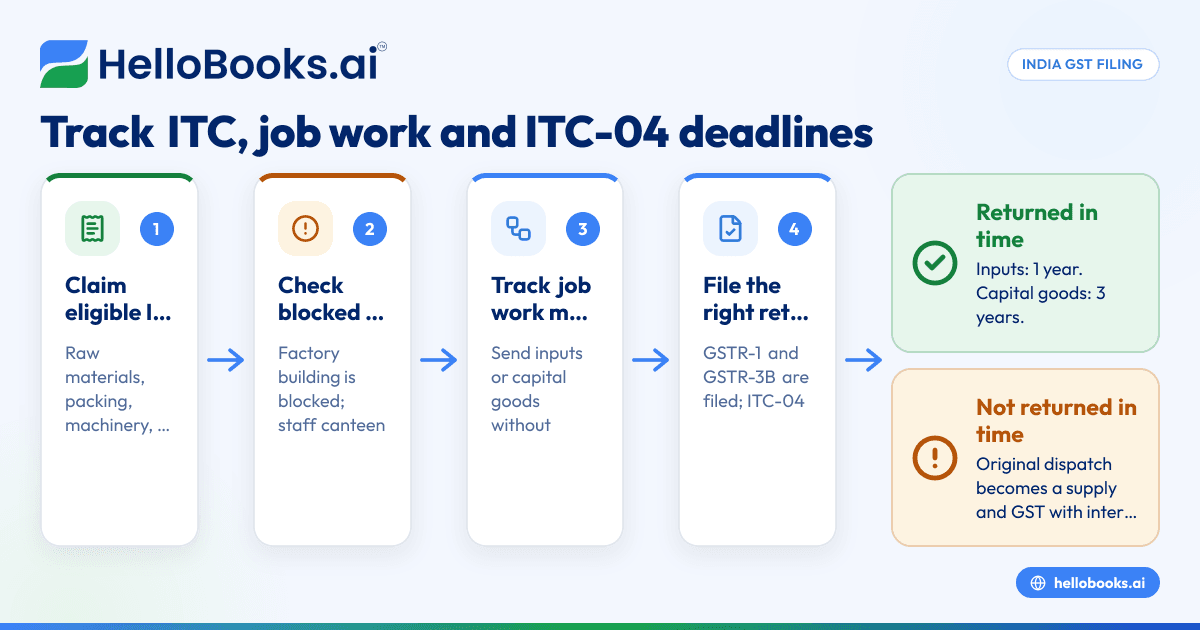
ਮੈਨੂਫੈਕਚਰਰ ਲਈ GST ਦਾ ਸਭ ਤੋਂ ਮਹੱਤਵਪੂਰਨ ਹਿੱਸਾ input tax credit, ਯਾਨੀ ITC, ਹੈ। ਪਰ ITC ਸਿਰਫ਼ purchase entry ਕਰ ਦੇਣ ਨਾਲ safe ਨਹੀਂ ਹੋ ਜਾਂਦਾ। ਇਸ ਦਾ ਸੰਬੰਧ tax invoice, supplier compliance, GSTR-2B visibility, business use ਅਤੇ blocked credit rules ਨਾਲ ਹੁੰਦਾ ਹੈ। ITC ਦਾ framework Central Goods and Services Tax Act, 2017 ਦੇ Section 16 ਅਤੇ blocked credits ਲਈ Section 17 ਨਾਲ ਜੁੜਦਾ ਹੈ; ਮੌਜੂਦਾ legal text CBIC ਅਤੇ India Code 'ਤੇ published ਹੁੰਦਾ ਹੈ, ਜਦਕਿ return-facing visibility GSTN ਦੇ GSTR-2A/2B data ਵਿੱਚ ਦਿਖਦੀ ਹੈ।
ਛੋਟੀ factory ਵਿੱਚ ਆਮ ਤੌਰ 'ਤੇ ਇਹ ਸਵਾਲ ਉੱਠਦੇ ਹਨ:
- raw material ਉੱਤੇ paid GST credit ਬਣੇਗਾ?
- consumables ਅਤੇ packing material ਦਾ ਕੀ?
- machine purchase ਉੱਤੇ paid GST credit ਮਿਲੇਗਾ?
- repair bill, job work charges, freight ਜਾਂ testing service ਦਾ treatment ਕੀ ਹੈ?
- canteen, building construction ਜਾਂ personal-use expense blocked ਹੈ ਜਾਂ ਨਹੀਂ?
ਇਸ ਦਾ ਇੱਕ fixed shortcut ਨਹੀਂ। Answer invoice ਦੇ nature, usage ਅਤੇ law ਦੇ specific provision ਉੱਤੇ ਨਿਰਭਰ ਕਰਦਾ ਹੈ। ਇਸ ਲਈ practical ਕੰਮ ਇਹ ਹੈ ਕਿ purchase bills ਸਹੀ capture ਹੋਣ, OCR ਨਾਲ bill entry ਵਿੱਚ typo ਘੱਟ ਹੋਣ, supplier GSTIN ਸਹੀ ਹੋਵੇ, ਅਤੇ GSTR-2B reconciliation regular ਹੋਵੇ। HelloBooks purchase bill ਦੀ OCR capture ਅਤੇ gst return filing workflow ਨਾਲ ਇਹ ਕੰਮ ਸੌਖਾ ਕਰਦਾ ਹੈ, ਕਿਉਂਕਿ owner ਜਾਂ accountant bill scan ਕਰਕੇ entry ਬਣਾਉਂਦਾ ਹੈ ਅਤੇ ਫਿਰ supplier data ਨਾਲ ITC track ਕਰ ਸਕਦਾ ਹੈ।
ਇੱਕ illustrative ਅਤੇ invented ਮਿਸਾਲ ਲਓ: ਮੰਨ ਲਓ ਲੁਧਿਆਣਾ ਦੀ ਇੱਕ ਛੋਟੀ unit ਨੇ ਇੱਕ CNC tool, cutting oil, packing rolls ਅਤੇ plating service ਲਈ bills book ਕੀਤੇ। ਮੰਨ ਲਓ total purchase value ₹4,80,000 ਹੈ ਅਤੇ tax component illustrative ਤੌਰ 'ਤੇ ₹52,000 book ਹੋਇਆ। ਇਹ figures invented ਹਨ, ਅਤੇ ਇਨ੍ਹਾਂ ਵਿੱਚ blocked credits, depreciation interaction under the Income-tax Act, 1961, reverse charge, exempt output ਜਾਂ supplier default ਦਾ effect ਸ਼ਾਮਲ ਨਹੀਂ। ਇਸ scenario ਵਿੱਚ accounting ਦਾ ਮੁੱਦਾ ਇਹ ਨਹੀਂ ਕਿ ₹52,000 ਆਪਣੇ ਆਪ claim ਹੋ ਜਾਵੇਗਾ; ਅਸਲ ਮੁੱਦਾ ਇਹ ਹੈ ਕਿ ਕਿੰਨਾ amount GSTR-2B ਵਿੱਚ ਆ ਰਿਹਾ ਹੈ, ਕਿਹੜਾ bill pending ਹੈ, ਅਤੇ ਕਿਹੜਾ expense business-use test ਪੂਰਾ ਨਹੀਂ ਕਰਦਾ।
ITC tracking ਦੀ value ਤਦੋਂ ਪਤਾ ਲੱਗਦੀ ਹੈ ਜਦੋਂ supplier ਨੇ invoice ਦਿੱਤਾ ਹੋਵੇ ਪਰ ਉਹ GST Portal data ਵਿੱਚ reflect ਨਾ ਕਰੇ। HelloBooks GSTR-2A/2B reconciliation ਅਤੇ ITC tracking ਨਾਲ ਉਹ missing invoices highlight ਕਰ ਸਕਦਾ ਹੈ ਤਾਂ ਜੋ GSTR-3B file ਕਰਨ ਤੋਂ ਪਹਿਲਾਂ follow-up ਹੋ ਜਾਵੇ। ਇਹ small manufacturers ਲਈ ਖ਼ਾਸ ਕਰਕੇ useful ਹੈ ਕਿਉਂਕਿ unclaimed ITC rupee cash-flow ਨੂੰ directly ਪ੍ਰਭਾਵਿਤ ਕਰਦਾ ਹੈ।
Job work ਵਿੱਚ record-keeping tax ਤੋਂ ਵੀ ਵੱਧ ਮਹੱਤਵਪੂਰਨ ਹੈ
Punjab, Haryana, Delhi NCR, Rajkot, Coimbatore, Pune ਜਾਂ Faridabad ਵਰਗੇ clusters ਵਿੱਚ job work ਆਮ practice ਹੈ: plating, heat treatment, stitching, powder coating, machining, polishing, assembly ਜਾਂ testing ਬਾਹਰ ਕਰਵਾਈ ਜਾਂਦੀ ਹੈ। Job work ਦਾ legal framework Central Goods and Services Tax Act, 2017 ਦੇ Section 143 ਅਤੇ ਸੰਬੰਧਤ rules ਹੇਠ ਆਉਂਦਾ ਹੈ। Inputs ਅਤੇ capital goods ਨੂੰ job worker ਕੋਲ ਭੇਜਣ, ਵਾਪਸ ਲੈਣ ਜਾਂ ਅੱਗੇ supply ਕਰਨ ਦੇ time limits, conditions ਅਤੇ reporting instructions ਦੀ ਮੌਜੂਦਾ position CBIC notifications, rules ਅਤੇ GST Portal guidance ਵਿੱਚ published ਹੁੰਦੀ ਹੈ.
ਇੱਥੇ ਸਭ ਤੋਂ ਵੱਡੀ practical ਗਲਤੀ ਇਹ ਹੁੰਦੀ ਹੈ ਕਿ business outward challan ਬਣਾਉਂਦਾ ਹੈ, ਪਰ ਵਾਪਸੀ entry timely ਨਹੀਂ ਕਰਦਾ। ਫਿਰ year-end 'ਤੇ ਕਿਸੇ ਨੂੰ ਯਾਦ ਨਹੀਂ ਰਹਿੰਦਾ ਕਿ ਕਿਹੜਾ lot ਕਿਸ job worker ਕੋਲ ਸੀ। Manufacturing ਵਿੱਚ ਇਹ sirf GST problem ਨਹੀਂ; ਇਹ stock valuation, WIP, delivery planning ਅਤੇ customer dispute ਦਾ ਵੀ issue ਬਣ ਜਾਂਦਾ ਹੈ।
ਜੇ ਤੁਸੀਂ job worker ਨੂੰ material ਭੇਜਦੇ ਹੋ, ਤਾਂ ਤੁਹਾਨੂੰ invoice, challan, quantity, wastage ਅਤੇ return movement ਦਾ trail ਚਾਹੀਦਾ ਹੈ। ਕਈ units WhatsApp 'ਤੇ dispatch photo ਰੱਖ ਲੈਂਦੀਆਂ ਹਨ, ਪਰ statutory trail ਉਸ ਨਾਲ ਪੂਰਾ ਨਹੀਂ ਹੁੰਦਾ। Noor assistant WhatsApp 'ਤੇ Hindi, English ਅਤੇ Hinglish ਵਿੱਚ bookkeeping-related ਸਵਾਲਾਂ ਵਿੱਚ ਮਦਦ ਕਰ ਸਕਦਾ ਹੈ, ਪਰ compliance record ਫਿਰ ਵੀ software ਵਿੱਚ ਸਹੀ entry ਨਾਲ ਹੀ safe ਬਣਦਾ ਹੈ।
Inventory management ਇਸ point 'ਤੇ especially useful ਹੈ। ਜਦੋਂ raw material issue, finished goods sale ਅਤੇ purchase receipt ਇੱਕੋ system ਵਿੱਚ ਹਿਲਦੇ ਹਨ, ਤਾਂ closing stock, shortage ਅਤੇ job-work-outstanding ਦਾ picture ਜ਼ਿਆਦਾ clear ਹੁੰਦਾ ਹੈ। HelloBooks ਦੀ inventory capability manufacturing business ਨੂੰ ਇਹ ਸਮਝਣ ਵਿੱਚ ਮਦਦ ਕਰਦੀ ਹੈ ਕਿ books ਵਿੱਚ ਜੋ stock ਹੈ, ਉਹ GST outward ਅਤੇ inward records ਨਾਲ broadly align ਕਰ ਰਿਹਾ ਹੈ ਜਾਂ ਨਹੀਂ।
e-invoice, IRN ਅਤੇ e-way bill: factory dispatch ਦੀ ground reality
ਸਾਰੇ manufacturers ਲਈ e-invoicing ਲਾਜ਼ਮੀ ਨਹੀਂ ਹੁੰਦੀ, ਅਤੇ applicability threshold, classes of taxpayers ਅਤੇ exemptions ਸਮੇਂ-ਸਮੇਂ 'ਤੇ CBIC notifications ਰਾਹੀਂ ਬਦਲ ਸਕਦੇ ਹਨ। ਇਸ ਲਈ current threshold ਦਾ figure CBIC notification ਅਤੇ GST Portal 'ਤੇ ਹੀ verify ਕਰਨਾ ਚਾਹੀਦਾ ਹੈ। ਜਿੱਥੇ e-invoicing ਲਾਗੂ ਹੁੰਦੀ ਹੈ, ਉੱਥੇ invoice ਦੀ compliance GST Portal ecosystem ਅਤੇ Invoice Registration Portal rules ਨਾਲ ਜੁੜਦੀ ਹੈ, ਅਤੇ IRN ਨਾਲ signed QR generation dispatch process ਦਾ ਹਿੱਸਾ ਬਣ ਜਾਂਦਾ ਹੈ।
ਛੋਟੀ manufacturing unit ਲਈ ਸਮੱਸਿਆ ਅਕਸਰ ਇਹ ਨਹੀਂ ਹੁੰਦੀ ਕਿ IRN concept ਸਮਝ ਨਹੀਂ ਆਇਆ; ਸਮੱਸਿਆ ਇਹ ਹੁੰਦੀ ਹੈ ਕਿ sales team invoice ਬਣਾਉਂਦੀ ਹੈ, accounts team data ਠੀਕ ਕਰਦੀ ਹੈ, dispatch team e-way bill ਲਈ ਫਿਰ ਤੋਂ same details type ਕਰਦੀ ਹੈ। Manual duplication ਨਾਲ GSTIN typo, vehicle detail error, quantity mismatch ਜਾਂ HSN issue ਹੋ ਸਕਦਾ ਹੈ। HelloBooks ਵਿੱਚ ਜਿੱਥੇ e-invoicing applicable ਹੈ, ਉੱਥੇ IRN ਅਤੇ signed QR invoice flow ਦੇ ਨਾਲ manage ਹੋ ਸਕਦੇ ਹਨ, ਅਤੇ e-way bill software ਵਾਲੇ workflow ਨਾਲ consignment details ਦੁਬਾਰਾ type ਕਰਨ ਦੀ ਲੋੜ ਘੱਟ ਹੁੰਦੀ ਹੈ।
Place of supply ਵੀ dispatch-heavy businesses ਵਿੱਚ critical ਹੈ। ਮੰਨ ਲਓ ਮੋਹਾਲੀ ਦੀ unit ਨੇ buyer ਦਾ billing address ਚੰਡੀਗੜ੍ਹ ਅਤੇ delivery location ਬੱਦੀ ਰੱਖਿਆ। Illustrative ਅਤੇ invented case ਵਿੱਚ, ਜੇ accounts team ਨੇ local sale ਮੰਨ ਕੇ CGST+SGST book ਕਰ ਦਿੱਤਾ, ਤਾਂ outward tax head split dispute ਖੜ੍ਹਾ ਹੋ ਸਕਦਾ ਹੈ। ਇਹ figures ਜਾਂ result legal advice ਨਹੀਂ ਹਨ; actual treatment contract terms, movement facts, GST law ਅਤੇ CBIC guidance ਉੱਤੇ ਨਿਰਭਰ ਕਰੇਗਾ. ਇਸ ਲਈ system-based tax head split useful ਹੈ, especially ਜਦੋਂ business multiple states ਵਿੱਚ dispatch ਕਰਦਾ ਹੋਵੇ।
GSTR-1 ਅਤੇ GSTR-3B ਫਾਈਲ ਕਰਨ ਤੋਂ ਪਹਿਲਾਂ ਕਿਹੜੇ ਡਾਟਾ ਨੂੰ ਮਿਲਾਉਣਾ ਚਾਹੀਦਾ ਹੈ
ਛੋਟੇ ਮੈਨੂਫੈਕਚਰਰ ਦਾ return filing stress ਆਖ਼ਰੀ ਦਿਨ ਨਹੀਂ ਬਣਦਾ; ਉਹ ਸਾਰੇ ਮਹੀਨੇ ਬਣਦਾ ਹੈ। GSTR-1 outward supplies ਦੀ detail-driven return ਹੈ, ਜਦਕਿ GSTR-3B summary liability ਅਤੇ ITC claim ਦਾ filing point ਬਣਦੀ ਹੈ। ਦੋਵੇਂ returns Central Goods and Services Tax Act, 2017 ਅਤੇ GST Rules ਹੇਠ operate ਕਰਦੀਆਂ ਹਨ; current due dates ਅਤੇ filing instructions GST Portal ਅਤੇ CBIC updates ਵਿੱਚ published ਹੁੰਦੇ ਹਨ।
Return file ਕਰਨ ਤੋਂ ਪਹਿਲਾਂ ਘੱਟੋ-ਘੱਟ ਇਹ ਚੀਜ਼ਾਂ ਮਿਲਾਣੀਆਂ ਚਾਹੀਦੀਆਂ ਹਨ:
- sales register ਵੱਲੋਂ invoice count ਅਤੇ taxable value
- credit notes ਅਤੇ debit notes
- e-invoice / IRN data, ਜੇ applicable ਹੋਵੇ
- e-way bill movement ਅਤੇ dispatch records
- purchase register ਵੱਲੋਂ eligible ITC
- GSTR-2B ਵਿੱਚ reflected supplier invoices
- reverse charge ਵਾਲੀਆਂ entries, ਜੇ ਕੋਈ ਹੋਣ
- bank receipts ਅਤੇ open receivables
- stock movement ਅਤੇ major quantity anomalies
HelloBooks ਦਾ direct filing workflow GSTR-1 ਅਤੇ GSTR-3B ਲਈ useful ਹੈ ਕਿਉਂਕਿ return books ਤੋਂ ਬਣਦੀ ਹੈ, ਵੱਖ spreadsheet ਤੋਂ ਨਹੀਂ। ਨਾਲ ਹੀ uploaded bank statement ਨੂੰ AI reconciliation ਨਾਲ match ਕਰਕੇ receipt trail ਸਾਫ਼ ਕੀਤਾ ਜਾ ਸਕਦਾ ਹੈ; ਇੱਥੇ ਧਿਆਨ ਰਹੇ ਕਿ ਭਾਰਤ ਵਿੱਚ ਇਹ uploaded bank statement reconciliation ਹੈ, live bank feed ਨਹੀਂ। bank reconciliation software ਵਾਲਾ ਇਹ ਹਿੱਸਾ ਉਹਨਾਂ units ਲਈ practical ਹੈ ਜਿਨ੍ਹਾਂ ਦੇ buyers NEFT, RTGS, IMPS ਜਾਂ mixed bank transfers ਨਾਲ payment ਕਰਦੇ ਹਨ ਅਤੇ remittance advice ਹਮੇਸ਼ਾਂ clean ਨਹੀਂ ਹੁੰਦੀ।
ਜੇ business ਕੋਲ ਦੋ ਜਾਂ ਤਿੰਨ ਰਾਜਾਂ ਵਿੱਚ GSTIN ਹਨ, ਤਾਂ multi-GSTIN handling ਵੀ ਮਹੱਤਵਪੂਰਨ ਬਣ ਜਾਂਦੀ ਹੈ। ਪੰਜਾਬ ਵਿੱਚ factory, ਦਿੱਲੀ ਵਿੱਚ sales office ਅਤੇ ਹਰਿਆਣਾ ਵਿੱਚ warehouse ਵਾਲੇ setup ਵਿੱਚ alag GSTIN data mix ਹੋਣ ਦਾ risk ਹੁੰਦਾ ਹੈ। HelloBooks multiple GSTINs ਅਤੇ unlimited users ਵਾਲੇ workflow ਨਾਲ state-wise filing discipline ਕਾਇਮ ਰੱਖਣ ਵਿੱਚ ਮਦਦ ਕਰ ਸਕਦਾ ਹੈ।
purchased bills, TDS ਅਤੇ reverse charge ਨੂੰ side spreadsheet ਵਿੱਚ ਨਾ ਛੱਡੋ
Manufacturing businesses ਵਿੱਚ GST compliance ਅਕਸਰ sales-centric ਹੋ ਜਾਂਦੀ ਹੈ, ਪਰ leakage purchase side ਤੋਂ ਹੁੰਦਾ ਹੈ। Freight vendor, contractor, rent, security service, tooling supplier, scrap purchase ਜਾਂ import-related local charge ਵੱਖ treatment ਮੰਗ ਸਕਦੇ ਹਨ। ਕੁਝ cases ਵਿੱਚ TDS bookkeeping ਵੀ same bill trail ਨਾਲ ਜੁੜੀ ਹੁੰਦੀ ਹੈ, ਅਤੇ ਕੁਝ cases ਵਿੱਚ reverse charge implications ਆ ਸਕਦੇ ਹਨ। TDS ਦਾ framework Income-tax Act, 1961 ਹੇਠ ਹੈ; GST reverse charge Central Goods and Services Tax Act, 2017 ਹੇਠ govern ਹੁੰਦਾ ਹੈ। Current applicability, rates, sections ਅਤੇ instructions respective regulator sources—Income Tax Department, CBIC ਅਤੇ GST Portal—ਉੱਤੇ published ਹੁੰਦੀਆਂ ਹਨ।
ਇਸ ਕਰਕੇ ਇੱਕ modern accounting setup ਵਿੱਚ purchase entry sirf amount capture ਨਹੀਂ ਹੋਣਾ ਚਾਹੀਦਾ। Bill image, supplier GSTIN, HSN/SAC context, tax breakup, TDS impact ਅਤੇ payment status ਵੀ link ਹੋਣਾ ਚਾਹੀਦਾ ਹੈ। HelloBooks OCR for purchase bills, TDS/TCS and reverse charge handling ਅਤੇ ai bookkeeping style workflows ਨਾਲ ਇਸ side ਨੂੰ organized ਰੱਖਦਾ ਹੈ, ਜੋ factory owner ਲਈ useful ਹੈ ਜਦੋਂ accountant ਛੁੱਟੀ 'ਤੇ ਹੋਵੇ ਜਾਂ CA review ਮੰਗੇ।
ਇੱਕ illustrative ਅਤੇ invented scenario ਵੇਖੋ: ਮੰਨ ਲਓ ਇੱਕ unit ਨੇ ₹1,20,000 ਦੀ machine repair service, ₹48,000 freight, ₹36,000 security service ਅਤੇ ₹2,10,000 tooling purchase record ਕੀਤੀ। ਮੰਨ ਲਓ books ਵਿੱਚ tax components ਵੀ capture ਹੋਏ, ਪਰ ਦੋ supplier bills ਦੀ OCR entry ਵਿੱਚ GSTIN digit typo ਸੀ, ਇੱਕ bill GSTR-2B ਵਿੱਚ ਨਹੀਂ ਦਿਖਿਆ, ਅਤੇ ਇੱਕ vendor payment 'ਤੇ TDS note side Excel ਵਿੱਚ ਪਿਆ ਰਹਿ ਗਿਆ। ਇਹ ਸਾਰੇ figures invented ਹਨ, ਅਤੇ ਇਨ੍ਹਾਂ ਵਿੱਚ legal classification, blocked credit review, contract terms, Section-specific analysis ਅਤੇ actual return impact ਸ਼ਾਮਲ ਨਹੀਂ। ਇਸ ਕਿਸਮ ਦੇ mismatch return filing ਦੇ ਦਿਨ ਨਹੀਂ, data-entry ਦੇ ਦਿਨ ਤੋਂ ਸ਼ੁਰੂ ਹੁੰਦੇ ਹਨ।
Punjab ਦੇ ਛੋਟੇ ਮੈਨੂਫੈਕਚਰਰ ਲਈ system ਚੁਣਦਿਆਂ ਕੀ ਵੇਖਣਾ ਚਾਹੀਦਾ ਹੈ
ਜੇ ਤੁਹਾਡਾ ਸਵਾਲ ਸਿਰਫ਼ “free GST filing” ਹੈ, ਤਾਂ temptation ਹੁੰਦੀ ਹੈ ਕਿ ਸਿਰਫ਼ ਉਹ tool ਚੁਣ ਲਿਆ ਜਾਵੇ ਜੋ return upload ਕਰ ਦੇਵੇ। ਪਰ factory context ਵਿੱਚ useful system ਉਹ ਹੈ ਜੋ invoice ਤੋਂ bank receipt ਤੱਕ trail ਬਣਾਏ। ਘੱਟੋ-ਘੱਟ ਇਹ ਵੇਖੋ:
- GST invoice ਬਣਦੇ ਵੇਲੇ GSTIN, HSN/SAC ਅਤੇ tax head split ਸਹੀ ਆ ਰਹੇ ਹਨ ਜਾਂ ਨਹੀਂ
- e-invoice applicable ਹੋਣ 'ਤੇ IRN ਅਤੇ signed QR manage ਹੋ ਸਕਦੇ ਹਨ ਜਾਂ ਨਹੀਂ
- e-way bill invoice ਤੋਂ ਹੀ ਬਣ ਸਕਦਾ ਹੈ ਜਾਂ ਨਹੀਂ
- purchase bill scan ਕਰਕੇ entry ਹੋ ਸਕਦੀ ਹੈ ਜਾਂ ਨਹੀਂ
- GSTR-2A/2B reconciliation ਅਤੇ ITC tracking practical ਹੈ ਜਾਂ ਨਹੀਂ
- GSTR-1 ਅਤੇ GSTR-3B direct filing ਹੈ ਜਾਂ ਨਹੀਂ
- inventory, receivables ਅਤੇ P&L ਇੱਕੋ data ਤੋਂ ਬਣ ਰਹੇ ਹਨ ਜਾਂ ਨਹੀਂ
- Tally ਤੋਂ migration ਜਾਂ connector possible ਹੈ ਜਾਂ ਨਹੀਂ
- phone app ਨਾਲ owner shopfloor ਜਾਂ travel ਦੌਰਾਨ basic approvals/entries ਵੇਖ ਸਕਦਾ ਹੈ ਜਾਂ ਨਹੀਂ
HelloBooks ਇਨ੍ਹਾਂ ਵਿੱਚੋਂ ਕਈ ਚੀਜ਼ਾਂ ਇੱਕੋ flow ਵਿੱਚ ਜੋੜਦਾ ਹੈ: accounting software india ਵਾਂਗ day-to-day books, e-invoicing software ਜਿੱਥੇ applicable ਹੋਵੇ, GST filing, OCR purchases, inventory ਅਤੇ reports. Financial reports ਇਸ ਲਈ useful ਹਨ ਕਿਉਂਕਿ manufacturing owner ਨੂੰ sirf tax payable ਨਹੀਂ ਦੇਖਣਾ; ਉਸ ਨੂੰ gross margin, debtor ageing, stock value ਅਤੇ cash position ਵੀ rupee terms ਵਿੱਚ ਸਮਝਣੀ ਹੁੰਦੀ ਹੈ। Mobile app iOS ਅਤੇ Android 'ਤੇ basic work accessible ਰੱਖਦੀ ਹੈ, ਜੋ ਉਹਨਾਂ owners ਲਈ helpful ਹੈ ਜੋ plant floor ਅਤੇ market visits ਵਿਚਕਾਰ ਕੰਮ ਕਰਦੇ ਹਨ।
ਜੇ ਤੁਸੀਂ tools ਨਾਲ ਸ਼ੁਰੂ ਕਰਨਾ ਚਾਹੁੰਦੇ ਹੋ, ਤਾਂ official filing ਤੋਂ ਪਹਿਲਾਂ GSTIN validate ਕਰਨ, HSN ਲੱਭਣ ਜਾਂ invoice fields check ਕਰਨ ਲਈ free India tools ਵਰਤੇ ਜਾ ਸਕਦੇ ਹਨ, ਜਿਵੇਂ GSTIN validator ਅਤੇ HSN code search। Product fit ਜਾਂ setup ਦੇਖਣ ਲਈ demo ਮੰਗੀ ਜਾ ਸਕਦੀ ਹੈ, ਅਤੇ commercial details ਲਈ pricing ਪੇਜ ਵੇਖਣਾ ਚਾਹੀਦਾ ਹੈ।
ਫ੍ਰੀ filing ਤਦੋਂ ਹੀ ਸਸਤੀ ਪੈਂਦੀ ਹੈ ਜਦੋਂ books ਸਹੀ ਹੋਣ
ਮੁੱਦੇ ਦੀ ਗੱਲ ਇਹ ਹੈ ਕਿ ਛੋਟੇ ਮੈਨੂਫੈਕਚਰਰ ਲਈ GST compliance ਦਾ ਖਰਚਾ ਸਿਰਫ਼ software fee ਨਹੀਂ ਹੁੰਦਾ। ਅਸਲ ਖਰਚਾ ਉਹ ਹੁੰਦਾ ਹੈ ਜਦੋਂ ITC miss ਹੋ ਜਾਵੇ, e-way bill detail mismatch ਹੋ ਜਾਵੇ, buyer invoice reject ਕਰ ਦੇਵੇ, bank receipt unallocated ਰਹਿ ਜਾਵੇ ਜਾਂ job work stock ਦਾ trail ਟੁੱਟ ਜਾਵੇ। ਇਸੇ ਕਰਕੇ “free GST filing” ਤਦੋਂ ਹੀ meaningful ਹੈ ਜਦੋਂ return ਤੱਕ ਪਹੁੰਚਣ ਵਾਲਾ data clean ਹੋਵੇ।
HelloBooks ਦਾ practical use-case ਇਸੇ ਜਗ੍ਹਾ fit ਹੁੰਦਾ ਹੈ: GST invoice ਬਣਾਉਣਾ, applicable ਹੋਣ 'ਤੇ e-invoice IRN ਅਤੇ signed QR manage ਕਰਨਾ, e-way bill raise ਕਰਨਾ, purchase bills ਨੂੰ OCR ਨਾਲ capture ਕਰਨਾ, uploaded bank statement ਨੂੰ AI reconciliation ਨਾਲ match ਕਰਨਾ, GSTR-2B reconciliation ਨਾਲ ITC track ਕਰਨਾ, ਅਤੇ ਫਿਰ GSTR-1 ਅਤੇ GSTR-3B direct file ਕਰਨਾ। Manufacturing business ਲਈ ਇਹ ਇੱਕ connected workflow ਬਣਾਉਂਦਾ ਹੈ, ਨਾ ਕਿ sirf filing button.
ਅਖੀਰ ਵਿੱਚ, ਕੋਈ ਵੀ current rate, threshold, due date, penalty, interest ਜਾਂ specific form instruction verify ਕਰਨ ਲਈ CBIC, GSTN, GST Portal, Income Tax Department, MCA ਜਾਂ ਹੋਰ official source ਹੀ final reference ਹਨ। GST law, Income-tax Act, Companies Act ਅਤੇ regulator guidance ਬਦਲ ਸਕਦੇ ਹਨ; ਇਸ ਲਈ real filing ਜਾਂ claim ਤੋਂ ਪਹਿਲਾਂ apne CA ਜਾਂ tax professional ਨਾਲ review ਕਰਨਾ ਸਭ ਤੋਂ ਸੁਰੱਖਿਅਤ ਰਸਤਾ ਹੈ।


