

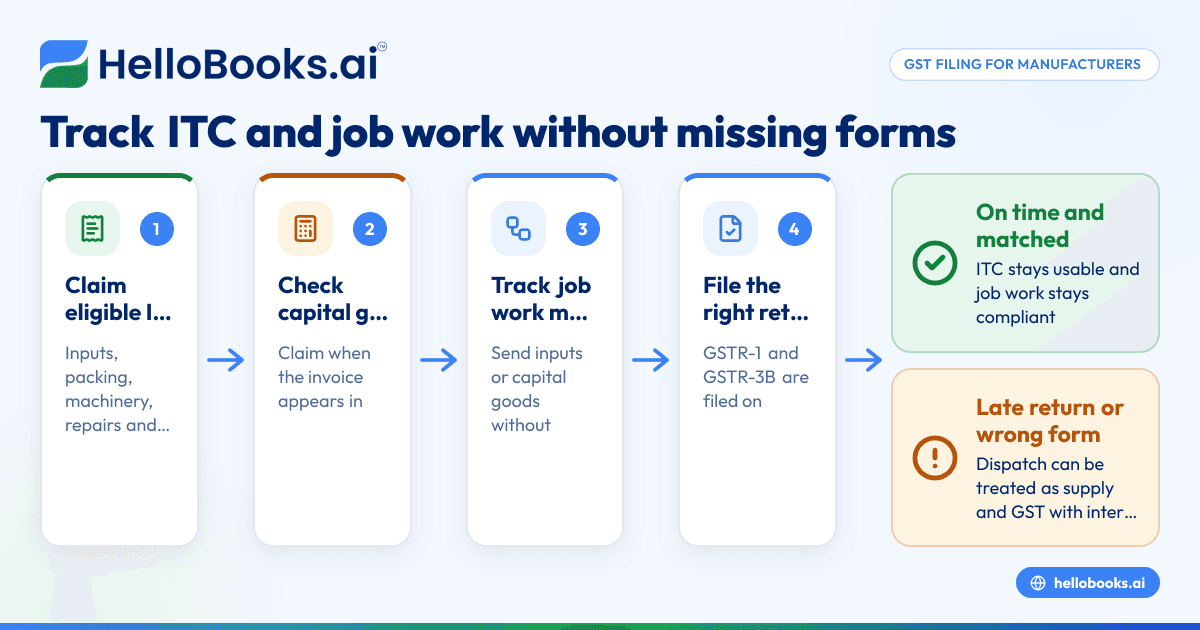

Key takeaways
What this article covers, in order:
- छोटे मैन्युफ़ैक्चरर के लिए GST filing का असली दायरा
- invoice सही न हो तो filing सही नहीं हो सकती
- ITC tracking में सबसे बड़ी दिक्कत supplier side से आती है
- job work का record return से अलग discipline मांगता है
- stock, purchases और dispatch एक-दूसरे से कटे हों तो GST टूटता है
- bank statement upload और reconciliation से factory owner को असली राहत मिलती है
India में छोटे मैन्युफ़ैक्चरर के लिए फ्री GST फाइलिंग का मतलब सिर्फ GSTR-1 और GSTR-3B जमा करना नहीं है; असली फर्क तब पड़ता है जब आपके invoice में सही CGST/SGST या IGST लगे, purchase bills से ITC ठीक ट्रैक हो, job work की movement अलग से संभले, और bank statement upload करके receipts reconcile हो जाएँ। अगर आपकी unit raw material खरीदती है, goods बाहर process के लिए भेजती है, e-way bill बनाती है, या Tally से shift सोच रही है, तो filing तभी आसान लगेगी जब books, stock और GST एक ही flow में हों।
छोटे मैन्युफ़ैक्चरर के लिए GST filing का असली दायरा
मैन्युफ़ैक्चरिंग business में GST का pressure trading से अलग होता है। यहाँ सिर्फ sale invoice नहीं बनता; raw material inward आता है, scrap निकलता है, consumables लगते हैं, semi-finished goods job worker के पास जाते हैं, फिर वापस आते हैं, और कई बार dispatch के साथ e-way bill या e-invoice का भी सवाल उठता है। इसी वजह से GST compliance का केंद्र return filing नहीं, बल्कि records की quality होती है।
भारत में GST का ढाँचा Central Goods and Services Tax Act, 2017, Integrated Goods and Services Tax Act, 2017 और इनके rules के तहत चलता है। इसका प्रशासन CBIC और राज्य GST authorities करती हैं, जबकि return system और taxpayer interface GSTN के GST Portal पर operate होते हैं। registration limit, e-invoicing applicability, e-way bill rules, due dates, late fee, interest और format जैसी current figures हमेशा CBIC notifications, GST Council decisions और GST Portal पर published updates से verify करनी चाहिए। अगर कोई consultant या article आपको bare number दे, तो उसे latest official source से cross-check करना चाहिए।
छोटे factory owner के लिए practical सवाल आमतौर पर ये होते हैं:
- buyer B2B है, तो क्या invoice details सही जा रही हैं?
- supplier की bill GSTR-2B में नहीं दिख रही, तो ITC कितना safe है?
- inter-state dispatch पर IGST लगेगा या local supply पर CGST/SGST?
- goods plating, coating, stitching या machining के लिए बाहर गए हैं—उनका trail कहाँ है?
- stock book, GST book और bank book अलग-अलग चल रही हैं क्या?
यहीं पर GST return filing software तब उपयोगी होता है जब वह invoices और purchases से return build करे, न कि अलग spreadsheet से। HelloBooks में GSTR-1 और GSTR-3B direct file किए जा सकते हैं, इसलिए manufacturing unit को invoice data दोबारा type नहीं करना पड़ता।
invoice सही न हो तो filing सही नहीं हो सकती
छोटे manufacturer के लिए सबसे आम GST गलती tax rate नहीं, tax head होती है—यानी local supply पर CGST और SGST लगना चाहिए था या inter-state sale पर IGST। यह determination place of supply, buyer location, bill-to / ship-to facts और transaction nature पर depend करती है। इन principles का legal base IGST Act, 2017 और GST rules में है, और current clarifications CBIC circulars तथा GST Portal guidance में मिलते हैं।
Manufacturing business में यह और tricky हो जाता है क्योंकि dispatch warehouse से हो सकता है, buyer किसी दूसरे राज्य में हो सकता है, और goods किसी third-party location पर ship किए जा सकते हैं। अगर tax head गलत लगा, तो return filing technically हो भी जाए, फिर भी buyer की accounts team credit रोक सकती है।
इसलिए invoice बनाते समय GSTIN, place of supply, HSN/SAC, product description, quantity, value और tax split consistent होना चाहिए। smart invoicing तभी काम की है जब system buyer के GSTIN और transaction facts के आधार पर सही CGST/SGST या IGST split संभाले। HelloBooks ऐसे invoice flow में मदद करता है, और जहाँ e-invoicing legally applicable हो, वहाँ IRN और signed QR के साथ invoice save-time पर तैयार हो सकता है, ताकि JSON upload अलग से manage न करना पड़े। e-invoicing की applicability, exemption classes और current turnover criterion की official position CBIC notifications और einvoice portal documentation में published होती है; इन्हें हर साल verify करना चाहिए।
ITC tracking में सबसे बड़ी दिक्कत supplier side से आती है
छोटे manufacturer का margin अक्सर raw material cost से दबा होता है। steel, chemicals, packaging, fabrication, machine repair, freight, tool purchase—इन सब पर दिया गया GST working capital को प्रभावित करता है। लेकिन ITC का legal framework सिर्फ purchase invoice तक सीमित नहीं है। Central Goods and Services Tax Act, 2017 की input tax credit provisions, blocked credit rules, document conditions और matching-related compliance का practical effect यह है कि bill, goods receipt, business use और supplier reporting—सभी matter करते हैं। current interpretive guidance CBIC circulars, GST Portal advisories और relevant case law से देखनी चाहिए।
यहीं GSTR-2A/2B reconciliation critical हो जाती है। Manufacturer को लगता है bill आ गया तो credit मिल गया, पर buyer side book entry और supplier side filing में mismatch हो सकता है। अगर purchase register अलग, accountant की excel अलग, और GST working अलग चल रही हो, तो month-end पर confusion तय है। HelloBooks purchase bills को OCR से capture करने और फिर GSTR-2A/2B के साथ reconcile करने में मदद करता है, ताकि missing invoices और ITC tracking एक ही जगह दिखे।
एक illustrative और invented स्थिति लें: मान लीजिए Faridabad की एक small unit ने एक महीने में sheet metal, packing material और machine maintenance पर कुल ₹2,40,000 का taxable purchase book किया। इनमें से invoices पर GST amounts भी recorded हैं, पर GSTR-2B में सिर्फ कुछ invoices reflect हुए। यह संख्या केवल समझाने के लिए invented है; इसमें blocked credits, debit notes, supplier amendments, freight classification, reverse charge situations और year-end adjustments शामिल नहीं हैं। ऐसी स्थिति में business owner को किताबों में दिख रहा ITC और portal-backed ITC अलग दिख सकता है। reconciliation के बिना GSTR-3B भरना risky हो सकता है, इसलिए portal data और books की तुलना पहले करनी चाहिए। आप चाहें तो GST reconciliation checker जैसे free tool से शुरुआती validation कर सकते हैं।
job work का record return से अलग discipline मांगता है
भारत के छोटे manufacturers plating, powder coating, embroidery, heat treatment, job machining, moulding, polishing या finishing जैसे process बाहर करवाते हैं। GST में job work को casually नहीं देखा जा सकता, क्योंकि goods principal के stock से निकलते हैं, पर हर outward movement sale नहीं होती। इसका legal framework CGST Act, 2017 की job work provisions और संबंधित GST rules में है। कौन-सी movement taxable supply मानी जाएगी, documentation क्या चाहिए, goods कब तक वापस आने चाहिए, और non-return की tax treatment क्या होगी—इनकी current position CBIC notifications, circulars और GST Portal guidance में देखनी चाहिए।
यहीं बहुत सी छोटी units गलती करती हैं: challan trail कमजोर होता है, inward-back quantity अलग होती है, wastage record नहीं होता, और accountant के पास month-end पर सिर्फ transporter slip बचती है। बाद में buyer audit, departmental query या stock mismatch में परेशानी होती है।
HelloBooks का focus यहाँ direct job-work return filing नहीं, बल्कि उस bookkeeping backbone पर है जिससे sale, purchase, stock movement और GST return data coherent रहें। अगर आप goods बाहर processing के लिए भेजते हैं, तो invoice, stock और e-way bill discipline साथ होना चाहिए। Dispatch cases में e-way bill software useful होता है जब consignment details invoice से pull हो जाएँ और transporter data अलग से बार-बार type न करना पड़े। e-way bill generation rules, validity logic और exceptions की official details e-Way Bill system, CBIC notifications और GST Portal help material में published होती हैं; current numbers वहीं से verify करें.
stock, purchases और dispatch एक-दूसरे से कटे हों तो GST टूटता है
Manufacturing units में accounting की सबसे practical समस्या यह है कि production floor, store, dispatch desk और accounts office अलग-अलग भाषा में काम करते हैं। store register quantity बोलता है, accounts value बोलता है, GST report tax बोलती है, और owner bank balance देखता है। अगर ये चारों sync में न हों, तो आपको पता ही नहीं चलता कि कौन-सा input consume हुआ, कौन-सा bill pending है, और कौन-सी outward supply invoice होकर भी payment में अटकी है।
इसीलिए inventory और GST को अलग systems में रखना छोटे business के लिए महँगा पड़ता है। HelloBooks inventory management के साथ purchases और sales को जोड़ता है, ताकि stock movement bookkeeping से कटा न रहे। Financial reports भी उसी data से बनते हैं जिससे GST filing बनती है, इसलिए P&L, receivables और tax summary में कम mismatch रहता है। अगर business अभी भी Tally पर है, तो tally alternative देखना useful हो सकता है, खासकर तब जब owner migration immediately नहीं करना चाहता पर cleaner GST workflow चाहता है। HelloBooks में Tally migration और connector available है, इसलिए पुराने data से नई process पर आने का रास्ता practical बनता है।
GSTIN, HSN validation और invoice field checks जैसे छोटे काम भी quality improve करते हैं। पहले ही stage पर GSTIN verify कर लेना, HSN search कर लेना, या invoice fields validate कर लेना बाद के notices कम कर सकता है। ऐसे use-cases के लिए GSTIN validator, HSN code search और GST invoice validator जैसे free India tools helpful starting points हो सकते हैं।
bank statement upload और reconciliation से factory owner को असली राहत मिलती है
छोटे manufacturer की रोज़मर्रा की collection UPI, NEFT, RTGS, IMPS या cheque mix में आ सकती है। buyer ने short payment किया, TDS काटा, freight adjust किया, debit note hold किया, या multiple invoices against एक combined remittance भेज दी—ये सब practical realities हैं। income recognition, receivable ageing और GST turnover review पर इसका असर पड़ता है, भले GST liability accounting basis पर सीधे तय न हो। TDS treatment का framework Income-tax Act, 1961 के तहत आता है, और current rates, sections, thresholds और filing obligations की updated position Income Tax Department notifications, CBDT circulars और official portal पर verify करनी चाहिए। GST के अंदर reverse charge और related treatment के लिए CBIC/GST Portal source देखना चाहिए।
यहीं HelloBooks का India-specific bank statement upload और AI reconciliation useful बनता है। यहाँ live bank feed की बात नहीं है; business monthly या periodic bank statement upload करता है, और system receipts/entries को invoices व ledger items से match करने में मदद करता है। इससे accountant को हर line manually type नहीं करनी पड़ती। Manufacturing business जहाँ payments staggered आते हैं, वहाँ यह feature cash flow clarity देता है। bank reconciliation software इसी reason से filing article में भी relevant है, क्योंकि GST return accuracy का base अक्सर वही settled sales book होती है जो bank matches के बाद साफ़ दिखती है।
एक illustrative और invented स्थिति सोचिए: Jaipur की एक fabrication unit ने महीने में ₹9,80,000 की outward invoices raise कीं। bank statement में ₹6,20,000 UPI और NEFT receipts दिखीं, ₹1,10,000 एक buyer ने TDS काटकर pay किया, और ₹75,000 दो पुराने invoices के against adjust हुआ। यह केवल समझाने के लिए invented numbers हैं; इसमें credit notes, export remittances, interest income, cash sales, cheque bounce, GST timing differences या litigation issues शामिल नहीं हैं। अगर owner सिर्फ bank credits देखकर sales समझे, तो receivables report और GST-facing invoice book में mismatch आ सकता है। upload-based reconciliation इस gap को जल्दी पकड़ लेती है।
जब business बढ़ता है, एक GSTIN से multiple locations तक सवाल बदल जाते हैं
कई छोटे manufacturers एक state में plant और दूसरे state में depot, branch या separate registration रखते हैं। कुछ businesses sister concern structure, contract manufacturing arrangement, या multiple GSTIN setup में काम करते हैं। ऐसी situation में सिर्फ filing नहीं, entity separation important होती है। कौन-सी supply किस GSTIN से book होगी, inter-branch stock transfer कैसे reflect होगा, और किस registration की GSTR-1 / GSTR-3B किस data set से बनेगी—यह legal और operational दोनों सवाल हैं। registration requirements, distinct person treatment और cross-charge/inter-unit rules की current guidance GST law, CBIC circulars और GST Portal material में देखनी चाहिए; complex cases में expert review ज़रूरी है।
HelloBooks multi-GSTIN setup और unlimited users के साथ useful हो सकता है, खासकर जब owner, accountant, CA और dispatch staff को same system में अलग roles के साथ काम करना हो। Mobile app भी practical है क्योंकि factory floor या godown से invoice, expense या quick checks phone पर हो जाते हैं। और Hindi या Hinglish में काम करने वाले owners के लिए Noor assistant on WhatsApp bookkeeping questions को समझने में मदद कर सकता है—जो भारत के छोटे business context में खास तौर पर relevant है, क्योंकि बहुत लोग formal accounting language की बजाय WhatsApp-style communication में comfortable होते हैं।
free GST filing तभी सच में free लगती है जब rework कम हो
"फ्री GST filing" सुनने में return submission जैसा लगता है, लेकिन छोटे manufacturer के लिए hidden cost rework का होता है—गलत invoice, missing ITC, unmatched bank entries, stock confusion, dispatch trail gaps, या CA को बार-बार data भेजना। अगर आपको हर महीने वही purchase bills scan करके, Tally export बनाकर, excel साफ़ करके और portal numbers match करके बैठना पड़ रहा है, तो filing भले free हो, process free नहीं है।
HelloBooks भारत में छोटे business के लिए इस workflow को compact करता है: GST invoicing, e-invoicing जहाँ applicable हो, GSTR-1 और GSTR-3B direct filing, GSTR-2A/2B reconciliation, OCR purchase capture, bank statement upload-based AI reconciliation, inventory, financial reports, TDS/TCS और reverse charge handling—ये सब manufacturing context में साथ आते हैं। अगर आप अभी options compare कर रहे हैं, तो accounting software India या demo देखना next step हो सकता है। pricing के लिए current details हमेशा India pricing पर देखें।
अंत में एक practical बात: GST, TDS, Companies Act, MCA filings, RBI-linked payment rules, और DPDP compliance सब अलग legal lanes हैं। Manufacturer को हर issue को GST return problem समझने की ज़रूरत नहीं, पर उसे इतना ज़रूर समझना चाहिए कि कौन-सा record किस law के लिए critical है। company law matters के लिए Companies Act, 2013 और MCA portal देखें; payment system guidance के लिए RBI sources देखें; personal data handling questions के लिए Digital Personal Data Protection Act, 2023 और official government guidance देखें। और जहाँ classification, job work treatment, refund, valuation या cross-state structuring complex हो, वहाँ bare internet advice की जगह qualified CA/indirect tax expert से review लेना बेहतर है।


