


Key takeaways
What this article covers, in order:
- નાના ઉત્પાદક માટે GSTમાં ખરેખર શું મહત્વનું બને છે
- ITCનું કેન્દ્ર: purchase bill booksમાં આવ્યું એટલું પૂરતું નથી
- job work માટે બહાર ગયેલો માલ: invoice કરતાં tracking વધારે મહત્વનું
- stock, production અને GST return વચ્ચે disconnect કેમ થાય છે
- એક કલ્પિત અને માત્ર સમજ માટેનો હિસાબ
- GSTR-1 અને GSTR-3B માટે નાના unitને ખરેખર શું ગોઠવવું પડે
ભારતમાં નાના મેન્યુફેક્ચરર માટે GST ફાઇલિંગનો સીધો જવાબ એવો છે: તમારે વેચાણની ઇન્વોઇસ, ખરીદીના બિલ, ITC, job work માટે બહાર ગયેલો માલ, અને bank entries એ રીતે જોડીને રાખવા પડે કે GSTR-1 અને GSTR-3B એકબીજા સાથે અને books સાથે મેળ ખાતા રહે. કયા rate, threshold, due date અથવા form timing લાગુ પડે છે તે Central Goods and Services Tax Act, 2017, સંબંધિત Rules, અને CBIC તથા GSTN/GST Portal પર પ્રકાશિત તાજા notifications અને advisories પરથી જ ચકાસવું જોઈએ.
નાના ઉત્પાદક માટે GSTમાં ખરેખર શું મહત્વનું બને છે
ટ્રેડિંગમાં મુખ્યત્વે ખરીદ-વેચનો હિસાબ હોય છે; મેન્યુફેક્ચરિંગમાં raw material, wastage, semi-finished stock, job worker, capital goods અને dispatch documentation બધું સાથે ચાલે છે. એટલે નાના unit માટે GST filing ફક્ત return upload કરવું નથી. જો invoice પર place of supply ખોટું પડ્યું, local sale પર CGST/SGSTની જગ્યાએ IGST લાગી ગયો, અથવા inter-state dispatch પર e-way billનું data mismatch થયું, તો પછી GST Portal પર reconciliation મુશ્કેલ બને છે.
અહીં એક પ્રેક્ટિકલ મુદ્દો છે: ઘણા Gujarati ઉત્પાદકો Rajkot, Ahmedabad, Surat, Vapi કે Morbiમાંથી supply કરે છે, પણ buyer Maharashtra, Rajasthan, Karnataka કે Delhiમાં હોય છે. તેથી place-of-supply અને tax head split સાચું હોવું અત્યંત જરૂરી બને છે. HelloBooksમાં invoice બનાવતી વખતે customer GSTIN અને supply location પરથી CGST, SGST કે IGSTનો split ગોઠવાઈ જાય, તો આ પ્રકારની રોજબરોજની ભૂલો ઘટે છે. જો business e-invoiceના નિયમો હેઠળ આવે, તો IRN અને signed QR સાથે invoice save થતી વખતે જ બનાવવું પણ operational discipline માટે ઉપયોગી રહે છે; પરંતુ ક્યારે e-invoicing ફરજિયાત બને છે તે current turnover criteria CBIC notifications અને GST Portal પર ચકાસવાની બાબત છે.
ITCનું કેન્દ્ર: purchase bill booksમાં આવ્યું એટલું પૂરતું નથી
મેન્યુફેક્ચરર માટે input tax credit એટલે working capital. પરંતુ ITCનો practical પ્રશ્ન એ છે કે supplierએ invoice અપાવ્યો એટલે credit સલામત થઈ ગયો એવું નથી. claim કરતા પહેલાં invoice booksમાં હોવું, supplier details સાચા હોવું, અને સંબંધિત auto-drafted statementમાં reflect થવું—આ બધું જોવું પડે. કયા conditions લાગુ પડે છે તે CGST Act, 2017 અને CBIC દ્વારા જાહેર કરાયેલા guidanceમાં આપવામાં આવ્યા છે; current compliance position GSTN પર જોઈ શકાય છે.
નાના unitમાં સૌથી સામાન્ય ગડબડ આ ત્રણ જગ્યાએ થાય છે:
- purchase bill photo કે PDF તરીકે છે, entry પાછળથી થાય છે;
- supplierએ GSTINમાં typo કરી દીધું હોય છે;
- goods આવ્યા છે પણ accounting અને stock register update થયા નથી.
આમાં OCRથી purchase bills capture થાય અને પછી GSTR-2A/2B reconciliationથી કયા supplier invoices દેખાય છે અને કયા missing છે તે ટ્રેક થાય, તો GSTR-3Bમાં ITC claim કરતાં પહેલાં picture સ્પષ્ટ થાય છે. ખાસ કરીને જ્યાં steel, chemicals, packing material, tooling અથવા subcontract chargesના ઘણા નાના bills હોય ત્યાં manual entryમાં ભૂલ થવી સરળ છે.
જો તમે TDS deduct થતી contract payments, reverse chargeવાળી કેટલીક inward supplies, અથવા transporter/service bills સાથે કામ કરો છો, તો accounting entry અને GST impact સાથે જ રાખવી પડે. અહીં spreadsheet પર side-note રાખવાથી books અને returns અલગ પડી જાય છે. integrated entry flowથી પછી financial reports પણ GST data સાથે મેળ ખાય છે.
job work માટે બહાર ગયેલો માલ: invoice કરતાં tracking વધારે મહત્વનું
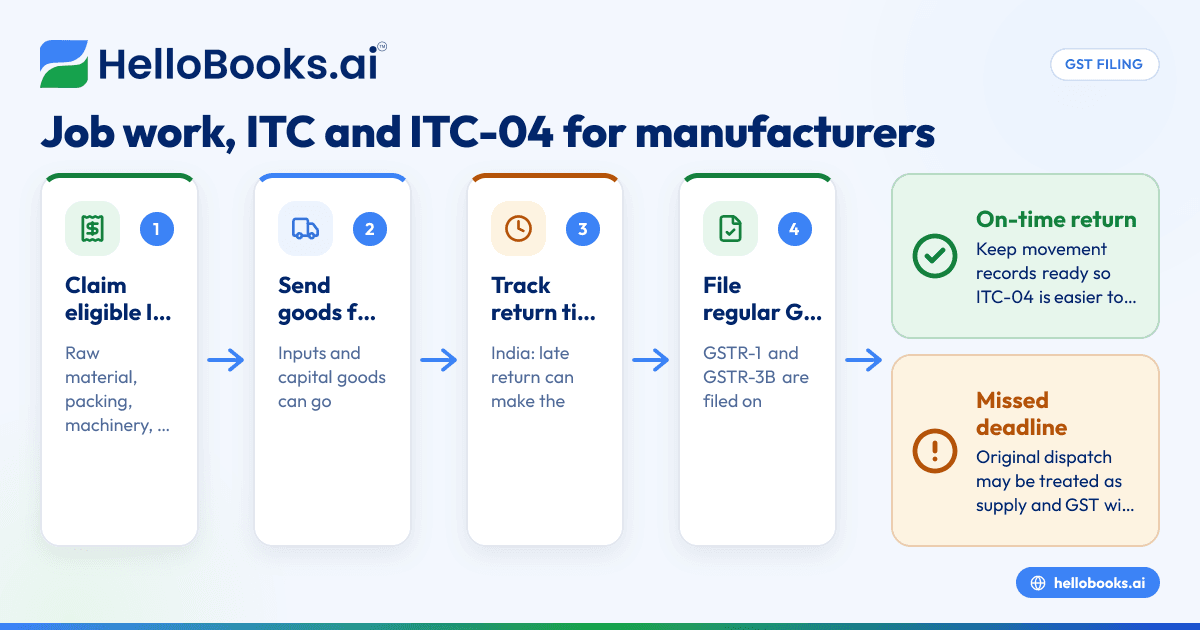
નાના મેન્યુફેક્ચરરમાં plating, powder coating, polishing, machining, embroidery, cutting, heat treatment, assembly જેવી પ્રક્રિયા job worker પાસે કરાવવી બહુ સામાન્ય વાત છે. કાનૂની framework CGST Act, 2017ની job work સંબંધિત જોગવાઈઓમાં છે, અને reporting/form requirements CBIC notifications, rules અને GST Portal પર current form instructionsમાં જોવાની હોય છે. અહીં ખાસ ધ્યાન એ પર રહે કે principalના માલનું movement properly documented હોય.
અહિં જોખમ ક્યાં ઊભું થાય છે? માલ બહાર ગયો, challan બન્યો, થોડો material scrap સાથે પાછો આવ્યો, થોડો directly customerને dispatch થયો, અને થોડો balance job worker પાસે રહ્યો. જો books, stock અને dispatch recordsમાં આ trail ન હોય, તો month-end અથવા year-end પર confusion થાય છે કે inventory ક્યાં છે.
HelloBooksમાં inventory movement અને invoice/e-way billનો સંબંધ સાથે રાખવાથી ઓછામાં ઓછું inward-outward trail વધુ સ્પષ્ટ બને છે. જો dispatch માટે e-way bill જરૂરી હોય, તો invoiceમાંથી data reuse કરીને document બનાવવું re-typing ઘટાડે છે. જોકે job work માટે કયો અલગ reporting form અથવા statement લાગુ પડે છે તેની current compliance જરૂરિયાત GST Portal અને CBIC source પરથી જ ચકાસવી જોઈએ, અને તે બાબતમાં practitionerની સલાહ લેવી યોગ્ય છે.
stock, production અને GST return વચ્ચે disconnect કેમ થાય છે
ઘણા નાના manufacturersમાં books એક softwareમાં, stock અલગ registerમાં અને GST working Excelમાં રાખવામાં આવે છે. શરૂઆતમાં આ manageable લાગે, પણ પછી નીચેના પ્રશ્નો ઊભા થાય છે:
- sale invoice booksમાં છે પરંતુ stock issue post નથી થયું;
- purchase entry થઈ છે પરંતુ input bill scan ક્યાંય નથી;
- goods return અથવા rejectionની GST treatment clear નથી;
- branch transfer, inter-state stock movement અથવા sample dispatchનું tax treatment mix થઈ જાય છે;
- Tallyમાં data છે પરંતુ GST working updated version ક્યાં છે તે સ્પષ્ટ નથી.
આ disconnectથી GSTR-1માં outward supplies એક રીતે જાય છે, GSTR-3Bમાં tax liability બીજી રીતે બેસે છે, અને management reports ત્રીજી picture આપે છે. ખાસ કરીને જ્યારે owner UPI, NEFT, RTGS અથવા IMPSથી receipts લે છે, bank statementમાં narration એક રીતે આવે છે અને invoice number બીજી રીતે હોય છે, ત્યારે collection matching સમયખાઉ બને છે.
bank statement upload કરીને AI reconciliation કરવાથી receiptsને invoices સામે match કરવી સરળ બને છે, ખાસ કરીને જ્યારે buyers partial payments કરે છે. live feedની વાત અહીં નથી; monthly કે periodic statement upload કરીને reconciliation થાય છે. આથી outstanding receivables અને realized sales વચ્ચેનો ભેદ સ્પષ્ટ રહે છે. નાના unit માટે આ મહત્વનું છે કારણ કે GST liability cash flow કરતાં પહેલેથી ઉભી થઈ શકે છે, જ્યારે collection પાછળથી મળે.
એક કલ્પિત અને માત્ર સમજ માટેનો હિસાબ
ચાલો એક સંપૂર્ણ invented અને illustrative સ્થિતિ લઈએ; આ figures સાચી commercial advice નથી અને તેમાં freight valuation, credit notes, scrap treatment, blocked credit, depreciation interaction, refund position અને sector-specific rules જેવી ઘણી બાબતો સરળ બનાવવામાં આવી છે.
માનો કે Anandની એક નાની unit એક મહિને fabricated parts વેચે છે. તે મહિને તેણે કુલ ₹12,00,000 worth outward supplies booksમાં record કરી. તેમાં local Gujarat sales અને inter-state sales બન્ને છે. એ જ સમયગાળામાં raw material, consumables અને job work services માટે purchase bills booksમાં આવ્યા, અને માનીએ કે eligible input tax total ₹1,40,000 જેટલો દેખાય છે. month-end પહેલાં reconciliationમાં માલૂમ પડે છે કે purchase billsમાંથી ₹22,000 equivalent ITC જેટલું tax ધરાવતાં કેટલાક supplier invoices હજુ GSTR-2Bમાં reflect નથી થતા.
આ illustrative સ્થિતિમાં prudent approach એ હોઈ શકે કે business provisional assumptions પર નહીં ચાલે; eligible દેખાતું બધું credit તરત claim કર્યું માની લેવાની જગ્યાએ, current law હેઠળ claim conditions શું કહે છે તે GST Portal guidance, CBIC circulars અને professional advice પરથી ચકાસે. જો return filing softwareમાં reconciliation visible હોય, તો ownerને તરત ખબર પડે કે booksમાં દાખલ purchase અને portal-side reflection વચ્ચે gap છે. એટલે cash planning વધુ વાસ્તવિક બને છે.
એજ monthમાં જો ₹3,50,000 worth goods job worker પાસે process માટે ગયા હોય અને પછી તેમાંના કેટલાક goods buyerને dispatch થયા હોય, તો stock trail વિના booksમાં quantity mismatch દેખાશે. inventory movement softwareમાં capture થાય તો closing stock report, outward supplies અને manufacturing cost discussion વધુ વિશ્વસનીય બને છે.
GSTR-1 અને GSTR-3B માટે નાના unitને ખરેખર શું ગોઠવવું પડે
કયા returnની frequency, eligibility કે filing timeline લાગુ પડે છે તે GST law હેઠળ CBIC અને GSTN/GST Portal પર પ્રકાશિત current rules પરથી જોવાનું રહે છે. પરંતુ operational રીતે નાના manufacturerએ દર periodમાં ઓછામાં ઓછા આ મુદ્દાઓ controlમાં રાખવા પડે:
- sales invoice data clean હોવું;
- debit note/credit note સમયસર record થવું;
- purchase bills OCR કે manual entryથી booksમાં આવી જવું;
- GSTR-2A/2B સામે supplier invoice match કરવો;
- tax head split, place of supply અને GSTIN validation ચકાસવું;
- bank receipts અને payments books સાથે reconcile કરવી;
- stock movement અને dispatch documents જોડીને રાખવા.
HelloBooksનો practical ફાયદો અહીં એ છે કે GSTR-1 અને GSTR-3B filing એ જ invoice અને purchase data પરથી તૈયાર થાય છે જે booksમાં પહેલેથી recorded છે. એટલે return drafting અને bookkeeping અલગ tracks પર નથી દોડતા. નાના unit માટે આ મોટો ફરક છે, કારણ કે ઘણી વખત CA officeને મોકલાતું data અને ownerની books વચ્ચે version mismatch રહે છે.
જો તમે પહેલેથી Tally વાપરો છો, તો migration અથવા connectorનો ઉપયોગ કરીને transition gradual રાખી શકાય છે. આ ખાસ કરીને family-run factories માટે ઉપયોગી છે જ્યાં accountant Tallyમાં આરામદાયક હોય પણ ownerને mobile app પર receivables, stock અથવા sales summary જોવી હોય.
Gujarat જેવા manufacturing beltsમાં e-invoice અને e-way bill શા માટે જોડાયેલા પ્રશ્નો છે
ભારતમાં dispatch-heavy businesses માટે GST invoice, e-invoice, IRN, signed QR અને e-way bill ઘણીવાર એક જ operational chainના ભાગ છે. threshold ક્યારે લાગુ પડે છે, કઈ supply covered છે, અને current exemptions શું છે તે CBIC notifications અને official e-invoice/e-way bill systems પર જ publish થાય છે. તેથી કોઈ ચોક્કસ turnover rule અહીં bare fact તરીકે માનવું નહીં.
પરંતુ reality એ છે કે Vapiથી Bhiwandi, Rajkotથી Pune, Morbiથી Jaipur કે Ahmedabadથી Hyderabad માલ મોકલતી unit માટે documentation delays સીધા dispatch અટકાવે છે. invoice booksમાં તૈયાર છે પણ e-way bill માટે vehicle details ફરીથી ટાઇપ કરવી પડે, અથવા e-invoice લાગુ પડે ત્યારે JSON/manual upload પર નિર્ભર રહેવું પડે, તો shipping desk bottleneck બને છે.
softwareમાં invoice પરથી IRN generation અને signed QR સાથે document તૈયાર થાય, અને જરૂરી હોય ત્યાં e-way bill data પણ એ જ source પરથી ઉઠે, તો dispatch operations વધુ smooth બને છે. ખાસ કરીને જ્યારે transporter, buyer accounts team અને factory dispatch ત્રણેય જુદા લોકો સંભાળતા હોય ત્યારે single source of truth કામ આવે છે.
ownerને શું જોવું: return નહીં, business health પણ
નાના manufacturer માટે GST compliance business visibilityથી અલગ નથી. જો receivables ageing, purchase trend, stock summary અને monthly P&L time પર ન મળે, તો GST filing technically થઈ ગયાં હોવા છતાં business decisions ખોટા પડી શકે.
આ માટે financial reports અને inventory સાથેના books useful બને છે. owner mobile app પરથી outstanding invoices જોઈ શકે, accountant officeમાં purchase bills post કરી શકે, અને CA return review કરી શકે—unlimited users અને, જ્યાં લાગુ પડે, multi-GSTIN setupથી એક જ login પરથી control રાખવો સરળ બને છે. જો owner WhatsApp પર જ સવાલ પૂછવાનું વધારે પસંદ કરે, તો Noor assistant Hindi, English અથવા Hinglishમાં basic bookkeeping context સમજવામાં મદદરૂપ થાય છે; compliance conclusion માટે હંમેશાં official source અને professional review વધારે વિશ્વસનીય રહે છે.
કેટલાક readers માટે free checks પણ ઉપયોગી રહે છે—જેમ કે GSTIN validator, HSN code search, GST invoice validator અને GST reconciliation checker. જો તમને broader setup જોવો હોય, તો GST return filing software, e-invoicing software, e-way bill software, bank reconciliation software અને India-specific overview માટે /in અથવા pricing પણ જોઈ શકો છો.
અંતિમ વિચાર: “free GST filing” ત્યારે જ સસ્તુ પડે જ્યારે rework ઓછું થાય
નાના manufacturer માટે સસ્તું solution એ નથી કે return somehow file થઈ જાય. સાચું economical setup એ છે જેમાં purchase billથી લઈને GST invoice, bank reconciliation, stock movement, e-way bill અને return filing વચ્ચે ઓછું rework થાય. ભારતમાં GST under CBIC oversight અને GSTN/GST Portal operations સાથે ચાલે છે; company law issues હોય તો MCA અને Companies Act, 2013નું પણ context આવી શકે છે, payments/banking trailમાં RBI-regulated channels જેમ કે NEFT, RTGS, IMPS અને UPI આવે છે, અને customer/vendor data handlingમાં DPDP Actનું broader compliance context પણ relevant બની શકે છે.
એટલે current rate, threshold, due date, penalty અથવા form requirement માટે હંમેશાં official publication ચકાસો. પણ daily operations માટે તમારા books એવા રાખો કે GSTR-1 અને GSTR-3B છેલ્લે compile કરવાના documents ન રહે—એ તમારા રોજિંદા accountingનો natural output બને. એ જ નાના Gujarati manufacturer માટે સૌથી practical GST discipline છે.


