


Key takeaways
What this article covers, in order:
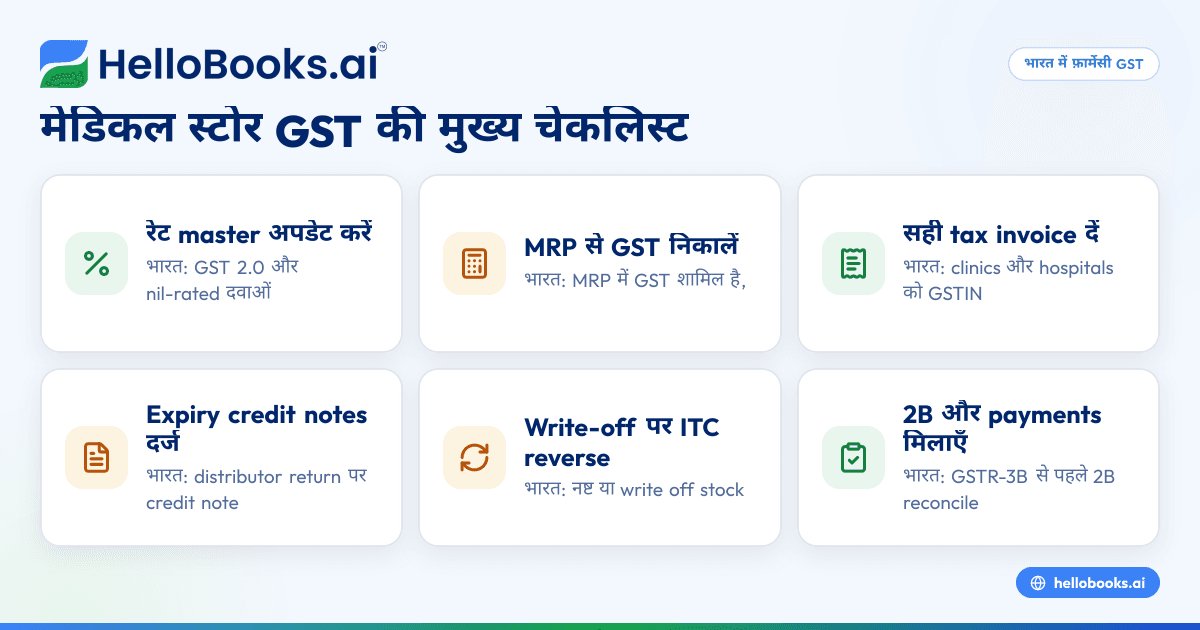
- मेडिकल स्टोर की GST filing दवा बेचने से ज़्यादा paperwork का काम है
- फ़ार्मेसी में invoice सही होना ITC से सीधा जुड़ा है
- Expired medicines, returns और credit note को हल्के में नहीं लेना चाहिए
- Clinic supply, home delivery और inter-state sale से compliance बदल सकता है
- GSTR-1 और GSTR-3B तभी आसान हैं जब purchase और collection भी साफ हों
- एक ईमानदार illustrative स्थिति: जहाँ गलती return में नहीं, data में होती है
भारत में मेडिकल स्टोर के लिए “free GST filing” का सही मतलब सिर्फ GSTR-1 और GSTR-3B जमा करना नहीं, बल्कि दवा की बिक्री, expiry returns, purchase bills, ITC और सही GST invoice data को एक साथ संभालना है। अगर आपकी pharmacy regular GST registration के तहत चलती है, तो practical सवाल यह है: क्या आपकी books, invoices और GST return आपस में match कर रहे हैं? Medical store में गलती अक्सर वहीं होती है जहाँ MRP, distributor credit note, GSTIN, e-invoice या e-way bill का असर साथ-साथ आता है.
मेडिकल स्टोर की GST filing दवा बेचने से ज़्यादा paperwork का काम है
Pharmacy business में sale counter पर जो सरल दिखता है, वह GST के हिसाब से कई हिस्सों में बंट सकता है। एक तरफ retail customer है जो ₹ में MRP देखकर खरीदता है। दूसरी तरफ clinic, nursing home, diagnostic centre या hospital हो सकता है जो GST invoice मांगता है। तीसरी तरफ distributor purchases, purchase return, expiry replacement और कभी-कभी inter-state supply भी होती है।
यही वजह है कि GST filing का काम सिर्फ महीने के end में figures भरने से पूरा नहीं होता। Central Goods and Services Tax Act, 2017, Integrated Goods and Services Tax Act, 2017 और State GST laws के तहत invoice data, input tax credit और outward supply reporting का रिकॉर्ड consistent होना चाहिए. इन कानूनों का प्रशासन CBIC और GSTN-backed GST portal के जरिए होता है, और current compliance details हमेशा आधिकारिक GST portal, CBIC notifications और संबंधित law text में verify करनी चाहिए.
Medical store में आम दिक्कतें ये होती हैं:
- counter sale तो recorded है, लेकिन clinic invoice अलग register में पड़ा है
- purchase bill पर GST है, पर supplier का invoice GSTR-2B में नहीं दिख रहा
- expired medicines का credit note आया, मगर books और GST treatment अलग-अलग हो गया
- local supply पर CGST/SGST और दूसरे राज्य की supply पर IGST का split गलत हो गया
- owner ने bank statement upload करके receipts मिलान नहीं किया, इसलिए sales और collections mismatch हो गए
अगर billing और filing एक ही system से हो, तो outward supplies से GSTR-1 और summary tax liability से GSTR-3B तैयार करना आसान हो जाता है। इसी वजह से कई pharmacies GST return filing software और accounting software India साथ में देखती हैं, सिर्फ spreadsheet नहीं.
फ़ार्मेसी में invoice सही होना ITC से सीधा जुड़ा है
Medical store का invoice सिर्फ customer को paper देना नहीं है। GST law के हिसाब से invoice fields, supply type, place of supply, GSTIN, item classification और tax head split का असर return तक जाता है। यदि आपका buyer registered clinic है और आपने गलत tax head लगा दिया, तो buyer की reconciliation भी बिगड़ सकती है.
Pharmacy में यह खास तौर पर तब महत्वपूर्ण हो जाता है जब:
- आप B2B supply करते हैं
- दूसरे राज्य में medicines भेजते हैं
- high-value consignment पर e-way bill लागू हो सकता है
- business e-invoicing scope में आता है, जहाँ IRN और signed QR की जरूरत हो सकती है
Current applicability thresholds, document rules और reporting requirements bare fact की तरह याद रखने के बजाय CBIC notifications, GST portal advisories और e-invoice/e-way bill systems पर check करने चाहिए. ये figures समय-समय पर बदल सकते हैं.
HelloBooks में GST invoice बनाते समय GSTIN, place of supply और tax head split एक ही flow में रखने से pharmacy owner को यह कम सोचना पड़ता है कि sale पर CGST/SGST लगेगा या IGST। यदि business e-invoicing scope में आता है, तो IRN और signed QR के साथ invoice save होना practical relief देता है, खासकर तब जब hospital या institutional buyer formal document मांगता है। इसी तरह invoice से e-way bill बनना दवा की movement वाले dispatch work में duplicate typing कम करता है। इसके लिए smart invoicing, e-invoicing software और e-way bill software जैसी linked workflows useful पड़ती हैं.
Expired medicines, returns और credit note को हल्के में नहीं लेना चाहिए
Pharmacy GST की सबसे अलग समस्या expired stock है। Counter business में expiry unavoidable है, लेकिन GST treatment careless नहीं हो सकता। जब medicines expire हो जाती हैं, तब accounting और tax position इस बात पर depend करती है कि stock distributor ने वापस लिया, replacement दिया, GST credit note issue किया, financial credit note दिया या stock destroy/write off हुआ.
Input tax credit के मामले में current legal position Central Goods and Services Tax Act, 2017 की blocked credit provisions, CBIC circulars/clarifications और official guidance के context में देखनी चाहिए। Exact treatment case facts पर depend कर सकता है, इसलिए disputed situations में professional review जरूरी है.
Practical level पर pharmacy owner को कम से कम यह देखना चाहिए:
- expired stock physically अलग mark हुआ या नहीं
- supplier return note और GST credit note match हो रहे हैं या नहीं
- books में purchase return, stock reduction और tax effect एक साथ record हुआ या नहीं
- अगर goods write off या destroy हुए, तो ITC impact review हुआ या नहीं
यहीं पर OCR से purchase bills capture करना और GSTR-2A/2B reconciliation useful होता है। Manual entry में अक्सर वही invoice miss हो जाता है जिस पर बाद में credit note आया होता है। HelloBooks purchase bills को photo या PDF से capture करके entry आसान करता है, और GSTR-2A/2B reconciliation के जरिए यह दिखाने में मदद करता है कि supplier invoices reflected हैं या नहीं। इससे pharmacy owner को ITC claim, reversal या follow-up का clearer view मिलता है। आप चाहें तो filing से पहले gst reconciliation checker और GSTIN validation के लिए GSTIN validator भी use कर सकते हैं.
Clinic supply, home delivery और inter-state sale से compliance बदल सकता है
हर medical store सिर्फ walk-in retail नहीं होता। कई stores doctors' clinics, small hospitals, pathology labs या corporate buyers को supply करते हैं। कुछ stores home delivery भी करते हैं। Payment UPI, NEFT, RTGS, IMPS या cash से आ सकता है; लेकिन payment mode अलग होने से GST character अपने आप नहीं बदलता. जो बदलता है, वह है documentation, recipient type, place of supply और dispatch trail.
मान लीजिए pharmacy दिल्ली में registered है और एक Haryana registered clinic को supply कर रही है। Tax head कौन-सा लगेगा, यह CGST Act/IGST Act framework और place-of-supply rules के हिसाब से तय होगा; current interpretation invoices और transaction facts के साथ देखनी चाहिए। यह figure-based shortcut का मामला नहीं है। Official source CBIC-published law text, notifications और GST portal guidance है.
Inter-state movement में e-way bill applicability भी transaction value, goods movement pattern और latest notified rules पर depend कर सकती है. Current thresholds और exemptions e-way bill portal, CBIC notifications और applicable state/central rules में published रहते हैं.
इस तरह के cases में pharmacy software का सबसे बड़ा काम “fast billing” नहीं, बल्कि correct classification और audit trail है। HelloBooks place-of-supply के हिसाब से tax split संभालता है, invoice से e-way bill raise करने देता है, और एक से अधिक GSTIN होने पर अलग entities को एक login से manage करने देता है। यह उन pharmacy groups के लिए practical है जिनकी branch अलग राज्यों में हो या wholesale-retail mix हो.
GSTR-1 और GSTR-3B तभी आसान हैं जब purchase और collection भी साफ हों
कई दुकानदार सोचते हैं कि filing का मतलब सिर्फ return screen पर total sales और total purchase tax डालना है। लेकिन medical store में mismatch बहुत जल्दी बनता है। Reason simple है: sales counter अलग, distributor bills अलग, bank receipts अलग और stock movement अलग track हो रहा होता है।
GSTR-1 outward supplies की detail-driven return है, जबकि GSTR-3B summary liability और ITC view देता है। इन returns की current filing rules, tables, due dates और amendment facilities GST portal और CBIC updates पर published रहती हैं; इन्हें bare fact की तरह fixed नहीं मानना चाहिए.
Practical filing से पहले medical store को यह देखना चाहिए:
- B2B invoices पर GSTIN सही है या नहीं
- B2C summary books से match कर रही है या नहीं
- debit note/credit note capture हुए या नहीं
- purchase register और GSTR-2B में material mismatch तो नहीं
- cash, UPI और bank receipts sales ledger से reconcile हैं या नहीं
यहीं bank statement upload मदद करता है। Indian banking context में owner महीने का statement upload कर सकता है और receipts का AI-based reconciliation कर सकता है, जिससे UPI, NEFT या IMPS से आए payment entries invoices के against मिलाना आसान होता है। Pharmacy business में यह useful है क्योंकि retail collections तेज़ होती हैं और manual matching में समय जाता है। अगर आप books और GST को एक साथ रखना चाहते हैं, तो bank reconciliation software और ai bookkeeping जैसी workflows spreadsheet से बेहतर control दे सकती हैं.
HelloBooks की practical value यह है कि invoices से GSTR-1 और summary data से GSTR-3B direct file किए जा सकते हैं, इसलिए portal पर re-typing कम होती है। इससे filing “free” तभी meaningful बनती है जब source data भी orderly हो.
एक ईमानदार illustrative स्थिति: जहाँ गलती return में नहीं, data में होती है
मान लीजिए, यह पूरी तरह illustrative और invented स्थिति है; numbers सिर्फ समझाने के लिए हैं, और इसमें product-wise HSN disputes, exact notification position, exempt items, valuation disputes, stock loss treatment और legal advice शामिल नहीं हैं।
एक pharmacy की एक महीने की outward supply ₹8,40,000 है, जिसमें से ₹6,20,000 retail counter sale है, ₹1,50,000 registered clinics को B2B sale है और ₹70,000 दूसरे राज्य के buyer को invoice किया गया है। उसी महीने purchases ₹5,10,000 की हैं। इनमें से कुछ supplier invoices books में हैं, पर GSTR-2B में अभी ₹42,000 taxable value वाले bills reflect नहीं हुए। साथ ही, expired medicines पर distributor ने ₹18,000 का credit note दिया, लेकिन staff ने stock register update किया, accounting entry नहीं.
अब return filing से पहले owner अगर सिर्फ monthly total देखकर GSTR-3B भर दे, तो तीन खतरे हैं:
- B2B invoice data GSTR-1 में incomplete जा सकता है
- ITC उतना claim हो सकता है जितना 2B support नहीं कर रहा
- expired stock/credit note books और GST figures को अलग कर देगा
अगर यही pharmacy purchase bills OCR से capture करे, supplier-wise GSTR-2B reconciliation देखे, bank statement upload करके collections match करे, और outward invoices से GSTR-1 build करे, तो mismatch पहले दिख जाएगा। यही filing की असली saving है: return submit होने से पहले error दिखना। Filing का cost zero होने से ज्यादा important है correction का timing.
Tally, multi-branch और Hindi/Hinglish workflows भी matters करते हैं
India में pharmacy trade का बड़ा हिस्सा अभी भी Tally, Excel, handwritten stock notes और WhatsApp instructions के mix पर चलता है। Owner shop पर होता है, accountant back office में, और CA month-end पर data मांगता है। इस setup में delay natural है.
अगर store पहले से Tally use कर रहा है, तो migration या connector useful हो सकता है ताकि पूरा process एक दिन में न बदले। Multi-GSTIN structure वाले businesses के लिए अलग branches या states को अलग संभालना जरूरी है। Inventory भी pharmacy में optional नहीं है; billing system और stock register अलग होंगे तो expiry और reorder control बिगड़ता है.
HelloBooks Tally migration/connector, inventory management और financial reports को उसी GST workflow के साथ जोड़ता है, इसलिए monthly P&L, receivables और tax data अलग-अलग islands में नहीं रहते। Mobile app से owner दुकान पर रहते हुए invoice या expense देख सकता है, और Noor assistant पर Hindi, English या Hinglish में WhatsApp के जरिए basic books-related सवाल पूछ सकता है। यह खासकर छोटे medical stores के लिए useful है जहाँ proprietor खुद operations भी देखता है.
अगर आप Tally से shift compare कर रहे हैं, तो tally alternative या HelloBooks vs Tally देख सकते हैं। Broader setup समझने के लिए accounting software for small business भी relevant है.
“फ्री GST filing” चुनते समय मेडिकल स्टोर को क्या देखना चाहिए
Medical store के लिए सही सवाल यह नहीं है कि software return file कर देता है या नहीं। सही सवाल यह है कि pharmacy-specific mess को handle करता है या नहीं। जैसे:
- invoice पर सही GST split
- B2B और retail sale दोनों का proper capture
- purchase bill entry तेज़ हो
- GSTR-2B reconciliation visible हो
- expired stock और credit notes book-wise reflect हों
- bank collections tally हों
- inventory साथ चले
- multiple users बिना friction काम कर सकें
Price की जगह scope देखना ज़रूरी है; current plans के लिए official page pricing पर देखना चाहिए। Demo देखना हो तो demo useful रहेगा.
Practical answer यह है: अगर आपकी pharmacy regular GST setup में है, invoices issue करती है, purchases पर ITC देखती है, और आपको month-end पर GSTR-1 व GSTR-3B file करने हैं, तो filing को accounting, inventory और reconciliation से अलग मत रखिए। भारत में GST compliance CBIC-administered law और GSTN systems पर चलती है; इसलिए final filing से पहले official portal data, CBIC notifications और अपने tax professional की review सबसे सुरक्षित रास्ता है। HelloBooks इस process को pharmacy owner के लिए ज़्यादा usable बना सकता है, खासकर जब दुकान की reality MRP, GSTIN, e-invoice, e-way bill, bank statement और Tally सबको एक साथ जोड़ती हो.


