


Key takeaways
What this article covers, in order:
- ਪੰਜਾਬੀ seller ਲਈ ecommerce GST ਦਾ ਅਸਲ ਮੁੱਦਾ
- ਕੀ marketplace 'ਤੇ ਵੇਚਣ ਲਈ GST registration ਲਾਜ਼ਮੀ ਹੈ?
- Marketplace settlement report GST return ਨਹੀਂ ਹੁੰਦੀ
- TCS ਨੂੰ samjho: ਇਹ tax credit ਨਹੀਂ, cash ledger effect ਹੈ
- Product rate ਨਹੀਂ, HSN ਅਤੇ place of supply matter ਕਰਦੇ ਹਨ
- Returns, cancellations ਅਤੇ fees books ਵਿੱਚ ਕਿਵੇਂ ਬੈਠਦੇ ਹਨ
India ਵਿੱਚ Amazon, Flipkart ਜਾਂ ਹੋਰ marketplace ਰਾਹੀਂ ਵੇਚਣ ਵਾਲੇ seller ਲਈ GST ਦਾ ਅਸਲ ਸਵਾਲ ਇਹ ਹੁੰਦਾ ਹੈ: registration ਚਾਹੀਦੀ ਹੈ ਜਾਂ ਨਹੀਂ, marketplace settlement ਨੂੰ books ਵਿੱਚ ਕਿਵੇਂ ਬੈਠਾਉਣਾ ਹੈ, ਅਤੇ GSTR-1 ਤੇ GSTR-3B ਵਿੱਚ sale, returns, fees ਅਤੇ TCS ਨੂੰ ਕਿਵੇਂ ਸਹੀ ਦਿਖਾਉਣਾ ਹੈ। ਛੋਟਾ ਜਵਾਬ ਇਹ ਹੈ ਕਿ India ਵਿੱਚ ecommerce seller ਲਈ position ਆਮ offline dukaan ਨਾਲ ਵੱਖਰੀ ਹੋ ਸਕਦੀ ਹੈ, ਇਸ ਲਈ CGST Act, CBIC notifications ਅਤੇ GST Portal/GSTN ਉੱਤੇ published current rules ਦੇ ਮੁਤਾਬਕ check ਕਰਨਾ ਜ਼ਰੂਰੀ ਹੈ।
ਪੰਜਾਬੀ seller ਲਈ ecommerce GST ਦਾ ਅਸਲ ਮੁੱਦਾ
Punjab, Delhi, Haryana ਜਾਂ poore India ਵਿੱਚ online order ਭੇਜਣ ਵਾਲੇ seller ਨੂੰ ਸਭ ਤੋਂ ਵੱਧ ਗੁੰਝਲ rate ਵਿੱਚ ਨਹੀਂ, settlement ਵਿੱਚ ਪੈਂਦੀ ਹੈ। Marketplace dashboard ਕੁਝ ਹੋਰ ਦਿਖਾਉਂਦਾ ਹੈ, bank statement ਵਿੱਚ rupee ਕੁਝ ਹੋਰ ਆਉਂਦੇ ਹਨ, ਅਤੇ GST return ਵਿੱਚ taxable sale ਕੁਝ ਹੋਰ ਜਾ ਸਕਦੀ ਹੈ ਜੇ returns, shipping recovery, commission, ads, TCS ਅਤੇ credit notes ਨੂੰ ਵੱਖਰਾ ਨਾ ਕੀਤਾ ਜਾਵੇ।
ਇਹੀ ਕਾਰਨ ਹੈ ਕਿ ecommerce ਲਈ sirf invoice banana ਕਾਫ਼ੀ ਨਹੀਂ। Invoice, place of supply, CGST/SGST ਜਾਂ IGST split, purchase ITC, bank reconciliation ਅਤੇ return filing ਇੱਕੋ flow ਵਿੱਚ ਹੋਣੇ ਚਾਹੀਦੇ ਹਨ। HelloBooks ਵਿੱਚ seller sale record ਕਰਦਾ ਹੈ, tax head split ਸਹੀ ਬੈਠਦਾ ਹੈ, ਅਤੇ ਉਹੀ data GST return filing software ਰਾਹੀਂ GSTR-1 ਅਤੇ GSTR-3B ਤੱਕ ਲੈ ਜਾਇਆ ਜਾ ਸਕਦਾ ਹੈ।
ਕੀ marketplace 'ਤੇ ਵੇਚਣ ਲਈ GST registration ਲਾਜ਼ਮੀ ਹੈ?
India ਵਿੱਚ ਇਸਦਾ ਇੱਕ universal one-line answer ਨਹੀਂ ਦੇਣਾ ਚਾਹੀਦਾ, ਕਿਉਂਕਿ ਇਹ supply ਦੀ nature, goods ਜਾਂ services, state ਦੀ situation, ਅਤੇ ecommerce operator ਵਾਲੇ rules ਉੱਤੇ ਨਿਰਭਰ ਕਰਦਾ ਹੈ। Current registration requirement Central Goods and Services Tax Act, 2017 ਅਤੇ ਉਸ ਨਾਲ ਜੁੜੀਆਂ notifications ਹੇਠ ਬਣਦੀ ਹੈ; regulator Central Board of Indirect Taxes and Customs (CBIC) ਹੈ, ਅਤੇ operative compliance figures/conditions GST Portal ਉੱਤੇ published advisories, notifications ਅਤੇ registration guidance ਵਿੱਚ ਮਿਲਦੇ ਹਨ।
Goods ਵੇਚਣ ਵਾਲੇ seller ਲਈ ecommerce operator ਰਾਹੀਂ supply ਕਰਨ ਦੇ ਨਿਯਮ ਆਮ turnover-based offline rule ਨਾਲੋਂ ਵੱਖਰੇ ਹੋ ਸਕਦੇ ਹਨ। ਕੁਝ cases ਵਿੱਚ registration ਲਾਜ਼ਮੀ ਹੋ ਸਕਦੀ ਹੈ; ਕੁਝ limited situations ਵਿੱਚ enrolment-based route ਵੀ relevant ਹੋ ਸਕਦਾ ਹੈ, ਪਰ ਉਸ ਦੀ applicability seller ਦੇ business model ਨਾਲ match ਹੋਣੀ ਚਾਹੀਦੀ ਹੈ। ਜੇ ਤੁਸੀਂ Punjab ਤੋਂ poore India ਵਿੱਚ courier ਰਾਹੀਂ parcel ਭੇਜਦੇ ਹੋ, ਤਾਂ interstate supply, GSTIN, e-invoice applicability, e-way bill requirement ਅਤੇ marketplace documentation ਨੂੰ ਇਕੱਠੇ dekhna ਪੈਂਦਾ ਹੈ।
Services ਵਾਲੇ seller ਲਈ ਵੀ answer service category ਦੇ ਮੁਤਾਬਕ ਬਦਲਦਾ ਹੈ। Kuch services ecommerce operator ਦੁਆਰਾ special mechanism ਹੇਠ covered ਹੋ ਸਕਦੀਆਂ ਹਨ, ਪਰ general consulting, design, marketing ਜਾਂ handmade digital product sales ਲਈ ordinary rule apply ਹੋ ਸਕਦਾ ਹੈ. Current threshold/eligibility figure CBIC notification ਅਤੇ GST Portal ਉੱਤੇ published official material ਤੋਂ verify ਕਰੋ; bare number ਇੱਥੇ quote ਕਰਨਾ ਬਿਨਾਂ source ਦੇ safe ਨਹੀਂ।
ਜੇ ਤੁਸੀਂ unsure ਹੋ, ਪਹਿਲਾਂ ਆਪਣਾ GSTIN status, place of business ਅਤੇ product HSN/SAC official source ਨਾਲ verify ਕਰੋ। HelloBooks ਦੇ free India tools ਵਿੱਚ GSTIN validator ਅਤੇ HSN code search practical starting point ਬਣ ਸਕਦੇ ਹਨ।
Marketplace settlement report GST return ਨਹੀਂ ਹੁੰਦੀ
Amazon ਜਾਂ Flipkart settlement report accounting ledger ਨਹੀਂ ਹੁੰਦੀ। ਉਸ ਵਿੱਚ gross order value, customer refund, marketplace fee, shipping fee, ads, TCS, sometimes TDS references, adjustment entries ਅਤੇ final payout ਵੱਖ-ਵੱਖ logic ਨਾਲ ਦਿਖਦੇ ਹਨ। GST return ਲਈ ਤੁਹਾਨੂੰ ਇਹ ਸਮਝਣਾ ਪੈਂਦਾ ਹੈ ਕਿ:
- taxable outward supply ਕਿੰਨੀ ਸੀ
- ਕਿਹੜੀਆਂ sales return ਹੋਈਆਂ
- marketplace ਨੇ seller ਨੂੰ ਕਿਹੜੀਆਂ services bill ਕੀਤੀਆਂ
- ਉਹਨਾਂ supplier invoices ਉੱਤੇ ITC available ਹੈ ਜਾਂ ਨਹੀਂ
- TCS cash ledger effect ਰੱਖਦਾ ਹੈ, ITC ਨਹੀਂ
- bank ਵਿੱਚ actual receipt payout amount ਹੈ, sale amount ਨਹੀਂ
ਇਸ ਲਈ ecommerce seller ਦੀ books ਵਿੱਚ gross sale ਅਤੇ bank receipt ਕਦੇ ਵੀ same line ਨਹੀਂ ਹੁੰਦੀ। Bank ਵਿੱਚ ₹ ਆਉਣਾ sirf settlement ਹੈ; tax invoice value ਵੱਖਰਾ base ਹੈ। HelloBooks ਵਿੱਚ monthly bank statement upload ਕਰਕੇ AI reconciliation ਨਾਲ receipts ਨੂੰ invoice, fees ਅਤੇ adjustments ਨਾਲ match ਕੀਤਾ ਜਾ ਸਕਦਾ ਹੈ, ਜੋ ecommerce sellers ਲਈ spreadsheet ਵਾਲੀ duplicate mehnat ਘਟਾਉਂਦਾ ਹੈ। ਇਸ context ਵਿੱਚ bank reconciliation software useful ਹੁੰਦਾ ਹੈ, khas taur 'ਤੇ ਜਦ payout NEFT, IMPS ਜਾਂ RTGS ਰਾਹੀਂ mixed batches ਵਿੱਚ ਆਉਂਦੇ ਹਨ।
TCS ਨੂੰ samjho: ਇਹ tax credit ਨਹੀਂ, cash ledger effect ਹੈ
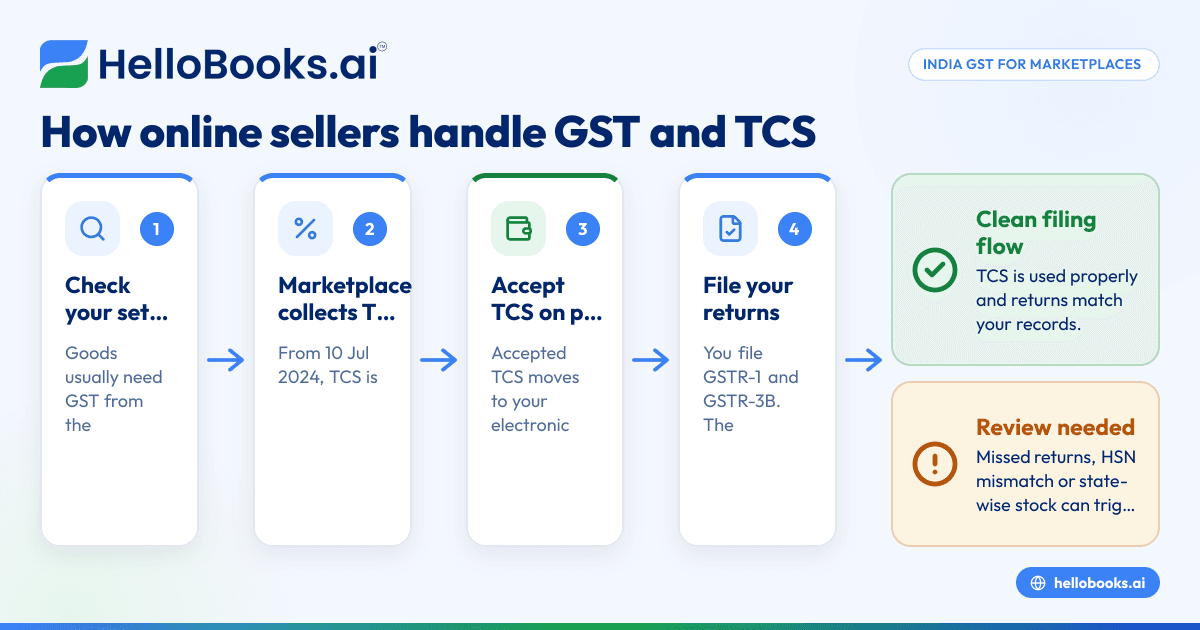
India ਵਿੱਚ ecommerce operator ਦੁਆਰਾ collect ਕੀਤਾ ਜਾਣ ਵਾਲਾ TCS, CGST Act ਦੇ ecommerce provisions ਹੇਠ aata hai, ਅਤੇ ਇਸਦੀ current rate/collection mechanism CBIC notifications ਅਤੇ GST Portal ਉੱਤੇ published official instructions ਵਿੱਚ ਵੇਖੀ ਜਾਂਦੀ ਹੈ। Specific figure source ਤੋਂ verify ਕਰੋ; platform change logs ਜਾਂ old blog post ਉੱਤੇ depend ਨਾ ਕਰੋ.
Practical point ਇਹ ਹੈ ਕਿ marketplace seller ਦੇ behalf 'ਤੇ ਕੁਝ amount collect karke report ਕਰਦਾ ਹੈ। Seller ਆਮ ਤੌਰ 'ਤੇ ਆਪਣੀ outward tax liability invoice data ਦੇ ਆਧਾਰ 'ਤੇ ਹੀ ਗਿਣਦਾ ਹੈ; marketplace-collected TCS ਉਸ liability ਦੇ against electronic cash ledger side ਦੀ utility ਰੱਖ ਸਕਦਾ ਹੈ, subject to portal matching and acceptance process as applicable under current GSTN workflow.
ਇੱਥੇ दो ਬਹੁਤ common errors ਹੁੰਦੇ ਹਨ:
- seller TCS ਨੂੰ income ਘਟਾ ਦਿੰਦਾ ਹੈ, ਜਿਵੇਂ ਇਹ fee ਹੋਵੇ;
- seller TCS ਨੂੰ ITC ਸਮਝ ਲੈਂਦਾ ਹੈ, ਜਿਵੇਂ supplier invoice tax ਹੋਵੇ।
ਦੋਵੇਂ accounting mistakes books ਖਰਾਬ ਕਰ ਦਿੰਦੀਆਂ ਹਨ। TCS ਦੀ treatment cash-settlement logic ਨਾਲ ਬੈਠਦੀ ਹੈ, ਨਾ ਕਿ purchase ITC logic ਨਾਲ। ਜੇ ਤੁਸੀਂ books manually ਬਣਾਉਂਦੇ ਹੋ, ਤਾਂ marketplace statement ਅਤੇ GST portal figures reconcile ਕਰਨਾ ਕਾਫ਼ੀ tedious ਹੋ ਸਕਦਾ ਹੈ। HelloBooks ਵਿੱਚ TDS/TCS handling accounting entry ਨੂੰ side spreadsheet ਤੋਂ ਹਟਾ ਕੇ regular books ਵਿੱਚ ਲਿਆਉਂਦੀ ਹੈ।
Product rate ਨਹੀਂ, HSN ਅਤੇ place of supply matter ਕਰਦੇ ਹਨ
Ecommerce sellers ਅਕਸਰ ਪੁੱਛਦੇ ਹਨ: “online sale ਦਾ GST rate ਕੀ ਹੈ?” India ਵਿੱਚ “online rate” ਕੋਈ separate category ਨਹੀਂ। Applicable GST product, HSN/SAC, exemption status, packaging, valuation ਅਤੇ supply circumstances ਉੱਤੇ depend ਕਰਦਾ ਹੈ। Current rate schedule GST rate notifications issued under the CGST Act/IGST Act by CBIC ਅਤੇ official updates ਉੱਤੇ published ਹੁੰਦਾ ਹੈ।
ਇਸਦੇ ਨਾਲ place of supply ਵੀ equally important ਹੈ, ਕਿਉਂਕਿ seller Punjab ਵਿੱਚ ਬੈਠਾ ਹੋ ਸਕਦਾ ਹੈ ਪਰ customer Maharashtra ਜਾਂ Karnataka ਵਿੱਚ ਹੋ ਸਕਦਾ ਹੈ। ਇਹ determine ਕਰਦਾ ਹੈ ਕਿ invoice ਵਿੱਚ CGST+SGST ਲੱਗਣਾ ਹੈ ਜਾਂ IGST. Governing framework Integrated Goods and Services Tax Act, 2017 ਅਤੇ allied GST law ਹੈ; official interpretive guidance CBIC circulars ਅਤੇ GST Portal resources ਵਿੱਚ ਮਿਲਦੀ ਹੈ।
Illustrative and invented scenario ਲਓ: ਇੱਕ Ludhiana seller ਨੇ ₹12,000 taxable value ਦਾ order Punjab ਦੇ customer ਨੂੰ bhejia ਅਤੇ ਦੂਜਾ same taxable value ਦਾ order Jaipur ਦੇ customer ਨੂੰ bhejia. Calculation intentionally simplified ਹੈ; shipping valuation issues, discounts, returns timing ਅਤੇ specific HSN rate nuances ਨੂੰ leave out ਕੀਤਾ ਗਿਆ ਹੈ. ਪਹਿਲੇ order ਵਿੱਚ intrastate logic ਹੇਠ CGST/SGST split ਹੋ ਸਕਦਾ ਹੈ; ਦੂਜੇ ਵਿੱਚ interstate logic ਹੇਠ IGST. ਜੇ seller ਇਹ split galat ਕਰ ਦੇਵੇ, ਤਾਂ invoice ਵੀ ਗਲਤ, GSTR-1 ਵੀ ਗਲਤ, ਅਤੇ customer-side reconciliation ਵੀ issue ਬਣ ਸਕਦੀ ਹੈ.
ਇਸੇ ਲਈ ecommerce invoicing manual template ਨਾਲ ਨਹੀਂ chalni chahidi. HelloBooks seller ਦੇ GSTIN, customer location ਅਤੇ place-of-supply logic ਦੇ ਆਧਾਰ 'ਤੇ invoice split consistent ਰੱਖਦਾ ਹੈ, ਅਤੇ smart invoicing ਨਾਲ repeated errors ਘਟਦੇ ਹਨ।
Returns, cancellations ਅਤੇ fees books ਵਿੱਚ ਕਿਵੇਂ ਬੈਠਦੇ ਹਨ
Ecommerce business ਵਿੱਚ sale ਦਾ ਮਹੀਨਾ ਅਤੇ return/refund ਦਾ ਮਹੀਨਾ ਅਲੱਗ ਹੋ ਸਕਦਾ ਹੈ। Customer order delivered ਹੋਇਆ, ਬਾਅਦ ਵਿੱਚ return ਹੋਇਆ, platform ਨੇ refund issue ਕੀਤਾ, seller payout ਤੋਂ adjustment ਕਰ ਲਿਆ — ਇਹ ਸਭ books ਵਿੱਚ distinct events ਹਨ। GST treatment document trail ਉੱਤੇ depend ਕਰਦੀ ਹੈ: original invoice, return timing, credit note, supplier fee invoice, and portal reporting consistency.
Marketplace fee, warehousing, ads, shipping support ਜਾਂ fulfilment charges seller ਲਈ inward services ਹੋ ਸਕਦੀਆਂ ਹਨ। Current tax treatment, rate and credit conditions CGST Act, Input Tax Credit rules, CBIC circulars ਅਤੇ supplier invoice data appearing through GSTN/GST Portal records ਤੋਂ verify ਹੋਣੀ ਚਾਹੀਦੀ ਹੈ। Seller ਨੂੰ ਇਹ ensure ਕਰਨਾ ਪੈਂਦਾ ਹੈ ਕਿ supplier invoice ਉੱਤੇ ਉਸਦਾ GSTIN ਸਹੀ ਹੋਵੇ, ਨਹੀਂ ਤਾਂ GSTR-2A/2B reconciliation ਵਿੱਚ mismatch ਆ ਸਕਦੀ ਹੈ।
ਇੱਥੇ OCR-based purchase capture helpful ਹੁੰਦੀ ਹੈ। Marketplace ਜਾਂ courier partner ਦੀ PDF invoice manually type ਕਰਨ ਦੀ ਬਜਾਏ HelloBooks purchase bills ਨੂੰ OCR ਨਾਲ capture ਕਰ ਸਕਦਾ ਹੈ ਅਤੇ GSTR-2A/2B reconciliation ਨਾਲ compare ਕਰਨ ਵਿੱਚ madad ਕਰਦਾ ਹੈ, ਤਾਂ ਕਿ ITC claim ਕਰਨ ਤੋਂ ਪਹਿਲਾਂ missing invoices ਜਾਂ mismatch dikh jaye.
Illustrative and invented scenario: ਮੰਨ ਲਓ seller ਦੀ monthly gross outward taxable sale ₹3,80,000 ਹੈ, returns ₹55,000 ਹਨ, marketplace services ਦੀ taxable value ₹28,000 ਹੈ, ਅਤੇ bank payout ₹3,11,000 receive ਹੋਇਆ. ਇਹ figures sirf illustration ਲਈ invented ਹਨ; actual GST, TCS, ITC eligibility, shipping treatment, bad debts, round-off, and timing differences ਨੂੰ simplify ਕੀਤਾ ਗਿਆ ਹੈ. Books ਵਿੱਚ direct bank receipt ਨੂੰ sale ਮੰਨ ਲੈਣਾ galat ਹੋਵੇਗਾ. ਪਹਿਲਾਂ outward supplies, ਫਿਰ returns/credit notes, ਫਿਰ inward fee invoices, ਫਿਰ TCS/TDS-type deductions, ਫਿਰ payout reconcile ਕਰਨਾ ਪੈਂਦਾ ਹੈ.
GSTR-1 ਅਤੇ GSTR-3B ਲਈ ecommerce seller ਨੂੰ ਕੀ ready ਰੱਖਣਾ ਚਾਹੀਦਾ ਹੈ
India ਵਿੱਚ return filing ਦਾ exact schema ਅਤੇ current due dates GSTN/GST Portal ਉੱਤੇ published ਹੁੰਦੇ ਹਨ under the GST law framework administered by CBIC. Bare due date ਇੱਥੇ quote ਕਰਨ ਦੀ ਬਜਾਏ official portal check ਕਰਨਾ best hai. Practical readiness list ਇਹ ਹੈ:
- sale invoices with correct GSTIN/consumer details where required
- interstate vs intrastate classification
- debit/credit notes for returns and pricing changes
- marketplace fee and service invoices
- purchase bills for ITC
- GSTR-2A/2B check before claiming credit
- bank statement reconciliation
- stock movement trail where physical goods involved
HelloBooks ਦਾ advantage ਇਹ ਹੈ ਕਿ same books ਤੋਂ GSTR-1 ਅਤੇ GSTR-3B direct file ਹੋ ਸਕਦੇ ਹਨ, so seller ਨੂੰ alag return-prep sheet maintain ਨਹੀਂ ਕਰਨੀ ਪੈਂਦੀ. Inventory movement ਵੀ same system ਵਿੱਚ ਰਹੇ ਤਾਂ closing stock, COGS ਅਤੇ outward sale में consistency ਆਉਂਦੀ ਹੈ, which matters when CA, auditor or management later asks why books and GST figures differ.
Agar seller multiple states ਵਿੱਚ GSTIN ਰੱਖਦਾ ਹੈ — say Punjab warehouse ਅਤੇ Delhi warehouse — ਤਾਂ multi-GSTIN handling useful ਹੁੰਦੀ ਹੈ, kyunki separate registrations ਲਈ data silo ਬਣਾਉਣ ਨਾਲ error risk ਵੱਧਦਾ ਹੈ। Tally ਤੋਂ shift ਕਰਨਾ ਹੋਵੇ ਜਾਂ parallel trial ਚਲਾਉਣਾ ਹੋਵੇ, tally-alternative context ਵਿੱਚ migration/connector practical ਬਣਦਾ ਹੈ, खासकर ਜਦ existing accountant abhi bhi Tally habit ਵਿੱਚ ਹੋਵੇ।
e-invoice, e-way bill ਅਤੇ stock movement ਕਦੋਂ relevant ਬਣਦੇ ਹਨ
ਹਰ ecommerce seller ਨੂੰ har din e-invoice ਨਹੀਂ chahidi, ਅਤੇ har parcel ਲਈ e-way bill ਵੀ ਨਹੀਂ ਹੁੰਦਾ। Applicability transaction type, movement value, business turnover criteria and notified rules ਉੱਤੇ depend ਕਰਦੀ ਹੈ. Current threshold/value figure CBIC notifications, e-invoice system guidance, GST Portal ਅਤੇ e-way bill portal ਉੱਤੇ published ਹੁੰਦੀ ਹੈ; please source ਤੋਂ verify ਕਰੋ.
ਪਰ ਜਦ applicability ਆ ਜਾਂਦੀ ਹੈ, manual process painful ਹੋ ਜਾਂਦਾ ਹੈ. IRN generate ਕਰਨਾ, signed QR maintain ਕਰਨਾ, dispatch details align ਕਰਨੀ, courier/warehouse movement ਲਈ e-way bill banana — ਇਹ ਸਭ disconnected tools ਵਿੱਚ ਕਰਨ ਨਾਲ mistakes ਹੁੰਦੀਆਂ ਹਨ। HelloBooks ਵਿੱਚ notified businesses invoice save time ਉੱਤੇ e-invoicing workflow ਨਾਲ IRN ਅਤੇ signed QR handle ਕਰ ਸਕਦੇ ਹਨ, ਅਤੇ dispatch situations ਵਿੱਚ e-way bill software ਤੋਂ invoice data reuse ਹੋ ਸਕਦਾ ਹੈ instead of retyping.
Inventory side ਵੀ important ਹੈ। Marketplace overselling, return-to-origin, damaged stock, replacement shipment — ਇਹ ਸਭ GST se alag lag sakde ਹਨ ਪਰ books par asar ਕਰਦੇ ਹਨ. Ecommerce seller ਲਈ inventory useful ਤਦ ਹੈ ਜਦ order, purchase ਅਤੇ return entries stock quantity ਨਾਲ linked ਹੋਣ।
“ਫ੍ਰੀ GST filing” ਦਾ practical ਮਤਲਬ seller ਲਈ ਕੀ ਹੈ
Search intent ਆਮ ਤੌਰ 'ਤੇ ਇਹ ਨਹੀਂ ਹੁੰਦੀ ਕਿ seller sirf zero-cost tool ਲੱਭ ਰਿਹਾ ਹੈ. ਅਸਲੀ ਮਤਲਬ ਹੁੰਦਾ ਹੈ: ਕੀ ਮੈਂ basic compliance, invoice, reconciliation ਅਤੇ filing bina extra operational mess ਦੇ ਕਰ ਸਕਦਾ ਹਾਂ?
ਜੇ ਤੁਹਾਡੇ orders ਘੱਟ ਹਨ, transactions straightforward ਹਨ, ਇੱਕ ਹੀ GSTIN ਹੈ, limited SKUs ਹਨ, ਅਤੇ marketplace adjustments manageable ਹਨ, ਤਾਂ lean setup kaafi ਹੋ ਸਕਦਾ ਹੈ. ਪਰ ਜਿਵੇਂ ਹੀ orders, returns, states, warehouses, or multiple users ਵੱਧਦੇ ਹਨ, free-looking workflow ਵੀ hidden cost ਬਣ ਜਾਂਦਾ ਹੈ: accountant time, missed ITC, wrong IGST/CGST split, unreconciled bank receipts, and month-end panic.
Isliye tool choose ਕਰਦੇ ਵੇਲੇ sirf cost nahi, workflow dekho. Seller ਨੂੰ ideally ਇਹ ਚਾਹੀਦਾ ਹੈ ਕਿ invoice ਤੋਂ return filing ਤੱਕ same data flow ਹੋਵੇ, OCR purchase capture ਹੋਵੇ, bank statement upload ਹੋਵੇ, GST reconciliation ਹੋਵੇ, mobile app ਰਾਹੀਂ quick entry ਹੋ ਜਾਵੇ, ਅਤੇ जरूरत ਪੈਣ 'ਤੇ WhatsApp ਉੱਤੇ Noor assistant ਤੋਂ Hindi/English/Hinglish ਵਿੱਚ bookkeeping questions puch sake. Pricing dekhni ਹੋਵੇ ਤਾਂ official page India pricing ਉੱਤੇ check ਕਰੋ, kyunki plan details time ਨਾਲ ਬਦਲ ਸਕਦੀਆਂ ਹਨ।
Punjabi ecommerce seller ਲਈ final practical checklist
Punjab ਦੇ seller ਲਈ सबसे safe approach ਇਹ ਹੈ:
- ਪਹਿਲਾਂ official law position verify ਕਰੋ: CGST Act, IGST Act, CBIC notifications, GST Portal guidance
- GSTIN, HSN/SAC ਅਤੇ place of supply documentation ਸਹੀ ਰੱਖੋ
- gross sale ਅਤੇ payout ਨੂੰ ਇਕੋ number ਨਾ ਮੰਨੋ
- marketplace fees ਦੀ supplier invoice ਸੰਭਾਲੋ
- GSTR-2A/2B ਨਾਲ ITC cross-check ਕਰੋ
- TCS ਨੂੰ fee ਜਾਂ ITC ਵਾਂਗ misclassify ਨਾ ਕਰੋ
- bank statement monthly upload karke reconciliation ਕਰੋ
- return filing ਤੋਂ ਪਹਿਲਾਂ books, stock ਅਤੇ portal data ਇੱਕ ਵਾਰੀ ਮਿਲਾਓ
ਜੇ ਤੁਸੀਂ ecommerce GST ਨੂੰ sirf filing problem ਸਮਝਦੇ ਹੋ, ਤਾਂ ਹਰ ਮਹੀਨੇ same confusion ਵਾਪਸ ਆਵੇਗੀ। ਇਸਨੂੰ books-and-reconciliation problem ਵਜੋਂ handle ਕਰੋ, ਤਾਂ GSTR-1 ਅਤੇ GSTR-3B relatively smooth ਹੋ ਜਾਂਦੇ ਹਨ. HelloBooks ਇਸ flow ਵਿੱਚ invoice, purchase capture, reconciliation, inventory ਅਤੇ return filing ਨੂੰ ਇੱਕਠਾ ਰੱਖ ਕੇ seller ਨੂੰ GST Portal-ready data ਬਣਾਉਣ ਵਿੱਚ practical madad ਕਰਦਾ ਹੈ। Demo dekhna ਹੋਵੇ ਤਾਂ book a demo ਕਰ ਸਕਦੇ ਹੋ, ਜਾਂ pehle free tools ਨਾਲ apna data validate ਕਰ ਸਕਦੇ ਹੋ.


