


Key takeaways
What this article covers, in order:
- ईकॉमर्स seller की GST filing बाकी व्यापार से अलग क्यों होती है
- ऑनलाइन goods बेचने पर GST registration का असली सवाल
- TCS, settlement report और bank credit को एक साथ कैसे समझें
- invoice, place of supply और tax head split में seller कहाँ गलती करता है
- GSTR-1 और GSTR-3B में consistency क्यों सबसे ज़रूरी है
- inventory, returns और marketplace fees को books में कैसे संभालें
India में Amazon, Flipkart या किसी भी e-commerce operator के जरिए goods बेचने वाले seller के लिए GST filing आम दुकान से अलग होती है: registration का सवाल, marketplace द्वारा काटा गया TCS, settlement report का मिलान, सही GST invoice, और GSTR-1 तथा GSTR-3B में consistent reporting। अगर आप यही समझना चाहते हैं कि online seller के लिए क्या अलग है और काम कैसे सरल हो सकता है, तो सीधा जवाब यह है: आपको law, portal data और marketplace reports—तीनों को साथ देखकर filing करनी होती है।
ईकॉमर्स seller की GST filing बाकी व्यापार से अलग क्यों होती है
ऑफलाइन दुकान में अक्सर sale, payment और tax entry एक ही flow में दिख जाती है। लेकिन e-commerce में order value, return, marketplace commission, shipping fee, advertising fee, TCS, और bank settlement अलग-अलग lines में आते हैं। इसी वजह से seller को सिर्फ bank में आए rupee देखकर GST नहीं भरना चाहिए। GST की reporting supply data पर आधारित होती है, जबकि bank credit अक्सर net amount होता है।
यहीं सबसे ज़्यादा confusion होता है। Marketplace settlement report कहती है कि आपकी gross sale कुछ और है, बैंक में INR कुछ कम आया, और बीच में TCS, fee और adjustments हैं। GST law के हिसाब से आपको taxable supplies, credit notes, place of supply, और सही tax head split—CGST, SGST या IGST—समझकर return बनानी पड़ती है। भारत में यह framework मुख्य रूप से Central Goods and Services Tax Act, 2017, Integrated Goods and Services Tax Act, 2017 और इनके rules के तहत चलता है; current notifications और operational changes CBIC, GST Council releases, GSTN और GST Portal पर प्रकाशित होते हैं।
अगर books और GST return अलग-अलग spreadsheets में चल रहे हों, तो mismatch होना आसान है। इसलिए कई sellers invoice बनाते समय ही place of supply और tax head split को सही रखना चाहते हैं, ताकि intra-state sale पर CGST+SGST और inter-state sale पर IGST अपने-आप ठीक बैठे। इसी जगह smart invoicing और gst-return-filing-software जैसे workflows उपयोगी बनते हैं, क्योंकि return बाद में manually rebuild नहीं करनी पड़ती।
ऑनलाइन goods बेचने पर GST registration का असली सवाल
E-commerce के बारे में सबसे आम सवाल होता है: "क्या online बेचने के लिए GSTIN ज़रूरी है?" भारत में इसका जवाब product, selling model और legal category पर निर्भर करता है, लेकिन goods बेचने वाले marketplace sellers के लिए registration rules सामान्य small-business threshold logic से अलग हो सकते हैं। इसका current position Central Goods and Services Tax Act, 2017 के registration provisions, खासकर section 24, संबंधित notifications, और GST Portal guidance में देखना चाहिए। कोई भी current threshold, exception या enrolment facility official source से verify करनी चाहिए, क्योंकि CBIC notification से position बदल सकती है।
व्यवहार में, अगर आप पूरे India में marketplace के जरिए सामान बेच रहे हैं, तो GSTIN, customer state, shipping movement और operator settlement—ये सब साथ आते हैं। GSTIN के बिना listing की कोई विशेष सुविधा या exception applicable है या नहीं, यह GST Portal, CBIC notification और अपने tax professional से confirm करना चाहिए NEEDS EXPERT REVIEW।
Services का treatment goods से अलग हो सकता है। कुछ platform-based services पर अलग mechanism लागू हो सकता है, और कुछ cases में e-commerce operator की role अलग होती है। इसलिए goods seller और service seller की सलाह एक जैसी नहीं हो सकती। अगर आपका business mix है—जैसे products के साथ installation, customization या design service—तो classification और tax treatment को Income Tax Act वाली bookkeeping logic से नहीं, GST law के अनुसार पढ़ना चाहिए।
Practical point यह है: marketplace onboarding से पहले GSTIN, trade name, principal place of business, bank details और invoice setup ठीक रखें। बाद में correction करने से settlement reconciliation और returns दोनों कठिन हो जाते हैं। accounting-software-india जैसे setup में multi-GSTIN records रखना उपयोगी हो सकता है, खासकर अगर business एक से अधिक state registration के साथ चल रहा हो।
TCS, settlement report और bank credit को एक साथ कैसे समझें
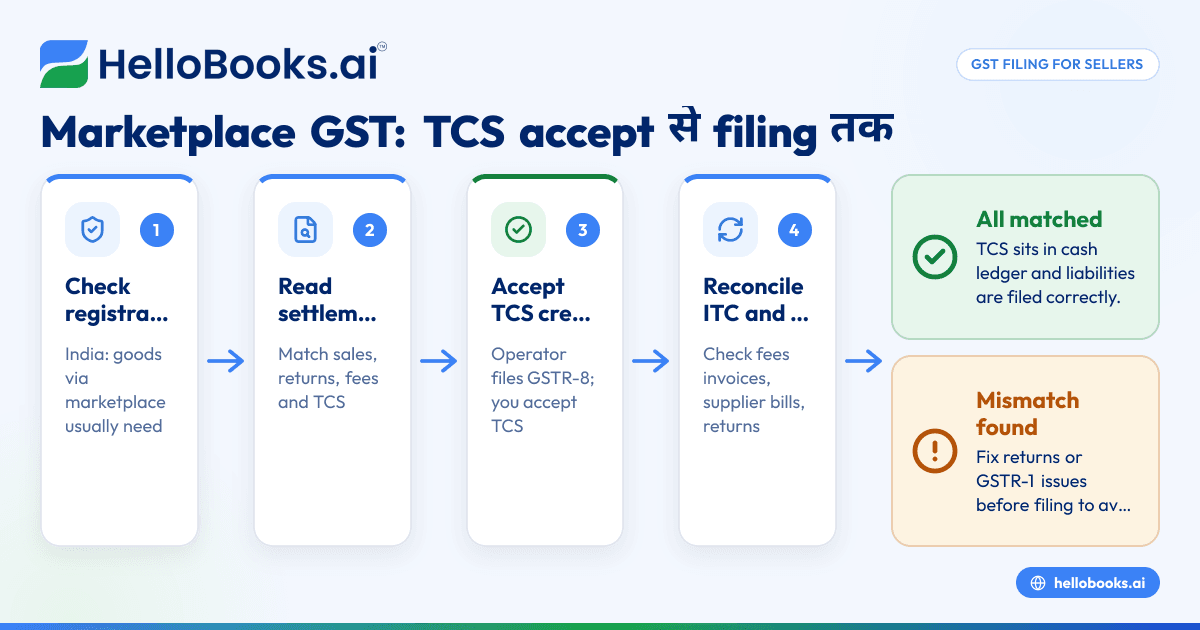
E-commerce seller के लिए सबसे बड़ा operational फर्क यह है कि marketplace customer से पैसा collect करता है और seller को net settlement भेजता है। इस net figure में fees, returns, reimbursements और TCS जैसी entries हो सकती हैं। TCS का framework GST law में e-commerce operator collection mechanism से जुड़ा है, और current rate या operational manner CBIC notifications, GST Portal advisories और operator documentation में published होता है। कोई भी current percentage official source से verify करनी चाहिए।
महत्वपूर्ण बात यह है कि TCS आपकी sale value का substitute नहीं है, और न ही net bank receipt ही turnover है। GST return बनाते समय seller को operator settlement report, issued invoices, credit notes और cash ledger impact समझना पड़ता है। Operator अपनी तरफ से statutory reporting करता है; seller को अपने portal records और books में उसका effect समझकर act करना होता है।
यहाँ एक illustrative और invented स्थिति देखें, जिसमें figures सिर्फ समझाने के लिए हैं, current rate या compliance advice नहीं हैं, और इसमें litigation, bad debts, inventory shrinkage, promotional reimbursements तथा cross-month adjustments को शामिल नहीं किया गया है:
मान लीजिए दिल्ली का एक seller home-storage items बेचता है। एक महीने में marketplace report में taxable supplies ₹1,20,000 दिखाती है, returns ₹10,000 दिखते हैं, platform fee ₹8,000 plus applicable GST on service invoice दिखती है, और bank में net settlement ₹1,00,200 आता है। seller अगर सिर्फ bank credit देखकर sale मानेगा, तो उसकी books गलत होंगी। उसे supplies, returns, marketplace service invoice, और operator द्वारा collected TCS को अलग-अलग पढ़ना होगा। फिर वही data GSTR-1 और GSTR-3B में consistent तरीके से reflected होना चाहिए।
जब bank statement upload करके reconciliation की जाती है, तो net settlement को invoice-level या report-level matching से समझना आसान होता है। HelloBooks India workflow में uploaded bank statement को AI reconciliation के साथ match करने देता है, ताकि NEFT, RTGS, IMPS या marketplace settlement entries को manually line-by-line retype न करना पड़े। यह खासकर तब उपयोगी है जब महीने में कई छोटे settlements आए हों। इसके लिए bank-reconciliation-software और ai-bookkeeping वाला flow काम आता है।
invoice, place of supply और tax head split में seller कहाँ गलती करता है
E-commerce filing की एक कम-चर्चित दिक्कत invoice level accuracy है। Seller को अक्सर लगता है कि marketplace report ही काफी है, लेकिन legal invoice details अभी भी महत्वपूर्ण रहती हैं। GST invoice के mandatory fields, HSN/SAC disclosure, supplier GSTIN, place of supply और other particulars का framework GST law और rules में दिया गया है; इसकी current compliance wording CBIC rules, notifications और GST Portal guidance में देखनी चाहिए।
सबसे आम गलती tax head split की होती है। अगर buyer state और seller state का relation ठीक से capture नहीं हुआ, तो CGST/SGST और IGST में mismatch हो सकता है। इससे books, return और customer-facing invoice में अंतर आ सकता है। इसी तरह HSN mapping गलती से wrong product category में चली जाए, तो marketplace listing, purchase bill और outward supply data में inconsistency आती है।
भारत में e-invoice applicability का सवाल भी कुछ sellers के लिए relevant होता है। e-invoicing framework, IRN generation और signed QR की current applicability, threshold और schema details CBIC notifications, NIC/Invoice Registration Portal documentation और GST Portal advisories में प्रकाशित होती हैं। कोई भी वर्तमान threshold या class of taxpayer official source से verify करनी चाहिए। यदि आपका business उस framework में आता है, तो invoice save करते समय IRN और signed QR का सही generation operational efficiency बढ़ा सकता है। इस संदर्भ में e-invoicing-software उपयोगी हो सकता है।
जहाँ physical movement of goods होता है, वहाँ e-way bill की requirement भी arise हो सकती है, depending on movement type and current legal conditions. इसकी exact requirement, value conditions और exemptions Central Goods and Services Tax Rules, relevant State GST rules, CBIC guidance और e-way bill portal पर published होती हैं; current limits official source से check करनी चाहिए। अगर invoice और dispatch details एक ही system में हों, तो e-way bill data दोबारा टाइप करने की ज़रूरत कम पड़ती है। इस संदर्भ में e-way-bill-software operational मदद देता है।
GSTR-1 और GSTR-3B में consistency क्यों सबसे ज़रूरी है
Seller के लिए practical filing का core यही है: outward supplies जिस तरह record हुई हैं, वही logic return तक पहुँचे। भारत में GSTR-1 और GSTR-3B की filing GSTN infrastructure और GST Portal के माध्यम से होती है, और return instructions/FAQs समय-समय पर GSTN advisories तथा CBIC materials में अपडेट होती रहती हैं। इसलिए monthly filing pattern शुरू करने से पहले current schema और portal behaviour check करना चाहिए।
Marketplace seller के case में mismatch कई जगह से आता है:
- gross sales books में हैं, पर return में net settlement के आधार पर figures चली गईं
- returns का treatment credit note बनाम adjustment की तरह अलग-अलग हुआ
- platform fee invoices का ITC track नहीं किया गया
- same seller के multiple GSTINs की data club हो गई
- inter-state order पर place of supply गलत capture हो गया
अगर accounting और GST workflow जुड़े हों, तो issued invoices से return बनना आसान होता है। HelloBooks सीधे GSTR-1 और GSTR-3B file करता है, इसलिए seller को अलग utility में वही data फिर से तैयार नहीं करना पड़ता। यह खासकर उन teams के लिए useful है जहाँ founder, accountant और CA अलग-अलग login से काम करते हैं; unlimited users और multi-GSTIN structure के साथ control रखना आसान हो सकता है।
इसके साथ purchase-side discipline भी महत्वपूर्ण है। Marketplace fees, courier support, ads, packing material, software subscriptions या other vendor bills पर ITC claim करने से पहले supplier invoice books में सही capture होना चाहिए और फिर GSTR-2A/2B reconciliation के against track होना चाहिए। HelloBooks में purchase bills को photo या PDF से OCR द्वारा capture करके supplier invoices record किए जा सकते हैं, और फिर GSTR-2A/2B reconciliation तथा ITC tracking से यह देखा जा सकता है कि कौन-सी inward invoice reflected है और कौन-सी missing है। इससे GSTR-3B filing से पहले review आसान हो जाता है।
inventory, returns और marketplace fees को books में कैसे संभालें
E-commerce seller की accounting तभी साफ रहती है जब stock movement और tax entries अलग-अलग spreadsheets में न फँसें। Returns का impact सिर्फ revenue पर नहीं, inventory पर भी पड़ सकता है। Damaged return, replacement shipment, reshipment, bundled products, promotional free units—इन सबका असर gross margin पर आता है। Companies Act, 2013 के तहत financial reporting obligations company structure वालों के लिए अलग layer जोड़ते हैं, और MCA filings से पहले books का साफ होना ज़रूरी होता है।
अगर आपने एक महीने की 500 units sale मान लीं लेकिन actual dispatch, return-to-origin और delivered orders अलग निकले, तो closing stock और cost of goods sold दोनों बिगड़ सकते हैं। Inventory-led accounting इसलिए useful है, खासकर जब एक seller Amazon FBA जैसे model, self-ship orders और offline B2B dispatch एक साथ चला रहा हो। inventory से stock movement current रखने का फायदा यह है कि GST outward data और financial reports आपस में disconnected नहीं रहते।
मान लीजिए एक illustrative और invented scenario में बेंगलुरु का seller stainless-steel bottles बेचता है। उसने महीने की शुरुआत में 900 units stock माना। महीने में 300 units खरीदीं, 420 units shipped दिखीं, 35 returned to origin आईं, 20 customer returns re-sellable थीं, और 8 units damaged हो गईं। अगर books में सिर्फ marketplace payout record हुआ और stock register update नहीं हुआ, तो month-end inventory और profit दोनों misleading हो सकते हैं। यह calculation freight-in allocation, wastage policy, valuation method और insurance claim effect को include नहीं करती; इसलिए यह सिर्फ समझाने के लिए है।
जब sales, purchases और stock एक ही system में हों, तो monthly P&L, receivables ageing और tax summary अधिक भरोसेमंद बनती है। यही वजह है कि कई sellers Tally से migrate या connector mode में parallel चलना चाहते हैं। अगर आपकी टीम अभी भी Tally पर historical data रखती है, तो tally-alternative या compare/hellobooks-vs-tally देखने से migration approach समझने में मदद मिल सकती है।
Hindi में काम करने वाले seller के लिए compliance workflow कैसा होना चाहिए
India के छोटे और mid-sized sellers का वास्तविक workflow अक्सर Hinglish में चलता है: order app में, supplier PDF WhatsApp पर, payment UPI/IMPS/NEFT से, और GST सवाल CA को message में। इसलिए software का local workflow matter करता है। DPDP Act, 2023 के context में business data handling और consent practices का broader compliance angle भी बढ़ा है, हालांकि उसका application setup-specific होता है और legal review मांग सकता है NEEDS EXPERT REVIEW। RBI payment systems regulate करता है, लेकिन payment receipt का accounting treatment फिर भी business books में सही capture करना पड़ता है।
Operational रूप से एक बेहतर pattern यह हो सकता है:
- sale के समय सही GST invoice बने
- जहाँ applicable हो वहाँ IRN और signed QR generate हो
- dispatch के समय e-way bill data तैयार रहे
- purchase bills OCR से entry में आ जाएँ
- uploaded bank statement से settlement match हो
- GSTR-2A/2B से ITC track हो
- उसी data से GSTR-1 और GSTR-3B file हो जाएँ
फोन से काम करने वाले founders के लिए mobile app useful रहता है, खासकर जब warehouse, supplier market और office अलग-अलग locations पर हों। Hindi, English और Hinglish में WhatsApp पर प्रश्न पूछने की सुविधा भी practical value रखती है; कुछ owners formal dashboard से ज़्यादा conversational help चाहते हैं। इसी प्रकार free India tools जैसे GSTIN validation, HSN lookup या invoice field checking शुरुआती review में काम आते हैं। आप tools/gstin-validator, tools/hsn-code-search और tools/gst-reconciliation-checker से प्रारंभिक जाँच कर सकते हैं।
free filing का मतलब क्या समझें, और कब expert review ज़रूरी है
"Free GST filing" सुनकर seller अक्सर मान लेता है कि compliance अपने-आप पूरी तरह हो जाएगी। लेकिन filing free हो सकती है, data clean-up free नहीं। अगर invoices गलत हैं, GSTIN wrong है, returns का treatment unclear है, या settlement data incomplete है, तो software केवल उतना ही सही output देगा जितना सही input होगा।
इसलिए पहले यह समझें कि आपका business simple single-GSTIN marketplace seller है या नहीं। अगर आप multiple states, warehouse transfers, reverse charge cases, TDS/TCS accounting adjustments, offline+B2B+B2C mix, या company audit trail जैसी complexities में हैं, तो CA review की आवश्यकता जल्दी पड़ सकती है। HelloBooks TDS/TCS accounting और reverse charge handling support करता है, लेकिन filing decisions फिर भी facts-specific होते हैं।
अगर आप plan details देखना चाहते हैं, तो price यहाँ quoted नहीं करना चाहिए; current details in/pricing पर देखना बेहतर है। Demo के लिए demo उपयोगी रहेगा।
अंत में practical बात: e-commerce GST compliance में असली राहत तब मिलती है जब sale, settlement, purchase, stock और return data एक ही जगह मेल खाते हों। India के seller के लिए सफलता का मतलब सिर्फ return submit करना नहीं, बल्कि इतना साफ record रखना है कि CBIC/GSTN portal data, bank statement, marketplace report और books—चारों में कहानी एक जैसी दिखे।


