

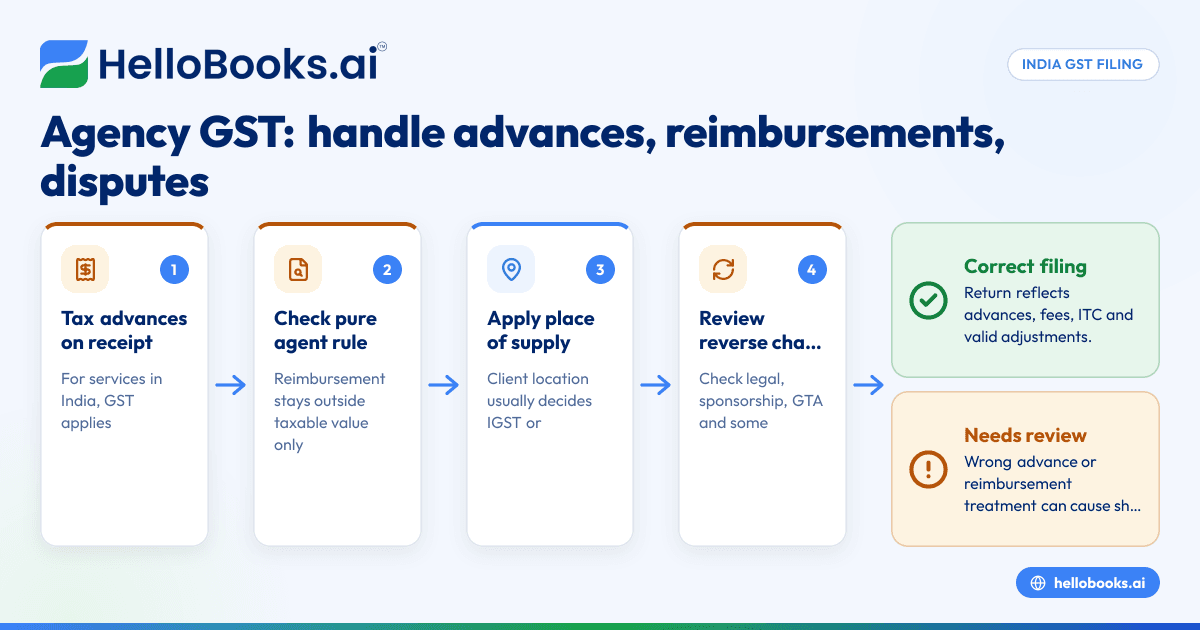

Key takeaways
What this article covers, in order:
- ਪੰਜਾਬ ਦੀ agency ਲਈ GST filing ਅਸਲ ਵਿੱਚ ਕਿੱਥੇ ਫਸਦੀ ਹੈ
- registration, tax rate ਅਤੇ SAC ਬਾਰੇ agency ਨੇ ਕਿਹੜੀ ਸਾਵਧਾਨੀ ਰੱਖਣੀ ਹੈ
- advance receipt ਆਇਆ ਤਾਂ service business ਨੇ ਕੀ record ਕਰਨਾ ਹੈ
- reimbursement, pure agent ਅਤੇ agency margin ਨੂੰ mix ਨਾ ਕਰੋ
- place of supply ਨਾਲ ਹੀ ਤੈਅ ਹੁੰਦਾ ਹੈ CGST/SGST ਜਾਂ IGST
- purchases, GSTR-2B, ITC ਅਤੇ reverse charge ਨੂੰ side spreadsheet ਵਿੱਚ ਨਾ ਛੱਡੋ
ਭਾਰਤ ਵਿੱਚ agency ਅਤੇ service business ਲਈ GST filing ਦਾ ਸਹੀ ਜਵਾਬ ਇਹ ਹੈ: ਸਿਰਫ਼ GSTR-1 ਅਤੇ GSTR-3B submit ਕਰਨਾ ਕਾਫ਼ੀ ਨਹੀਂ, ਤੁਹਾਨੂੰ invoice ਬਣਾਉਂਦੇ ਵੇਲੇ place of supply, CGST/SGST ਜਾਂ IGST split, advance receipts, reimbursements, reverse charge ਅਤੇ ITC reconciliation ਵੀ ਠੀਕ ਰੱਖਣੇ ਪੈਂਦੇ ਹਨ। ਪੰਜਾਬ ਵਿੱਚ ਬੈਠੀ ਇਕ agency ਜੇ ਮੁੰਬਈ, ਬੈਂਗਲੁਰੂ ਜਾਂ ਵਿਦੇਸ਼ੀ client ਨੂੰ bill ਕਰਦੀ ਹੈ, ਤਾਂ ਗਲਤੀ ਅਕਸਰ return filing ਤੋਂ ਪਹਿਲਾਂ ਹੀ ਹੋ ਜਾਂਦੀ ਹੈ। ਇਸੇ ਲਈ filing ਨੂੰ bookkeeping ਤੋਂ ਵੱਖਰਾ ਕੰਮ ਨਹੀਂ ਮੰਨਣਾ ਚਾਹੀਦਾ।
ਪੰਜਾਬ ਦੀ agency ਲਈ GST filing ਅਸਲ ਵਿੱਚ ਕਿੱਥੇ ਫਸਦੀ ਹੈ
ਚਾਹੇ ਤੁਸੀਂ Ludhiana, Mohali, Jalandhar ਜਾਂ Amritsar ਵਿੱਚ digital marketing agency, design studio, consultancy, recruitment firm ਜਾਂ IT services business ਚਲਾ ਰਹੇ ਹੋ, GST ਦੀ ਮੁਸ਼ਕਲ ਅਕਸਰ ਤਿੰਨ ਥਾਵਾਂ ਤੇ ਆਉਂਦੀ ਹੈ: bill ਕਿਵੇਂ ਬਣਾਇਆ, receipt ਕਿਵੇਂ record ਕੀਤੀ, ਅਤੇ supplier invoices ਨਾਲ ITC ਕਿਵੇਂ match ਕੀਤਾ।
India ਵਿੱਚ GST ਦਾ framework Central Goods and Services Tax Act, 2017, Integrated Goods and Services Tax Act, 2017 ਅਤੇ ਉਹਨਾਂ ਦੇ rules ਹੇਠ ਚਲਦਾ ਹੈ। ਇਹਨਾਂ ਦੀ administration CBIC ਅਤੇ return/invoice data infrastructure GSTN ਤੇ GST Portal ਰਾਹੀਂ ਚਲਦੀ ਹੈ। Registration threshold, tax rate, due date ਜਾਂ e-invoice applicability ਵਰਗੀਆਂ current figures ਹਮੇਸ਼ਾਂ official notifications, CBIC circulars ਅਤੇ GST Portal ਤੇ published updates ਵਿੱਚ verify ਕਰਨੀਆਂ ਚਾਹੀਦੀਆਂ ਹਨ। ਜੇ ਕੋਈ CA ਜਾਂ owner ਇਹਨਾਂ ਨੂੰ spreadsheet ਵਿੱਚ ਪੁਰਾਣੇ ਅੰਕਾਂ ਨਾਲ ਚਲਾਉਂਦਾ ਰਹੇ, ਤਾਂ ਮੁਸੀਬਤ ਪੱਕੀ ਹੈ.
Agency businesses ਵਿੱਚ ਖਾਸ issue ਇਹ ਹੈ ਕਿ payment flow simple ਨਹੀਂ ਹੁੰਦਾ। Client UPI, NEFT, RTGS ਜਾਂ IMPS ਨਾਲ advance ਭੇਜ ਸਕਦਾ ਹੈ; team reimbursement ਨੂੰ fee ਨਾਲ mix ਕਰ ਸਕਦੀ ਹੈ; purchase bills PDF, email ਜਾਂ WhatsApp ਰਾਹੀਂ ਆ ਸਕਦੀਆਂ ਹਨ; ਅਤੇ accounting ਅਜੇ ਵੀ Tally ਵਿੱਚ ਹੋ ਸਕਦੀ ਹੈ। ਇਸ ਕਰਕੇ GST filing ਦਾ “free” ਹੋਣਾ ਤਦੋਂ ਹੀ useful ਹੈ ਜਦੋਂ books ਅਤੇ returns ਆਪਸ ਵਿੱਚ ਮਿਲਣ। HelloBooks ਵਿੱਚ invoice ਬਣਾਉਂਦੇ ਵੇਲੇ place-of-supply logic ਨਾਲ CGST/SGST ਜਾਂ IGST split automatic ਹੋ ਸਕਦਾ ਹੈ, ਅਤੇ ਉਸੇ data ਤੋਂ GSTR-1 ਅਤੇ GSTR-3B direct file ਹੋਣ ਕਰਕੇ return ਅਤੇ books ਵਿਚ mismatch ਘੱਟ ਰਹਿੰਦਾ ਹੈ।
registration, tax rate ਅਤੇ SAC ਬਾਰੇ agency ਨੇ ਕਿਹੜੀ ਸਾਵਧਾਨੀ ਰੱਖਣੀ ਹੈ
Agency owners ਅਕਸਰ ਪੁੱਛਦੇ ਹਨ: “ਸਾਨੂੰ registration ਲੈਣੀ ਲਾਜ਼ਮੀ ਹੈ?” ਜਾਂ “ਸਾਡੀ service ਤੇ ਕਿਹੜਾ GST rate ਲੱਗਦਾ ਹੈ?” ਇਸਦਾ ਇੱਕ bare answer ਦੇਣਾ unsafe ਹੈ, ਕਿਉਂਕਿ current threshold ਅਤੇ notified rate service type, notification history ਅਤੇ facts ਤੇ depend ਕਰਦੇ ਹਨ। Registration threshold CGST Act, 2017 ਹੇਠ notified figures ਵਿੱਚ ਵੇਖੋ, ਜੋ CBIC notifications ਅਤੇ GST Portal ਉੱਤੇ published ਹੁੰਦੀਆਂ ਹਨ। Tax rate ਵੀ GST rate notifications ਵਿੱਚ published ਹੁੰਦੀ ਹੈ, ਅਤੇ service classification ਲਈ SAC mapping official schedules ਅਤੇ CBIC/GST resources ਵਿੱਚ ਵੇਖਣੀ ਚਾਹੀਦੀ ਹੈ।
Agency ਲਈ practical point ਇਹ ਹੈ ਕਿ company ਦਾ label matter ਨਹੀਂ ਕਰਦਾ; contract ਕੀ supply ਕਰ ਰਿਹਾ ਹੈ, ਇਹ matter ਕਰਦਾ ਹੈ। “Digital agency” ਹੋਣ ਨਾਲ ਹਰ invoice ਇੱਕੋ SAC ਨਹੀਂ ਲੈਂਦਾ। Branding, media planning, software development, staffing support, consulting, event coordination — ਹਰ ਇਕ ਦਾ classification facts ਨਾਲ judge ਹੁੰਦਾ ਹੈ।
ਜੇ ਤੁਹਾਡੀ sales team ਜਲਦੀ ਵਿੱਚ invoice ਬਣਾਉਂਦੀ ਹੈ, ਤਾਂ GSTIN ਤੋਂ customer details pull ਹੋਣ, HSN/SAC search ਆਸਾਨ ਹੋਵੇ, ਅਤੇ invoice ਵਿੱਚ Rule 46 ਵਾਲੇ fields consistent ਰਹਿਣ — ਇਹ ਸਭ filing errors ਘਟਾਉਂਦੇ ਹਨ। ਇਸ ਲਈ smart invoicing ਅਤੇ HSN code search tool ਵਰਗੇ workflows practical ਹੋ ਜਾਂਦੇ ਹਨ। GSTIN ਦੀ basic validity check ਲਈ GSTIN validator ਵੀ useful ਹੈ, ਖਾਸ ਕਰਕੇ ਜਦੋਂ client onboarding email ਜਾਂ WhatsApp ਰਾਹੀਂ ਹੋਇਆ ਹੋਵੇ।
advance receipt ਆਇਆ ਤਾਂ service business ਨੇ ਕੀ record ਕਰਨਾ ਹੈ
Service firms ਵਿੱਚ ਸਭ ਤੋਂ overlooked issue advance ਹੈ। Time of supply ਦੇ rules CGST Act, 2017 ਅਤੇ related rules ਹੇਠ govern ਹੁੰਦੇ ਹਨ, ਅਤੇ current operational position hamesha CBIC clarifications ਅਤੇ GST Portal guidance ਨਾਲ verify ਕਰਨੀ ਚਾਹੀਦੀ ਹੈ। Bare statement ਦੇਣਾ ਕਿ “advance ਆਇਆ ਤਾਂ ਹਮੇਸ਼ਾਂ tax ਬਣਦਾ ਹੈ” ਜਾਂ “ਕਦੇ ਨਹੀਂ ਬਣਦਾ” dangerous simplification ਹੈ; service type, facts ਅਤੇ current notification position check ਕਰਨੀ ਲਾਜ਼ਮੀ ਹੈ.
Practical reality ਇਹ ਹੈ ਕਿ agencies retainer, booking amount, campaign advance ਜਾਂ project kickoff amount ਲੈਂਦੀਆਂ ਹਨ। ਜੇ accounting team ਨੇ bank receipt ਤਾਂ record ਕਰ ਲਈ, ਪਰ ਉਸਨੂੰ advance against supply ਵਜੋਂ ਨਹੀਂ tag ਕੀਤਾ, ਤਾਂ GSTR-3B figures distort ਹੋ ਸਕਦੀਆਂ ਹਨ। Client ਨੇ ₹ ਵਿੱਚ payment ਕਰ ਦਿੱਤੀ, ਪਰ invoice ਅਗਲੇ ਮਹੀਨੇ ਬਣੀ; owner ਨੂੰ ਲੱਗਿਆ ਕਿ tax ਵੀ ਅਗਲੇ ਮਹੀਨੇ ਜਾਵੇਗਾ; ਫਿਰ CA reconciliation ਵਿੱਚ struggle ਕਰਦਾ ਹੈ.
ਇੱਕ illustrative ਅਤੇ invented situation ਲਓ: Mohali ਦੀ agency ਨੇ client ਤੋਂ ₹1,80,000 advance receive ਕੀਤਾ, ਜਿਸ ਵਿੱਚ actual tax treatment contract facts, time-of-supply position, later adjustment entries ਅਤੇ official law references ਦੇ ਅਧਾਰ ਤੇ decide ਹੋਵੇਗਾ; ਇੱਥੇ figures ਸਿਰਫ਼ bookkeeping flow ਸਮਝਾਉਣ ਲਈ ਹਨ ਅਤੇ current notified position ਨੂੰ replace ਨਹੀਂ ਕਰਦੀਆਂ। ਜੇ ਇਸ receipt ਨੂੰ “sales” ਵਜੋਂ post ਕਰ ਦਿੱਤਾ ਗਿਆ, ਪਰ final invoice issue ਹੋਣ ਵੇਲੇ ਉਸ advance ਦੀ adjustment ਵੱਖਰੇ ledger ਵਿੱਚ ਨਹੀਂ ਹੋਈ, ਤਾਂ GSTR-1, GSTR-3B ਅਤੇ receivables ageing ਤਿੰਨੇ mismatch ਕਰ ਸਕਦੇ ਹਨ।
HelloBooks ਵਿੱਚ receipt, invoice ਅਤੇ return data ਇੱਕੋ flow ਵਿੱਚ ਰਹਿਣ ਕਰਕੇ ਇਹ ਗਲਤੀ ਘੱਟ ਹੁੰਦੀ ਹੈ। Bank statement upload ਕਰਕੇ India-specific AI reconciliation ਨਾਲ receipt lines ਨੂੰ invoices ਜਾਂ advances ਨਾਲ match ਕੀਤਾ ਜਾ ਸਕਦਾ ਹੈ; ਇੱਥੇ live bank feed ਦੀ ਗੱਲ ਨਹੀਂ, ਸਗੋਂ uploaded bank statement ਤੋਂ reconciliation ਦੀ ਹੈ। bank reconciliation software ਵਾਲਾ ਇਹ approach ਉਹਨਾਂ firms ਲਈ ਖਾਸ useful ਹੈ ਜੋ UPI collections, NEFT credits ਅਤੇ mixed narration ਵਾਲੇ bank entries ਨਾਲ deal ਕਰਦੀਆਂ ਹਨ।
reimbursement, pure agent ਅਤੇ agency margin ਨੂੰ mix ਨਾ ਕਰੋ
Punjab ਦੀਆਂ agencies ਵਿੱਚ reimbursement ਸਭ ਤੋਂ ਵੱਧ confusion ਵਾਲਾ area ਹੈ। Client ਕਹਿੰਦਾ ਹੈ: “Meta ads ਅਸੀਂ ਤੁਹਾਡੇ through ਚਲਵਾਏ, amount pass through ਹੈ”; ਜਾਂ “hotel booking, courier, printing, freelancer cost ਅਸੀਂ reimburse ਕਰਾਂਗੇ।” ਪਰ ਹਰ reimbursement tax value ਤੋਂ ਬਾਹਰ ਨਹੀਂ ਹੋ ਜਾਂਦੀ। “Pure agent” treatment ਦੀ conditions CGST Rules, 2017 ਦੇ Rule 33 ਹੇਠ ਵੇਖੀਆਂ ਜਾਂਦੀਆਂ ਹਨ, ਅਤੇ ਇਸ ਬਾਰੇ final view contract wording, invoice pattern, underlying third-party bill ਅਤੇ actual conduct ਦੇ ਅਧਾਰ ਤੇ ਲੈਣਾ ਚਾਹੀਦਾ ਹੈ। Current legal interpretation ਲਈ CBIC guidance ਅਤੇ professional advice ਲਾਜ਼ਮੀ ਹੈ.
Agency ਨੇ ਦੋ ਸਵਾਲ ਪੁੱਛਣੇ ਹਨ:
- underlying service ਜਾਂ expense actual ਵਿੱਚ client ਲਈ ਸੀ ਜਾਂ agency ਨੇ ਆਪਣੀ supply deliver ਕਰਨ ਲਈ consume ਕੀਤਾ?
- recovery exact pass-through ਹੈ ਜਾਂ ਉਸ ਉੱਤੇ markup/margin/add-on bundled ਹੈ?
Illustrative ਅਤੇ invented numbers ਨਾਲ ਸਮਝੋ: ਇੱਕ Chandigarh creative agency ਨੇ client campaign ਲਈ ₹72,000 media vendor ਨੂੰ pay ਕੀਤੇ ਅਤੇ ਆਪਣੀ professional fee ₹28,000 charge ਕੀਤੀ। ਇਹ figures ਸਿਰਫ਼ illustration ਲਈ invented ਹਨ। ਜੇ media purchase client ਦੇ ਨਾਮ, authority ਅਤੇ documentation ਹੇਠ ਸੀ, ਅਤੇ agency ਨੇ exact recovery ਵੱਖਰੀ line ਵਿੱਚ ਦਿਖਾਈ, ਤਾਂ pure agent analysis relevant ਬਣ ਸਕਦੀ ਹੈ; ਪਰ ਜੇ agency ਨੇ inventory/apportionment/control ਆਪਣੇ ਨਾਮ ਤੇ ਰੱਖਿਆ ਜਾਂ bundle ਵਜੋਂ resell ਕੀਤਾ, ਤਾਂ treatment ਵੱਖਰਾ ਹੋ ਸਕਦਾ ਹੈ। ਇਹ calculation contract drafting, vendor invoice name, usage control, foreign platform billing position ਅਤੇ current law interpretation ਨੂੰ leave out ਕਰਦੀ ਹੈ, ਇਸ ਲਈ NEEDS EXPERT REVIEW.
This is where clean invoicing matters. HelloBooks ਵਿੱਚ invoice lines ਵੱਖਰੀਆਂ ਰੱਖ ਕੇ taxable fee, reimbursements, reverse charge-sensitive purchases ਅਤੇ client-wise ledgers ਠੀਕ maintain ਕਰਨੇ ਆਸਾਨ ਹੋ ਜਾਂਦੇ ਹਨ। OCR ਨਾਲ purchase bills capture ਹੋਣ ਕਰਕੇ later dispute ਵੇਲੇ PDF ਜਾਂ photo ਲੱਭਣ ਦੀ ਥਾਂ record ready ਰਹਿੰਦਾ ਹੈ। Expense capture ਲਈ expense management software ਅਤੇ broader ai bookkeeping workflow ਇਸੇ reason ਕਰਕੇ helpful ਹਨ.
place of supply ਨਾਲ ਹੀ ਤੈਅ ਹੁੰਦਾ ਹੈ CGST/SGST ਜਾਂ IGST
Agency businesses ਲਈ ਸਭ ਤੋਂ common invoice error ਇਹੀ ਹੈ: intra-state supply ਉੱਤੇ IGST ਲਾ ਦਿੱਤਾ ਜਾਂ inter-state ਉੱਤੇ CGST/SGST split ਕਰ ਦਿੱਤਾ। Place of supply rules IGST Act, 2017 ਹੇਠ govern ਹੁੰਦੇ ਹਨ, ਅਤੇ exact treatment service category, recipient status ਅਤੇ location facts ਨਾਲ decide ਹੁੰਦਾ ਹੈ। Current legal position hamesha Act, rules, CBIC clarifications ਅਤੇ GST Portal references ਨਾਲ verify ਕਰੋ.
General commercial sense ਇਹ ਹੈ ਕਿ client ਦੀ GST registration location, billing arrangement ਅਤੇ supply ਦੀ nature ਪਹਿਲਾਂ confirm ਕੀਤੀ ਜਾਵੇ। Event-related services, immovable property linked services, online information services, export of services, intermediary issues — ਇਹ ਸਭ agency world ਵਿੱਚ ਆ ਸਕਦੇ ਹਨ। ਇਕ Punjab firm ਜੇ Delhi GSTIN ਵਾਲੇ client ਨੂੰ retainer bill ਕਰਦੀ ਹੈ, ਇਕ ਹੋਰ local Punjab client ਲਈ onsite activation ਕਰਦੀ ਹੈ, ਅਤੇ ਤੀਜੇ foreign client ਲਈ design services deliver ਕਰਦੀ ਹੈ, ਤਾਂ ਤਿੰਨਾਂ invoices ਦਾ treatment same ਹੋਣਾ ਲਾਜ਼ਮੀ ਨਹੀਂ.
Invoice ਬਣਾਉਣ ਵੇਲੇ state code, customer GSTIN ਅਤੇ place-of-supply logic ਸਹੀ ਹੋਣਾ filing ਤੋਂ ਵੱਧ important ਹੈ। HelloBooks ਵਿੱਚ tax head split invoice stage ਤੇ ਹੀ handle ਹੋ ਜਾਂਦਾ ਹੈ, ਤਾਂ later GSTR-1 ਵਿੱਚ B2B entries manually repair ਕਰਨ ਦੀ ਲੋੜ ਘੱਟ ਪੈਂਦੀ ਹੈ। E-invoice applicable businesses ਲਈ IRN ਅਤੇ signed QR save-time workflow ਨਾਲ generate ਹੋ ਸਕਦੇ ਹਨ, subject to the current applicability criteria published by CBIC and on the GST Portal/e-invoice system. Current turnover threshold ਜਾਂ category applicability figure official source ਤੋਂ check ਕਰਨੀ ਚਾਹੀਦੀ ਹੈ. ਇਸ ਸੰਦਰਭ ਵਿੱਚ e-invoicing software useful ਬਣਦਾ ਹੈ.
purchases, GSTR-2B, ITC ਅਤੇ reverse charge ਨੂੰ side spreadsheet ਵਿੱਚ ਨਾ ਛੱਡੋ
Agency owners sales invoices ਉੱਤੇ focus ਕਰਦੇ ਹਨ, ਪਰ GST cash flow ਅਕਸਰ purchase side ਤੋਂ बिगੜਦਾ ਹੈ। Vendor ਨੇ GSTIN ਗਲਤ ਲਿਖਿਆ, invoice upload ਨਹੀਂ ਕੀਤਾ, place of supply off ਸੀ, ਜਾਂ bill team WhatsApp group ਵਿੱਚ ਰਹਿ ਗਿਆ — ਫਿਰ ITC claim questionable ਬਣ ਜਾਂਦਾ ਹੈ। Input tax credit ਦੀ conditions CGST Act, 2017 ਅਤੇ rules ਹੇਠ govern ਹੁੰਦੀਆਂ ਹਨ; claim ਦੀ current position GSTR-2B, GST Portal instructions, CBIC circulars ਅਤੇ judicial developments ਨਾਲ verify ਕਰਨੀ ਚਾਹੀਦੀ ਹੈ.
Reverse charge ਵੀ agencies ਲਈ real issue ਹੈ, ਖਾਸ ਕਰਕੇ legal services, certain transport situations ਜਾਂ other notified inward supplies ਵਾਲੇ cases ਵਿੱਚ। ਕਿਹੜੀਆਂ inward supplies ਅੱਜ reverse charge ਵਿੱਚ ਹਨ, ਇਹ bare memory ਨਾਲ ਨਹੀਂ, current notifications published by CBIC ਤੋਂ verify ਕਰਨਾ ਚਾਹੀਦਾ ਹੈ. TDS ਵੀ service businesses ਲਈ commercial reality ਹੈ, ਪਰ direct tax TDS treatment Income-tax Act, 1961 ਹੇਠ ਆਉਂਦਾ ਹੈ ਅਤੇ regulator Central Board of Direct Taxes ਹੈ; GST books ਨਾਲ reconciliation ਲਈ ਇਸਦਾ impact books ਵਿੱਚ ਸਹੀ reflect ਹੋਣਾ ਚਾਹੀਦਾ ਹੈ.
Illustrative ਅਤੇ invented numbers ਨਾਲ ਵੇਖੋ: ਇੱਕ Ludhiana consulting firm ਦੀ monthly outward fee invoices ₹3,40,000 ਹਨ, purchase bills ₹96,000 ਹਨ, ਅਤੇ ਇਨ੍ਹਾਂ ਵਿੱਚੋਂ ਕੁਝ supplier invoices GSTR-2B ਵਿੱਚ ਨਹੀਂ ਦਿਖ ਰਹੀਆਂ। ਇਹ figures invented ਹਨ, ਅਤੇ actual net tax position claim conditions, blocked credit, reverse charge, credit notes, debit notes ਅਤੇ prior-period adjustments ਨੂੰ leave out ਕਰਦੀ ਹੈ. ਜੇ owner ਨੇ full purchase tax spreadsheet ਤੋਂ claim ਮੰਨ ਲਿਆ ਪਰ 2B mismatch ignore ਕੀਤਾ, ਤਾਂ GSTR-3B risk ਵੱਧਦਾ ਹੈ. HelloBooks ਵਿੱਚ GSTR-2A/2B reconciliation ਅਤੇ ITC tracking ਨਾਲ missing supplier invoices ਪਹਿਲਾਂ ਹੀ ਦਿਸ ਸਕਦੀਆਂ ਹਨ, ਜਿਸ ਨਾਲ CA follow-up factual basis ਤੇ ਕਰ ਸਕਦਾ ਹੈ। gst return filing software ਅਤੇ gst reconciliation checker ਇੱਥੇ natural next step ਬਣਦੇ ਹਨ.
e-way bill, inventory ਅਤੇ mixed business models ਵਾਲੀਆਂ service firms
ਸਭ agencies ਨੂੰ inventory ਜਾਂ e-way bill ਦੀ ਲੋੜ ਨਹੀਂ ਹੁੰਦੀ, ਪਰ ਕਈ service businesses pure service ਨਹੀਂ ਰਹਿੰਦੀਆਂ। Exhibition material, printed kits, promotional merchandise, POS units, hardware bundle, samples ਜਾਂ event assets ਦੀ movement ਹੋਵੇ ਤਾਂ goods movement side ignore ਨਹੀਂ ਕੀਤਾ ਜਾ ਸਕਦਾ। E-way bill requirements ਦਾ current threshold, exceptions ਅਤੇ documentary rules CGST Rules ਅਤੇ e-way bill system/GST Portal ਉੱਤੇ published guidance ਵਿੱਚ ਵੇਖੋ; bare number ਯਾਦ ਰੱਖਣਾ risky ਹੈ.
Illustrative invented case: Jalandhar ਦੀ branding firm ਨੇ client activation ਲਈ printed display material dispatch ਕੀਤਾ, ਜਿਸਦੀ accounting value ₹68,000 recorded ਹੈ. ਇਹ amount invented ਹੈ ਅਤੇ actual e-way bill requirement consignment facts, document type, movement reason ਅਤੇ notified rules ਉੱਤੇ depend ਕਰੇਗੀ. ਜੇ sales team ਨੇ ਇਸਨੂੰ simple service invoice ਮੰਨ ਕੇ dispatch document ignore ਕਰ ਦਿੱਤਾ, ਤਾਂ logistics ਅਤੇ compliance ਦੋਵੇਂ ਅਟਕ ਸਕਦੇ ਹਨ.
HelloBooks ਵਿੱਚ goods movement ਵਾਲੇ cases ਲਈ invoice ਤੋਂ e-way bill workflow helpful ਹੈ, ਅਤੇ inventory-managed firms closing stock ਤੇ dispatch records ਇੱਕੋ system ਵਿੱਚ ਰੱਖ ਸਕਦੀਆਂ ਹਨ। Agencies ਜੋ part-service, part-goods model ਚਲਾਉਂਦੀਆਂ ਹਨ, ਉਹਨਾਂ ਲਈ e-way bill software ਅਤੇ inventory relevant ਹੋ ਜਾਂਦੇ ਹਨ।
free filing ਕਦੋਂ useful ਹੈ, ਅਤੇ ਕਦੋਂ broader accounting setup ਚਾਹੀਦਾ ਹੈ
“Free GST filing” ਦਾ ਸਹੀ meaning ਇਹ ਨਹੀਂ ਕਿ compliance zero-effort ਹੋ ਜਾਵੇਗੀ। Useful ਤਦੋਂ ਹੈ ਜਦੋਂ ਤੁਹਾਡੇ invoices, purchase bills, bank receipts ਅਤੇ return figures ਇੱਕੋ system ਵਿੱਚ tie ਹੋਣ। ਜੇ ਤੁਸੀਂ ਇੱਕ GSTIN ਨਾਲ ਕੰਮ ਕਰ ਰਹੇ ਹੋ, limited team ਹੈ, ਅਤੇ primary need compliant invoices plus GSTR-1/GSTR-3B filing ਹੈ, ਤਾਂ free workflow ਕਾਫ਼ੀ practical ਹੋ ਸਕਦਾ ਹੈ। But ਜਦੋਂ business multi-state ਹੋਵੇ, multiple GSTINs ਹੋਣ, purchase volume ਵੱਧ ਹੋਵੇ, TDS/TCS entries, reverse charge, inventory ਜਾਂ branch-wise reporting ਚਾਹੀਦੀ ਹੋਵੇ, ਤਾਂ broader accounting setup ਜ਼ਰੂਰੀ ਬਣਦਾ ਹੈ.
HelloBooks India ਵਿੱਚ ਇਸ gap ਨੂੰ practical ਢੰਗ ਨਾਲ cover ਕਰਦਾ ਹੈ: GST invoices ਤੋਂ returns build ਹੁੰਦੇ ਹਨ; bank statement upload ਕਰਕੇ reconciliation ਹੋ ਸਕਦੀ ਹੈ; purchase bills OCR ਨਾਲ capture ਹੋ ਜਾਂਦੇ ਹਨ; financial reports same entries ਤੋਂ ਨਿਕਲਦੇ ਹਨ; ਅਤੇ ਜੇ ਤੁਸੀਂ Tally ਤੋਂ shift ਕਰਨਾ ਚਾਹੁੰਦੇ ਹੋ ਜਾਂ parallel trial ਚਲਾਉਣਾ ਚਾਹੁੰਦੇ ਹੋ, ਤਾਂ Tally migration/connector useful ਹੋ ਸਕਦਾ ਹੈ। Multi-GSTIN firms ਅਤੇ unlimited users ਵਾਲਾ setup agencies, CA firms ਅਤੇ growing service teams ਲਈ handy ਹੈ। Phone ਤੋਂ approval ਜਾਂ data entry ਲਈ mobile app relevant ਹੈ, ਅਤੇ owner ਨੂੰ quick help ਚਾਹੀਦੀ ਹੋਵੇ ਤਾਂ Noor assistant WhatsApp ਤੇ Hindi, English ਜਾਂ Hinglish ਵਿੱਚ context-based help ਦੇ ਸਕਦਾ ਹੈ। Punjabi article ਹੋਣ ਦੇ ਬਾਵਜੂਦ ਇਹ India-wide operating habit ਨਾਲ match ਕਰਦਾ ਹੈ, ਕਿਉਂਕਿ ਬਹੁਤ ਸਾਰੇ founders daily books WhatsApp context ਵਿੱਚ ਹੀ discuss ਕਰਦੇ ਹਨ.
ਜੇ ਤੁਸੀਂ compare ਕਰ ਰਹੇ ਹੋ ਕਿ Tally ਨਾਲ ਹੀ ਰਹਿਣਾ ਹੈ ਜਾਂ cloud workflow ਲੈਣਾ ਹੈ, ਤਾਂ tally alternative ਅਤੇ HelloBooks vs Tally useful starting points ਹਨ। General overview ਲਈ accounting software India ਵੇਖ ਸਕਦੇ ਹੋ, pricing details ਲਈ ਸਿੱਧਾ /in/pricing, ਅਤੇ live fit-check ਲਈ /demo better ਹੈ.
ਪੰਜਾਬ ਦੀ agency ਲਈ ਇੱਕ practical filing routine
Best routine glamorous ਨਹੀਂ ਹੁੰਦਾ; disciplined ਹੁੰਦਾ ਹੈ.
ਹਰ client onboarding ਤੇ GSTIN verify ਕਰੋ। Invoice issue ਕਰਨ ਤੋਂ ਪਹਿਲਾਂ contract ਦੇ basis ਤੇ service classification ਅਤੇ place of supply decide ਕਰੋ। Advance receipts ਨੂੰ simple bank credits ਵਾਂਗ ਨਾ ਛੱਡੋ। Reimbursements ਨੂੰ fee ਨਾਲ mix ਨਾ ਕਰੋ। Supplier bills email, PDF ਜਾਂ photo ਤੋਂ same month capture ਕਰੋ। GSTR-2B mismatch filing ਤੋਂ ਪਹਿਲਾਂ ਵੇਖੋ। TDS deductions ਨੂੰ books ਵਿੱਚ reflect ਕਰੋ ਤਾਂ receivables false high ਨਾ ਲੱਗਣ। Export, LUT, reverse charge, e-invoice applicability ਜਾਂ disputed contracts ਵਾਲੇ cases ਵਿੱਚ CA ਨਾਲ facts review ਕਰੋ.
India ਵਿੱਚ compliance law-only exercise ਨਹੀਂ; records exercise ਵੀ ਹੈ। Companies Act, 2013 ਹੇਠ governed companies ਲਈ MCA-facing books discipline ਵੀ matter ਕਰਦਾ ਹੈ, direct-tax side Income-tax Act, 1961 ਹੇਠ records consistency matter ਕਰਦੀ ਹੈ, payment evidence RBI-regulated banking rails ਜਿਵੇਂ UPI/NEFT/RTGS/IMPS ਤੋਂ ਆਉਂਦੀ ਹੈ, ਅਤੇ client data handling broader privacy expectations ਜਿਵੇਂ Digital Personal Data Protection Act, 2023 ਦੇ context ਵਿੱਚ thoughtful ਹੋਣਾ ਚਾਹੀਦਾ ਹੈ। GST filing ਇਨ੍ਹਾਂ ਸਭ ਤੋਂ ਵੱਖਰੀ ਨਹੀਂ ਰਹਿੰਦੀ.
ਜੇ ਤੁਹਾਡਾ target ਸਿਰਫ਼ “return file ਹੋ ਜਾਏ” ਨਹੀਂ, ਸਗੋਂ “books, GST ਅਤੇ cash receipts ਇੱਕ ਦੂਜੇ ਨਾਲ ਮਿਲਣ” ਹੈ, ਤਾਂ ਉਹੀ sustainable setup ਹੈ। Punjab ਦੀ agency ਲਈ ਸਹੀ system ਉਹ ਹੈ ਜੋ invoice ਬਣਾਉਂਦੇ ਸਮੇਂ ਹੀ future return error ਰੋਕ ਦੇਵੇ.


