

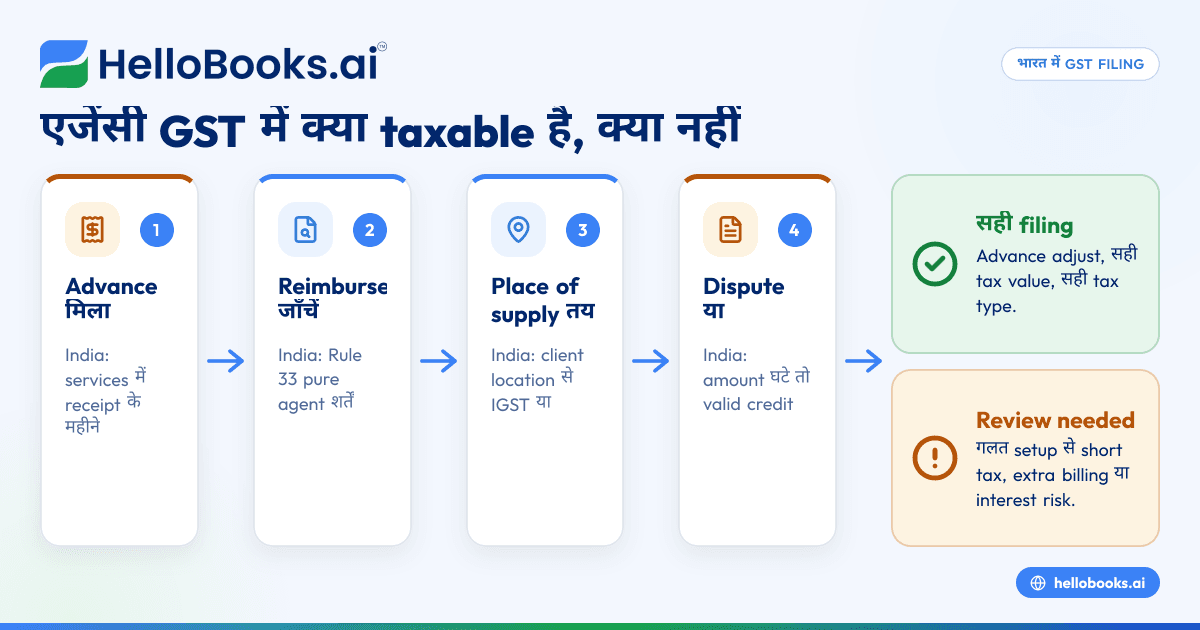

Key takeaways
What this article covers, in order:
- एजेंसी और service firms के लिए GST का असली सवाल क्या होता है
- advance मिला है तो service tax point कैसे समझें
- reimbursement हमेशा pass-through नहीं होता
- place of supply तय करेगा CGST+SGST या IGST
- vendor bills, GSTR-2B और ITC tracking से filing आसान क्यों होती है
- reverse charge, TDS और agency bookkeeping का overlap
India में एजेंसी और service business के लिए GST filing का सही जवाब यह है: advance, reimbursement, place of supply, ITC और client disputes—इन पांच जगहों पर गलती सबसे ज़्यादा होती है। अगर आपकी टीम invoices और expenses पहले से साफ़ रिकॉर्ड करती है, तो GSTR-1 और GSTR-3B filing बहुत आसान हो जाती है। HelloBooks में GST invoice बनाते समय CGST, SGST या IGST का split place of supply के हिसाब से आ जाता है, और वही data आगे GST return filing में काम आता है।
एजेंसी और service firms के लिए GST का असली सवाल क्या होता है
Digital marketing agency, design studio, recruitment firm, consultancy, software service provider, PR firm या freelancer collective—इनमें issue अक्सर “GST rate क्या है” वाला नहीं होता। असली issue यह होता है कि invoice की taxable value क्या है, tax head कौन-सा लगेगा, और receipt या expense किस महीने की return में जाना चाहिए।
India में GST का framework Central Goods and Services Tax Act, 2017, Integrated Goods and Services Tax Act, 2017 और उनसे जुड़े rules के तहत चलता है। इनके implementation और indirect tax administration में CBIC की भूमिका है, जबकि return system और online compliance GSTN और GST portal पर दिखाई देता है। किसी भी current rate, threshold, due date, late fee, interest या notification को bare fact की तरह याद रखने के बजाय CBIC notifications, GST portal और relevant law text से verify करना चाहिए.
एजेंसी business में खास मुश्किलें ये रहती हैं:
- client से मिला advance
- ad spend या travel reimbursement
- interstate client billing पर IGST बनाम CGST+SGST
- vendor bills का GSTR-2B में न दिखना
- credit note और partial cancellation
- bank receipt match न होना, खासकर UPI, NEFT, RTGS या IMPS entries में narrative अलग होने पर
यहीं पर books और GST return अलग-अलग नहीं रह सकते। अगर invoice Excel में, expenses WhatsApp photo में, और collections bank statement में बिखरे हों, तो filing technically possible है लेकिन clean नहीं होती।
advance मिला है तो service tax point कैसे समझें
Agencies अक्सर retainer, onboarding fee, campaign booking amount, project kickoff amount या milestone advance लेती हैं। GST में time of supply services के लिए contract, invoice issue और payment receipt की timing से जुड़ता है। Current rule position CGST Act और related rules के तहत देखी जानी चाहिए, और practical interpretation के लिए CBIC guidance तथा GST portal references check करने चाहिए.
सही compliance के लिए आप यह देखें:
- पैसा advance है या final consideration का हिस्सा
- क्या receipt को books में properly tag किया गया है
- बाद में final invoice में adjustment कैसे होगा
- deal cancel होने पर refund voucher या credit adjustment कैसे reflect होगा
Illustrative और invented स्थिति लें: मान लीजिए दिल्ली की एक branding agency को ₹2,40,000 का advance मिला, जिसमें tax treatment contract और timing पर निर्भर है. यह figure सिर्फ समझाने के लिए invented है; इसमें exact law position, exemptions, notification changes, export treatment या sector-specific facts शामिल नहीं हैं. अगर यह amount campaign शुरू होने से पहले आया और आपने उसे सिर्फ “advance received” लिखकर छोड़ दिया, पर GST working में नहीं लिया, तो GSTR-1, GSTR-3B और books में mismatch आ सकता है.
ऐसे मामलों में invoice trail साफ़ होना ज़रूरी है। HelloBooks में GST invoice और receipt-linked entries एक ही workflow में रखी जा सकती हैं, ताकि बाद में return बनाते समय manually hunt न करना पड़े। अगर आप phone से काम करते हैं, तो mobile app पर भी invoice और expense entry करना आसान रहता है।
reimbursement हमेशा pass-through नहीं होता
Agency world में सबसे ज़्यादा confusion reimbursements पर होता है। Client कहता है: “यह हमारा media spend था, इस पर फिर से GST क्यों?” या “travel तो आपने client meeting के लिए किया था, इसे pure reimbursement मानिए।” लेकिन हर reimbursement tax से बाहर नहीं जाता।
यह सवाल CGST Rules, खासकर Rule 33 के pure agent concept, contract wording और billing structure से जुड़ता है। Current legal position CBIC circulars, rules text और judicial developments से verify करनी चाहिए.
Practical distinction यह है:
- अगर आपने खर्च अपने नाम से लिया, उसका benefit आपकी service supply में मिला, या markup/management element embedded है, तो वह taxable value का हिस्सा बन सकता है.
- अगर आप contractually pure agent की तरह client की ओर से payment कर रहे थे, amount exactly recover कर रहे थे, और वह आपकी own service से अलग identifiable था, तो treatment अलग हो सकता है.
Illustrative और invented स्थिति लें: मुंबई की एक performance marketing agency ने एक client campaign के लिए ₹86,000 ad-platform spend front किया और client से वही amount recover किया, साथ में ₹40,000 management fee charged की. ये numbers invented हैं; इनमें platform invoicing pattern, agreement clauses, foreign supplier implications, reverse charge, equalisation questions या documentary proof शामिल नहीं हैं. अगर ad inventory agency के नाम पर खरीदी गई थी और agency principal की तरह act कर रही थी, तो tax exposure full recovery पर बन सकता है. अगर platform billing client के नाम पर थी और agency सिर्फ management कर रही थी, तो सिर्फ fee पर GST treatment की बात हो सकती है.
इसलिए reimbursement का answer invoice template से नहीं, engagement letter से निकलता है। Contract पढ़े बिना “यह pass-through है” लिख देना risky है।
place of supply तय करेगा CGST+SGST या IGST
Service business में invoice सही होने का आधा खेल place of supply है। India में registered B2B clients के case में अक्सर recipient location relevant होती है, लेकिन event, immovable property, performance-based services, intermediary questions और export situations में rule बदल सकता है। Governing law IGST Act, 2017 है; current position official bare act, CBIC material और GST portal guidance से देखनी चाहिए.
गलती आमतौर पर इन जगहों पर होती है:
- same state client मानकर CGST और SGST लगा दिया, जबकि GSTIN दूसरे state का था
- head office को bill किया, लेकिन service contract branch के साथ था
- export of services समझकर tax नहीं लगाया, जबकि conditions पूरी नहीं थीं
- event service में venue-based rule miss हो गया
Illustrative और invented billing pattern देखें: बेंगलुरु की agency ने कर्नाटक के client GSTIN पर one invoice बनाया और दूसरी service महाराष्ट्र GSTIN वाले same corporate group को दी. पहली billing पर local tax heads और दूसरी पर inter-state head लग सकता है, पर exact treatment contract, GSTIN used, recipient registration और service nature पर निर्भर करेगा. यह illustration invented है; इसमें SEZ, distinct persons, cross-charge, LUT या export documentation शामिल नहीं हैं.
यही वजह है कि place-of-supply automation बहुत valuable होती है। HelloBooks invoice बनाते समय customer GSTIN और location logic के आधार पर tax head split संभालता है, ताकि inter-state invoice पर गलती से CGST/SGST न लग जाए या local invoice पर IGST न चले जाए। अगर आपका business goods भी dispatch करता है—जैसे event kits, printed material या promotional stock—तो e-way bill workflow भी उसी invoice trail से जुड़ सकता है।
vendor bills, GSTR-2B और ITC tracking से filing आसान क्यों होती है
Agency business “services only” लग सकता है, लेकिन input side पर बहुत सारे vendor bills होते हैं: software subscriptions, freelancers, studio rent, office expenses, equipment hire, travel, printing, production, legal fees, contractors, cloud tools. इनमें से हर bill पर available ITC claim करने से पहले documentation और auto-drafted statement alignment देखना ज़रूरी है।
Input tax credit का framework CGST Act और matching-related compliance practice के तहत समझा जाता है, और supplier reporting data GSTR-2A/2B format में GSTN/GST portal पर reflect होता है. Current restrictions और eligibility conditions हमेशा official sources से verify करें.
Agency owners की practical problems:
- supplier ने GSTIN गलत डाला
- invoice books में है, पर GSTR-2B में नहीं दिख रहा
- duplicate bill enter हो गया
- expense employee reimbursement में छिप गया
- RCM वाली service को normal purchase की तरह post कर दिया
यहीं OCR और reconciliation useful होते हैं। HelloBooks purchase bills को photo या PDF से capture कर सकता है, फिर GSTR-2A/2B reconciliation और ITC tracking में missing items जल्दी दिख जाते हैं। इससे GSTR-3B filing के पहले आप supplier follow-up कर सकते हैं।
अगर collections और payments कई bank accounts में आते-जाते हैं, तो monthly bank statement upload करके AI reconciliation करना भी practical राहत देता है। UPI, NEFT, RTGS या IMPS narration हमेशा clean नहीं होता; bank reconciliation से कम से कम invoices और receipts का link बनना शुरू हो जाता है।
reverse charge, TDS और agency bookkeeping का overlap
Agency और service firms कई बार ऐसी services खरीदती हैं जिनमें reverse charge का सवाल उठ सकता है, या client payments में TDS कटता है। यह indirect tax और direct tax दोनों का bookkeeping impact पैदा करता है। Reverse charge का source GST law में है, जबकि TDS का framework Income-tax Act, 1961 में है; current applicability, sections, rates और deposit/return requirements को Income Tax Department materials, Finance Act updates, CBIC notifications और professional advice से verify करना चाहिए.
Practical effect यह होता है:
- vendor bill expense में गया, पर tax cash payment side पर अलग treatment मांगता है
- client ने invoice से TDS काट लिया, पर accounts receivable पूरा खुला रह गया
- GST liability और bank receipt match नहीं हो रहे
- management reports inflated receivable दिखा रही हैं
Illustrative और invented स्थिति लें: एक Jaipur consultancy ने ₹1,18,000 का invoice raise किया. Client ने contract terms के अनुसार कुछ TDS काटकर balance bank में भेजा. यह number और treatment सिर्फ illustration के लिए invented है; इसमें exact section, certificate availability, deduction timing, gross-up clauses या disputed deductions शामिल नहीं हैं. अगर accounts में सिर्फ bank credit पोस्ट हुआ और बाकी difference “discount” मान लिया गया, तो receivable ageing और tax reporting दोनों बिगड़ सकते हैं.
HelloBooks में TDS handling और reverse charge entries को same books flow में रखना useful है, ताकि अलग spreadsheet न बनानी पड़े। इससे P&L, receivables और GST return figures के बीच consistency बढ़ती है।
client disputes, credit notes और bad debts का GST असर
Service business में हर invoice smoothly collect नहीं होता। Scope change, media under-delivery, hiring miss, milestone rejection, campaign pause, retention money, partial cancellation—इन सबका GST effect होता है। Governing provisions CGST Act, credit note rules, valuation provisions और reporting framework में मिलते हैं; current treatment official law text, CBIC clarifications और GST portal instructions से verify करें.
आपको अलग-अलग situations पहचाननी चाहिए:
- service value genuinely reduce हुई है
- invoice clerical error से ज़्यादा बन गया था
- client ने सिर्फ payment रोका है, dispute final नहीं हुआ
- bad debt बन गया, पर supply reverse नहीं हुई
Illustrative और invented case लें: एक Hyderabad content agency ने ₹3,54,000 का invoice बनाया, बाद में client ने deliverables का हिस्सा reject किया और दोनों ने ₹72,000 equivalent reduction पर agree किया. यह numbers invented हैं; इसमें exact tax fraction, contract acceptance clause, arbitration outcome, write-off accounting या limitation issues शामिल नहीं हैं. ऐसी स्थिति में credit note workflow books, GST reporting और customer ledger—तीनों में consistent होना चाहिए. सिर्फ email लिख देने से accounts ठीक नहीं होते.
अगर आपकी team कई states, कई GSTINs या कई client managers के साथ काम करती है, तो one-login visibility बहुत मदद करती है। HelloBooks multi-GSTIN setup और unlimited users के साथ state-wise books अलग रखते हुए reporting एक जगह देखने देता है।
free filing उपयोगी कब है, और कब process ज़्यादा महत्वपूर्ण हो जाता है
“Free GST filing” सुनकर कई owners सिर्फ cost देखते हैं, process नहीं। लेकिन agency business में असली saving filing fee से कम, और correction effort से ज़्यादा जुड़ी होती है। अगर invoices सही हैं, purchase bills organized हैं, bank receipts matched हैं, और client disputes timely posted हैं, तो GSTR-1 और GSTR-3B filing relatively straightforward हो जाती है।
HelloBooks सीधे GSTR-1 और GSTR-3B file करता है, इसलिए अलग JSON preparation या repeated data entry की जरूरत कम पड़ती है। लेकिन free तभी truly useful है जब underlying books usable हों. अगर data messy है, तो “free filing” भी last-minute firefight बन सकती है.
Agency teams के लिए आम practical stack यह हो सकता है:
- invoice creation with GST fields already correct via smart invoicing
- e-invoice applicable होने पर IRN और signed QR generation through e-invoicing
- purchase capture और ITC follow-up
- bank statement upload based matching
- return filing from the same records
- monthly financial reports ताकि owner को सिर्फ tax नहीं, margin भी दिखे
अगर आप Tally से shift सोच रहे हैं, तो पहले पूरी migration जरूरी नहीं। कुछ firms trial period में Tally connector या migration path देखकर parallel check करती हैं; Tally alternative compare करना practical शुरुआत हो सकती है। Pricing देखने के लिए सीधे /in/pricing पर जाएँ, और अगर workflow अपने business पर देखना है तो /demo ज्यादा उपयोगी रहेगा।
India में agencies के लिए एक workable filing rhythm
Best practice कोई fancy framework नहीं, बस disciplined monthly rhythm है:
- हर client invoice issue होते ही GST fields verify करें
- advance receipt को plain receipt छोड़ने के बजाय tax treatment review करें
- reimbursements को contract backing के बिना pass-through assume न करें
- vendor bills OCR या scan से जल्दी capture करें
- GSTR-2B mismatch महीने के भीतर chase करें
- bank statement upload करके receipts reconcile करें
- credit notes delay न करें
- management P&L और GST numbers cross-check करें
इसके साथ छोटे free tools भी काम आते हैं। GSTIN check करना हो, HSN/SAC search करना हो, या invoice fields validate करने हों, तो GSTIN validator, HSN code search और GST invoice validator जैसे tools quick checks के लिए helpful हैं।
अंत में एक legal note: GST, TDS, Companies Act, MCA filings, RBI rules, DPDP compliance और contract law अलग-अलग domains हैं। इस article का focus GST filing hygiene है, not legal opinion. किसी current threshold, rate, deadline, penalty, interest, notification impact, export benefit, SEZ treatment, reverse charge applicability या litigation-sensitive issue पर final position लेने से पहले CBIC, GST portal, Income Tax Department, relevant bare acts और अपने CA/advocate से verify करें। यही India में agency GST filing को truly safe बनाता है.


