


Key takeaways
What this article covers, in order:
- એક invoice માટે IRN, અને એક movement માટે document
- કાયદા મુજબ કઈ બાબત ક્યાં ચેક કરવી
- e-invoicing સામાન્ય રીતે ક્યા businessને અડે છે
- e-way bill વેચાણ સિવાય પણ ક્યાં જોઈએ
- ઘણી વાર એક જોઈએ, બીજું નહીં
- invoice, dispatch અને returns એકબીજા સાથે કેવી રીતે જોડાય છે
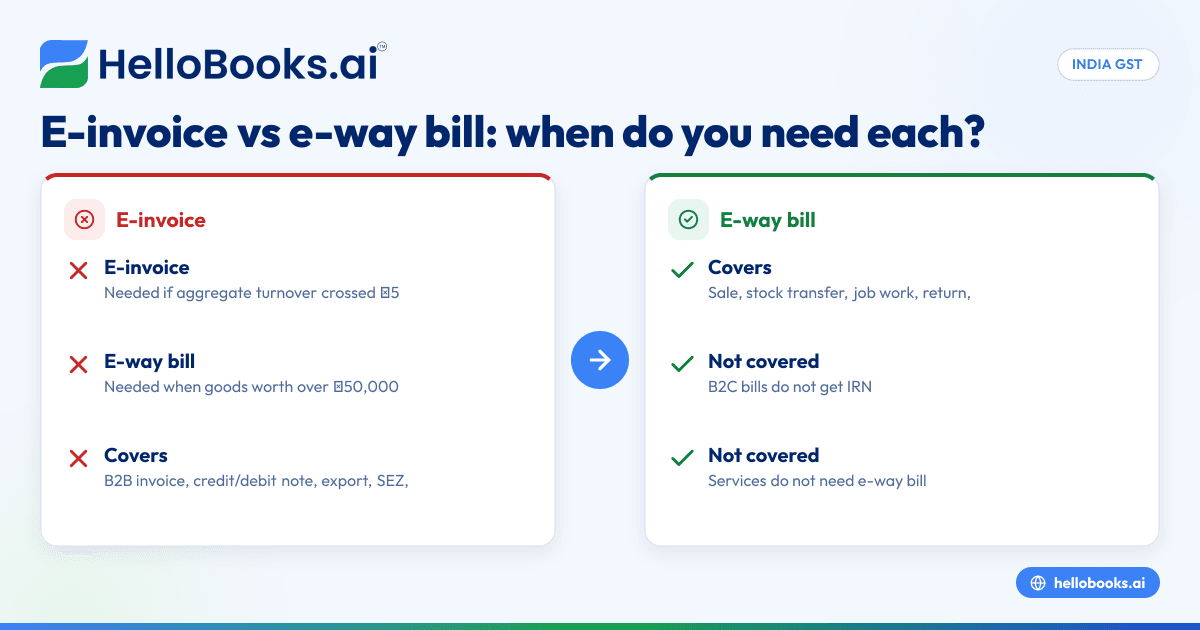
Indiaમાં e-invoicing અને e-way bill બે અલગ GST જરૂરીયાતો છે: e-invoicing invoice reporting માટે છે, જ્યારે e-way bill goods movement માટે છે. સામાન્ય રીતે, e-invoice લાગુ પડે છે કે નહીં તે Central Goods and Services Tax Act, 2017 હેઠળના e-invoice framework અને GSTN/CBIC દ્વારા પ્રકાશિત applicability rules પરથી નક્કી થાય છે; અને e-way bill જોઈએ કે નહીં તે CGST Act, 2017 સાથે જોડાયેલા e-way bill rules, NIC e-way bill system અને GST Portal પરના current guidance પરથી. એટલે નાના traderને e-way bill જોઈએ પણ e-invoice ન જોઈએ, અને service business માટે તેનો ઉલ্টো પણ સાચો હોઈ શકે.
એક invoice માટે IRN, અને એક movement માટે document
ઘણી Gujarati businesses માં ગૂંચવણ એથી થાય છે કે બંનેમાં invoice, GSTIN અને portal આવે છે. પરંતુ કામ જુદું છે.
E-invoicing હેઠળ supplier પોતાના B2B tax invoice, credit note અથવા debit note ની વિગતો Invoice Registration Portal મારફતે report કરે છે. IRP invoiceને register કરે છે, IRN આપે છે અને signed QR code generate કરે છે. આ framework CBIC notifications અને GSTN advisories દ્વારા ચાલે છે. applicability, exempt category, reporting restriction જેવી current વિગતો GST Portal, GSTN e-invoice page અને CBIC notifications માં જ publish થાય છે.
E-way bill માલની હેરફેર માટે છે. જો goods એક સ્થાનથી બીજા સ્થળે જાય છે, તો movementના contextમાં document જોઈએ કે નહીં તે e-way bill rules પરથી નક્કી થાય છે. આ system NIC e-way bill portal હેઠળ ચાલે છે, અને legal basis CGST Rules, 2017 માં publish થયેલો છે. અહીં ફોકસ goods movement છે, invoice registration નહીં.
સીધી ભાષામાં કહીએ તો:
- e-invoice પૂછે છે: “આ B2B invoice સરકારના e-invoice system પર register કરાવવાનો છે?”
- e-way bill પૂછે છે: “આ goods road પર, transporter દ્વારા, branch transferમાં, job work માટે કે return તરીકે move થાય છે?”
એટલે service invoice માટે IRNનો પ્રશ્ન ઊભો થઈ શકે, પણ e-way billનો નહીં. અને B2C retail goods dispatchમાં e-way billનો પ્રશ્ન આવી શકે, પણ e-invoiceનો નહીં.
કાયદા મુજબ કઈ બાબત ક્યાં ચેક કરવી
Indiaમાં current applicability બાબતે અંદાજથી કામ ન કરવું. ખાસ કરીને ₹, lakh, crore, GST turnover, state movement, place of supply અને document timing જેવી બાબતો official source પરથી જ ચેક કરવી.
E-invoicing માટે તમે આ sources જુઓ:
- CBIC notifications under the Central Goods and Services Tax Act, 2017 and rules
- GSTN advisories on the GST Portal
- e-invoice system guidance on the official portal
E-way bill માટે તમે આ sources જુઓ:
- CGST Rules, 2017 હેઠળનો e-way bill framework
- NIC e-way bill portal guidance
- CBIC circulars/notifications
- intra-state movement માટે state-specific notification, જો લાગુ પડતી હોય
આ ખાસ મહત્વનું છે કારણ કે turnover trigger, exempt sectors, reporting window, consignment value treatment, document validity અને vehicle update rules સમયાંતરે બદલાઈ શકે છે. કોઈ પણ ચોક્કસ આંકડો official source વગર bare fact તરીકે પકડી રાખવો જોખમી છે. જો તમારી company multiple GSTINs, inter-state dispatches, stock transfer, job work, export, SEZ supply અથવા TDS/TCS અને reverse charge જેવા મુદ્દાઓ સાથે કામ કરતી હોય, તો CA અથવા GST practitionerની review લેવી યોગ્ય છે.
e-invoicing સામાન્ય રીતે ક્યા businessને અડે છે
E-invoicingનો મૂળ પ્રશ્ન turnover-based applicability નો છે. પરંતુ “turnover” શબ્દ સાંભળતાં જ business owners ઘણી વાર current year sales જ જુએ છે. હકીકતમાં, current figure શું છે, કયા financial yearને જોવાનો છે, aggregate turnover કેવી રીતે ગણાય છે, અને exemption કયા sectorsને છે — આ બધું CBIC notification અને GSTN guidanceમાં જ જોવું જોઈએ.
સામાન્ય રીતે manufacturing, wholesaling, distribution, B2B trading, equipment supply, industrial services અથવા inter-state B2B billing કરતી entities ને આ મુદ્દો વધુ અડે છે. Service providers માટે પણ, જો તેઓ registered businessesને taxable invoice raise કરે છે, તો e-invoice applicability relevant બની શકે.
પરંતુ sectors-wise exemptions હોઈ શકે છે. banking, financial institution, insurance, GTA, passenger transport, cinema admission અથવા SEZ unit જેવી categories વિશે current position હંમેશાં official notification પરથી જ confirm કરવી. “અમારા consultantએ બે વર્ષ પહેલા કહ્યું હતું” એ પૂરતું નથી.
એક practical point: e-invoice એટલે PDF invoice બનાવવી નહીં; invoiceને IRP પર report કરવી. એટલે accounting softwareમાં invoice બનેલું હોવું પૂરતું નથી, જો applicable businessએ IRN લીધા વગર B2B tax invoice issue કરી દીધો હોય. એ mismatch પછી buyerની ITC position, accounts payable approval અને GSTR-1 consistencyમાં તકલીફ ઊભી કરી શકે.
આ જગ્યાએ smart invoicing અને e-invoicing-software જેવી setup useful બને છે, કારણ કે invoice બનાવતી વખતે GSTIN, HSN/SAC, place of supply અને CGST/SGST સામે IGST split એકસરખા રહે તો IRN generation સુધી data cleaner રહે છે.
e-way bill વેચાણ સિવાય પણ ક્યાં જોઈએ
E-way billને ઘણા લોકો માત્ર sales dispatch સાથે જોડે છે. પણ law movement of goods ને વધારે પહોળા અર્થમાં જુએ છે. Goods sale માટે જ નહીં, stock transfer, branch transfer, job work, return, approval basis dispatch, exhibition માટે મોકલેલો માલ અથવા vendor/customer વચ્ચે logistics chainમાં move થતી consignment માટે પણ પ્રશ્ન ઊભો થઈ શકે.
અહીં સૌથી અગત્યની વાત એ છે કે e-way bill movement-based requirement છે. એટલે turnover નાનું હોય તો પણ goods move થાય તો rule લાગુ પડી શકે. અને મોટા turnover હોવા છતાં pure service supply માટે e-way billનો પ્રશ્ન ન પણ બને.
બીજી મોટી ગૂંચવણ consignment value, exempt goods, non-motor movement, short-distance exception, transporter document અને intra-state variation વિશે આવે છે. આ બાબતો CGST Rules, 2017, CBIC guidance અને રાજ્ય-સ્તરની notificationમાં publish થાય છે. એટલે Gujaratની અંદર movement માટે local notification લાગુ પડે છે કે નહીં, એ official publication પરથી જ જોવું.
જો તમે dispatch-heavy business હો — જેમ કે Rajkotનો machine parts trader, Suratનું textile wholesaler, Ahmedabadનો electrical distributor, Morbiની tiles movement chain, કે pharma stock transfer setup — તો invoice data અને movement data અલગ-અલગ spreadsheetમાં રાખવાથી errors વધી જાય છે. Invoiceમાંથી જ e-way bill generate થાય તો consignee, GSTIN, HSN, value અને vehicle-related fields ફરીથી ટાઇપ કરવાની જરૂર ઓછી રહે છે.
ઘણી વાર એક જોઈએ, બીજું નહીં
આ બંને requirements હંમેશાં સાથે નથી આવતી. Finance teamએ આ distinction સમજવું જરૂરી છે.
એક consulting firm Mumbaiની registered companyને professional fee invoice આપે. અહીં goods movement જ નથી. એટલે e-way billનો પ્રશ્ન નહીં. પરંતુ જો e-invoicing applicability official rules મુજબ business પર લાગુ પડતી હોય, તો B2B invoice માટે IRN જરૂરી બની શકે.
ઉલટું, એક small trader warehouseમાંથી goods customerને મોકલે છે. જો business e-invoice frameworkમાં covered ન હોય, તો IRNનો પ્રશ્ન નથી. છતાં goods movement માટે e-way bill rules લાગુ પડી શકે.
ત્રીજું case: branch transfer. Sale નથી, payment receipt નથી, પણ goods move થાય છે. અહીં e-way billનો પ્રશ્ન ઉભો થઈ શકે, જ્યારે e-invoice supply type, document nature અને applicabilityના contextમાં અલગ રીતે જોવું પડે.
ચોથું case: B2C retail dispatch. Buyer registered business નથી. તેથી e-invoicing સામાન્ય રીતે પ્રશ્ન નહીં બને. છતાં consignment movement rules લાગુ પડે તો e-way bill relevant થઈ શકે.
પાંચમું case: export goods. અહીં customs, shipping documents, GST treatment, e-invoice applicability અને e-way bill movement — બધું document chainમાં અલગ ભૂમિકા ભજવે છે.
આ distinctions return filingમાં પણ અસર કરે છે. Invoice reporting, outward supply summary અને tax liability alignment માટે books, IRN data અને GST return figures મેળ ખાતા હોવા જોઈએ. તેથી gst-return-filing-software સાથે invoice-driven filing helpful બને છે, ખાસ કરીને GSTR-1 અને GSTR-3B direct filing કરતી teams માટે.
invoice, dispatch અને returns એકબીજા સાથે કેવી રીતે જોડાય છે
Operational headache ત્યાં થાય છે જ્યાં sales team invoice બનાવે, dispatch team transporter slip જુએ, accounts team GSTR-1 ભરે, અને owner payment UPI, NEFT, RTGS અથવા IMPS receiptથી track કરે. જો આ બધું અલગ systemsમાં છે, તો mismatch સ્વાભાવિક છે.
સારી process સામાન્ય રીતે આવી દેખાય છે:
- customer masterમાં GSTIN સાચું capture થાય
- place of supply પરથી tax head split સાચું થાય: intra-state હોય તો CGST/SGST, inter-state હોય તો IGST, applicable law મુજબ
- B2B invoice માટે e-invoice applicability હોય તો IRN અને signed QR મળે
- goods movement હોય તો e-way bill invoice data પરથી બને
- outward supplies return figures સાથે જોડાય
- purchase side પર supplier data GSTR-2A/2B સાથે reconcile થાય જેથી ITC claim blind રીતે ન થાય
આ workflowમાં human error સૌથી વધુ ક્યાં થાય? GSTIN typo, wrong place of supply, wrong tax head split, invoice value સામે consignment value mismatch, cancelled invoice update ન થવી, transporter detail late capture થવી, અને booksમાં receipt આવી ગયેલી હોવા છતાં invoice open દેખાતી રહેવી.
એટલે Gujarati SME માટે માત્ર billing tool નહિ, પણ joined-up bookkeeping વધુ કામનું બને છે. Example તરીકે, bank transactions માટે live feedનો દાવો કરતાં નહીં, monthly bank statement upload કરીને AI reconciliation કરાવવી વધુ સાચી India workflow છે. Receipts UPI, NEFT કે IMPSથી આવી હોય, owner uploaded bank statementના આધારે invoice matching જોઈ શકે છે; આ bank reconciliation અને ai bookkeeping પ્રકારની automationથી શક્ય બને છે.
invented illustrative ગણતરીથી ફરક સમજો
માનો કે આ સંપૂર્ણ રીતે illustrative અને invented સ્થિતિ છે; નીચેના આંકડા માત્ર સમજાવવા માટે છે, official threshold, rate, value test અથવા legal conclusion માટે નહીં. Current rule CBIC, GSTN અને NIC e-way bill portal પર ચેક કરવી જ પડશે.
ધારીએ કે Vadodaraની એક electrical goods firmે એક registered dealerને INRમાં tax invoice raise કર્યો. આ invented invoiceમાં taxable value ₹1,80,000 રાખીએ, અને goods Ahmedabadથી Udaipur મોકલાય છે. આ ઉદાહરણમાં inter-state movement છે, એટલે place of supply અને tax head split બાબત booksમાં IGST side પર જઈ શકે — પરંતુ actual tax treatment invoice facts, supply nature, law અને current official guidance પરથી જ નક્કી કરવો.
અહીં business માટે બે અલગ પ્રશ્ન છે:
પ્રથમ, શું આ firm e-invoicing frameworkમાં covered entity છે? એ માટે current turnover-based applicability CBIC notification પરથી જોવી પડશે. જો covered હોય, તો B2B invoice IRP પર report કરીને IRN અને signed QR લેવો પડે.
બીજું, શું આ goods movement માટે e-way bill જરૂરી છે? એ માટે consignment value, goods nature, exemption, movement facts અને current e-way bill rules જોવાની રહેશે.
નોંધો કે આ invented illustration શું બતાવે છે: એક જ dispatchમાં invoice compliance અને movement compliance બંને એકસાથે આવી શકે. પરંતુ તે automatic નથી. ક્યારેક invoice compliance હશે પણ movement compliance નહીં; ક્યારેક movement compliance હશે પણ IRNનો પ્રશ્ન નહીં.
આ ઉદાહરણ calculation શું છોડે છે? Actual GST rate, exemption, HSN-specific treatment, transporter arrangement, vehicle update, document validity, state-specific notification, export/customs layer, reverse charge position અને buyer ITC implication — બધું. એટલે real filing અથવા dispatch decision માટે NEEDS EXPERT REVIEW.
Gujarati businesses સૌથી વધુ ક્યાં અટવાય છે
Ahmedabad, Surat, Rajkot, Vadodara, Morbi, Vapi કે Bhavnagar જેવા hubsમાં business owners સામાન્ય રીતે નીચેના pain points કહે છે:
એક, “અમારે Tallyમાં invoice છે, પણ dispatch document અલગ બનાવીએ છીએ.” પરિણામે same goods માટે બે data versions રહે છે. જો તમે tally-alternative જોવા માંગતા હો, અથવા Tally migration/connector સાથે parallel trial કરવો હોય, તો invoice અને compliance data એક જ flowમાં લાવવું સરળ બને છે.
બે, “staff place of supply ખોટું લઈ લે છે.” આથી CGST/SGST સામે IGST split ખોટો પડે છે. Gujaratમાં intra-state અને inter-state billing mix હોય ત્યારે આ બહુ સામાન્ય છે.
ત્રણ, “purchase bills entry મોડું થાય છે.” Supplier invoice PDF, photo અથવા paperમાંથી OCRથી capture થાય તો inward data ઝડપથી booksમાં આવે છે, અને પછી GSTR-2A/2B reconciliation સાથે ITC tracking વધુ નિયંત્રિત બને છે.
ચાર, “multi-state GSTINs છે.” એક entity પાસે Gujarat અને Maharashtra બંને GSTIN હોય તો branch-wise compliance અલગ જોવી પડે. Multi-GSTIN environmentમાં central visibility મદદરૂપ બને છે.
પાંચ, “dispatch થઈ ગયું, પણ accountsને ખબર મોડે પડે.” Mobile appથી invoice, expense કે stock-side entries phone પરથી capture થવી field teams માટે useful છે.
છ, “owner details માટે WhatsApp પર પૂછે છે.” Noor assistant WhatsApp પર Hindi, English અને Hinglishમાં books વિશે મદદ કરે છે; Gujarati business owner માટે પણ day-to-day quick query contextમાં આ practical છે, ખાસ કરીને જ્યારે owner full desktop system સામે ન બેઠો હોય.
સાત, “inventory book અને GST book અલગ છે.” Inventory movement sales/purchase સાથે જોડાય તો closing stock અને dispatch readiness વધારે current રહે છે. આ માટે inventory linked accounting વધુ ઉપયોગી રહે છે.
complianceને softwareથી નહીં, processથી હળવું કરો
કોઈપણ software lawને replace કરતું નથી. Indiaમાં GST, CBIC, GSTN, Income Tax Act, Companies Act, MCA, RBI અથવા DPDP જેવી compliance realities વચ્ચે businessએ પોતાનો document trail મજબૂત રાખવો પડે છે. પરંતુ યોગ્ય processથી કામ સરળ જરૂર બને છે.
ઉપયોગી setup એ હોય છે જ્યાં:
- GST invoice બનાવતી વખતે GSTIN validation થાય
- place of supplyથી tax head split consistent રહે
- applicable હોય ત્યારે invoiceમાંથી સીધો IRN અને signed QR મળે
- goods dispatch માટે e-way bill invoice data પરથી ઊઠે
- purchases OCRથી booksમાં આવે
- GSTR-2A/2B reconciliationથી ITC tracking થાય
- GSTR-1 અને GSTR-3B booksમાંથી જ build થાય
- uploaded bank statementથી receipt matching અને AI reconciliation થાય
- financial reports, receivables ageing અને GST figures એકબીજાથી દૂર ન ભાગે
એમાં HelloBooks જેવી accounting software India approach ખાસ SMEs માટે કામની બને છે, કારણ કે owner, accountant, CA firm અને dispatch team એક જ source data પરથી કામ કરી શકે. Pricing જાણવા હોય તો pricing જુઓ, અને hands-on સમજવું હોય તો demo વધુ યોગ્ય રહેશે.
જો તમને પહેલા basic checks કરવાની હોય, તો official filing પહેલાં free toolsથી GSTIN, HSN અને invoice field sanity પણ ચેક કરી શકાય. ઉદાહરણ તરીકે GSTIN validator, HSN code search અને GST invoice validator જેવી checks data quality સુધારે છે.
છેલ્લો practical rule: dispatch પહેલાં બે સવાલ પૂછો
દરેક sale, transfer અથવા outward movement પહેલાં તમારા staffને બે સવાલની ટેવ પાડો.
પહેલો: આ document B2B invoice/credit note/debit note છે અને અમારી entity પર current e-invoicing applicability CBIC/GSTN મુજબ લાગુ પડે છે?
બીજો: આ goods movement માટે e-way bill rules current law અને portal guidance મુજબ લાગુ પડે છે?
આ બે સવાલ જુદા છે. જો team તેમને એકમાં મિક્સ કરે છે, તો problems થાય છે: buyer payment અટકે, transporter અટકે, GSTR-1 mismatch થાય, ITC query આવે, અથવા accounts અને warehouse વચ્ચે તણાવ ઊભો થાય.
જો તમે Gujarat કે Indiaમાં growing business ચલાવો છો, ખાસ કરીને જ્યાં rupee-value dispatch, GST invoices, inter-state movement, TDS/TCS adjustments, inventory અને multiple users સાથે રોજનું કામ ચાલે છે, તો objective આ હોવું જોઈએ: invoice, movement, books અને returns અલગ ફાઈલો નહીં, એક જ connected process બને.


