


Key takeaways
What this article covers, in order:
- पहले यह तय कीजिए: सौदा बदला है या सिर्फ return गलत है?
- Credit note और debit note में क्या-क्या जुड़ना चाहिए
- GSTR-1 में notes और amendments कहाँ reflect होते हैं
- Place of supply गलत हो तो note नहीं, अक्सर amendment ज़्यादा सही होता है
- एक छोटा काल्पनिक हिसाब, ताकि फर्क साफ दिखे
- Credit note से buyer-side ITC और matching पर क्या असर पड़ता है
India में GST रिटर्न के लिए सीधा नियम यह है: अगर invoice जारी होने के बाद असली लेन-देन बदला है—जैसे माल return, post-sale discount, short supply, या price revision—तो credit note या debit note देखें; लेकिन अगर आपकी reporting गलत हुई है—जैसे गलत GSTIN, गलत place of supply, गलत taxable value—तो amendment करें. GST का framework Central Goods and Services Tax Act, 2017, Integrated Goods and Services Tax Act, 2017 और उनके rules के तहत चलता है; current tables, schema, advisories और filing flow GSTN के GST Portal तथा CBIC की notifications/circulars में publish होते हैं.
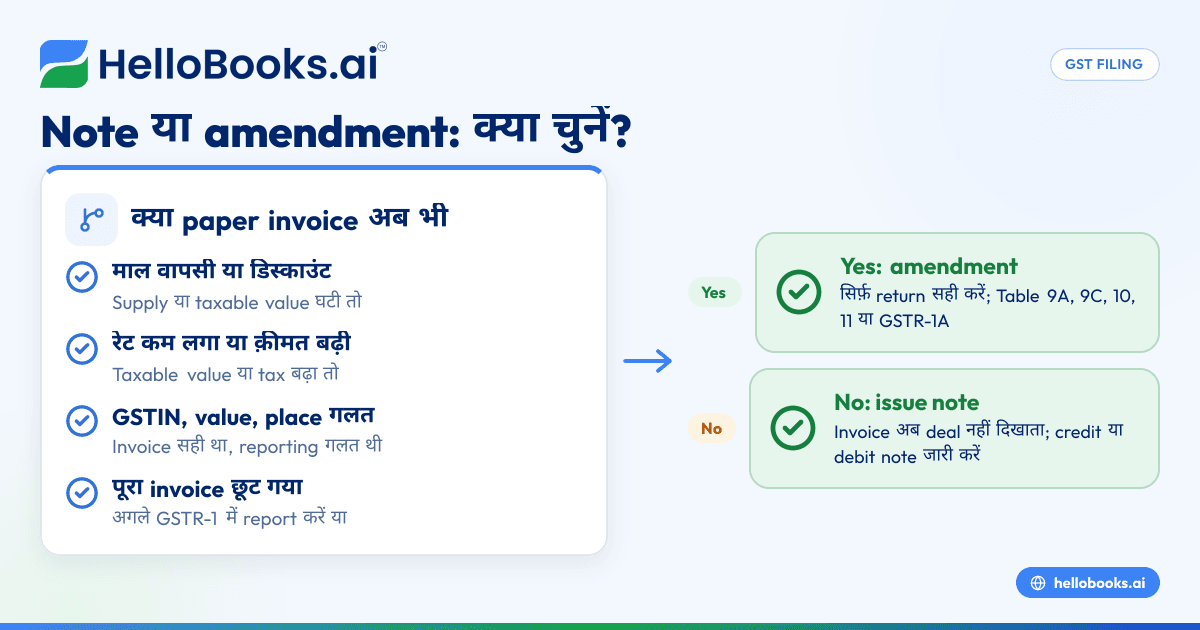
पहले यह तय कीजिए: सौदा बदला है या सिर्फ return गलत है?
अधिकांश confusion यहीं से शुरू होती है. व्यापारी को लगता है कि हर गलती के लिए credit note बना देना आसान है. पर GST में note और amendment अलग समस्याओं का इलाज हैं.
Credit note तब उपयुक्त होता है जब supply के बाद value या tax downward revise करना हो. जैसे:
- माल वापस आ गया
- quantity कम accept हुई
- contract के मुताबिक बाद में discount देना पड़ा
- invoice में अधिक amount charge हो गया और अब उसे घटाना है
Debit note तब आता है जब supply के बाद value या tax upward revise करना हो. जैसे:
- कम value bill हुई थी, अब बढ़ानी है
- short billing हुई थी
- rate application या quantity capture से tax कम निकल गया था और commercial document से उसे बढ़ाना है
Amendment तब करें जब underlying deal ठीक थी, पर return में reporting गलत चली गई. जैसे:
- buyer का GSTIN गलत report हो गया
- invoice number/date गलत चढ़ गया
- place of supply गलत report हुआ, जिससे IGST बनाम CGST+SGST split बिगड़ गया
- taxable value या tax amount return table में गलत चला गया
एक practical test रखिए: जो invoice आपने customer को दिया था, क्या वह आज भी commercial reality सही दिखाता है? अगर हाँ, पर GST return में entry गलत है, तो amendment. अगर invoice अब सौदे को सही नहीं दिखाता, तो note.
यहीं पर सही invoicing बहुत फर्क डालती है. यदि software customer GSTIN, state और place of supply के आधार पर CGST, SGST या IGST split consistently रखे, तो बाद में amendment की जरूरत कम पड़ती है. HelloBooks में GST invoicing और place-of-supply logic इसी तरह ऐसी reporting mistakes घटाने में मदद करते हैं.
Credit note और debit note में क्या-क्या जुड़ना चाहिए
भारत में tax invoice, revised documents और linked notes के mandatory fields का आधार CGST Act, 2017 और Central Goods and Services Tax Rules, 2017 हैं; field-level requirements का current text CBIC notifications, rules repository और GST Portal help material में मिलता है. इसलिए कोई भी format final करने से पहले वहीं का current wording देखें.
सामान्य रूप से एक valid credit note या debit note में यह स्पष्ट होना चाहिए:
- supplier का legal name, address और GSTIN
- serial number और issue date
- recipient का नाम, address; registered हो तो GSTIN
- original invoice का reference number और date
- taxable value में कितना change हो रहा है
- applicable tax heads: CGST, SGST, IGST, और जहाँ relevant हो cess
- reason, जैसे sales return, post-sale discount, rate difference
अगर note कई invoices से linked है, तो link trail maintain करना ज़रूरी है. Portal reporting और buyer-side matching के लिए audit trail साफ होना चाहिए. खासकर जब buyer registered हो, तो उनके IMS/GSTR-2B view में note कैसे reflect होगा, यह link quality पर निर्भर करता है.
Purchase side पर भी यही discipline जरूरी है. Supplier ने आपको credit note दिया है तो उसका असर ITC tracking में दिखना चाहिए. HelloBooks में purchase bills की OCR capture और GSTR-2A/2B reconciliation के साथ note impact देखना accounting और GST books को एक line में रखने में मदद करता है.
GSTR-1 में notes और amendments कहाँ reflect होते हैं
Exact table numbers, return schema changes और portal behaviour GSTN के GST Portal release notes और return instructions में publish होते हैं, इसलिए filing month में current layout वहीं verify करें. India में यही सबसे सुरक्षित तरीका है, क्योंकि GSTN interface समय-समय पर बदलता है.
Broadly, logic यह है:
- registered buyer से जुड़े credit note/debit note अलग note reporting buckets में जाते हैं
- certain unregistered cases में भी note reporting अलग रहती है
- small B2C adjustments कई बार summary impact के रूप में flow कर सकती हैं, depending on current portal design and table treatment as published on GST Portal NEEDS EXPERT REVIEW
- amendments original invoice reporting को correct करने के लिए designated amendment tables या then-current correction flow में जाती हैं
यह distinction इसलिए जरूरी है क्योंकि GSTR-3B liability flow increasingly GSTR-1 data से driven रहता है. अगर आपने note की जगह amendment किया, या amendment की जगह note, तो outward liability, buyer visibility और reconciliation तीनों बिगड़ सकते हैं.
Registered customers के साथ यह और महत्वपूर्ण हो जाता है. उनके books, ITC eligibility और working capital पर आपके credit note/debit note का असर दिखता है. इसलिए return tables को memory से नहीं, current GST Portal instructions से पढ़ें.
अगर आप return manually बनाते हैं, तो invoice register, note register और amendment trail अलग रखें. HelloBooks में invoices से return preparation होने और GSTR-1 व GSTR-3B direct filing होने का practical फायदा यही है कि issued document और filed figures के बीच mismatch कम रहता है.
Place of supply गलत हो तो note नहीं, अक्सर amendment ज़्यादा सही होता है
भारत में inter-state और intra-state treatment के कारण place of supply की गलती सिर्फ address error नहीं होती; इससे tax head बदल सकता है—IGST बनाम CGST+SGST. इसका legal basis IGST Act, 2017 में place-of-supply provisions और CBIC/GSTN guidance में मिलता है. Current interpretive guidance के लिए CBIC circulars, FAQs और GST Portal advisories देखें.
मान लीजिए customer का GSTIN Karnataka का है, लेकिन invoice/reporting में Maharashtra local sale जैसा treatment चला गया. अब दो स्तर हैं:
- क्या original commercial invoice itself गलत था?
- या invoice सही था, पर GSTR-1 reporting में tax head/supply type गलत report हुआ?
दूसरे case में amendment obvious route हो सकता है. पहले case में documentation trail broader हो सकती है, और कई businesses commercial correction plus GST correction दोनों करते हैं. यह fact-specific होता है और CA/indirect tax expert review मांग सकता है.
यह वही area है जहाँ software का tax-head split बहुत काम आता है. HelloBooks customer GSTIN, state और supply type के आधार पर CGST/SGST बनाम IGST split लगाता है, जिससे गलत tax head charging और बाद का amendment workload घटता है. Interstate dispatch हो तो e-way bill invoice data से raise करने का flow भी consistency बढ़ाता है.
एक छोटा काल्पनिक हिसाब, ताकि फर्क साफ दिखे
यहाँ जो रकम दी जा रही है वे पूरी तरह illustrative और invented हैं. इनका मकसद concept समझाना है, न कि current tax computation या compliance advice देना. Current rate, reporting position, eligibility और cut-off आपको संबंधित law, CBIC notification और GST Portal instructions से verify करनी चाहिए.
मान लीजिए Delhi का एक seller, जिसका GSTIN active है, April में Jaipur के registered buyer को tiles सप्लाई करता है. उसने एक invoice issue किया और outward supply को inter-state माना. बाद में buyer बताता है कि कुछ boxes transit में टूट गए और वापस भेज दिए गए. Seller buyer को rupee amount में adjustment देता है. यहाँ commercial event बदला: goods partly returned. इसलिए credit note natural document है.
अब दूसरा invented twist लीजिए. माल return नहीं हुआ, discount भी नहीं हुआ, पर seller ने GSTR-1 में buyer का GSTIN typo के साथ report कर दिया. Underlying invoice ठीक है; return reporting गलत है. यहाँ credit note बनाकर value घटाना गलत होगा. सही रास्ता amendment है.
तीसरा twist: seller ने पहले कम value bill कर दी थी, बाद में contract reading से पता चला कि freight recoverable थी और taxable value बढ़नी चाहिए थी. अगर facts और contract support करते हैं, debit note का सवाल आता है.
इस invented illustration में हमने e-invoice threshold, exact tax rate, reverse charge possibility, TDS under Income-tax Act, 1961, buyer ITC timing, transport valuation और any sector-specific notification को deliberately छोड़ दिया है. इसलिए इसे सिर्फ concept note मानिए.
Credit note से buyer-side ITC और matching पर क्या असर पड़ता है
Credit note सिर्फ seller की outward liability की कहानी नहीं है. India में registered buyer के लिए यह input tax credit position को भी प्रभावित कर सकता है. ITC framework का legal base CGST Act, 2017 की input tax credit provisions और related rules हैं; current reflection logic GSTN, GST Portal advisories और buyer-facing statements/records में देखा जाता है.
सरल भाषा में: seller ने tax reduce किया, तो buyer को भी अपनी side पर corresponding effect देखना पड़ सकता है. इसलिए buyer और seller के books sync होना जरूरी है. यहीं से reconciliation discipline पैदा होता है.
व्यवहार में कई mismatch ऐसे बनते हैं:
- seller ने credit note issue किया, पर buyer से commercial acknowledgement नहीं लिया
- seller books में note है, return में नहीं गया
- return में note गया, पर original invoice mapping गड़बड़ है
- purchase register update नहीं हुआ
यदि आप supplier bills को PDF या photo से capture करते हैं और उनका GST reconciliation लगातार करते हैं, तो buyer-side surprises कम होते हैं. HelloBooks में OCR-based purchase capture, ITC tracking और GST reconciliation checker जैसे tools इसी use case में काम आते हैं.
Amendment करने से पहले source records मिलाइए
कई businesses सीधे GST Portal खोलकर amendment कर देते हैं, फिर बाद में books, bank, inventory और return अलग-अलग numbers दिखाते हैं. सही sequence यह होना चाहिए:
- original invoice/credit note/debit note document देखें
- dispatch proof, delivery proof, return proof, debit-credit approval देखें
- stock movement देखें, अगर goods involved हैं
- payment adjustment देखें: UPI, NEFT, RTGS या IMPS receipt/refund trail क्या कहती है
- buyer ledger और tax ledger मिलाएँ
अगर bank trail नहीं मिला, तो commercial correction और tax correction का alignment टूट सकता है. HelloBooks में bank statement upload के बाद AI reconciliation से receipts/refunds को invoice entries से match करना आसान होता है; इसके लिए bank reconciliation flow काम आता है. अगर goods वापस आए हैं, तो inventory movement update होना भी ज़रूरी है, नहीं तो stock एक number दिखाएगा और GST adjustment दूसरा.
यह discipline Companies Act, 2013 के तहत books and records expectations, और broader audit preparedness के लिए भी अच्छा है. Private limited companies के लिए MCA-facing financial reporting और GST records का मेल practical necessity है, भले filing systems अलग हों.
Multi-GSTIN businesses के लिए amendment governance अलग रखें
India में बहुत से traders और service businesses के पास एक से अधिक GSTIN होते हैं—state-wise registrations की वजह से. ऐसे में note और amendment की गलती सिर्फ एक branch issue नहीं रहती; एक ही PAN group में अलग-अलग state teams अलग style अपनाती हैं.
Best practice यह है कि आप हर GSTIN के लिए:
- document numbering discipline रखें
- return corrections की approval trail रखें
- place of supply matrix standardise करें
- Tally या पुराने ERP से migrated data validate करें
- state-wise outward, inward और stock reports नियमित देखें
अगर team अभी भी Tally data पर heavily dependent है, तो migration phase में खास सावधानी रखें. HelloBooks का Tally alternative positioning और Tally connector practical transition में useful हो सकता है, क्योंकि इससे legacy books और current GST work को एकदम से तोड़ना नहीं पड़ता. Multi-state entities के लिए multi-GSTIN handling भी इसलिए relevant है.
Hindi में काम करने वाली teams के लिए compliance तभी चलता है जब workflow सरल हो
GST corrections का problem सिर्फ law नहीं, execution भी है. भारत में owner Hindi, accountant English, transporter WhatsApp पर Hinglish, और CA portal language में काम करता है. इसी mismatch में notes और amendments late या गलत हो जाते हैं.
इसलिए workflow ऐसा होना चाहिए जिसमें:
- invoice से correction trail साफ दिखे
- owner mobile पर status देख सके
- accountant return file कर सके
- buyer GSTIN validate किया जा सके
- HSN/SAC और invoice fields जल्दी check हो जाएँ
HelloBooks की mobile app, Hindi/English/Hinglish support वाली Noor assistant on WhatsApp, और India-specific free tools इस execution side को आसान बनाते हैं. Quick checks के लिए आप GSTIN validator, HSN code search और GST invoice validator जैसे tools इस्तेमाल कर सकते हैं. Software fit समझना हो तो demo या India page यहाँ देख सकते हैं; pricing के लिए केवल India pricing देखें.
किन बातों पर expert review लेना चाहिए
कुछ स्थितियाँ simple नहीं होतीं, और वहाँ template answer नुकसान कर सकता है:
- place of supply error के साथ wrong tax head collection already हो चुका हो
- export, SEZ, deemed export या LUT/Bond context हो
- debit note का buyer ITC effect complex हो
- year-end close के बाद commercial credit तो देना है, पर GST reduction eligibility doubtful है
- reverse charge implications जुड़ी हों
- sector-specific valuation rules लागू हों
ऐसे मामलों में current law text, CBIC circulars, GST Portal advisories और आपके facts-based documentation को साथ पढ़ना चाहिए. Income Tax Act, 1961 के तहत revenue recognition, bad debts, discounts या TDS accounting के angles भी कभी-कभी side effects पैदा करते हैं, भले primary issue GST हो. Data privacy side पर customer details और invoice records संभालते समय Digital Personal Data Protection Act, 2023 की internal controls पर भी ध्यान रखें, especially अगर records teams और vendors के बीच share हो रहे हों.
अंतिम बात सीधी है: credit note/debit note transaction change के लिए है; amendment reporting error के लिए. India में GST compliance का आधा काम सही legal bucket चुनना है, और बाकी आधा साफ records रखना. अगर invoice, bank statement, inventory और return एक ही system से जुड़ते हैं, तो notice, mismatch और buyer disputes कम होते हैं.


