


Key takeaways
What this article covers, in order:
- முதலில் நேரடி பதில்: எந்த business-க்கு எந்த திட்டம் பொருந்தும்?
- Composition scheme என்றால் உண்மையில் நீங்கள் எதை விட்டுக் கொடுக்கிறீர்கள்?
- Regular GST எப்போது தெளிவாக நல்ல தேர்வு ஆகிறது?
- உங்கள் customer யார் என்பது தான் மையக் கேள்வி
- ஒரு நேர்மையான கணக்கு: illustrative, invented numbers மட்டுமே
- Inter-state supply, e-way bill, e-invoice: growth வந்தால் படம் மாறும்
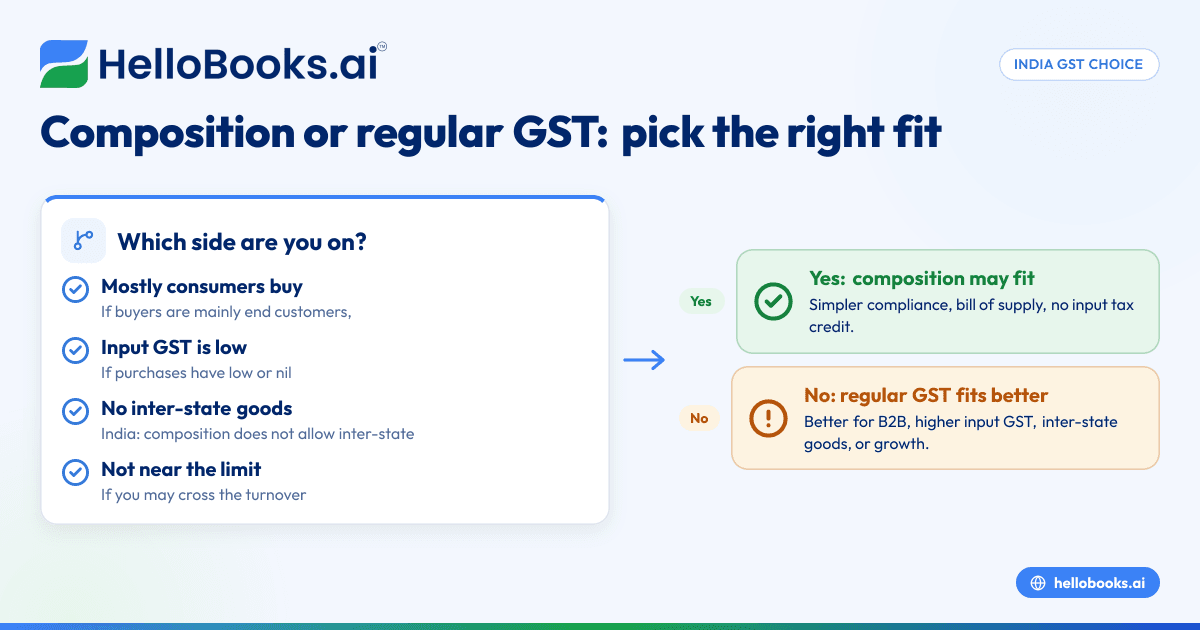
India-வில் Composition Scheme மற்றும் Regular GST இடையில் எதைத் தேர்ந்தெடுப்பது என்பது உங்கள் turnover எண்ணிக்கையை மட்டும் பார்த்து முடிவெடுக்க வேண்டிய விஷயம் அல்ல. நீங்கள் யாருக்கு விற்கிறீர்கள், purchase-களில் எவ்வளவு GST சிக்கிக் கொள்கிறது, inter-state supply இருக்கிறதா, buyer-க்கு ITC தேவையா, growth plan என்ன என்பதுதான் முக்கியம். சுருக்கமாகச் சொன்னால்: local B2C, low-input-tax, paperwork குறைய வேண்டும் என்றால் composition பொருந்தலாம்; B2B, ITC, IGST sales, multiple GSTIN, e-invoice அல்லது scale வேண்டுமெனில் regular GST பொதுவாகச் சிறந்த பாதை.
முதலில் நேரடி பதில்: எந்த business-க்கு எந்த திட்டம் பொருந்தும்?
Tamil Nadu-ல ஒரு retail கடை அல்லது small restaurant போல mostly end customer-க்கு விற்கும் business-க்கு, invoice-ல் tax collect செய்ய வேண்டிய அவசியம் குறைவாகவும், input side-ல் eligible ITC பெரிய அளவில் இல்லாமலும் இருந்தால் composition scheme எளிமையை தரலாம். ஆனால் wholesaler, manufacturer, contractor, online seller, inter-state supplier, அல்லது GST-registered customers-க்கு supply செய்யும் business-க்கு regular GST பெரும்பாலும் practical choice.
ஏன் என்றால் regular GST-ல் நீங்கள் tax invoice issue செய்து, Central Goods and Services Tax Act, 2017 மற்றும் Integrated Goods and Services Tax Act, 2017 கீழ் eligible input tax credit claim செய்யும் அமைப்பில் வேலை செய்கிறீர்கள். இந்த framework-ஐ Central Board of Indirect Taxes and Customs (CBIC) நிர்வகிக்கிறது; filing system GST Network (GSTN) மூலம் GST Portal-ல் இயங்குகிறது. Composition-க்கு யார் தகுதி, என்ன நிபந்தனை, current rate, current threshold, return requirement போன்றவை CBIC notifications, CGST Rules, மற்றும் GST Portal guidance-ல் தான் வெளியாகின்றன; அதனால் final decision எடுப்பதற்கு முன் அங்கிருந்த current figures-ஐ பார்த்து அல்லது உங்கள் CA-வுடன் உறுதி செய்ய வேண்டும்.
Composition scheme என்றால் உண்மையில் நீங்கள் எதை விட்டுக் கொடுக்கிறீர்கள்?
Composition scheme-ன் பெரிய attraction simplicity. ஆனால் simplicity free அல்ல. பொதுவாக நீங்கள் regular GST போல output tax separately collect செய்வது, eligible ITC claim செய்வது, buyer-க்கு tax invoice கொடுத்து அவருக்கு credit pass செய்வது போன்ற பல நன்மைகளை விட்டுக் கொடுக்கிறீர்கள். பல சமயங்களில் bill of supply model-ல் இயங்க வேண்டி வரும், அதனால் உங்கள் customer GST-registered business என்றால் அவர் வாங்கியதில் credit கிடைக்காதது deal-breaker ஆகலாம்.
இது கடைக்காரர், small trader, neighbourhood restaurant போன்றவர்களுக்கு sometimes acceptable. அவர்கள் customer base பெரும்பாலும் household buyer; buyer-க்கு GSTIN கிடையாது, ITC பற்றி கவலை இல்லை. ஆனால் B2B supply செய்யும் Coimbatore machine parts supplier, Chennai interior contractor, Tiruppur fabric trader போன்றவர்களுக்கு இது sales friction உருவாக்கலாம். Buyer-கள் “tax invoice குடுக்க முடியுமா?” என்று கேட்க ஆரம்பித்தவுடன் regular GST வலிமை தெரியும்.
மற்றொரு point: composition-ல் purchase side GST ஒரு real cost ஆக மாறக்கூடும். Raw material, packaging, freight, services, rent-related tax components, reverse charge situations, அல்லது capital goods purchases இருந்தால், அந்த tax-ஐ absorb செய்ய வேண்டிய நிலை வரும். Margin already tight என்றால் இதுவே composition-ஐ expensive ஆக்கிவிடும்.
Regular GST எப்போது தெளிவாக நல்ல தேர்வு ஆகிறது?
Regular GST “paperwork அதிகம்” என்பதற்காக மட்டும் தவிர்க்கக் கூடாது. சில business models-க்கு அது basic operating requirement மாதிரி இருக்கும்.
Regular GST usually stronger choice ஆகும் சூழல்கள்:
- உங்கள் customers GST-registered businesses; அவர்களுக்கு ITC வேண்டும்
- நீங்கள் inter-state goods அல்லது services supply செய்கிறீர்கள்; place of supply சரியாக நிர்ணயிக்க வேண்டியுள்ளது
- purchases-ல் GST meaningful amount ஆக உள்ளது
- e-commerce, distributor network, branch expansion, multiple states போன்ற growth plans உள்ளன
- e-way bill, e-invoice, IRN, signed QR போன்ற compliance ecosystem-க்குள் நீங்கள் நுழைய வாய்ப்பு உள்ளது
- one state-ஐ தாண்டி வேலை செய்கிறீர்கள்; IGST vs CGST/SGST treatment day-to-day reality
இந்த வகை business-களுக்கு books மற்றும் GST data ஒத்துப் போக வேண்டும். அதனால் invoice போடும்போது customer GSTIN, place of supply, HSN/SAC, CGST/SGST அல்லது IGST split போன்றவை சரியாகப் போவது முக்கியம். HelloBooks மாதிரி system-ல் GST invoice உருவாக்கும்போதே tax head split சரியாக வருவது, inter-state sale-ல் தவறாக CGST+SGST charge ஆகாமல் காப்பது, பின்னர் GSTR-1 மற்றும் GSTR-3B direct filing-க்கு data clean ஆக இருப்பது practical advantage தரும்.
உங்கள் customer யார் என்பது தான் மையக் கேள்வி
பலர் scheme-ஐ tax rate comparison ஆகப் பார்க்கிறார்கள். India-வில் அது incomplete view. உங்கள் buyer profile தான் முடிவை நிர்ணயிக்கும்.
B2C-heavy business
நீங்கள் Madurai-ல் ஒரு provisions store, Salem-ல் ஒரு small mess, Trichy-ல் ஒரு local hardware counter நடத்துகிறீர்கள் என்று வைத்துக் கொள்ளுங்கள். Buyer cash, UPI, IMPS, NEFT receipt mix-ஆக pay செய்கிறார்; அவருக்கு GST credit தேவையில்லை. இங்கே compliance simplicity ஒரு business benefit ஆக இருக்கலாம்.
B2B-heavy business
நீங்கள் Hosur-ல் components supply செய்கிறீர்கள், Chennai-ல் corporate clients-க்கு service செய்கிறீர்கள், அல்லது Sivakasi-ல் dealers chain-க்கு goods அனுப்புகிறீர்கள் என்றால், buyer tax invoice expect செய்வார். அவர் GSTR-2B-ல் entry reflect ஆக வேண்டுமென்று பார்ப்பார். அங்கே composition-ன் simplicity உங்கள் sales-ஐ குறைக்கலாம்.
Regular GST-ல் recorded purchase invoices-ஐ GSTR-2A/2B reconciliation செய்து ITC track செய்வது, vendor missing invoice issues early-ஆகப் பார்க்குவது useful. இது books, GST return, and cash flow மூன்றையும் control செய்ய உதவும்.
ஒரு நேர்மையான கணக்கு: illustrative, invented numbers மட்டுமே
இப்போது ஒரு illustrative, invented situation பார்ப்போம். இது official rate advice அல்ல; current applicable rates, eligibility conditions, threshold figures, and filing rules அனைத்தும் CBIC notifications, GST Portal, மற்றும் relevant provisions of the CGST Act/Rules-ல் publish ஆகும். கீழே உள்ள கணக்கு freight classification, blocked credits, exempt turnover mix, stock transition issues, reverse charge specifics, and sector restrictions ஆகியவற்றை முழுமையாக எடுத்துக் கொள்ளவில்லை.
Suppose ஒரு Tiruppur trader-க்கு வருட sales ரூபாய் 48 lakh என்று purely illustrative, invented figure வைத்துக் கொள்வோம். அவர் mostly local households-க்கு விற்கிறார். வருட purchase value ரூபாய் 36 lakh; அதில் eligible input tax embedded impact relatively small என்று வைத்துக் கொள்வோம். Composition-ல் அவர் books maintain செய்வது simpler; buyer ITC demand குறைவு; tax cost business margin-ல் absorb ஆகலாம். இந்த fact pattern-ல் composition practical choice போலத் தோன்றலாம்.
இதேபோல் ஒரு Coimbatore furniture unit-ஐ எடுத்துக் கொள்ளுங்கள். வருட sales ரூபாய் 72 lakh என்று illustrative, invented figure வைத்துக் கொள்வோம்; customers பெரும்பாலும் GST-registered interior firms. Raw material purchases ரூபாய் 45 lakh, and tax-bearing inputs significant என்று assume செய்கிறோம். இங்கே composition-க்கு மாறினால் buyer credit இழக்கிறார்; seller input tax recover செய்ய முடியாமல் margin pressure-ஐ சந்திக்கலாம். இந்த invented scenario-ல் regular GST commercially stronger answer ஆகும்.
அதாவது ஒரு scheme “cheap” அல்லது “easy” என்று abstract-ஆக இல்லை. Buyer type, procurement pattern, and expansion path பார்த்தால்தான் சரியான பதில் கிடைக்கும்.
Inter-state supply, e-way bill, e-invoice: growth வந்தால் படம் மாறும்
Small business இன்று local-ஆக இருக்கலாம்; நாளை Karnataka, Kerala, Telangana buyers-க்கு sell செய்ய ஆரம்பிக்கலாம். அங்குதான் early decision முக்கியமாகிறது. IGST treatment, place of supply, dispatch documentation, transporter coordination, e-way bill requirements—all these become operational issues, not theory.
Goods movement இருக்கிற business-க்கு invoice-லிருந்து e-way bill உருவாகும் workflow நேரம் சேமிக்கும். Same consignment details-ஐ இருமுறை type செய்ய வேண்டாமென்றால் error குறையும். Scale ஆகும் போது இது பெரிய விஷயம். அதேபோல் law-க்கு உட்பட்ட current e-invoicing applicability figures, turnover limits, and notified classes CBIC notifications மற்றும் GST system advisories-ல் publish செய்யப்படுகின்றன. Business அந்த applicability-க்குள் வந்தால் IRN மற்றும் signed QR generation manual portal upload-ஐவிட நேர்த்தியான workflow தேவைப்படும்.
HelloBooks-ல் invoice save செய்யும் நேரத்திலேயே e-invoice process fit ஆகும் business-க்களுக்கு IRN and signed QR workflow smooth ஆக இருக்கும்; அதனால் growth stage-ல் spreadsheet இருந்து திடீர் migration செய்ய வேண்டிய சூழல் குறையும்.
Compliance வேலை குறைய வேண்டும் என்றால் system எப்படி இருக்க வேண்டும்?
Composition தேர்வு செய்யும் business-க்கும் books தேவைதான். Regular GST தேர்வு செய்யும் business-க்கு அது இன்னும் முக்கியம். India-வில் practical pain point tax law மட்டும் இல்லை; data fragmentation. ஒரு பக்கம் Tally, ஒரு பக்கம் Excel, ஒரு பக்கம் bank statement PDF, ஒரு பக்கம் supplier WhatsApp bill, இன்னொரு பக்கம் GST Portal.
அதனால் decision scheme பற்றி மட்டும் இருக்கக் கூடாது; compliance workflow எப்படி ஓடும் என்பதையும் பார்க்க வேண்டும்.
- Purchase bills photo/PDF-ஆக வந்தால் OCR capture useful
- Monthly bank statement upload செய்து receipts and payments reconcile பண்ணுவது owner நேரத்தை காப்பாற்றும்
- Inventory business என்றால் sales and purchases உடன் stock move ஆக வேண்டும்
- Financial reports same entries-ல் இருந்து உருவானால் GST numbers மற்றும் P&L fight பண்ணாது
- If you are shifting from Tally, migration path practical ஆக இருக்க வேண்டும்
இந்த காரணத்தால் accounting software India போன்ற tools பார்க்கும்போது, GST return filing மட்டும் அல்லாமல் day-to-day bookkeeping எப்படி சுலபமாகிறது என்பதையும் பார்க்க வேண்டும். Bank statement upload செய்து AI reconciliation செய்யும் flow, invoice-to-return linkage, purchase OCR, inventory movement—இவை எல்லாம் regular GST-க்கு மட்டும் அல்ல; composition user-க்கும் useful. ஆனால் regular GST-ல் payoff அதிகம் தெரியும், ஏனெனில் GSTR-1 மற்றும் GSTR-3B filing data அதே books-ல் இருந்து செல்லும்.
ஒரு Tamil Nadu business owner decision எடுக்கும் முன் கேட்க வேண்டிய கேள்விகள்
நீங்கள் இந்த கேள்விகளுக்கு honest answer கொடுத்தால் தேர்வு தெளிவாகும்:
- என் customer-களில் எத்தனை பேர் GSTIN உடன் registered businesses?
- அவர்கள் tax invoice கேட்கிறார்களா, ITC பற்றி பேசுகிறார்களா?
- நான் வாங்கும் raw material, packing, rent, services, logistics-ல் GST cost meaningful amount ஆக இருக்கிறதா?
- நான் Tamil Nadu-க்கு வெளியே supply செய்யப் போகிறேனா?
- Amazon/marketplace model, distributor network, branch expansion போன்ற திட்டங்கள் உள்ளனவா?
- நான் தற்போது Tally/Excel/WhatsApp/PDF mix-ல் வேலை செய்கிறேனா?
- Multiple GSTIN அல்லது company + proprietorship structures இருக்கிறதா?
- Bank reconciliation, stock, GST returns, TDS/TCS entries அனைத்தும் ஒரே system-ல் இருந்தால் எனக்கு control அதிகரிக்குமா?
இந்த கேள்விகளில் buyer ITC, inter-state, procurement tax, scale ஆகியவற்றுக்கு “ஆம்” அதிகமாக இருந்தால் regular GST பொதுவாக பொருத்தமாகும். “இல்லை” அதிகமாகவும், business hyper-local consumer retail ஆகவும் இருந்தால் composition seriously consider செய்யலாம்—subject to current legal eligibility published by CBIC/GST Portal and professional review.
Scheme மாற வேண்டிய சூழல்கள் என்ன?
Business static இல்லை. இன்று composition எடுத்த business நாளை regular GST-க்கு shift செய்ய வேண்டிய நிலை வரலாம். காரணங்கள்:
- turnover growth
- inter-state orders ஆரம்பித்தல்
- GST-registered buyer mix அதிகரித்தல்
- input tax heavy procurement
- funding, company conversion, MCA compliance formalisation
- better accounting discipline தேவைப்படுதல்
இந்த transition smooth ஆக இருக்க வேண்டுமென்றால் records clean இருக்க வேண்டும். Stock, supplier bills, customer invoices, GSTIN mapping, tax heads, bank reconciliation எல்லாம் व्यवस्थितமாக இருந்தால் shift less painful. Tally-யில் பழைய data இருந்தாலும், migration அல்லது connector path useful ஆகலாம். அதனால் Tally alternative அல்லது compare HelloBooks vs Tally போன்ற comparison-ஐ business process கோணத்தில் பார்க்கலாம்; “எந்த software cheaper?” என்பதற்காக மட்டும் அல்ல.
HelloBooks எங்கு பொருந்துகிறது?
இந்தத் தேர்வில் HelloBooks useful ஆகும் பகுதி straight forward. நீங்கள் regular GST-ல் இருந்தால் correct GST invoice issue செய்வது, place of supply அடிப்படையில் CGST/SGST அல்லது IGST split சரியாக வருவது, purchase bills capture செய்வது, GSTR-2A/2B reconciliation மூலம் ITC tracking செய்வது, மற்றும் recorded data-யிலிருந்து GSTR-1, GSTR-3B direct filing செய்வது வேலைச் சுமையை குறைக்கும். Goods dispatch business-களுக்கு invoice-லிருந்து e-way bill raise செய்வதும் practical.
Composition business-க்கும் இது irrelevant அல்ல. Billing discipline, inventory, bank statement upload, AI reconciliation, financial reports ஆகியவை owner-க்கு real visibility தரும். இன்று single GSTIN இருந்தாலும், நாளை second state registration வந்தால் same login-ல் multi-GSTIN handling helpful ஆகலாம். Mobile app மூலம் shop floor அல்லது field-லிருந்தே entries போட முடிவது small teams-க்கு வசதியாக இருக்கும்.
உங்களுக்கு current eligibility, classification, or invoice field sanity check வேண்டும் என்றால் free India tools உதவும்: GST calculator, GSTIN validator, HSN code search, GST reconciliation checker. Product fit பார்க்க வேண்டுமெனில் demo book செய்யலாம்; pricing பார்க்க வேண்டுமெனில் India pricing பக்கத்தில் current plans இருக்கும்.
இறுதியாக எந்தத் தேர்வு சரி?
சுருக்கமாக:
- Local consumer-facing, low-ITC, simplicity-first business என்றால் composition பொருந்தக்கூடும்.
- B2B, ITC-heavy, inter-state, growth-oriented, process-driven business என்றால் regular GST பல நேரங்களில் சரியான பதில்.
- “Rate குறைவு” மட்டும் பார்த்து composition போவது ஆபத்து.
- “Paperwork அதிகம்” என்று regular GST-ஐ பயந்து விலகுவது கூட ஆபத்து.
Final decision எடுக்கும் முன் current composition eligibility, notified conditions, applicable rates, and filing obligations ஆகியவற்றை Central Goods and Services Tax Act, 2017, relevant Rules, CBIC notifications, and the GST Portal-ல் verify செய்யுங்கள். TDS, Companies Act, MCA, RBI banking trail, மற்றும் DPDP data handling போன்ற wider compliance context business structure-ஐப் பொறுத்து relevance பெறலாம்; அதனால் accountant அல்லது GST practitioner review நல்லது. ஆனால் purely business logic-ஆகப் பார்த்தால், உங்கள் customer யார், purchase tax எவ்வளவு, India-வில் நீங்கள் எவ்வளவு scale ஆகப் போகிறீர்கள் என்பதுதான் இந்தத் தேர்வின் மையம்.


