


Key takeaways
What this article covers, in order:
- Composition आणि regular GST मधला खरा फरक कुठे जाणवतो
- कोणत्या व्यवसायाला composition योग्य पडू शकतो
- Regular GST कधी जास्त शहाणपणाचा पर्याय ठरतो
- ग्राहक कोण आहेत हे उत्तर बहुतेक वेळा निवड ठरवतं
- ITC, margin आणि pricing यांची गणितं कागदावर करून पाहा
- Inter-state supply, e-way bill आणि e-invoice तुमच्यावर काय परिणाम करतात
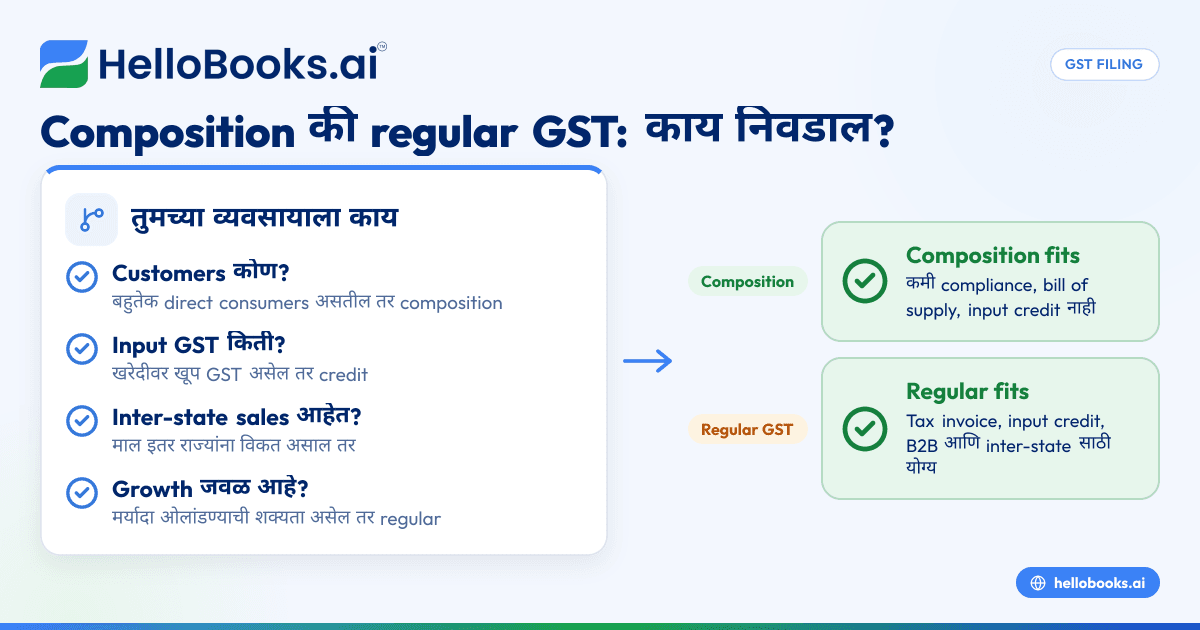
India मध्ये composition scheme की regular GST याचं सरळ उत्तर असं आहे: तुम्ही मुख्यतः अंतिम ग्राहकांना स्थानिक विक्री करता, ITC फारसा साचत नाही, आणि कमी compliance हवी असेल तर composition काही व्यवसायांसाठी उपयोगी पडू शकतो. पण B2B विक्री, inter-state supply, e-invoice/e-way billची गरज, input GST credit महत्त्वाचं असणं, किंवा वाढीची योजना असेल तर regular GST बहुतेक वेळा जास्त योग्य ठरतो. अंतिम निवड करताना GST कायदा, CBICचे नियम आणि GST Portal/GSTN वरची चालू अट तपासणे आवश्यक आहे. NEEDS EXPERT REVIEW
Composition आणि regular GST मधला खरा फरक कुठे जाणवतो
फरक फक्त “कमी tax vs जास्त tax” असा नाही. India मध्ये हा निर्णय तुमच्या billing पद्धतीवर, ग्राहकांना देता येणाऱ्या invoice प्रकारावर, खरेदीवरचा GST credit, राज्याबाहेरील supply, आणि भविष्यातील scale यावर परिणाम करतो.
Composition scheme साधेपणासाठी बनलेली आहे. काही पात्र लहान व्यवसाय turnoverवर कर भरतात, tax invoice ऐवजी bill of supply देतात, आणि input tax credit घेत नाहीत. Regular GST मध्ये तुम्ही तुमच्या outward supply वर लागू GST आकारता, eligible input tax credit ट्रॅक करता, आणि GSTN/GST Portal वर नियमित return filing करता.
हा फ्रेमवर्क Central Goods and Services Tax Act, 2017 आणि संबंधित नियमांतून येतो. चालू पात्रता, अटी, notified rates, return obligations आणि exclusions या गोष्टी CBIC च्या notifications, circulars आणि GST Portal वर प्रकाशित केल्या जातात. कोणतीही विशिष्ट संख्या वापरण्यापूर्वी तिथेच verify करा.
कोणत्या व्यवसायाला composition योग्य पडू शकतो
Composition सर्वांसाठी नसतो, पण काही Indian businesses साठी तो practical असू शकतो.
उदा., तुमचं दुकान एखाद्या शहरात किंवा तालुक्यात local retail करत असेल, ग्राहक बहुतेक unregistered असतील, पैसे UPI, cash, IMPS, NEFT किंवा card ने येत असतील, आणि खरेदीवरचा GST credit फार महत्त्वाचा नसेल, तर composition साधा मार्ग वाटू शकतो. किराणा, छोटं trading outlet, local counter sales, किंवा काही restaurant प्रकारातील व्यवसायांमध्ये हा विचार येतो.
अशा वेळी दोन गोष्टी महत्त्वाच्या असतात:
- तुमचा ग्राहक सहसा ITC मागत नाही
- तुमच्या खरेदीमधला GST इतका मोठा नाही की credit न मिळाल्याने margin बिघडेल
जर तुम्ही books हाताने, Excel मध्ये किंवा जुना Tally setup वापरून manage करत असाल, तर compliance कमी असणं आकर्षक वाटतं. पण “कमी paperwork” म्हणूनच निर्णय घेणं धोक्याचं आहे. कारण inter-state supply, certain categories of goods/services, e-commerce involvement, किंवा business structure यामुळे composition उपलब्धच नसेल. या अटी CGST Act, state GST laws आणि CBIC notifications मध्ये दिल्या जातात; current position GST Portal वर तपासावी.
Regular GST कधी जास्त शहाणपणाचा पर्याय ठरतो
Regular GST हा “मोठ्या कंपनींसाठीच” आहे असा गैरसमज खूप common आहे. प्रत्यक्षात अनेक लहान आणि मध्यम businesses साठी regular scheme जास्त योग्य ठरते.
खालील परिस्थितींपैकी एखादी तरी लागू होत असेल तर regular GST गंभीरपणे विचारात घ्या:
- तुम्ही GST-registered business customersना विकता
- ग्राहकांना tax invoice आणि ITC हवं असतं
- तुम्ही राज्याबाहेर supply करता
- तुम्ही online orders घेता आणि place of supply महत्त्वाचा ठरतो
- raw material, trading stock, packing, transport किंवा services वर GST भरपूर बसतो
- e-way bill किंवा e-invoice ecosystem मध्ये काम करावं लागतं
- तुम्हाला lender, investor, MCA filing, Companies Act reporting किंवा cleaner MIS साठी व्यवस्थित books हवेत
Regular GST मध्ये योग्य CGST/SGST किंवा IGST split लावणं, GSTIN capture करणं, HSN/SAC discipline ठेवणं, आणि GSTR-1 व GSTR-3B मधली consistency राखणं महत्त्वाचं असतं. म्हणूनच software choice इथे खूप matters. HelloBooks मध्ये invoice करताना place of supplyनुसार tax head split लागतो, आणि तुम्ही already नोंदवलेल्या invoicesमधून GST return filing तयार होऊ शकतं. त्यामुळे B2B billing आणि return figures वेगवेगळ्या sheets मध्ये mismatch होण्याचा धोका कमी होतो.
जर तुमच्यावर e-invoice लागू असेल, तर IRN आणि signed QRची प्रक्रिया manual portal upload न करता e-invoicing flow मध्ये बसवणं उपयोगाचं ठरतं. चालू applicability threshold मात्र CBIC notifications आणि GST Portal वरूनच verify करा.
ग्राहक कोण आहेत हे उत्तर बहुतेक वेळा निवड ठरवतं
Composition की regular हा प्रश्न अनेकदा “माझे customer कोण?” या एका प्रश्नाने स्पष्ट होतो.
जर तुमचे ग्राहक:
- colony, गाव, शहरातील end consumers असतील,
- invoice पेक्षा final priceकडे जास्त पाहत असतील,
- GST credit claim करत नसतील,
तर composition workable असू शकतो.
पण जर तुमचे ग्राहक:
- builders, wholesalers, consultants, factories, distributors, agencies, hospitals, schools, offices अशा registered entities असतील,
- purchase team GSTIN देत असेल,
- accounts department input credit reconcile करत असेल,
तर regular GST साधारणपणे मजबूत पर्याय ठरतो. कारण तुमच्या ग्राहकाला तुमचा invoice त्यांच्या GSTR-2B आणि purchase booksशी जुळायला हवा असतो.
इथे फक्त तुमचाच tax cost प्रश्न नसतो; ग्राहकाच्या procurement decisionवरही परिणाम होतो. India मध्ये B2B buyer सहसा असा vendor पसंत करतो ज्याचा invoice clean असेल, GSTIN बरोबर असेल, place of supply चुकीचं नसेल, आणि ITC tracking सोपी असेल. HelloBooks मध्ये customer GSTIN आणि supply detailsवरून GST invoice तयार करताना smart invoicing मदत करते, आणि purchase sideला GSTR-2A/2B reconciliationमुळे missing supplier invoices दिसू शकतात.
ITC, margin आणि pricing यांची गणितं कागदावर करून पाहा
Composition निवडताना सर्वात जास्त दुर्लक्ष होणारी गोष्ट म्हणजे input tax credit न मिळण्याची किंमत. Regular GST निवडताना लोक complianceचं काम जास्त समजतात; composition निवडताना लोक marginवरील दाब कमी समजतात.
हे स्पष्ट करण्यासाठी एक illustrative आणि invented गणित बघू. हे figures केवळ समजावण्यासाठी आहेत; actual notified rates, eligibility, blocked credits, stock transition, exempt supplies, reverse charge, sector-specific rules आणि valuation issues यात धरलेले नाहीत. Current law CGST Act, CBIC notifications आणि GST Portal वर verify करावा.
समजा पुण्यातील एका traderची annual sales ₹48 lakh आहे, आणि त्याच्या taxable purchasesवर वर्षभरात मिळू शकणारा eligible GST credit ₹2.4 lakh इतका आहे, असे आपण केवळ illustrative पद्धतीने गृहित धरतो. जर हा business compositionमध्ये गेला, तर तो input credit घेऊ शकणार नाही; म्हणजे हा ₹2.4 lakh त्याच्या cost structureवर परिणाम करू शकतो. Regularमध्ये त्याला हा credit मिळू शकतो, पण त्याबदल्यात tax invoice discipline, reconciliation आणि return filing करावी लागेल. जर त्याचे ग्राहक B2B असतील, तर तेही त्याच्या invoiceवर credit पाहतात. अशा परिस्थितीत complianceचा ताण असूनही regular जास्त अर्थपूर्ण ठरू शकतो.
उलट, नागपूरमधल्या एका small local retailerचं illustrative, invented गणित घ्या: annual sales ₹22 lakh, purchasesपैकी बऱ्याच वस्तूंवर eligible ITC फारच कमी, आणि customer base पूर्णपणे retail. इथे credit benefit कमी असल्यामुळे compositionचा simplicity benefit तुलनेने जास्त वाटू शकतो. पण तरीही final decision घेण्यापूर्वी current eligibility आणि restrictions official sourceवर तपासणे आवश्यक आहे.
म्हणजे thumb rule असा: input GST तुमच्या marginमध्ये मोठा घटक असेल तर regularचा विचार जास्त गंभीरपणे करा.
Inter-state supply, e-way bill आणि e-invoice तुमच्यावर काय परिणाम करतात
India मध्ये business वाढला की “मी फक्त local seller आहे” ही स्थिती लवकर बदलते. आज WhatsApp inquiry आली, उद्या दुसऱ्या राज्यात dispatch, परवा transporterने e-way bill मागितला — आणि scheme choice अचानक operational issue बनतो.
Regular GST निवडण्यामागे अनेकदा pure taxपेक्षा operations कारणीभूत असतात:
- दुसऱ्या राज्यात supply
- transporterसाठी e-way bill
- large buyerसाठी e-invoice/IRN requirement
- branch किंवा warehouse दुसऱ्या stateमध्ये
- multi-GSTIN accounting
E-way bill requirement, e-invoice applicability, document fields आणि movement rules या सर्व गोष्टी CGST Act, Integrated Goods and Services Tax Act, 2017, संबंधित rules, आणि CBIC / NIC e-Way Bill System / GST Portal वर प्रकाशित प्रक्रियांवर आधारलेल्या असतात. कोणत्या consignmentला e-way bill आवश्यक आहे किंवा e-invoice threshold काय आहे, हे current official sourceवर तपासावं; bare number लक्षात ठेवून निर्णय घेऊ नये.
जर तुमचा dispatch-heavy business असेल, तर invoiceमधूनच e-way bill तयार होणं practical असतं. त्याचप्रमाणे IRN आणि signed QR लागणाऱ्या businessesना e-invoicing workflow उपयुक्त पडतो. हे regular GSTला “legal” नव्हे तर “operationally manageable” बनवतं.
Books, bank आणि reconciliationचा ताण कोणत्या schemeमध्ये कसा बदलतो
लोकांना वाटतं composition म्हणजे accountingची गरजच कमी. खरं म्हणजे accountingची गरज संपत नाही; फक्त complexityचा प्रकार बदलतो.
Compositionमध्येही तुम्हाला sales, purchases, stock, expenses, bank receipts, supplier payments आणि profit track करावाच लागतो. Income Tax Actखाली business income, TDS implications, आणि booksची विश्वसनीयता कायम महत्त्वाचीच असते. Companies Act लागू असेल तर MCA reporting आणि board-level financial clarityही लागते. RBI-regulated lenderकडे loan renewal करताना किंवा OD/CC limitसाठी गेलात तरी clean reports लागतात.
Regular GSTमध्ये reconciliation जास्त critical होतं:
- sales register vs GSTR-1
- tax liability vs GSTR-3B
- supplier invoices vs GSTR-2B
- bank receipts vs open invoices
- stock movement vs billed quantity
म्हणूनच softwareचा फरक पडतो. HelloBooks मध्ये bank statement upload करून receipts reconcile करता येतात, त्यामुळे UPI, NEFT, RTGS, IMPS credits हाताने line-by-line टाकण्याचं काम कमी होतं; त्यासाठी bank reconciliation उपयोगी ठरू शकतं. Purchase bills PDF किंवा फोटोमधून capture करण्यासाठी OCR मदत करतं, आणि inventory असलेल्या व्यवसायांना inventory trackingमुळे closing stock आणि GST books जास्त सुसंगत ठेवता येतात. Tallyवरून हलायचं की hybrid setup ठेवायचा असा प्रश्न असेल तर Tally alternative किंवा migration path बघणं उपयोगी ठरतं.
बदल पुढे करायचा असेल तर आजची निवड उद्याचा अडथळा होऊ देऊ नका
काही व्यवसाय compositionने सुरुवात करून नंतर regularमध्ये जातात. काहीजण उलट regularमध्ये असून simplified route विचारात घेतात. पण scheme change हा फक्त formality नसतो; pricing, customer communication, stock treatment, vendor discipline, ERP/accounting setup आणि document format यावर त्याचा परिणाम होतो.
म्हणून निर्णय घेण्याआधी हे practical प्रश्न स्वतःला विचारा:
- पुढच्या 12 महिन्यांत मी दुसऱ्या राज्यात विक्री सुरू करणार का?
- माझ्या मोठ्या ग्राहकांना GST credit महत्त्वाचं आहे का?
- माझ्या purchasesवर eligible GST credit meaningful आहे का?
- मी bill of supply modelमध्ये comfortable आहे का, की tax invoice आवश्यक आहे?
- माझा business inventory-heavy आहे का?
- मला एकापेक्षा जास्त GSTIN हाताळावे लागतील का?
- माझा CA आणि internal team monthly discipline सांभाळू शकतो का?
जर वाढीचा रोडमॅप “local shop” पासून “multi-city B2B supply” कडे असेल, तर आजचा composition decision उद्याचा migration pain बनू शकतो. उलट, जर तुम्ही consciously small, hyper-local, consumer-facing राहणार असाल, तर simplicity ही legitimate business choice आहे.
India मध्ये निर्णय घेण्यापूर्वी कोणते official स्रोत तपासावेत
हा विषय hearsayवर सोडू नका. “माझ्या marketमध्ये सगळे composition घेतात” किंवा “CAच्या juniorने सांगितलं” एवढ्यावर निर्णय घेऊ नका.
किमान हे official sources तपासा:
- CBIC notifications, circulars आणि press releases
- GST Portal / GSTN वरील taxpayer guidance, return instructions आणि eligibility notes
- CGST Act, 2017, IGST Act, 2017 आणि संबंधित rules
- applicable असल्यास Income Tax Act, 1961 मधील books, expense, TDS आणि business income treatment
- company असल्यास Companies Act, 2013 आणि MCA compliance expectations
Practical screeningसाठी HelloBooksचे India toolsही उपयुक्त पडू शकतात, जसे GSTIN validator, GST calculator, किंवा GST reconciliation checker. पण legal conclusion official source आणि तुमच्या tax professionalकडूनच confirm करा.
शेवटचा निर्णय: साधेपणा की scale-ready setup?
India मध्ये composition vs regular GST हा प्रश्न “कोणतं scheme स्वस्त?” इतकाच नाही; “कोणतं scheme माझ्या business modelला खरंच बसतं?” हा आहे.
जर तुम्ही local, retail-heavy, low-ITC, low-complexity business चालवत असाल तर composition काही वेळा योग्य असू शकतो. पण B2B, inter-state, ITC-sensitive, inventory-heavy, transporter-linked, e-way bill किंवा e-invoice ecosystemमध्ये असलेला business regular GSTकडे झुकतो.
म्हणून अंतिम निवड अशी करा:
- ग्राहक कोण आहेत
- credit किती महत्त्वाचा आहे
- supply कुठे जाते
- किती लवकर scale करायचं आहे
- books किती disciplineने ठेवू शकता
जर तुम्हाला invoicing, reconciliation, inventory आणि GSTR-1/GSTR-3B workflow एकत्र पाहायचा असेल, तर HelloBooksचा demo बघू शकता किंवा India-specific detailsसाठी pricing पानावर जाऊ शकता.


