


Key takeaways
What this article covers, in order:
- B2B और B2C का फर्क GSTR-1 में इतना अहम क्यों है
- कौन-सी sale किस bucket में जाती है
- Registered buyer वाली supply: सिर्फ GSTIN लिखना काफी नहीं
- Unregistered buyer की sale: B2C small और B2C large को कैसे समझें
- Place of supply, IGST बनाम CGST/SGST, और classification का असली रिश्ता
- Credit note, debit note और बाद में मिला GSTIN
भारत में GSTR-1 भरते समय सबसे पहला नियम यह है: buyer registered है या unregistered, यही तय करता है कि sale किस table में जाएगी. Registered buyer को की गई supply आम तौर पर B2B के रूप में invoice-level पर रिपोर्ट होती है, जबकि unregistered buyer की sales B2C buckets में जाती हैं, जहाँ reporting का तरीका place of supply, inter-state/intra-state nature और invoice value पर निर्भर करता है. Current table structure, validation rules और filing behaviour GSTN के GST Portal पर प्रकाशित होते हैं, और GST का legal framework Central Goods and Services Tax Act, 2017, Integrated Goods and Services Tax Act, 2017 और इनके Rules के तहत CBIC administer करता है.
B2B और B2C का फर्क GSTR-1 में इतना अहम क्यों है
GSTR-1 सिर्फ sales summary नहीं है; यह वही return है जिससे buyer के records, auto-drafted statements और input tax credit trail प्रभावित होते हैं. अगर आपने registered customer की sale को B2C में डाल दिया, तो tax amount जमा हो जाने के बावजूद buyer को credit trail में दिक्कत आ सकती है. इसी वजह से GSTN पर invoice classification सिर्फ bookkeeping detail नहीं, compliance issue है.
भारत में यह गलती अक्सर तब होती है जब business invoice बनाते समय customer का GSTIN capture नहीं करता, या Tally या spreadsheet से data import करते समय registered/unregistered tag गलत बैठ जाता है. खासकर multi-state sellers के लिए place of supply और tax head split भी classification के साथ जुड़ जाते हैं: intra-state supply पर CGST और SGST, inter-state supply par IGST. Applicable treatment GST law के तहत CBIC notifications, GST Rules और GST Portal guidance में देखा जाना चाहिए.
यहीं पर invoicing system की quality फर्क डालती है. अगर invoice बनाते वक्त customer GSTIN, place of supply और tax head split सही pick हो, तो बाद में GSTR-1 classification guesswork नहीं रहता. HelloBooks में GST invoicing के साथ invoice बनाते समय CGST/SGST या IGST split और GSTIN-based fields को एक ही flow में रखा जा सकता है, जिससे B2B और B2C mix होने का risk कम होता है.
कौन-सी sale किस bucket में जाती है
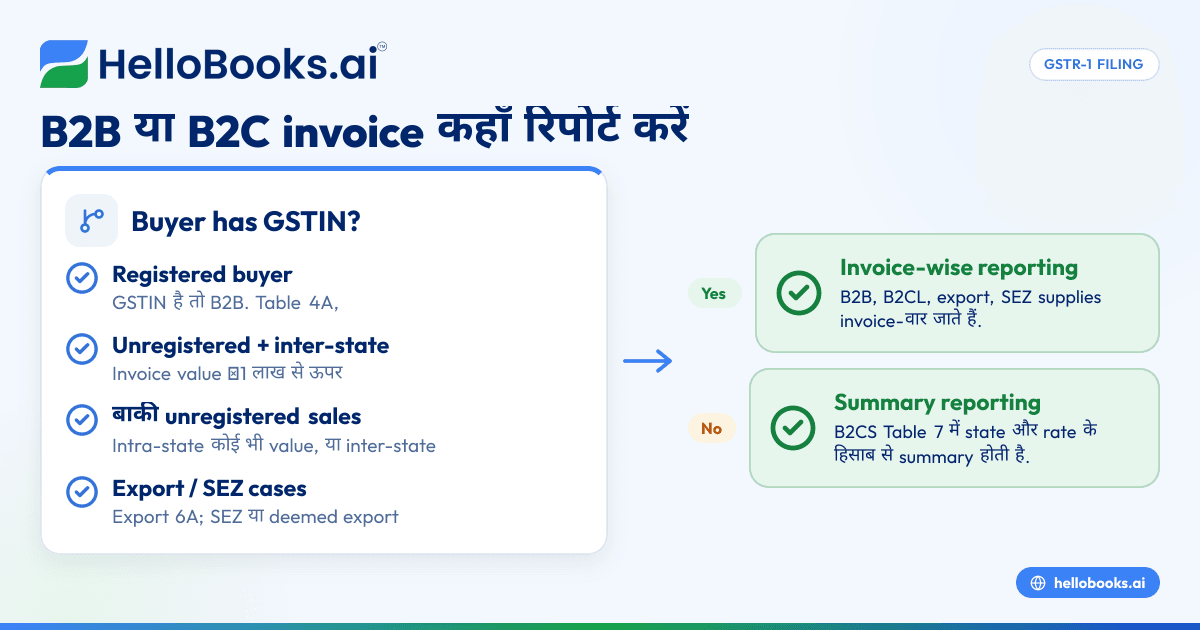
GSTR-1 में सभी outward supplies एक ही तरह report नहीं होतीं. Practical level पर आपको कम से कम यह समझना चाहिए:
- Registered buyer को sale: आम तौर पर B2B reporting bucket
- Unregistered buyer को intra-state sale: आम तौर पर B2C summary bucket
- Unregistered buyer को inter-state sale: value और portal rule के हिसाब से B2C large या B2C small treatment
- Export, SEZ, deemed export: अलग reporting buckets
- Credit note/debit note: original supply की nature के साथ linked treatment
लेकिन bare number याद करना काफी नहीं है, क्योंकि limits और table validations बदल सकते हैं. किसी भी current threshold, table mapping change या validation rule को official मानने से पहले GSTN के GST Portal पर latest advisory, schema notes या offline utility instructions देखें, और legal basis के लिए CBIC notifications under the CGST Act/IGST Act verify करें.
Illustrative and invented scenario लें: मान लीजिए Jaipur का एक furniture seller तीन invoices बनाता है. पहला invoice Rajasthan के एक hotel को है जिसने अपना GSTIN दिया है. दूसरा invoice showroom walk-in customer को है जिसने UPI से payment किया लेकिन GSTIN नहीं दिया. तीसरा invoice Delhi के household buyer को है, जो unregistered है और inter-state supply बनती है. इन तीनों sales का tax treatment, reporting section और invoice detail level एक जैसा नहीं होगा. यह उदाहरण सिर्फ समझाने के लिए है; इसमें actual thresholds, exemption nuances, HSN issues और sector-specific exceptions शामिल नहीं हैं.
Registered buyer वाली supply: सिर्फ GSTIN लिखना काफी नहीं
B2B sale के लिए यह देखना ज़रूरी है कि buyer सच में registered person है, GSTIN सही है, invoice details valid हैं, और place of supply invoice के nature से मेल खाता है. गलत GSTIN, typo, wrong state code, या tax head mismatch buyer के reconciliation को बिगाड़ सकते हैं.
India में कई businesses यह मान लेते हैं कि अगर buyer ने WhatsApp पर GSTIN भेज दिया तो classification काम खत्म. ऐसा नहीं है. GSTIN validity, buyer state, transaction nature, reverse charge applicability, document type, HSN/SAC और taxable value mapping भी मायने रखते हैं. Official GSTIN status GST Portal के search tools पर verify किया जाता है. इसी तरह invoice field requirements CGST Rules, खासकर tax invoice requirements वाली provisions, और CBIC guidance में देखनी चाहिए.
अगर आपका buyer registered है और आपने sale को B2C summary में डाल दिया, तो buyer की side पर mismatch आ सकता है. अगर आपने wrong place of supply डाल दी, तो CGST+SGST बनाम IGST का फर्क आ सकता है. इसलिए reporting से पहले invoice creation stage पर control होना बेहतर है. HelloBooks में e-invoicing software उन businesses के लिए मददगार है जिन पर e-invoice rules लागू होते हैं, क्योंकि invoice save flow में IRN और signed QR capture होने से invoice identity और return data linkage अधिक साफ रहता है; current applicability threshold हमेशा CBIC notification और GST Portal documentation से verify करें.
Unregistered buyer की sale: B2C small और B2C large को कैसे समझें
B2C sales में confusion ज़्यादा होता है, क्योंकि हर unregistered sale एक ही तरह report नहीं होती. Intra-state B2C sales आम तौर पर summary form में जाती हैं. Inter-state B2C sales में current GST Portal rules के हिसाब से कुछ invoices invoice-wise reporting मांग सकते हैं, जबकि बाकी summary bucket में जाते हैं.
यहाँ सबसे बड़ी गलती पुराने templates से होती है. India में businesses अक्सर किसी CA office की पुरानी Excel file, किसी blog का पुराना screenshot, या Tally export layout पर भरोसा कर लेते हैं. लेकिन B2C large classification के current limits और return tables की latest behaviour GSTN के GST Portal पर check करनी चाहिए, और applicable legal backing CBIC notifications के साथ verify करनी चाहिए. अगर कोई article, YouTube video या software popup बिना source के कोई threshold बता रहा है, उसे official source से मिलाए बिना follow न करें.
Illustrative and invented figures के साथ समझें: मान लीजिए एक seller ने Bengaluru से Karnataka के walk-in customers को कई invoices दिए और कुछ inter-state online orders Hyderabad तथा Pune भेजे. Karnataka के unregistered walk-in customers की sales एक summary bucket में club हो सकती हैं, जबकि inter-state unregistered invoices में portal rule के हिसाब से invoice-level disclosure की जरूरत पड़ सकती है. यह केवल explanation के लिए बनाया गया scenario है; इसमें current threshold figure जानबूझकर official source से cite नहीं की जा रही, क्योंकि वही GST Portal और CBIC material से confirm होनी चाहिए.
यहीं gst return filing software useful होता है. जब invoices creation stage से ही सही tag के साथ recorded हों, तो GSTR-1 build करते समय B2B/B2C breakup manually reconstruct नहीं करना पड़ता. HelloBooks सीधे GSTR-1 और GSTR-3B filing support करता है, इसलिए sale booking और return preparation के बीच data दोबारा type करने की जरूरत घटती है.
Place of supply, IGST बनाम CGST/SGST, और classification का असली रिश्ता
भारत में B2B/B2C discussion अक्सर अधूरी रह जाती है क्योंकि लोग सिर्फ buyer registration पर रुक जाते हैं. जबकि GSTR-1 classification का दूसरा आधा place of supply है. यह तय करता है कि supply inter-state है या intra-state, और उसी से IGST या CGST+SGST निकलता है. Applicable rules IGST Act, 2017 में दिए गए हैं, और operational guidance CBIC तथा GST Portal पर मिलती है.
अगर seller Maharashtra में है और goods Gujarat भेजे जा रहे हैं, तो inter-state character बन सकता है. अगर वही seller Maharashtra के भीतर supply कर रहा है, treatment अलग हो सकता है. Services में place of supply analysis और भी nuanced हो सकता है. इसलिए सिर्फ customer city देखकर tax head चुनना खतरनाक है.
Illustrative and invented working देखें: एक seller ने ₹48,000 की taxable value वाला invoice raised किया, buyer unregistered है, goods दूसरे state में भेजे गए, और system ने गलती से CGST+SGST लगा दिया. दूसरी तरफ सही treatment IGST होना चाहिए था. इस invented example में amount सिर्फ समझाने के लिए है; actual tax computation, rate selection, exemptions, freight treatment और composite supply analysis intentionally छोड़े गए हैं. Point यह है कि गलत tax head सिर्फ tax amount की गलती नहीं बनाता, बल्कि return table, state-wise summary और audit trail भी बिगाड़ देता है.
इसलिए software में place of supply और tax head split का automation बहुत काम का है. HelloBooks में sale entry के साथ place of supply logic और CGST/SGST बनाम IGST split को एक ही accounting flow में रखा जा सकता है, जिससे inter-state B2C और local B2B जैसी frequent situations में manual override कम पड़े. Goods movement हो तो उसी invoice context से e-way bill generation भी convenient हो सकता है, ताकि consignment data अलग से retype न करना पड़े. E-way bill applicability, document requirements और value-related rules हमेशा CBIC-backed portal guidance से verify करें.
Credit note, debit note और बाद में मिला GSTIN
असल confusion return filing के दिन नहीं, correction के दिन बढ़ता है. आपने पहले B2C sale माना, बाद में customer बोलता है कि उसका GSTIN है. या आपने B2B invoice बना दिया, बाद में पता चला GSTIN invalid था. ऐसी situations में sirf accounting entry edit करना काफी नहीं; आपको देखना पड़ता है कि original document, amendment route, credit note/debit note treatment और buyer-side reflection पर क्या असर पड़ेगा.
यहाँ governing framework CGST Act, CGST Rules और GST Portal की amendment utilities/return instructions हैं. Current amendment windows, permitted fields और document handling rules official portal पर verify किए जाने चाहिए. किसी generic blog की advice पर blindly past-period change करना risk भरा है.
Illustrative and invented case लें: एक seller ने Chennai के retail customer को ₹1,18,000 का invoice बना दिया और B2C treat किया. अगले week customer ने कहा कि purchase business use के लिए थी और valid GSTIN share किया. अब क्या original invoice को सीधा B2B में swap कर सकते हैं? इसका answer transaction facts, return already filed है या नहीं, portal amendment capability, and supporting documentation पर depend करेगा. यह scenario सिर्फ issue समझाने के लिए है; इसमें exact remedy official advice नहीं है और NEEDS EXPERT REVIEW.
अगर business regularly ऐसी corrections face करता है, तो customer master discipline जरूरी है. HelloBooks में GSTIN-centric customer records, invoice history और direct return flow होने से amendment cases trace करना आसान हो सकता है. Multi-state businesses के लिए multi-GSTIN setup भी useful है, क्योंकि अलग state registrations की outward supplies एक ही login context में अलग रखी जा सकती हैं.
Buyer reconciliation पर असर: आपकी GSTR-1 गलती दूसरे की ITC problem बन सकती है
भारत में GST compliance अब isolated नहीं है. Seller की outward reporting buyer की inward reconciliation को directly प्रभावित करती है. Buyer अपनी purchase register, supplier invoices, GSTR-2A/2B view और ITC eligibility compare करता है. अगर seller ने B2B invoice गलत classify किया, invoice number mismatch किया, या GSTIN typo कर दिया, तो buyer follow-up करेगा ही.
यही वजह है कि B2B/B2C classification sales team, billing desk और accountant—तीनों की shared responsibility है. Shop counter पर invoice B2C बन गया, लेकिन customer later business name और GSTIN मांग रहा है—यह process issue है. E-commerce style dispatch में address दूसरे state का है, लेकिन billing state local pick-up जैसा enter हुआ—यह place of supply issue है. NEFT, RTGS, IMPS या bank transfer receipt reconcile हो जाने से GST classification अपने-आप सही नहीं हो जाता.
Operationally, uploaded bank statement से receipt match करना भी useful cross-check देता है. अगर high-value inter-state retail invoices बार-बार bank narration में दिख रहे हैं लेकिन return summary में उनका reporting pattern consistent नहीं है, तो review trigger होना चाहिए. HelloBooks में bank reconciliation software के जरिए India-specific bank statement upload और AI-assisted matching available है; यह live bank feed नहीं है, बल्कि uploaded statement based workflow है, जो sales receipts और books alignment में मदद कर सकता है.
Purchase side पर भी picture पूरी करनी चाहिए. जब business suppliers के bills OCR से capture करता है, GSTR-2A/2B reconciliation देखता है और ITC track करता है, तब inward और outward disciplines एक-दूसरे को मजबूत करते हैं. HelloBooks का ai bookkeeping और OCR-based purchase capture accounting team को duplicate typing कम करने में मदद कर सकता है, खासकर तब जब same month में outward GSTR-1 और inward checks parallel चल रहे हों.
India में practical monthly review कैसे करें ताकि B2B/B2C mix-up कम हो
हर filing cycle में एक short control review काफी फर्क डाल सकता है. इसका मकसद bare deadlines chase करना नहीं, बल्कि classification quality improve करना है. Current due dates, late fee, interest or penalty figures official रूप से GST Portal, CBIC notifications और relevant provisions under the CGST Act/IGST Act में check होने चाहिए; यहाँ उन्हें bare fact की तरह repeat नहीं किया जा रहा.
Review में ये practical checks रखें:
- जिन customers ने GSTIN दिया है, क्या उनकी invoices B2B bucket में हैं?
- क्या कोई inter-state unregistered invoice है जिसे summary में नहीं जाना चाहिए था, as per current portal rule?
- क्या place of supply customer state और dispatch facts से मेल खाता है?
- क्या IGST vs CGST/SGST split supply nature के साथ consistent है?
- क्या credit notes original supply nature के साथ linked हैं?
- क्या invoice numbering clean है, especially e-invoice IRN वाले documents में?
- क्या high-value receipts bank statement में तो हैं, पर invoice classification unclear है?
Illustrative and invented review sheet सोचें: 240 sales invoices, जिनमें 38 registered buyers, 176 local retail bills, 26 inter-state unregistered dispatches. Review में 4 invoices में wrong GSTIN digit, 3 में place of supply error, और 2 inter-state retail invoices summary bucket में pushed मिले. Figures invented हैं और सिर्फ process समझाने के लिए हैं; actual business impact sector, tax rate, returns already filed होने और amendment route पर depend करेगा.
ऐसे review को आसान बनाने के लिए software में reports और drill-down जरूरी हैं. HelloBooks की accounting software India setup में invoices, stock movement, receivables और GST filing data एक ही system में जुड़े रह सकते हैं, जिससे अलग-अलग Excel versions कम बनते हैं. अगर business अभी भी Tally से shift सोच रहा है, तो tally alternative comparison देखना helpful हो सकता है, और migration/connector approach phased cleanup में काम आ सकती है.
Filing से पहले कौन-से tools और records हाथ में रखें
GSTR-1 में B2B vs B2C classification समझने के लिए सिर्फ return screen देखना पर्याप्त नहीं. आपको master data, invoice trail और validation tools चाहिए. India में minimum practical toolkit यह हो सकता है:
- Customer-wise GSTIN list
- State-wise sales summary
- Inter-state unregistered invoice list
- Credit/debit note register
- E-invoice/IRN records जहाँ applicable हों
- Goods movement records जहाँ e-way bill relevant हो
- Uploaded bank statement based receipt matching
- Inventory movement, अगर goods business है
Official validation के लिए GSTIN और invoice fields को filing से पहले verify करना smart habit है. Free checks के लिए GSTIN validator, GST invoice validator और GST reconciliation checker जैसे tools उपयोगी हो सकते हैं. Tax amount estimation के लिए GST calculator भी काम आ सकता है, लेकिन legal position, rate notification और classification nuances फिर भी CBIC/GST Portal source से confirm करने चाहिए.
अगर team mobile-first काम करती है—जैसे field sales, godown dispatch, owner approvals—तो phone पर invoice visibility और quick checks useful रहते हैं. HelloBooks का mobile app iOS और Android पर available है, और Hindi, English या Hinglish में Noor assistant on WhatsApp के जरिए bookkeeping/GST context के सवाल पूछना कुछ businesses के लिए practical support layer बन सकता है. Data governance और privacy obligations का broader framework India में DPDP Act, Companies Act record-keeping context, और sector-specific requirements से भी प्रभावित हो सकता है; जहाँ needed हो, policy review अलग से करें.
सबसे सीधी बात: sale की nature invoice बनाते वक्त तय करें, filing के दिन नहीं
GSTR-1 में B2B और B2C का सही जवाब return table याद करने से कम, और invoice discipline से ज़्यादा आता है. Buyer registered है या नहीं, GSTIN valid है या नहीं, place of supply क्या है, inter-state/intra-state nature क्या है, और document original sale है या note—ये सब invoice creation stage पर साफ होना चाहिए. उसी से सही GST, सही tax head, सही reporting bucket और buyer-side reconciliation निकलते हैं.
अगर आपके पास India operations में कई GSTINs हैं, inventory भी है, e-invoice भी लागू है, और receipts UPI, NEFT या bank transfer से आती हैं, तो scattered tools जल्दी messy हो जाते हैं. Integrated records, uploaded bank statement reconciliation, invoice-level GST logic और direct GSTR-1/GSTR-3B filing वाला setup errors कम कर सकता है. HelloBooks के बारे में और देखना हो तो India page, pricing details के लिए /in/pricing, और product walkthrough के लिए demo देख सकते हैं.


