


Key takeaways
What this article covers, in order:
- 31 மார்ச் முன் முடிக்க வேண்டியது என்ன, பிறகு தொடரக்கூடியது என்ன
- GSTR-1, GSTR-3B, books — மூன்றும் ஒரே கதையைச் சொல்ல வேண்டும்
- ITC clean-up என்பது purchase register clean-up மட்டும் அல்ல
- Stock room-ல் நடக்கும் தவறு, GST return-ல் later தெரியும்
- e-invoice, IRN, signed QR, e-way bill trail முறையாக உள்ளதா
- Bank statement upload இல்லாமல் year-end clean close அரிது
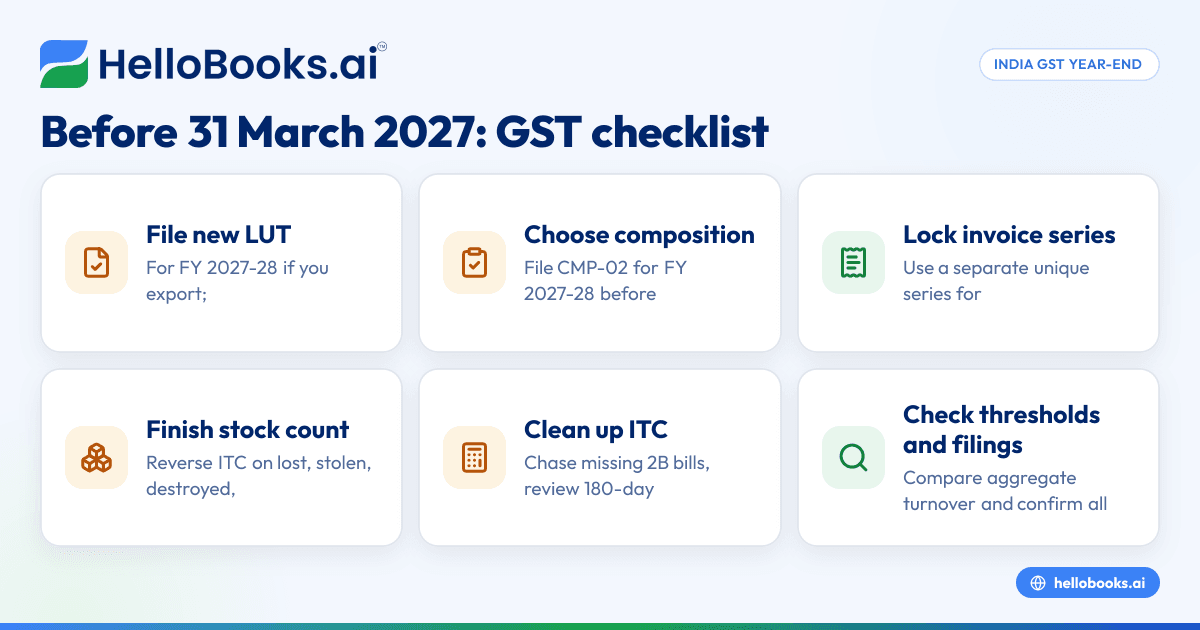
India-வில் 31 மார்ச் close ஆகும் முன் நீங்கள் செய்ய வேண்டியது ஒரு simple GST to-do list அல்ல: books-ல் உள்ள sales, purchases, stock, bank receipts, GSTR-1/GSTR-3B figures, e-invoice/IRN trail, e-way bill trail, மற்றும் next FY invoice setup ஒன்று மற்றொன்றுடன் ஒத்திருக்கிறதா என்று cross-check செய்வதே year-end வேலை. FY 2026-27-ஐ clean-ஆக முடிக்க வேண்டுமெனில், GST law கீழ் CBIC நிர்வகிக்கும் framework, GSTN இயக்கும் GST Portal data, மற்றும் உங்கள் own records — இந்த மூன்றும் பொருந்த வேண்டும்.
31 மார்ச் முன் முடிக்க வேண்டியது என்ன, பிறகு தொடரக்கூடியது என்ன
Year-end confusion அதிகமாக வரும் இடம் இதுதான். எல்லா GST வேலைக்கும் 31 மார்ச் hard stop அல்ல. ஆனால் சில முடிவுகள் financial year boundary-யுடன் கட்டுப்படும்; சிலவை return cycle-களில் திருத்தலாம்; சிலவை late-ஆக விட்டால் audit trail மோசமடையும். அதனால் first filter இதுதான்:
- next financial year-க்கு invoice series, document controls, branch-wise GSTIN usage தயார் இருக்க வேண்டும்
- stock count மற்றும் damaged / lost goods review 31 மார்ச் அருகில் செய்ய வேண்டும்; இல்லையெனில் ITC tracking கஷ்டமாகும்
- March-end வரை raised invoices, debit notes, credit notes, dispatch records, e-way bill references சரியா என பார்க்க வேண்டும்
- books-ல் உள்ள purchase bills மற்றும் GST Portal-ல் reflected supplier data இடையே gap இருக்கிறதா என early-ஆக கண்டுபிடிக்க வேண்டும்
- bank statement upload செய்து receipts and payments reconcile செய்ய வேண்டும்; இல்லையெனில் March sales April collection ஆகிப் போகும், outstanding list தவறாகும்
Specific deadline, threshold அல்லது filing window பற்றி யாரும் “இது தான் current number” என்று bare fact சொல்லக்கூடாது. GST-க்கு சம்பந்தப்பட்ட current figures Central Goods and Services Tax Act, 2017, அதனுடன் இணைந்த Rules, CBIC notifications/circulars, மற்றும் GST Portal / GSTN publications-ல் பார்த்து உறுதி செய்ய வேண்டும். Income-tax side item ஏதாவது touch ஆனால் Income-tax Act, 1961 மற்றும் Income Tax Department publications தான் source.
GSTR-1, GSTR-3B, books — மூன்றும் ஒரே கதையைச் சொல்ல வேண்டும்
பல businesses-ல் year-end problem return filing இல்லை; return logic and books logic வேறுபட்டிருப்பதுதான். Sales ledger ஒரு figure, GSTR-1 வேறு figure, tax payable working வேறு figure என்றால் April-ல் CA, accountant, owner மூவரும் same invoice-ஐத் தேடிக் கொண்டிருப்பார்கள்.
இந்த stage-ல் நீங்கள் பார்க்க வேண்டியது:
- cancelled invoices இருக்கிறதா
- invoice number series break ஆகிறதா
- B2B customer GSTIN தவறா
- place of supply தவறாக உள்ளதா
- local sale-க்கு CGST/SGST split வேண்டிய இடத்தில் IGST போயிற்றா, அல்லது inter-state supply-க்கு reverse ஆகிவிட்டதா
- credit note issue செய்தும் original invoice mapping செய்யவில்லையா
- March dispatch April invoice ஆகிய mismatch இருக்கிறதா
இதில்தான் smart invoicing மற்றும் gst-return-filing-software போன்ற workflow உதவும். Invoice உருவாக்கும் போதே GSTIN, place-of-supply, HSN/SAC, CGST/SGST அல்லது IGST split consistent-ஆக இருந்தால், பின்னர் GSTR-1 build செய்யும் போது manual spreadsheet repair குறையும். HelloBooks-ல் already recorded invoices-இலிருந்து GSTR-1 மற்றும் GSTR-3B direct filing செய்ய முடிவதால், books-ல் உள்ள sale மற்றும் filed return இடையிலான drift குறைய உதவும்.
Multi-state business என்றால் இது இன்னும் முக்கியம். ஒரு entityக்கு பல GSTIN இருந்தால், branch or state mix-up காரணமாக wrong GSTIN-ல் invoice போவது year-end-ல் தான் வெளியில் வரும். ஒரே login-இல் multi-GSTIN records வைத்திருப்பது consolidation-க்கும், state-wise review-க்கும் உதவும்.
ITC clean-up என்பது purchase register clean-up மட்டும் அல்ல
Input Tax Credit review-ஐ பலர் “2B match பண்ணிடலாம்” என்று குறைத்துப் பார்க்கிறார்கள். India market-ல் practical issue அதைவிட பெரியது. Supplier filing behaviour, OCR errors, duplicate bills, reverse charge cases, 180-day payment condition, exempt/taxable common credits, write-off stock — இவை எல்லாம் சேர்ந்து தான் year-end ITC position உருவாகிறது.
இந்த review-இல் பார்க்க வேண்டிய முக்கிய பகுதிகள்:
1) Books-ல் bill இருக்கிறது; GST Portal trail இல்லை.
Supplier invoice உங்கள் purchase register-ல் இருக்கலாம்; ஆனால் GSTR-2A/2B view-ல் தெரியாமல் இருக்கலாம். அது supplier non-filing, wrong GSTIN, wrong document classification, அல்லது timing issue ஆக இருக்கலாம். Bill இன்னும் fresh-ஆக இருக்கும் போது vendor follow-up செய்வது சுலபம்.
2) OCR capture செய்த purchase bills சரியாக ledger-இல் போயிற்றா.
Photo அல்லது PDF-இலிருந்து bills capture செய்வது வேகமானது. ஆனால் year-end-ல் sample-based verification அவசியம்: supplier GSTIN, invoice number, taxable value, tax heads, date, reverse charge flag ஆகியவை சரியா என்று பார்க்க வேண்டும். HelloBooks purchase bill OCR entry வேலையை குறைக்கலாம்; ஆனாலும் owner/accountant review தேவை இல்லாமல் போகாது.
3) 2A/2B reconciliation-ஐ action list-ஆக மாற்றியுள்ளீர்களா.
Mismatch report வைத்திருப்பது போதாது. எந்த supplier-க்கு call, எந்த invoice hold, எந்த bill doubtful, எந்த credit documentation pending — என்று status வேண்டும். HelloBooks-ல் GSTR-2A/2B reconciliation மற்றும் ITC tracking பயன்படுத்தினால் “missing vs matched vs review” போன்ற working உருவாகும்; year-end-ல் இதுதான் practical value.
4) reverse charge மற்றும் TDS/TCS impact entries.
Every business-க்கும் இது heavy இல்லாமல் இருக்கலாம். ஆனால் applicable இடங்களில் reverse charge handling and related booking தவறாமல் இருக்க வேண்டும். சில businesses purchase settlement-களில் TDS impact-ஐ side spreadsheet-ல் வைத்திருப்பார்கள்; அப்போது supplier payable, expense, tax deduction trail வேறுபடும். HelloBooks-ல் TDS/TCS மற்றும் reverse charge handling entries same books-ல் இருந்தால் year-end reconciliation எளிதாகும்.
Current eligibility rules, reversals, documentation conditions, and claim windows அனைத்தும் CGST Act, 2017, CGST Rules, CBIC clarifications, மற்றும் GST Portal guidance-இல் verify செய்யப்பட வேண்டியவை. Any live claim decision needs expert review.
Stock room-ல் நடக்கும் தவறு, GST return-ல் later தெரியும்
Retail, trading, distribution, small manufacturing — எந்த segment இருந்தாலும் year-end stock count GST-க்கு indirect-ஆக பெரிய தாக்கம் தரும். Missing goods, damaged goods, obsolete stock, samples, branch transfers, goods in transit, job-work style movement, unbilled delivery — இவை books-ல் ஒரு மாதிரி, godown-ல் ஒரு மாதிரி இருந்தால் closing picture தவறும்.
இதன் GST relevance என்ன?
- write-off அல்லது loss treatment ITC review-ஐ பாதிக்கலாம்
- invoice raised ஆன goods dispatch ஆகவில்லையெனில் revenue cut-off issue வரும்
- dispatch ஆன goods-க்கு e-way bill trail மற்றும் invoice date alignment வேண்டும்
- branch/state movement records சரியாக இல்லாவிட்டால் place-of-supply and tax head review பாதிக்கப்படும்
இதில் inventory useful ஆகிறது, ஏனெனில் sale and purchase entries-ஓடு stock movement இணைந்திருக்கும் போது separate handwritten stock register dependency குறையும். Year-end count எடுத்தபின் adjustment entries எங்கே தேவை என்று பார்க்கலாம். Goods movement invoice-இருந்தே e-way bill raise செய்திருந்தால் duplicate typing குறையும்; e-way bill-software style workflow audit trail-ஐ சுத்தமாக வைத்திருக்க உதவும்.
இது ஒரு illustrative and invented scenario: கோயம்புத்தூரில் ஒரு distributor-க்கு books-ல் 1,200 units closing stock என்று தெரிகிறது. Physical count-ல் 1,140 units தான் கிடைத்தது. Difference 60 units. இதில் 20 units damaged, 15 units sample issue but not recorded, 25 units posting error என்று later தெரிய வந்தது என வைத்துக்கொள்வோம். Unit cost ₹800 என்று purely illustrative and invented figure எடுத்தால் total variance ₹48,000. இந்த calculation freight, insurance, valuation method, scrap recovery, exact ITC treatment போன்றவற்றை leave out செய்கிறது. Point என்னவென்றால், stock variance ஒரு godown problem மட்டும் இல்லை; GST, P&L, receivables discipline மூன்றையும் பாதிக்கும்.
e-invoice, IRN, signed QR, e-way bill trail முறையாக உள்ளதா
Businesses-க்கு e-invoicing applicability, threshold, document types போன்ற current rules CBIC notifications மற்றும் GST System / GSTN documentation-ல் publish செய்யப்படுகின்றன. அந்த current figure-ஐ official source-ல் தான் பார்க்க வேண்டும். ஆனால் year-end control perspective-இல், applicability உண்டான business ஒரு basic question கேட்க வேண்டும்: “எங்கள் invoice register-ல் இருக்கும் taxable documents-க்கு IRN trail complete-ஆக உள்ளதா?”
சரிபார்க்க வேண்டியவை:
- invoice cancelled ஆனால் corresponding IRN status என்ன
- signed QR copy customer-facing invoice-ல் வந்ததா
- manual emergency invoice later system-ல் re-enter செய்யும்போது duplication நேர்ந்ததா
- e-invoice data மற்றும் GSTR-1 outward supplies classification ஒத்திருக்கிறதா
- goods movement-க்கு தேவையான இடங்களில் e-way bill reference attach செய்துள்ளீர்களா
HelloBooks-ல் e-invoicing applicable businesses save time-இல் IRN மற்றும் signed QR workflow பெற முடியும்; separate JSON upload habit குறையும். அதே invoice data-இலிருந்து e-way bill raise செய்யும் flow இருந்தால் dispatch desk மற்றும் accounts desk இரண்டு முறை data type செய்ய வேண்டிய அவசியம் குறையும். இது March rush-ல் especially useful.
Bank statement upload இல்லாமல் year-end clean close அரிது
GST article-ல் bank reconciliation பற்றி பேசவேண்டுமா என்று சிலர் கேட்பார்கள். ஆனால் practical answer: absolutely yes. India-வில் collections UPI, NEFT, RTGS, IMPS, cash deposit, cheque clearing, payment gateway settlement போன்ற mixed rails-ல் வரும் போது, sales register மட்டும் பார்த்து year-end close செய்வது risky.
Common issues:
- March invoice April bank credit ஆகிறது
- customer short payment deduction narration-ல் மறைந்து விடுகிறது
- same customer இரண்டு UPI references-ஆக split payment செய்கிறார்
- supplier refund bank-ல் வந்திருக்கிறது; books-ல் credit note இல்லை
- bank charges or settlement deductions posted இல்லை
இதற்கு live bank feed பற்றி assumptions வேண்டாம். HelloBooks India workflow-இல் bank statement upload செய்து AI-assisted reconciliation செய்வது relevant. அதாவது நீங்கள் statement file upload செய்கிறீர்கள்; அதன் பிறகு receipts, invoices, expenses, unmatched entries ஆகியவை reconcile செய்ய உதவுகிறது. இது bank reconciliation software மற்றும் broader ai-bookkeeping use-case-ஐ year-end context-ல் practical-ஆக கொண்டு வருகிறது.
Illustrative and invented numbers கொண்டு சொல்லப் போனால்: ஒரு Chennai wholesaler March last week-ல் 18 customer invoices raise செய்தார் என வைத்துக்கொள்வோம். Books-ல் total ₹6,40,000 receivable காட்டுகிறது என்று purely illustrative and invented figure எடுத்துக்கொள்வோம். Bank statement upload செய்து reconcile செய்தபின் ₹1,20,000 already received through UPI and IMPS but not knocked off, ₹35,000 short-paid with deduction dispute, ₹22,000 duplicate outstanding due to wrong customer tagging என்று தெரிந்தது என எடுத்துக்கொள்ளலாம். இந்த figures entirely illustrative and invented; GST liability computation, bad debt treatment, and legal recovery questions இங்கே include செய்யப்படவில்லை. ஆனால் இதே difference April working capital decisions-ஐ மாற்றிவிடும்.
புதிய நிதியாண்டுக்கு master data சீராக இல்லையெனில் பழைய தவறு repeat ஆகும்
31 மார்ச் checklist என்பது old year correction மட்டும் அல்ல; 1 April முதல் error repeat ஆகாத அமைப்பும் வேண்டும். அதற்கான review:
- new invoice numbering series
- active customer GSTIN validation
- supplier master cleanup
- HSN/SAC mapping review
- default tax heads review
- branch/state-wise GSTIN tagging
- opening stock and reorder items
- user access and approval flow
இதில் accounting-software-india context-ல் பார்க்கும்போது, invoicing, inventory, returns, and reports separate tools-ல் இருந்தால் control கஷ்டம். ஒரே system-இல் invoices, purchases, stock, GST returns, and financial reports இருந்தால் March close முதல் April opening வரை continuity கிடைக்கும். HelloBooks financial reports மூலம் receivables ageing, P&L, and ledger views பார்க்க முடியும்; GST working மற்றும் books alignment verify செய்ய இது உதவும். Mobile app இருப்பதால் owner godown, shop floor, field sales எங்கிருந்தும் invoice அல்லது expense status பார்க்க முடியும்.
Tally-யிலிருந்து historical data அல்லது current workflow transition செய்யும் business-க்கு, full switch immediately செய்ய முடியாவிட்டாலும் Tally migration/connector approach useful ஆகும். Year-end-ல் “old system vs new system” gap பெரிய risk; bridge இருந்தால் safer.
Owner, accountant, CA — மூவருக்கும் பொருந்தும் March review rhythm
இந்த article ஒரு checklist என்றாலும், best outcome ஒரு review rhythm set செய்தால் தான் வரும். ஒரு practical pattern:
- week 1: sales register, invoice series, GSTIN clean-up
- week 2: purchase bills, OCR verification, 2A/2B action follow-up
- week 3: stock count, damaged/lost items, dispatch and e-way bill review
- week 4: bank statement upload, receivable/payable reconciliation, return draft review
இதில் owner-க்கு dashboard clarity வேண்டும்; accountant-க்கு entry discipline வேண்டும்; CA-க்கு return-ready data வேண்டும். HelloBooks போன்ற system-ல் unlimited users மற்றும் role-based working multi-person review-க்கு உதவும். WhatsApp-ல் quick bookkeeping questions கேட்க விரும்பும் business owner-க்கு Noor assistant (Hindi, English, Hinglish) handy ஆக இருக்கலாம், though final tax position எப்போதும் books and law source-ஐ வைத்து confirm செய்ய வேண்டும்.
GSTIN validity, invoice field checks, reconciliation spot checks போன்றவற்றுக்கு account open செய்யாமல் பயன்படுத்தக்கூடிய India tools-மும் useful. தேவையான இடங்களில் gstin-validator, gst-invoice-validator, gst-reconciliation-checker போன்ற tools quick pre-check-களுக்கு உதவும். Full product fit, workflow, and implementation details பார்க்க in, in/pricing, அல்லது demo வழியாக evaluate செய்யலாம்.
31 மார்ச் முன் நினைவில் வைக்க வேண்டிய இறுதி விஷயம்
Year-end GST success என்பதன் அர்த்தம் last-minute filing அல்ல; March books, GST Portal data, stock reality, and bank reality ஒன்று சேர்வதுதான். GST என்பது CGST/SGST/IGST split மட்டும் அல்ல; place of supply, GSTIN accuracy, e-invoice IRN trail, e-way bill evidence, purchase bill support, ITC discipline, bank reconciliation, மற்றும் branch-wise control ஆகியவற்றின் கூட்டுத்தொகை. Current rates, thresholds, due dates, and legal positions அனைத்தும் CBIC notifications, GSTN/GST Portal publications, CGST Act/Rules, மற்றும் தேவையானபோது Income Tax Act or MCA sources-ல் verify செய்யப்பட வேண்டும். Filing or claim decision எடுப்பதற்கு முன் your CA or GST practitioner review அவசியம்.
31 மார்ச்-ஐ ஒரு deadline போல மட்டும் பார்க்காமல், next year mess குறைக்கும் control point போலப் பாருங்கள். அப்போதுதான் April முதல் உங்கள் rupee, GST, TDS, stock, and reporting picture cleaner ஆகும்.


