


Key takeaways
What this article covers, in order:
- 31 मार्च 2027 ला खरोखर महत्त्वाच्या वर्षअखेरीच्या निवडी
- ITC साठी 31 मार्च नसला तरी मार्चपूर्वी साफसफाईच शहाणी
- turnover, e-invoice readiness आणि 1 एप्रिलचा invoice shock टाळा
- credit notes, debit notes आणि March sales चा खरा मागोवा
- stock count, e-way bill trail आणि purchase records यांची जोड
- bank reconciliation, UPI settlements आणि receivables ageing दुर्लक्षित करू नका
भारतामध्ये 31 मार्च 2027 आधीची वर्षअखेरीची GST तयारी म्हणजे फक्त return भरायची घाई नाही; मुख्य काम म्हणजे FY 2026-27 च्या invoices, ITC, stock, e-invoice readiness, e-way bill trail आणि पुढच्या वर्षासाठी invoicing setup नीट लावणे. काही गोष्टी 31 मार्चलाच बांधलेल्या असतात, तर काहींचे actual cut-off Central Goods and Services Tax Act, 2017, CGST Rules, 2017 आणि CBIC/GSTN वर नंतर प्रकाशित होणाऱ्या deadlines नुसार असतात. म्हणून ही checklist “आता काय करायचे” आणि “काय पुढेही करता येते” हे वेगळे करते.
31 मार्च 2027 ला खरोखर महत्त्वाच्या वर्षअखेरीच्या निवडी
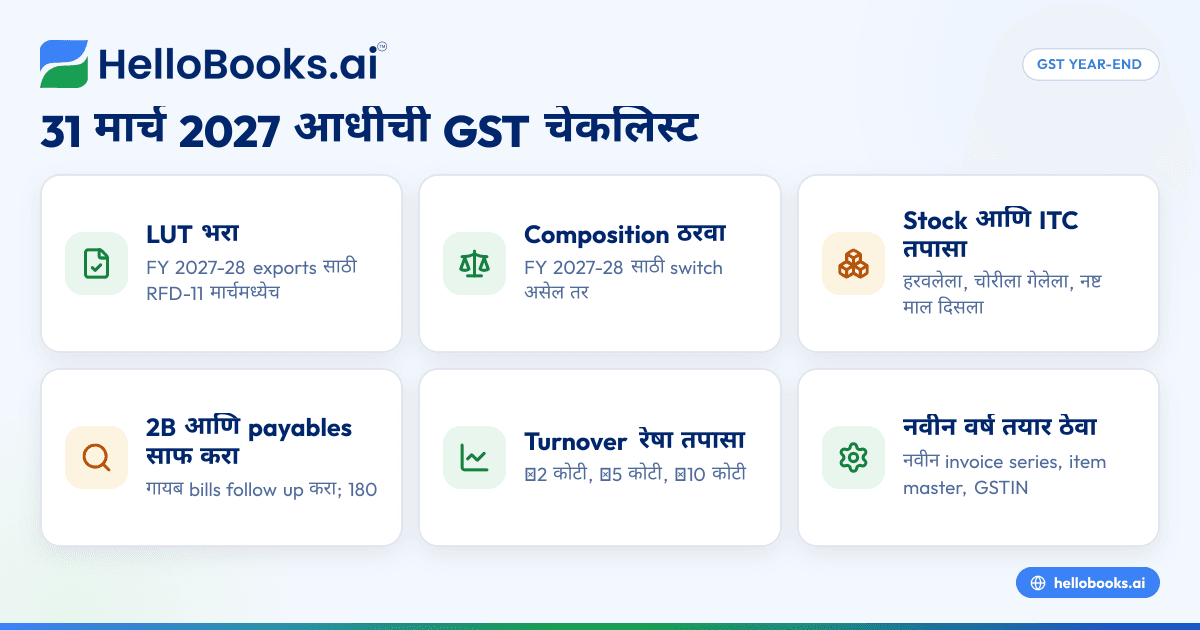
वर्षअखेरच्या सगळ्या GST कामांना एकच अंतिम तारीख नसते. पण काही निर्णय असे असतात की ते FY 2027-28 सुरू होण्यापूर्वीच घ्यावे लागतात.
1) FY 2027-28 साठी invoice series बंद-उघड करणे
CGST Rules, 2017 मधील tax invoice requirements आणि record-keeping expectations पाहता नवीन financial year साठी invoice numbering discipline ठेवणे अत्यंत महत्त्वाचे असते. GST Portal हे numbering policy publish करत नाही, पण कायदेशीर फ्रेमवर्क Central Goods and Services Tax Act, 2017 आणि Central Goods and Services Tax Rules, 2017 मध्ये आहे; current guidance CBIC notifications/circulars आणि GSTN help content मध्ये तपासा. वर्ष बदलल्यावर जुनी series चालू ठेवली तर audit trail गोंधळतो.
2) export करत असाल तर LUT/related export setup तपासणे
Letter of Undertaking संबंधी requirement Integrated Goods and Services Tax Act, 2017, CGST Rules, 2017 आणि CBIC notifications/circulars यांच्या चौकटीत येते; चालू वर्षासाठी काय वैध आहे ते CBIC आणि GST Portal वर प्रकाशित current instructions मध्ये तपासा. 31 मार्चपूर्वी हे तपासले नाही तर 1 एप्रिलनंतर पहिल्या export invoice पासून operational अडथळे येऊ शकतात.
3) composition किंवा regular scheme संदर्भातील निर्णय
composition election/exit चे नियम CGST Act, 2017 आणि CGST Rules, 2017 मध्ये आहेत; current eligibility conditions, procedures आणि portal workflow CBIC व GSTN/GST Portal वर प्रकाशित असतात. कोणताही threshold किंवा cut-off इथे bare fact म्हणून न मानता official source वरूनच verify करा. किरकोळ विक्रेते, restaurants, small traders यांच्यासाठी हा निर्णय March-end ला practical ठरतो कारण 1 एप्रिलपासून billing logic बदलतो.
4) multiple GSTIN असतील तर प्रत्येक registration साठी year-end closure
aggregate turnover PAN level वर पाहावा लागतो, पण return filing, tax head split, place of supply आणि books closure हे GSTIN-wise चालते. महाराष्ट्र, गुजरात, कर्नाटक अशा अनेक states मध्ये registration असेल तर प्रत्येक GSTIN चे sales, purchases, stock आणि bank mapping वेगळे verify करा.
HelloBooks मध्ये multi-GSTIN setup असल्यामुळे एकाच login मधून वेगवेगळ्या GSTIN साठी invoice series, books आणि filings वेगळे सांभाळणे सोपे होते; मार्चअखेर हा फरक फार उपयोगी पडतो.
ITC साठी 31 मार्च नसला तरी मार्चपूर्वी साफसफाईच शहाणी
Input Tax Credit च्या अनेक practical अडचणी 31 मार्च 2027 ला legally संपत नाहीत. पण trail ताजा असताना supplier follow-up, purchase bill matching आणि reversal checks करून ठेवले नाहीत तर नंतर पुरावे, PDFs, transporter records, bank entries सगळे शोधायला त्रास होतो.
GSTR-2A/2B विरुद्ध books जुळवा
ITC eligibility आणि matching चे तत्त्व CGST Act, 2017 मधील input tax credit provisions आणि संबंधित CGST Rules, 2017 वर आधारित आहे. Current return auto-drafted statements, reconciliation logic आणि advisory GSTN/GST Portal वर उपलब्ध असते. Books मध्ये bill आहे पण GSTR-2B मध्ये नाही, किंवा supplier ने चुकीचा GSTIN टाकला, किंवा invoice month mismatch झाला, तर March-end ला त्याचा पाठपुरावा करा.
180 दिवसांचा payment rule तपासा
supplier ला payment न झाल्यास ITC reversal संबंधित requirement CGST Act, 2017 आणि CGST Rules, 2017 मध्ये आहे; current computation guidance, if any, CBIC circulars आणि GST Portal advisories मध्ये तपासा. हे bare number म्हणून न घेता official publication वर verify करणे आवश्यक आहे. Accounts payable ageing काढल्याशिवाय हा मुद्दा दिसत नाही.
blocked credit, exempt supplies आणि reverse charge entries वेगळ्या करा
सर्व purchase bills वर ITC मिळतेच असे नाही. काही credits blocked असतात; काही common credits taxable आणि exempt turnover मध्ये विभागावे लागतात; काही खर्च reverse charge मध्ये येऊ शकतात. यासाठी CGST Act, 2017, CGST Rules, 2017 आणि CBIC circulars ही primary sources आहेत.
supplier documents व्यवस्थित जतन करा
purchase invoice PDF, e-invoice details, e-way bill copy, goods received proof, bank payment proof — हे सगळे नंतर notice आल्यावर शोधण्यापेक्षा March मध्ये digital trail बांधून ठेवा.
HelloBooks मध्ये OCR ने purchase bills capture करून GSTR-2A/2B reconciliation आणि ITC tracking करणे उपयोगी पडते, कारण missing invoices आणि duplicate claims लगेच दिसतात. जर payment bank statement मधून झाला असेल, तर bank statement upload करून AI reconciliation मुळे invoice, NEFT/RTGS/IMPS/UPI receipt आणि ledger line एकत्र दिसू शकतात.
turnover, e-invoice readiness आणि 1 एप्रिलचा invoice shock टाळा
March-end ला सर्वात मोठा operational धोका असा असतो: कायदा एप्रिलपासून लागू होतो, पण business ला त्याची जाणीव मे महिन्यात होते. विशेषतः e-invoice, IRN, signed QR, QRMP/regular frequency, आणि place-of-supply errors इथे पकडले जातात.
e-invoicing चे applicability rules CGST Act, 2017, CGST Rules, 2017 आणि CBIC notifications मध्ये येतात; current turnover threshold, classes of taxpayers, reporting time limits किंवा exemptions यांचे अचूक figures CBIC आणि GSTN/GST Portal वर published official material मध्ये verify करावेत. एखादा specific turnover figure येथे official source शिवाय लिहायचा असल्यास NEEDS EXPERT REVIEW.
March मध्ये काय तपासायचे?
- PAN level aggregate turnover काढा.
- related-party branches किंवा additional GSTINs वगळले गेले नाहीत याची खात्री करा.
- B2B invoices, debit notes, credit notes यांना IRN लागणार का ते verify करा.
- product/service master मध्ये HSN/SAC, place of supply, customer GSTIN आणि tax head logic तपासा.
- dispatch असेल तर e-way bill workflow invoice शी जोडून ठेवा.
एक illustrative आणि invented परिस्थिती घ्या: समजा पुण्यातील एका electrical goods व्यापाऱ्याची FY 2026-27 मधील aggregate turnover गणना books नुसार ₹4.8 crore दाखवते आणि मार्चमधील दोन मोठ्या B2B dispatches मिळून invented ₹0.6 crore वाढते. हा आकडा पूर्णपणे illustrative आहे; यामध्ये returns, discounts, branch adjustments, exempt turnover classification आणि law-specific exclusions समाविष्ट केलेले नाहीत. जर official CBIC threshold cross होत असेल, तर 1 एप्रिलपासून e-invoice readiness नसल्याने invoice issue, IRN generation आणि buyer ITC chain मध्ये तातडीची अडचण येऊ शकते. म्हणून threshold च्या अगदी जवळ असाल, तर March मध्येच system तयार ठेवा.
HelloBooks मध्ये GST invoicing करताना customer GSTIN, place of supply आणि inter-state/intra-state split नुसार CGST/SGST किंवा IGST योग्य बसवता येते. e-invoicing लागू असल्यास IRN आणि signed QR workflow invoice save करतानाच हाताळणे वर्षअखेरीला विशेष महत्त्वाचे ठरते.
credit notes, debit notes आणि March sales चा खरा मागोवा
वर्षअखेरीला “हे invoice या वर्षात टाका”, “credit note लगेच द्या”, “goods April मध्ये परत येतील पण adjustment March चा पाहिजे” अशा मागण्या वाढतात. येथे commercial pressure आणि GST documentation वेगळे ठेवणे गरजेचे आहे.
credit note/debit note treatment CGST Act, 2017 आणि CGST Rules, 2017 नुसार ठरते; current reporting windows, declaration mechanics आणि return tables CBIC notifications/circulars तसेच GST Portal वर प्रकाशित असतात. Bare deadlines किंवा cut-off dates official source शिवाय वापरू नयेत.
March-end ला खालील गोष्टी करा:
- goods return physically आला का, की फक्त commercial email आहे?
- discount pre-agreed होता का post-sale settlement आहे?
- tax invoice विरुद्ध credit note linkage आहे का?
- e-invoice taxpayer असाल तर credit note ला IRN requirement लागू होते का ते official source वरून verify करा.
- buyer ने already ITC घेतले असल्यास commercial conversation आणि documentation समांतर ठेवा.
जर invoice आणि credit note books मध्ये असले तरी GSTR-1 मध्ये reporting mismatch राहिली, तर नंतर GSTR-3B numbers explain करणे कठीण जाते. म्हणून sales register, outward supplies summary आणि returns draft एकाच वेळी पहा.
HelloBooks मधून invoices वरून GSTR-1 आणि GSTR-3B direct filing होत असल्याने March sales, amendments आणि notes यांचा effect books आणि returns मध्ये वेगळा बसण्याची शक्यता कमी होते.
stock count, e-way bill trail आणि purchase records यांची जोड
GST year-end discussion अनेकदा फक्त return filingपुरती मर्यादित राहते, पण stock आणि movement records इथे तितकेच महत्त्वाचे आहेत. विशेषतः traders, distributors, manufacturers, spare parts dealers, FMCG wholesalers यांच्यासाठी.
physical stock count करा
damaged, obsolete, stolen, destroyed किंवा write-off stock वर ITC treatment हा CGST Act, 2017 मधील ITC provisions आणि CGST Rules, 2017 वर अवलंबून असतो; exact position official law text आणि CBIC clarifications मध्ये verify करा.
goods in transit वेगळे दाखवा
31 मार्चच्या आसपास dispatch झालेले goods, transporter कडे असलेला माल, job work/branch transfer goods आणि delivery pending orders वेगळे चिन्हांकित करा. इथे invoice date, e-way bill date, transporter document आणि receipt confirmation mismatch होणे खूप सामान्य आहे.
purchase side वर GRN/document trail ठेवा
purchase bill book झाला, पण goods आले नाहीत; किंवा goods आले पण invoice नंतर book झाला — अशा cases मध्ये ITC timing, stock valuation आणि vendor reconciliation तिन्ही प्रभावित होतात.
एक illustrative आणि invented चित्र पाहू: समजा नागपूरमधील एका distributor च्या books मध्ये closing stock invented ₹12 lakh दिसतो, पण physical count नंतर invented ₹11.4 lakh निघतो. हा फरक पूर्णपणे illustrative आहे; valuation method, shrinkage policy, freight capitalization, normal loss, insurance claim आणि law-specific ITC treatment यांचा इथे विचार केलेला नाही. अशा वेळी फक्त inventory कमी झाली एवढेच नोंदवू नका; कोणत्या purchase lots वर परिणाम झाला, त्यावर ITC reversal लागू होतो का, e-way bill trail मध्ये कोणती consignment pending आहे का, हे तपासावे लागते.
inventory-heavy business साठी HelloBooks मधील inventory management उपयोगी पडते, कारण sales आणि purchases नोंदवल्यावर stock trail चालू राहतो. Dispatch documents सोबत e-way bill तयार करता येत असल्याने consignment details दोनदा टाइप करावी लागत नाहीत.
bank reconciliation, UPI settlements आणि receivables ageing दुर्लक्षित करू नका
GST issues फक्त GST Portal वर सापडत नाहीत. अनेक विसंगती bank statement मध्ये सापडतात: receipt आली पण invoice adjust झाला नाही; UPI collection झाला पण customer ledger open राहिला; NEFT/RTGS narration मध्ये invoice number नाही; TDS deduction वेगळ्या महिन्यात credit झाली; marketplace settlement net amount ने आली.
Bank reconciliation हे income recognition, receivables clean-up आणि tax trail यासाठी practical foundation असते. TDS संबंधित accounting treatment Income-tax Act, 1961 अंतर्गत येते, तर books presentation companies साठी Companies Act, 2013 आणि MCA compliance environment शी जोडलेले असू शकते. Banking/payment ecosystem वर RBI चे framework लागू असते. डेटा हाताळणीबाबत internal controls ठेवताना Digital Personal Data Protection Act, 2023 चा विचारही महत्त्वाचा ठरू शकतो, विशेषतः staff/customer documents share होत असतील तर.
March-end ला या गोष्टी पहा:
- UPI/IMPS receipts unidentified राहिल्या आहेत का?
- bank charges, bounce charges, settlement deductions book केल्या आहेत का?
- customer-wise receivables ageing आणि supplier-wise payables ageing काढली का?
- TDS deducted by customer ledger मध्ये reflect आहे का?
- owner drawings/business expenses मिसळले आहेत का?
HelloBooks मध्ये bank statement upload करून AI reconciliation करता येते, त्यामुळे bank lines आणि invoices जुळवताना manual ticking कमी होते. त्याच entries वर financial reports निघतात, म्हणून receivables ageing आणि P&L काढताना वेगळा Excel बनवण्याची गरज कमी पडते.
1 एप्रिल 2027 साठी billing system आधीच तयार ठेवा
31 मार्चची खरी तयारी म्हणजे 1 एप्रिलला चुका न होणे. नवीन financial year सुरू झाल्यावर पहिल्याच दिवशी खालील गोष्टी ready असाव्यात:
- नवीन invoice series
- customer master मधील GSTIN validation
- HSN/SAC mapping
- place-of-supply logic
- intra-state vs inter-state tax head split
- e-invoice applicability असल्यास IRN workflow
- dispatch-based business साठी e-way bill setup
- branch/GSTIN-wise users and permissions
जर तुम्ही अजूनही Tally वर मुख्य books ठेवत असाल, तरी March-end हा migration किंवा parallel run पाहण्याचा चांगला काळ असतो. HelloBooks कडे Tally migration आणि connector असल्यामुळे पूर्ण switch करण्यापूर्वी data flow तपासता येतो. Mobile app मुळे owner किंवा field staff invoice/expense entry फोनवरून करू शकतात; आणि छोट्या टीमला quick clarification हवी असेल तर Noor assistant वर WhatsApp मध्ये Hindi, English किंवा Hinglish मध्ये bookkeeping/GST-related practical प्रश्न विचारता येतात.
ही संक्षिप्त मार्चअखेरची working checklist वापरा
ही list print करून desk वर ठेवण्यासारखी आहे:
- सर्व GSTIN साठी FY 2026-27 sales आणि purchase registers freeze करा.
- March month पर्यंत bank statement upload करून reconciliation पूर्ण करा.
- GSTR-2A/2B विरुद्ध missing purchase invoices काढा.
- 180-day unpaid supplier bills आणि possible ITC reversals तपासा.
- blocked credit, reverse charge, exempt/common credit items वेगळे flag करा.
- physical stock count plan करा; damaged/write-off goods वेगळे करा.
- goods in transit, branch transfer, delivery pending consignments mark करा.
- customer GSTIN, HSN/SAC, place of supply masters तपासा.
- aggregate turnover PAN level वर मोजून e-invoice applicability official source वर verify करा.
- export/LUT, composition/regular decisions official CBIC/GST Portal source वरून re-check करा.
- credit notes/debit notes साठी documentation पूर्ण करा.
- April 1 साठी नवीन invoice series आणि user access तयार ठेवा.
- GSTR-1 आणि GSTR-3B draft numbers books शी जुळतात का ते पाहा.
उपयोगी तपासणीसाठी HelloBooks चे काही free India tools देखील वापरता येतात, जसे GSTIN validator, HSN code search, GST invoice validator आणि GST reconciliation checker. जर तुम्हाला invoicing workflow आधी सुधारायचा असेल, तर smart invoicing, e-invoicing software, GST return filing software आणि bank reconciliation software यांची माहिती उपयोगी पडेल. भारतासाठी product details आणि plans साठी pricing पहा किंवा demo book करा.
शेवटचा मुद्दा सर्वात महत्त्वाचा: March-end GST checklist ही “deadline hunting” exercise नाही. ती books, GST, stock, bank, e-invoice, e-way bill आणि next-year setup एकाच धाग्यात बांधण्याची प्रक्रिया आहे. Current rates, thresholds, due dates, penalties, interest किंवा form deadlines यांसाठी नेहमी CBIC, GSTN/GST Portal, संबंधित Act/Rules, आणि गरज पडल्यास तुमच्या CA/GST practitioner कडून latest position confirm करा.


