


Key takeaways
What this article covers, in order:
- GSTR फाइलिंग असल में है क्या?
- नए GST रजिस्ट्रेशन के बाद आमतौर पर किन returns पर ध्यान देना होता है
- GSTR-1 और GSTR-3B में फर्क, आसान भाषा में
- invoice सही नहीं, तो return सही नहीं
- खरीद, GSTR-2A/2B और ITC: नए लोग यहां सबसे ज़्यादा अटकते हैं
- QRMP, monthly ya quarterly: शुरुआत में सही सवाल क्या है
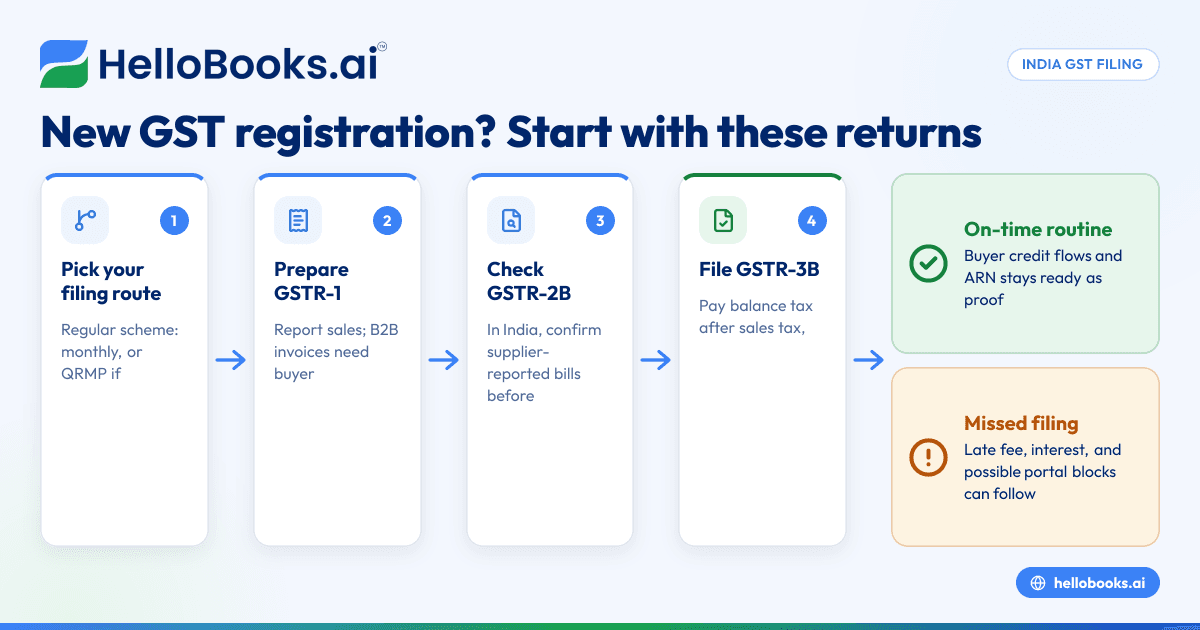
भारत में GSTR फाइलिंग का सीधा मतलब है कि आप अपने GSTIN से जुड़ी बिक्री, खरीद, ITC और tax liability को GST कानून के तहत GST Portal पर सही return में रिपोर्ट करते हैं। नए रजिस्ट्रेशन वाले regular taxpayer के लिए रोज़मर्रा में सबसे ज़्यादा काम दो returns के आसपास होता है: GSTR-1 और GSTR-3B। कौन-सा return, कितनी बार, और किस तरह फाइल होगा, यह Central Goods and Services Tax Act, 2017, उससे बने rules, और CBIC व GSTN/GST Portal पर प्रकाशित मौजूदा guidance से तय होता है।
GSTR फाइलिंग असल में है क्या?
GSTR filing को बहुत लोग सिर्फ “portal पर form भरना” समझते हैं, लेकिन शुरुआत में सही समझ यह होनी चाहिए कि यह आपकी books, invoices और tax positions का official summary है।
अगर आपने किसी ग्राहक को invoice बनाया, उस पर GST लगाया, place of supply तय किया, और पैसा UPI, NEFT, RTGS, IMPS या cash से मिला, तो उसका असर books में भी होगा और return में भी। इसी तरह supplier की purchase bill, reverse charge की स्थिति, और TDS कटने जैसी बातें भी reporting को प्रभावित कर सकती हैं।
भारत में GST return framework का legal आधार Central Goods and Services Tax Act, 2017 और संबंधित state GST laws हैं। इनके implementation और administration में CBIC प्रमुख regulator है, जबकि return filing, statements और data exchange की operational backbone GSTN और GST Portal हैं। किसी भी current filing frequency, eligibility, due date या late fee जैसी specific figure के लिए हमेशा CBIC notifications, GST Portal help content, और official advisories देखें; इन्हें bare fact की तरह याद करके चलना जोखिमभरा है।
नए GST रजिस्ट्रेशन के बाद आमतौर पर किन returns पर ध्यान देना होता है
यदि आप India में एक regular taxpayer हैं—जैसे trader, service provider, agency, consultant, manufacturer या small business—तो शुरुआती महीनों में आपको पूरे return universe को नहीं, बल्कि अपने actual compliance flow को समझना है।
सबसे पहले, GSTR-1 आपकी outward supplies यानी sales reporting से जुड़ा return है। इसमें B2B invoices, कुछ B2C details, credit notes, debit notes और अन्य relevant outward supply information आती है। यही data आगे आपके buyers के ITC visibility को प्रभावित कर सकता है।
दूसरा, GSTR-3B वह summary return है जिसमें output tax liability, eligible ITC, reverse charge liability और net tax payable जैसी बातें रिपोर्ट होती हैं। practical level पर नए businesses को यही समझना चाहिए कि GSTR-1 और GSTR-3B का data आपस में logically consistent होना चाहिए।
हर business पर एक जैसा pattern लागू नहीं होता। return filing frequency, scheme selection, e-invoice applicability, e-way bill needs, annual compliance exposure—ये सब official law, notifications और portal guidance से तय होते हैं। current thresholds या dates के लिए CBIC और GST Portal पर published latest material देखना ही सही तरीका है.
GSTR-1 और GSTR-3B में फर्क, आसान भाषा में
GSTR-1 को आप “मैंने क्या बेचा” वाली report मान सकते हैं, और GSTR-3B को “उस बिक्री, खरीद और credit के बाद मेरी tax position क्या बनती है” वाला return।
पर यह फर्क सिर्फ theory में नहीं, day-to-day काम में भी बहुत important है:
- GSTR-1 में invoice-level accuracy मायने रखती है। गलत GSTIN, गलत place of supply, गलत tax head split, या गलत document type buyer के लिए problem बना सकता है।
- GSTR-3B में summary consistency मायने रखती है। अगर books, sales register, purchase register और ITC support ठीक नहीं है, तो filing के समय confusion होता है।
इसी जगह software discipline सबसे ज़्यादा काम आता है। अगर invoice बनाते समय system अपने आप place of supply देखकर CGST/SGST या IGST split सही करे, तो शुरुआती गलती कम होती है। HelloBooks में GST invoice बनाते समय यही practical मदद मिलती है, इसलिए बाद में GSTR-1 में mismatches कम रह जाते हैं। उसी recorded data से GST return filing software के जरिए GSTR-1 और GSTR-3B सीधे file करना छोटे business के लिए manual re-entry से आसान पड़ता है।
invoice सही नहीं, तो return सही नहीं
नए taxpayers की सबसे बड़ी समस्या return के time पर नहीं, invoice बनाते समय शुरू होती है। GST filing की quality उतनी ही अच्छी होती है जितनी अच्छी आपकी source entries हों।
भारत में एक valid tax invoice पर कौन-कौन सी particulars चाहिए, इसका framework CGST Act और CGST Rules, खासकर invoice-related rules, में दिया गया है; latest interpretation और implementation guidance CBIC और GST Portal पर मिलती है। HSN/SAC requirement, e-invoice applicability, document fields जैसी current specifics official publications में verify करनी चाहिए।
व्यवहार में इन चीज़ों पर ध्यान दें:
- customer का सही GSTIN
- सही state और place of supply
- goods या services की सही classification
- taxable value और tax heads का सही split
- credit note/debit note का proper linkage
- export, exempt, nil-rated, reverse charge जैसी special situations की अलग पहचान
अगर आप inter-state sale पर गलती से CGST+SGST लगा दें, या same-state supply पर IGST, तो बाद में correction headache बन जाता है। HelloBooks invoice बनाते समय place-of-supply logic और tax-head split को साथ रखता है, जिससे शुरुआती users की यह common error कम होती है। अगर e-invoice आपके business पर लागू होता है, तो IRN और signed QR वाला flow भी invoice के साथ जुड़ सकता है, बजाय इसके कि आप अलग JSON process में उलझें; लेकिन applicability की current limit official CBIC notifications और GST Portal documentation से verify करें। e-invoicing software का फायदा यहीं दिखता है।
खरीद, GSTR-2A/2B और ITC: नए लोग यहां सबसे ज़्यादा अटकते हैं
बहुत से beginners सोचते हैं कि purchase bill है, तो ITC मिल ही जाएगा। भारत में ground reality इतनी simple नहीं है। ITC claim का legal framework CGST Act, 2017 में है, और practical matching visibility GSTR-2A/2B statements के जरिए GSTN/GST Portal पर दिखती है। current restrictions, conditions और official interpretation के लिए CBIC circulars, notifications और portal advisories देखनी चाहिए।
आपको broadly यह समझना है:
- supplier ने invoice बनाया हो
- उसने अपनी reporting सही की हो
- आपकी books में purchase properly recorded हो
- invoice business use से जुड़ा हो
- blocked credit या ineligible category में न आता हो
यहीं पर reconciliation important बनती है। अगर supplier bill आपकी books में है लेकिन GSTR-2B में नहीं दिख रहा, तो ITC claim का decision सोच-समझकर लेना पड़ता है। अगर bill amount, GSTIN, invoice number या tax amount mismatch हो, तो follow-up करना पड़ता है।
HelloBooks purchase bills को OCR से capture कर सकता है, फिर GSTR-2A/2B reconciliation और ITC tracking में missing या mismatched items पकड़ने में मदद करता है। इससे नए business owner को कम से कम यह दिखने लगता है कि issue books में है, supplier filing में है, या claim timing में। आप चाहें तो gst reconciliation checker और GSTIN validator जैसे free India tools से basic checks भी कर सकते हैं।
QRMP, monthly ya quarterly: शुरुआत में सही सवाल क्या है
Beginners अक्सर पूछते हैं: “मुझे monthly file करना है या quarterly?” सही जवाब यह है कि पहले यह देखना होता है कि आपकी scheme, eligibility और option क्या permit करते हैं। यह position CGST Act, संबंधित rules, और CBIC/GST Portal पर published current guidance से तय होती है। कोई भी turnover limit, option window, challan method या periodicity की exact current detail official source से verify करनी चाहिए।
Practical angle से सोचें:
- क्या आपकी sales B2B ज़्यादा हैं?
- क्या buyers को जल्दी invoice visibility चाहिए?
- क्या आपकी accounting monthly close होती है?
- क्या आप working capital tightly manage करते हैं?
- क्या आपको हर महीने साफ tax position चाहिए?
कई छोटे businesses quarterly option के बारे में सुनकर खुश हो जाते हैं, लेकिन books अगर monthly clean नहीं हैं तो quarter end पर तीन महीने का backlog बन जाता है। दूसरी तरफ, disciplined monthly bookkeeping वाले business के लिए compliance कम stressful रहता है, चाहे filing frequency कुछ भी हो।
HelloBooks में monthly invoicing, purchase capture, bank statement upload और AI reconciliation साथ चलने से quarter end surprise कम होते हैं। bank data India में live feed की तरह नहीं, बल्कि uploaded statement के आधार पर reconcile होता है—जो बहुत से SMEs के लिए practical है। bank reconciliation software और ai bookkeeping जैसे flows का असली फायदा return के दिन नहीं, पूरे महीने में मिलता है।
एक छोटा काल्पनिक हिसाब, सिर्फ समझाने के लिए
मान लीजिए यह पूरी तरह illustrative and invented example है: दिल्ली का एक wholesaler अप्रैल में ₹1,80,000 की local B2B sale करता है और ₹70,000 की inter-state sale करता है। उसी महीने वह ₹95,000 की taxable purchases रिकॉर्ड करता है। इन figures में rate, exempt supplies, freight nuances, blocked ITC, credit notes, reverse charge, advances, valuation disputes और industry-specific adjustments शामिल नहीं हैं; इसलिए इसे सिर्फ concept समझने के लिए देखें.
इस स्थिति में उसकी books में broadly तीन बातें होंगी:
- local sale पर output tax head अलग दिखेगा, आमतौर पर CGST और SGST split के रूप में, subject to applicable law and official rate publication by CBIC NEEDS EXPERT REVIEW
- inter-state sale पर output tax head अलग दिखेगा, आमतौर पर IGST के रूप में, subject to applicable law and official rate publication by CBIC NEEDS EXPERT REVIEW
- purchases पर input tax ledger बनेगा, लेकिन actual ITC claim supplier reporting, eligibility और CGST Act की conditions पर निर्भर करेगा
अब filing logic यह होगा कि outward supplies का detail GSTR-1 side पर सही invoice data से reflect हो, और GSTR-3B side पर output tax minus eligible ITC के बाद net liability समझ में आए। अगर purchase bills books में हैं लेकिन GSTR-2B में कुछ invoices missing हैं, तो owner को supplier follow-up करना पड़ सकता है।
यानी return filing calculator पर शुरू नहीं होती; वह सही sales entry, purchase capture और reconciliation से शुरू होती है।
e-way bill, e-invoice और movement records: हर sale सिर्फ return तक सीमित नहीं
India में बहुत-सी businesses के लिए GST compliance सिर्फ GSTR तक सीमित नहीं रहती। goods move होते हैं, transporter details लगती हैं, e-way bill बनता है, और कुछ businesses के लिए e-invoice/IRN भी लागू होता है। इन requirements का legal आधार GST law और related rules में है; current applicability, exemptions और operational instructions के लिए CBIC, GST Portal और e-way bill/e-invoice system की official documentation देखनी चाहिए।
व्यवहार में परेशानी तब होती है जब:
- invoice एक जगह बना
- e-way bill दूसरी जगह manually बना
- stock register अलग चला
- return में summary कुछ और निकल आई
अगर aap goods-based business चलाते हैं, तो invoice, inventory और e-way bill को connected रखना बहुत useful है। HelloBooks में invoice से e-way bill raise करने और inventory movement साथ capture करने का flow इस duplication को घटा सकता है। इससे transporter details, consignment values और stock effect को बार-बार type नहीं करना पड़ता। e-way bill software और inventory जैसे connected workflows छोटे distributor, trader और wholesaler के लिए खास काम के होते हैं।
नए business owner के लिए एक practical filing routine
GST compliance को आसान बनाने का सबसे अच्छा तरीका “return day accounting” छोड़ना है। इसके बजाय एक simple monthly discipline रखें:
हर sale के समय सही GST invoice बनाइए। customer GSTIN, state, HSN/SAC, taxability और place of supply को entry stage पर ठीक कीजिए। अगर आप अभी spreadsheets या Tally से shift सोच रहे हैं, तो tally alternative या accounting software india जैसे options compare कर सकते हैं; HelloBooks में Tally migration और connector होने से transition softer हो सकता है।
हर purchase bill को उसी हफ्ते record कीजिए। PDF, scan या photo से OCR capture होने पर data entry का बोझ घटता है।
हर महीने bank statement upload कीजिए। UPI collections, NEFT credits, IMPS receipts, bank charges, cheque clearances—इनका invoice और expense entries से match होना जरूरी है। इससे receivables, unexplained credits और duplicate entries जल्दी पकड़ में आती हैं।
महीने के अंत में sales register, purchase register, GSTR-2B visibility, output tax heads, reverse charge items और TDS adjustments देखकर close कीजिए। TDS/TCS और reverse charge handling अगर books में ही proper हो, तो final return review आसान होता है।
फिर GSTR-1 और GSTR-3B file कीजिए, न कि raw data compile करने बैठिए। यही वह point है जहां system-led filing manual portal work से बेहतर साबित होती है। smart invoicing और gst return filing software को साथ देखने का कारण भी यही है।
records, reports और CA coordination: filing के बाद भी काम बचता है
GSTR file हो जाना अंत नहीं है। India में business owner को books और compliance trail दोनों संभालने पड़ते हैं। future scrutiny, vendor disputes, buyer follow-up, income tax reporting, MCA reporting for companies, audit preparation, DPDP-conscious record handling, और banking conversations—सबके लिए clean records useful रहते हैं।
यहां दो laws का फर्क समझना जरूरी है:
- GST reporting का framework CGST Act/SGST laws और CBIC administration के तहत आता है
- direct tax side की कई obligations Income-tax Act, 1961 के तहत आती हैं, जिसका regulator/admin framework अलग है
- company entities के लिए corporate filings का angle Companies Act, 2013 और MCA से जुड़ता है
इसलिए GST numbers अकेले नहीं रहने चाहिए; उन्हें books, stock और bank trail के साथ reconcile होना चाहिए। HelloBooks के financial reports, receivables view, inventory records और multi-GSTIN setup उस business के लिए useful हैं जिसके एक से ज़्यादा states में GSTIN हैं या जहां owner, accountant और CA को same system में काम करना है। mobile app और WhatsApp पर Noor assistant भी उन owners के लिए practical हैं जो Hindi, English या Hinglish में जल्दी सवाल पूछना चाहते हैं, लेकिन final legal position फिर भी official source या tax professional से confirm करनी चाहिए।
आखिर में: beginner को अभी क्या समझ लेना चाहिए
अगर आपका नया GST registration हुआ है, तो GSTR filing का सार यह है: पहले सही invoice और purchase record बनाइए, फिर GSTR-1 और GSTR-3B को books से जोड़कर समझिए, और ITC को GSTR-2B visibility के बिना automatic मत मानिए। भारत में compliance की current dates, late fee, interest, thresholds, e-invoice applicability और QRMP eligibility जैसी specifics हमेशा CBIC notifications, GST Portal, और official law updates से verify की जानी चाहिए।
अगर आप manual काम कम करके invoicing, reconciliation और return filing को एक system में लाना चाहते हैं, तो HelloBooks के India workflows देखना practical हो सकता है. Product details के लिए भारत पेज, pricing के लिए /in/pricing, और guided walkthrough के लिए demo देख सकते हैं।


