


Key takeaways
What this article covers, in order:
- Reverse charge என்றால், GSTR-3B பார்வையில் என்ன?
- எந்த வகை வாங்குதல்கள் RCM-ல் வரலாம்?
- GSTR-3B-ல் RCM எங்கே போகும்?
- Cash-ஆக pay செய்ய வேண்டும் என்றால் அதற்குப் பொருள் என்ன?
- Supplier registered ஆ, unregistered ஆ என்பதில் paperwork எப்படி மாறும்?
- Time of supply தவறினால், தவறான மாதத்தில் 3B-ல் போய்விடும்
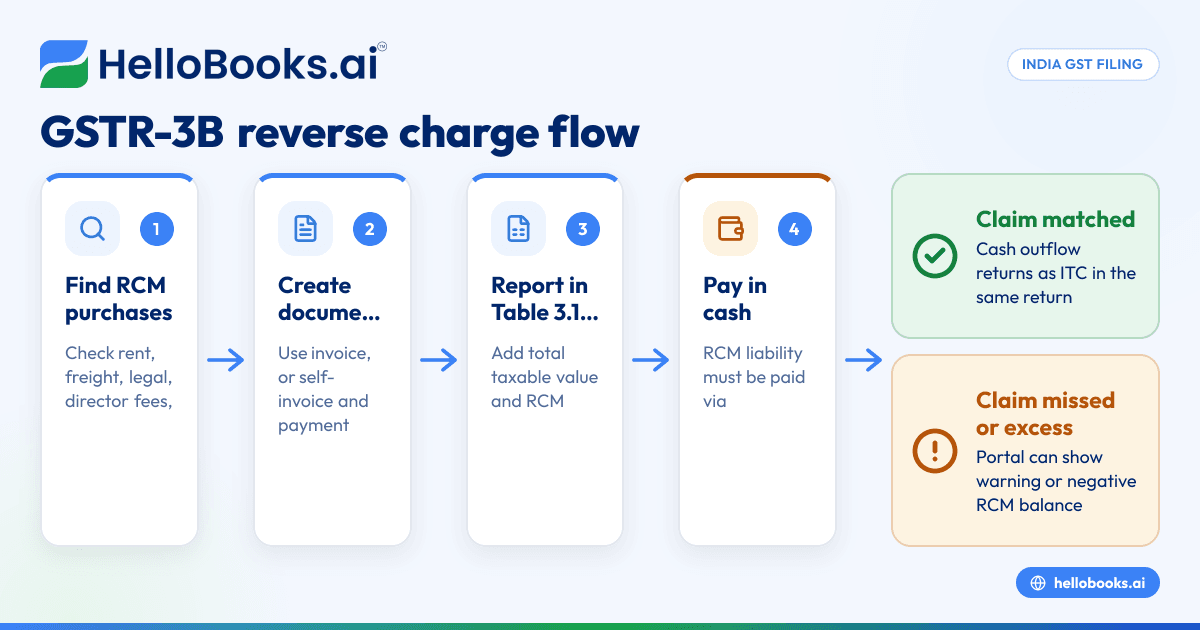
India-வில் GSTR-3B-ல் reverse charge mechanism (RCM) வந்தால், taxable value மற்றும் tax-ஐ Table 3.1(d)-ல் report செய்கிறீர்கள்; அந்த GST-ஐ electronic cash ledger மூலம் pay செய்ய வேண்டும்; பிறகு purchase ITC-க்கு eligible என்றால் credit-ஐ பொதுவாக Table 4(A)(3)-ல் claim செய்கிறீர்கள், ஆனால் import of services போன்ற சில நிலைகளில் அது Table 4(A)(2)-ல் செல்லலாம். இது CGST Act, 2017 மற்றும் அதின் rules கீழ் இயங்குகிறது; current instructions, tables, advisories ஆகியவை GSTN நடத்தும் GST Portal மற்றும் CBIC வெளியிடும் notifications/circulars-ல் publish ஆகின்றன.
Reverse charge என்றால், GSTR-3B பார்வையில் என்ன?
சாதாரண GST flow-ல் supplier invoice போட்டு GST collect செய்து government-க்கு remit செய்கிறார். Reverse charge-ல் அது மாறுகிறது: recipient தான் tax pay செய்கிறார். அதனால் GSTR-3B-யில் கவனம் invoice issue பக்கம் அல்ல, purchase side tax liability பக்கம் இருக்கும்.
இந்தியாவில் RCM இரண்டு வேறு சட்ட பாதைகளில் தோன்றலாம்:
- CGST Act, 2017 Section 9(3): குறிப்பிட்ட notified goods/services மீது reverse charge.
- CGST Act, 2017 Section 9(4): unregistered supplier-களிடமிருந்து notified cases-ல் reverse charge.
எந்த supply இன்னும் notified category-யில் உள்ளது, எது amendment மூலம் மாறியது என்பதை CBIC notifications-ல்தான் current-ஆக பார்க்க வேண்டும். ஒரு blog article-ஐ final authority-ஆகக் கொள்ளக் கூடாது.
GSTR-3B filing பார்வையில் முக்கியம்: RCM liability உங்கள் outward sales tax அல்ல. இது உங்கள் own purchase-side liability. அதனால் அது reported, paid, then if eligible claimed ஆகிறது.
எந்த வகை வாங்குதல்கள் RCM-ல் வரலாம்?
எல்லா வாங்குதலும் reverse charge அல்ல. இந்தியாவில் business users-க்கு நடைமுறையில் அதிகம் மோதும் categories சில:
- goods transport agency services, applicable notification position படி
- advocate அல்லது law firm வழங்கும் legal services to business entity
- director services to company in notified situations
- sponsorship services in notified cases
- security services in certain business-to-business situations
- registered person-க்கு residential dwelling renting தொடர்பான notified situations
- commercial property rent from an unregistered person to a registered person, notified scope-ல் வந்தால்
- import of services
- notified goods such as certain scrap or agricultural/raw material categories where applicable
இந்த பட்டியல் முழுமையானதல்ல; current scope CBIC வெளியிடும் notifications-ல் தான் உள்ளது. குறிப்பிட்ட transaction-க்கு supplier status, GSTIN, place of supply, invoice wording, and business use ஆகியவை முடிவை மாற்றலாம். அதனால் doubt இருந்தால் current notification + professional review அவசியம்.
இங்கே ஒரு practical India point: ஒரே business-க்கு பல state GSTIN-கள் இருந்தால், liability எந்த GSTIN-க்கு சொந்தம், place of supply என்ன, CGST+SGST ஆகுமா அல்லது IGST ஆகுமா என்பது மிக முக்கியம். இதை தவறாக split செய்தால் return mismatch உருவாகும். அதனால்தான் GST return filing software மற்றும் accounting software India போன்ற tools-ல் place-of-supply மற்றும் tax head split சரியாகப் பிடிப்பது பயன் தரும்.
GSTR-3B-ல் RCM எங்கே போகும்?
முக்கிய answer இதுதான்:
Table 3.1(d)
GSTR-3B-யில் reverse charge taxable supplies மீது tax liability பொதுவாக Table 3.1(d)-ல் report செய்யப்படுகிறது. இங்கே நீங்கள் supplier-இடமிருந்து பெற்ற notified inward supplies-ன் taxable value மற்றும் applicable GST heads-ஐ reflect செய்வீர்கள்.
இதன் பொருள்:
- inward supply taxable value சேர்க்க வேண்டும்
- tax liability relevant head-களில் காட்ட வேண்டும்
- liability உங்கள் books-லுள்ள RCM transactions-ுடன் match ஆக வேண்டும்
இங்கே head selection தவறினால் பிரச்சனை அதிகம். Intra-state transaction என்றால் CGST/SGST; inter-state என்றால் IGST — ஆனால் இது invoice state பார்த்து guess பண்ணுவது அல்ல; place of supply rules, location of supplier, location of recipient ஆகியவற்றைப் பார்த்து நிர்ணயிக்க வேண்டும். இந்த rules IGST Act, 2017-ல் உள்ளன; current interpretive guidance CBIC circulars மற்றும் GST Portal help content-ல் காணலாம்.
Table 4(A)(3) மற்றும் 4(A)(2)
RCM tax-ஐ pay செய்த பிறகு, purchase business use-க்காகவும் blocked credit அல்லாததாகவும் இருந்தால் ITC claim செய்யலாம்.
- பொதுவாக domestic reverse charge inward supplies-க்கு eligible ITC Table 4(A)(3)-ல் claim செய்யப்படும்.
- Import of services போன்ற transactions-க்கு ITC flow Table 4(A)(2)-க்கு செல்லலாம், return instructions படி.
இதில் confusion வருவது சாதாரணம், ஏனெனில் எல்லா RCM-மும் ஒரே ITC box-க்கு போகாது. Final mapping-ஐ GST Portal GSTR-3B instructions மூலம் cross-check செய்ய வேண்டும்.
Cash-ஆக pay செய்ய வேண்டும் என்றால் அதற்குப் பொருள் என்ன?
RCM liability-யை settle செய்யும்போது, ITC balance-ஐ நேரடியாக பயன்படுத்த முடியாது; அது electronic cash ledger வழியாக pay செய்யப்படும். இந்த principle CGST Act read with input tax credit utilisation framework-இல் இருந்து வருகிறது; current operational treatment GST Portal cash ledger/payment flow-ல் reflect ஆகிறது.
நடைமுறையில் இதன் அர்த்தம்:
- challan generate செய்கிறீர்கள்
- bank/authorised payment mode மூலம் amount deposit செய்கிறீர்கள்
- electronic cash ledger-ல் balance உருவாகிறது
- அதன் மூலம் RCM liability offset செய்கிறீர்கள்
India context-ல் பல businesses net banking, NEFT, RTGS, IMPS அல்லது portal-supported payment options பயன்படுத்தலாம்; available modes bank, state, system changes போன்றவற்றைப் பொறுத்து மாறலாம், அதனால் current options GST Portal-ல் பார்க்க வேண்டும். UPI தனியாக எல்லா tax payment flows-க்கும் ஒரே மாதிரி கிடைக்கும் என்று assume செய்யக் கூடாது NEEDS EXPERT REVIEW.
உங்களுக்கு issue cash outflow தான். ITC later கிடைத்தாலும், first payment cash-ஆகவே செல்கிறது. அதனால் monthly working capital planning-ல் RCM items missed ஆகக் கூடாது.
Supplier registered ஆ, unregistered ஆ என்பதில் paperwork எப்படி மாறும்?
Registered supplier இருந்தால்
உதாரணமாக GTA, advocate, law firm, director-service போன்ற notified cases-ல் supplier registered இருக்கலாம். அவர்கள் invoice-ல் reverse charge applicability-ஐ indicate செய்யலாம். அந்த purchase உங்கள் system-ல் inward liability-ஆக capture ஆக வேண்டும்.
சில சமயங்களில் இந்த invoice data GSTR-2B-ல் signal ஆகலாம்; ஆனால் RCM tax payment responsibility recipient-இடம்தான். 2B-ல் வந்துவிட்டது என்பதால் tax auto-paid ஆகிவிடாது.
Unregistered supplier இருந்தால்
Unregistered landlord அல்லது மற்ற notified supplier-இடமிருந்து வாங்கினால், recipient-க்கு self-documentation duty வரும். CGST Act Section 31 மற்றும் relevant rules-ன் current wording படி self-invoice/payment voucher requirements-ஐ CBIC rules and notifications-ல் பார்த்தே நடைமுறை fix செய்ய வேண்டும், ஏனெனில் wording மற்றும் timelines amendment மூலம் மாறலாம்.
அதாவது:
- supplier GST invoice தர மாட்டார்
- நீங்கள் self-invoice உருவாக்க வேண்டும், where legally required
- payment voucher maintain செய்ய வேண்டிய நிலை இருக்கலாம்
- இந்த inward supply auto-populate ஆகாது; உங்கள் books-ல்தான் source record இருக்கும்
இதில் OCR மற்றும் purchase capture நல்ல discipline தரும். Supplier bill photo அல்லது PDF-லிருந்து data capture செய்து, RCM flag வைத்து, later GSTR-3B filing-க்கு traceable audit trail வைத்திருப்பது safer. அதனால்தான் ai bookkeeping அல்லது expense management software போல bill capture-heavy workflows useful ஆகும்.
Time of supply தவறினால், தவறான மாதத்தில் 3B-ல் போய்விடும்
RCM-இல் பெரிய practical mistake என்னவென்றால், tax liability எந்த month-க்கு சொந்தம் என்பதை books team vendor payment date பார்த்து மட்டும் முடிவு செய்வது. அது போதாது. CGST Act, 2017-ன் time of supply provisions for reverse charge மற்றும் related rules-ன் படி goods, services, invoice date, payment date, receipt date போன்ற factors outcome-ஐ மாற்றும்.
Current time-of-supply rules, cut-offs, and exceptions-ஐ CBIC publications மற்றும் GST Portal guidance-ல் பார்க்க வேண்டும். எந்த bare deadline-யும் இங்கே quote செய்வது safe அல்ல, ஏனெனில் amendments/clarifications வரலாம்.
நீங்கள் கவனிக்க வேண்டியது:
- service received date
- goods received date
- payment entry date in bank or books
- supplier invoice date
- self-invoice date where relevant
- import documents, if import of services question arises
இந்த matching-க்கு bank statement upload உதவும். பல India businesses-ல் payment UPI, NEFT, RTGS, IMPS அல்லது cheque மூலம் போகும்; monthly bank statement upload செய்து AI reconciliation மூலம் vendor payment தேதிகளை match செய்தால் RCM month தவறுவது குறையும். Bank reconciliation software இதற்காகவே useful.
ஒரு illustrative, invented நிலை வைத்து பார்த்தால்
கீழே உள்ள figures illustrative and invented. இது concept புரிய மட்டும்; current rate, notification scope, blocked credit rules, exempt use, partial business use, and interest implications ஆகியவற்றை இது cover செய்யவில்லை.
சென்னை GSTIN-உள்ள ஒரு company, registered அல்லாத landlord-இடமிருந்து commercial godown rent எடுத்திருக்கிறது என்று கொள்ளலாம்; current notification உண்மையில் அந்த case-ஐ cover செய்கிறதா என்பதை CBIC notification-ல் verify செய்ய வேண்டும். ஒரு மாத rent ₹1,00,000 என்று completely invented figure வைத்துக் கொள்வோம். Illustrative-ஆக, applicable GST amount ₹18,000 என்று assume செய்கிறோம்; இந்த figure official current rate statement அல்ல, invented training number மட்டும்.
அப்போது books flow roughly இப்படி இருக்கும்:
- taxable inward supply value: ₹1,00,000
- RCM GST liability: ₹18,000
- GSTR-3B Table 3.1(d): taxable value + tax liability reflect செய்யப்படும்
- tax payment: electronic cash ledger வழியாக ₹18,000 pay
- same month அல்லது eligible claim month-ல், business use and ITC eligibility satisfied என்றால் Table 4(A)(3)-ல் ₹18,000 ITC claim
இதன் cash effect என்ன? Immediate outflow ₹18,000. Later ITC credit கிடைப்பதால் long-term tax cost zero போலத் தோன்றலாம். ஆனால் working capital impact real. மேலும் claim மறந்தால் அந்த credit books-ல் pending-ஆகவே இருக்கும்.
இதே logic import of services-க்கு வந்தால் reporting box மாறலாம்; return instructions படி Table 4(A)(2) relevance இருக்கும்.
RCM claim செய்யும்போது 2B, books, vendor documents மூன்றும் எப்படி சேர வேண்டும்?
RCM world-ல் எல்லாமே GSTR-2B-ல் clean-ஆகத் தெரியாது. குறிப்பாக self-invoice cases-ல் 2B source இல்லை. அதனால் India businesses-க்கு மூன்று-layer check நல்லது:
- Books register: எந்த inward supply RCM-க்கு subject என்று mark செய்திருக்கிறீர்கள்?
- Vendor/supporting document: invoice, agreement, legal memo, rent agreement, import contract.
- 2A/2B check: auto-populated data எங்கே இருக்கிறது, எங்கே இல்லை?
GSTR-2A/2B reconciliation purely supplier-uploaded ITC claims பார்க்க மட்டுமல்ல; அது gaps கண்டுபிடிக்கவும் உதவும். Supplier invoice வந்தும் 2B mismatch இருந்தால் one type of follow-up; self-invoice RCM என்றால் 2B இல்லாததே expected. இந்த distinction தெரியாததால் many teams wrongly wait for 2B and miss claim timing.
HelloBooks-ல் purchase bills OCR மூலம் capture செய்து, inward entries-க்கு reverse charge handling mark செய்து, 2A/2B reconciliation உடன் ITC tracking பார்க்க முடிவதால், “இந்த invoice portal-ல் வந்ததா?” மற்றும் “இது self-invoice case-ஆ?” என்ற இரு கேள்விகளையும் வேறுபடுத்தி handle செய்ய முடியும். GSTR-3B direct filing இருப்பதால் books-ல் உள்ள RCM entries return-க்கு pull ஆகும்; ஆனால் filing முன் legal eligibility review இன்னும் உங்கள் CA அல்லது tax advisor பங்கு தான்.
India businesses-க்கு அதிகம் நடக்கும் practical தவறுகள்
1) RCM applicable transaction-ஐ normal expense ஆகவே post செய்துவிடுவது
Vendor registered இல்லை என்பதாலோ, invoice-ல் GST இல்லையென நினைத்தோ, team அதை GST-neutral expense ஆக post செய்து விடுகிறது. பின்னர் GSTR-3B-ல் liability miss ஆகிறது.
2) Table 3.1(d)-ல் liability காட்டி, ITC box தவறாக claim செய்வது
Domestic RCM, import of services, blocked credit — மூன்றும் ஒன்றல்ல.
3) Cash payment செய்யாமல் ITC utilisation போதும் என்று எண்ணுவது
RCM-ல் offset cash ledger வழியாகவே செல்லும் operational rule-ஐ team miss பண்ணலாம்.
4) Wrong GST head
Tamil Nadu supplier என்ற alone காரணத்தால் CGST/SGST என்று போட முடியாது; place of supply rules பார்க்க வேண்டும். Multi-state businesses-க்கு இது critical. HelloBooks போன்ற systems-ல் multi-GSTIN handling இருந்தால் ஒரே login-ல் state-wise books maintain செய்யலாம்; ஆனால் transaction classification சரியாக கொடுக்கப்பட வேண்டும்.
5) Bank date மற்றும் invoice date mismatch கவனிக்காமல் விடுவது
Part-payment, advance, delayed payment போன்றவை time of supply analysis-ஐ complicate செய்கின்றன.
6) TDS மற்றும் GST RCM-ஐ கலக்குவது
Property rent, professional fee, contract payment போன்ற entries-ல் Income-tax Act, 1961 கீழ் TDS question மற்றும் CGST Act கீழ் RCM question இரண்டும் தனித்தனி. ஒன்று applied என்ற alone காரணத்தால் மற்றொன்று automatically applied ஆகாது. India bookkeeping-ல் இந்த confusion மிகவும் common.
Record-keeping நல்லதாக இருந்தால் GSTR-3B filing எளிதாகும்
RCM-க்கு spreadsheet போதுமா? very small volume-ல் போகலாம். ஆனால் volumes உயர்ந்தால் issues வரும்:
- vendor-wise tracking கலைந்து போகும்
- self-invoice numbering discipline குலையும்
- GSTIN/state mapping தவறும்
- bank payment linkage கண்ணில் தெரியாது
- Tally export/import-ல் flags drop ஆகும்
அதனால் many India businesses tally-alternative options பார்க்கிறார்கள், அல்லது existing Tally data-யை connector/migration வழியாக maintain செய்ய விரும்புகிறார்கள். HelloBooks-ல் Tally migration and connector இருப்பதால் old data continuity காக்கலாம்; அதே நேரத்தில் GST invoicing, purchase capture, RCM handling, GSTR-1 மற்றும் GSTR-3B filing ஒரே workflow-ல் வரலாம். Inventory business என்றால் inward purchase stock impact-உம் books-உம் ஒன்றாக இருப்பது later audit-க்கு உதவும். மேலும் mobile app மூலம் on-the-go bill capture செய்ய முடிவதால் godown, site, branch போன்ற இடங்களில் document delay குறையும்.
இந்த மாதம் RCM சரியாகப் போனதா என்பதை உறுதிப்படுத்த ஒரு நடைமுறை review
மாத இறுதியில் இதைச் செய்யுங்கள்:
- rent, legal, GTA, security, director-related, import of services போன்ற expense ledgers scan செய்யுங்கள்
- unregistered vendors list-ஐ revisit செய்யுங்கள்
- bank statement-ல் பெரிய outward payments identify செய்யுங்கள்
- purchase agreements மற்றும் invoices-ஐ compare செய்யுங்கள்
- self-invoice required cases இருந்தனவா check செய்யுங்கள்
- Table 3.1(d) figure books register-ுடன் tally ஆகிறதா பார்க்குங்கள்
- ITC claim box correct-ஆ என்று verify செய்யுங்கள்
- blocked credit அல்லது personal/non-business use issues உள்ளனவா பார்க்குங்கள்
இதற்கு free checks வேண்டுமென்றால் GSTIN validator, GST reconciliation checker, GST calculator போன்ற India tools ஆரம்ப sanity check-க்கு உதவும். Final legal position மட்டும் official source + advisor மூலம் confirm செய்ய வேண்டும்.
HelloBooks இதில் பயன் தரும் இடம்
RCM-ல் real pain rate மனப்பாடம் அல்ல; missed identification, wrong month, wrong table, and missing documents தான். அதனால் HelloBooks-ன் value filing screen-ல் மட்டும் இல்லை. Purchase bills-ஐ OCR மூலம் capture செய்து, reverse charge treatment mark செய்து, bank statement upload மூலம் payment matching பார்த்து, 2A/2B reconciliation உடன் ITC tracking செய்து, பிறகு GSTR-3B direct filing வரை same data flow தொடர்வது duplication குறைக்கும். Multi-GSTIN business என்றால் state-wise compliance separate-ஆக நடத்த முடியும். If you want to see the India setup, demo அல்லது India page பாருங்கள்; pricing details-க்கு pricing.
RCM-ன் final rule of thumb: முதலில் Table 3.1(d)-ல் liability, cash-ஆக payment, eligibility இருந்தால் பின்னர் correct ITC table-ல் claim. ஆனால் transaction notified category-க்குள் உண்மையில் வருகிறதா, எந்த month-ல் liability trigger ஆகிறது, ITC blocked ஆகிறதா என்பதை CBIC notifications, GST Portal instructions, CGST Act/IGST Act மற்றும் உங்கள் tax advisor மூலம் verify செய்யாமல் filing செய்ய வேண்டாம்.


