


Key takeaways
What this article covers, in order:
- Reverse charge म्हणजे नेमके काय बदलते?
- कोणत्या खरेदींमध्ये RCM वारंवार समोर येतो?
- GSTR-3B मध्ये RCM कुठे जातो?
- RCM वरचा कर cash नेच का भरावा लागतो?
- Self-invoice, payment voucher आणि पुरावे इतके महत्त्वाचे का आहेत?
- ITC कधी आणि कसा घ्यायचा?
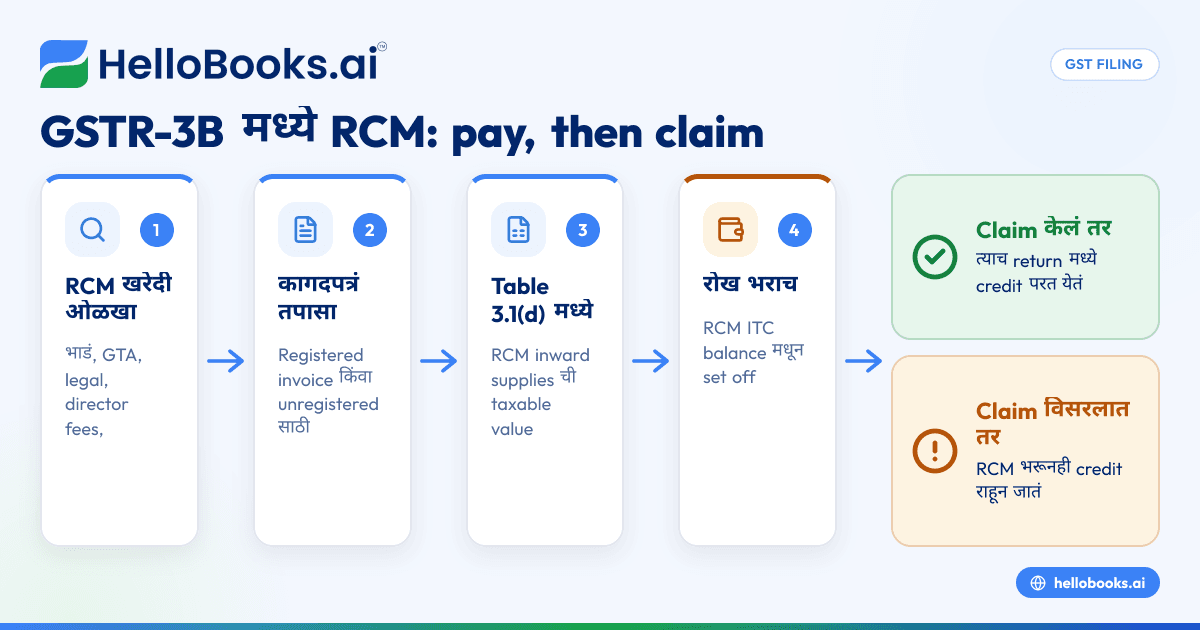
भारतामध्ये GSTR-3B मध्ये reverse charge mechanism (RCM) असलेली inward supplies साधारणपणे Table 3.1(d) मध्ये दाखवली जातात, कर electronic cash ledger मधून भरावा लागतो, आणि खरेदी ITC-साठी पात्र असेल तर त्याचा credit नंतर Table 4 मध्ये घेतला जातो. पण अचूक reporting तुमच्या transaction च्या प्रकारावर, GST कायद्यातील तरतुदींवर, आणि GSTN व GST Portal वर दिसणाऱ्या current return schema वर अवलंबून असते. म्हणून खालील मार्गदर्शन व्यवहार्य आहे, पण specific case साठी CBIC notifications आणि तुमच्या tax adviser ची खात्री घ्या.
Reverse charge म्हणजे नेमके काय बदलते?
नेहमीच्या GST व्यवहारात supplier कर आकारतो, invoice वर दाखवतो, आणि तो सरकारकडे भरतो. Reverse charge मध्ये ही जबाबदारी recipient कडे येते. भारतात हे Central Goods and Services Tax Act, 2017 मधील Section 9(3) आणि Section 9(4), तसेच Integrated Goods and Services Tax Act, 2017 मधील संबंधित reverse charge तरतुदींमधून चालते. Current coverage, notified services किंवा goods, आणि लागू अटी CBIC कडून notifications मध्ये प्रकाशित केल्या जातात; practical reporting GST Portal आणि GSTN च्या return instructions मध्ये दिसते.
याचा अर्थ एकच: supplier ने tax न भरता तुम्ही tax द्यायचा, पण तो ITC-साठी पात्र असल्यास पुढे credit म्हणून घेता येऊ शकतो. म्हणून RCM हा फक्त “extra tax” नसतो; अनेक वेळा तो cash-flow timing आणि compliance discipline चा विषय असतो.
कोणत्या खरेदींमध्ये RCM वारंवार समोर येतो?
प्रत्येक व्यवसायाला सारख्या inward supplies नसतात. तरी भारतात small business, trader, services firm, contractor किंवा company यांच्याकडे खालील प्रकार वारंवार दिसतात:
- goods transport agency (GTA) सेवा, जर त्या व्यवहाराला reverse charge लागू होत असेल
- advocate किंवा law firm कडून business entity ला legal services
- company director कडून company ला दिलेल्या काही सेवा
- sponsorship services
- काही security services च्या categories
- काही notified goods
- import of services
- काही परिस्थितींमध्ये unregistered person कडून घेतलेल्या notified supplies
- commercial property किंवा residential dwelling संदर्भातील notified reverse charge situations, ज्या वेळोवेळी CBIC notification ने बदलू शकतात
इथे एक महत्त्वाची गोष्ट: “हे कायमच RCM आहे” असे गृहित धरू नका. भारतात GST under CBIC frequently notification-driven आहे. म्हणून transaction type, supplier status, recipient status, place of supply, आणि notification चा सध्याचा मजकूर तपासणे आवश्यक असते. Current position CBIC च्या official notifications, GST Portal FAQs, आणि regulator-published advisories मध्ये पाहावी.
GSTR-3B मध्ये RCM कुठे जातो?
व्यवहारिकदृष्ट्या, reverse charge अंतर्गत taxable inward supplies ची value आणि त्यावरील tax liability GSTR-3B मधील Table 3.1(d) मध्ये reflect केली जाते. Return format, labels, आणि validation rules चे current version GSTN/GST Portal वर प्रकाशित असतात. म्हणून exact field naming किंवा schema बदलला असल्यास portal वरचे current instructions follow करणे गरजेचे आहे.
यानंतर दोन वेगळ्या गोष्टी समजून घ्या:
- Tax liability reporting — reverse charge मुळे recipient वर कर देय होतो.
- ITC claim — कर भरल्यानंतर, आणि inward supply ITC-साठी पात्र असल्यास, तो input tax credit म्हणून relevant ITC table मध्ये घेतला जाऊ शकतो.
यामुळे अनेकांना गोंधळ होतो. Table 3.1(d) ही liability side आहे; ITC side वेगळी आहे. दोन्ही entries मध्ये logic जुळणे महत्त्वाचे आहे, नाहीतर books, GST return आणि purchase records mismatch होतात.
RCM वरचा कर cash नेच का भरावा लागतो?
Reverse charge liability set off करण्याबाबतचा व्यवहारिक नियम CGST Act च्या input tax credit framework, set-off mechanics, आणि GST Portal च्या payment flow मध्ये दिसतो. Current treatment आणि utilisation rules GST Portal वर व applicable law/reference material मध्ये प्रकाशित असतात. याचा practical अर्थ असा की reverse charge liability भरताना electronic cash ledger वापरावा लागतो; existing ITC balance थेट वापरून ती liability discharge करता येत नाही, असा current portal-based compliance treatment आहे, पण specific scenario साठी official portal instructions verify कराव्यात.
हे cash-flow planning साठी महत्त्वाचे आहे. तुमच्याकडे books मध्ये मोठा ITC pool असला तरी RCM liability साठी bank मार्फत challan भरावा लागू शकतो. त्यामुळे UPI, NEFT, RTGS किंवा IMPS ने tax payment funding करताना व्यवसाय cash position आधी तपासतो.
जर तुम्ही accounting system मध्ये purchase bill टाकून सोडले, पण month-end ला cash payment planning केली नाही, तर return filing वेळी अडचण येते. त्यामुळे RCM हा accounts team, founder, CA, आणि treasury discipline यांचा संयुक्त विषय आहे.
Self-invoice, payment voucher आणि पुरावे इतके महत्त्वाचे का आहेत?
RCM मध्ये paperwork supplier च्या प्रकारावर अवलंबून बदलतो.
Registered supplier असेल तर
काही notified cases मध्ये supplier invoice देतो, पण tax reverse charge ने recipient भरतो. Invoice वर reverse charge applicability दिसू शकते. अशा वेळी supplier data, तुमचा GSTIN, place of supply, आणि nature of service नीट capture होणे आवश्यक असते.
Unregistered supplier असेल तर
कायद्याखाली काही reverse charge situations मध्ये recipient ला self-invoice करावी लागू शकते. यासाठी Central Goods and Services Tax Act, 2017 मधील invoicing provisions आणि Central Goods and Services Tax Rules, 2017 मधील applicable rules बघावेत. Current documentary requirement CBIC notifications, rules, आणि GST Portal guidance मध्ये प्रकाशित असते.
व्यवहारात तुम्हाला खालील पुरावे useful ठरतात:
- supplier agreement किंवा engagement letter
- self-invoice
- payment voucher
- bank statement entry
- invoice किंवा supporting note
- service completion proof, transport document, rent agreement, legal memo, इत्यादी
जर purchase OCR ने capture केली नाही, self-invoice वेळेवर निघाली नाही, किंवा bank statement upload करून reconciliation केले नाही, तर महिन्याच्या शेवटी RCM missed होतो. म्हणून अनेक businesses purchase bills scan करून ठेवतात, bank statement upload करून AI reconciliation करतात, आणि RCM flag वेगळा track करतात.
ITC कधी आणि कसा घ्यायचा?
RCM वर भरलेला GST आपोआप ITC होत नाही. ITC claim साठी inward supply business purpose साठी असणे, blocked credit मध्ये न येणे, आणि कायद्यातील इतर अटी पूर्ण होणे आवश्यक आहे. ITC framework CGST Act, 2017 मधील Section 16 आणि blocked credits साठी Section 17 मध्ये आहे. Current claim conditions, restrictions, and portal behaviour GST Portal, CBIC circulars, आणि GSTN return instructions मध्ये प्रकाशित असतात.
Practical point असा:
- आधी reverse charge liability report होते
- मग ती cash ledger मधून भरली जाते
- inward supply eligible असेल तर ITC claim केला जातो
Import of services, domestic RCM services, goods, blocked credits, exempt output, personal use, आणि partial business use अशा cases मध्ये treatment वेगवेगळा होऊ शकतो. म्हणून “RCM भरला म्हणजे लगेच full ITC” हा shortcut धोकादायक आहे.
GSTR-2A/2B reconciliation इथे मदत करते, पण self-invoiced RCM cases मध्ये सगळे data auto-populate होईलच असे नाही. त्यामुळे internal register आवश्यक राहतो.
Place of supply, IGST की CGST-SGST: RCM मध्ये ही चूक महाग पडते
RCM फक्त “कर कोण भरतो” हे बदलते; tax head निवडण्याचे नियम बदलत नाहीत. Inter-state supply असेल तर IGST, intra-state असेल तर CGST आणि SGST/UTGST लागू होतात, subject to the GST law and place-of-supply provisions. हे Integrated Goods and Services Tax Act, 2017 आणि संबंधित place-of-supply rules मधून ठरते. Current interpretive guidance CBIC circulars आणि official materials मध्ये पाहावी.
उदा., legal service, rent, transport, import of services, किंवा branch structure असलेल्या entity मध्ये चुकीचा tax head लागला तर:
- Table 3.1(d) मधील head mismatch होतो
- ITC wrong bucket मध्ये जातो
- books आणि return मध्ये difference येतो
- assessment किंवा notice वेळी explanation द्यावा लागतो
म्हणून invoice entry करताना GSTIN, supplier state, recipient registration state, place of supply, आणि tax head split नीट capture करणे महत्त्वाचे आहे. अशा वेळी smart invoicing आणि place-of-supply based tax split असलेले software manual error कमी करतात.
एक प्रामाणिक, invented illustrative हिशोब पाहू
खालील आकडे illustrative आणि invented आहेत. हे फक्त mechanics समजावण्यासाठी आहेत. यात blocked credit, exempt turnover, partial business use, valuation disputes, imports-specific nuances, आणि current CBIC notification wording यांचा पूर्ण विचार केलेला नाही.
समजा पुण्यातील एक registered design company एप्रिल महिन्यात दोन inward supplies घेते:
- एक legal opinion एका advocate firm कडून
- एक office premises वापरासंबंधी notified RCM category मध्ये येणारे भाडे
मानूया, illustrative invented figures म्हणून legal service ची taxable value ₹40,000 आहे आणि notified rent ची taxable value ₹60,000 आहे. आता समजा applicable GST, relevant law, notification आणि CBIC-published rate schedule नुसार, या दोन्हीवर मिळून illustrative invented liability ₹18,000 इतकी येते. हा आकडा current official rate table वरून प्रत्येक real case मध्ये verify करावा; इथला आकडा फक्त समजावणीसाठी आहे.
या कंपनीने GSTR-3B मध्ये:
- Table 3.1(d) मध्ये त्या inward supplies ची taxable value आणि tax दाखवली
- ₹18,000 equivalent amount electronic cash ledger साठी challan ने भरला
- inward supplies business purpose साठी eligible असल्याने ITC side मध्ये तो credit घेतला
Cash-flow काय झाला? एका टप्प्यावर ₹18,000 रोखाने भरावे लागले. पण credit eligible असल्याने net long-term burden तोच राहीलच असे नाही. मात्र जर यातला काही भाग blocked credit मध्ये गेला, personal use होता, किंवा exempt output मुळे reversal लागला, तर full credit मिळेलच असे नाही.
याच कारणासाठी founder ला “RCM म्हणजे extra cost” की “temporary cash outflow” हे transaction-wise समजणे गरजेचे असते.
Month-end close मध्ये RCM चुकतो कुठे?
भारतातील MSME आणि CA firms मध्ये RCM ची चूक सहसा rate माहीत नसल्यामुळे नाही, तर process तुटल्यामुळे होते.
1) Purchase recorded आहे, पण RCM flag नाही
Expense booked असतो, पण supplier category reverse charge ला लागते हे tagging केलेले नसते.
2) Self-invoice तयार होत नाही
Unregistered supplier case मध्ये agreement आहे, payment झाले आहे, पण self-invoice missing असते.
3) Bank entry वेगळी, bill वेगळे
UPI, IMPS, NEFT किंवा RTGS ने payment झालेले असते, पण books मध्ये त्याचा expense/document trail link नसतो.
4) Place of supply चुकीचा
IGST विरुद्ध CGST-SGST split चुकीचा होतो.
5) ITC claim विसरला जातो
Liability भरली जाते, पण eligible credit पुढे घेतला जात नाही.
6) Multi-GSTIN businesses मध्ये state-wise confusion
एक company कडे दोन किंवा अधिक GSTIN असतील तर कोणत्या registration ने inward supply घेतली आणि कोणत्या GSTIN ने RCM भरायचा, यात गोंधळ होतो.
यासाठी gst-return-filing-software वापरताना purchase capture, ITC tracking, आणि liability mapping एकाच workflow मध्ये असणे उपयोगाचे ठरते. Multi-GSTIN business असेल तर state-wise segregation आणखी महत्त्वाचा होतो.
HelloBooks सारखे software व्यवहारात कुठे मदत करते?
RCM हा फक्त return table चा विषय नाही; तो invoicing, purchase capture, bank proof, reconciliation, आणि filing यांना जोडतो. म्हणून भारतात जर तुम्ही HelloBooks वापरत असाल, तर supplier bills OCR ने capture करून inward supply लवकर book करता येते, bank statement upload करून payment trail reconcile करता येतो, आणि GSTR-3B direct filing करताना RCM entries books मधल्या records शी cross-check करता येतात.
जर तुमचा business Tally वरून shift होत असेल, किंवा parallel run करत असेल, तर tally-alternative किंवा compare/hellobooks-vs-tally पाहून workflow समजून घेता येतो. RCM-heavy businesses मध्ये purchase-side discipline जास्त महत्त्वाची असल्याने bank-reconciliation-software आणि ai-bookkeeping प्रकारची मदत month-end close जलद करू शकते.
GST compliance specific use case साठी gst-return-filing-software आणि e-invoice किंवा e-way bill लागणाऱ्या businesses साठी e-invoicing-software व e-way-bill-software संबंधित workflow वेगळा नीट जुळवता येतो. Tool level वर GSTIN किंवा invoice field sanity तपासण्यासाठी free India tools देखील उपयोगी पडू शकतात, जसे GSTIN validator किंवा GST reconciliation checker.
कोणत्या official sources वर current figure आणि rule तपासायचे?
RCM संदर्भात bare fact लक्षात ठेवण्यापेक्षा source लक्षात ठेवा. भारतात current position तपासण्यासाठी हे sources सर्वात महत्त्वाचे आहेत:
- CBIC: notifications, circulars, rate schedules, and explanatory material
- GST Portal / GSTN: GSTR-3B format, filing flow, validations, liability and ITC presentation
- CGST Act, 2017 / IGST Act, 2017 / CGST Rules, 2017: legal basis
- State GST law mirror provisions: intra-state situations साठी relevant framework
जर transaction property rent, import of service, director service, GTA, scrap, security service, किंवा cross-state branch setup शी संबंधित असेल, तर official notification wording वाचणे विशेष आवश्यक आहे. Income-tax Act, Companies Act, MCA, RBI किंवा DPDP Act थेट RCM return entry ठरवत नाहीत, पण supporting records, contracts, governance, data handling, आणि audit trail यांच्या दृष्टीने त्यांचा context कधी कधी महत्त्वाचा ठरतो.
शेवटी, RCM योग्यरीत्या दाखवण्याचा practical मंत्र
RCM योग्य भरायचा असेल तर तीन प्रश्न प्रत्येक transaction ला विचारा: हा notified reverse charge case आहे का, tax head कोणता आहे, आणि ITC खरंच eligible आहे का? भारतात याचे उत्तर CBIC notification, GST law, आणि GST Portal instructions यांच्याशी जुळले पाहिजे. Return filing आधी purchase register, self-invoice file, bank proof, आणि GSTIN-wise mapping जुळवा. If needed, demo घ्या किंवा India plans साठी pricing पाहा.


