


Key takeaways
What this article covers, in order:
- GSTR-3B में reverse charge की entry असल में कहाँ जाती है
- Reverse charge किन purchases पर आता है, और हर purchase पर नहीं
- Self-invoice, payment voucher और paperwork की असली अहमियत
- RCM का tax cash में क्यों जाता है, और ITC बाद में कैसे लौटता है
- GSTR-2B, books और bank statement के बीच mismatch कहाँ पैदा होता है
- Place of supply, tax head split और interstate mistakes
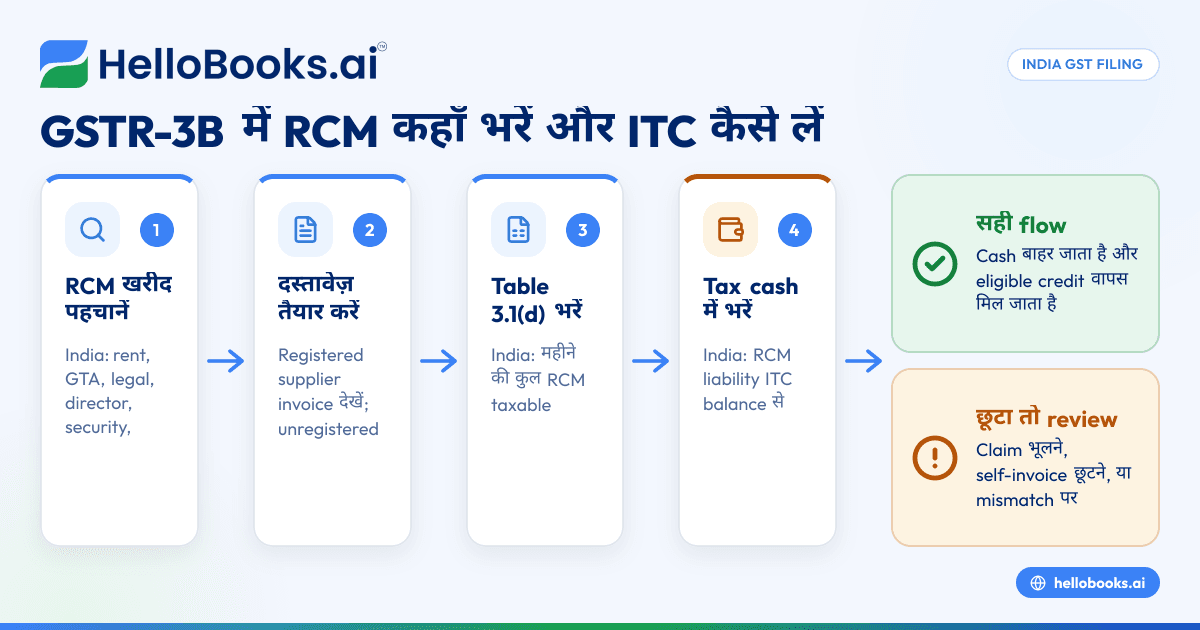
India में GSTR-3B में reverse charge (RCM) भरने का सीधा जवाब यह है: reverse charge वाली inward supply आम तौर पर GSTR-3B की Table 3.1(d) में दिखाई जाती है, RCM का tax cash ledger से चुकाया जाता है, और अगर input tax credit वैध है तो वही tax बाद में ITC के रूप में claim किया जाता है. लेकिन सही claim इस बात पर निर्भर करता है कि supply किस section के तहत RCM में आती है, supplier registered है या नहीं, self-invoice बनती है या नहीं, और entry books, GST portal तथा GSTR-2B/2A से कैसे मेल खाती है. मौजूदा position Central Goods and Services Tax Act, 2017, उसके rules, और CBIC/GSTN के published guidance से verify करें.
GSTR-3B में reverse charge की entry असल में कहाँ जाती है
RCM का मूल सिद्धांत यह है कि GST supplier नहीं, recipient भरता है. भारत में यह व्यवस्था Central Goods and Services Tax Act, 2017 की धारा 9(3) और 9(4) के ढांचे से आती है; interstate मामलों में Integrated Goods and Services Tax Act, 2017 भी relevant हो सकता है. कौन-सी supply reverse charge में है, इसकी current list CBIC की notifications, circulars और GST portal पर उपलब्ध सामग्री में देखनी चाहिए.
GSTR-3B के level पर practical सवाल यह होता है कि amount कहाँ भरी जाए. Broadly:
- reverse charge वाली inward supplies Table 3.1(d) में report की जाती हैं;
- liability electronic cash ledger से चुकाई जाती है;
- eligible ITC बाद में input tax credit section में claim की जाती है, subject to the law, documentation and eligibility.
कौन-सी ITC entry किस sub-table में जाएगी, यह supply की प्रकृति पर निर्भर कर सकता है, इसलिए current return format और GSTN की filing instructions देखकर ही final reporting करें. अगर आपका मामला import of services, blocked credit, exempt output, personal use, या mixed-use जैसी बातों से जुड़ता है, तो NEEDS EXPERT REVIEW.
अगर आप accounting entries बाद में सोचते हैं और पहले return भरते हैं, तो यहीं mismatch शुरू होता है. इसलिए RCM को invoice stage पर tag करना ज़रूरी है. इसी जगह GST return filing और purchase bill capture का फायदा आता है, क्योंकि reverse charge वाली bill entry books और 3B दोनों में साथ चलती है.
Reverse charge किन purchases पर आता है, और हर purchase पर नहीं
भारत में हर unregistered supplier से खरीद अपने-आप RCM में नहीं आ जाती. यह बहुत आम गलतफ़हमी है. RCM केवल उन supplies पर आता है जिन्हें कानून या notification ने specifically cover किया हो. इसकी authoritative position CBIC notifications, CGST Act, IGST Act और GST portal की updates से देखनी चाहिए.
छोटे और मध्यम व्यवसायों में अक्सर जिन categories पर चर्चा होती है, उनमें ये शामिल हो सकती हैं, depending on current law and notification status:
- goods transport agency (GTA) services;
- advocate या law firm की certain legal services business entity को;
- director services company को;
- कुछ security services arrangements;
- कुछ rent situations;
- import of services;
- कुछ notified goods.
लेकिन “अक्सर” का मतलब “हमेशा” नहीं है. उदाहरण के लिए, place of supply, supplier की constitution, registration status, invoice wording, और specific exemption सब फर्क डालते हैं. इसलिए current position CBIC की latest notifications और GST portal guidance से confirm करें.
यहीं practical bookkeeping important हो जाती है. अगर purchase bill photo या PDF में आता है, तो OCR से bill capture करके उसे RCM-eligible bucket में review करना manual data entry से बेहतर होता है. अगर business कई राज्यों में GSTINs चलाता है, तो multi-GSTIN setup मदद करता है, क्योंकि एक ही expense हर state registration पर एक जैसी treatment नहीं पा सकता.
Self-invoice, payment voucher और paperwork की असली अहमियत
RCM में गलती अक्सर tax calculation से पहले paperwork में होती है. अगर supplier registered है और supply reverse charge category में है, तो supplier invoice पर reverse charge का indication हो सकता है, और उसका data GSTN flow में किसी रूप में reflected दिख सकता है. लेकिन unregistered supplier वाले case में अक्सर recipient को अपने records मजबूत रखने पड़ते हैं.
Central Goods and Services Tax Act, 2017 की section 31 और CGST Rules के तहत self-invoice तथा payment voucher की requirements relevant हो सकती हैं. Self-invoice कब बनानी है, किन particulars के साथ बनानी है, और payment voucher की exact requirement क्या है, इसकी current wording CGST Rules, CBIC notifications और official updates में check करें. Bare fact के रूप में timing quote करने के बजाय current text official source से verify करें, क्योंकि rules में amendments आते रहते हैं.
Practical level पर आपको कम-से-कम यह साफ़ रखना चाहिए:
- supplier registered है या unregistered;
- supply RCM notification में covered है या नहीं;
- self-invoice बनी या नहीं;
- expense business use के लिए है या personal/mixed use;
- ITC eligible है या blocked.
अगर यह paper trail साफ़ नहीं है, तो 3B में tax भरकर भी बाद में ITC dispute हो सकता है. इसलिए purchase side पर OCR, document attachment, और narration discipline बहुत काम आता है. HelloBooks में purchase bills को scan करके record करना और reverse charge treatment के साथ expense entry रखना इस gap को कम करता है, खासकर तब जब bills email, PDF या मोबाइल photo के रूप में आते हों.
RCM का tax cash में क्यों जाता है, और ITC बाद में कैसे लौटता है
भारत में RCM की सबसे practical बात cash-flow है. Law की current interpretation के अनुसार reverse charge liability को cash ledger से discharge किया जाता है; available ITC balance को सीधे RCM liability के against उपयोग नहीं किया जाता. इसकी current operational position GST portal instructions, CBIC guidance और return filing utility notes में देखनी चाहिए.
फिर सवाल आता है: अगर cash में tax भरना है, तो ITC का फायदा कहाँ मिला? जवाब यह है कि अगर purchase business use के लिए है, blocked credit नहीं है, और बाकी conditions पूरी हैं, तो वही tax eligible credit के रूप में लिया जा सकता है. यह immediate accounting comfort देता है, लेकिन cash movement फिर भी होता है.
इसे साफ़ करने के लिए एक illustrative और invented स्थिति लें. मान लीजिए एक Delhi GSTIN वाली private limited company ने एक notified reverse-charge service ली. इस invented case में taxable value ₹1,00,000 और tax ₹18,000 माना गया है. यहाँ ₹18,000 केवल समझाने के लिए invented figure है; actual tax rate संबंधित GST law, HSN/SAC classification, CBIC notification और GST portal references से verify करें. कंपनी को पहले यह ₹18,000 cash ledger से discharge करना पड़ सकता है. अगर service पूरी तरह taxable business use के लिए है और credit blocked नहीं है, तो वही ₹18,000 eligible ITC के रूप में लिया जा सकता है. यह illustration interest, apportionment, exempt turnover impact, section 17 restrictions, और timing mismatches को शामिल नहीं करता.
यानी “RCM में tax गया भी और credit वापस भी आया” — यह बात सही हो सकती है, पर हर case में नहीं. अगर outward supplies exempt हैं, composition scheme लागू है, या expense personal use का है, तो result बदल जाएगा. NEEDS EXPERT REVIEW.
GSTR-2B, books और bank statement के बीच mismatch कहाँ पैदा होता है
RCM में सभी entries GSTR-2B पर वैसी नहीं दिखतीं जैसी सामान्य B2B purchase पर दिखती हैं. खासकर unregistered supplier और self-invoice वाले मामलों में taxpayer को अपनी books पर ज्यादा भरोसा करना पड़ता है. इसलिए केवल 2B देखकर RCM complete मान लेना ठीक नहीं.
यहाँ तीन reconciliation layers होती हैं:
- purchase document बनाम books,
- books बनाम GSTR-3B,
- bank payment बनाम recorded expense.
उदाहरण के लिए, अगर office rent rupee amount में NEFT से गया, लेकिन accountant ने उसे सामान्य rent expense माना और RCM flag नहीं लगाया, तो bank statement और expense तो मिल जाएंगे, पर 3B की reverse charge liability छूट सकती है. इसी तरह अगर imported service का invoice USD में है, INR conversion basis गलत पकड़ा गया, तो IGST reporting mismatch हो सकता है. Foreign exchange conversion rules और valuation issues official law text से verify करने चाहिए. NEEDS EXPERT REVIEW.
यहीं bank reconciliation उपयोगी होती है. भारत में bank statement upload करके payment lines को expense entries से match करना इस बात को पकड़ने में मदद करता है कि कौन-सी recurring payments—जैसे rent, legal fee, security service—RCM review मांगती हैं. अगर books Tally में रही हैं, तो Tally alternative या migration flow helpful हो सकता है ताकि historical ledgers खोए बिना current GST cleanup किया जा सके.
Place of supply, tax head split और interstate mistakes
RCM सिर्फ “tax payable by recipient” का प्रश्न नहीं है; सही tax head भी उतना ही important है. भारत में CGST, SGST और IGST का split place of supply, location of supplier, location of recipient, और supply classification पर निर्भर करता है, जैसा CGST Act और IGST Act में framework दिया गया है. Current interpretive position CBIC circulars, law text और GST portal resources में देखनी चाहिए.
व्यवहार में गलती तब होती है जब accountant RCM entry तो डाल देता है, लेकिन wrong tax head चुन लेता है. उदाहरण:
- intrastate service पर IGST डाल दिया;
- interstate service पर CGST+SGST split कर दिया;
- import of service को सामान्य domestic purchase जैसा treat कर दिया.
इससे 3B liability, ITC bucket और books तीनों बिगड़ते हैं. अगर goods movement जुड़ा है, तो e-way bill और tax treatment अलग workflows में जाने से duplicate errors भी हो सकते हैं. इसलिए invoice stage पर place-of-supply logic और tax head split का automation useful होता है. Smart invoicing और accounting software India जैसे flows का practical फायदा यही है कि tax heads manual अनुमान पर कम निर्भर रहते हैं.
एक invented working से समझें कि journal और return साथ कैसे बैठते हैं
एक और illustrative और invented working लें. मान लीजिए Mumbai में registered business ने unregistered landlord से commercial premises rent लिया और current law के अनुसार वह arrangement RCM में आता है. यह factual assumption केवल illustration के लिए है; आपकी exact situation CBIC notification, CGST Act provisions और GST portal guidance से confirm करें. अब मान लें invented monthly rent ₹50,000 है और invented GST amount ₹9,000 है. यह ₹9,000 official rate statement नहीं है; सिर्फ समझाने के लिए invented figure है.
Books में simplified treatment कुछ इस तरह दिख सकता है:
- rent expense ₹50,000;
- reverse charge tax payable ₹9,000;
- bank/creditor payment अलग entry में;
- cash ledger discharge after challan/payment;
- eligible ITC recognition when conditions are met.
GSTR-3B side पर taxpayer reverse charge inward supply को relevant reverse charge table में report करता है, फिर tax cash से discharge करता है, और eligible credit को ITC side पर लेता है. इस illustration में हमने partial payment, month-end accrual, blocked credit, exempt turnover reversal, section 16 conditions, और documentation defects को छोड़ दिया है. वास्तविक filing से पहले CA या GST practitioner से confirm करें.
अगर आप entries phone से approve करते हैं, तो mobile app का उपयोग useful हो सकता है—खासकर तब जब owner site visits, godown checks, inventory movement और approvals एक साथ संभाल रहा हो. Hindi या Hinglish में quick clarification चाहिए हो, तो WhatsApp पर Noor assistant से bookkeeping context में सवाल पूछना भी convenient हो सकता है; final legal view फिर भी official source या advisor से verify करें.
किन स्थितियों में ITC claim रुक सकता है
RCM भर देने से ITC अपने-आप नहीं मिल जाती. Input tax credit की eligibility Central Goods and Services Tax Act, 2017 की section 16, section 17 और संबंधित rules के अधीन देखी जाती है. Blocked credit, personal consumption, exempt output, missing documentation, और business nexus की कमी ITC रोक सकती है. Current legal text CBIC और GST portal पर उपलब्ध official publications से देखना चाहिए.
ध्यान देने योग्य practical situations:
- expense personal या non-business use का हो;
- motor vehicle, club membership, construction या अन्य blocked credit category relevant हो;
- self-invoice या supporting document ठीक न हो;
- goods/services received condition doubtful हो;
- books और return figures में mismatch हो.
इसलिए RCM को केवल “cash दो, credit लो” का mechanical process मानना risky है. GST reconciliation checker या 2A/2B reconciliation review उपयोगी हो सकता है, पर self-invoice वाले मामलों में internal records और भी महत्वपूर्ण हो जाते हैं.
India में RCM संभालते समय HelloBooks कहाँ practical मदद करता है
RCM article में software की असली usefulness filing के ठीक पहले नहीं, बल्कि पूरे महीने की discipline में है. अगर purchase bills OCR से capture हों, reverse charge tag सही लगे, place of supply और tax head split सही बैठे, और bank statement upload के बाद AI reconciliation recurring payments को expenses से जोड़ दे, तो month-end पर RCM छूटने की संभावना कम होती है.
फिर GSTR-3B direct filing के समय figures books से खिंचती हैं, न कि अलग spreadsheet से. अगर business के पास कई GSTIN हैं—मान लीजिए Karnataka और Maharashtra—तो one-login multi-GSTIN workflow useful है क्योंकि एक state का rent, legal fee या imported service दूसरे state registration से mix नहीं होना चाहिए. Inventory-heavy business के लिए purchase entries stock और finance reports से भी जुड़ती हैं, इसलिए GST और P&L अलग-अलग दुनिया नहीं रह जाते.
अगर आप अभी tool decide नहीं कर रहे और सिर्फ GSTIN, HSN या invoice field check करना चाहते हैं, तो India-specific free tools भी काम आते हैं, जैसे GSTIN validator, HSN code search, और GST invoice validator. Software details या fit समझना हो तो demo देख सकते हैं, और plan information के लिए /in/pricing सही जगह है.
आख़िरी practical बात: RCM में सबसे पहले category नहीं, evidence देखिए
RCM पर काम करते समय पहले यह मत मानिए कि “यह legal fee है, इसलिए reverse charge होगा” या “यह unregistered vendor है, इसलिए जरूर reverse charge होगा.” भारत में सही क्रम यह है:
- supply की nature पहचानिए;
- current law और CBIC notification देखिए;
- supplier की registration और GSTIN status verify कीजिए;
- place of supply और tax head तय कीजिए;
- self-invoice/payment voucher requirement check कीजिए;
- cash discharge और ITC eligibility अलग-अलग सोचिए.
यदि आप यही discipline रखते हैं, तो GSTR-3B में reverse charge डरावना नहीं रहता. Return की सही table भरना अंतिम कदम है; असली काम documents, classification, INR bookkeeping, GST portal matching और evidence trail में होता है.


