
Key takeaways
What this article covers, in order:
- Recurring Invoices: When & How to Create One
- Why recurring invoices matter
- How recurring invoices help plan the business
- When to use recurring invoices
- Situations where recurring invoices are ideal
- How to create repeating invoices
Recurring Invoices: When & How to Create One
Why recurring invoices matter
Recurring invoices automate repeated billing tasks for regular clients to save time. They assist in keeping consistent cash flow and minimize manual mistakes that lead to delays. But when you implement them the right way, they allow time for work at the heart of your business and serving clients. Bold and recurring invoices become predictable for the business and customers.
How recurring invoices help plan the business
It creates a predictable revenue stream, which can help greatly aid in budgeting and forecasting. A predictable billing pattern allows for more confidence when planning staffing and expenses. They minimize accounts receivable follow up by automatically billing on time. Include recurring invoices as part of a larger billing strategy for consistent growth.
When to use recurring invoices
Recurring invoices are ideal for situations where a service or product is delivered on an ongoing basis. These are suitable for memberships, ongoing services, retainers or subscription-style offers that recur monthly or annually. A recurring invoice will save on admin effort if clients get the same charge every time. Change when the billing pattern starts to get regular and predictable.
Situations where recurring invoices are ideal
- Monthly memberships or subscriptions
- Ongoing maintenance or service retainers
- Payment plans for longer term projects
- Donations or monthly charitable donations
How to create repeating invoices
Choose a schedule
Choose a billing frequency that suits the service cadence and client preference. Depending on the billing cycle, popular choices are weekly, monthly, quarterly and annual schedules. For instance, avoid sending an invoice dated 30 October when your actual delivery dates are in November or pay periods differ. Before generating recurrent invoices, inform clients about the selected session frequency.
Create a template
Create an invoice template including clear line items and total amounts for all recurring charges. Include payment terms, due dates, and acceptable methods of payment in the template. Avoid any legal jargon and use wording customers can understand explaining late fees or renewal terms. Templates ensure that all recurring invoices are uniform, and can decrease the number of manual edits.
Set payment terms and reminders
Set payment terms that reflect cash flow needs as well as customer convenience such as net 15 or net 30 terms. Put automated reminders in place to go out a few days before and after the due date to help limit missed payments. Implement a clear process for updating payment details when cards expire or accounts change. Frequent reminders reduce the risk of payment delays and disputes.
Setup checklist for recurring invoices
- Make sure client agrees to automatic billing
- The frequency and start date can be selected
- Develop a clear invoice template
- Specify payment details and alerts
- First test a single recurring invoice
Best practices and common pitfalls
Unless you specify clearly in advance the parameters of their billing cycle and renewal terms, hold off on making those recurring invoices. Send a welcome invoice or notice that outlines up-and-coming recurring charges to avoid unexpected surprises. Make a point to regularly review recurring invoices, ensuring amounts are accurate and consistent with services being provided. Avoid applying discounts or prorated charges without caution and provide clear documentation of any changes made.
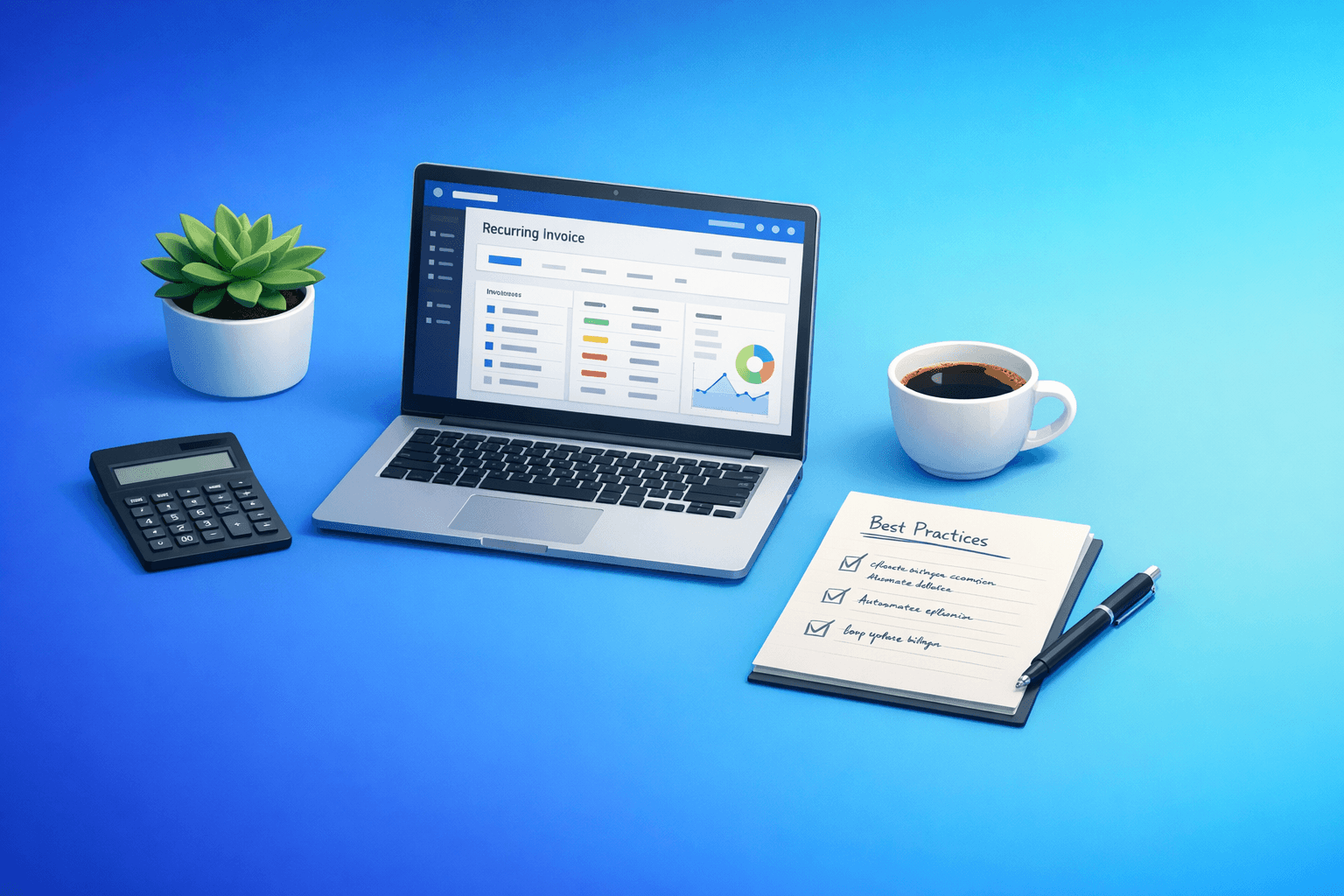
List of best practices
- Inform customers prior to first recurring billing
- Provide cancel and update as simple options
- Match periodic invoices with bank statements
- Maintain records of consent and billing updates
Monitoring and adjusting recurring invoices
Monitor performance with easy metrics such as collection rate and churn for recurring billing. Look at these numbers on a monthly basis for past due accounts or surprises cancellations that impact revenue. Adapt billing frequency, payment reminders, or service terms to enhance retention based on the insights gleaned. This keeps the billing process healthy and minimizes revenue leakage.
Adjusting or canceling recurring invoices
If a client terminates a service or requests to modify it, immediately update the recurring invoice and confirm this change in writing. If billing needs to be paused, set a specific restart date and tell the client about any prorated costs. Keeping a clean list of active recurring invoices can prevent duplicate or forgotten charges. A transparent cancellation policy safeguards client trust and your cash flow.
A final checklist before implementing recurring invoices
- Make sure of legal and tax issue for recurring charges
- Test the complete billing process with a single account
- Terms and start date communication to clients
- Regular reviews to ensure invoices stay accurate
Conclusion
When used in the right situations, recurring invoices allow for easy billing and a steady stream of revenue. They are suited for predictable services and repeat customers who can tolerate automated billing. Timely communication and careful setup help reduce disputes and late payments. They also support quick revenue adjustments via cancellations and refunds when appropriate, allowing them to become a trusted line item in your billing system as long as there is good monitoring (and easy fixes).