


Key takeaways
What this article covers, in order:
- QRMP स्कीम असल में किसके लिए बनी है
- QRMP चुनने से पहले eligibility कैसे समझें
- IFF कब जरूरी लगता है और कब नहीं
- मासिक payment को हल्के में लेना QRMP की सबसे बड़ी गलती है
- quarter के आखिर में GSTR-1 और GSTR-3B कैसे smooth रखें
- buyers, suppliers और ITC के बीच QRMP का असली pressure point
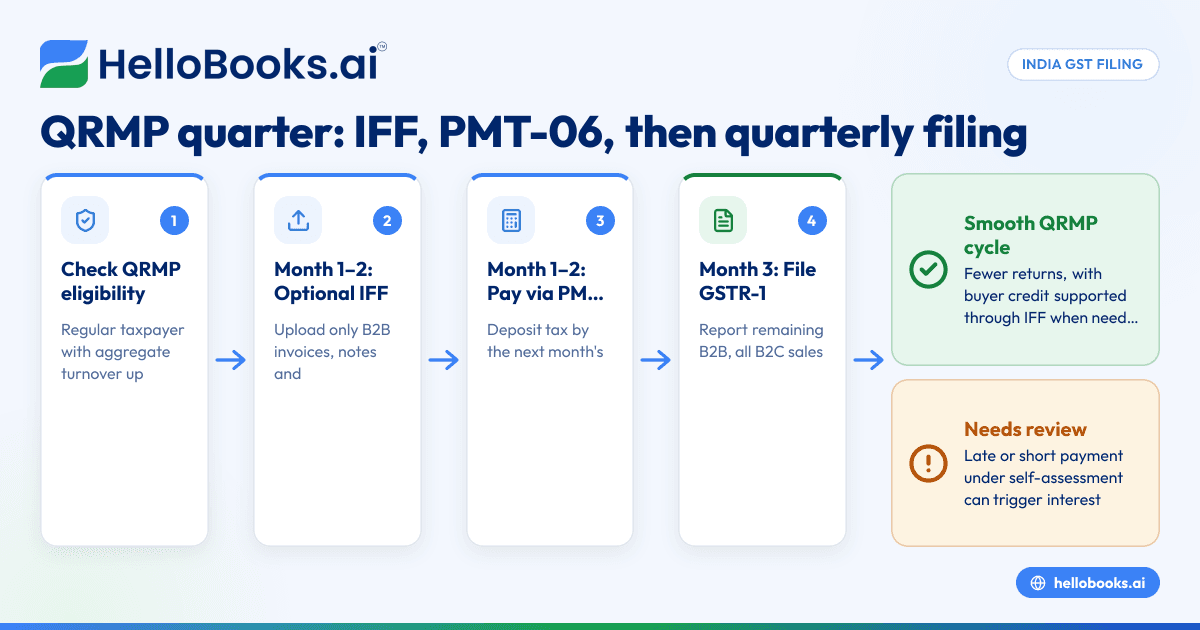
India में QRMP स्कीम का मतलब यह है कि eligible regular GST taxpayers GSTR-1 और GSTR-3B तिमाही में फाइल कर सकते हैं, लेकिन GST का भुगतान हर महीने करना पड़ता है। अगर आपके buyers registered हैं और उन्हें input tax credit जल्दी चाहिए, तो IFF काम आता है। eligibility, option window, monthly PMT-06 payment, और quarter-end filing के current rules Central Goods and Services Tax Act, 2017, संबंधित Rules, और GST Portal/GSTN पर CBIC द्वारा प्रकाशित guidance में देखे जाते हैं।
QRMP स्कीम असल में किसके लिए बनी है
QRMP का full form है Quarterly Return Monthly Payment। नाम से ही साफ है: return filing तिमाही, payment monthly। यह उन businesses के लिए useful होती है जिनका compliance workload कम करना ज़रूरी है, लेकिन जो regular GST system में ही रहना चाहते हैं।
India में बहुत से traders, distributors, service providers, small manufacturers और multi-city sellers के लिए दिक्कत filing की frequency से ज्यादा workflow की होती है। हर महीने sales invoices, purchase bills, bank entries, GST heads, place of supply, और receivables को ready रखना पड़ता है। QRMP filing count कम करती है, bookkeeping की ज़रूरत नहीं।
यहीं पर practical फर्क समझना ज़रूरी है: QRMP “कम GST” नहीं है, सिर्फ “कम return filing events” है। आपकी outward supply, inward supply, ITC tracking, reverse charge situations, e-way bill needs, और invoice accuracy उतनी ही महत्वपूर्ण रहती है। अगर invoice में गलत GSTIN, गलत place of supply, या CGST/SGST बनाम IGST का split गलत है, तो quarter-end पर वही गलती बड़ा mismatch बन जाती है.
ऐसे businesses जो पहले Tally spreadsheet mix पर चल रहे थे, उन्हें QRMP में discipline और भी ज्यादा चाहिए। HelloBooks जैसे system में invoice बनाते समय GST invoicing, place-of-supply logic और tax head split साथ में होने से interstate और intrastate billing की गलतियाँ कम होती हैं, और quarter-end GSTR-1 व GSTR-3B direct filing के समय figures books से जुड़ी रहती हैं।
QRMP चुनने से पहले eligibility कैसे समझें
Eligibility का current framework Central Goods and Services Tax Act, 2017, CGST Rules, और CBIC/GST Portal की latest advisories में published होता है। कौन QRMP चुन सकता है, aggregate turnover कैसे compute होगा, और option कब valid रहेगा, यह हमेशा GSTN portal पर current instructions से confirm करना चाहिए।
यहाँ दो practical points सबसे ज्यादा confuse करते हैं:
- turnover एक GSTIN देखकर नहीं, PAN level पर aggregate basis पर देखा जाता है
- scheme regular taxpayers के context में relevant है; हर registration type का treatment एक जैसा नहीं होता
मान लीजिए एक illustrative और invented situation लें: एक business के पास Maharashtra और Karnataka में दो GSTIN हैं। Maharashtra unit का turnover ₹2.20 crore और Karnataka unit का ₹1.90 crore है। PAN level aggregate ₹4.10 crore हुआ। यह सिर्फ समझाने के लिए invented figure है; actual eligibility current CBIC/GST Portal instructions से verify करनी होगी। अगर future में aggregate turnover official limit cross कर जाए, तो QRMP continue रहेगा या next quarter से change होगा, इसकी exact treatment portal guidance से check करनी चाहिए.
यह भी ध्यान रखें कि registration pattern business reality से अलग हो सकता है। कई firms सोचती हैं कि “हम एक state में छोटे हैं, इसलिए QRMP मिल जाएगा।” लेकिन GST law aggregate turnover को broader तरीके से देखता है। इसलिए CA, tax consultant, या internal finance lead को PAN-wise picture देखनी चाहिए।
अगर आपके पास multiple GSTIN हैं, तो operationally compliance और tricky हो जाता है। HelloBooks में multi-GSTIN setup useful हो सकता है, क्योंकि अलग registrations के invoices, purchases और filings एक login से segregated रहते हैं, जबकि users की limit compliance team को bottleneck नहीं बनाती।
IFF कब जरूरी लगता है और कब नहीं
IFF यानी Invoice Furnishing Facility, QRMP का सबसे misunderstood हिस्सा है। यह हर किसी के लिए equally useful नहीं है। इसका काम यह है कि quarter के पहले दो महीनों की कुछ B2B invoice details buyers तक जल्दी पहुँच सकें, ताकि उनका ITC cycle unnecessarily delay न हो। IFF का exact scope, data fields और current limits GST Portal पर GSTN/CBIC guidance में published रहती हैं; filing से पहले वहीं confirm करें।
अगर आपका business largely B2C है—जैसे retail counter, salon chain, clinic, local store, cloud kitchen, या direct-to-consumer website—तो IFF उतना critical नहीं हो सकता। लेकिन अगर आप registered buyers को supply करते हैं, especially distributors, corporates, contractors, manufacturers या wholesalers को, तो IFF practical expectation बन जाता है।
सोचिए एक illustrative और invented case। Jaipur का एक packaging supplier Bengaluru की registered manufacturing company को goods भेजता है। October की supply पर invoice raise हुआ, payment terms tight हैं, और buyer accounts team कहती है कि उनका ITC तभी visible होगा जब supplier data जल्दी report करे। यह invented scenario है; actual ITC reflection mechanics current GSTN system behaviour और law interpretation पर depend कर सकते हैं. ऐसे case में IFF seller-buyer relationship smooth रख सकता है।
IFF का एक और hidden benefit है: quarterly rush कम होता है। पहले दो महीनों का कुछ B2B data अगर पहले ही furnish कर दिया जाए, तो quarter-end GSTR-1 comparatively cleaner हो सकती है। लेकिन danger भी है—अगर records disciplined न हों, तो वही invoice IFF और quarterly return दोनों में duplicate reporting risk पैदा कर सकती है।
इसलिए process होना चाहिए: invoice issue करो, GSTIN validate करो, place of supply सही रखो, और जो data IFF में गया है उसे quarter-end return draft में दोबारा पकड़कर reconcile करो। HelloBooks में GSTIN-level invoicing और GSTR-1 direct filing workflow इस duplication risk को manual Excel से बेहतर तरीके से control कर सकता है, खासकर तब जब team Hindi, English या Hinglish में Noor assistant on WhatsApp से quick guidance लेना चाहती हो।
मासिक payment को हल्के में लेना QRMP की सबसे बड़ी गलती है
QRMP के साथ सबसे आम misunderstanding यह है कि “quarterly return है, तो payment भी quarter end पर करेंगे।” ऐसा नहीं मानना चाहिए। GST payment mechanics, challan process, cash ledger effect, और interest implications Central Goods and Services Tax Act, 2017, CGST Rules, और CBIC/GST Portal पर published instructions के हिसाब से समझने चाहिए। PMT-06 का use monthly payment flow में होता है, लेकिन exact amount कैसे compute होगा, यह आपकी facts, output tax liability, eligible ITC और applicable method पर depend करता है.
Practical level पर business owners तीन जगह फिसलते हैं:
- sales book updated नहीं होती
- purchase ITC position clear नहीं होती
- bank receipts और tax payments reconcile नहीं होते
एक illustrative और invented working लें, केवल concept समझाने के लिए, official computation नहीं। मान लें April में outward tax liability ₹86,000 दिख रही है, available ITC ₹31,000 है, और कुछ purchase bills अभी OCR entry या supplier upload mismatch की वजह से final review में हैं। यह invented figure है और इसमें reverse charge, credit restrictions, debit notes, prior-period adjustments, interest exposure, और blocked credits शामिल नहीं हैं। ऐसे में PMT-06 पर safe payment estimate और final quarter-settlement अलग हो सकते हैं।
यही वजह है कि QRMP filers को monthly close routine चाहिए, चाहे return quarter-end पर जाए। HelloBooks में bank statement upload करके AI reconciliation करने से NEFT, RTGS, IMPS या UPI collections को invoices से match करना आसान होता है। साथ में OCR से purchase bills capture हो जाएँ, तो monthly tax working side spreadsheet पर निर्भर नहीं रहती.
quarter के आखिर में GSTR-1 और GSTR-3B कैसे smooth रखें
QRMP का quarter-end तभी आसान लगता है जब पहले दो महीने messy न हों। GSTR-1 outward supplies का statement है और GSTR-3B summary return-cum-payment statement की तरह compliance flow में आता है। इनके current due dates, state-wise variations जहाँ लागू हों, और filing instructions GST Portal/GSTN पर CBIC notifications और advisories के साथ published होते हैं; filing से पहले वहीं देखना चाहिए।
Quarter-end पर आपकी checklist केवल “return file कर दो” नहीं होनी चाहिए। असली सवाल ये हैं:
- क्या सभी tax invoices books में हैं?
- क्या B2B और B2C classification सही है?
- क्या interstate supplies पर IGST और local supplies पर CGST/SGST सही लगा है?
- क्या e-invoice applicable supplies पर IRN और signed QR properly generated हैं, जहाँ law के तहत required हों? Current applicability thresholds CBIC notifications और NIC/e-invoice system guidance में published होते हैं.
- क्या goods movement वाले invoices पर e-way bill consistency है, जहाँ required हो? Current rules CGST law, Rules और e-way bill portal guidance में published होते हैं.
अगर आपका business stock-led है—जैसे hardware, pharma distribution, garments, electricals, auto parts—तो inventory inaccuracies भी GST return mismatch बन सकती हैं। Books में sale है, dispatch register में अलग figure है, e-way bill record अलग है, और customer ledger अलग। इसलिए inventory management और invoicing अलग-अलग systems में रखने का नुकसान QRMP में ज्यादा दिखता है.
HelloBooks में inventory sale-purchase entries के साथ move करती है, और financial reports उसी data पर बनते हैं जिससे GST return filing निकलती है। इससे CA को अलग trial balance और GST summary reconcile करने में कम friction होता है। अगर business Tally से shift कर रहा है या parallel trial run चाहता है, तो Tally alternative और HelloBooks vs Tally context useful हो सकते हैं।
buyers, suppliers और ITC के बीच QRMP का असली pressure point
QRMP की planning केवल seller-side issue नहीं है। India में GST ecosystem का practical pressure buyer ITC cycle से आता है। Buyers चाहते हैं कि supplier invoice सही GSTIN पर हो, timely appear हो, और purchase team की reconciliation list में अटका न रहे। Suppliers चाहते हैं कि payment release हो। Accounting team चाहती है कि 2A/2B mismatch कम रहे.
यहीं QRMP users को disciplined supplier-customer communication चाहिए। अगर आप B2B seller हैं, तो quarter शुरू होते ही key customers से clear कर लें कि:
- क्या उन्हें first two months में IFF reporting चाहिए
- invoice पर PO number, state code, HSN/SAC, dispatch details जैसी कौन-सी fields critical हैं
- credit note/debit note handling का internal timeline क्या है
Supplier side पर भी यही discipline चाहिए। आपकी own ITC position monthly payment estimate को affect करती है। अगर supplier ने invoice upload नहीं किया, invoice number mismatch है, या GSTIN typo है, तो quarter-end पर claim decision मुश्किल हो सकता है। Current ITC entitlement conditions Central Goods and Services Tax Act, 2017, CGST Rules, और CBIC/GSTN published guidance के अनुसार देखनी चाहिए.
HelloBooks में GSTR-2A/2B reconciliation and ITC tracking का practical use यह है कि purchase side पर missing invoices और mismatches early दिख जाएँ। इसके साथ bank reconciliation और AI bookkeeping workflow small teams के लिए खास मददगार होते हैं, क्योंकि वही person अक्सर sales, collections, GST और vendor bills सब देख रहा होता है।
कौन-से businesses में QRMP सचमुच fit बैठता है
QRMP हर छोटे business के लिए automatically best choice नहीं है। Fit इस बात पर depend करता है कि आपकी billing pattern कैसी है, buyers कौन हैं, और books कितनी जल्दी close होती हैं।
QRMP अक्सर इन situations में sensible लग सकती है:
- B2C-heavy business जहाँ buyers को monthly ITC visibility की urgency नहीं
- predictable billing cycle वाला service business
- low-volume but compliant trader
- small manufacturer जिसकी accounting team lean है लेकिन monthly payment discipline maintain कर सकती है
QRMP कम suitable लग सकती है जब:
- बड़े registered buyers लगातार monthly upload pressure डालते हों
- invoice volume बहुत ज्यादा हो
- frequent amendments, debit notes, credit notes आते हों
- books weak हों और quarter-end तक backlog जमा हो जाता हो
एक illustrative और invented contrast देखें। Business A एक local furnishing retailer है, जहाँ अधिकांश sales B2C हैं, receipts UPI और bank transfer से आती हैं, और B2B component limited है। Business B एक industrial consumables wholesaler है जो registered factories को supplies करता है और buyers हर महीने ITC visibility demand करते हैं। यह invented comparison है; actual decision sector, turnover, buyer contracts, and compliance readiness पर depend करेगा। ऐसे contrast में A के लिए QRMP ज्यादा natural fit हो सकती है, जबकि B को IFF discipline के बिना QRMP operationally irritating लग सकती है.
अगर आप अभी भी unsure हैं, तो eligibility और latest procedural rules GST Portal पर verify करने के बाद trial workflow बनाइए: क्या आपकी team month 1 और month 2 में invoices close, purchase bills scan, bank reconciliation, और tax estimate तैयार कर सकती है? अगर जवाब “नहीं” है, तो quarterly filing भी relief नहीं देगी.
QRMP पर clean workflow बनाने के practical तरीके
सही QRMP routine “कम filing” से नहीं, “better month-close” से बनता है। यह routine बहुत fancy नहीं होना चाहिए:
- invoice बनाते समय GSTIN और place of supply check
- goods movement हो तो e-way bill requirement verify
- जहाँ applicable हो वहाँ e-invoice IRN/signed QR consistency रखो
- purchase bills photo या PDF से record करो
- month-end पर bank statement upload करके receipts and payments reconcile करो
- key customers के लिए IFF decision पहले से तय करो
- quarter-end से पहले GSTR-1 draft और purchase mismatches review करो
अगर आप smartphone-first owner हैं, field sales team चलाते हैं, या accountant हर समय office में नहीं बैठता, तो mobile-based entry useful हो सकती है। HelloBooks की smart invoicing, e-invoicing software, e-way bill software, और accounting software India pages पर इस workflow का context देखा जा सकता है। Pricing देखने के लिए India pricing है, और current product fit समझना हो तो demo लेना बेहतर रहेगा।
अंतिम बात: QRMP सुविधा है, छुट्टी नहीं
QRMP India के GST framework में एक useful compliance option है, खासकर तब जब filing frequency कम करनी हो। लेकिन इसे “quarterly means relaxed” समझना गलती है। आपका GST monthly rhythm पर ही चलता रहता है—invoice accuracy, buyer ITC expectations, PMT-06 payment discipline, purchase bill capture, bank reconciliation, और quarter-end return consistency सब उतने ही important रहते हैं।
सबसे सुरक्षित approach यह है: eligibility, option window, monthly payment method, IFF scope, और current dates/limits हमेशा Central Goods and Services Tax Act, 2017, संबंधित Rules, CBIC notifications, और GST Portal/GSTN पर published current guidance से verify करें। जहाँ doubt हो, CA या GST practitioner से review लें। QRMP सही hands में compliance को lighter बनाती है; बिना process के वही चीज quarter-end stress में बदल जाती है।


