

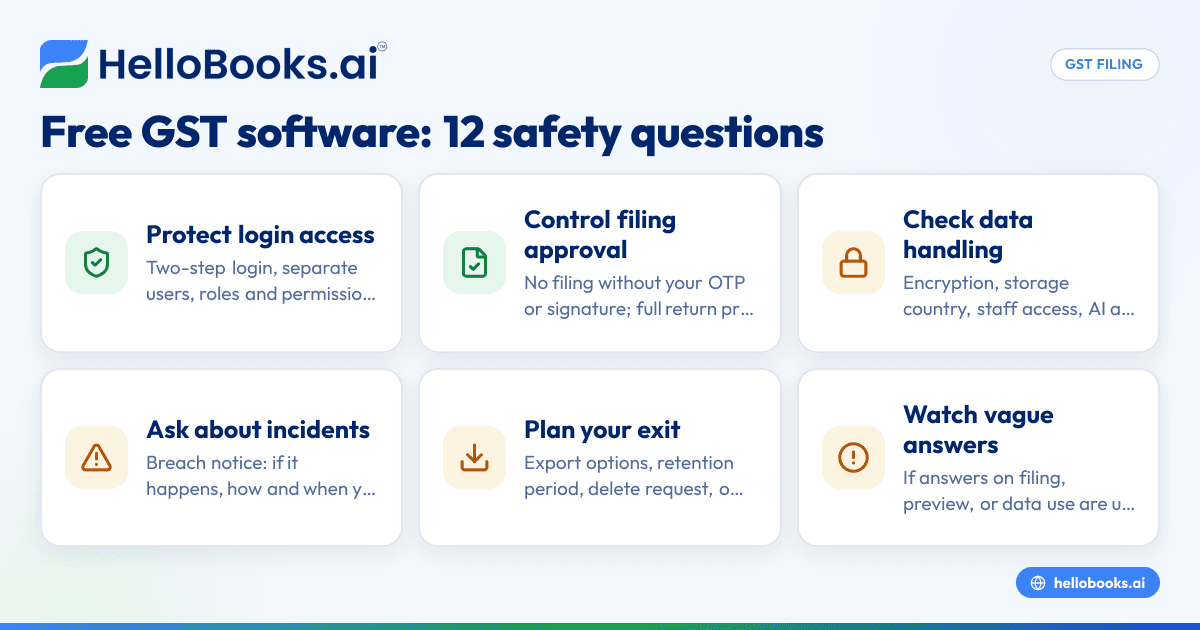

Key takeaways
What this article covers, in order:
- GST software-ல் இருக்கும் data ஏன் சாதாரண data இல்லை?
- முதலில் கேட்க வேண்டியது: யார் login செய்வார்கள், யார் என்ன செய்ய முடியும்?
- GST Portal access பற்றி மழுப்பலாக வந்த பதிலை நம்பாதீர்கள்
- Privacy policy-ல் கண்டிப்பாக தேட வேண்டிய வரிகள்
- Encryption, backups, and device safety: plain Tamil-ல் புரிந்துகொள்வது
- GST errors மட்டும் இல்லாமல் tax-head errors-ையும் software உருவாக்கலாம்
India-வில் free GST software safe ஆக இருக்கலாம்; unsafe ஆகவும் இருக்கலாம். விலை தான் முடிவு செய்யாது. உங்கள் GSTIN, invoices, bank statement upload, GSTR-1 அல்லது GSTR-3B filing access, e-invoice IRN data, supplier bills, even UPI/NEFT/RTGS/IMPS collections பற்றிய பதிவுகள்—all of that is sensitive. அதனால் கேள்வி இது: “இந்த app free ஆ paid ஆ?” இல்லை. “என் data-வையும் GST வேலைகளையும் இந்த vendor எப்படி கையாள்கிறான்?” என்பதுதான் முக்கியம்.
GST software-ல் இருக்கும் data ஏன் சாதாரண data இல்லை?
ஒரு இந்திய business GST software-ஐ தினசரி billing tool மாதிரி மட்டும் பார்க்கிறது. ஆனால் actual-ஆக அதில் பல அடுக்குகள் உள்ளன.
- உங்கள் customer GSTIN-கள்
- supplier names, bills, purchase values
- CGST, SGST, IGST split உள்ள tax invoices
- place of supply details
- stock movement, HSN/SAC data
- bank statement upload செய்தால் receipts and payments mapping
- GSTR-1, GSTR-3B figures
- e-invoice பயன்படுத்தினால் IRN மற்றும் signed QR references
- e-way bill details
இந்த data-வை வைத்து உங்கள் sales pattern, margins, receivables, vendor network, state-wise turnover, even compliance discipline வரை யாராவது புரிந்து கொள்ள முடியும். GST-க்கு மேல், Income-tax working, TDS adjustments, reverse charge entries, Companies Act reporting, MCA scrutiny, lender due diligence—பல இடங்களில் இந்த books indirectly உதவும்.
அதனால்தான் பாதுகாப்பு என்றால் password மட்டும் அல்ல. Access, approvals, audit trail, export rights, privacy policy, backup, and exit control எல்லாமே சேர்ந்து பார்க்க வேண்டியது.
முதலில் கேட்க வேண்டியது: யார் login செய்வார்கள், யார் என்ன செய்ய முடியும்?
ஒரே username-password-ஐ owner, cashier, accountant, CA எல்லாரும் share பண்ணுவது இந்திய SMEs-ல் மிகவும் common. இது cheap habit போலத் தெரிந்தாலும், security-யின் முதல் கசிவு அங்கேதான்.
Vendor-ஐ நேராக கேளுங்கள்:
- ஒவ்வொரு user-க்கும் தனி login கிடைக்குமா?
- role-based access இருக்கிறதா?
- invoice create பண்ணலாம், delete பண்ண முடியாத role இருக்கிறதா?
- filing பார்க்கலாம், submit செய்ய முடியாத role இருக்கிறதா?
- ஒரு staff வெளியேறினால் உடனே access remove செய்ய முடியுமா?
- activity log அல்லது audit trail இருக்கிறதா?
இது especially முக்கியம், நீங்கள் multiple branches அல்லது multiple GSTIN-கள் வைத்திருந்தால். Tamil Nadu-வில் ஒரு GSTIN, Karnataka-வில் இன்னொரு GSTIN, head office accountant Chennai-ல், CA Coimbatore-ல், owner travel-ல் mobile app வழியாக பார்க்கிறார் என்றால், “யார் என்ன செய்தார்?” என்ற visibility கட்டாயம் வேண்டும்.
HelloBooks மாதிரி system-ல் unlimited users மற்றும் multi-GSTIN handling போன்ற வசதிகள் useful ஆகும், ஆனால் security angle-ல் பார்த்தால் அதன் உண்மையான value role separation-ல் தான் தெரியும்: billing staff invoice போடலாம், accountant reconciliation செய்யலாம், CA return review செய்யலாம், owner final check செய்யலாம்.
GST Portal access பற்றி மழுப்பலாக வந்த பதிலை நம்பாதீர்கள்
ஒரு GST software மிகவும் powerful ஆகி விடும் இடம், அது GST Portal அல்லது GSTN workflows-ஐ touch செய்யும் போது தான். Return filing, invoice syncing, e-invoice generation, e-way bill raise செய்வது—all these involve regulated systems.
இங்கே நீங்கள் vendor-ஐ கேட்க வேண்டியது:
- உங்கள் GST portal credentials எப்படி பயன்படுத்தப்படுகின்றன?
- filing முன் human approval தேவைப்படுமா?
- OTP/EVC/DSC இல்லாமல் ஏதேனும் submit ஆகுமா?
- draft return முழுவதும் review செய்ய முடியுமா?
- filed figures எதிலிருந்து வந்தது என்று trace back செய்ய முடியுமா?
Current filing process requirements, authentication modes, and portal behaviour are published through the GST Portal and GSTN/CBIC notifications, circulars and help content under the Central Goods and Services Tax Act, 2017 and related rules. எந்த current rule, authentication method, due date, late fee, or table-level requirement பற்றியும் official source-ஐயே பார்க்க வேண்டும்.
இங்கே ஒரு practical point: software “நாங்களே file பண்ணிடுவோம், நீங்கள் tension வேண்டாம்” என்று சொன்னால், next question “என் review இல்லாமல் ஏதாவது போகுமா?” என்பதாக இருக்க வேண்டும். நல்ல system draft view, return summary, mismatch flags, and approval checkpoints கொடுக்கும்.
HelloBooks-இல் GSTR-1 மற்றும் GSTR-3B direct filing relevance இதில்தான்: invoices already books-ல் இருந்ததிலிருந்து return build ஆகும்; அதனால் numbers எப்படி வந்தது என்று trace செய்ய எளிதாகும். ஆனால் software direct file செய்கிறது என்பதற்காக blind trust கொடுக்கக் கூடாது; review control வேண்டும்.
Privacy policy-ல் கண்டிப்பாக தேட வேண்டிய வரிகள்
Free software என்றாலே ஒரு business question வரும்: “அவர்கள் எப்படி சம்பாதிக்கிறார்கள்?” அதற்கான பதில் vague-ஆ இருந்தால், உங்கள் data தான் product ஆகி விடுமோ என்று கேட்கலாம்.
கீழ்க்கண்ட விஷயங்கள் policy-யில் தெளிவாக இருக்க வேண்டும்:
- data owner யார்?
- vendor உங்கள் invoice, purchase, bank, GST data-வை ads, profiling, resale, cross-marketing-க்கு பயன்படுத்துகிறானா?
- service improvement என்ற பெயரில் என்னென்ன data process செய்கிறான்?
- subcontractors அல்லது cloud providers use செய்கிறானா?
- support team account-ஐ பார்க்கும் போது consent model என்ன?
- data retention எவ்வளவு?
- account close செய்த பிறகு export/delete options என்ன?
India-வில் personal data handling பற்றி Digital Personal Data Protection Act, 2023 பொருந்தும். Business books முழுவதும் “personal data” ஆகாது; ஆனால் proprietor details, employee information, customer contact numbers, WhatsApp-linked details, bank contacts போன்றவை இதில் வரலாம். DPDP Act-இன் current compliance expectations, rules, and notifications are to be checked from the official Government of India publications and notified rules NEEDS EXPERT REVIEW.
Policy-யில் “we may share with partners” போன்ற broad phrase இருந்தால், “எந்த partners? எந்த purpose? aggregated ஆ? raw data ஆ?” என்று follow-up கேளுங்கள்.
Encryption, backups, and device safety: plain Tamil-ல் புரிந்துகொள்வது
Technical jargon தெரிய வேண்டியதில்லை. இந்த நான்கு கேள்விகள் போதும்:
- browser/app-லிருந்து server-க்கு data encrypted ஆக போகிறதா?
- server-ல் data encrypted-ஆ சேமிக்கப்படுகிறதா?
- backups எடுக்கப்படுகிறதா? restore process documented-ஆ?
- lost phone அல்லது stolen laptop இருந்தால் account access quickly revoke செய்ய முடியுமா?
Mobile app use பண்ணும் businesses-க்கு இது மிக முக்கியம். Invoice create பண்ணும் phone, godown-ல் stock பார்க்கும் Android device, owner iPhone-ல் dashboard பார்க்கிறார்—இந்த mix-ல் device hygiene பலமில்லை என்றால் software security மட்டும் போதாது.
If the business captures purchase bills through OCR from photos or PDFs, or uploads bank statements for AI reconciliation, ask an extra question: uploaded files temporary processing-க்குப் பிறகு எப்படி handled ஆகின்றன? retained ஆகிறதா, delete ஆகிறதா, or linked to your permanent records-ஆ? இது important, because bank statements often reveal payer names, account patterns, and narration trails from UPI, NEFT, RTGS or IMPS receipts.
HelloBooks-இன் bank statement upload and AI reconciliation, plus OCR for purchase bills, practical productivity தரும். ஆனால் அதற்கான safe use என்பது vendor answers தெளிவாக இருப்பதில்தான் உள்ளது: who can see uploads, how long they remain accessible, and whether you can audit matched entries later.
GST errors மட்டும் இல்லாமல் tax-head errors-ையும் software உருவாக்கலாம்
Data safety என்றால் privacy மட்டும் என்று நினைக்காதீர்கள். Wrong automation கூட ஒரு security problem தான், because it can silently create compliance damage.
உதாரணமாக:
- inter-state sale-க்கு CGST+SGST போடுவது
- intra-state sale-க்கு IGST போடுவது
- wrong place of supply pick ஆகுவது
- duplicate invoice இருந்து GSTR-1 inflate ஆகுவது
- e-way bill details invoice-ஐ match செய்யாதது
- e-invoice IRN reference books-ல் track ஆகாமல் போவது
இந்தத் தவறுகள் fraud இல்லாமலே நடக்கலாம். ஆனால் later scrutiny வந்தால் business-க்கு explanation burden உண்டு. Under the CGST Act, 2017, SGST laws of the state, and the administration by CBIC together with state GST authorities through GSTN systems, current invoice rules, e-invoice applicability, e-way bill requirements, tax head treatment and return reporting should be verified from official notifications, rules, FAQs and portal advisories.
இதனால்தான் software-ல் place-of-supply logic மற்றும் tax head split validation நல்லதாக இருக்க வேண்டும். Invoice save செய்யும் நேரத்திலேயே CGST/SGST அல்லது IGST split sensible-ஆ இருக்கிறதா என்று பார்க்கும் system, later correction work-ஐ குறைக்கும். HelloBooks இந்த angle-ல் useful, because GST invoicing-இல் place-of-supply மற்றும் tax-head split சரியாக அமைந்தால் compliance risk itself குறையும்.
வெளியேற முடியாத software பாதுகாப்பான software அல்ல
Security discussion-ல் people often forget the exit question. ஆனால் vendor change செய்ய முடியாத நிலை itself a risk.
Ask these clearly:
- free plan-ல்கூட export கிடைக்குமா?
- invoices, customers, suppliers, stock, ledger, purchase bills, GST reports export formats என்ன?
- filed return summaries download செய்ய முடியுமா?
- audit trail export செய்ய முடியுமா?
- attachments export செய்ய முடியுமா?
- account close பண்ணினால் data delete procedure என்ன?
India-வில் இன்னும் பல businesses Tally-யிலிருந்து move ஆக முயற்சி செய்கின்றன, அல்லது parallel-ஆ use செய்கின்றன. அதனால் migration and reversibility முக்கியம். நீங்கள் ஒரு ஆண்டு முழுக்க books build பண்ணி, பிறகு வெளியேற முடியாமல் இருந்தால், அது “free” அல்ல; it is lock-in.
HelloBooks-இன் Tally migration and connector இங்கே relevant, because many Indian businesses want a gradual move rather than a big-bang switch. Safe software என்பது நீங்கள் உள்ளே வருவதையும், தேவையெனில் வெளியேறுவதையும் practical-ஆ enable செய்ய வேண்டும்.
ஒரு சிறிய invented illustration: risk எப்படி actually உருவாகும்?
இந்த figures illustrative மற்றும் invented. Current legal rates, thresholds, due dates, penalties அல்லது interest பற்றிய official facts அல்ல. These numbers leave out many real-world details such as exemptions, credit notes, amendments, and sector-specific rules.
ஒரு trader Chennai-யில் இருந்து Bengaluru customer-க்கு goods விற்கிறார் என்று நினைப்போம். Invoice value illustrative-ஆ ₹1,18,000 என்று வைத்துக் கொள்ளலாம்; இதில் taxable value ₹1,00,000, tax portion ₹18,000 என்று software auto-filled என்று வைத்துக் கொள்வோம். ஆனால் system wrong-ஆ CGST ₹9,000 + SGST ₹9,000 split போட்டது என்று imagine பண்ணுங்கள், even though place of supply Karnataka-ஆ இருந்தது.
இப்போது என்ன நடக்கலாம்?
- invoice customer books-ல் objection வரும்
- GSTR-1 draft mismatch ஆகலாம்
- customer ITC claim hold ஆகலாம்
- correction issue செய்ய வேண்டும்
- if e-way bill or e-invoice data flowed from the same wrong invoice, correction effort multiplies
இந்த illustration சொல்வது simple point: பாதுகாப்பு என்றால் hacker-இடமிருந்து மட்டும் பாதுகாப்பு அல்ல. Wrong logic-இலிருந்தும் பாதுகாப்பு வேண்டும்.
free tools use செய்து vendor claim-ஐ சோதிக்கலாம்
Vendor demo-வில் எல்லாம் perfect ஆகத் தெரியும். அதனால் independent checks useful.
- ஒரு GSTIN validate பண்ணி entity details sensible-ஆ வருகிறதா என்று GSTIN validator மூலம் பார்க்கலாம்.
- invoice fields completeness பற்றி GST invoice validator உதவும்.
- mismatch thinking புரிந்து கொள்ள GST reconciliation checker useful.
- rough tax working-க்கு GST calculator பார்க்கலாம்.
இந்த tools official portal-ஐ replace செய்யாது. ஆனால் vendor output reasonable-ஆ இருக்கிறதா என்று sanity check செய்ய உதவும்.
எந்த வகை Indian business-க்கு எந்த security question அதிகம் முக்கியம்?
Retailer என்றால் billing speed and staff access control முக்கியம்.
Wholesaler என்றால் inventory, e-way bill linkage, branch users முக்கியம்.
Service firm என்றால் GST invoicing, bank reconciliation, receivables visibility முக்கியம்.
CA-managed SME என்றால் export rights, role separation, audit trail, and return review முக்கியம்.
Multi-state business என்றால் multi-GSTIN segregation and place-of-supply logic மிகவும் முக்கியம்.
If your business files directly from the software, GSTR-1 and GSTR-3B review reliability is central. If purchases are heavy, GSTR-2A/2B reconciliation and ITC tracking matter because supplier non-reporting or mismatches can create downstream pain. If dispatches are frequent, invoice-to-e-way-bill flow matters because duplicate typing itself becomes an error source.
HelloBooks இந்த Indian workflows-க்கு relevant ஆக இருக்கிறது when used in that specific context: books-லிருந்து return build ஆகிறது, GSTR-2A/2B reconciliation மூலம் ITC tracking easier ஆகும், invoice-இலிருந்து e-way bill and e-invoicing workflow duplication குறையும், and uploaded bank statements can be matched to entries without retyping every line.
vendor-ஐ call-ல் கேட்க ஒரு short checklist
இந்த exact wording-ஐ use செய்யலாம்:
- “ஒவ்வொரு user-க்கும் தனி login மற்றும் role control இருக்கிறதா?”
- “என் GST portal work-க்கு approval flow என்ன?”
- “OTP/EVC/DSC இல்லாமல் எதாவது submit ஆகுமா?”
- “Support team என் data-வை எப்போது பார்க்க முடியும்?”
- “Privacy policy-ல் ads, sharing, model training பற்றி எங்கே எழுதிருக்கிறது?”
- “Bank statement upload, OCR files எவ்வளவு நாள் retain ஆகும்?”
- “Export formats என்ன? Free plan-ல்கூட கிடைக்குமா?”
- “Tally-யிலிருந்து வரவும், தேவையெனில் வெளியே போகவும் easy-ஆ?”
- “Multi-GSTIN segregation எப்படி handle பண்ணுவீர்கள்?”
- “Draft GSTR-1, GSTR-3B submit முன் முழுவதும் review செய்ய முடியுமா?”
இந்த கேள்விகளுக்கு direct, written answers கொடுக்கத் தயங்கும் vendor-ஐ கவனமாகப் பாருங்கள்.
free என்ற alone signal-ஐ நம்பாதீர்கள்
Paid software automatically safe அல்ல. Free software automatically unsafe அல்ல. India-வில் right answer usually process quality-யில்தான் இருக்கும்: access control, GST workflow discipline, export rights, reconciliation visibility, and transparent privacy commitments.
If you are evaluating a system for Indian GST work, test the real workflows you actually use: tax invoice creation, place-of-supply treatment, GSTR-1/GSTR-3B review, purchase reconciliation, e-invoice or e-way bill generation if applicable, bank statement upload, and migration from Tally if relevant. Product details and plan options can be checked at HelloBooks India, pricing, or by booking a demo. For businesses comparing bookkeeping stacks, accounting software India and Tally alternative pages are also useful starting points.
நேர்மையான முடிவு இதுதான்: free GST software safe ஆ என்று ஒரு universal answer இல்லை. ஆனால் சரியான இந்திய-context கேள்விகளை கேட்டால், unsafe vendor-ஐ மிக விரைவாக அடையாளம் காணலாம்.


