


Key takeaways
What this article covers, in order:
- GSTR-3B फ्री में file करना वास्तव में किस चीज़ का काम है
- फाइल करने से पहले कौन-कौन से records सामने रखें
- GST Portal पर GSTR-3B खोलने से पहले क्या verify करें
- GST Portal पर GSTR-3B online file करने का साफ़ तरीका
- Table names याद रखने से ज्यादा जरूरी है इन sections की समझ
- एक ईमानदार, काल्पनिक हिसाब जिससे filing logic साफ़ हो
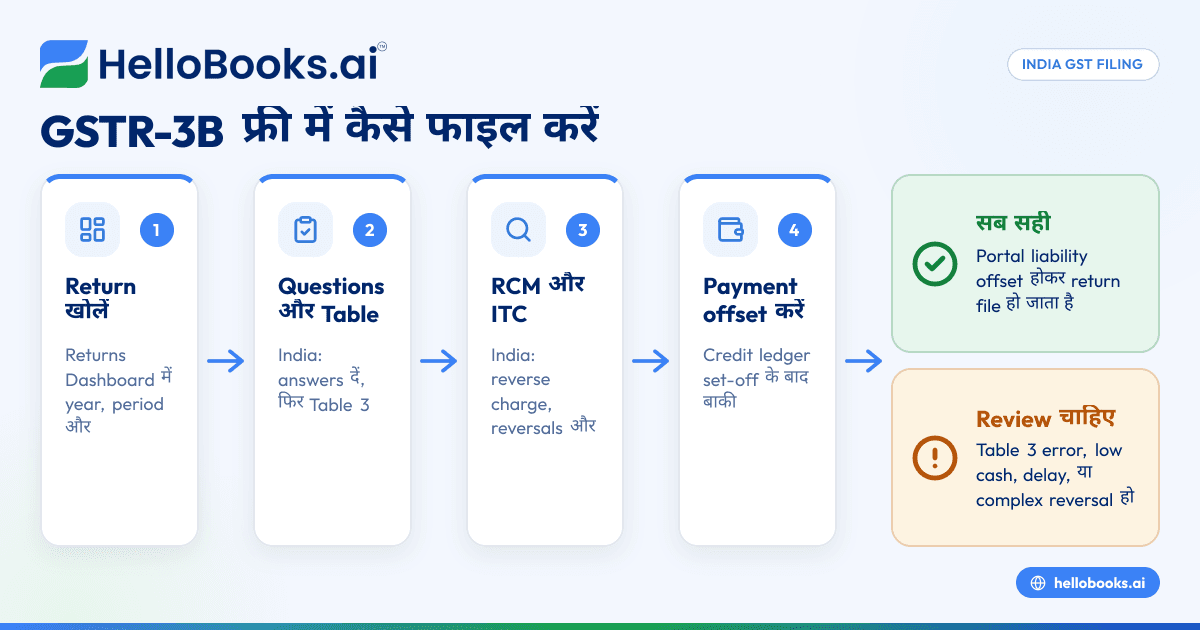
India में GSTR-3B आप GST Portal पर बिना किसी software fee के फाइल कर सकते हैं, लेकिन सही filing का मतलब सिर्फ return submit करना नहीं है। आपको GSTN के portal पर auto-populated data, GSTR-2B के आधार पर ITC, reverse charge, cash ledger payment और CGST/SGST/IGST split को जांचना होता है। अगर आपका सवाल है “फ्री में कैसे करें?”, छोटा जवाब है: GST Portal पर login करें, period चुनें, GSTR-3B खोलें, auto-filled tables verify करें, जहां कानूनन आपकी जिम्मेदारी है वहां corrections करें, payment set-off करें और file करें.
GSTR-3B फ्री में file करना वास्तव में किस चीज़ का काम है
GSTR-3B एक summary return है, लेकिन इसे हल्का काम समझना गलती होती है। Central Goods and Services Tax Act, 2017 और उससे जुड़े rules के तहत self-assessment आपकी जिम्मेदारी रहती है, और GST system का संचालन GSTN के portal पर होता है जबकि indirect tax administration का policy framework Central Board of Indirect Taxes and Customs यानी CBIC जारी करता है।
इस return में broadly तीन चीज़ें मिलती हैं:
- outward supplies की tax liability
- inward supplies से जुड़ा eligible ITC
- credit ledger और cash ledger से final tax payment
यही वजह है कि कई businesses को filing के दिन नहीं, उससे पहले की bookkeeping में दिक्कत आती है। अगर invoice बनाते समय place of supply गलत गया, local sale पर IGST लगा दिया या inter-state supply पर CGST/SGST split कर दिया, तो GSTR-3B तक आते-आते mismatch दिखने लगता है। इसी जगह ऐसे accounting setup की value आती है जो invoice बनाते समय ही GSTIN, state, place of supply और tax head split को सही रखे; HelloBooks का GST invoicing और GSTR-3B direct filing इसी workflow में काम आता है.
फाइल करने से पहले कौन-कौन से records सामने रखें
Portal खोलने से पहले यह तय कर लें कि आप return “भर” नहीं रहे, बल्कि “verify” कर रहे हैं। इसलिए आपके पास ये practical records होने चाहिए:
- उस tax period की sales register
- filed या draft GSTR-1 के figures
- GSTR-2B statement
- purchase bills, खासकर जिन पर ITC लेना है
- reverse charge वाली inward supplies का record
- credit notes, debit notes, advances जहां relevant हों
- electronic credit ledger और electronic cash ledger की स्थिति
- bank statement, ताकि receipt/payment trail से sanity check हो सके
India में छोटे businesses अक्सर एक rupee तक का perfect trial balance filing से ठीक पहले नहीं ढूंढते; वे पहले portal figure देखते हैं, फिर tallying शुरू करते हैं। यही उल्टा क्रम confusion पैदा करता है। बेहतर तरीका यह है कि purchase bills पहले capture हों, supplier GSTIN check हो, फिर GSTR-2B reconciliation की जाए। HelloBooks में PDF या photo से bills पढ़ने वाला OCR, uploaded bank statement के साथ AI reconciliation, और GSTR-2A/2B reconciliation जैसे workflows rework कम कर सकते हैं। अगर आपका पुराना data Tally में है, तो Tally alternative या connector approach migration को आसान बनाती है।
GST Portal पर GSTR-3B खोलने से पहले क्या verify करें
GST Portal पर जाने से पहले चार checks कर लें:
1. GSTR-1 और books broadly match कर रहे हैं या नहीं
अगर outward supplies portal पर auto-populate होती दिख रही हैं, तो source data पहले GSTR-1 side पर correct होना चाहिए। GSTR-3B में summary देखकर panic होने की बजाय source register देखें.
2. GSTR-2B में जो नहीं दिख रहा, उस पर claim सोच-समझकर करें
ITC eligibility की legal position Central Goods and Services Tax Act, 2017, संबंधित rules और CBIC/GST Portal पर प्रकाशित guidance से check होनी चाहिए। कौन-सा credit कब eligible है, यह bare-fact memory से नहीं, official publication से verify करें.
3. Reverse charge entries अलग से पहचान लें
Advocate fee, GTA, director services, import of services या अन्य notified cases जैसे मुद्दे facts पर depend करते हैं। Applicable categories और current treatment CBIC notifications, the CGST Act and Rules, और GST Portal guidance में check करें.
4. Multi-state business है तो GSTIN-wise return देखें
एक PAN के नीचे कई GSTIN होने पर return हमेशा GSTIN-specific होता है। Maharashtra, Karnataka, Delhi या Tamil Nadu में अलग registrations हों, तो each GSTIN की liability, ITC और stock trail अलग review करें। HelloBooks में multi-GSTIN handling helpful है क्योंकि अलग state registrations एक ही login से manage हो जाते हैं.
GST Portal पर GSTR-3B online file करने का साफ़ तरीका
यहां “step-by-step” की जगह सीधी practical sequence समझिए, क्योंकि portal screens बदल सकती हैं लेकिन logic वही रहता है.
सबसे पहले GST Portal पर login करें। Returns Dashboard में financial year और return period चुनें, फिर GSTR-3B खोलें। Portal कुछ sections को auto-populate करेगा। Auto-population का source और current behavior GSTN/GST Portal के release notes और advisories में published होता है; filing से पहले वही देखना बेहतर है, क्योंकि portal workflows समय-समय पर बदलते रहते हैं.
अब outward supplies वाली figures देखें। यहां आपका पहला काम typing नहीं, comparison है। Sales register, GSTR-1 और portal figure एक-दूसरे से broadly align होने चाहिए। अगर mismatch है, तो समझिए issue GSTR-3B screen का नहीं, upstream data का है.
फिर inward liability और reverse charge वाली स्थिति देखें। Portal हर चीज़ अपने आप नहीं समझ सकता, क्योंकि कुछ liabilities आपके own records, contracts या vendor nature पर depend करती हैं। इसलिए legal fee, freight, import of service, या notified reverse charge cases को अलग working sheet से verify करें.
उसके बाद ITC section पर जाएँ। GSTR-2B से दिखाई देने वाला credit और आपके purchase register का संबंध जांचें। केवल bill होने से credit लेना सुरक्षित नहीं मान लेना चाहिए; supplier reporting, document validity, business use, blocked credit rules और reversal rules सब relevant हो सकते हैं। Current legal position के लिए CGST Act, 2017, CGST Rules, CBIC circulars और GST Portal help सामग्री देखें.
फिर exempt, nil-rated और non-GST inward/outward disclosures जहां applicable हों, भरें। India में businesses अक्सर petrol/diesel, interest income, composition purchases, या non-GST inward items को ignore कर देते हैं, जबकि disclosure requirement अलग हो सकती है.
अंत में payment section पर ledger set-off check करें। Credit ledger से कितनी liability adjust हो रही है और कितनी cash ledger से जाएगी, यह filing के समय clearly दिखता है। अगर challan बनाना पड़े, तो उसी GST Portal flow में आगे बढ़ें। NEFT, RTGS, IMPS या authorized banking routes का current process GST Portal और संबंधित bank/payment instructions में published होता है.
Table names याद रखने से ज्यादा जरूरी है इन sections की समझ
कई guides tables की spelling याद कराते हैं, पर असली benefit तब है जब आप यह समझें कि portal किस section में क्या expect करता है.
Outward tax liability
यह sales summary है, लेकिन यहीं सबसे ज्यादा source errors आते हैं। B2B invoice पर GSTIN गलत, place of supply गलत, export flag गलत, या inter-state/local classification गलत होने से CGST, SGST और IGST का असर return तक आता है। HelloBooks invoice बनाते समय place-of-supply और tax head split को automate कर सकता है, इसलिए invoice stage पर गलती पकड़ी जाती है, बाद में return stage पर नहीं.
Reverse charge liability
यह section सिर्फ “supplier ने tax नहीं लगाया” का मामला नहीं है। सवाल यह है कि law के under tax liability किस पर shift हो रही है। Current notified categories CBIC notifications और GST law references से verify करें.
Eligible ITC and reversals
यहीं सबसे ज्यादा disputes होते हैं। GSTR-2B match, blocked credits, personal use, exempt supplies, capital goods allocation, और vendor non-compliance का असर यहीं दिखता है। यदि purchase bills बिखरे पड़े हैं, तो OCR-based bill capture और reconciliation workflow बहुत समय बचाता है.
Payment and set-off
कई filers यहीं अटकते हैं, खासकर जब books में receivables कुछ और हों और bank statement कुछ और कहानी कह रहा हो। Uploaded bank statement के against reconciliation करने से यह समझना आसान हो जाता है कि receipts booked हुईं या नहीं, refunds/adjustments properly posted हैं या नहीं.
एक ईमानदार, काल्पनिक हिसाब जिससे filing logic साफ़ हो
मान लीजिए यह पूरी तरह illustrative और invented स्थिति है; नीचे के ₹ figures केवल समझाने के लिए हैं, official computation नहीं हैं, और इसमें sector-specific exceptions, blocked credit nuances, amendments, interest computation details और legal interpretation issues शामिल नहीं हैं.
एक Jaipur-based trader के एक महीने का data मान लेते हैं। उसने इस period में ₹8,40,000 की taxable local sales और ₹3,60,000 की inter-state taxable sales कीं। Local sales पर output tax का CGST/SGST split invoice records के अनुसार निकला, और inter-state sales पर IGST लगा। उसी महीने purchases में कुछ supplier invoices GSTR-2B में दिख रहे हैं, जिन पर कुल eligible ITC मान लें ₹74,000 है। इसके अलावा एक professional services bill ऐसा है जिस पर reverse charge apply हो सकता है, और trader के records के अनुसार उस पर self-assessed tax liability अलग से देखनी है.
अब filing logic यह होगा:
- outward liability का source sales invoices और filed GSTR-1 side है
- reverse charge liability trader अपने records से add/check करेगा
- ITC केवल उतना consider करेगा जो law के तहत eligible है और GSTR-2B plus records से support होता है
- payment के समय पहले credit ledger set-off होगा, बाकी amount cash ledger से जाएगी
अगर इस trader ने कुछ invoices गलत state code के साथ बना दिए हों, तो liability total सही दिख सकती है लेकिन CGST/SGST बनाम IGST split गलत हो सकता है। यही कारण है कि filing के दिन spreadsheet repair करने की बजाय invoice creation stage पर controls होना जरूरी है.
“फ्री filing” कब ठीक है, और कब महंगी साबित होती है
GST Portal पर directly file करना free हो सकता है, पर mistakes free नहीं होतीं। यह खासकर तब सच है जब:
- invoices Excel, WhatsApp photos और notebook में बंटे हों
- purchase bills समय पर capture न होते हों
- supplier mismatch बार-बार हो रहा हो
- e-invoice/IRN, e-way bill और invoice books अलग-अलग systems में हों
- inventory और GST books connect न हों
- एक से अधिक GSTIN हों
अगर आपका business very low-volume है, invoices कम हैं, purchases limited हैं, और आपका CA monthly review कर देता है, तो portal filing काफी हो सकती है। लेकिन अगर stock चल रहा है, dispatch होता है, e-way bill बनता है, bank statement upload करके reconciliation करना पड़ता है, या multiple users काम करते हैं, तो manual free filing की hidden cost बढ़ जाती है.
यहीं integrated system मदद करता है। HelloBooks में invoice से e-invoice IRN और signed QR generate करने की जरूरत वाले businesses के लिए workflow available है, e-way bill invoice data से निकाला जा सकता है, inventory entries sales/purchases के साथ move होती हैं, और accounting software India setup से P&L तथा GST numbers एक ही books base से निकलते हैं। इसका practical असर यह है कि GSTR-3B filing month-end panic की बजाय review exercise बनती है.
छोटे businesses India में सबसे ज्यादा कहाँ फँसते हैं
पहला trap है GSTR-1 और GSTR-3B को अलग दुनिया समझना। दोनों के source figures connected होते हैं; अगर invoice master गलत है, return summary भी गड़बड़ होगी.
दूसरा trap है GSTR-2B को purchase register का exact substitute मान लेना। यह useful statement है, पर legal eligibility का final answer नहीं। Eligible ITC का आधार law, documents, business use और restrictions का combined reading है.
तीसरा trap है bank reality को ignore करना। Books में sales booked हैं, लेकिन bank statement में settlement timing, deductions, chargebacks या short receipts अलग दिखते हैं। UPI collections, NEFT credits, RTGS receipts और IMPS transfers की matching साफ़ न हो तो cash flow pressure filing के दिन समझ आता है.
चौथा trap है TDS/TCS, reverse charge और GST entries को side spreadsheets में रखना। Indian businesses में अक्सर GST books एक तरफ, TDS working दूसरी तरफ और bank statement तीसरी जगह होता है। Integrated posting discipline इससे बेहतर है.
पांचवां trap है Tally export-import पर पूरी filing process टिकाना। Tally India में common है, लेकिन अगर return-ready data बार-बार manual cleanup मांग रहा है, तो connector या alternate workflow सोचना practical हो सकता है. Compare करने के लिए HelloBooks vs Tally देख सकते हैं.
अगर Hindi में काम करते हैं, तो process को सरल कैसे रखें
बहुत से business owners English tax vocabulary से नहीं, practical action से काम करते हैं। उनके लिए सबसे अच्छा तरीका यह है:
- sales daily post करें
- purchase bills photo/PDF से capture करें
- supplier GSTIN verify करें
- month-end तक GSTR-2B reconciliation pending न छोड़ें
- bank statement upload करके matching कर लें
- filing day पर सिर्फ review और set-off बचे
अगर owner field में रहता है और desktop पर कम बैठता है, तो mobile-based bookkeeping फर्क डालती है। HelloBooks का mobile app iOS और Android पर entries capture करने देता है, और Hindi/English/Hinglish में WhatsApp पर Noor assistant basic bookkeeping questions को आसान बना सकता है। Free checks के लिए GSTIN validator, GST calculator और GST reconciliation checker जैसे tools useful starting point हैं.
आधिकारिक figures कहाँ verify करें
किसी भी current rate, threshold, due date, late fee, interest, exemption, e-invoicing turnover condition या filing deadline को memory, YouTube short या social media post से final मत मानिए। India में ऐसी current figures संबंधित tax के लिए उसके governing law और regulator/publication पर verify करें:
- GST matters: Central Goods and Services Tax Act, 2017, Integrated Goods and Services Tax Act, 2017, CGST Rules, CBIC notifications/circulars, GST Portal and GSTN advisories
- company compliance context: Companies Act, 2013 and MCA publications जहां relevant हों
- TDS matters: Income-tax Act, 1961 and Income Tax Department publications जहां relevant हों
- payment system context: RBI-regulated banking/payment instructions जहां NEFT/RTGS/IMPS process का सवाल हो
- data handling expectations: Digital Personal Data Protection Act context जहां customer data process हो रहा हो
अगर आप software ढूंढ रहे हैं जो सिर्फ return filing नहीं, बल्कि books, GST invoices, GSTR-1/GSTR-3B filing, reconciliation, e-way bill, inventory और India workflows को साथ रखे, तो HelloBooks India, pricing या demo देखना अगला logical कदम है.


