


Key takeaways
What this article covers, in order:
- GSTR-1 ખરેખર શું બતાવે છે
- Filing પહેલાં કયા records તૈયાર રાખવા
- GSTR-1 માં ગુજરાતી business સામાન્ય રીતે કઈ tables વાપરે છે
- GST portal પર manual filing કેવી રીતે ચાલે છે
- Booksમાંથી direct filing વધુ સારું ક્યારે બને છે
- એક કલ્પિત, સ્પષ્ટ રીતે invented હિસાબથી સમજીએ
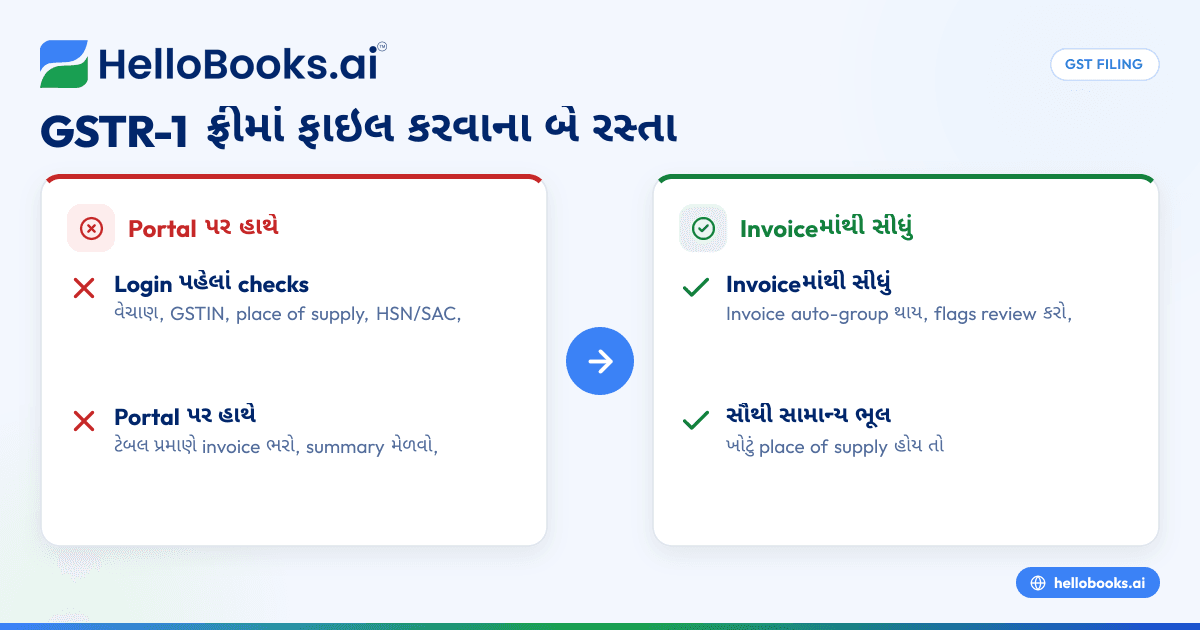
Indiaમાં GSTR-1 ઓનલાઇન ફાઇલ કરવાનું મૂળ કામ બે રસ્તાથી થાય છે: સીધું GST portal પર, અથવા તમારા booksમાંથી return બનાવીને ફાઇલ કરવું. જો તમારા invoice ઓછી સંખ્યામાં હોય તો portal પર manual entry ચાલે; જો B2B sales, ઘણા GSTIN, e-invoice, e-way bill અથવા reconciliation હોય તો booksમાંથી filing વધુ સલામત બને છે. GSTR-1 outward supplies માટે છે, એટલે invoice, credit note, debit note, place of supply અને GST head split પહેલા સાચાં હોવા જોઈએ.
GSTR-1 ખરેખર શું બતાવે છે
GSTR-1 એ તમારા outward supplies નો return છે. તેનો કાનૂની આધાર Central Goods and Services Tax Act, 2017 અને તે હેઠળ બનાવાયેલા નિયમોમાં છે, અને તેની operational filing વ્યવસ્થા GSTN દ્વારા ચાલતા GST portal પર મળે છે. કઈ return period માટે filing કરવી, કયા taxpayers ને monthly કે quarterly option મળે છે, અને હાલના instructions શું છે — તેનો સત્તાવાર સ્ત્રોત GST portal અને CBIC ની notifications/circulars છે.
સરળ ભાષામાં કહીએ તો, તમે ભારતમાં જે વેચાણ કર્યું — B2B, B2C, export, credit note, debit note, કેટલીક advance entries, HSN summary, document series — તેનું structured disclosure GSTR-1 માં જાય છે. GSTR-3B tax payment return છે; GSTR-1 invoice-level અથવા summary-level outward data return છે. બંને વચ્ચે mismatch રહે તો પછી ITC reconciliation, customer follow-up, અને notice risk વધે છે.
ગુજરાતના trader, service provider, manufacturer, freelancer અથવા distributor માટે એક ખાસ બાબત છે: place of supply સાચું નક્કી કર્યા વગર return ભરશો તો CGST+SGST અને IGST નું split ખોટું પડી શકે. આ split GST law હેઠળ નક્કી થાય છે, અને practical guidance CBIC તથા GST portal પર પ્રસિદ્ધ instructions માં જોવી જોઈએ.
Filing પહેલાં કયા records તૈયાર રાખવા
Portal login કરતાં પહેલાં paperwork ગોઠવવું filing કરતાં પણ વધુ અગત્યનું છે. બહુ વાર error portal પર નહીં, source data માં હોય છે.
આ વસ્તુઓ હાથવગી રાખો:
- sales register
- invoice book અથવા invoicing software ની list
- customer GSTIN details
- credit note / debit note records
- export / SEZ documents હોય તો તેની વિગતો
- HSN/SAC mapping
- document serial range
- authorised signatory નો access
- OTP અથવા DSC માટે જરૂરી access
ખાસ કરીને આ પાંચ checks કરો:
- B2B customer નો GSTIN સાચો છે કે નહીં એક અક્ષર ખોટો પડ્યો તો buyer ને invoice reflect ન થાય.
- Place of supply યોગ્ય છે કે નહીં ગુજરાતની અંદર supply હોય તો CGST અને SGST, બહારની inter-state supply હોય તો IGST — પણ આ હંમેશા invoice facts પરથી નક્કી થાય છે. લાગુ rule અને guidance CBIC/GST portal પર publish થાય છે.
- HSN/SAC mapping consistent છે કે નહીં summary table માં mismatch ના આવે.
- Credit note અને debit note મૂળ invoice સાથે જોડાયેલા છે કે નહીં નહીં તો turnover mismatch થઈ શકે.
- Invoice numbering માં gaps explain કરી શકાય તેવી છે કે નહીં document series disclosure માટે ઉપયોગી થાય છે.
જો તમે booksમાં જ invoice બનાવો છો, તો smart invoicing અને accounting software india પ્રકારનું setup આ pre-check સરળ બનાવે છે, કારણ કે GSTIN, HSN, tax head split અને sales register એક જ જગ્યાએ રહે છે.
GSTR-1 માં ગુજરાતી business સામાન્ય રીતે કઈ tables વાપરે છે
ઘણા taxpayers ને આખું return ડરામણું લાગે છે, પણ હકીકતમાં બધાં tables બધાને લાગતા નથી.
સામાન્ય રીતે નીચેની categories વધુ જોવા મળે છે:
- B2B supplies: registered buyers ને invoices
- B2C large inter-state invoices: rule મુજબ જે cases અલગ બતાવવા પડે, તેનો current criterion GST portal/CBIC source પર check કરવો
- B2C other: unregistered buyers માટે rate-wise / state-wise summary
- Exports / SEZ / deemed export, જો લાગુ પડે
- Credit notes / debit notes
- Nil-rated / exempt / non-GST supplies
- HSN summary
- Documents issued
- E-commerce operator સંબંધિત disclosures, જો business model માં હોય
ફ્રીલાન્સ consultant પાસે કદાચ થોડાં B2B invoices, HSN/SAC summary અને document count જ હોય. જ્યારે રાજકોટનો wholesaler, સુરતનો textile trader અથવા અમદાવાદની distribution firm પાસે multi-state B2B, B2C summary, e-way bill linked dispatches, returns/credit notes, inventory movement અને bank reconciliation સુધી બધું જોડાયેલું હોઈ શકે.
જો invoices booksમાંથી બને છે, તો place-of-supply અને tax head split automation કામ લાગે છે. ખોટી રીતે Gujarat local sale પર IGST કે Maharashtra buyer ને CGST+SGST લગાડવાની ભૂલ ત્યાંથી ઓછી થાય છે.
GST portal પર manual filing કેવી રીતે ચાલે છે
Manual filing હજુ પણ યોગ્ય રસ્તો છે, ખાસ કરીને invoice count ઓછું હોય ત્યારે. Current navigation GSTN દ્વારા બદલાઈ શકે, એટલે exact screen flow GST portal પર જ check કરવો.
સામાન્ય flow આ રીતે રહે છે:
- GST portal પર login
- Returns dashboard ખોલવું
- financial year અને return period પસંદ કરવું
- GSTR-1 માટે prepare / online filing section ખોલવું
- applicable tables માં data ભરવું
- summary generate કરવી
- preview ચકાસવું
- declaration સાથે file કરવું
- EVC અથવા DSC દ્વારા authenticate કરવું, જે taxpayer category માટે લાગુ પડે
- ARN save રાખવું
Manual filingમાં મુશ્કેલી ક્યાં આવે છે?
B2B entry
દરેક invoice માટે buyer GSTIN, invoice number, date, taxable value, rate, place of supply, tax amount જેવી વિગતો સાચી રીતે ભરવી પડે છે.
B2C summary
Retail sales વધારે હોય તો summary logic સમજવી પડે છે. State-wise અને rate-wise break-up source recordsમાંથી આવવો જોઈએ.
HSN summary
લોકો ઘણીવાર sales entry ભરી દે છે પણ HSN summary અથવા document countમાં mismatch રહે છે.
Nil return confusion
કોઈ period માં outward supply ન હોય તો nil filing લાગુ પડે કે નહીં — તેનો current rule GST portal instructions અને CBIC guidance પરથી confirm કરવો જોઈએ.
Save, generate, preview
Preview PDF અથવા summary totals sales register સાથે મળતા હોવા જોઈએ. જો booksમાં turnover ₹, gst amount અને note adjustments અલગ બતાવે છે અને portal summary અલગ હોય, તો filing અટકાવીને mismatch શોધવી વધુ યોગ્ય છે.
જો invoice data Excel/JSON routeથી upload કરો, તો official utility structure અને version GST portal પરથી જ લેવી.
Booksમાંથી direct filing વધુ સારું ક્યારે બને છે
જ્યારે businessમાં દર મહિને manual typing વધારે થઈ જાય, ત્યારે return portal પર નહીં, source accountingમાં સુધારવાની જરૂર હોય છે. અહીં booksમાંથી GSTR-1 build કરવાનું ફાયદાકારક બને છે.
જો તમે invoice બનાવતાં જ customer GSTIN, HSN/SAC, place of supply, CGST/SGST/IGST split, credit note linkage અને inventory movement capture કરો, તો return એ જ entries પરથી બને છે. આ રીતથી sales register અને return વચ્ચે consistency વધે છે.
HelloBooks જેવી systemમાં India માટે invoice બનાવતી વખતે GST logic જોડી શકાય છે, અને પછી gst return filing software દ્વારા GSTR-1 અને GSTR-3B direct file કરવાનું સરળ બને છે. જો business e-invoice regime હેઠળ આવે, તો invoice save કરતી વખતે IRN અને signed QR generation workflow પણ જોડાય છે; current applicability threshold CBIC notifications under GST law માં publish થાય છે, તેથી પોતાના case માટે official source check કરવો જોઈએ.
Manufacturer કે distributor માટે inventory પણ અગત્યનું છે. Sale, return અને purchase booksમાં live રહે તો outward supplies અને stock movement વચ્ચે તફાવત ઝડપથી દેખાય. Dispatch-heavy businessમાં invoice પરથી e-way bill software flow useful બને છે, કારણ કે consignment details ફરીથી ટાઇપ કરવાની જરૂર ઓછી પડે છે.
જો તમારી જૂની books Tallyમાં છે, તો tally alternative અથવા migration/connector approach ઉપયોગી બની શકે છે, ખાસ કરીને જ્યારે CA firm parallel review કરવા માગતી હોય.
એક કલ્પિત, સ્પષ્ટ રીતે invented હિસાબથી સમજીએ
માની લો કે આ માત્ર illustrative અને invented આંકડા છે; એમાં cess, sector-specific complications, export documentation nuances, amendments અને special scheme issues સામેલ નથી. હેતુ માત્ર flow સમજાવવાનો છે.
અમદાવાદની એક trader firm પાસે એક monthમાં નીચેનું outward data છે:
- ગુજરાતની અંદર registered dealer ને એક invoice: ₹48,000 taxable value
- રાજસ્થાનના registered buyer ને એક invoice: ₹72,000 taxable value
- બે retail walk-in sales મળીને: ₹19,500 taxable value
- એક credit note: ₹4,000 taxable value reduction
અહીં booksમાં શું જોવું પડે?
- Gujarat local B2B invoice માટે intra-state treatment, એટલે CGST અને SGST split
- Rajasthan buyer માટે inter-state treatment, એટલે IGST
- retail sales B2C summary bucketમાં જાય
- credit note મૂળ sale સાથે linked રહે
- HSN summaryમાં total outward taxable value net impact સાથે reflect થાય
જો source booksમાં credit note અલગ spreadsheetમાં પડી હોય અને sales registerમાં update ન થયું હોય, તો GSTR-1 summary વધારે turnover બતાવી શકે. અને જો bank receipt UPI અથવા NEFT દ્વારા આવી ગઈ હોય પણ invoice match ન થયું હોય, તો owner ને cash-flow તો દેખાશે, પણ GST return mismatch ક્યાંથી આવ્યો તે સમજાશે નહીં. આવી સ્થિતિમાં bank statement upload કરીને AI reconciliation ઉપયોગી બને છે; bank reconciliation software અને ai bookkeeping પ્રકારની મદદ source data tidy કરવામાં મદદ કરે છે.
Gujaratના businesses જ્યાં સૌથી વધુ અટકે છે
ગુજરાતી વેપારમાં speed વધુ હોય છે: invoice આજે, dispatch આજે, payment UPI/IMPS/NEFT થી ક્યારેક તરત, ક્યારેક weeks પછી. પણ GST return speed કરતાં વધુ discipline માગે છે.
GSTIN typo
ખાસ કરીને B2B salesમાં customer GSTIN copy-paste ખોટું પડવું common છે. Filing પહેલાં GSTIN validator જેવી toolથી format/basic validation check કરી શકાય.
Tax head split ખોટો
Place of supply સમજ્યા વિના invoice બનાવવાથી CGST/SGST અને IGST ખોટું જાય. આ error પછી GSTR-1, GSTR-3B અને customer books ત્રણેમાં headache બને છે.
Purchase-side mismatch નો indirect અસર
ભલે GSTR-1 outward return છે, supplier data અને inward records ગડબડ હોય તો overall GST control નબળું પડે છે. GSTR-2A/2B reconciliation અને ITC tracking અલગથી જાળવવું ઉપયોગી છે જેથી outward અને inward books બંને disciplined રહે.
Credit notes પાછળથી add કરવી
Textile, pharma, hardware, FMCG tradingમાં returns અને rate differences પાછળથી આવે છે. જો credit note time પર record ન થાય, તો outward figures inflated રહી શકે.
Multiple GSTIN
કેટલાક groups પાસે Gujarat અને અન્ય state માં અલગ GSTIN હોય છે. એક entityના dataથી બીજા GSTINની filing ન થવી જોઈએ. Multi-GSTIN discipline અહીં મહત્વનું છે.
Portal પર last-minute filing
OTP, DSC, browser issue, session expiry — બધું છેલ્લા દિવસે જ કેમ થાય છે એવી સ્થિતિ બને. Current due date, late fee, interest implication વગેરે CGST Act / Rules, CBIC notifications અને GST portal પર publish થાય છે; કોઈ પણ specific number માટે official source જ જુઓ.
“Freeમાં” filing નો અર્થ શું રાખવો
Search કરનારનો પ્રશ્ન ઘણીવાર “freeમાં” એટલે “શું portal પર ફી વગર file કરી શકું?” એવો હોય છે. તેનો જવાબ practical રીતે હા: GST portal પર return submit કરવા separate software fee જરૂરી જ હોય એવું નથી. પરંતુ free filingનો અર્થ “સમય, correction, reconciliation, CA review અથવા staff effort કશું ખર્ચાતું નથી” એવો નથી.
જો invoice count ઓછું હોય, manual filing સાચી છે. જો business regular B2B supplies, e-invoice, e-way bill, purchase OCR, bank reconciliation, inventory અને multi-user workflow ધરાવે છે, તો bookkeeping system વગર “free” filing પછી costly correctionમાં ફેરવાઈ શકે.
એટલે સાચો સવાલ free કરતાં પણ વધુ છે: તમારી books અને return એકબીજા સાથે મળે છે કે નહીં?
HelloBooks ક્યાં practical મદદ કરે છે
આ વિષયમાં જ્યાં ખરેખર મદદ પડે છે, ત્યાં softwareનું કામ filing પહેલાં શરૂ થાય છે. Invoice બનાવતી વખતે customer GSTIN પરથી place of supply, HSN/SAC અને CGST/SGST અથવા IGST split consistent રહે, તો GSTR-1 બનાવતી વખતે manual repair ઓછી પડે. જો business e-invoice rules હેઠળ આવે, તો IRN અને signed QR same workflowમાં generate થવાથી invoice source data અને return data વચ્ચે gap ઘટે.
પછી જ્યારે outward data તૈયાર હોય, ત્યારે booksમાંથી જ GSTR-1 અને GSTR-3B direct file કરવાથી portal પર ફરીથી typing કરવાની જરૂર ઓછી થાય છે. Purchase bills PDF અથવા photoમાંથી OCR વડે capture કરવાથી books વધારે tidy રહે છે, અને GSTR-2A/2B reconciliationથી overall GST control સુધરે છે. Retail, wholesale અથવા distribution setupમાં inventory અને financial reports સાથે એક જ systemમાં data રહે, તો sales, stock અને gst figures cross-check કરવું સરળ બને છે.
Indiaમાં bank feed live હોવાનો દાવો કર્યા વગર, bank statement upload કરીને reconciliation કરવી ઘણા owners માટે practical છે, ખાસ કરીને જ્યારે receipts UPI, RTGS, NEFT અથવા IMPS મારફતે scattered હોય. Mobile appથી field પર invoice/expense capture થઈ શકે છે, અને WhatsApp પર Noor assistant હિન્દી, English અથવા Hinglishમાં basic bookkeeping queries માટે કામ આવી શકે છે. Features, fit અને setup જોવા માટે demo અથવા India page here અને pricing details માટે pricing જુઓ.
Filing પહેલાં છેલ્લી self-check list
Return submit કરતાં પહેલાં આ short review કરો:
- sales register total vs GSTR-1 summary
- B2B GSTIN accuracy
- inter-state vs intra-state treatment
- credit/debit notes included
- HSN summary complete
- document serial disclosure complete
- applicable export/SEZ data entered
- preview saved
- ARN record રાખ્યો
જો કોઈ specific rate, threshold, due date, late fee, interest અથવા applicability limit જાણવા હોય, તો GST law હેઠળ CBIC notifications, circulars અને GST portal પરનો current published figure જ માનો. Companies Act સંબંધિત signatory governance, જ્યાં લાગુ પડે, તે માટે MCA records અને company authorisation documents પણ align હોવા જોઈએ. Data handling માટે internal complianceમાં DPDP Act policies પર પણ ધ્યાન આપવું યોગ્ય છે, ખાસ કરીને જ્યારે invoice, bank statement અને customer GSTIN records digital systemમાં રાખો છો.
અંતમાં સીધી વાત: GSTR-1 filing મુશ્કેલ નથી; ગડબડ source data, ખોટો GSTIN, ખોટું place of supply અને last-minute portal dependency તેને મુશ્કેલ બનાવે છે. પહેલા books સાચી કરો, પછી return ફાઇલ કરો — બસ એટલું જ ભારતના મોટા ભાગના small business માટે સૌથી ઉપયોગી નિયમ છે.


