


Key takeaways
What this article covers, in order:
- ITC claim என்றால் இந்திய GST சட்டத்தில் உண்மையில் என்ன?
- ITC claim செய்ய முன்னால் எந்த அடிப்படை நிபந்தனைகள் பூர்த்தி ஆக வேண்டும்?
- GSTR-2B ஏன் இவ்வளவு முக்கியம், purchase register போதாதா?
- எல்லா purchase-க்கும் credit கிடைக்காது: blocked credits-ஐ சரியாகப் புரிந்து கொள்ளுங்கள்
- taxable, exempt, personal use கலந்து இருந்தால் reversal எப்படி நினைக்க வேண்டும்?
- supplier invoice சரியாக இருந்தாலும் claim தவறாகிப் போகும் இடங்கள்
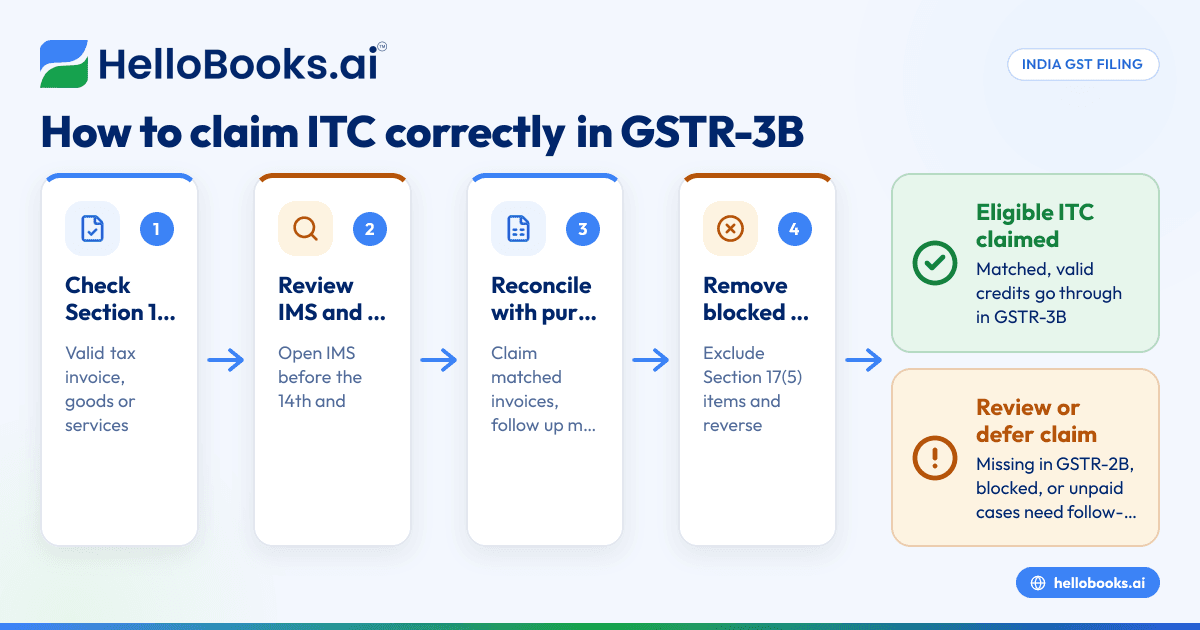
இந்தியாவில் Input Tax Credit (ITC) சரியாக claim செய்ய வேண்டுமெனில், உங்கள் purchase register-ல் GST தெரிகிறதா என்பத alone போதாது. Central Goods and Services Tax Act, 2017-ன் Section 16 மற்றும் Section 17, அதற்குட்பட்ட Rules, மேலும் GSTN நடத்தும் GST portal-ல் reflected ஆகும் GSTR-2B ஆகியவை ஒன்றோடொன்று பொருந்த வேண்டும். சுருக்கமாக: சரியான tax invoice இருக்க வேண்டும், goods or services உண்மையில் கிடைத்திருக்க வேண்டும், claim செய்யும் credit சட்டத்தால் blocked ஆகக்கூடாது, மற்றும் GSTR-3B-ல் claim செய்வதற்கு முன் GSTR-2B reconciliation செய்ய வேண்டும்.
ITC claim என்றால் இந்திய GST சட்டத்தில் உண்மையில் என்ன?
ITC என்பது நீங்கள் purchase செய்த goods அல்லது services மீது supplier charge செய்த GST-ஐ, உங்கள் outward tax liability-க்கு எதிராக set off செய்யும் வசதி. இது வெறும் accounting convenience அல்ல; இது Central Goods and Services Tax Act, 2017-ன் கட்டுப்பாட்டில் இருக்கும் statutory credit. இந்த Act-ஐ CBIC (Central Board of Indirect Taxes and Customs) நிர்வகிக்கிறது, மற்றும் return data GSTN மூலம் இயங்கும் GST portal-ல் பிரதிபலிக்கிறது.
அதனால் “என் books-ல் ₹ amount இருக்கு, அதை முழுதாக claim பண்ணலாமா?” என்ற கேள்விக்கு சரியான பதில்: books ஒரு தொடக்கம் மட்டுமே. சட்டப்படி eligible ஆன credit-ஐத் தான் claim செய்யலாம்.
ஒரு trader, manufacturer, wholesaler, service provider, D2C seller, அல்லது Tamil Nadu-வில் ஒரு branch உடன் Karnataka-வில் இன்னொரு GSTIN வைத்திருக்கும் business—even if you collect through UPI, NEFT, RTGS அல்லது IMPS—ITC eligibility invoice, receipt, tax reporting, and business use ஆகியவற்றின் மேல் தான் நின்றிருக்கிறது.
ITC claim செய்ய முன்னால் எந்த அடிப்படை நிபந்தனைகள் பூர்த்தி ஆக வேண்டும்?
இந்தப் பகுதி மிக முக்கியம். CGST Act, 2017 Section 16 தான் ITC-க்கு அடிப்படை விதியை சொல்கிறது. தற்போதைய சட்ட உரை, amendments, notifications, circulars ஆகியவை CBIC தளத்திலும் GST portal-லும்தான் வெளியிடப்படும்; நீங்கள் பயன்படுத்தும் figure, cut-off, அல்லது compliance position அங்கிருந்து verify செய்ய வேண்டும்.
பொதுவாக, கீழ்கண்டவை உண்மையாக இருக்க வேண்டும்:
- உங்கள் கையில் valid tax invoice அல்லது debit note இருக்க வேண்டும்.
- அந்த invoice உங்கள் business-க்கான purchase-ஐ பிரதிபலிக்க வேண்டும்; personal expense ஆக இருக்கக் கூடாது.
- goods அல்லது services உண்மையில் கிடைத்திருக்க வேண்டும்.
- supplier அந்த transaction-ஐ சரியாக report செய்திருக்க வேண்டும்; அதன் practical check பெரும்பாலும் GSTR-2B.
- நீங்கள் claim செய்வது blocked credit category-யில் இருக்கக் கூடாது.
- claim செய்யப்பட்ட credit-க்கு later reversal தேவைப்படும் சூழ்நிலை இல்லையா என்பதும் பார்க்க வேண்டும்.
Invoice மட்டும் இருந்தால் போதும் என்ற எண்ணமே பல notice-களின் ஆரம்பம். ஒரு bill scan பண்ணி folder-ல் வைத்திருப்பது மற்றும் அந்த GST legally claimable credit ஆக மாறுவது இரண்டு வேறு விஷயங்கள்.
இதில்தான் OCR மூலம் purchase bills capture செய்வது உதவும்: supplier PDF அல்லது photo-விலிருந்து data எடுக்கும்போது manual typing errors குறையும். ஆனால் OCR ஒரு convenience மட்டும்; eligibility test-ஐ law தான் தீர்மானிக்கிறது.
GSTR-2B ஏன் இவ்வளவு முக்கியம், purchase register போதாதா?
இந்திய GST practice-ல் ITC discussion எல்லாம் இறுதியில் வந்து நிற்பது GSTR-2B-இல் தான். காரணம் practical. உங்கள் internal purchase register உங்களுக்குத் தெரிந்த வாங்குதல்களின் பட்டியல்; ஆனால் GST portal-க்கு தெரியும் உலகம் supplier reported data.
இதனால், monthly close செய்யும்போது நீங்கள் இரண்டு வேறு உண்மைகளை compare பண்ணுகிறீர்கள்:
- நீங்கள் books-ல் பதிவு செய்த inward supplies
- GSTN data-வில் reflected inward supplies
இந்த இரண்டு பட்டியலும் perfectly match ஆகாததே சாதாரணம். சில invoices late upload ஆகும்; சிலவற்றில் GSTIN typo இருக்கும்; சில supplier-கள் GSTR-1-ல் தவறான tax head போட்டிருப்பார்கள்; சில நேரம் same invoice duplicate ஆகும்.
அதனால்தான் GSTR-2A/2B reconciliation மற்றும் ITC tracking முக்கியமானது. ஒவ்வொரு purchase bill-ஐயும் books-ோடு மட்டும் அல்ல, portal data-ோடும் compare செய்யும் பழக்கம் தேவை. GST return filing software பயன்படுத்தும்போது இந்த mismatch-களை return filing-க்கு முன்பே பிடிக்க முடியும்; guess பண்ணி GSTR-3B Table 4 நிரப்ப வேண்டிய நிலை குறையும்.
ஒரு practical Indian workflow-ல், accountant supplier-ஐ phone, email அல்லது WhatsApp மூலம் chase பண்ண வேண்டிய சூழ்நிலை வரும். Tamil Nadu-வில் ஒரு textile trader, Chennai-யிலிருந்து வாங்கிய bill ஒன்று books-ல் இருக்கலாம்; ஆனால் supplier GSTR-1 amend செய்யாததால் அது 2B-ல் தெரியாமல் இருக்கலாம். இப்படிப்பட்ட gap-களை “later பார்க்கலாம்” என்று விட்டுவிட்டால், year-end clean-up மிகவும் கஷ்டமாகும்.
எல்லா purchase-க்கும் credit கிடைக்காது: blocked credits-ஐ சரியாகப் புரிந்து கொள்ளுங்கள்
ITC claim-ல் business owners அதிகமாக சிக்குவது இங்கே தான். CGST Act, 2017 Section 17(5) சில inward supplies மீது credit-ஐ தடை செய்கிறது. தற்போதைய blocked credit position, explanatory circulars, மற்றும் updates அனைத்தும் CBIC வெளியீடுகளில் verify செய்யப்பட வேண்டும்.
பொதுவாக dispute வரக்கூடிய areas:
- personal consumption கலந்து இருக்கும் செலவுகள்
- employee welfare nature expenses
- motor vehicle related claims in ineligible cases
- club, health, travel, food-related expenses in many business situations
- construction-related inward supplies in specified contexts
- exempt supply அல்லது non-business use-க்கு தொடர்பான input tax
இது “bill இருக்கிறது, GST separately charge பண்ணியிருக்காங்க, அதனால் claim பண்ணலாம்” என்ற logic-ஐ உடைக்கிறது. Hotel invoice, staff outing bill, director personal car repair bill, office renovation invoice—இவை அனைத்தும் same treatment பெறாது.
உங்களுடைய business taxable supplies மட்டும் செய்கிறதா, taxable + exempt mix ஆக செய்கிறதா, அல்லது partly business / partly personal use உள்ளதா என்பது outcome-ஐ மாற்றும். அதனால் ITC review செய்யும்போது ledger name பார்த்து முடிவு எடுக்கக் கூடாது; transaction nature பார்க்க வேண்டும்.
taxable, exempt, personal use கலந்து இருந்தால் reversal எப்படி நினைக்க வேண்டும்?
பல இந்திய businesses pure taxable இல்லை. ஒரு company taxable goods விற்கலாம், அதேசமயம் exempt supplies-யும் இருக்கலாம். ஒரு proprietor business mobile bill-ஐ personal use-க்கும் பயன்படுத்தலாம். ஒரு distributor godown expense-ஐ multi-state operations-க்கு பயன்படுத்தலாம். இங்கே full credit claim செய்து விடுவது ஆபத்து.
CGST Act, 2017 Section 17 மற்றும் சம்பந்தப்பட்ட CGST Rules apportionment மற்றும் reversal framework-ஐ தருகிறது. தற்போதைய method, formula, and disclosure requirements ஆகியவை CBIC notifications/rules மற்றும் GST portal instructions-ல் பார்க்கப்பட வேண்டும். எந்த specific formula figure-ஐயும் latest source-இல் confirm செய்யாமல் பயன்படுத்தக் கூடாது.
Illustrative மற்றும் invented கணக்காக எடுத்துக் கொள்ளுங்கள்: ஒரு business inward GST-ஆக ₹1,20,000 books-ல் பதிவு செய்திருக்கிறது என நினைப்போம். அதில் ₹20,000 equivalent portion exempt activity-க்கு தொடர்புடையது, மேலும் ₹10,000 equivalent portion director personal use கலந்து இருப்பதாக internal review காட்டுகிறது என வைத்துக் கொள்வோம். இந்த invented illustration-ல் full ₹1,20,000 claim பண்ணாமல், eligible portion மட்டும் consider செய்ய வேண்டிய logic-ஐ இது காட்டுகிறது. இது demonstration மட்டும்; actual reversal computation law-prescribed method, document trail, and facts அடிப்படையில் மாறும், மேலும் depreciation/tax treatment போன்ற பிற factors இங்கே எடுத்துக் கொள்ளப்படவில்லை.
இந்த மாதிரியான split-களை spreadsheet-ல் manually trace செய்வது கடினம். Stock-linked inward purchases இருந்தால் inventory data, purchase entries, expense classification, மற்றும் GST ledgers ஒன்றோடொன்று agree ஆக வேண்டும். அதே books-இலிருந்து financial reports வரும் போது, P&L-ல் expense treatment மற்றும் GST return treatment முரணாக இருக்கிறதா என்பதும் தெளிவாக தெரியும்.
supplier invoice சரியாக இருந்தாலும் claim தவறாகிப் போகும் இடங்கள்
பல ITC disputes fraudulent claim காரணமாக மட்டும் வரவில்லை; routine data hygiene குறைவாக இருந்தும் வருகிறது. இந்திய compliance reality-ல், இவை repeat ஆகும்:
1) GSTIN mismatch
Supplier invoice-ல் legal name சரியாக இருந்தாலும் GSTIN typo இருந்தால், 2B reflection பாதிக்கப்படலாம். அதனால் inward bill receive செய்த உடனே basic validation செய்ய வேண்டும். GSTIN validator போன்ற tool initial check-க்கு உதவும்.
2) wrong tax head
Inter-state supply-க்கு IGST வர வேண்டிய இடத்தில் CGST/SGST charge செய்திருந்தால், அல்லது reverse ஆக இருந்தால், credit position சிக்கலாகும். Place of supply சரியாகப் புரியாமல் invoice issue செய்தால் recipient side-லும் பிரச்சினை வரும். Outward billing-ல் place-of-supply மற்றும் tax head split சரியாக வைத்தால் downstream disputes குறையும்; inward bills review-லும்இதே logic பயன்படுத்த வேண்டும்.
3) invoice books-ல் இருக்கு, portal-ல் இல்லை
இதுதான் classic mismatch. Supplier filing delay, amendment pending, upload omission, அல்லது data error காரணமாக இருக்கலாம். இப்படிப்பட்ட items-ஐ blindly claim பண்ணுவது risky.
4) duplicate claim
ஒரே bill scan இருமுறை upload ஆகி, books-ல் இரண்டு purchase entries ஆகிவிடலாம். OCR convenience இருந்தாலும், duplicate review அவசியம்.
5) payment trail weak ஆக இருப்பது
Law eligibility-ஐ invoice மற்றும் receipt மீது அமைத்தாலும், scrutiny நேரத்தில் bank trail, vendor ledger, goods receipt trail, e-way bill trail, and contract trail எல்லாம் matter ஆகலாம். Indian businesses UPI, NEFT, RTGS, IMPS மூலமாகவே pay செய்தாலும், month-end reconciliation செய்யாமல் விட்டால் support evidence scattered ஆகி விடும்.
இதில்தான் uploaded bank statement-இலிருந்து AI reconciliation useful. Live bank feed என்று அல்ல; India workflow-ல் bank statement upload செய்து receipts and payments match செய்வது தான் relevant. Bank reconciliation software மாதிரி setup-ல் vendor payment trace, unreconciled entries, duplicate postings போன்றவை சீக்கிரம் தெரியும்.
GSTR-3B-ல் ITC claim செய்யும் முன் ஒரு இந்திய business எதை review செய்ய வேண்டும்?
GSTR-3B filing என்பது final typing வேலை மட்டும் அல்ல; அது review outcome. GSTR-3B filing instructions, table guidance, advisories, and latest schema details GSTN/GST portal-ல் வெளியிடப்படுகின்றன. Applicable legal framework CGST Act மற்றும் CGST Rules, regulator side guidance CBIC மற்றும் GSTN sources-ல் check செய்யப்பட வேண்டும்.
மாதந்தோறும், practical review இது போல இருக்கலாம்:
- purchase register close செய்யுங்கள்
- supplier bills missing உள்ளதா பாருங்கள்
- OCR/import entries duplicate ஆக உள்ளதா check செய்யுங்கள்
- GSTR-2B-ஐ pull செய்து line-by-line or consolidated reconcile செய்யுங்கள்
- blocked credits identify செய்யுங்கள்
- exempt / non-business / personal use reversals கணக்கிடுங்கள்
- reverse charge entries இருந்தால் அவற்றை தனியாக review செய்யுங்கள்
- vendor payment status, especially disputed bills, trace செய்யுங்கள்
- only then Table 4 claim numbers finalise செய்யுங்கள்
Direct filing workflow useful ஆக இருப்பதற்கான காரணம் இதுதான்: invoice data, purchase data, reconciliation status, and return figures ஒரே system-ல் இருந்தால் last-minute copy-paste குறையும். Accounting software India setup-இல் books-லிருந்து GSTR-1 மற்றும் GSTR-3B direct filing வரும் போது, GST numbers and accounting numbers ஒரே source-இல் இருந்து வருவதால் consistency மேம்படும்.
Multi-state business என்றால் இது இன்னும் முக்கியம். ஒரு company-க்கு Tamil Nadu, Karnataka, Telangana ஆகிய மாநிலங்களில் தனித்தனி GSTIN இருந்தால், inter-branch purchase flows, IGST treatment, e-invoice applicability, e-way bill movement எல்லாமே records-ஐ சிக்கலாக்கும். Multi-GSTIN handling இருந்தால்தான் consolidated control possible.
purchase, stock, e-invoice, e-way bill—all connected to ITC
ITC discussion purchase register-க்கு மட்டும் கட்டுப்படாது. இந்தியாவில் goods movement உள்ள business-களுக்கு inward and outward evidence chain ஒரே ecosystem-ஆகவே வேலை செய்கிறது.
- Supplier e-invoice applicable category-ல் இருந்தால் IRN மற்றும் signed QR உடன் invoice வரும்.
- Movement இருந்தால் e-way bill trail இருக்கலாம்.
- Goods inward entry stock-ல் reflect ஆக வேண்டும்.
- Vendor bill books-ல் சரியாக பதிவு ஆக வேண்டும்.
- Payment bank statement-ல் trace ஆக வேண்டும்.
- Return-ல் claim செய்யப்பட்ட credit இதைச் support பண்ண வேண்டும்.
இதனால் e-invoicing software மற்றும் e-way bill software outward side tools மாதிரி தோன்றினாலும், inward verification mindset-ஐயும் sharpen பண்ணும். நீங்கள் issue செய்யும் invoices-ல் IRN, signed QR, place-of-supply, IGST vs CGST/SGST split ஆகியவை சரியாக இருந்தால், inward review செய்யும்போதும் அதே quality bar-ஐ suppliers-மீது apply செய்வீர்கள்.
Goods-heavy business-களில் smart invoicing + inventory discipline ஒரு indirect ITC control ஆகிறது. Stock வந்ததே இல்லை, ஆனால் bill book ஆகிவிட்டது என்ற gap-கள் stock review-ல் தெரியும். Especially Tally-யிலிருந்து migrate ஆகும் businesses-க்கு, legacy ledger mapping and GST treatment alignment முக்கியம்; tally-alternative comparison பார்க்கும் முன் migration-ல் GST masters and tax heads சரியாக வந்துள்ளனவா என்பதை உறுதி செய்ய வேண்டும்.
ஒரு நம்பகமான monthly ITC routine எப்படி இருக்க வேண்டும்?
ஒவ்வொரு மாதமும் ஒரு CA office அல்லது in-house accounts team realistically follow செய்யக்கூடிய routine தேவை. Fancy theory இல்லாமல், Indian practice-க்கு ஏற்ற routine:
முதல் வாரம்: supplier bills collect செய்யுங்கள்—email, PDF, paper, WhatsApp scan எல்லாம் centralise செய்யுங்கள். OCR capture உதவலாம்.
அடுத்தது: inward entries post செய்யுங்கள். Expense vs inventory classification தெளிவாக இருக்க வேண்டும். TDS applicable transactions இருந்தால், Income-tax side consequence வேறு என்றாலும் GST eligibility review-க்கு vendor ledger clean இருக்க வேண்டும். TDS/TCS and reverse charge handling separate attention கேட்கும்.
பிறகு: uploaded bank statement-ஐ reconcile செய்யுங்கள். UPI, NEFT, RTGS, IMPS receipts and payments unmatched ஆக விட்டால் vendor ageing distort ஆகும்; அது disputed purchase list-ஐ கூட பாதிக்கும்.
அதன் பிறகு: GSTR-2B compare செய்யுங்கள். Missing, mismatched, duplicate, and blocked items mark செய்யுங்கள்.
அதற்கு பின்: management/owner confirmation—இந்த செலவு business use தானா? personal element உள்ளதா? exempt activity தொடர்பா?—இவற்றை முடித்து eligible ITC finalise செய்யுங்கள்.
இறுதியில்: GSTR-3B file செய்யுங்கள், supporting working papers retain செய்யுங்கள், மற்றும் next month supplier follow-up list உருவாக்குங்கள்.
Mobile-led businesses-க்கு phone-லிருந்தே expenses capture செய்யும் app convenience உதவும். Field sales, warehouse, shop floor, travelling proprietor—யார் இருந்தாலும் bill photo capture சீக்கிரம் நடக்கிறது. ஒரு small business owner Hindi, English அல்லது Hinglish-ல் WhatsApp-ல் clarification கேட்கும் habit வைத்திருந்தால், Noor assistant போன்ற interface bookkeeping follow-up-ஐ less intimidating ஆக்கலாம்; ஆனால் final legal position எப்போதும் law, CBIC, GSTN sources, மற்றும் உங்கள் tax professional review அடிப்படையில்தான் உறுதி செய்ய வேண்டும்.
ITC claim-ஐ “return task” ஆக அல்ல, “records discipline” ஆக பார்க்குங்கள்
ITC சரியாக claim செய்வது GSTR-3B filing day-ல் மட்டும் நடக்காது. அது invoice quality, GSTIN accuracy, supplier discipline, stock trail, payment trail, tax head correctness, மற்றும் monthly reconciliation ஆகியவற்றின் கூட்டுத்தொகை.
இந்திய சட்ட framework-ல் authoritative source எது என்றால்: Central Goods and Services Tax Act, 2017, CGST Rules, CBIC notifications/circulars, மற்றும் GSTN / GST portal instructions. எந்த current rate, threshold, due date, form change, advisory, or filing window பற்றியும் latest official publication-இல் verify செய்யாமல் செயல்படக் கூடாது. Specific figure தேவைப்பட்டால் CBIC மற்றும் GST portal-ல் current publication பார்க்கவும்; இல்லையெனில் NEEDS EXPERT REVIEW.
HelloBooks போன்ற setup ஒரு useful advantage கொடுக்கும்: GST invoicing-ல் சரியான CGST/SGST அல்லது IGST split maintain செய்ய முடியும்; purchase bills OCR மூலம் capture செய்யலாம்; uploaded bank statement-ஐ AI உதவியுடன் reconcile செய்யலாம்; GSTR-2A/2B reconciliation-ல் missing invoices மற்றும் ITC tracking செய்யலாம்; GSTR-1 மற்றும் GSTR-3B direct filing மூலம் books மற்றும் returns ஒன்றுடன் ஒன்று பொருந்த வைத்துக் கொள்ளலாம்; inventory, financial reports, mobile access, மற்றும் multi-GSTIN support மூலம் audit trail fragmented ஆகாமல் இருக்கும். இந்திய options, tools, and pricing பார்க்க HelloBooks India அல்லது pricing பக்கத்தைப் பாருங்கள். Demo வேண்டுமெனில் book a demo.
அதற்கு முன், quick checks-க்கு free tools உதவும்: invoice field sanity check-க்கு GST invoice validator, mismatch review mindset-க்கு GST reconciliation checker. ஆனால் நினைவில் வைத்துக் கொள்ளுங்கள்: tool ஒரு helper; ITC entitlement சட்டத்தால் தான் தீர்மானிக்கப்படுகிறது.


