


Key takeaways
What this article covers, in order:
- GSTR-2B आपके ITC control room की तरह क्यों है
- फ्री reconciliation करने के लिए आपको असल में किन files की जरूरत है
- Excel में matching कैसे करें ताकि सचमुच फ्री रहे
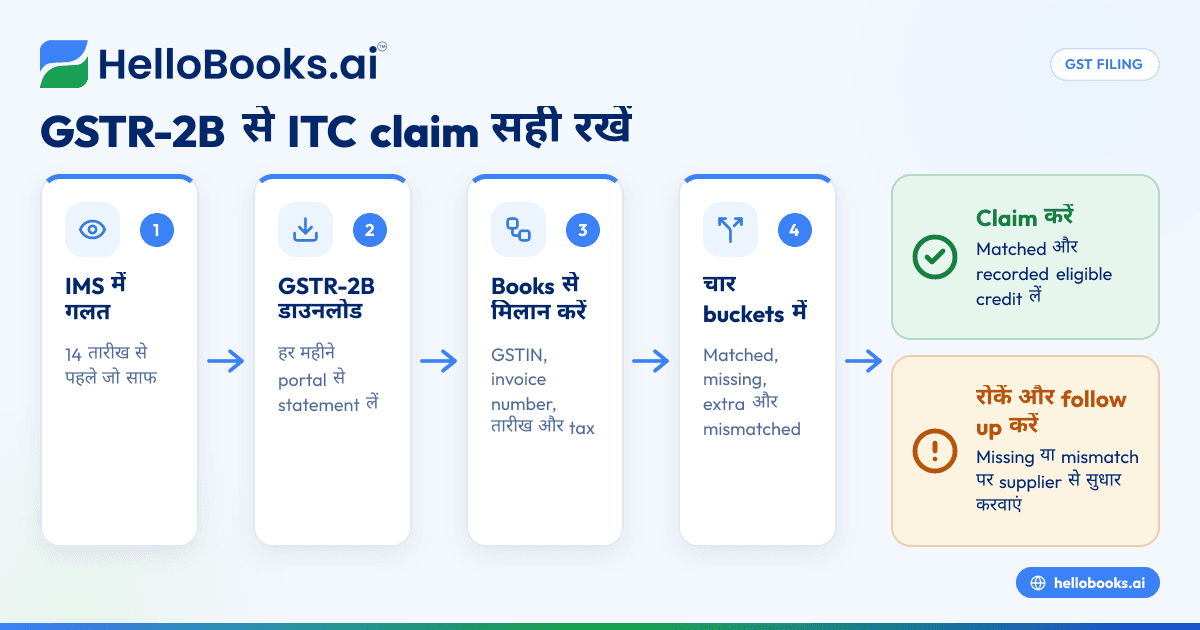
- चार buckets जिनसे reconciliation actionable बनता है
- supplier follow-up को chase नहीं, system बनाइए
- एक ईमानदार, invented illustration: कहाँ credit अटकता है
भारत में GSTR-2B reconciliation का सीधा मतलब है: अपने purchase register को GST Portal पर उपलब्ध GSTR-2B से मिलाइए, जो invoices वहां नहीं दिखते उन पर तुरंत supplier follow-up कीजिए, और GSTR-3B में उतना ही ITC claim कीजिए जितना Central Goods and Services Tax Act, 2017 के तहत eligible हो और जिसका current treatment CBIC तथा GSTN/GST Portal की official guidance में दिखता हो। यह काम Excel में फ्री में हो सकता है; फर्क disciplined routine से पड़ता है, software से नहीं शुरू होता।
GSTR-2B आपके ITC control room की तरह क्यों है
Input Tax Credit का practical decision आज books से कम और visibility से ज़्यादा जुड़ा हुआ है। आपके पास vendor bill, payment proof, NEFT entry, UPI reference या stock inward note हो सकता है, फिर भी अगर supplier ने invoice सही तरह report नहीं किया, तो ITC claim पर risk बनता है। भारत में इस पूरे framework का आधार Central Goods and Services Tax Act, 2017 और उसके rules हैं, जिनकी authoritative updates CBIC और GSTN के GST Portal पर publish होती हैं। किसी भी eligibility condition, cut-off या restriction की current wording वहीं verify करनी चाहिए।
GSTR-2B useful इसलिए है क्योंकि यह एक period-wise statement की तरह काम करता है। इसका काम बस इतना नहीं कि कौन-सा bill दिख रहा है; यह यह भी बताता है कि आपकी books और supplier reporting में gap कहाँ है। अगर आपने purchase register में ₹, GSTIN, invoice number और tax heads ठीक से record किए हैं, तो reconciliation से जल्दी पता चल जाता है कि issue missing invoice का है, duplicate entry का, गलत IGST/CGST-SGST split का, या supplier-side typo का।
यही वजह है कि कई businesses month-end accounting को सिर्फ bookkeeping नहीं मानते। अगर books, GST और bank entries अलग-अलग spreadsheets में हैं, तो leakage बढ़ता है। जहां invoices सही tax head split के साथ बनते हैं, purchase bills OCR से capture हो जाते हैं, और GSTR-2A/2B reconciliation साथ में चलता है, वहां ITC tracking ज्यादा साफ रहती है। HelloBooks जैसे system में यह खास मदद करता है क्योंकि purchase bills record करने, ITC track करने और GSTR-1 और GSTR-3B filing को एक ही flow में रखा जा सकता है।
फ्री reconciliation करने के लिए आपको असल में किन files की जरूरत है
बिना paid software के भी reconciliation हो सकता है, लेकिन “फ्री” का मतलब “बिना structure” नहीं है। minimum setup आम तौर पर यह होता है:
- GST Portal से downloaded GSTR-2B data
- आपका purchase register export
- supplier-wise follow-up sheet
- optional bank statement, अगर payment proof trace करना हो
Purchase register में कम से कम supplier name, GSTIN, invoice number, invoice date, taxable value, CGST, SGST, IGST, cess अगर relevant हो, और reverse charge flag जैसे fields होने चाहिए। अगर आपका data Tally से आता है, तो export usable हो सकता है, पर पहले उसे normalize करना पड़ता है। कई firms अभी भी Tally में books रखती हैं और GST checking अलग Excel में करती हैं; इसलिए migration या connector useful तब होता है जब team एकदम switch नहीं करना चाहती। इस तरह का bridge Tally alternative या phased setup में practical होता है।
अगर purchase bills PDF या photo में पड़े हैं, तो free process यहीं कमजोर पड़ता है: data entry में typo हो जाते हैं। OCR से purchase bills capture करने का फायदा reconciliation में दिखता है, क्योंकि invoice number और tax amounts manual typing से कम बिगड़ते हैं।
Excel में matching कैसे करें ताकि सचमुच फ्री रहे
Excel method काम करता है, पर raw download पर VLOOKUP चला देने से नहीं। पहले data clean करना पड़ता है। एक practical free routine यह है:
- GST Portal से relevant tax period का GSTR-2B download करें। Portal navigation बदल सकती है; current path और utilities GSTN/GST Portal पर published रहती हैं।
- उसी period का purchase register export करें।
- Invoice number cleaning rule तय करें: spaces हटाएँ, slash/hyphen standard करें, upper case करें, leading zeros को consistent करें।
- GSTIN + cleaned invoice number + financial document type का composite key बनाइए।
- दोनों sheets में lookup लगाकर matched, missing in 2B, missing in books और mismatch buckets बनाइए।
- Amount-level comparison कीजिए: taxable value, CGST, SGST, IGST अलग-अलग compare हों।
- Supplier-wise aging sheet बनाइए ताकि एक missing bill कितने periods से pending है, यह दिखे।
यहां सबसे बड़ी गलती यह होती है कि लोग सिर्फ total ITC compare करते हैं। Totals match होने पर भी line-level errors छिपे रह सकते हैं। मान लीजिए Gujarat के supplier ने interstate supply पर IGST report किया, लेकिन आपकी books में local purchase मानकर CGST/SGST split कर दिया गया। Total tax amount पास-पास लग सकता है, पर return logic गलत रहेगा। इसलिए place-of-supply और tax head split बहुत महत्वपूर्ण है। जहां software invoice बनाते समय place-of-supply logic पकड़ लेता है, वहां ऐसी downstream problems कम होती हैं; यही कारण है कि smart invoicing और books एक-दूसरे से कटे हुए नहीं होने चाहिए।
चार buckets जिनसे reconciliation actionable बनता है
Reconciliation useful तभी है जब हर line item किसी action तक पहुँचे। Practical तौर पर entries अक्सर इन buckets में जाती हैं:
1) Books में भी है, GSTR-2B में भी है
यह ideal case है। फिर भी random sample check करना चाहिए कि tax heads, invoice date और supplier GSTIN सही हैं। Matched होने का मतलब हमेशा risk-free नहीं होता; कभी-कभी duplicate booking books में अलग invoice number formatting के कारण छिप जाती है।
2) Books में है, GSTR-2B में नहीं है
यहीं सबसे ज्यादा ITC leakage का खतरा है। आम कारण:
- supplier ने invoice report नहीं किया
- गलत GSTIN पर report किया
- invoice number typo
- document अगले period में गया
- reverse charge या non-claimable nature की entry को आपने claimable purchase register में डाल दिया
इस bucket का action है: supplier follow-up, proof gathering, और claim timing पर cautious decision। Current legal position, restrictions और claim conditions CBIC notifications/circulars, CGST Act, और GST Portal help content पर verify की जानी चाहिए।
3) GSTR-2B में है, books में नहीं है
इसका मतलब हमेशा bonus credit नहीं होता। हो सकता है bill accounting में छूट गया हो। हो सकता है supplier ने गलती से आपके GSTIN पर invoice डाल दिया हो। यह fraud detection का भी area है। यही जगह है जहां IMS-related workflow और document review useful हो सकते हैं, क्योंकि हर portal-visible document आपकी genuine inward supply नहीं होता। Current IMS behaviour, if applicable, GSTN/GST Portal documentation पर check करें NEEDS EXPERT REVIEW.
4) दोनों में है, पर mismatch है
यहीं actual मेहनत लगती है। Differences अक्सर छोटे दिखते हैं:
- INV-102 बनाम INV102
- date format mismatch
- taxable value rounding
- IGST बनाम CGST+SGST classification
- amended invoice बनाम original booking
एक disciplined team mismatch को “छोड़ो, total ठीक है” कहकर बंद नहीं करती। यही future notices, vendor disputes और working capital block का कारण बनता है।
supplier follow-up को chase नहीं, system बनाइए
भारत में reconciliation का आधा काम Excel नहीं, vendor communication है। अगर हर महीने अलग-अलग mail, call और WhatsApp message से पीछा करेंगे, तो trail टूट जाएगा। बेहतर तरीका है supplier-wise issue register रखना:
- supplier name
- GSTIN
- invoice number
- booked date
- 2B status
- last follow-up date
- supplier reply
- next action
WhatsApp भारत में business communication का real channel है, पर सिर्फ chat पर्याप्त नहीं। Reply का summary books में note होना चाहिए। यदि owner Hindi या Hinglish में काम करता है, तो accountant के लिए communication notes centralized रखना आसान पड़ता है। इस तरह की day-to-day clarity तब बढ़ती है जब bookkeeping, purchase bill capture और reminders एक operational system में हों; mobile पर entry और Hindi/Hinglish support वाला workflow छोटे व्यापारियों को खास मदद देता है। HelloBooks में Noor assistant on WhatsApp और mobile app इस तरह की operational friction कम कर सकते हैं, लेकिन reconciliation decision फिर भी accounts team को records देखकर लेना होता है।
एक ईमानदार, invented illustration: कहाँ credit अटकता है
मान लीजिए यह पूरी तरह illustrative और invented स्थिति है; इसमें actual law के सभी exceptions, blocked credit rules, imports, debit notes, reverse charge nuances, IMS actions, annual adjustments और sector-specific conditions शामिल नहीं हैं। सिर्फ reconciliation logic समझाने के लिए numbers लिए जा रहे हैं।
दिल्ली की एक trading firm के purchase register में एक महीने के लिए तीन supplier bills हैं:
- Supplier A: taxable value ₹80,000, tax ₹14,400
- Supplier B: taxable value ₹35,000, tax ₹6,300
- Supplier C: taxable value ₹20,000, tax ₹3,600
Total booked tax ₹24,300 हुआ। अब GSTR-2B में दिखता है:
- Supplier A वही amount के साथ मौजूद
- Supplier B invoice मौजूद, लेकिन tax head split books से अलग
- Supplier C invoice नहीं दिख रहा
इस invented case में business अगर पूरे ₹24,300 को blindly eligible मान ले, तो risk बनता है। Reconciliation view से:
- Supplier A: claim bucket
- Supplier B: mismatch bucket, पहले nature verify करें
- Supplier C: missing bucket, supplier follow-up करें
तो working sheet पर “cleanly supported ITC” ₹14,400 ही दिखेगा, जबकि बाकी ₹9,900 पर action pending है। यही reconciliation की value है: यह “कितना credit theoretically booked है” और “कितना currently supportable है” में फर्क दिखाता है।
जब एक GSTIN नहीं, कई GSTIN हों
कई Indian businesses एक state से ज्यादा में registered होते हैं। तब problem multiply होती है, क्योंकि supplier कभी wrong GSTIN पर bill upload कर देता है, या HO purchase और branch receipt अलग तरीके से record होते हैं। Multi-GSTIN business में reconciliation हमेशा GSTIN-wise होना चाहिए, company-wise total पर नहीं।
यह खासकर तब जरूरी है जब inventory movement, e-way bill, branch transfer और state-specific invoicing साथ चल रहे हों। अगर invoice generation के समय सही GSTIN, place of supply और tax head split नहीं बैठता, तो बाद में 2B reconciliation सिर्फ symptoms पकड़ेगा, cause नहीं। जहां books में multi-GSTIN control, inventory movement और e-way bill linkage साथ मिलता है, वहां mismatch trace करना तेज होता है। HelloBooks का multi-GSTIN setup और e-way bill software जैसा connected flow ऐसे cases में useful हो सकता है, क्योंकि invoice, movement और return data बिखरते नहीं।
bank statement और purchase records साथ देखने से क्या फायदा है
GSTR-2B reconciliation केवल portal vs register exercise नहीं है। कई बार vendor कहता है “हमने file कर दिया”, लेकिन books में गलत bill book हुआ होता है। यहां bank statement upload मदद करता है। अगर आपने monthly statement upload किया और AI reconciliation से payment entries tag कर दीं, तो कम से कम यह साफ हो जाता है कि जिस invoice पर आप ITC ढूंढ रहे हैं, उसकी payment trail किस bill से जुड़ी है।
ध्यान रहे: payment proof अपने-आप ITC entitlement नहीं बनाता। वह सिर्फ evidence chain मजबूत करता है। Current legal entitlement conditions CGST Act, relevant rules और CBIC/GST Portal guidance से ही verify होंगी। पर operationally, NEFT/RTGS/IMPS/UPI trail useful होता है जब supplier कहता है invoice अलग number से report हुआ है या accounts team wrong bill tag कर बैठी है। इस तरह के workflow के लिए bank reconciliation software और bookkeeping data एक-दूसरे से जुड़े होना practical है।
free method कब पर्याप्त है, और कब software लेना सही है
Excel-based free method तब तक काफी है जब:
- invoices कम हैं
- एक ही GSTIN है
- accountant cleaning rules जानता है
- supplier base stable है
- monthly discipline अच्छा है
लेकिन अगर आपके पास dozens या hundreds of vendor bills हैं, multiple GSTINs हैं, inventory भी चल रही है, TDS/TCS entries भी हैं, और purchase bills photo/PDF में आते हैं, तो manual process जल्दी टूटता है। तब software का real benefit fancy dashboard नहीं, बल्कि error surface area कम करना है:
- OCR से purchase bills capture
- GSTR-2A/2B reconciliation and ITC tracking
- books से सीधे GSTR-1 और GSTR-3B filing
- uploaded bank statement का AI reconciliation
- financial reports जिनसे books और GST figures align रहें
अगर आप अभी भी Tally-centric setup में हैं, तो पहले data cleanliness देखिए; उसके बाद HelloBooks vs Tally जैसा comparison पढ़ना useful हो सकता है। Pricing के लिए current options यहां देखें।
law, regulator और figures कहाँ verify करें
इस विषय में confusion अक्सर numbers से होता है: किस period की statement कब available होती है, eligibility conditions क्या हैं, क्या restriction बदली है, या कौन-सी compliance window current है। इन सबका सही उत्तर generic blog नहीं, official source देता है। भारत में relevant primary references आम तौर पर ये हैं:
- Central Goods and Services Tax Act, 2017
- related GST Rules
- CBIC notifications, circulars, advisories
- GSTN / GST Portal help pages and release notes
अगर आपको कोई current rate, threshold, due date, penalty, interest figure या deadline चाहिए, तो उसे official publication से verify करें। Blog article को working understanding समझिए, final authority नहीं। खासकर ITC eligibility, blocked credits, reverse charge, amendments, debit notes, e-invoice/IRN linkage, Companies Act या Income-tax Act से जुड़े accounting knock-on effects, और DPDP-sensitive document handling policies पर professional review लेना समझदारी है।
शुरू करने के लिए free checks useful हैं: supplier GSTIN verify करने के लिए GSTIN validator, invoice field sanity check के लिए GST invoice validator, और mismatch spotting के लिए GST reconciliation checker काम आ सकते हैं.
अंत में simple rule यह है: भारत में ITC “बाद में देखेंगे” वाला area नहीं है। हर महीने purchase register, GSTR-2B, supplier follow-up और filing को एक closed loop में चलाइए। वही free method को भी effective बनाता है, और वही software adoption को भी सार्थक।


