


Key takeaways
What this article covers, in order:
- GSTR-2B reconcile કરવું એટલે ખરેખર શું?
- Gujaratના વેપારીઓ પાસે mismatch કેમ વધુ દેખાય છે?
- કયા દસ્તાવેજો સાથે free reconciliation શરૂ કરશો?
- Excelમાં ફ્રી reconciliation માટે એક usable રીત
- બધાં mismatch એકસરખાં નથી હોતા
- એક સાચી રીતે કહેલું illustrative હિસાબ
Indiaમાં GSTR-2B reconciliationનો સરળ જવાબ એ છે: તમારા purchase register, supplier bills અને GST Portal પર દેખાતું GSTR-2B એકબીજા સાથે દર મહિને મિલાવો; જે invoice 2Bમાં નથી અથવા mismatch છે, તેની ITC GSTR-3Bમાં તરત ન લો. CGST Act હેઠળ ITC eligibility અને CBIC/GSTNની system-generated statement બંને મહત્વના છે, તેથી free રીત Excelથી ચાલે છે, પણ discipline જરૂરી છે.
GSTR-2B reconcile કરવું એટલે ખરેખર શું?
GSTR-2B એ GSTN દ્વારા GST Portal પર ઉપલબ્ધ એક static auto-drafted statement છે. તમારા suppliersએ તેમના outward supplies જે રીતે report કર્યા છે, તેના આધાર પર તમારા GSTIN સામે inward supply data અહીં દેખાય છે. ITC claim કરવા માટે businesses સામાન્ય રીતે purchase register અને GSTR-2B વચ્ચે matching કરે છે, કારણ કે Central Goods and Services Tax Act, 2017 અને તેની rules હેઠળ credit claim કરતી વખતે reported data અને eligibility બંને જોવી પડે છે. હાલની legal wording, notifications અને advisories CBIC અને GST Portal પર publish થાય છે; specific legal interpretation માટે NEEDS EXPERT REVIEW.
અર્થ એ થયો કે bill હાથમાં હોવું પૂરતું નથી. જો supplierએ returnમાં report ખોટું કર્યું હોય, invoice number mismatched હોય, GSTIN ખોટો નાખ્યો હોય, અથવા document હજુ reflected ન થયો હોય, તો તમારું booksનું figure અને portalનું figure અલગ પડી શકે. reconciliationનો ઉદ્દેશ માત્ર compliance નહીં, પણ rupee-by-rupee ITC leakage અટકાવવો છે.
Gujaratના વેપારીઓ પાસે mismatch કેમ વધુ દેખાય છે?
ગુજરાતમાં trading, textiles, chemicals, ceramics, engineering parts, packaging અને multiple-state dispatches બહુ સામાન્ય છે. આવી businessesમાં એક સાથે GST, e-way bill, IGST versus CGST/SGST split, stock movement, branch transfers અને supplier follow-up બધું જોડાયેલું રહે છે. જો Ahmedabadમાંથી Rajkotમાં local purchase હોય તો tax head split એક પ્રકારનો બને; જો Gujarat બહાર Maharashtra કે Rajasthan supplier હોય તો place-of-supply અને IGST treatment બદલાય. એક નાનો data error પછી GSTR-2B mismatch તરીકે દેખાય છે.
બીજું કારણ practical છે: ઘણા businesses હજુ Tally export, PDF bills, WhatsApp પર આવેલ invoice copies, bank statement અને manual Excel register સાથે કામ ચલાવે છે. જ્યાં OCR નથી, purchase bill entry late થાય છે, અથવા GSTIN validation entry સમયે થયું નથી, ત્યાં books અને portal વચ્ચે gap વધે છે.
અટલે free reconciliation guideનો સાચો અર્થ “software વગર somehow manage” નહીં, પણ “સૌથી ઓછા ખર્ચે control બનાવો” એવો છે.
કયા દસ્તાવેજો સાથે free reconciliation શરૂ કરશો?
free method માટે તમને ઓછામાં ઓછા નીચેના records તૈયાર જોઈએ:
- GST Portal પરથી downloaded GSTR-2B for the relevant tax period
- તમારા books અથવા Excelમાંથી purchase register export
- supplier invoices/PDF scans/photos
- debit note/credit note details જ્યાં લાગુ પડે
- import-related entries હોય તો supporting customs/ICEGATE-linked records NEEDS EXPERT REVIEW
- reverse charge લાગુ પડતી ખરીદીઓની અલગ ઓળખ
- bank statement upload માટે month-end statement, જેથી payment trail સમજાય
જો data entry scattered છે, તો પહેલા source tidy કરો. અહીં software થોડી મહેનત બચાવે છે: purchase bills photo કે PDFમાંથી OCRથી capture થાય, supplier bill booksમાં properly આવે, અને પછી GST reconciliation checker જેવી free India toolથી initial sanity check થઈ શકે. જો તમારા books HelloBooksમાં maintain કરો છો, તો GSTR-2A/2B reconciliation અને ITC trackingથી missing invoices ઝડપથી દેખાય છે, એટલે Excel cleanupનો સમય ઘટે છે.
Excelમાં ફ્રી reconciliation માટે એક usable રીત
આ રીત paid tool વગર કામ કરે છે, પણ discipline માગે છે.
1) Portal અને booksનો period exactly same રાખો
એક જ tax periodનું GSTR-2B download કરો. પછી purchase register પણ એ જ periodનું કાઢો. month mismatch reconciliationને બગાડે છે.
2) columns standardise કરો
બંને sheetsમાં શક્ય તેટલા common fields રાખો:
- supplier GSTIN
- supplier name
- invoice number
- invoice date
- taxable value
- tax amount by head: CGST, SGST, IGST, cess જ્યાં લાગુ પડે
- document type
3) invoice number cleaning કરો
Excelમાં spaces, slash, dash, leading zero, lowercase-uppercase variation remove કરવા helper column બનાવો. “INV-0012”, “INV0012” અને “inv/12” ઘણીવાર actual same document હોય શકે.
4) match key બનાવો
સામાન્ય રીતે GSTIN + cleaned invoice number + year/month combination કામ આવે છે. કેટલીક firms invoice date પણ keyમાં ઉમેરે છે.
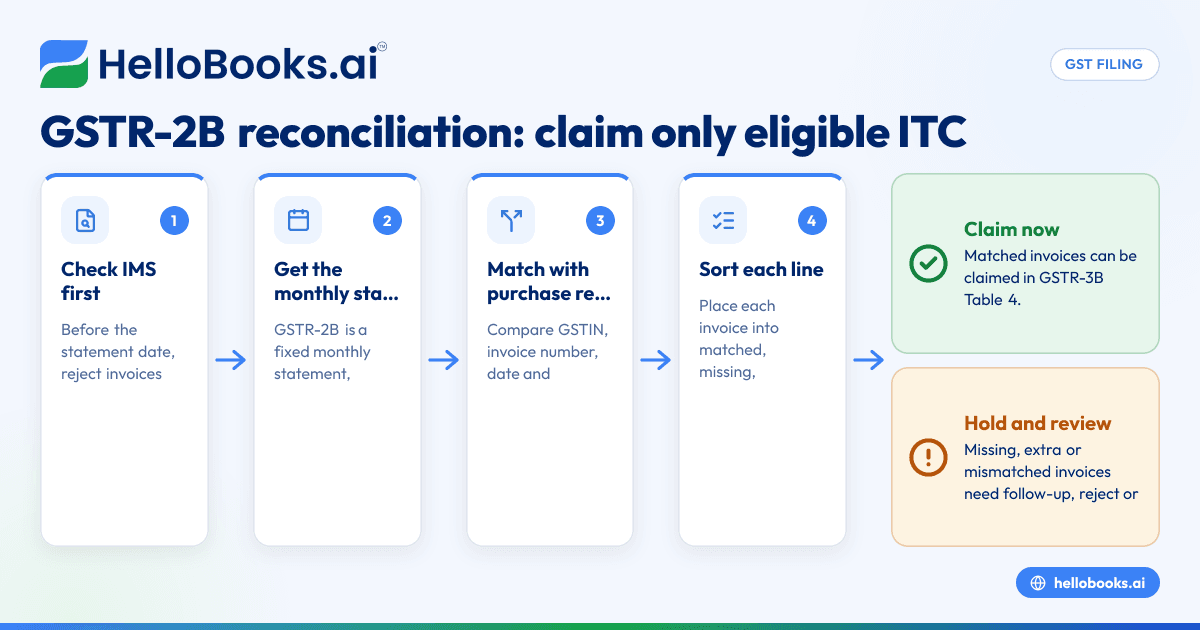
5) four-way result કાઢો
દરેક line આ પૈકી એક bucketમાં જશે:
- books અને 2B બંનેમાં match
- booksમાં છે, 2Bમાં નથી
- 2Bમાં છે, booksમાં નથી
- બંનેમાં છે, પણ value/date/tax head mismatch
6) tax head split અલગથી જુઓ
ક્યારેક taxable value same હોય છે, પણ IGST સામે CGST+SGST mismatch હોય છે. આ ખાસ inter-state versus intra-state purchaseમાં થાય છે. place-of-supply logic ખોટું record થયું હોય તો return impact પડે. invoice entry સમયે સાચો split રાખવો બહુ મહત્વનો છે; smart invoicing અથવા accounting software India જેવી setupમાં આ ભૂલ ઓછી થાય છે.
7) supplier follow-up sheet રાખો
જે invoice 2Bમાં નથી, તેના માટે separate action tracker બનાવો: supplier name, GSTIN, invoice number, tax amount, first reminder date, response, corrected month.
8) claim file finalise કરતાં પહેલાં recheck
GSTR-3B draft final કરતાં પહેલાં books-versus-2B unreconciled list ફરી જુઓ. જો તમે software વાપરો છો જે GSTR-1 અને GSTR-3B direct filing support કરે છે, તો outward side અને inward ITC review એક જ workflowમાં રહે છે.
બધાં mismatch એકસરખાં નથી હોતા
Reconciliationમાં “difference” દેખાય એટલે દરેક કેસમાં supplier દોષી છે એવો અર્થ નથી. સામાન્ય પરિસ્થિતિઓ આ રીતે આવે છે:
Booksમાં entry છે, 2Bમાં નથી
- supplierએ invoice report ન કર્યું
- report કર્યું પણ wrong GSTIN પર કર્યું
- wrong invoice number/dateથી report થયું
- document next periodમાં reflected થયું
- purchase bill booksમાં duplicate કે wrong entered થયું
આ પરિસ્થિતિમાં ITC claim કરવી કે રાહ જોવી એ CGST Act, CBIC guidance અને current portal behaviourના આધાર પર check કરવાનું રહે; latest position official sources પર જોવી જરૂરી છે. Specific treatment NEEDS EXPERT REVIEW.
2Bમાં છે, booksમાં નથી
- bill accountsમાં book જ થયો નથી
- invoice mail/WhatsApp/PDFમાં પડ્યો છે પણ posting બાકી છે
- goods/services actually received નથી થયા
- wrong GSTIN taggingથી unrelated supplier document આવ્યો છે
અહીં OCR for purchase bills બહુ ઉપયોગી બને છે, કારણ કે scattered PDFs અને photosમાંથી bill capture થઈ જાય તો books complete થાય છે.
Value mismatch
- taxable value wrong entered
- rounding difference
- freight/other charges invoiceમાં હતા પણ booksમાં omit થયા
- credit note/debit note adjustment miss થઈ
Tax head mismatch
- IGST ને CGST/SGST તરીકે book કર્યું અથવા vice versa
- place of supply ખોટું record થયું
- branch/location selection ખોટું પડ્યું
Compliance timing mismatch
- supplier late file કરે
- amendment later monthમાં આવે
- internal approvalના કારણે purchase posting late થાય
એક સાચી રીતે કહેલું illustrative હિસાબ
ચાલો એક invented, illustrative ઉદાહરણ લઈએ. માનો Suratની એક fabrics trading firmના એક tax period માટે booksમાં 120 purchase invoices છે. આ આંકડા સંપૂર્ણ રીતે કલ્પિત છે અને current legal caps, blocked credit rules, import treatment, reverse charge detail, supplier litigation, IMS actions અને annual cut-off જેવી બાબતોને simplify કરે છે.
માની લો books મુજબ કુલ input tax ₹1,80,000 દેખાય છે. GSTR-2Bમાં તેમાંથી ₹1,52,000 જેટલા invoices clean match થાય છે. ₹18,000 જેટલા invoices booksમાં છે પણ 2Bમાં નથી. ₹6,000 જેટલા invoices 2Bમાં છે પરંતુ booksમાં હજુ book થયા નથી. અને ₹4,000 જેટલા documentsમાં IGST અને CGST/SGST split mismatch છે.
આ invented illustrationમાં immediate safe working view એવું હોઈ શકે કે clean matched ₹1,52,000 પર focus કરો, ₹18,000 માટે supplier follow-up કરો, ₹6,000 માટે bill locate કરીને eligibility verify કરો, અને ₹4,000 માટે tax head correction કરો. પરંતુ actual claim position માટે applicable law, CBIC circulars, GST Portal instructions અને advisor review જોવું પડે. એટલે આ calculation માત્ર process સમજાવવા માટે છે, filing advice નથી.
IMS, supplier communication અને month-end routine
કેટલાક businesses માત્ર month-end પર GSTR-2B download કરીને reconcile કરે છે, પણ હવે process ત્યાં પૂરતી અટકતી નથી. Invoice Management System સંબંધિત current workflow, availability અને treatment GSTN/GST Portal advisoriesમાં publish થાય છે. જો તમારા inward documents પર action mechanism ઉપલબ્ધ હોય, તો supplier-uploaded document સામે time-to-time review રાખવો practical બને છે; exact operational impact NEEDS EXPERT REVIEW.
ગુજરાતના વેપારીઓ માટે useful routine આ રીતે હોઈ શકે:
- weekમાં એક વાર new supplier bills booksમાં નાખો
- GSTIN validate કરો, ખાસ કરીને નવા supplier માટે
- large-value invoices માટે tax head split તરત ચકાસો
- month-end પહેલાં unmatched purchase list કાઢો
- portal statement આવ્યા પછી final reconciliation કરો
- supplierને consolidated reminder મોકલો, line-by-line dispute list સાથે
અહીં gst return filing software અને purchase-side ITC tracking સાથે કામ કરવાથી CA અને business owner બંને same screen પર same mismatch list જોઈ શકે છે. જો તમારી પાસે multiple registrations હોય, તો multi-GSTIN handling ખાસ ઉપયોગી છે, કારણ કે Gujarat GSTIN, Maharashtra GSTIN અને Karnataka GSTINના inward credits mix ન થાય.
Free method ક્યારે પૂરતી છે, અને software ક્યારે જરૂરી બને?
જો તમે મહિનામાં થોડા invoices handle કરો છો, single GSTIN છે, inward supplies simple છે, અને owner પોતે Excel સારી રીતે ચલાવે છે, તો free method પૂરતી છે. Free India tools જેમ કે GSTIN validator અથવા GST calculator initial checksમાં મદદ કરે છે.
પરંતુ નીચેની પરિસ્થિતિમાં manual system ઝડપથી તૂટી પડે છે:
- invoicesની સંખ્યા બહુ વધી જાય
- multiple GSTINs હોય
- inventory અને GST books જોડાયેલા હોવા જોઈએ
- e-invoice/IRN obligations પણ parallel ચાલે
- e-way bill data invoice સાથે align કરવું પડે
- bank receipts and paymentsનું matching હાથથી મુશ્કેલ बने
- TDS, TCS અથવા reverse charge entries side spreadsheetમાં ફરતી રહે
આ સમયે softwareનો લાભ reconciliation કરતાં પણ વધુ operational controlમાં છે. HelloBooksમાં purchase bills OCRથી આવે, bank statement upload કરીને AI reconciliation થાય, inventory books સાથે sync રહે, અને financial reports એ જ entries પરથી બને—એટલે GST, stock અને receivables એકબીજા સાથે તૂટતા નથી. જો તમે હજુ Tallyમાં હો, તો tally alternative અથવા Tally connector/migration approachથી transition gradual રાખી શકાય.
ITC claim કરતાં પહેલાં કઈ legal બાબતો verify કરવી જ જોઈએ?
એક મહત્વની વાત: reconciliation useful છે, પરંતુ માત્ર 2Bમાં invoice દેખાય એટલે ITC automatically available થાય એવું નથી. ITC eligibility માટે CGST Act, 2017, related rules, CBIC circulars અને GST Portal instructions જોવાની રહે. Eligibility પર અસર કરનારી બાબતોમાં goods/services receipt, blocked credit restrictions, tax invoice completeness, supplier compliance trail, payment-related conditions, reverse charge treatment, document timing અને other factual questions આવી શકે છે. દરેક મુદ્દાનું current position official source પરથી જ verify કરો; legal conclusion માટે NEEDS EXPERT REVIEW.
તેમજ, due dates, annual cut-off dates, threshold-based requirements, e-invoicing applicability, e-way bill thresholds, and penalty or interest exposure જેવી કોઈ પણ specific figures CBIC, GST Council notifications, GST Portal, Income Tax Department, MCA અથવા relevant regulatorના official publication પરથી જ ચકાસો. Bare figures પર આધાર રાખીને filing કરવી જોખમી છે.
HelloBooks આ કામમાં ક્યાં સુધી વાસ્તવમાં મદદ કરે છે?
આ લેખનો પ્રશ્ન “freeમાં GSTR-2B reconciliation” છે, તેથી softwareનો ઉલ્લેખ પણ એટલો જ હોવો જોઈએ જેટલો practically મદદરૂપ બને. જો તમે purchase data manual રીતે જ maintain કરો છો, તો HelloBooksમાં OCRથી supplier bills ઝડપથી book થાય છે, GSTIN, invoice value અને tax heads વધુ consistent રહે છે, અને GSTR-2A/2B reconciliation સાથે missing ITC tracking visible થાય છે. ત્યારબાદ GSTR-1 અને GSTR-3B direct filing એક જ systemમાંથી થવાથી outward અને inward numbers વચ્ચે difference ઓછો થાય છે.
જ્યાં business dispatch-heavy હોય ત્યાં invoiceમાંથી e-way bill raise થવું duplicate typing ઘટાડે છે. જ્યાં inter-state/intra-state confusion frequent હોય ત્યાં place-of-supply અને CGST/SGST versus IGST split automation useful બને છે. owner travelling પર હોય તો mobile appથી bill approve કે expense note કરી શકે છે. અને જો team WhatsApp-centric હોય, તો Noor assistant basic books-related queries માટે convenient બને છે.
જો pricing જોવી હોય તો current details માટે /in/pricing જુઓ; fit સમજવા demo માટે /demo વધુ યોગ્ય છે.
Bottom line: free reconciliationનું સાચું લક્ષ્ય
GSTR-2B reconciliationનો હેતુ માત્ર return ભરવો નથી; તે rupee-level ITC control બનાવવાનો રસ્તો છે. Free Excel method single GSTIN અને lower volume માટે perfectly workable છે, જો તમે purchase register clean રાખો, supplier GSTIN અને invoice numbers standardise કરો, bank statement અને bills સમયસર record કરો, અને portal statement સામે disciplined review કરો. જેમ volume, states, stock movement અને compliance layers વધે, તેમ system support more valuable બને છે.
Indiaમાં safest approach એ જ છે: ITC claim કરતાં પહેલાં books, supplier document, GST Portal statement અને applicable law—બધું એકબીજા સાથે બેસે છે કે નહીં તે ચકાસો.


