


Key takeaways
What this article covers, in order:
- GSTR-1 શું કહે છે, અને GSTR-3B શું સેટલ કરે છે
- તમારા buyer માટે શા માટે GSTR-1 વધુ મહત્વનું બને છે
- GSTR-3B માં ખરીદી, ITC અને reverse charge ક્યાંથી આવે છે
- બંને return એકબીજા સાથે કેવી રીતે જોડાયેલા છે
- Gujaratના વેપારી માટે સાચી સમજ: invoice level સામે summary level
- આંકડાં સાથે એક કલ્પિત સ્થિતિ વિચારો — માત્ર સમજ માટે
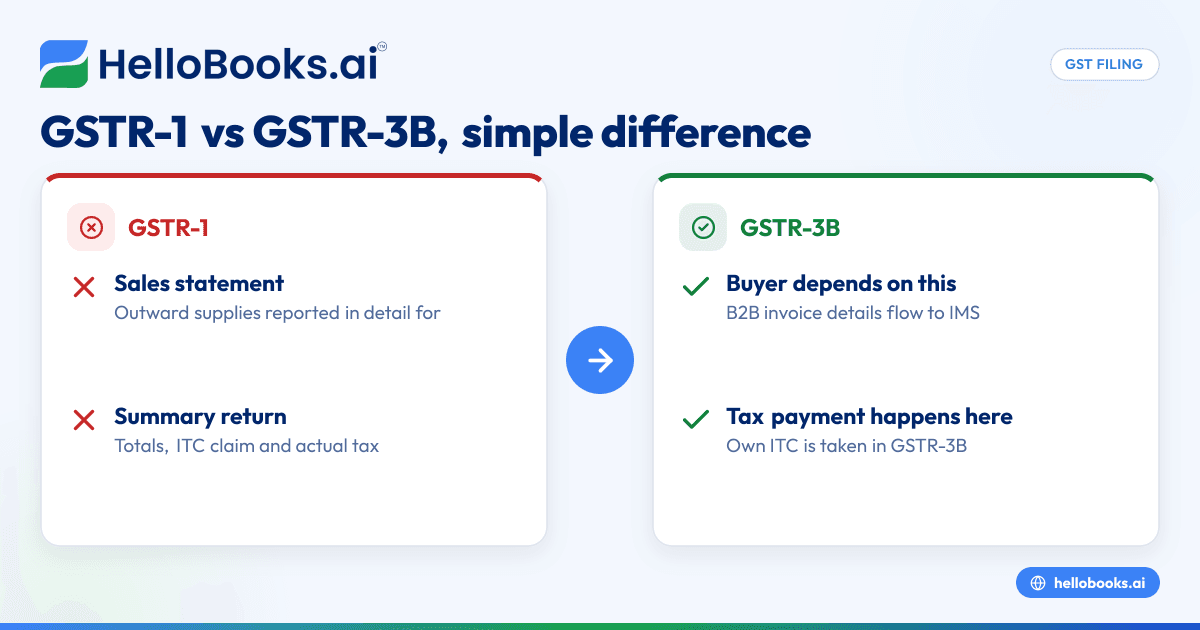
Indiaમાં GSTR-1 અને GSTR-3B નો સાચો ફરક બહુ સીધો છે: GSTR-1 તમારા outward supplies એટલે વેચાણની વિગતવાર જાણકારી CBIC ના GST કાયદા હેઠળ GSTN/GST Portal પર આપે છે, જ્યારે GSTR-3B એ એ જ સમયગાળાની tax liability, ITC અને net tax payment નો સમરી return છે. તમારા buyer માટે મુખ્ય return સામાન્ય રીતે GSTR-1 છે, કારણ કે ત્યાંથી તેની 2A/2B તરફ માહિતી જાય છે; તમારા cash outflow માટે મુખ્ય return સામાન્ય રીતે GSTR-3B છે.
GSTR-1 શું કહે છે, અને GSTR-3B શું સેટલ કરે છે
ગુજરાતીમાં સૌથી સરળ રીતે કહીએ તો, GSTR-1 એ “મેં કોને શું supply કર્યું?” તેનો ખુલાસો છે. તેમાં B2B invoice-level વિગતો, debit note/credit note, place of supply, GSTIN, HSN/SAC જેવી બાબતો મહત્વની બને છે. આ માળખું Central Goods and Services Tax Act, 2017 અને તેના Rules હેઠળ ચાલે છે, અને return flow GSTN દ્વારા GST Portal પર સંચાલિત થાય છે. કયો taxpayer ક્યારે અને કેવી રીતે file કરે છે તેની તાજી સ્થિતિ CBIC અને GST Portal ના official advisoriesમાં પ્રકાશિત થાય છે.
GSTR-3B બીજી બાજુ “હવે આ સમયગાળામાં મને કેટલો GST ભરવો છે, અને મારી eligible ITC કેટલી છે?” એવો સમરી હિસાબ છે. એટલે તેમાં outward tax liability, inward supplies પર ITC, reverse charge લાગતો હોય તો તેનો અસર, અને balance tax payment આવે છે. કાયદાકીય આધાર CGST Act ની return અને payment સંબંધિત જોગવાઈઓમાં છે, અને operational guidance CBIC તથા GSTN/GST Portal પર મળે છે.
સાદી યાદ રાખવાની રીત એવી છે:
- GSTR-1 = sales disclosure
- GSTR-3B = tax settlement summary
પણ આ માત્ર textbook ફરક નથી. રોજિંદા વેપારમાં, ખાસ કરીને Gujarat જેવા trading-heavy marketમાં, બંને returns એકબીજા સાથે જોડાયેલા છે. તમે Ahmedabad, Surat, Rajkot કે Vapiમાં માલ વેચતા હો, buyer ને ITC જોઈએ તો તમારું GSTR-1 સાચું હોવું જરૂરી છે; તમને cash flow control કરવો હોય તો GSTR-3B સાચું હોવું જરૂરી છે.
તમારા buyer માટે શા માટે GSTR-1 વધુ મહત્વનું બને છે
ઘણા વેપારીઓ માને છે કે “મેં tax તો 3B માં ભરી દીધો, હવે buyer ને શું ફરક પડે?” હકીકતમાં buyer માટે invoice visibility વધુ અગત્યની હોય છે. કારણ કે B2B supply ની વિગતો supplier ના GSTR-1 પરથી recipient ની 2A/2B reconciliationમાં દેખાય છે. તેથી buyer ને તમારું invoice, GSTIN, place of supply, tax head split — CGST/SGST કે IGST — બરાબર જોઈએ.
જો તમે Gujaratની અંદર supply માટે ખોટેથી IGST લગાવો, અથવા Maharashtra supply પર CGST+SGST મૂકી દો, તો buyer ની accounting અને ITC tracking બગડે છે. આ માટે invoice બનાવતી વેળા place-of-supply અને tax head split સાચું રહેવું ખૂબ જરૂરી છે. smart invoicing અને gst-return-filing-software જેવી HelloBooks ની India-oriented workflowમાં invoice entry અને return figures વચ્ચે continuity રહે છે, એટલે Excel, Tally export અને portal typing વચ્ચે data તૂટે તેવો જોખમ ઓછો થાય છે.
આ જ કારણ છે કે ઘણા wholesalers buyer તરફથી સૌથી પહેલા એક જ પ્રશ્ન સાંભળે છે: “મારું invoice 2B માં દેખાયું કે નહીં?” buyer તમારું GSTR-3B નથી જોતો; buyer ને તમારું GSTR-1 અને તેની correctness અસર કરે છે.
GSTR-3B માં ખરીદી, ITC અને reverse charge ક્યાંથી આવે છે
GSTR-1 માં તમારી purchase side નથી આવતી. એ outward side return છે. જ્યારે GSTR-3B માં inward supplies અને ITC નો પ્રભાવ પડે છે. અહીં supplier compliance પણ મહત્વની છે. તમારા suppliers એ એમનું GSTR-1 યોગ્ય રીતે file કર્યું હોય તો જ તમારી 2A/2B reconciliation સરળ બને છે. practical India contextમાં આ જ જગ્યા પર bookkeeping બગડે છે: purchase bill drawerમાં છે, portal data કંઈક જુદું બતાવે છે, bank statementમાં payment થઈ ગયું છે, અને return filing સમયે CA ને mismatch મળે છે.
આ માટે OCRથી purchase bills capture કરવી, પછી 2A/2B સાથે reconcile કરવી, અને eligible ITC track કરવી useful બને છે. HelloBooksમાં purchase bill photo કે PDFમાંથી entry લઈને ai-bookkeeping અને bank-reconciliation-software workflow સાથે books અને GST returns નજીક લાવવામાં મદદ મળે છે. ખાસ કરીને જ્યારે payment UPI, NEFT, RTGS કે IMPSથી થયેલ હોય અને bank statement upload કરીને reconciliation કરવી હોય ત્યારે manual re-typing ઘટે છે.
જો reverse charge લાગતો ખર્ચ હોય, અથવા TDS/TCS accounting booksમાં track કરવું હોય, તો તેને side spreadsheetમાં નહિ પણ એ જ accounting flowમાં પકડવું સારું. કારણ કે return સમયે inward tax position અને expense books વચ્ચે gap વધી જાય તો GSTR-3B નું logic સમજાતું નથી.
બંને return એકબીજા સાથે કેવી રીતે જોડાયેલા છે
જૂના guidance વાંચવાથી ઘણા લોકોને લાગે છે કે GSTR-1 અને GSTR-3B સંપૂર્ણપણે અલગ returns છે. કાયદાકીય રીતે તેઓ અલગ છે, પણ compliance flowમાં strongly linked છે. CGST Act અને CGST Rules હેઠળ return filing sequence, outward supply reporting અને summary payment એકબીજા સાથે સંબંધિત છે. આ સંબંધ વિશે તાજી position CBIC circulars, notifications, GST Portal advisories અને GSTN updatesમાં તપાસવી જોઈએ, કારણ કે portal behaviour અને tablesના auto-population rules સમયમાં બદલાતા રહે છે.
આજના compliance environmentમાં broad practical rule એવો છે: GSTR-1 માં outward supplies ની correctness future disputes ટાળે છે, અને GSTR-3B માં tax payment તથા ITC claim ની correctness cash exposure અને notices ટાળે છે. એક returnમાં ગફલત બીજી returnમાં પ્રશ્ન ઊભો કરી શકે છે.
ઉદાહરણ તરીકે, તમે invoice issue કરી દીધું, e-invoice લાગુ પડતું business હોય તો IRN અને signed QR generate કર્યા, e-way bill પણ raise કર્યો, પણ month-end returnમાં outward summary mismatch રહી ગઈ. ત્યારે books, invoice register, e-invoice data, e-way bill trail અને bank receipts એકબીજાથી અલગ બોલવા લાગે છે. e-invoicing-software અને e-way-bill-software સાથે invoice-origin data પરથી filing કરવાથી આ પ્રકારની mismatchની શક્યતા ઘટે છે.
Gujaratના વેપારી માટે સાચી સમજ: invoice level સામે summary level
Gujaratના ઘણા SMEsમાં આ કન્ફ્યુઝન ખાસ જોવા મળે છે: “જો બંનેમાં sales જ બતાવવાની છે, તો બે return શા માટે?” કારણ કે બંનેનો level અલગ છે.
GSTR-1 invoice-level detail તરફ ઝુકે છે. તેમાં party-wise અથવા category-wise disclosure મહત્વનું બને છે. Buyer GSTIN, invoice number, invoice date, taxable value, tax amount, credit note, debit note — આ બધું invoice trail સાથે જોડાયેલું છે.
GSTR-3B summary-level settlement તરફ ઝુકે છે. તેમાં એક મહિના અથવા quarterની combined liability, ITC utilisation અને tax paymentનું operational picture બને છે. એટલે GSTR-3B જોઈને કોઈ buyer પોતાના invoiceની ચોક્કસ વિગતો verify કરી શકતો નથી.
આને accounting ભાષામાં કહીએ તો:
- GSTR-1 booksમાંથી sales register જેવી બહાર આવે છે
- GSTR-3B booksમાંથી tax position જેવી બહાર આવે છે
એટલે invoice creation stage પર correctness ખૂબ જરૂરી છે. Gujaratમાં interstate trading સામાન્ય છે; Suratથી Rajasthan, Ahmedabadથી Maharashtra, Rajkotથી Karnataka supplies થાય છે. place of supply ખોટું હોય તો CGST/SGST સામે IGST નો પ્રશ્ન થાય છે. HelloBooksનું invoice flow આ tax head split ને address કરે છે, અને multi-GSTIN business હોય તો એક login હેઠળ અલગ GSTINs માટે records જાળવવા પણ સરળ બનાવે છે.
આંકડાં સાથે એક કલ્પિત સ્થિતિ વિચારો — માત્ર સમજ માટે
આ ગણતરી સંપૂર્ણપણે illustrative અને invented છે, real legal advice નથી, અને તેમાં cess, special valuation issues, blocked credit, adjustment timing અને sector-specific complications લેવામાં આવ્યા નથી.
માનો કે Vadodaraનો એક trader એક tax periodમાં ત્રણ પ્રકારની supply કરે છે:
- Gujaratની અંદર B2B sale: ₹1,20,000 taxable value
- Maharashtraમાં interstate B2B sale: ₹80,000 taxable value
- Local B2C sale: ₹40,000 taxable value
તે જ periodમાં business purchases તરીકે બે supplier bills છે:
- one purchase bill: ₹50,000 taxable value
- another purchase bill: ₹30,000 taxable value
હવે વિચારવાની રીત આ છે:
GSTR-1માં trader outward supplies બતાવશે — કોને supply કરી, કયું GSTIN, local કે interstate, invoice value, taxable value, tax breakup. એટલે ઉપરના ત્રણેય sales blocks GSTR-1માં visibility માટે મહત્વના છે.
GSTR-3Bમાં એ જ trader outward liability નું summary જોશે, પછી purchase sideમાંથી eligible ITC consider કરશે, અને balance tax payment નક્કી કરશે. જો purchase bill પૈકી એક supplier એ પોતાનું return સાચું ન ભર્યું હોય અને તે invoice 2B reconciliationમાં reflect ન થાય, તો trader ની ITC position practical રીતે અલગ દેખાઈ શકે છે. આ જ કારણ છે કે purchase capture, supplier follow-up અને 2A/2B reconciliation, GSTR-3B સમજવામાં central બની જાય છે.
અહીં notice કરો: same business event બે returnsમાં અલગ role ભજવે છે. GSTR-1માં sale “disclosure” છે. GSTR-3Bમાં sale “liability summary” છે. purchase GSTR-1માં આવતી નથી, પણ GSTR-3Bમાં ITC side પર અસર કરે છે.
mismatch ક્યાં જન્મે છે — અને પછી પ્રશ્નો કેમ ઊભા થાય છે
Mismatch સામાન્ય રીતે portal પર નહીં, business processમાં જન્મે છે. Indiaના નાના અને મધ્યમ વેપારમાં મુખ્ય કારણો આ પ્રકારના હોય છે:
- invoice બનાવી, પણ booksમાં late entry
- party GSTIN ખોટું
- place of supply ખોટું
- local supply પર IGST અથવા interstate supply પર CGST/SGST
- credit note booksમાં છે, return workingમાં નથી
- purchase bill fileમાં છે, systemમાં નથી
- bank receipt UPI/NEFTથી આવી, પણ invoice સામે knock-off નથી
- multiple branches અથવા multiple GSTIN હોવાથી data scattered
- Tally અને portal working અલગ-અલગ versionમાં
આ mismatch પછી notices, buyer complaints, ITC disputes અથવા internal confusion લાવે છે. official consequence, process, notice format, interest, late fee, threshold અથવા deadline સંબંધિત દરેક current figure CBIC notifications, GST Portal instructions અને GSTN advisoriesમાં તપાસવી જોઈએ; આવા આંકડા ઝડપથી બદલાઈ શકે છે, તેથી કોઈ bare number પર આધાર રાખવો યોગ્ય નથી without official verification.
જો તમે પહેલેથી Tallyમાં કામ કરતા હો, તો migration અથવા connector useful બની શકે છે જેથી legacy books છૂટા ન પડે. tally-alternative અને compare/hellobooks-vs-tally વાંચવાથી workflow difference સમજાય છે, ખાસ કરીને ત્યારે જ્યારે GST return filing, invoiceing, inventory અને reconciliationને એક જ stackમાં જોવાનું હોય.
return filing પહેલાં કઈ checks ખરેખર કામની છે
GSTR-1 અને GSTR-3B ની વચ્ચેનો ફરક સમજવાનો સાચો રસ્તો filing પહેલાંના control pointsમાં છે:
પ્રથમ, outward register check કરો. B2B invoicesમાં GSTIN, invoice number, taxable value, place of supply અને tax split બરાબર છે કે નહીં?
બીજું, interstate અને intrastate supplies અલગ verify કરો. Gujarat business માટે આ ખાસ મહત્વનું છે કારણ કે IGST સામે CGST/SGST classification ભૂલ બહુ સામાન્ય છે.
ત્રીજું, credit/debit notes timeસર adjust થયા છે કે નહીં જુઓ.
ચોથી, purchase bills booksમાં captured છે કે નહીં. OCR અથવા upload વિના paper bills ભૂલી જવા સરળ છે.
પાંચમી, GSTR-2A/2B reconciliation કરો. supplierએ upload ન કરેલું invoice હોવા પર ITC working revisit કરો.
છઠ્ઠી, bank statement upload કરીને receipts અને payments match કરો. UPI, NEFT, IMPS, RTGS entries books સામે reconcile થયા છે કે નહીં?
સાતમી, inventory-led business હોય તો stock movement અને sales entries વચ્ચે alignment જુઓ. ખાસ કરીને trading, hardware, pharma distribution, textiles અને electricals જેવા sectorsમાં stock-book mismatch return mismatch સુધી જઈ શકે છે. inventory અને accounting-software-india contextમાં integrated records રાખવાથી આ gap ઘટે છે.
આ checks પછી GSTR-1 અને GSTR-3B direct filingનો practical લાભ એ છે કે manually portal પર ફરીથી type કરવાની જરૂર ઓછી પડે. HelloBooksમાં invoice, purchase, reconciliation અને filing flow જોડાતા હોવાથી month-end compliance વધુ readable બને છે. Mobile app પરથી sales/expenses capture કરી શકાય છે, અને ownerને English, Hindi કે Hinglishમાં WhatsApp પર Noor દ્વારા basic bookkeeping queries પૂછવાની સુવિધા પણ day-to-day follow-upમાં મદદરૂપ બની શકે છે.
શું યાદ રાખવું: બંને return અલગ છે, પણ અલગથી વિચારવાના નથી
જો એક જ વાક્યમાં યાદ રાખવું હોય, તો આવું કહો: GSTR-1 buyer-facing sales disclosure છે, અને GSTR-3B business-facing tax settlement summary છે. એકથી invoice trail બને છે; બીજાથી tax outflow અને ITC utilisation સ્પષ્ટ થાય છે.
Indiaના GST frameworkમાં, જે CBIC દ્વારા સંચાલિત કાનૂની માળખા અને GSTN/GST Portal દ્વારા operational બને છે, complianceની quality હવે માત્ર “return file કરી દીધું”થી માપાતી નથી. invoice સાચું, e-invoice/IRN જ્યાં લાગુ પડે ત્યાં યોગ્ય, e-way bill consistent, purchase bills captured, 2B reconciled, bank statement matched, અને books-return harmony — આ બધું સાથે જ જોઈએ.
તમે જો invoiceથી return સુધી એક cleaner workflow શોધી રહ્યા હો, તો gst-return-filing-software, smart invoicing અને India pages in અથવા in/pricing પરથી fit સમજી શકો છો. Official rates, thresholds, due dates, penalties અને filing rules માટે હંમેશાં CBIC, GST Portal અને GSTN ના current publications જ ચકાસો.


