


Key takeaways
What this article covers, in order:
- இந்த மூன்று ஆவணங்கள் ஒன்றே போலத் தோன்றினாலும், வேலை வேறு
- DRC-01B என்றால் என்ன, அது usually எப்போது வருகிறது
- DRC-01C notice வந்தால் focus ITC மேல் இருக்க வேண்டும்
- ASMT-10 அல்லது show cause stage எப்போது serious ஆகிறது
- Tamil business-களில் mismatch உருவாகும் நிஜ காரணங்கள்
- ஒரு சின்ன illustrative கதை: mismatch எப்படி உருவாகி, எப்படி சரியாகிறது
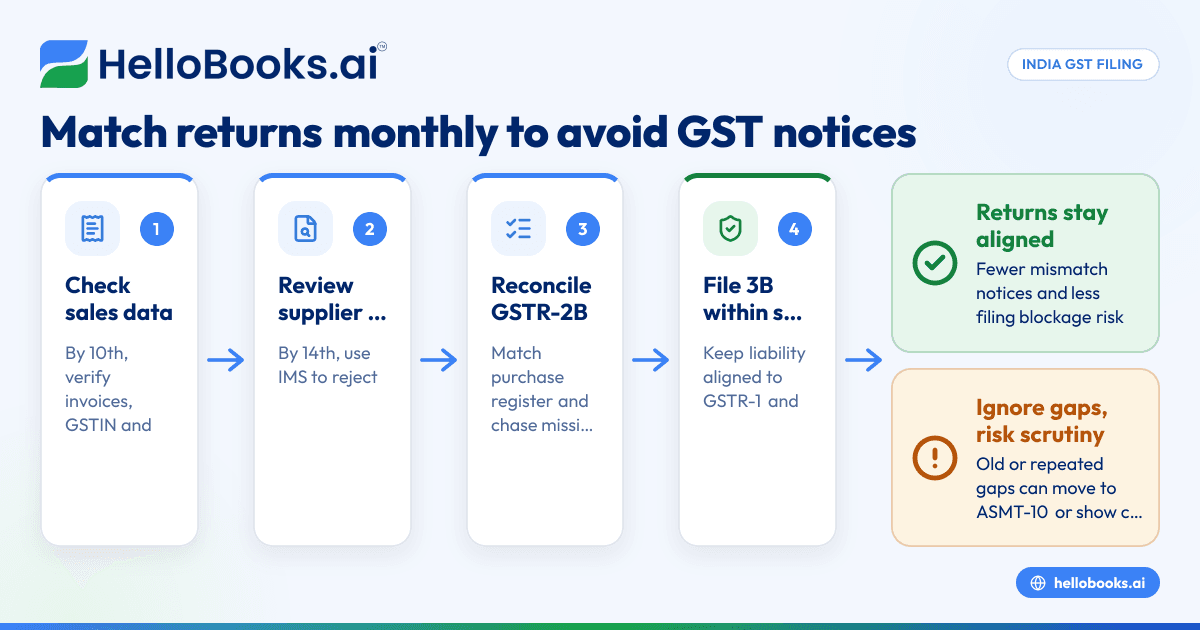
India-ல் GSTR-1, GSTR-3B, GSTR-2B mismatch notice வந்தால் அதின் அர்த்தம் சாதாரணமாக இது தான்: நீங்கள் GST Portal-ல் report செய்த outward liability, GSTR-3B-ல் discharge செய்த liability, அல்லது GSTR-2B-ல் reflect ஆகும் input tax credit—இவற்றில் ஒன்று ஒன்றுடன் பொருந்தவில்லை. பொதுவாக GSTR-1 liability அதிகமாக இருந்து GSTR-3B அதனை ஒத்துக்கொள்ளாவிட்டால் DRC-01B; GSTR-3B-ல் claim செய்த ITC, GSTR-2B-ஐ மீறினால் DRC-01C. இதை India-வில் GST law கீழ் CBIC rules மற்றும் GSTN system validations govern செய்கின்றன; current triggers, workflow, and portal behaviour are published on the GST Portal, GSTN advisories, and CBIC notifications/circulars.
இந்த மூன்று ஆவணங்கள் ஒன்றே போலத் தோன்றினாலும், வேலை வேறு
Tamil Nadu-யிலோ Karnataka border trade-லோ, ஒரு business invoice issue பண்ணும் போது ஒரு எண்ணே பல இடங்களில் வாழ்கிறது. அந்த same transaction:
- sales register-ல் இருக்கும்
- GSTR-1-ல் outward supplies ஆக report ஆகும்
- GSTR-3B-ல் summary liability ஆக தெரியும்
- buyer side-ல் GSTR-2B credit visibility-க்கு காரணமாகும்
- goods movement இருந்தால் e-way bill record-களுடனும் இணைந்து பார்க்கப்படலாம்
இதில்தான் mismatch உருவாகிறது. காரணம், மூன்றும் ஒரே screen-இல் இருந்து உருவாகாத சூழலில் manual edits, Excel uploads, Tally export-import mistakes, wrong GSTIN, wrong place of supply, credit note timing, reverse charge classification, branch-wise data lag—இவையெல்லாம் சேர்ந்து figures-ஐ அசைக்கின்றன.
India-வில் Central Goods and Services Tax Act, 2017, அதின் Rules, மற்றும் CBIC administer செய்யும் GST framework கீழ் returns compare செய்யப்படுகின்றன. System validations, advisories, and filing flows GSTN மற்றும் GST Portal-ல் வெளியிடப்படுகின்றன. எந்த current threshold, lock, blocking rule, response window ஆகியவற்றையும் நீங்கள் official portal instruction, CBIC notification, அல்லது relevant advisory-ல் சரிபார்க்க வேண்டும்.
DRC-01B என்றால் என்ன, அது usually எப்போது வருகிறது
DRC-01B பற்றி practical-ஆக புரிந்துகொள்ள வேண்டியது: நீங்கள் GSTR-1 அல்லது IFF-ல் காட்டிய tax liability, அதற்கான period-இல் GSTR-3B-ல் discharge செய்யப்பட்ட liability-யுடன் பொருந்தவில்லை என்று system நினைக்கிறது. இது Rule 88C of the CGST Rules context-இல் வருகிறது; law framework CBIC publish செய்கிறது, operational behaviour GSTN/GST Portal advisories-ல் விளக்கப்படும்.
இந்த notice வந்தபோது business owner-க்கு first pain point notice itself இல்லை. அடுத்த filing cycle பாதிக்கப்படுவது தான். Buyer-கள் ITC பார்க்க காத்திருக்கிறார்கள்; உங்கள் GSTR-1 hold ஆனால் customer relationship-க்கும் cash flow-க்கும் தாக்கம் வரும். குறிப்பாக B2B buyers, monthly closing நேரத்தில் உடனே call பண்ணுவார்கள்.
இது often வரும் practical காரணங்கள்:
- sales invoice books-ல் உள்ளது, GSTR-1-ல் போயுள்ளது, ஆனால் GSTR-3B summary-க்கு சரியாக carry ஆகவில்லை
- amendment period-இல் liability correct ஆனது, but officer view original period mismatch-ஐ flag பண்ணுகிறது
- credit note one period-ல், original invoice another period-ல் handled ஆகியது
- wrong tax head split: intrastate sale-க்கு IGST அல்லது interstate sale-க்கு CGST/SGST போடப்பட்டது
- branch team invoice upload பண்ணியது, HO payment working வேறு register-ல் செய்தது
- old periods from pre-automation process இன்னும் comparison-ல் சிக்கின
HelloBooks மாதிரி system-இல் invoice உருவாக்கும்போதே GSTIN, place of supply, மற்றும் CGST/SGST vs IGST split consistent-ஆக capture ஆகி, அதே books-இலிருந்து GSTR-1 and GSTR-3B filing நடக்கும்போது இந்த type liability drift குறையும். அது especially multi-state businesses-க்கு உதவும், ஏனெனில் ஒரு login-இல் பல GSTIN-களை manage செய்ய முடியும்.
DRC-01C notice வந்தால் focus ITC மேல் இருக்க வேண்டும்
DRC-01C பொதுவாக நீங்கள் GSTR-3B-ல் claim செய்த input tax credit, corresponding GSTR-2B visibility-ஐவிட அதிகம் என்று system flag செய்யும் சூழல். இது Rule 88D of the CGST Rules context-இல் பேசப்படுகிறது; current comparison logic, any tolerance or workflow, GST Portal and CBIC/GSTN official publications-ல் தான் பார்க்க வேண்டும்.
இந்த mismatch India-வில் மிக common ஆனது, காரணம் supplier behaviour உங்கள் control-ல் இருக்காது. நீங்கள் purchase bill book பண்ணிவிடலாம்; ஆனால் supplier:
- return file செய்யாமல் இருக்கலாம்
- wrong GSTIN-க்கு upload செய்யலாம்
- invoice date/number typo போடலாம்
- credit note issue பண்ணி later adjust செய்யலாம்
- e-invoice generated ஆனாலும் reporting error உருவாகலாம்
இதனால் உங்கள் books-ல் ITC இருக்கிறது போல தெரியும்; ஆனால் GSTR-2B-ல் அது இன்னும் reflect ஆகவில்லை. Income Tax Act கீழ் expense recognition logic ஒன்றாக இருக்கலாம்; ஆனால் GST credit claim logic CBIC-administered GST law கீழ் தனி discipline. அதனால் purchase register-ஐ மட்டும் நம்பி return finalise பண்ணுவது unsafe.
இந்த இடத்தில் GSTR-2A/2B reconciliation and ITC tracking போன்ற workflow முக்கியம். Purchase bills photo அல்லது PDF-யிலிருந்து OCR மூலம் capture பண்ணப்பட்டாலும், claim செய்வதற்கு முன் 2B-ஐ ஒப்பிட்டு “missing from supplier side” என்பதை தெளிவாக பிரித்துக் காட்டினால் DRC-01C risk குறையும். Bank statement upload செய்து AI reconciliation செய்யும் habit கூட useful; NEFT, RTGS, IMPS, UPI collection அல்லது supplier payment நடந்ததே bill genuine என்று காட்டலாம், ஆனால் payment நடந்தது மட்டும் ITC entitlement-க்கு போதாது என்பதையும் team நினைவில் வைத்திருக்க வேண்டும்.
ASMT-10 அல்லது show cause stage எப்போது serious ஆகிறது
ஒவ்வொரு mismatch-மும் உடனே adjudication-க்கு போகாது. ஆனால் unresolved variance, repeated period-to-period inconsistency, அல்லது explanation documents weak-ஆக இருந்தால் scrutiny communication, including ASMT-10, அல்லது later show cause proceedings வரலாம். Scrutiny powers GST law framework கீழ் இருக்கின்றன; official process, form usage, and current instructions CBIC notifications/circulars மற்றும் GST Portal guidance-ல் பார்க்கப்பட வேண்டும்.
இந்த stage-இல் officer usually raw number-ஐ மட்டும் பார்க்க மாட்டார். அவர் கேட்கக்கூடியவை:
- sales register vs GSTR-1 mapping
- purchase register vs GSTR-2B mapping
- e-invoice IRN trail இருந்ததா
- e-way bill details outward supply-ஐ support செய்கிறதா
- bank receipt trail உள்ளது தானா
- ledger narration consistent-ஆ இருக்கிறதா
- amendments எந்த period-ல் செய்யப்பட்டன
அதனால் mismatch response என்பது ஒரு single text explanation அல்ல; it is a document trail exercise. Books, returns, banking trail, and inventory movement ஒரே story சொன்னால் case handle பண்ண எளிதாகும். HelloBooks-ல் invoice, inventory movement, OCR purchase capture, uploaded bank statement reconciliation, மற்றும் financial reports same dataset-இலிருந்து கிடைப்பது இந்த story-building-ஐ practical-ஆக எளிதாக்கும்.
Tamil business-களில் mismatch உருவாகும் நிஜ காரணங்கள்
Template article மாதிரி “data entry error” என்று மட்டும் சொல்லிவிட்டால் India context miss ஆகும். Real life-ல், குறிப்பாக Tamil-speaking MSME businesses-ல், mismatch இப்படி நடக்கிறது:
- Tally-ல் books, portal-ல் filing, Excel-ல் adjustments: மூன்று source of truth உருவாகிறது.
- Interstate supply confusion: Chennai-லிருந்து Bengaluru buyer-க்கு supply செய்து CGST/SGST charge செய்தால் later correction headache.
- Multiple GSTIN operations: ஒரு company-க்கு Tamil Nadu GSTIN, Karnataka GSTIN இரண்டும் இருந்தால் wrong GSTIN-ல் invoice போகலாம்.
- Goods moved, paperwork delayed: e-way bill raise பண்ணியிருப்பார்கள்; invoice amendment later நடந்திருக்கலாம்.
- Purchase bills WhatsApp/PDF-ஆக scattered: accounts team OCR இல்லாமல் late entry பண்ணும் போது invoice number mismatch அதிகம்.
- Month-end cash flow pressure: books close ஆகாமல் GSTR-3B summary finalise செய்துவிடுவார்கள்.
- TDS/TCS or reverse charge confusion: supplier bill accounting வேறாக, GST claim working வேறாக வைத்தால் registers drift ஆகும்.
- UPI receipts not matched to invoices: especially retail-plus-wholesale businesses-ல் bank narration மூலம் invoice match செய்யாமல் summary post பண்ணுகிறார்கள்.
இந்த pattern-களுக்கு ஒரு India-specific fix என்னவென்றால், bookkeeping software invoice stage-லேயே tax head split and GSTIN validation செய்ய வேண்டும். Smart invoicing மற்றும் accounting software India workflows ஒரே இடத்தில் இருந்தால் later return mismatch குறையும். பழைய Tally setup-இலிருந்து move ஆகும் firms-க்கு Tally alternative அல்லது connector-style migration path useful ஆகும்.
ஒரு சின்ன illustrative கதை: mismatch எப்படி உருவாகி, எப்படி சரியாகிறது
இங்கே வரும் figures illustrative and invented. இவை official rates, thresholds, interest, penalty, or deadlines-ஐ state செய்யவில்லை; current legal amounts and timelines must be checked on the GST Portal, CBIC notifications, and relevant law text. இந்த calculation freight valuation nuances, blocked credits, exempt turnover, and sector-specific rules-ஐ leave out செய்கிறது.
Coimbatore-யில் உள்ள ஒரு machinery trader, April period-க்கு இரண்டு B2B invoices issue பண்ணியதாக நினைத்துக்கொள்ளுங்கள். Invented numbers-ஆக, Invoice A taxable value ₹8,00,000; Invoice B taxable value ₹3,50,000. Accounts staff Invoice A-வை correct GSTIN-க்கு upload செய்தார். Invoice B however wrong place-of-supply code-உடன் post ஆனது. அதே மாதத்தில் purchases side-ல் மூன்று supplier bills books-ல் entry ஆனது: invented figures ₹1,20,000, ₹85,000, ₹40,000 eligible ITC working-க்கு support ஆகும் போல தெரிந்தது. ஆனால் அந்த மூன்றில் ஒரு supplier இன்னும் return file செய்யவில்லை; another supplier wrong GSTIN mention செய்தார்.
Result என்ன? Sales liability GSTR-1 data-வில் ஒரு shape; GSTR-3B summary-ல் another shape. Purchase register-ல் ITC higher போலத் தெரியும்; GSTR-2B lower. இதுதான் DRC-01B + DRC-01C risk zone.
அதே business next month என்ன பண்ணுகிறது என்றால்:
- invoice master-ல் GSTIN validate செய்கிறது
- place of supply auto-check செய்கிறது
- GSTR-1 draft submit செய்வதற்கு முன் liability summary compare செய்கிறது
- purchase bills OCR capture பின் GSTR-2B match status பார்க்கிறது
- uploaded bank statement-இல் NEFT and UPI receipts invoice-wise reconcile செய்கிறது
- supplier missing entries list எடுத்து follow-up செய்கிறது
இந்த invented story-யின் point: mismatch பெரும்பாலும் tax law problem மட்டும் இல்லை; process design problem.
notice வந்த பிறகு பதில் தயார் செய்ய வேண்டிய ஆவணங்கள்
Lawyer-style jargon இல்லாமல் சொன்னால், officer-க்கு நீங்கள் சொல்வது “இந்த difference உண்மையில் ஏன் வந்தது, அது ஏற்கெனவே சரியான period-ல் settle ஆனதா, அல்லது அதை இப்போது regularise செய்கிறோமா” என்பதுதான். அதற்கு usually useful ஆகும் records:
- invoice copies with GSTIN and tax head breakup
- debit note/credit note trail
- e-invoice IRN and signed QR details, where applicable under the notified e-invoicing framework published by CBIC/GSTN
- sales register and purchase register extracts
- GSTR-1 draft/final comparison
- GSTR-2B reconciliation report
- bank statement extracts showing receipt/payment trail
- e-way bill references for goods movement, where relevant
- stock or inventory movement support
- amendment history and period mapping
இதைக் கைமுறையாக folders-ல் தேடும்போது response weak ஆகும். ஒரே system-இல் e-invoicing, e-way bill, inventory, மற்றும் books இணைந்தால் supporting trail உடனே எடுக்க முடியும். CA அல்லது internal accountant இருவரும் same data-வில் வேலை செய்வது முக்கியம்.
notice வராத மாதிரி அமைக்க வேண்டிய monthly control
Mismatch prevention என்பது “file on time” என்பதைக் காட்டிலும் பெரியது. India GST compliance-ல் நல்ல discipline usually இந்த five-control model-இல் தெரியும்:
1. Invoice-stage correctness
GSTIN validate பண்ணாமல் invoice save பண்ணாதீர்கள். Place of supply, HSN/SAC, tax head split, and customer state mapping first layer.
2. Purchase-stage evidence
Supplier bill photo, PDF, or scan உடனே capture செய்ய வேண்டும். OCR entry பின் duplicate invoice number, wrong GSTIN, and missing tax amount check செய்யுங்கள்.
3. Pre-filing comparison
GSTR-1 draft vs books; GSTR-3B summary vs liability trail; GSTR-2B vs ITC claim working. இது filingக்கு முந்தைய ritual ஆக இருக்க வேண்டும்.
4. Payment-trail cleanup
Monthly bank statement upload செய்து AI reconciliation run பண்ணுங்கள். UPI, NEFT, RTGS, IMPS receipts invoice-க்கு இணைக்கப்படாதால் receivables ageing மற்றும் GST trail இரண்டும் blur ஆகும். Bank reconciliation இந்த control-ஐ fast ஆக்கும்.
5. Supplier follow-up list
2B-ல் இல்லாத invoices-ஐ vendor-wise ageing list ஆக்கி follow-up செய்யுங்கள். WhatsApp-ல் vendor-க்கு message அனுப்புவதை விட, internal working clear ஆக இருக்க வேண்டும்; proof trail maintain செய்யுங்கள்.
HelloBooks-ல் invoice உருவாக்கம், GST return filing, purchase OCR, GSTR-2A/2B reconciliation, uploaded bank statement matching, inventory movement, மற்றும் multi-GSTIN operations ஒரே flow-ஆக நடந்தால் owner-க்கும் accountant-க்கும் “எந்த figure எங்கிருந்து வந்தது?” என்ற கேள்வி குறையும். Mobile app இருப்பதால் field sales team invoice delay குறைக்கலாம்; Hindi, English, Hinglish-ல் Noor assistant WhatsApp-ல் bookkeeping questions answer செய்வது mixed-language teams-க்கு useful, though filing control still books data-மேல் தான் நிற்கிறது.
India-வில் official figure எங்கே verify செய்ய வேண்டும்
இந்த topic-ல் readers அதிகம் தேடுவது notice period, blocking rule, late consequence, threshold, and response method. இவற்றில் எந்த current number-ஐயும் bare fact-ஆக நினைவில் வைத்துக் கொள்ளாதீர்கள். Verify செய்ய வேண்டிய sources:
- CBIC: notifications, circulars, rules under the CGST Act and CGST Rules
- GSTN / GST Portal: advisories, user manuals, form flows, system changes, portal validations
- Relevant law text: Central Goods and Services Tax Act, 2017; associated rules; where needed State GST alignment for SGST administration
- Professional review: your CA or GST practitioner, especially if the mismatch spans multiple periods, crore-level turnover bands, or cross-state GSTIN structure
Quick validation-க்கு HelloBooks India free tools useful. GSTIN check செய்ய GSTIN validator, invoice field sanity பார்க்க GST invoice validator, reconciliation gap spot செய்ய GST reconciliation checker use பண்ணலாம். Software fit பார்க்க வேண்டுமென்றால் India page, pricing, அல்லது demo பார்க்கலாம்.
இறுதி practical point
DRC-01B அல்லது DRC-01C வந்துவிட்டது என்ற alone காரணத்தால் panic வேண்டாம்; ஆனால் அதை mere portal nuisance என்றும்கூட treat செய்யாதீர்கள். India GST system-இல் notice என்பது mostly உங்கள் books, GST returns, supplier compliance, மற்றும் banking trail ஒரே line-இல் இல்லை என்பதற்கான signal. நீங்கள் monthly reconciliation habit அமைத்து, GST invoicing முதல் GSTR-1/3B filing வரை ஒரே dataset-இல் கொண்டு வந்தால், பெரும்பாலான mismatch-கள் notice stage-க்கு போகும் முன்பே பிடிபடும். பழைய periods, complex reverse charge, TDS/TCS interplay, or disputed ITC claims இருந்தால், response filingக்கு முன் expert review அவசியம்.


