


Key takeaways
What this article covers, in order:
- ਇਹ ਤਿੰਨ documents ਇਕੋ ਗੱਲ ਕਿਉਂ ਨਹੀਂ ਦੱਸਦੇ
- DRC-01B ਅਮਲ ਵਿੱਚ ਕਦੋਂ ਆਉਂਦਾ ਹੈ
- DRC-01C ਵਿੱਚ ਅਸਲ ਜੋਖਮ ITC ਦਾ ਹੁੰਦਾ ਹੈ
- ASMT-10 ਤੇ scrutiny notice template ਵਾਲੀ ਨਹੀਂ, files ਵਾਲੀ ਲੜਾਈ ਹੈ
- Punjabi businesses ਵਿੱਚ mismatch ਦੇ ਸਭ ਤੋਂ ਆਮ pattern
- ਇੱਕ ਇਲਾਸਟ੍ਰੇਟਿਵ ਤੇ invented ਹਿਸਾਬ ਨਾਲ ਸਮਝੋ ਬੇਮੇਲ ਕਿਵੇਂ ਬਣਦਾ ਹੈ
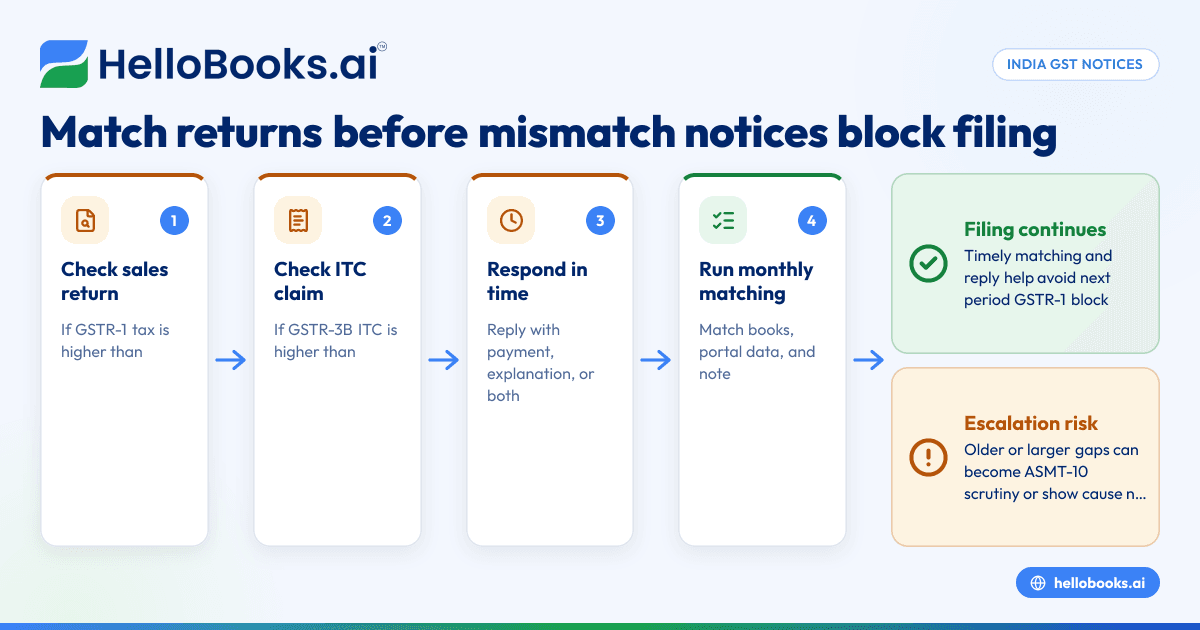
India ਵਿੱਚ GSTR-1, GSTR-3B ਅਤੇ GSTR-2B ਵਿਚਕਾਰ ਬੇਮੇਲ ਆਮ ਤੌਰ ‘ਤੇ ਦੋ ਜਗ੍ਹਾਂ ਤੋਂ ਬਣਦਾ ਹੈ: ਵਿਕਰੀ ਦੀ tax liability GSTR-1 ਵਿੱਚ ਹੋਰ ਹੈ ਪਰ GSTR-3B ਵਿੱਚ ਹੋਰ, ਜਾਂ ITC GSTR-3B ਵਿੱਚ ਕਲੇਮ ਹੋ ਗਿਆ ਪਰ ਉਹ GSTR-2B ਨਾਲ ਨਹੀਂ ਮਿਲਦਾ। ਐਸੇ ਬੇਮੇਲਾਂ ‘ਤੇ GSTN ਅਤੇ GST Portal ਰਾਹੀਂ Rule 88C ਹੇਠ DRC-01B, Rule 88D ਹੇਠ DRC-01C, ਅਤੇ ਕਈ ਵਾਰੀ scrutiny ਲਈ ASMT-10 ਆ ਸਕਦਾ ਹੈ। ਸੁਰੱਖਿਅਤ ਰਾਹ ਇਹ ਹੈ ਕਿ sales register, purchase register, bank statement, ਅਤੇ portal data ਹਰ period close ਕਰਨ ਤੋਂ ਪਹਿਲਾਂ ਮਿਲਾਇਆ ਜਾਵੇ।
ਇਹ ਤਿੰਨ documents ਇਕੋ ਗੱਲ ਕਿਉਂ ਨਹੀਂ ਦੱਸਦੇ
ਪੰਜਾਬ ਦੇ ਇੱਕ trader, Ludhiana ਦੇ manufacturer, ਜਾਂ Mohali ਦੀ services firm ਲਈ ਵੀ pattern ਲਗਭਗ ਇਕੋ ਹੁੰਦਾ ਹੈ: invoice ਇਕ ਸਿਸਟਮ ਵਿੱਚ ਬਣਦਾ ਹੈ, payment ਦੂਜੇ record ਵਿੱਚ ਆਉਂਦੀ ਹੈ, ਅਤੇ supplier filing ਤੀਜੇ timeline ‘ਤੇ ਹੁੰਦੀ ਹੈ। ਨਤੀਜਾ ਇਹ ਕਿ GST liability, ITC ਅਤੇ books ਇਕੋ ਮਹੀਨੇ ਲਈ ਵੀ ਵੱਖਰੀ ਤਸਵੀਰ ਦਿਖਾ ਸਕਦੇ ਹਨ।
GSTR-1 ਤੁਹਾਡੀ outward supplies ਦੀ return ਹੈ। GSTR-3B summary liability ਅਤੇ ITC claim ਦਿਖਾਉਂਦੀ ਹੈ। GSTR-2B auto-drafted statement ਹੈ ਜੋ GSTN ਤੁਹਾਡੇ suppliers ਦੀ filing ਦੇ ਆਧਾਰ ‘ਤੇ ਬਣਾਉਂਦਾ ਹੈ। ਇਹ ਤਿੰਨੇ Central Goods and Services Tax Act, 2017 ਅਤੇ ਉਸ ਦੇ Rules ਦੇ framework ਹੇਠ ਕੰਮ ਕਰਦੇ ਹਨ, ਜਿਸ ਦੀ administration CBIC ਅਤੇ GSTN platform ਰਾਹੀਂ ਹੁੰਦੀ ਹੈ। ਕਿਸੇ ਵੀ current due date, threshold ਜਾਂ system-trigger figure ਲਈ ਹਮੇਸ਼ਾਂ CBIC notifications, GST Council recommendations, ਅਤੇ GST Portal/GSTN advisories ਵੇਖੋ, ਕਿਉਂਕਿ ਇਹ figures bare memory ਨਾਲ quote ਕਰਨਾ ਠੀਕ ਨਹੀਂ।
ਵਿਵਹਾਰਕ ਕਾਰਨ ਹੋਰ ਸਾਫ਼ ਹਨ:
- invoice books ਵਿੱਚ ਬਣ ਗਿਆ ਪਰ return mapping ਗਲਤ table ਵਿੱਚ ਗਿਆ
- interstate supply ਲਈ IGST ਹੋਣਾ ਸੀ, ਪਰ CGST/SGST split ਹੋ ਗਿਆ
- credit note ਇਕ period ਵਿੱਚ ਲਿਆ, original outward supply ਦੂਜੇ ਵਿੱਚ ਪਈ ਰਹੀ
- purchase bill books ਵਿੱਚ record ਹੋ ਗਈ, ਪਰ supplier ਨੇ ਤੁਹਾਡੇ GSTIN ‘ਤੇ upload ਨਹੀਂ ਕੀਤੀ
- supplier ਨੇ ਗਲਤ GSTIN, HSN ਜਾਂ taxable value report ਕਰ ਦਿੱਤੀ
- reverse charge ਵਾਲਾ transaction purchase register ਵਿੱਚ ਹੈ, ਪਰ 3B logic ਵੱਖਰਾ ਚੱਲ ਗਿਆ
- e-invoice/IRN data ਅਤੇ accounting entry ਇੱਕੋ invoice number ਨਾਲ tie ਨਹੀਂ ਹੋਈ
- receipt bank statement ਵਿੱਚ ਆ ਗਈ, ਪਰ invoice outstanding ਹੀ ਰਹਿ ਗਿਆ
ਇਸੇ ਲਈ mismatch sirf portal ਦੀ problem ਨਹੀਂ; ਇਹ bookkeeping, classification, timing ਅਤੇ team coordination ਦੀ problem ਵੀ ਹੈ।
DRC-01B ਅਮਲ ਵਿੱਚ ਕਦੋਂ ਆਉਂਦਾ ਹੈ
DRC-01B ਆਮ ਤੌਰ ‘ਤੇ ਉਹਨਾਂ cases ਨਾਲ ਜੁੜਿਆ ਹੁੰਦਾ ਹੈ ਜਿੱਥੇ outward tax liability, ਜੋ GSTR-1 ਜਾਂ IFF data ਤੋਂ ਨਿਕਲਦੀ ਹੈ, GSTR-3B ਵਿੱਚ paid liability ਨਾਲ materially match ਨਹੀਂ ਕਰਦੀ। ਇਸ mechanism ਦਾ legal basis CGST Rules ਵਿੱਚ Rule 88C ਹੈ। Current trigger conditions, system behaviour, response flow ਅਤੇ any blocking consequences ਲਈ official source GST Portal advisories, CBIC notifications ਅਤੇ rules text ਹਨ।
Practical level ‘ਤੇ ਇਹ ਅਕਸਰ ਇਨ੍ਹਾਂ ਕਾਰਣਾਂ ਨਾਲ ਬਣਦਾ ਹੈ:
- sales invoices upload ਹੋ ਗਈਆਂ, ਪਰ 3B file ਕਰਦੇ ਵੇਲੇ liability complete ਨਹੀਂ ਲੱਗੀ
- debit note report ਹੋ ਗਿਆ, payment side ‘ਤੇ ਰਹਿ ਗਿਆ
- amended invoice outward tables ਵਿੱਚ reflect ਹੋ ਗਿਆ, ਪਰ summary tax computation update ਨਹੀਂ ਹੋਈ
- multi-branch business ਵਿੱਚ ਇੱਕ GSTIN ਦੀ sale ਦੂਜੇ registration ਦੀ books ਵਿੱਚ ਚਲੀ ਗਈ
- e-commerce, freight ਜਾਂ round-off entries ਨਾਲ taxable value reconciliation ਖਰਾਬ ਹੋ ਗਿਆ
DRC-01B ਨੂੰ ignore ਕਰਨ ਦੀ operational problem ਇਹ ਹੈ ਕਿ ਅਗਲੇ period ਦੀ filing flow ਪ੍ਰਭਾਵਿਤ ਹੋ ਸਕਦੀ ਹੈ, ਜਿਸ ਨਾਲ buyer ਨੂੰ ITC delay ਹੋ ਸਕਦਾ ਹੈ ਅਤੇ collections ‘ਤੇ ਵੀ ਅਸਰ ਪੈ ਸਕਦਾ ਹੈ। Punjab ਦੇ B2B businesses ਲਈ ਇਹ ਸਿਰਫ compliance issue ਨਹੀਂ; working capital issue ਵੀ ਹੈ, ਕਿਉਂਕਿ buyer ਅਕਸਰ GST reflected ਹੋਣ ਤੋਂ ਪਹਿਲਾਂ payment hold ਕਰ ਲੈਂਦੇ ਹਨ, chahe payment UPI, NEFT, RTGS ਜਾਂ IMPS ਰਾਹੀਂ ਆਉਣੀ ਹੋਵੇ।
ਜੇ ਤੁਹਾਨੂੰ ਇਹ notice ਮਿਲੇ, ਤਾਂ ਪਹਿਲਾਂ portal view, sales register, invoice-wise tax summary ਅਤੇ relevant period ਦੀ filed GSTR-3B ਇਕੱਠੀ ਕਰੋ। ਫਿਰ ਵੇਖੋ ਕਿ ਬੇਮੇਲ value ਦਾ source timing ਹੈ, classification ਹੈ ਜਾਂ actual short payment।
DRC-01C ਵਿੱਚ ਅਸਲ ਜੋਖਮ ITC ਦਾ ਹੁੰਦਾ ਹੈ
DRC-01C ਦਾ ਸਬੰਧ ਆਮ ਤੌਰ ‘ਤੇ ਉਸ situation ਨਾਲ ਹੁੰਦਾ ਹੈ ਜਿੱਥੇ GSTR-3B ਵਿੱਚ claimed ITC, GSTR-2B ਵਿੱਚ reflected ITC ਨਾਲ ਨਹੀਂ ਮਿਲਦੀ। ਇਸਦਾ legal anchor Rule 88D ਹੈ, ਅਤੇ current system logic GSTN/GST Portal advisories ਅਤੇ CBIC-issued framework ਵਿੱਚ ਵੇਖਣਾ ਚਾਹੀਦਾ ਹੈ। Exact trigger figure ਜਾਂ response timeline official publication ਤੋਂ ਹੀ confirm ਕਰੋ.
ਇਹ notice ਅੱਜਕੱਲ੍ਹ ਵੱਧ sensitive ਮੰਨੀ ਜਾਂਦੀ ਹੈ, ਕਿਉਂਕਿ ITC claim cash flow ਲਈ ਬਹੁਤ important ਹੈ। ਪਰ law ਦੀ direction ਇਹੀ ਹੈ ਕਿ claim supportable ਹੋਵੇ। Input Tax Credit ਦੀ eligibility ਅਤੇ conditions ਲਈ CGST Act, 2017 ਦੀ relevant provisions ਅਤੇ CBIC circulars/FAQs ਨੂੰ source ਮੰਨੋ।
ਅਮਲ ਵਿੱਚ DRC-01C ਇਹਨਾਂ ਕਾਰਨਾਂ ਨਾਲ ਨਿਕਲ ਸਕਦੀ ਹੈ:
- supplier ਨੇ return file ਨਹੀਂ ਕੀਤੀ, ਪਰ ਤੁਸੀਂ purchase register ਤੋਂ ITC ਲੈ ਲਿਆ
- supplier filing late ਸੀ; ਤੁਸੀਂ same month claim ਕਰ ਬੈਠੇ
- wrong GSTIN ‘ਤੇ supplier invoice upload ਹੋਈ
- import, reverse charge ਜਾਂ adjustment items ਦੀ treatment team ਨੇ mixed ਕਰ ਦਿੱਤੀ
- OCR ਨਾਲ captured bill books ਵਿੱਚ ਆ ਗਿਆ, ਪਰ eligibility review ਨਹੀਂ ਹੋਇਆ
- blocked credit ਜਾਂ non-business expense गलती ਨਾਲ claim ਹੋ ਗਿਆ
ਜੇ ਤੁਹਾਡਾ business raw material heavy ਹੈ—ਜਿਵੇਂ hosiery, auto parts, packaging, machine job-work—ਤਾਂ purchase volume ਵੱਧ ਹੋਣ ਕਰਕੇ ਛੋਟੇ invoice-level errors ਮਿਲ ਕੇ ਵੱਡਾ GSTR-2B mismatch ਬਣਾਉਂਦੇ ਹਨ। ਇਸ ਲਈ monthly reconciliation optional ਨਹੀਂ ਰਹਿੰਦੀ। GST return filing ਵਾਲਾ workflow ਤਦ ਹੀ ਮਜ਼ਬੂਤ ਹੁੰਦਾ ਹੈ ਜਦੋਂ purchase capture, supplier follow-up ਅਤੇ ITC tracking ਇਕੋ rhythm ਵਿੱਚ ਚਲੇ।
ASMT-10 ਤੇ scrutiny notice template ਵਾਲੀ ਨਹੀਂ, files ਵਾਲੀ ਲੜਾਈ ਹੈ
ASMT-10 scrutiny notice DRC-01B/01C ਵਰਗੀ portal-driven intimation ਤੋਂ ਵੱਖਰੀ feel ਦਿੰਦੀ ਹੈ, ਕਿਉਂਕਿ ਇਸ ਵਿੱਚ officer books, returns, ratios, year-on-year movement ਜਾਂ specific disclosures ‘ਤੇ ਸਵਾਲ ਉਠਾ ਸਕਦਾ ਹੈ। Scrutiny provisions CGST Act, 2017 ਅਤੇ related rules ਦੇ ਅਧੀਨ operate ਕਰਦੀਆਂ ਹਨ; exact procedure ਅਤੇ reply expectations ਲਈ CBIC material, GST Portal guidance ਅਤੇ notice text ਆਪ ਵੇਖਣਾ ਲਾਜ਼ਮੀ ਹੈ।
ਇੱਥੇ ਸਿਰਫ “portal mismatch” ਜਵਾਬ ਕਾਫ਼ੀ ਨਹੀਂ ਹੁੰਦਾ। ਤੁਹਾਨੂੰ evidence trail ਦਿਖਾਉਣਾ ਪੈਂਦਾ ਹੈ:
- tax invoice
- e-invoice/IRN record ਜੇ applicable ਹੋਵੇ
- signed QR data where relevant
- e-way bill details where movement of goods involved ਹੈ
- ledger posting
- bank receipt or payment proof
- purchase bill copy
- vendor communication
- stock movement or inventory trail
ਜੇ outward supply books ਵਿੱਚ ਹੈ, e-way bill ਬਣਿਆ ਸੀ, payment bank statement ਵਿੱਚ ਆਈ, ਪਰ GSTR-1 table mapping ਗਲਤ ਸੀ, ਤਾਂ case explainable ਹੈ। ਪਰ ਜੇ sale ਕਿਤੇ ਵੀ properly supported ਨਹੀਂ, ਤਾਂ scrutiny ਗੰਭੀਰ ਹੋ ਸਕਦੀ ਹੈ। Companies Act, 2013 ਹੇਠ MCA reporting ਵਾਲੀਆਂ entities ਲਈ books ਅਤੇ statutory filings ਦਾ alignment ਹੋਰ ਵੀ ਮਹੱਤਵਪੂਰਨ ਬਣ ਜਾਂਦਾ ਹੈ।
Punjabi businesses ਵਿੱਚ mismatch ਦੇ ਸਭ ਤੋਂ ਆਮ pattern
Template article ਆਮ ਕਾਰਨ ਦੱਸ ਦੇਵੇਗੀ; India, ਅਤੇ ਖ਼ਾਸ ਤੌਰ ‘ਤੇ North Indian trade practice, ਕੁਝ local patterns ਵੀ ਦਿਖਾਉਂਦੀ ਹੈ।
1. Tally ਅਤੇ portal ਵਿਚਕਾਰ gap
ਕਈ firms ਅਜੇ ਵੀ primary bookkeeping Tally ਵਿੱਚ ਰੱਖਦੀਆਂ ਹਨ, ਪਰ GST workings spreadsheet ਜਾਂ portal export ਤੋਂ ਬਣਾਉਂਦੀਆਂ ਹਨ। ਜਿੱਥੇ ledger naming, place of supply, tax heads ਜਾਂ amendment control tight ਨਹੀਂ ਹੁੰਦੇ, ਉੱਥੇ mismatch ਆਉਣਾ ਸੁਭਾਵਿਕ ਹੈ। ਜੇ migration ਜਾਂ parallel use ਚੱਲ ਰਿਹਾ ਹੋਵੇ, ਤਾਂ Tally alternative ਜਾਂ HelloBooks vs Tally ਵੇਖਣ ਦਾ ਮਕਸਦ sirf software ਬਦਲਣਾ ਨਹੀਂ, ਸਗੋਂ duplicate logic ਘਟਾਉਣਾ ਹੈ।
2. Place of supply ਦੀ ਗਲਤੀ
Chandigarh billing, Punjab dispatch, Haryana customer, Delhi consignee—ਇਹ combinations ਵਿੱਚ IGST vs CGST/SGST ਗੜਬੜ ਬਹੁਤ ਹੁੰਦੀ ਹੈ। Invoice stage ‘ਤੇ place-of-supply ਅਤੇ tax-head split ਸਹੀ ਨਾ ਹੋਵੇ ਤਾਂ GSTR-1 ਵੀ distort ਹੋ ਜਾਂਦੀ ਹੈ ਅਤੇ buyer side ITC ਵੀ। Smart invoicing ਵਾਲਾ system ਇਹ ਗਲਤੀ ਘਟਾਉਂਦਾ ਹੈ ਕਿਉਂਕਿ GSTIN ਅਤੇ supply location ਦੇ ਆਧਾਰ ‘ਤੇ classification consistent ਰਹਿੰਦੀ ਹੈ।
3. Goods movement ਹੈ ਪਰ paperwork stitched ਨਹੀਂ
Dispatch team ਨੇ e-way bill ਬਣਾ ਦਿੱਤਾ, accounts ਨੇ invoice amend ਕਰ ਦਿੱਤੀ, returns team ਨੇ purana value report ਕਰ ਦਿੱਤਾ। Goods sectors ਵਿੱਚ ਇਹ ਬਹੁਤ common ਹੈ। e-way bill ਨੂੰ invoice flow ਨਾਲ ਜੋੜ ਕੇ ਚਲਾਉਣਾ ਇਸ ਲਈ useful ਹੈ ਕਿ consignment details ਵੱਖਰੇ-ਵੱਖਰੇ ਨਾ type ਹੋਣ।
4. Purchase bills capture ਹੋ ਗਈਆਂ, supplier compliance ਨਹੀਂ
Photo, PDF ਜਾਂ WhatsApp scan ਤੋਂ OCR ਨਾਲ bill books ਵਿੱਚ ਆ ਜਾਂਦੀ ਹੈ, ਪਰ supplier ਨੇ GSTR-1 file late ਕੀਤੀ। ਨਤੀਜੇ ਵਜੋਂ purchase register healthy ਦਿਸਦਾ ਹੈ, GSTR-2B weak ਦਿਸਦੀ ਹੈ। ਇਸ ਲਈ OCR capture ਤੋਂ ਬਾਅਦ ITC eligibility ਅਤੇ 2B presence ਦਾ second check ਜ਼ਰੂਰੀ ਹੈ।
5. Bank receipt match ਨਹੀਂ ਹੋਈ
Customer ਨੇ rupee payment UPI ਜਾਂ NEFT ਨਾਲ ਭੇਜੀ, narration vague ਸੀ, account team ਨੇ advance, old invoice ਜਾਂ fresh sale ਵਿੱਚੋਂ ਗਲਤ tag ਕਰ ਦਿੱਤਾ। ਫਿਰ outward liability period distort ਹੋ ਜਾਂਦਾ ਹੈ। Bank reconciliation ਤਦ ਕੰਮ ਆਉਂਦੀ ਹੈ ਜਦੋਂ bank statement upload ਕਰਕੇ receipts ਨੂੰ invoices ਨਾਲ match ਕੀਤਾ ਜਾਵੇ, ਨਾ ਕਿ live feed assume ਕਰ ਲਈ ਜਾਵੇ।
6. Multi-GSTIN businesses
ਜੇ ਇੱਕ group ਕੋਲ Punjab ਅਤੇ ਕਿਸੇ ਹੋਰ state ਵਿੱਚ ਵੱਖਰੇ GSTIN ਹਨ, ਤਾਂ invoice, stock transfer, branch sale ਅਤੇ purchase attribution ਵਿੱਚ error ਦੀ ਸੰਭਾਵਨਾ ਵੱਧ ਜਾਂਦੀ ਹੈ। Multi-GSTIN view ਇੱਕ login ਵਿੱਚ helpful ਹੋ ਸਕਦੀ ਹੈ, ਪਰ discipline ਫਿਰ ਵੀ ਲੋੜੀਂਦੀ ਹੈ।
ਇੱਕ ਇਲਾਸਟ੍ਰੇਟਿਵ ਤੇ invented ਹਿਸਾਬ ਨਾਲ ਸਮਝੋ ਬੇਮੇਲ ਕਿਵੇਂ ਬਣਦਾ ਹੈ
ਹੇਠਾਂ ਦਿੱਤੇ figures illustrative ਅਤੇ invented ਹਨ; ਇਹ ਕਿਸੇ official rate, threshold, due date ਜਾਂ actual taxpayer case ਨੂੰ represent ਨਹੀਂ ਕਰਦੇ। Calculation sirf mismatch logic ਸਮਝਾਉਣ ਲਈ ਹੈ, ਅਤੇ ਇਹ interest, penalty, blocked credit issues, amendments across multiple periods, imports treatment ਅਤੇ litigation positions ਨੂੰ simplify ਕਰਦਾ ਹੈ.
ਮੰਨ ਲਓ Jalandhar ਦਾ ਇੱਕ wholesaler ਇੱਕ month ਵਿੱਚ ₹12,00,000 ਦੀ taxable outward supply books ਵਿੱਚ record ਕਰਦਾ ਹੈ। ਉਸ ਵਿੱਚੋਂ ₹7,00,000 Punjab ਦੇ ਅੰਦਰ ਦੀ sale ਹੈ ਅਤੇ ₹5,00,000 interstate ਹੈ। Accounting team ਨੇ invoices ਠੀਕ ਬਣਾਈਆਂ, ਪਰ return compilation ਵੇਲੇ ਇੱਕ interstate invoice ₹1,20,000 taxable value ਵਾਲੀ GSTR-1 ਵਿੱਚ ਚਲੀ ਗਈ, ਜਦਕਿ GSTR-3B working ਵਿੱਚ miss ਹੋ ਗਈ। ਇਸ ਨਾਲ outward liability GSTR-1 side ‘ਤੇ ਵੱਧ ਦਿਸੇਗੀ। ਇਹ ਉਹ pattern ਹੈ ਜਿਸ ਤੋਂ Rule 88C context ਵਾਲਾ DRC-01B discussion ਬਣਦਾ ਹੈ; actual trigger figures GSTN/CBIC source ‘ਚੋਂ confirm ਕਰਨੀਆਂ ਚਾਹੀਦੀਆਂ ਹਨ.
ਹੁਣ same month ਵਿੱਚ purchases ₹8,00,000 ਦੀਆਂ ਹਨ। Books ਵਿੱਚ ਸਾਰੇ bills capture ਹੋ ਗਏ, ਜਿਸ ਵਿੱਚੋਂ ₹1,50,000 taxable value ਵਾਲਾ ਇੱਕ supplier bill OCR ਨਾਲ ਆ ਗਿਆ। ਪਰ supplier ਨੇ ਹਾਲੇ ਉਹ invoice ਤੁਹਾਡੇ GSTIN ‘ਤੇ upload ਨਹੀਂ ਕੀਤੀ। Accounts team ਨੇ purchase register ਦੇ ਆਧਾਰ ‘ਤੇ ITC claim ਤਿਆਰ ਕਰ ਲਈ, ਜਦਕਿ GSTR-2B ਵਿੱਚ ਉਹ bill absent ਹੈ। ਇਹ ਉਹ pattern ਹੈ ਜਿਸ ਨਾਲ Rule 88D context ਵਾਲੀ DRC-01C risk ਬਣਦੀ ਹੈ.
ਇਸ invented illustration ਦਾ point ਸਿਰਫ ਇਹ ਹੈ: outward mismatch ਅਤੇ ITC mismatch ਵੱਖਰੀਆਂ ਜੜਾਂ ਰੱਖਦੇ ਹਨ, ਇਸ ਲਈ ਇੱਕ ਹੀ summary sheet ਨਾਲ ਦੋਵੇਂ control ਨਹੀਂ ਹੁੰਦੇ।
Notice ਆਉਣ ਤੋਂ ਪਹਿਲਾਂ monthly control room ਕਿਵੇਂ ਬਣਾਇਆ ਜਾਵੇ
ਸਭ ਤੋਂ ਵਧੀਆ defence reply drafting ਨਹੀਂ, pre-filing control ਹੈ। ਇੱਕ practical monthly routine ਕੁਝ ਇਸ ਤਰ੍ਹਾਂ ਹੋ ਸਕਦੀ ਹੈ:
ਪਹਿਲਾਂ sales side close ਕਰੋ। Invoice register, credit notes, debit notes, e-invoice/IRN references, place of supply, GSTIN validation ਅਤੇ tax head split ਚੈੱਕ ਕਰੋ। Goods business ਹੈ ਤਾਂ e-way bill trail ਵੀ ਮਿਲਾਓ। E-invoicing software ਨਾਲ IRN ਅਤੇ signed QR invoice save ਸਮੇਂ ਹੀ ਆ ਜਾਣ ਤਾਂ JSON upload ਵਾਲੀਆਂ manual errors ਘੱਟ ਹੁੰਦੀਆਂ ਹਨ, ਖ਼ਾਸ ਕਰਕੇ ਜਦ turnover applicability official source ਮੁਤਾਬਕ ਤੁਹਾਡੇ ਉੱਤੇ ਲਾਗੂ ਹੋਵੇ। Current applicability threshold ਲਈ CBIC notifications ਅਤੇ NIC/GST system advisories ਵੇਖੋ।
ਫਿਰ purchase side review ਕਰੋ। Supplier-wise 2A/2B reconciliation, missing invoices, duplicate bills, reverse charge items, ineligible expenses, TDS/TCS impacts ਅਤੇ vendor follow-up list ਬਣਾਓ। ਜੇ purchase bills PDF ਜਾਂ phone photo ਰਾਹੀਂ ਆਉਂਦੀਆਂ ਹਨ, OCR capture useful ਹੈ, ਪਰ last word ਨਹੀਂ। 2B presence ਅਤੇ documentation review ਫਿਰ ਵੀ ਲੋੜੀਂਦਾ ਹੈ।
ਤੀਜਾ layer receipts/payments ਹੈ। Bank statement upload ਕਰਕੇ AI reconciliation ਨਾਲ invoice matching ਕਰੋ ਤਾਂ outstanding, advances ਅਤੇ realised sales ਦੇ period confusion ਘੱਟ ਹੁੰਦੇ ਹਨ। ਇਹ ਖ਼ਾਸ ਕਰਕੇ ਉਹਨਾਂ firms ਲਈ ਮਦਦਗਾਰ ਹੈ ਜਿੱਥੇ collection UPI, IMPS, NEFT ਅਤੇ RTGS ਦੇ mix ਨਾਲ ਆਉਂਦੀ ਹੈ।
ਚੌਥਾ layer inventory ਅਤੇ books alignment ਹੈ। Inventory movement, purchase entries ਅਤੇ outward supply ਇਕੋ data backbone ‘ਤੇ ਹੋਣ ਤਾਂ stock-driven sectors ਵਿੱਚ fake mismatch signals ਘੱਟ ਬਣਦੇ ਹਨ। Inventory ਅਤੇ accounting ਇਕੱਠੇ ਚਲਣ ਨਾਲ sales register ਅਤੇ P&L ਵੱਖਰੀ ਦਿਸ਼ਾ ਨਹੀਂ ਲੈਂਦੇ।
ਅਖੀਰ ਵਿੱਚ return filing। ਜਦ invoices, purchases ਅਤੇ reconciliation already system ਵਿੱਚ ਹਨ, ਤਾਂ GSTR-1 ਅਤੇ GSTR-3B direct filing safer ਹੁੰਦੀ ਹੈ ਕਿਉਂਕਿ figures retype ਨਹੀਂ ਕਰਨੀਆਂ ਪੈਂਦੀਆਂ। HelloBooks ਇਸ stage ‘ਤੇ India ਲਈ relevant ਤਰੀਕੇ ਨਾਲ useful ਬਣਦਾ ਹੈ: invoice level data ਤੋਂ GSTR-1 ਅਤੇ GSTR-3B file ਕਰਨ ਵਿੱਚ ਮਦਦ, GSTR-2A/2B reconciliation ਅਤੇ ITC tracking, purchase bills ਲਈ OCR, uploaded bank statement ਤੋਂ reconciliation, e-invoice IRN/QR handling, e-way bill generation, ਅਤੇ place-of-supply ਦੇ ਆਧਾਰ ‘ਤੇ CGST/SGST ਜਾਂ IGST split ਦੀ consistency।
ਜਦੋਂ reply ਦੇਣਾ ਹੀ ਪਏ, ਤਾਂ ਕੀ evidence ਨਾਲ ਬੈਠਣਾ ਚਾਹੀਦਾ ਹੈ
Reply ਦਾ legal wording ਤੁਹਾਡੇ CA, GST practitioner ਜਾਂ advocate ਤੋਂ review ਕਰਵਾਉਣਾ ਚਾਹੀਦਾ ਹੈ, ਪਰ factual pack ਆਮ ਤੌਰ ‘ਤੇ ਤੁਹਾਡੇ ਕੋਲੋਂ ਹੀ ਬਣਦਾ ਹੈ। ਇਸ pack ਵਿੱਚ ਆਮ ਤੌਰ ‘ਤੇ ਇਹ ਚੀਜ਼ਾਂ useful ਹੁੰਦੀਆਂ ਹਨ:
- notice reference ਅਤੇ period mapping
- invoice-wise reconciliation sheet
- GSTR-1 filed data extract
- GSTR-3B filed summary
- GSTR-2B comparison sheet
- supplier communication for missing invoices
- bank statement excerpts supporting receipt/payment timing
- e-invoice, IRN, signed QR, e-way bill references where relevant
- ledger extracts from accounting books
- amendment trail and reason note
ਜੇ ਤੁਹਾਨੂੰ GSTIN validation ਜਾਂ invoice field check ਵਰਗਾ quick verification ਚਾਹੀਦਾ ਹੋਵੇ, ਤਾਂ HelloBooks ਦੇ free India tools ਵੀ ਪਹਿਲੇ pass ਵਿੱਚ ਕੰਮ ਦੇ ਸਕਦੇ ਹਨ, ਜਿਵੇਂ GSTIN validator ਜਾਂ GST reconciliation checker। ਪਰ final legal stand ਫਿਰ ਵੀ facts ਅਤੇ law ‘ਤੇ ਬਣਦਾ ਹੈ।
ਕਿਹੜੇ ਸੰਕੇਤ ਦੱਸਦੇ ਹਨ ਕਿ ਤੁਹਾਡਾ system notice invite ਕਰ ਰਿਹਾ ਹੈ
ਜੇ ਹਰ ਮਹੀਨੇ ਇਹਨਾਂ ਵਿੱਚੋਂ ਕਈ ਗੱਲਾਂ ਹੋ ਰਹੀਆਂ ਹਨ, ਤਾਂ notice risk built-in ਹੈ:
- return file ਕਰਨ ਤੋਂ ਪਹਿਲਾਂ 2B ਨਹੀਂ ਵੇਖੀ ਜਾਂਦੀ
- sales ledger ਅਤੇ filed GSTR-1 ਦਾ invoice count ਵੱਖਰਾ ਹੁੰਦਾ ਹੈ
- place of supply team guess ਕਰਦੀ ਹੈ
- credit notes month-end ‘ਤੇ bunch ਵਿੱਚ adjust ਹੁੰਦੀਆਂ ਹਨ
- bank receipts unmatched ਰਹਿੰਦੀਆਂ ਹਨ
- supplier outstanding ITC list maintain ਨਹੀਂ ਹੁੰਦੀ
- e-way bill ਅਤੇ invoice number series अलग-अलग ਚੱਲ ਰਹੀਆਂ ਹਨ
- Tally, spreadsheet ਅਤੇ portal ਤਿੰਨੋਂ ਵਿੱਚ ਵੱਖਰੇ totals ਹਨ
ਇਹਨਾਂ ਹਾਲਤਾਂ ਵਿੱਚ software ਆਪਣੇ ਆਪ cure ਨਹੀਂ, ਪਰ discipline enable ਕਰ ਸਕਦਾ ਹੈ। Punjab ਦੇ SMEs ਲਈ phone-based working ਵੀ important ਹੁੰਦੀ ਹੈ, ਇਸ ਲਈ mobile app ਤੋਂ invoice/expense capture helpful ਹੋ ਸਕਦਾ ਹੈ। ਅਤੇ ਜੇ owner WhatsApp ‘ਤੇ Hindi, English ਜਾਂ Hinglish ਵਿੱਚ bookkeeping questions ਪੁੱਛਣਾ ਪਸੰਦ ਕਰਦਾ ਹੈ, Noor assistant context clear ਕਰਨ ਵਿੱਚ ਮਦਦ ਕਰ ਸਕਦੀ ਹੈ—ਹਾਲਾਂਕਿ final filing judgement trained professional ਨਾਲ align ਹੋਣੀ ਚਾਹੀਦੀ ਹੈ।
ਜੇ ਤੁਸੀਂ India ਲਈ accounting setup ਸੈੱਟ ਕਰ ਰਹੇ ਹੋ, ਤਾਂ accounting software India, demo ਜਾਂ in pricing ਵੇਖ ਸਕਦੇ ਹੋ।
ਅਖੀਰਲੀ ਗੱਲ: mismatch notice symptom ਹੈ, ਜੜ੍ਹ ਨਹੀਂ
GSTR-1, GSTR-3B ਅਤੇ GSTR-2B mismatch notice ਨੂੰ sirf portal nuisance ਸਮਝਣਾ ਗਲਤੀ ਹੈ। India ਦੇ GST framework ਵਿੱਚ ਇਹ books quality, supplier discipline, tax classification, bank matching ਅਤੇ documentation quality ਦਾ combined signal ਹੁੰਦਾ ਹੈ। Rule 88C ਵਾਲਾ DRC-01B outward liability discipline ਵੱਲ ਇਸ਼ਾਰਾ ਕਰਦਾ ਹੈ; Rule 88D ਵਾਲਾ DRC-01C ITC discipline ਵੱਲ। ਅਤੇ scrutiny notices ਦੱਸਦੇ ਹਨ ਕਿ ਹੁਣ officer-level explanation ਦੀ ਲੋੜ ਪੈ ਸਕਦੀ ਹੈ।
ਸਹੀ ਰਾਹ ਸਾਦਾ ਹੈ ਪਰ strict ਹੈ: invoice ਸਹੀ ਬਣਾਓ, GSTIN validate ਕਰੋ, place of supply ਠੀਕ ਰੱਖੋ, GSTR-2B ਨਾਲ ITC ਮਿਲਾਓ, bank statement upload ਕਰਕੇ receipts reconcile ਕਰੋ, inventory ਅਤੇ books align ਰੱਖੋ, ਅਤੇ returns retyping ਦੀ ਬਜਾਇ source data ਤੋਂ file ਕਰੋ। Current legal figures, deadlines, thresholds ਅਤੇ consequences ਲਈ ਹਮੇਸ਼ਾਂ CBIC, GSTN, GST Portal advisories, relevant rules under the CGST Act, 2017, ਅਤੇ ਜਿੱਥੇ relevant ਹੋਵੇ Income-tax Act, Companies Act, MCA, RBI ਜਾਂ DPDP guidance ਦੇ official publications ‘ਤੇ ਹੀ ਭਰੋਸਾ ਕਰੋ।


