


Key takeaways
What this article covers, in order:
- GSTR-1, GSTR-3B और GSTR-2B का mismatch असल में होता क्या है
- DRC-01B किस तरह की liability difference पर आता है
- DRC-01C में ITC mismatch क्यों फंसता है
- Notice आने पर सबसे पहले कौन-सी जांच करें
- Reply देते समय क्या लिखें, क्या नहीं
- एक छोटा, ईमानदार illustrative हिसाब समझिए
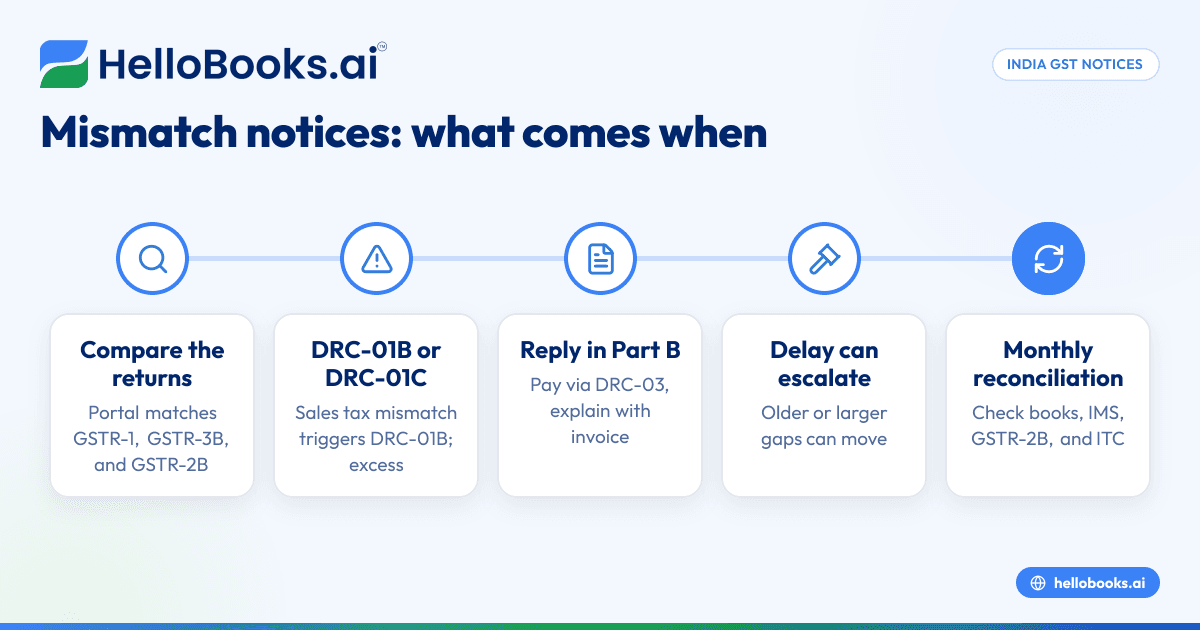
India में GSTR-1, GSTR-3B और GSTR-2B mismatch notice आम तौर पर तब आते हैं जब आपकी outward supply, tax payment और input tax credit की कहानी GST Portal पर एक-दूसरे से नहीं मिलती। सीधी बात: GSTR-1 में sales ज़्यादा दिखी लेकिन GSTR-3B में उतनी liability नहीं गई, तो DRC-01B का जोखिम बनता है; GSTR-3B में ITC ऐसा claim हुआ जो GSTR-2B से support नहीं होता, तो DRC-01C आ सकता है. सही इलाज है—invoice-level reconciliation, supplier follow-up, और return filing से पहले books, bank statement, purchase bills और GSTN data को साथ देखकर जवाब देना।
GSTR-1, GSTR-3B और GSTR-2B का mismatch असल में होता क्या है
GST के तहत, Central Goods and Services Tax Act, 2017 और उससे जुड़े Rules के framework में आपकी compliance कई data streams पर चलती है। regulator के तौर पर CBIC law administer करता है, जबकि return system, comparison logic और notice workflow practically GSTN और GST Portal पर दिखाई देते हैं। इसी वजह से mismatch सिर्फ़ accounting error नहीं होता; वह portal-side comparison event भी बन सकता है।
तीनों को एक लाइन में समझिए:
- GSTR-1: आपने buyers को क्या supply report की
- GSTR-3B: आपने summary में क्या tax discharge और क्या ITC claim किया
- GSTR-2B: आपके suppliers ने आपके GSTIN के against क्या report किया, जिसका credit आपको दिखाई दे सकता है
जब sales register, purchase register, credit notes, debit notes, place of supply, tax head split और payment records अलग-अलग source से आते हैं—जैसे Tally export, Excel sheet, handwritten challan, bank statement upload, और staff की manual entry—तभी फर्क घुसता है। India में खासकर multi-state businesses, multi-GSTIN setups, e-invoice/IRN वाले taxpayers, aur e-way bill heavy dispatch operations में यह और जल्दी होता है।
DRC-01B किस तरह की liability difference पर आता है
DRC-01B को समझने के लिए bare number याद करने की ज़रूरत नहीं है। इसके trigger conditions, response workflow और applicable rule की current position CGST Rules में देखी जानी चाहिए, और official functionality/alerts GST Portal तथा CBIC notifications/circulars में publish होते हैं। Current threshold या response timeline जैसी specific figure official source से verify करें; otherwise NEEDS EXPERT REVIEW.
Practical level पर DRC-01B का मतलब यह है कि system को लगता है:
- आपने GSTR-1 में outward supplies और tax liability report की,
- लेकिन उसी period के GSTR-3B में उतना tax payment/discharge reflect नहीं हुआ।
यह difference कई वजहों से बनता है:
- sales invoice books में था, GSTR-1 में चला गया, पर 3B working में छूट गया
- amendment गलत period में लिया गया
- credit note GSTR-1 और books में है, पर 3B summary logic अलग बना
- export, B2B, B2C, debit note या advance adjustment की classification mismatch हो गई
- inter-state sale पर IGST की जगह invoice में CGST + SGST लगा दिया गया या उल्टा
- one GSTIN की sale दूसरे GSTIN की filing data में mix हो गई
अगर आप invoice बनाते समय customer GSTIN, place of supply और tax head split consistent नहीं रखते, तो बाद में GSTR-1 और 3B का tie-up बिगड़ना बहुत आसान है। इसी जगह smart invoicing और gst-return-filing-software जैसी workflow मदद करती है, क्योंकि returns वही data खींचते हैं जो invoice stage पर सही capture हुआ हो।
DRC-01C में ITC mismatch क्यों फंसता है
DRC-01C broadly तब relevant होता है जब आपके GSTR-3B का ITC claim, portal-visible GSTR-2B support से align नहीं दिखता। इसका rule position, comparison method और current system guidance CGST Rules, CBIC updates और GST Portal advisories में प्रकाशित होती है। कोई भी current threshold, due timeline या quantification rule official publication से check करें; otherwise NEEDS EXPERT REVIEW.
India में यह mismatch DRC-01B से भी ज़्यादा operational problem बनता है, क्योंकि purchase side fragmented होती है। Typical कारण:
- supplier ने आपकी invoice अभी upload ही नहीं की
- upload की, पर गलत GSTIN पर कर दी
- invoice number/date mismatch है
- supplier ने return file late किया, इसलिए current GSTR-2B में invoice नहीं दिखी
- आपने OCR से bill capture किया, पर supplier tax head अलग report कर रहा है
- reverse charge वाली entry को normal ITC समझ लिया गया
- import, ISD-like internal misunderstanding, या previous reversal re-claim की working स्पष्ट नहीं रखी गई
Purchase bill का physical PDF, vendor mail, transporter copy, e-way bill reference और GSTR-2B line item—ये सब एक ही बात नहीं होते। Law के हिसाब से eligible ITC claim का test सिर्फ़ “मेरे पास bill है” नहीं है; compliance trail भी matter करती है। इसलिए gst-reconciliation-checker जैसे free checks और नियमित 2A/2B reconciliation useful होते हैं। HelloBooks में purchase bills को OCR से capture करके और GSTR-2A/2B reconciliation से missing invoices दिखाकर ITC tracking करना इसी प्रकार के mismatch को filing से पहले पकड़ने में मदद करता है।
Notice आने पर सबसे पहले कौन-सी जांच करें
Notice देखकर panic करने के बजाय period-wise trail बनाइए। Hindi में कहें तो “किस month की कौन-सी line item गड़बड़ है” पहले पकड़िए। यह checklist India के SMEs, traders, service firms और CA-managed clients के लिए सबसे practical रहती है:
- Notice period identify करें — month/quarter और GSTIN दोनों
- GSTR-1 summary बनाम books — taxable value, tax amount, credit notes, debit notes
- GSTR-3B liability tables — क्या outward tax कम गया?
- GSTR-2B बनाम purchase register — कौन-सी invoices missing हैं?
- Supplier-wise aging — किस vendor ने file नहीं किया?
- Bank statement match — receipts और large supplier payments periods से मेल खाते हैं या नहीं?
- E-invoice and IRN trail — अगर applicable है तो signed QR/IRN वाली invoice कहीं return data से बाहर तो नहीं
- E-way bill trail — goods moved but invoice/reporting period अलग तो नहीं
- Tax head review — IGST बनाम CGST/SGST
- Reverse charge / TDS / TCS tags — कहीं claim या classification गलत तो नहीं
Bank trail India में बहुत काम आता है, especially जब payment UPI, NEFT, RTGS या IMPS से आया हो और sales invoice ledger posting बाद में की गई हो। HelloBooks में uploaded bank statement की AI reconciliation से receipt-to-invoice matching तेज़ हो जाती है; इससे यह दिखाना आसान होता है कि entry books में किस period में गई और return में किस period में reflect हुई।
Reply देते समय क्या लिखें, क्या नहीं
Specific reply text आपके facts पर depend करेगा, इसलिए final submission से पहले CA या GST practitioner से देखवाना सही है। फिर भी structure साफ़ होना चाहिए:
- period और GSTIN
- notice reference
- difference का exact source
- invoice-wise या supplier-wise annexure
- अगर payment/reversal किया है तो उसका challan/reference
- अगर timing issue है तो subsequent period proof
- अगर wrong GSTIN reporting है तो supplier communication proof
Reply में vague lines जैसे “technical issue था” या “system error” कमज़ोर पड़ती हैं। बेहतर है factual language रखें:
- “Invoice no. X customer Y को issue हुई थी, books और GSTR-1 में period A में report हुई; tax discharge period B में reflect हुआ, supporting working attached.”
- “Supplier Z की purchase invoice हमारे purchase register में थी, पर GSTR-2B में original period में visible नहीं थी; vendor follow-up mail attached.”
यदि DRC-01B या DRC-01C response के लिए current form flow, timeline या payment route जानना है, तो latest instruction GST Portal help content, CBIC notifications और relevant rule text में देखना चाहिए। कोई fixed number यहां bare fact की तरह rely न करें; NEEDS EXPERT REVIEW.
एक छोटा, ईमानदार illustrative हिसाब समझिए
मान लीजिए यह illustrative और invented उदाहरण है; numbers सिर्फ़ समझाने के लिए हैं, current legal threshold, interest, exact table mapping, amendments, exports, RCM, blocked credit, and rounding effects leave out किए गए हैं.
एक Delhi GSTIN वाले wholesaler ने April period में books में कुल outward taxable sales ₹12,00,000 recorded की। इनमें से invoice data से GSTR-1 में taxable value और tax सही चला गया। लेकिन GSTR-3B working Excel में एक B2B invoice miss हो गई, जिसकी invented tax value ₹18,000 थी। अब portal comparison में यह दिखाई दे सकता है कि GSTR-1 liability, GSTR-3B discharge से ₹18,000 अधिक है.
उसी period में purchases side पर उसने 10 supplier bills booked किए। उनमें से 2 invoices, invented values ₹6,000 और ₹4,500 tax component वाली, purchase register में थीं और payment भी NEFT से हो चुका था, लेकिन supplier ने अभी तक अपनी GSTR-1 filing नहीं की। Business ने full ITC ₹10,500 claim कर लिया। तब 3B का ITC, GSTR-2B support से उतना ऊपर दिखाई दे सकता है.
इस invented scenario में दो अलग risk बनते हैं:
- outward liability difference → DRC-01B type issue
- unsupported ITC claim → DRC-01C type issue
इलाज भी अलग होगा: sales side पर omitted liability का explanation या discharge; purchase side पर supplier follow-up, ITC reversal/explanation और invoice-level reconciliation। यही reason है कि one-click summary देखने से काम नहीं चलता; source documents तक जाना पड़ता है।
India में mismatch रोकने का workable monthly system
Template checklist नहीं, बल्कि ground reality वाला routine चाहिए। खासकर अगर आप rupee-level margins पर काम करते हैं, lakh/crore turnover periods में seasonality है, या multiple staff invoice बनाते हैं, तो यह routine practical है:
1) Invoice बनते समय सही GST logic बंदाइए
Customer GSTIN, state, place of supply, HSN/SAC और tax head split शुरुआत में सही होना चाहिए। गलत invoice बाद में amended हो भी जाए, तब तक buyer, books और return तीनों जगह फर्क पैदा कर देता है। HelloBooks invoice बनाते समय CGST/SGST या IGST split और GST invoicing logic को consistent रखता है, जिससे human error कम होती है।
2) E-invoice applicable हो तो manual JSON juggling बंद करें
जहां e-invoicing लागू है, वहां IRN और signed QR invoice flow से बाहर नहीं होने चाहिए। अगर invoice books में है पर IRN trail अलग spreadsheet में पड़ा है, reconciliation slow हो जाएगी। e-invoicing software workflow useful इसलिए है क्योंकि saved invoice और IRN record एक context में रह सकें।
3) Purchase bills को महीने के अंत में नहीं, आते ही capture करें
Supplier PDF, photo, courier bill, transporter slip—सबको end-of-month पर टाइप करना mismatch की फैक्ट्री है। OCR से purchase bills जल्दी capture हों और फिर GSTR-2B से मिलाए जाएँ, तो missing credit जल्दी दिखता है। यही discipline DRC-01C risk कम करता है।
4) Supplier follow-up को accounting task मानिए
India में बहुत ITC vendor discipline पर depend करता है। Supplier ने return file नहीं किया, wrong GSTIN डाला, या invoice date बदल दी—इन सबका असर आपकी 3B position पर पड़ता है। WhatsApp पर vendor chase करना informal लगता है, पर record रखें। HelloBooks का Noor assistant WhatsApp पर Hindi, English या Hinglish में bookkeeping questions clarify करने में मदद करता है, जिससे owner और accountant pending items जल्दी समझ पाते हैं।
5) Dispatch data, e-way bill और invoice data साथ रखें
Goods निकल गए, e-way bill बन गया, पर invoice period mapping अलग रही—यह trader businesses में common है। e-way bill software जैसे connected workflow का फायदा यही है कि consignment detail दोबारा manually type न करनी पड़े और outward record coherent रहे।
6) Bank statement से closure करें, memory से नहीं
Month-end पर uploaded bank statement को invoice receipts और major vendor payments से मिलाइए। UPI collections, IMPS settlements, NEFT inward credits, cash deposit adjustments—इन सबका असर ledger timing पर पड़ता है। bank reconciliation software की मदद से bank and books gap जल्दी दिखता है, और HelloBooks की AI reconciliation India bank statement upload के साथ यही काम करती है।
7) Multi-GSTIN business में state-wise books अलग रखें
एक login में कई GSTIN संभालना convenient है, लेकिन data pooling dangerous है। Maharashtra sale को Karnataka GSTIN से report कर दिया, या branch purchase wrong entity में book हो गई, तो mismatch chain बन जाती है। HelloBooks multi-GSTIN handling के साथ state-wise filing context बनाए रखने में काम आता है।
Tally, Excel और portal के बीच data drift कैसे रोकेँ
India में बहुत businesses पूरी तरह नए system पर नहीं जाते; वे Tally, Excel, CA working sheets और GST Portal सब parallel चलाते हैं। Problem यहीं पैदा होती है। Same invoice तीन जगह edit होती है, मगर final कौन-सा version return में गया—यह clear नहीं रहता।
अगर आपका setup ऐसा है, तो minimum control यह होना चाहिए:
- source of truth तय करें
- amendment register रखें
- return freeze date के बाद manual edits log करें
- credit note/debit note period tagging standardize करें
- CA working और business books के बीच reconciliation sign-off रखें
HelloBooks का tally-alternative angle relevant तब बनता है जब आप पूरी तरह shift करना चाहते हों, लेकिन practical transition में Tally migration/connector useful है क्योंकि businesses एकदम से पुराना system छोड़ते नहीं। इससे gradual cleanup संभव होता है।
Notice से पहले warning signs कौन-से दिखते हैं
अक्सर formal notice आने से पहले कुछ signals मिल जाते हैं:
- GSTR-2B eligible credit से books का ITC visibly ऊपर है
- one month की sales unusually high हैं लेकिन bank receipts या dispatch trail support नहीं करते
- buyer complain कर रहा है कि उसका credit reflect नहीं हो रहा
- accountant outward summary और 3B liability अलग sheet से बना रहा है
- multiple amended invoices हैं और कोई central log नहीं
- e-invoice IRN generated है पर return draft में invoice count कम है
- stock movement inventory में है पर tax invoice posting incomplete है
Inventory-heavy businesses में books और GST का tie-up सिर्फ़ tax problem नहीं, operations problem भी है। अगर sale हुई पर stock outflow और invoice mismatch है, तो closing stock, P&L और receivables aging भी distort होंगे। यही वजह है कि inventory और financial reports from the same entries मदद करते हैं—GST अलग दुनिया नहीं रह जाता।
कब expert को तुरंत involve करना चाहिए
कुछ situations में खुद reply draft करने के बजाय तुरंत expert review लें:
- large rupee difference जो कई periods में फैला हो
- repeated DRC notices
- blocked filing impacting customers
- inter-state vs intra-state classification confusion across many invoices
- reverse charge, TDS/TCS, imports या sector-specific credits involved हों
- Companies Act/MCA reporting और GST books में भी mismatch दिख रहा हो
अगर business company structure में है, तो Companies Act, 2013 के under MCA filings, statutory financials और GST books के बीच भी consistency matter करती है। Tax issue isolated नहीं रहता। Data privacy side पर customer/vendor information handle करते समय DPDP Act obligations भी broadly ध्यान में रखने चाहिए, especially when statements, GSTIN records और invoice documents multiple users में circulate होते हैं.
अंत में practical बात: mismatch notice का best reply filing के बाद नहीं, filing से पहले तैयार होता है। अगर invoices, purchase bills, bank statement, e-way bill, IRN और GSTN data एक connected workflow में हों, तो DRC-01B और DRC-01C दोनों की संभावना घटती है। HelloBooks में GSTR-1 और GSTR-3B direct filing, 2A/2B reconciliation, OCR-based purchase capture, uploaded bank statement reconciliation और place-of-supply logic इसी रोज़मर्रा के India-specific pain को कम करने के लिए सबसे relevant हैं।
अगर आप system tighten करना चाहते हैं, तो accounting software india, in और demo देख सकते हैं. Current pricing के लिए केवल pricing देखें.


