


Key takeaways
What this article covers, in order:
- કયો mismatch કયા notice તરફ લઈ જાય છે
- mismatch સૌથી વધુ ક્યાંથી જન્મે છે
- DRC-01B આવે ત્યારે શું સમજવું
- DRC-01C સામાન્ય રીતે ITC disciplineનો પ્રશ્ન છે
- ASMT-10 કે આગળની કાર્યવાહી સુધી બાબત કેવી રીતે પહોંચે
- invented illustrative workingથી સમજીએ કે mismatch કેવી રીતે બને
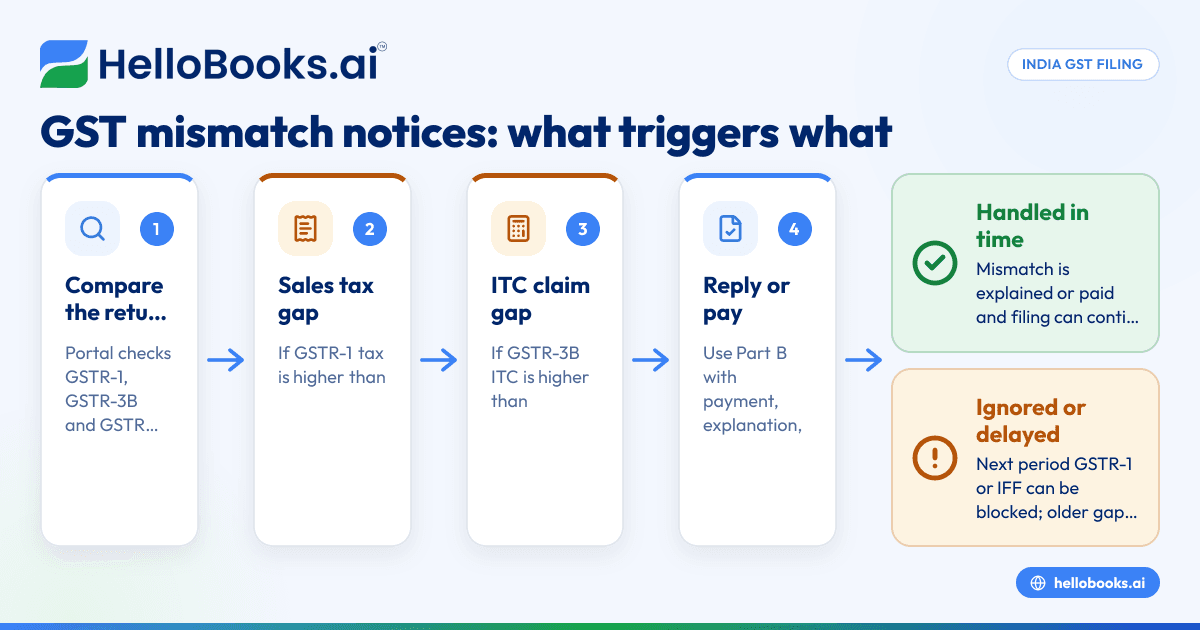
Indiaમાં GSTR-1, GSTR-3B અને GSTR-2B mismatch notice સામાન્ય રીતે એ સમયે આવે છે જ્યારે GST Portal પર GSTN અને CBIC હેઠળ ચાલતી matching logic મુજબ તમારી outward tax liability, claimed ITC અને supplier-reported data એકબીજા સાથે ન મળે. સરળ ભાષામાં: GSTR-1માં વેચાણ વધુ બતાવ્યું પણ GSTR-3Bમાં એટલું tax discharge ન કર્યું હોય તો DRC-01Bનો જોખમ; GSTR-3Bમાં ITC વધુ claim કર્યું પણ GSTR-2Bમાં એટલું reflected ન હોય તો DRC-01Cનો જોખમ. ઉકેલ સામાન્ય રીતે monthly reconciliation, clean invoicing અને timely explanation છે.
કયો mismatch કયા notice તરફ લઈ જાય છે
ગુજરાત, મહારાષ્ટ્ર કે અન્ય કોઈ stateમાં GSTIN ધરાવતી business માટે ત્રણ અલગ data streams સાથે કામ થાય છે:
- GSTR-1: તમે outward supplies શું report કરો છો
- GSTR-3B: તમે summary returnમાં કેટલી tax liability discharge કરો છો અને કેટલું ITC claim કરો છો
- GSTR-2B: suppliers દ્વારા filed data પરથી GSTN compile કરેલું તમારી ITC visibility statement
આ ત્રણેય returns Central Goods and Services Tax Act, 2017 અને તેની હેઠળ બનાવેલા rulesના frameworkમાં આવે છે. Rules, procedures, advisory અને functionality updates સામાન્ય રીતે CBIC અને GSTN/GST Portal પર publish થાય છે. કોઈ threshold, response window, system-trigger condition અથવા current portal behaviour વિશે ચોક્કસ આંકડો જોઈતો હોય તો CBIC notification, relevant Rule અને GST Portal advisoryમાં current figure check કરવો જોઈએ.
વ્યવહારિક રીતે:
- GSTR-1 liability > GSTR-3B liability જાય તો DRC-01Bનું intimation આવી શકે.
- GSTR-3Bમાં claimed ITC > GSTR-2B reflected ITC જાય તો DRC-01Cનું intimation આવી શકે.
- જૂના, repeated, unexplained અથવા wider discrepancies scrutinyમાં જાય તો officer-side notice, જેમ કે ASMT-10, અથવા આગળ ચાલીને show cause proceedings સુધી બાબત જઈ શકે.
આ બધું એકદમ legal languageમાં સમજવાની જરૂર નથી; business owner માટે core point એટલો જ છે: sales register, purchase register, bank receipt trail અને GST return figures એક જ story કહેવી જોઈએ.
mismatch સૌથી વધુ ક્યાંથી જન્મે છે
ઘણા businesses માને છે કે mismatch એટલે માત્ર filing error. હકીકતમાં Indiaમાં mismatch ઘણીવાર process error હોય છે.
1) invoice બનાવતી વખતે place of supply ખોટું
જો intra-state supply માટે CGST અને SGST લાગવું જોઈએ પણ invoiceમાં IGST ગયો, અથવા તેનો ઉલ্টো, તો booksમાં એક figure અને return tablesમાં બીજું mapping થાય છે. ખાસ કરીને Gujaratમાંથી Rajasthan, Maharashtra અથવા Delhiને supply કરતી firmsમાં આ બહુ જોવા મળે છે. Place-of-supply અને tax-head split શરૂઆતથી સાચો ન હોય તો પછી amendment, credit note અને return mappingમાં confusion ઊભી થાય છે.
2) sales books અને filed GSTR-1 અલગ sourcesમાંથી બનાવવી
એક staff Excelમાં invoice રાખે, બીજો accountant Tallyમાં entry કરે, અને return consultant portal utilityથી બનાવે — તો mismatch virtually built-in થઈ જાય છે. invoice numbering, debit/credit note linkage અને amended entries trace કરવી મુશ્કેલ બને.
3) purchase bill booksમાં છે, પણ GSTR-2Bમાં નથી
supplierએ હજી GSTR-1 file ન કર્યું હોય, ખોટો GSTIN નાખ્યો હોય, invoice value mismatch હોય, અથવા document wrong periodમાં report થયું હોય. buyer booksમાં bill છે, OCRથી capture પણ થઈ ગયું છે, payment પણ NEFT, RTGS, IMPS અથવા UPIથી થઈ ગઈ છે — છતાં ITC visibility GSTR-2Bમાં નથી.
4) bank receipt match ન થવાથી turnover understating અથવા overstating
કેટલાંક businesses receipts bank statementમાં દેખાય પછી જ invoice mark કરે છે. જો monthly bank statement upload કરીને receipts reconcile ન કરવામાં આવે, તો advance, partial receipt, cancelled invoice કે duplicate postingને કારણે outward supply summary વાંકું જઈ શકે.
5) e-invoice, IRN અને books data વચ્ચે gap
જ્યાં e-invoicing લાગુ પડે છે, ત્યાં IRN-generated invoice, signed QRવાળો final document અને accounting entry એકસરખા રહેવું જરૂરી છે. JSON upload અલગ, books અલગ અને final printed invoice અલગ હોય તો later reconciliation કઠિન બને છે.
6) multi-GSTIN businessesમાં state-wise confusion
એક જ owner પાસે Gujarat અને Maharashtraના બે GSTIN હોય, stock transfer, branch transfer અથવા inter-unit billing properly separated ન હોય, તો IGST, e-way bill, inventory movement અને return figures વચ્ચે mismatch થતો રહે.
DRC-01B આવે ત્યારે શું સમજવું
DRC-01B સામાન્ય રીતે outward tax liability mismatch અંગેની intimation તરીકે સમજાય છે. તેની legal basis માટે current position CGST Rulesમાં relevant rule અને CBIC notifications/advisoriesમાં જોવી જોઈએ, કારણ કે portal behaviour અને trigger logic અંગેની operational details GSTN/GST Portal publish કરે છે.
Practical reading એવી હોવી જોઈએ:
- Portal કહી રહ્યું છે કે તમે sales side પર કંઈક report કર્યું છે
- પરંતુ summary payment side પર તે પુરતું દેખાતું નથી
- એટલે તમે difference pay કરો અથવા explain કરો
બધા DRC-01B cases tax short payment જ હોય એવું નથી. ઘણા વખત timing difference હોઈ શકે:
- invoice એક tax periodમાં report થયું
- tax discharge next periodમાં થયું
- amendment પછી net impact બદલાયો
- credit note later monthમાં adjust થયું
- wrong table reportingને કારણે apparent mismatch દેખાયો
આવા સમયે blind payment કરતાં પહેલા invoice trail, return ARN, amendment history અને ledger check કરવું વધુ મહત્વનું છે.
જો તમારી filing process software-driven હોય અને invoicesમાંથી જ GST return filing બને, તો GSTR-1 અને GSTR-3B વચ્ચે manual drift ઓછો રહે છે. HelloBooksમાં sales invoices પરથી return build થવાથી outward figures અલગ-અલગ sheetમાંથી ઊભાં કરવા પડે નહીં.
DRC-01C સામાન્ય રીતે ITC disciplineનો પ્રશ્ન છે
DRC-01Cનો core issue input tax credit છે. CGST Act, 2017, ખાસ કરીને ITC provisions, અને સંબંધિત rules મુજબ ITC claim legal conditions સાથે બંધાયેલું છે; reflected data, reversals, re-availment અને documentary supportનો current treatment CBIC circulars, notifications અને GST Portal guidanceમાં ચકાસવો જોઈએ.
Business languageમાં કહીએ તો DRC-01C એ portalનો પ્રશ્ન છે: “તમે GSTR-3Bમાં જે ITC લીધો છે, તે supplier-reported ecosystemમાં પૂરતું કેમ નથી દેખાતું?”
આ notice નીચેની પરિસ્થિતિઓમાંથી ઊભું થઈ શકે:
- purchase register પરથી ITC લઈ લીધું, GSTR-2B જોયા વગર
- supplierએ late filing કર્યું
- wrong GSTIN સાથે bill upload થયો
- import-related credit અથવા special case ITCનું treatment misunderstood થયું
- earlier reversal પછી re-availmentનું evidence return workingમાં જોડાયું નથી
- duplicate purchase bookingથી ITC inflate થયો
આથી monthly GSTR-2A/2B reconciliation અત્યંત મહત્વનું છે. purchase billની PDF અથવા photo પરથી OCRથી entry કરવી ઉપયોગી છે, પણ તેના પછી supplier reflection સામે matching વધુ જરૂરી છે. HelloBooksમાં OCRથી purchase bills capture થયા પછી GSTR-2A/2B reconciliation અને ITC tracking સાથે missing, mismatched અથવા pending credits ઝડપથી દેખાય છે.
ASMT-10 કે આગળની કાર્યવાહી સુધી બાબત કેવી રીતે પહોંચે
દરેક mismatch તરત litigationમાં જાય એવું નથી. પરંતુ unexplained pattern હોય, same issue repeatedly આવે, books અને returnsમાં structural inconsistency હોય, અથવા officer scrutinyમાં larger variance દેખાય, તો scrutiny notice જેવી કાર્યવાહી આવી શકે. ASMT-10 scrutiny processનો ભાગ છે, જેના legal basis માટે CGST Act, 2017 અને rules સાથે CBIC દ્વારા publish થયેલી current guidance જોવી જોઈએ.
આ સ્તરે માત્ર એક return નહીં, પણ wider compliance behaviour જોવામાં આવે છે:
- turnover vs bank credits
- stock movement vs sales reporting
- e-way bill trail vs tax invoice trail
- purchase ITC vs supplier compliance
- financial statements vs GST data
અહીંથી એક અગત્યનો local point આવે છે: GST compliance ક્યારેય portal-only exercise નથી. ભારતમાં books, GST returns, bank statement, inventory અને sometimes TDS implications — બધું જોડાયેલું છે. Income-tax side પર Income-tax Act, 1961 હેઠળ reporting અને reconciliationનો અસરકારક link પણ હોય શકે છે; corporate entities માટે Companies Act, 2013 અને MCA filings સાથે figures broadly consistent હોવા જોઈએ. Data handlingમાં customer/vendor informationનું governance DPDP Act contextમાં પણ internal discipline માંગે છે.
invented illustrative workingથી સમજીએ કે mismatch કેવી રીતે બને
નીચેના આંકડા પૂરેપૂરા illustrative અને invented છે. આ calculation simplified છે; તેમાં interest computation, adjustment mechanics, specific table mapping, amendmentsનું legal treatment અને current portal validations બધું cover કરેલું નથી. Actual treatment માટે CBIC notification, CGST law અને GST Portal instructions check કરવાં, અને professional advice લેવી.
માની લો અમદાવાદની એક trading firm પાસે એક month માટે નીચેનું data છે:
- books મુજબ taxable outward supply: ₹12,40,000
- તેમાં inter-state sale: ₹3,60,000
- intra-state sale: ₹8,80,000
- purchase register મુજબ eligible ITC: ₹1,48,000
- GSTR-2Bમાં reflected ITC: ₹1,21,000
હવે invented scenarioમાં બે ભૂલો થઈ:
- ₹95,000નું એક invoice GSTR-1માં report થયું, પરંતુ accountantએ GSTR-3B workingમાં તેને ચૂકી દીધું.
- ₹27,000 જેટલું purchase-side ITC booksમાંથી લઈ લીધું, પણ supplierએ હજી invoice upload ન કર્યું હોવાથી તે GSTR-2Bમાં દેખાતું નથી.
આ invented caseમાં portalને બે અલગ concerns દેખાઈ શકે:
- sales side પર outward liability understatement
- ITC side પર excess claim appearance
એટલે એક જ monthમાં businessને outward mismatch અને ITC mismatch બંને angleથી explanation તૈયાર રાખવી પડી શકે. આથી monthly reconciliation “return file થઈ ગઈ એટલે કામ પૂરું” જેવી બાબત નથી; return figures ક્યાંથી આવી, supporting invoices કયા છે, receipt trail શું છે — તે બધું ready હોવું જોઈએ.
Gujaratના SMEs માટે practical control system શું કામ કરે છે
ગુજરાતી વેપારીઓમાં ઘણા હજુ Tally, Excel, WhatsApp approvals, bank PDF statements અને manual challan trackingના mix પર કામ કરે છે. એ real-world setup છે, પણ mismatch reduction માટે થોડાં controls જરૂરી છે.
sales side પર
- invoice બનાવતી વખતે GSTIN validate કરો; free GSTIN validator અહીં મદદરૂપ થાય છે
- place of supply સાચું પસંદ કરો જેથી CGST/SGST vs IGST split ખોટું ન પડે
- HSN/SAC discipline રાખો; HSN code search ઉપયોગી છે
- જ્યાં e-invoice લાગુ પડે ત્યાં IRN અને signed QRવાળો final invoice જ booksમાં જવો જોઈએ
- goods movement હોય તો e-way bill અને invoice details match હોવી જોઈએ
HelloBooksમાં smart invoicing સાથે GST invoice બનાવતી વખતે tax head split, GSTIN-based fields અને invoice structure consistent રહે છે. e-invoicing લાગુ પડતા businesses માટે e-invoicing software દ્વારા IRN અને signed QR workflow invoice save કરતી વેળાએ જ જોડાઈ શકે છે, જેથી later manual re-entryની જરૂર ઘટે.
purchase side પર
- vendor bill મળતાં જ capture કરો; photo/PDF પરથી OCR કરો તો data entry error ઘટે
- month-end પહેલા GSTR-2B સામે unmatched invoices ચકાસો
- supplier follow-up માટે pending list રાખો
- reverse charge, TDS/TCS અને credit note effects booksમાં side spreadsheet વગર જ record કરો
જો purchase volume વધુ હોય તો bank reconciliation અને invoice-level matching સાથે payment trail સમજવો સરળ બને છે, ખાસ કરીને જ્યારે suppliersને NEFT/RTGS/IMPSથી staged payments આપતાં હો.
books અને receipts side પર
- monthly bank statement upload કરો; live feedની રાહ ન જોવી
- receiptsને invoice સામે match કરો
- unallocated credit entries અને duplicate receipts સાફ કરો
- cash, bank, sales અને inventory reports એક જ systemમાંથી કાઢો
HelloBooksમાં bank statement upload પછી AI reconciliation India use-case માટે receipts અને payments match કરવામાં મદદ કરે છે. inventory-moving businesses માટે stock અને sales સાથે જોડાયેલ reporting હોવાથી closing stock, outward supply અને purchase flow વધુ aligned રહે છે. Tally પરથી shift કરવું હોય અથવા parallelમાં કામ કરવું હોય તો Tally alternative અથવા migration path useful બને છે.
notice આવ્યા પછી જવાબ કેવી રીતે તૈયાર કરવો
Notice ignore કરવો સૌથી ખરાબ વિકલ્પ છે. Current response timeline, form behaviour અને blocking consequence માટે GST Portal પર publish થયેલી latest advisory અને CBIC rule/notification check કરવાની જરૂર છે, કારણ કે figures અને workflow બદલાઈ શકે.
જવાબ તૈયાર કરતી વખતે આ sequence ફાયદાકારક રહે છે:
- Noticeમાં period અને issue type ચોક્કસ ઓળખો — outward liability છે કે ITC.
- Invoice-level workings કાઢો — summaryથી શરૂઆત ન કરો.
- Books vs filed return vs portal statement ત્રણેય side-by-side બેસાડો.
- Timing difference અને real difference અલગ કરો.
- Supporting documents જોડો — invoice, credit note, debit note, bank proof, supplier communication, amended return reference.
- જો payment જરૂરી લાગે તો legal advice સાથે કરો; જો explanation valid હોય તો concise અને evidence-backed submission કરો.
Explanation લખતી વખતે vague sentence ટાળો. “system error” અથવા “clerical issue” એકલા પૂરતા નથી. વધુ સારું drafting એવું હોય:
- કયો invoice/document
- કયા periodમાં report થયો
- કઈ entry next periodમાં discharge/reflect થઈ
- amendment અથવા supplier filingથી difference કેવી રીતે resolve થયો
જો you work with an accountant or CA, તો shared access મદદરૂપ છે. Multi-GSTIN setup અને unlimited users જેવી arrangementથી owner, accounts team અને consultant એક જ dataset પર કામ કરી શકે છે, instead of passing versions over email.
mismatch ઓછી કરવા માટે monthly discipline કેવી હોવી જોઈએ
દર મહિને half-day closing routine mismatch noticesને ઘણું ઓછું કરી શકે છે:
- sales register freeze before return prep
- cancelled invoices અને credit notes finalise કરો
- bank statement upload કરીને receipts reconcile કરો
- GSTR-2B સામે purchase review કરો
- high-value vendorsને chase કરો
- e-way bill vs invoice dispatch trail ચકાસો
- inventory-moving itemsનું quantity sanity check કરો
- financial reportsમાંથી turnover cross-check કરો
જો owner travel પર હોય તો mobile appથી invoice અને expenses timely capture થઈ શકે છે. અને WhatsApp-heavy teams માટે Noor assistant Hindi, English અને Hinglishમાં bookkeeping questions clear કરવામાં મદદરૂપ બની શકે છે — ખાસ કરીને જ્યારે field staff invoice status કે bill entry વિશે તરત પૂછે.
Final point સરળ છે: DRC-01B કે DRC-01C notice ઘણીવાર “tax problem” કરતાં પહેલાં “data discipline problem” હોય છે. Indiaમાં GST compliance હવે માત્ર portal filing નથી; GSTN data, CBIC rules, bank trail, e-invoice/IRN, e-way bill, GSTIN accuracy અને books alignment — બધું એક સાથે ચાલે છે. જો તમે શરૂઆતથી invoices, purchases અને reconciliationને એક જ workflowમાં રાખો, તો mismatch noticeનો જોખમ ઘણો ઘટે છે. HelloBooks વિશે વધુ જાણવા માટે India page, pricing અથવા demo જોઈ શકો છો.


