Key takeaways
What this article covers, in order:
- It usually starts with the invoice you didn't send
- Step 1: agree payment terms before you start
- Step 2: make the invoice impossible to ignore
- Step 3: let reminders do the awkward bit
- Step 4: the phone call
- Step 5: when it still doesn't arrive
Most late payments aren't malicious. They're invoices that arrived late, went to the wrong person, were missing a PO number or simply got forgotten. Getting invoices paid faster starts with fixing those boring causes first: clear terms agreed up front, invoicing the day the work is done, reminders that go out on schedule, and a polite but firm phone call when they don't work.
It usually starts with the invoice you didn't send
Marcus is a freelance web developer in Bristol. He finished a site for a client on 4 Sep 2026, felt good about it, and spent the next fortnight on the next project. He sent the invoice on 18 Sep 2026 on 30-day terms. It was paid on 23 Oct 2026, a few days late.
He felt the client was slow. Look again. The client took 35 days. Marcus took 14 days just to ask. Seven weeks from finishing to being paid, and two of those weeks were his.
That's the most common pattern we see, and the cheapest one to fix.
Step 1: agree payment terms before you start
Terms are much easier to set at the quote stage than to argue about later. Put them in writing, on the quote and the invoice, in plain English.
Pick a sensible default. For many small B2B jobs, 14 days is normal and rarely questioned. Thirty days is common with larger clients. Anything longer is a favour you're doing them; make sure you mean to.
Ask for a deposit on big or long jobs. A 25% to 50% deposit before you start isn't unusual for trades, design or events. It filters out clients who weren't serious and covers your early costs.
Use stage payments for anything over a few weeks. Bill at agreed milestones rather than waiting until the end.
Say how to pay. Bank details on every invoice. Sort code, account number, the reference you want them to use. Every missing detail is a reason to put it to one side.
Mention late-payment rights, once and calmly. UK late-payment legislation lets businesses claim statutory interest and a fixed compensation amount on overdue business-to-business invoices. You don't have to use it, and many small firms never do, but a short line on your terms that you reserve the right to is perfectly normal. Check the current rules or ask your accountant before you actually charge it.
Step 2: make the invoice impossible to ignore
A good invoice gets paid. A vague one gets queried, which is just a polite way of not paying yet.
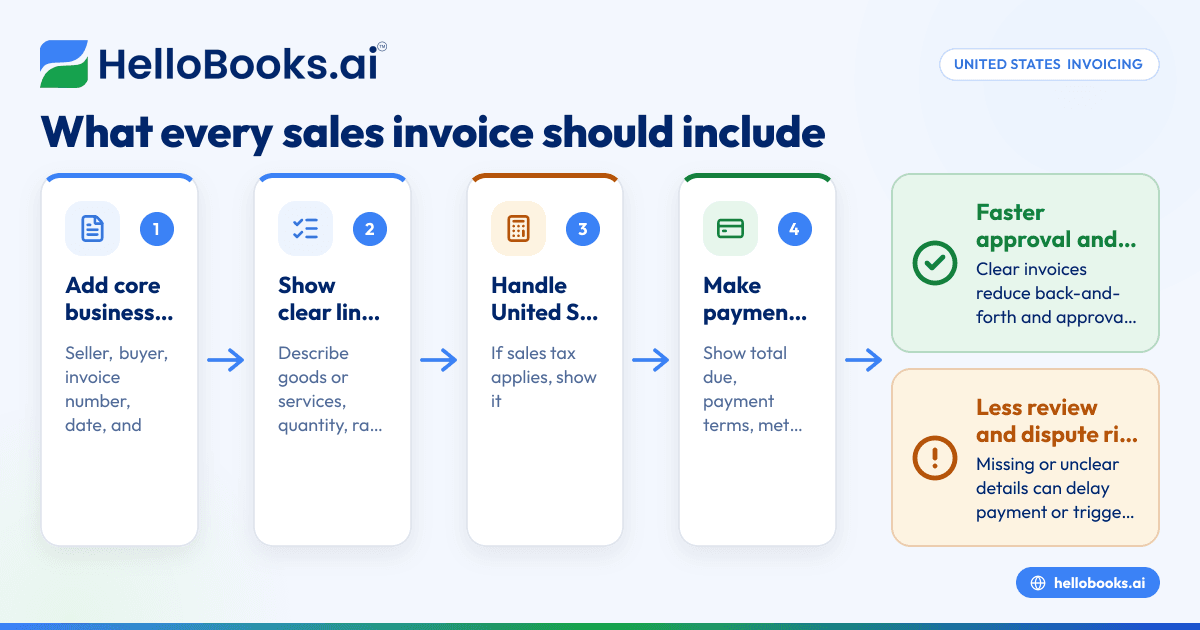
Checklist for every invoice:
- [ ] Sent the same day the work is finished, or on the agreed date
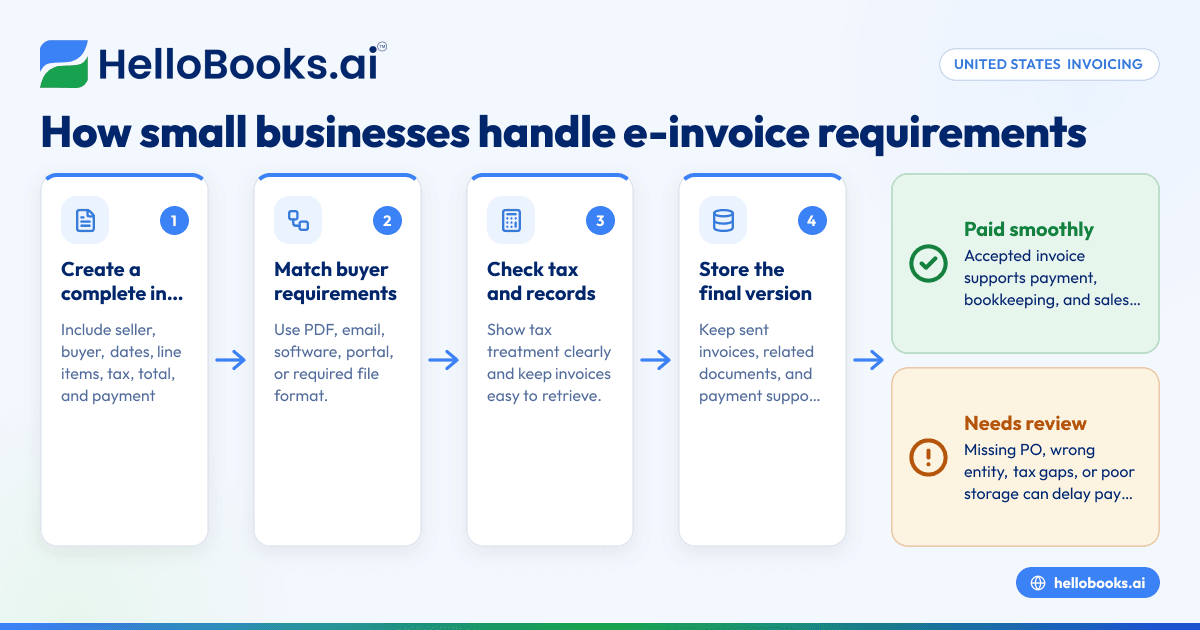
- [ ] Addressed to the person who approves payment, not just your day-to-day contact
- [ ] Their purchase order or reference number, if they use them
- [ ] A clear description the finance team will understand without asking anyone
- [ ] Due date written as a date ("Due 20 Oct 2026"), not just "30 days"
- [ ] Your bank details and the payment reference to use
- [ ] A contact name and number for queries
That due date line matters more than people expect. "Net 30" makes someone do maths. "Due 20 Oct 2026" goes straight into a payment run.
Step 3: let reminders do the awkward bit
Nobody enjoys writing "just checking in on invoice 1043". Automated reminders take the emotion out of it and they never forget. A schedule that works for most small businesses:
| When | Tone | What it says |
|---|---|---|
| 3 days before due | Friendly | A heads-up that invoice 1043 for £1,250 is due on 20 Oct 2026, with a copy attached |
| On the due date | Friendly | It's due today; here are the bank details |
| 7 days overdue | Polite, direct | It's now a week overdue; please let us know if there's a query |
| 14 days overdue | Firm | Second reminder; please confirm a payment date |
| 21 days overdue | Firm, personal | Stop automating. Phone call from you |
Short, factual, invoice attached each time. No sarcasm, no capitals, no "as per my last email".
Step 4: the phone call
Email reminders do most of the work. The phone call does the rest. When you ring, you're not accusing anyone; you're finding out what's stuck.
A simple script:
- "Hi, it's Marcus from Marcus Web. I'm calling about invoice 1043 for £1,250, which was due on 20 Oct 2026."
- "Have you received it, and is there anything on it you need from me?"
- "When's your next payment run?"
- "Great, so I can expect it by Friday 6 Nov 2026? I'll make a note."
Then send a two-line email confirming what was agreed. Most of the time, you'll discover the invoice was sitting with someone on holiday, or the PO number was missing. Problems you can actually fix.
Step 5: when it still doesn't arrive
If the agreed date passes without payment, you have a few options, roughly in order of escalation:
- A formal letter or email stating the amount, the original due date, what's been agreed, and a final date for payment.
- A payment plan. If the client is genuinely struggling, getting paid in instalments is better than not getting paid at all. Put it in writing.
- Pausing work. If you're still doing work for them, it's reasonable to stop until the account is up to date. Tell them before you do it, not after.
- Formal recovery. Debt collection agencies, a letter before action, or the small claims route. Get advice before this step, as it's slower and costs money.
Know when to stop, too. If a debt is small and the client has vanished, the hours spent chasing can cost more than the invoice. Your accountant can talk you through writing it off.
Things that quietly speed everything up
Reconcile weekly. If you don't know who's paid, you can't chase confidently, and chasing someone who's already paid is embarrassing. Match your bank to your invoices every week.
Keep your aged debtors report honest. It's your chasing list. Run it after reconciling, so it only shows real debts.
Use recurring invoices for regular work. Retainers and monthly services shouldn't depend on you remembering to bill.
Thank people who pay on time. It sounds soft. It works. Clients remember suppliers who are easy to deal with.
Be consistent. If you let one late payment slide, the next one will be later. A reminder that arrives on day 7 every time teaches clients your day 7 means something.
How HelloBooks helps
On the Free plan you can create and send invoices and quotes, and set up unlimited email payment reminders so the friendly early nudges go out without you. The aged debtors (AR ageing) report shows who's late and by how much. Customer payments come in through your Open Banking bank feed or a CSV statement, and the reconcile screen suggests the matching invoice for each deposit, so you know who's paid before you pick up the phone.
On Pro (£14.99/month), you can set up recurring invoices for retainers and regular work, remove the "Powered by HelloBooks" badge, and add your bookkeeper or a team member to handle chasing. Freelancers might find the freelancer page useful, and there's more on invoice software and recurring invoices.
FAQs
What payment terms should a small UK business use?
Many small businesses use 14 or 30 days. Shorter terms help cash flow, but some larger clients have fixed payment runs and won't change them. Agree terms before you start, and put a clear due date on every invoice.
Can I charge interest on late payments?
UK late-payment legislation allows businesses to claim statutory interest and fixed compensation on late business-to-business payments. It doesn't apply to consumers in the same way. Check the current rules or speak to your accountant before charging it, and think about the relationship first.
How many reminders should I send?
Two or three emails over two to three weeks, then a phone call. More emails beyond that rarely help; a conversation usually does.
Should I stop work if a client hasn't paid?
It's reasonable to pause new work until an account is up to date, especially for ongoing services. Tell the client clearly and in advance. Check your contract first in case it says anything specific.
Is it rude to send a reminder before the due date?
Not if it's friendly. A short heads-up a few days before the due date is common and often appreciated by finance teams who are planning their payment run.
Send it today, remind on schedule, ring when the emails stop working. That's most of the job.
Start free, no card needed. Try HelloBooks Free