Key takeaways
What this article covers, in order:
- What slow payment really costs you
- Start with your payment terms
- Make the invoice easy to pay
- A reminder schedule that works
- What to actually say on the phone
- A few things that don't work
Most late payments aren't malicious. They're invoices that went to the wrong inbox, terms nobody noticed, or a customer who pays whatever's loudest. You get paid faster by setting short, clear terms, sending invoices the day the work is done, and following a reminder schedule you actually stick to. Here's how, plus our approach to chasing unpaid invoices, including the words to use when you have to pick up the phone.
What slow payment really costs you
Ruby runs a small marketing studio in Hobart and bills about $30,000 a month, roughly $1,000 a day. Her customers take an average of 45 days to pay. That means at any given moment, around $45,000 of her money is sitting in other people's bank accounts.
If she gets that average down to 30 days, her debtors drop to about $30,000. That's $15,000 back in her account, permanently, without winning a single new client.
| Average days to get paid | Approx. money owed to Ruby at any time | Cash freed vs 45 days |
|---|---|---|
| 45 days | $45,000 | $0 |
| 30 days | $30,000 | $15,000 |
| 21 days | $21,000 | $24,000 |
| 14 days | $14,000 | $31,000 |
(Based on $1,000 of sales per day. Your numbers will differ, but the shape holds.)
That's why collections deserve the same attention as sales.
Start with your payment terms
Shorter is usually fine. Plenty of Australian small businesses default to 30 days because that's what the template said. For most service work, 7 or 14 days is reasonable and few customers argue. Large corporates and government may insist on their own terms; for everyone else, set yours.
Put the terms in writing before the work starts. On the quote, in the engagement email, on the invoice. "Payment due 14 days from invoice date" beats "Net 14", which some people genuinely don't understand.
Use a real due date. Print "Due: 20 Oct 2026" on the invoice. A date is harder to ignore than a number of days.
Ask for deposits on bigger jobs. A 30% or 50% deposit on anything over a few thousand dollars protects your cash and filters out customers who were never going to pay.
Consider progress invoicing. On a job that runs for six weeks, invoice at milestones instead of waiting until the end.
Make the invoice easy to pay
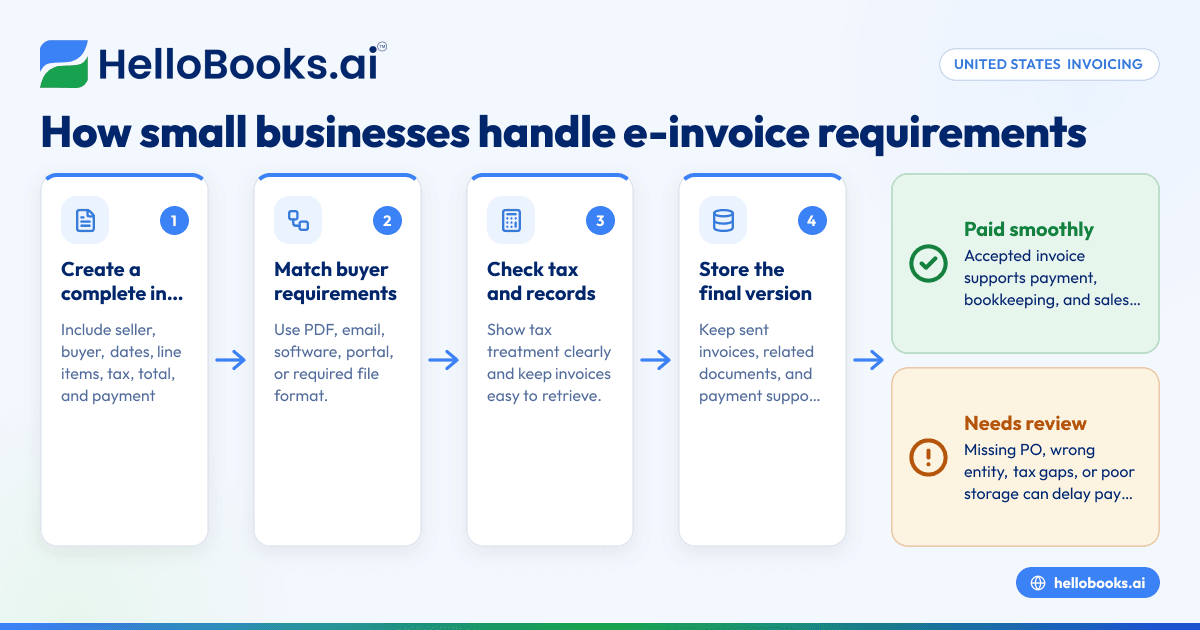
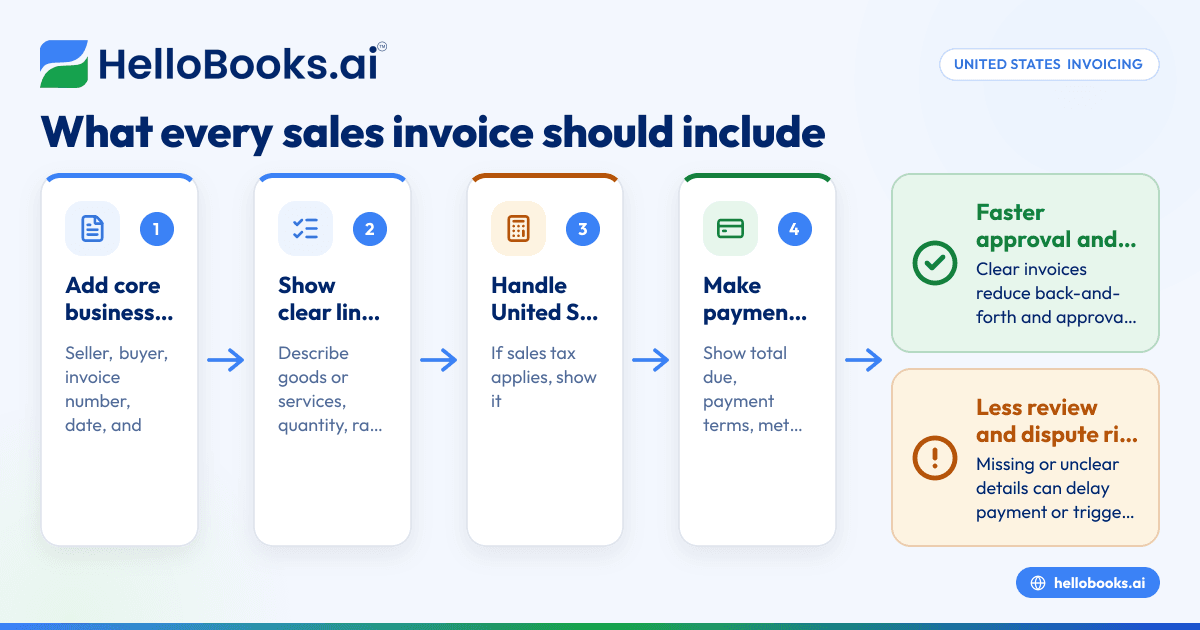
A surprising number of late payments come down to an invoice that's hard to process. Before you send, check:
- [ ] It goes to the person who pays, not just the person who ordered (ask for an accounts email up front)
- [ ] It has their purchase order number, if they use them
- [ ] Your ABN is on it, and it's labelled "Tax invoice" if you're registered for GST
- [ ] Your bank details (BSB and account number) are clear and correct
- [ ] The description says what was done, not just "Services"
- [ ] The due date is visible near the total
Then send it the day the work is finished. Every day you hold an invoice is a day added to when you'll be paid.
A reminder schedule that works
The trick is consistency. Most owners send reminders when they remember, which means irregularly and usually too late. Pick a schedule and stick to it.
| When | Channel | Tone |
|---|---|---|
| 3 days before due | Friendly heads-up: "Just a reminder this is due Friday" | |
| Due date + 1 day | Neutral: "This was due yesterday, could you let us know when it's scheduled?" | |
| Due date + 7 days | Direct: second notice, with the invoice attached again | |
| Due date + 14 days | Phone | Personal: confirm they have it, ask for a payment date |
| Due date + 30 days | Phone and email | Firm: work paused until paid, or a written payment plan |
| Due date + 60 days | Letter | Final notice before you consider debt recovery |
Automate the emails where you can. Do the phone calls yourself.
What to actually say on the phone
People hate this part. It helps to have words ready. A script that keeps it pleasant:
"Hi Sam, it's Ruby from the studio. I'm just checking on invoice 1184 for $3,300, which was due on 20 Oct 2026. Has it come across your desk?"
Then stop talking and let them answer. Most of the time you'll hear one of these:
- "I never got it." Resend it while you're on the phone and confirm the email address.
- "It's in the next pay run." Ask when that is and write it down.
- "There's a problem with it." Good to know now. Find out what and fix it this week.
- "Things are tight at the moment." Offer a payment plan with dates. Two half-payments on agreed dates beats nothing.
Then send a short email confirming what was agreed. "Thanks for the chat, Sam. As discussed, you'll pay $3,300 by Fri 6 Nov 2026."
A few things that don't work
- Getting angry. It feels good for about a minute and costs you the customer.
- Vague reminders. "Just following up on our outstanding balance" doesn't say which invoice, how much, or when it was due.
- Late fees you never enforce. If your terms mention interest on overdue accounts and you never charge it, customers learn to ignore it. Either apply it consistently or leave it off.
- Chasing invoices that are already paid. Reconcile your bank before you chase. Calling someone about a payment they made last week is awkward for everyone.
Watch who's slow, and act on it
Your aged receivables report shows which customers are habitually late. If the same three names are always in the 31 to 60 days column, that's not bad luck. It's a pattern. Options:
- Move them to shorter terms or upfront payment
- Ask for a deposit on every job
- Stop extending credit and require payment before work starts
- Accept it, and price it in
You're allowed to decide some customers aren't worth the chasing.
If you're comparing tools for sending invoices and reminders, see invoice software and recurring invoices for regular billing.
How HelloBooks helps
The Free plan (A$0, no card, no expiry) includes invoices, quotes, unlimited email payment reminders and an AR (receivables) ageing report, so you can see who's late and chase them from the same place. When payments arrive through your connected bank account or a CSV statement import, the reconcile screen suggests the matching invoice for each line, which keeps your ageing report accurate before you start chasing.
Pro (A$30/month) adds recurring invoices for regular clients, removes the "Powered by HelloBooks" badge from your invoices, and adds AI Analysis on every report. See pricing.
FAQs
What are standard payment terms in Australia?
There's no single standard. 7, 14 and 30 days are all common for small businesses. Choose what suits your cash flow and state it clearly on quotes and invoices before work starts.
Can I charge interest on late payments?
You can if it's in your agreed terms with the customer. Keep it reasonable, apply it consistently, and get advice if you're unsure what's enforceable for your situation.
How many reminders is too many?
A reminder before the due date, a couple after, then a phone call is reasonable. If you're sending a fifth email, it's time to pick up the phone instead.
Should I stop work for a customer who hasn't paid?
If your terms allow it, pausing work on accounts more than 30 days overdue is a fair step. Tell them clearly and in writing before you do it.
What if a customer disputes the invoice?
Find out exactly which part they dispute. Often you can get the undisputed part paid now and sort out the rest separately, perhaps with a credit note.
Getting paid is part of the job, not an awkward extra. Set the terms, send the reminders, make the call.
Start free, no card needed. Try HelloBooks Free