Key takeaways
What this article covers, in order:
- Most late invoices are a process problem
- Start with the invoice itself
- Send the invoice the same day
- A reminder schedule that works
- When reminders don't work
- Fix the clients, not just the invoices
To get paid faster, send invoices the day the work is done, use short and specific payment terms, make paying easy, and follow up on a fixed reminder schedule instead of when you happen to remember. Most late payments aren't malicious. They're invoices that got buried, sent to the wrong person, or never chased.
Here's what to put on the invoice, when to remind, what to say, and how to handle the clients who still drag their feet.
Most late invoices are a process problem
Marcus is a freelance web developer in Denver. In August 2026 he finished a site for a local brewery, sent the invoice two weeks later with "Net 30" at the bottom, and then waited. By mid-Oct 2026 he still hadn't been paid. When he finally called, the brewery's office manager said, cheerfully, that she'd never seen it. It had gone to the owner's personal inbox.
None of that was the client being difficult. It was a late invoice, a vague term, a wrong contact and zero follow-up. Fix those four and most of your collection problems shrink.
Start with the invoice itself
A surprising number of invoices are missing something that lets the client put them aside "until it's clear."
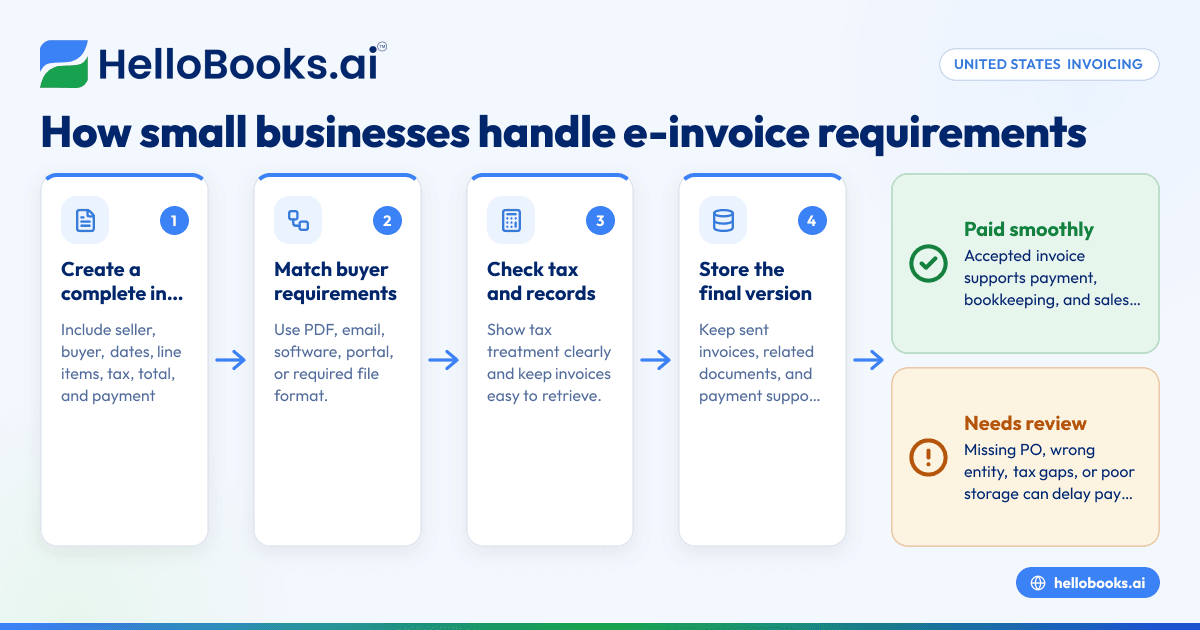
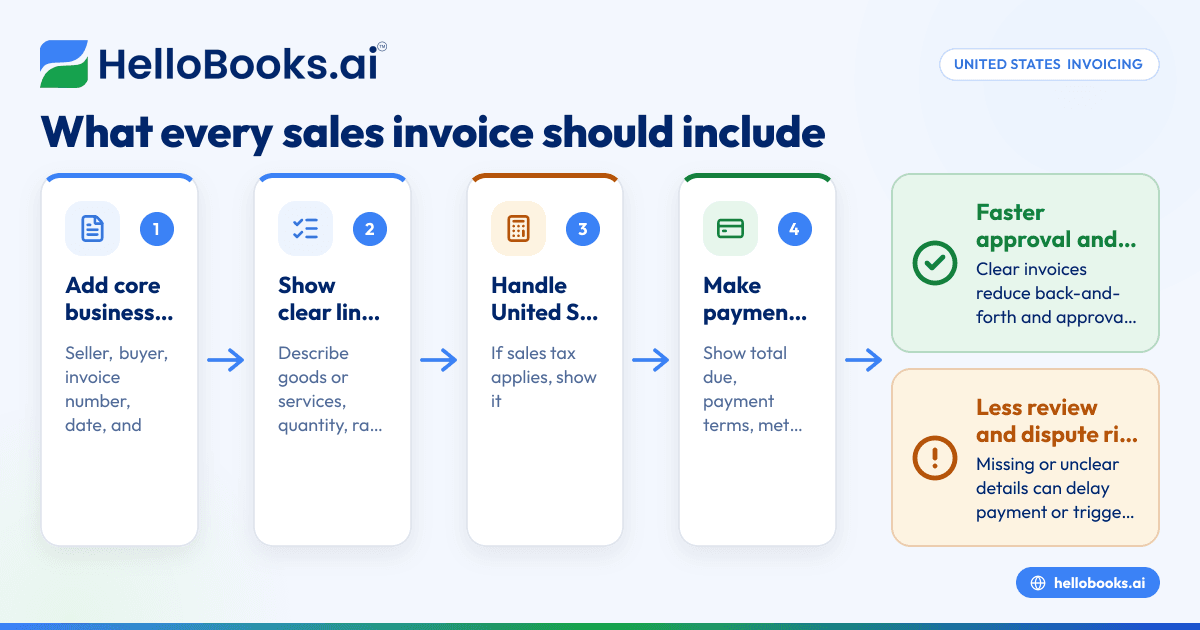
What every invoice should include
- Your business name, address and contact details
- The client's billing contact, by name, plus their AP email if they have one
- A unique invoice number
- The invoice date and an actual due date ("Due Nov 14, 2026", not just "Net 30")
- A clear description of the work, with dates and quantities
- The PO number, if the client uses them (big companies often won't pay without it)
- How to pay: accepted methods and the details they need
- Your late-payment policy, if you have one
That due date line matters more than people think. "Net 30" makes the client do math. A date doesn't.
Pick terms that match your business
| Terms | What it means | Good fit for |
|---|---|---|
| Due on receipt | Pay now | Small one-off jobs, new clients, consumer work |
| Net 7 / Net 15 | Due 7 or 15 days after invoice date | Freelancers, trades, most service businesses |
| Net 30 | Due 30 days after invoice date | Larger business clients who expect it |
| 50% deposit, balance on completion | Half up front | Projects over a few thousand dollars |
| Milestone billing | Pay as phases finish | Long projects, construction, agency work |
| 2/10 Net 30 | 2% discount if paid within 10 days | When faster cash is worth a small discount |
If you don't have a reason to offer Net 30, don't. Net 15 is normal for small service businesses, and clients rarely push back. The ones that do usually tell you something useful about how they'll pay.
A note on early-payment discounts: 2% off for paying 20 days early sounds small, but on an annual basis it's expensive. Use it only if cash really is tight or a client is chronically slow and responds to it.
Send the invoice the same day
Every day you wait to invoice is a day added to your collection time. If you finish a job on Friday, send the invoice Friday. If you bill monthly, bill on the 1st, not "early in the month."
For recurring work, like monthly retainers or maintenance contracts, set the invoices to go out automatically so they don't depend on your memory.
A reminder schedule that works
The goal is firm and predictable, never rude. Clients who see that you follow up on schedule tend to pay you before the vendors who don't.
| When | What | Tone |
|---|---|---|
| 3 days before due date | Friendly heads-up with the invoice attached | "Just a reminder" |
| On the due date | Payment due today | Neutral, factual |
| 7 days late | First overdue reminder | Polite, ask if anything is needed |
| 14 days late | Second reminder, plus a phone call | Direct, ask for a date |
| 30 days late | Formal notice | Clear, mention next steps and pausing new work |
| 45 to 60 days late | Final notice | Firm, in writing, with a deadline |
Short scripts you can steal
Before the due date:
"Hi Dana, a quick note that invoice #1187 for $2,450 is due on Nov 14, 2026. I've attached it again in case it's easier to find. Thanks!"
7 days late:
"Hi Dana, invoice #1187 for $2,450 was due Nov 14, 2026 and I haven't seen payment yet. Could you check whether it's in your system? Happy to resend anything you need."
14 days late, by phone:
"I'm calling about invoice #1187. Is there anything holding it up on your side? When can I expect payment?" Then stop talking and wait for a date.
30 days late:
"Invoice #1187 for $2,450 is now 30 days overdue. Please arrange payment by Dec 21, 2026. If there's an issue with the invoice, let me know this week so we can sort it out. New work will be on hold until the account is current."
Notice what these have in common: invoice number, amount, date, and a specific ask. No apologies.
When reminders don't work
Some clients need more than email.
- Pick up the phone. Email is easy to ignore. A call usually gets you either payment or the real reason.
- Find the right person. In larger companies, the person who hired you isn't the one who pays you. Ask for accounts payable.
- Offer a payment plan. Getting $3,000 in three installments is better than chasing $3,000 for six months.
- Pause new work. It's the most effective lever you have, and it's fair.
- Put it in writing. Agreements about dates or plans should be in an email you can point to.
- Know your walk-away point. For larger balances, a collection agency or small claims court may be worth it. For small ones, sometimes the cost outweighs the debt. Talk to your bookkeeper or CPA about how to record a write-off if it comes to that.
Fix the clients, not just the invoices
If the same clients are always late, change the terms for them, not for everyone.
- Ask for deposits from clients with a late history
- Move slow payers to shorter terms or due on receipt
- Bill smaller, more often, so no single invoice gets too big to ignore
- Before taking on a new large client, ask how their payment cycle works
A get-paid-faster checklist
- [ ] Invoice the same day the work is done
- [ ] Show a real due date on every invoice
- [ ] Confirm the billing contact and AP email for each client
- [ ] Include PO numbers where clients use them
- [ ] Use Net 15 or shorter unless there's a reason not to
- [ ] Ask for deposits on large or new projects
- [ ] Set a reminder schedule and stick to it
- [ ] Check your AR aging weekly
- [ ] Call anyone more than 14 days late
- [ ] Match incoming payments to invoices so reminders don't go to clients who've paid
That last one is easy to skip and embarrassing when you do. Nothing annoys a client like a "you're overdue" email for an invoice they paid last week.
How HelloBooks helps
On the Free plan you can create and send invoices with clear due dates, and send unlimited email payment reminders, so following a reminder schedule doesn't cost extra. The AR aging report, also on Free, shows who's late and by how much. Payments that come in through your bank feed (you can connect most US banks and credit cards, or upload a CSV) land in a review list, so you can record them against the right invoices before the next round of reminders and avoid chasing a client who's already paid.
If you bill the same clients every month, recurring invoices start on the Starter plan and send on schedule. On Pro, the "Powered by HelloBooks" badge comes off your invoices. Take a look at the invoice software and recurring invoices pages for more, or see the freelancer setup if you work on your own.
FAQs
What's the best payment term for a small business?
For most service businesses, Net 15 or due on receipt. Use Net 30 when larger clients expect it. Whatever you pick, put the actual due date on the invoice.
How many payment reminders should I send?
Plan on four to six touches: one before the due date, one on it, then reminders at about 7, 14 and 30 days late, with a phone call in the mix. After 45 to 60 days, send a final notice.
Is it rude to send a reminder before the invoice is due?
No. A friendly heads-up a few days before the due date is common and usually appreciated, especially by clients who batch their payments.
Should I charge late fees?
If you want to, state the fee clearly in your terms before the work starts and follow your state's rules on what's allowed. Many small businesses get better results from consistent follow-up than from fees.
What should I do when a client says they never got the invoice?
Resend it right away, confirm the correct email and contact, and set a new due date that's short. Then update the client record so it doesn't happen again.
When should I stop working for a client who pays late?
When an invoice is more than 30 days overdue and they haven't agreed on a payment date. Pausing new work is fair and usually gets a response.
Send it today, put a date on it, and follow up like clockwork. Most of the time, that's all it takes.
Start free, no credit card. Try HelloBooks Free