

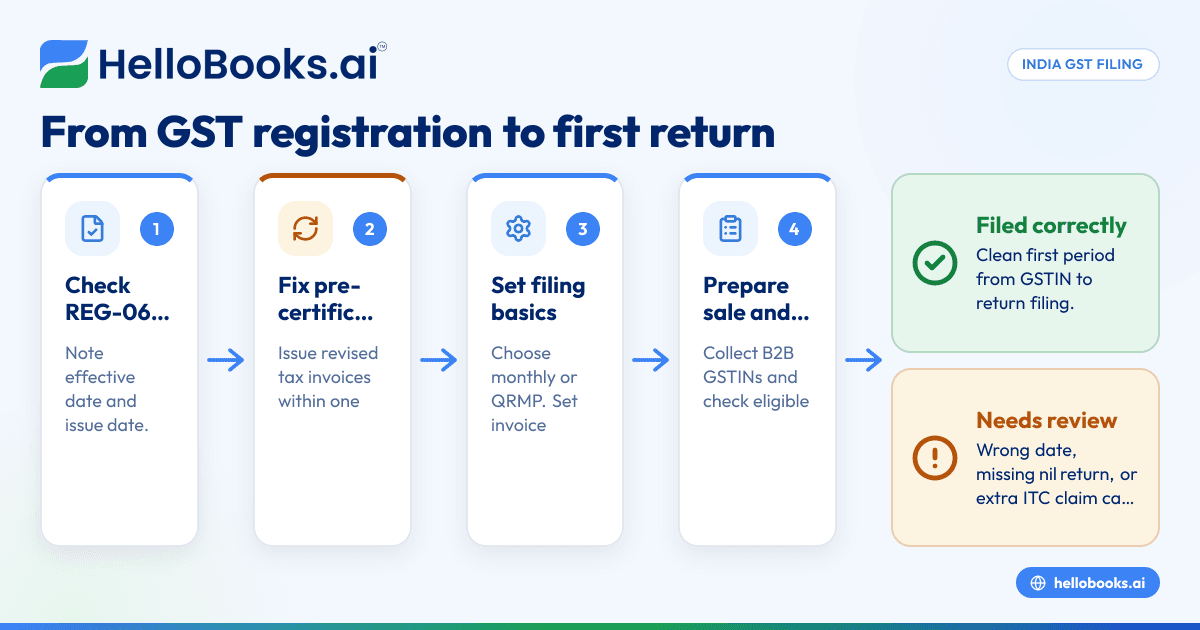

Key takeaways
What this article covers, in order:
- REG-06માં સાચી રીતે શું વાંચવું: approval નહીં, effective date મહત્વની
- certificate મળ્યા પહેલાં કરેલી sales ખાલી જગ્યા નથી
- પહેલી invoice પહેલાં place of supply અને tax head split સમજો
- GSTR-1 અને GSTR-3B: પહેલો return હકીકતમાં બે જુદા કામ છે
- purchases, GSTR-2A/2B અને ITC: પહેલી જ periodથી શિસ્ત રાખો
- goods move થાય તો GST setup અને e-way bill setup અલગ રાખશો નહીં
Indiaમાં GST registration મળ્યા પછી તમારું પહેલું કામ ફક્ત invoice કાઢવાનું નથી; registration certificate, effective date, GSTIN, place of supply, purchase records અને bank entries બધું એકસરખું બેસાડવું પડે છે, કારણ કે પહેલો return સામાન્ય રીતે GSTR-1 અને GSTR-3Bનો જોડો છે. Current due dates, filing frequency options, thresholds અને e-invoice/e-way bill applicability Central Goods and Services Tax Act, 2017, સંબંધિત Rules, CBIC notifications અને GST Portal/GSTN પર જ ચકાસવા જેવી બાબતો છે.
REG-06માં સાચી રીતે શું વાંચવું: approval નહીં, effective date મહત્વની
GST registration મળ્યા પછી ઘણા વેપારીઓ issue date જ જુએ છે અને માને છે કે જવાબદારી એ દિવસથી શરૂ થઈ. પરંતુ પ્રથમ return સમજવા માટે registration certificate (Form REG-06) માં effective date વધારે મહત્વની હોય છે. Central Goods and Services Tax Act, 2017 અને નિયમો હેઠળ registration કઈ તારીખથી માન્ય બને છે, તેની હાલની સ્થિતિ GST Portal પર certificate અને registration detailsમાં દેખાય છે.
આ effective date પરથી જ તમારો પહેલો tax period નક્કી થાય છે. એટલે તમે અમદાવાદ, રાજકોટ કે સુરતમાંથી business ચલાવતા હો, invoice book શરૂ કરતાં પહેલાં નીચેની બાબતો ચકાસો:
- legal name અને trade name એકસરખા છે કે નહીં
- principal place of business સાચું છે કે નહીં
- godown, branch, warehouse કે extra place ઉમેરાયું છે કે નહીં
- taxpayer type regular છે કે composition નથી
- GSTIN દરેક sales document અને purchase recordમાં યોગ્ય રીતે વપરાય છે કે નહીં
જો address અથવા additional place ખોટું હોય તો પછી e-way bill, e-invoice data, transporter details અથવા notice serviceમાં વિઘ્ન આવે. તેથી amendment વહેલી કરવી સારી.
certificate મળ્યા પહેલાં કરેલી sales ખાલી જગ્યા નથી
નવા registrant માટે સૌથી પ્રાયોગિક ગૂંચવણ એ છે: certificate મળ્યા પહેલાં જે supply થઈ ગઈ, તેનું શું? જવાબ effective date પર આધારિત છે. જો liability certificate issue પહેલાં શરૂ થઈ ગઈ હોય, તો તે સમયગાળાની supplies returnમાં આવતી હોઈ શકે. Revised tax invoice વિશેની હાલની જોગવાઈઓ CGST Act, 2017 અને CGST Rulesમાં છે; ચોક્કસ સમયમર્યાદા અને wording માટે CBIC દ્વારા પ્રકાશિત નિયમો તથા GST Portal પર guidance ચકાસવું જોઈએ.
માનો કે આ માત્ર illustrative અને invented પરિસ્થિતિ છે: એક traderની effective date 3 April છે, પણ certificate 17 Aprilે issue થયું. 3 Aprilથી 16 April વચ્ચે તેણે બે B2B supplies કરી, જેમાં કુલ taxable value ₹1,20,000 અને tax treatment place of supply મુજબ થવું જોઈએ હતું. અહીં આ આંકડા ફક્ત સમજાવવા માટેના છે; actual tax rate, document timing અને credit effect law, notification અને facts પર આધારિત રહેશે. આવી sales returnમાંથી ગાયબ રાખશો તો આગળ buyerના ITC, reconciliation અને turnover reportingમાં તફાવત ઉભો થઈ શકે.
અટલે પ્રથમ periodમાં જૂના invoices, proforma documents, delivery challan, bank receipt અને customer confirmations એકઠાં કરવું જરૂરી છે.
પહેલી invoice પહેલાં place of supply અને tax head split સમજો
નવા GST users સૌથી વધુ ભૂલ ક્યાં કરે છે? CGST+SGST અને IGST ખોટું લગાડવામાં. આ invoice error પછી returnમાં પણ દોહરાય છે. Place of supplyનો નિયમ Integrated Goods and Services Tax Act, 2017 હેઠળ આવે છે અને તેની current interpretation માટે Act, Rules, CBIC circulars અને official FAQs જોવાની જરૂર છે.
સ્થૂળ રીતે જુઓ તો પ્રશ્ન એ છે: supply intra-state છે કે inter-state? પરંતુ practical lifeમાં billing address, shipping address, bill-to-ship-to, service location, installation site, branch transfer અને online services બાબતોને લીધે વિષય સરળ નથી રહેતો.
આથી invoice setupમાં શરૂઆતથી જ નીચેનું discipline રાખો:
- customerનું GSTIN અને state code સાચું લો
- goods અને services અલગ રીતે classify કરો
- HSN/SAC ખાલી ન છોડો જો reportingમાં જરૂરી હોય
- place of supply invoice પર દર્શાવો જ્યાં લાગુ પડે
- tax head split booksમાં invoiceના સમયે જ સાચું બેસાડો
અહીં smart invoicing ઉપયોગી બને છે, કારણ કે GST invoice બનાવતી વખતે buyerના GSTIN, state અને transaction pattern મુજબ CGST/SGST કે IGST split સતત એકસરખો રહે તો આગળ GSTR-1 mismatch ઓછો થાય.
GSTR-1 અને GSTR-3B: પહેલો return હકીકતમાં બે જુદા કામ છે
પહેલો return સમજવાનો સીધો રસ્તો એ છે કે GSTR-1 અને GSTR-3Bને એક જ વસ્તુ ન માનો. સામાન્ય રીતે GSTR-1 outward suppliesની વિગતવાર reporting છે, જ્યારે GSTR-3B summary return અને tax set-off/paymentનો હિસ્સો ધરાવે છે. આ returnsના legal framework માટે CGST Act, 2017, સંબંધિત Rules, CBIC notifications અને GSTN/GST Portal પર publish થયેલી filing guidance જોવી જરૂરી છે. Current due dates bare fact તરીકે યાદ રાખવા કરતાં official portal પરથી ચકાસવી જોઈએ.
પ્રથમ filing દરમિયાન ખાસ ધ્યાન આપશો એવી બાબતો:
- B2B invoices buyer GSTIN સાથે યોગ્ય sectionમાં ગયા છે કે નહીં
- B2C sales aggregate numbersમાં જતાં હોય તો period સાચો છે કે નહીં
- credit notes/debit notes હોય તો link થયેલા છે કે નહીં
- exempt, nil-rated અથવા non-GST supplies હોય તો તેમની અલગ reporting સમજાઈ છે કે નહીં
- advances, where relevant, અને adjustments booksમાં બેસાડ્યાં છે કે નહીં
- tax liability અને eligible ITC વચ્ચેનો link purchase records પરથી બાંધ્યો છે કે નહીં
જો invoice issue કર્યા પછી manually spreadsheetમાં data ભરો, પછી GST Portal પર retype કરો, પછી 3B માટે ફરી summary કરો, તો પ્રથમ month/quarterમાં જ control છૂટી જાય છે. તેથી gst return filing software જેવી workflow ઉપયોગી છે જ્યાં recorded invoices પરથી GSTR-1 અને GSTR-3B તૈયાર થાય અને બંનેમાં figures મળતા રહે.
purchases, GSTR-2A/2B અને ITC: પહેલી જ periodથી શિસ્ત રાખો
ઘણા નવા businesses outward supply પર ધ્યાન આપે છે, પરંતુ પહેલો return ખરાબ મોટેભાગે purchasesને કારણે બને છે. Input tax creditની જોગવાઈઓ CGST Act, 2017 અને સંબંધિત Rules હેઠળ આવે છે; eligibility, blocked credits, document conditions અને reconciliationની current position CBIC circulars તથા GST Portal પર ઉપલબ્ધ statements અને advisories પરથી verify કરવી જોઈએ.
પ્રથમ periodમાં આ કામ કરો:
- supplier bills invoice date પ્રમાણે સાચવો
- supplier GSTIN, invoice number અને taxable value booksમાં બરાબર નાખો
- goods received અને service receivedનો practical evidence રાખો
- reverse charge લાગુ પડે તો ઓળખો
- supplierએ returnમાં invoice અપલોડ કર્યો છે કે નહીં તે પછી reconcile કરો
અહીં ai bookkeeping અને bank reconciliation software જેવી વ્યવસ્થા કામની બને છે, ખાસ કરીને જ્યારે તમે bank statement upload કરો અને AI receipts/paymentsને invoices સાથે મિલાવે. Supplier bill PDF અથવા photoમાંથી OCR entry થવાથી manual typing ભૂલ ઘટે છે. GSTR-2A/2B reconciliation અને ITC trackingથી missing supplier invoices પહેલી જ periodમાં દેખાઈ જાય તો 3B ભરતાં પહેલાં CA સાથે ચર્ચા કરી શકાય.
goods move થાય તો GST setup અને e-way bill setup અલગ રાખશો નહીં
જો તમારું business stock, trading, manufacturing અથવા dispatch સાથે જોડાયેલું છે, તો GST registration પછી inventory અને movement records parallelમાં સેટ કરવું જરૂરી છે. e-way bill સંબંધિત જોગવાઈઓ CGST Rules અને e-way bill system guidance હેઠળ આવે છે; threshold, exemptions અને validity જેવા current figures CBIC અને official e-way bill portal પર publish થાય છે, તેથી ત્યાંથી જ ચકાસવા જેવી બાબતો છે.
ખાસ કરીને ગુજરાતમાં trader માટે invoice, stock અને transport data જુદા-જુદા placesમાં રાખવાની ટેવ હોય છે—એક Excel, એક Tally, એક transporter WhatsApp chat, એક paper slip. પછી dispatch સમયે consignee address, HSN, value, vehicle details અને tax invoice વચ્ચે mismatch થાય.
આથી પહેલી periodથી જ:
- inventory itemsનું consistent naming રાખો
- unit, HSN અને tax treatment mapping કરો
- branch/godown stock અલગ દર્શાવો
- invoiceમાંથી જ movement documents કાઢો
e-way bill software અને inventory setup સાથે invoice data reuse થાય તો consignee, goods description અને taxable value ફરીથી ટાઇપ કરવાની જરૂર ઓછી રહે છે. જો e-invoice લાગુ પડતું હોય તો IRN અને signed QRવાળી invoice workflow સાથે alignment પણ મહત્વની છે. Applicabilityની હાલની limit અને scope e-invoicing હેઠળ CBIC notifications અને NIC/GST system guidanceમાં publish થાય છે; current threshold bare fact તરીકે અહીં માનવી નહીં.
એક સચ્ચાઈભર્યો illustrated હિસાબ: શું શું returnમાં ભેગું થાય છે
આ ભાગના આંકડા illustrative અને invented છે. ફક્ત વિચાર સમજાવવા માટે છે; actual tax rates, eligibility, set-off order, blocked credit, reverse charge, exempt turnover, rounding અને portal validations અહીં બધું સમાવેલું નથી. Current legal treatment CBIC, GST Portal, CGST Act, IGST Act અને Rules પરથી verify કરવાનું રહેશે.
માનો એક Ahmedabad-based wholesalerની effective date periodના મધ્યમાં આવી. તે period દરમિયાન તેણે નીચેની entries કરી:
- local B2B sale: taxable value ₹80,000
- Maharashtra customerને inter-state sale: taxable value ₹60,000
- local B2C retail sale: taxable value ₹25,000
- purchase bills with eligible-looking tax: total tax shown by suppliers ₹18,000
- bank statementમાં customer receipts: ₹90,000
- one supplier bill booksમાં છે પણ GSTR-2Bમાં દેખાતો નથી
આ illustrated caseમાં GSTR-1 માટે outward suppliesનું classification મહત્વનું છે: local B2B, inter-state B2B/B2C, અને retail summary યોગ્ય bucketsમાં જવી જોઈએ. GSTR-3B માટે liability summary અને ITC claim કરતી વખતે supplier-missing invoice પર સાવચેતી લેવી પડે. આ ઉદાહરણ purchase eligibilityની સંપૂર્ણ કાનૂની તપાસ કર્યા વિના છે. જો booksમાં sales ₹1,65,000ના હોય અને bankમાં ₹90,000 જ receive થયા હોય, તો return bank receipt પરથી નહીં પરંતુ supply record પરથી બને છે; receivables અલગથી રહે. એટલે accounting, GST અને bank reconciliationને એકબીજાથી જુદું ન માનો.
આવા caseમાં financial reports પણ ઉપયોગી થાય છે, કારણ કે P&L, receivables ageing અને GST summaries એક જ books પરથી આવે તો ownerને rupee inflow અને tax liability વચ્ચેનો તફાવત સમજાય છે.
Tallyમાંથી આવો છો તો migration પહેલી return પહેલાં કરો, પછી નહીં
Indiaમાં નવા GST businessesમાં ઘણી વાર sales Tallyમાં, expenses Excelમાં, stock notebookમાં અને return data CAના officeમાં રહે છે. પહેલો month/quarter somehow પસાર થઈ જાય, પણ બીજા filing cycle સુધી mismatch વધે છે. જો તમે પહેલેથી Tally વાપરો છો, તો tally-alternative અથવા compare/hellobooks-vs-tally વાંચીને workflow કેવી રીતે અલગ છે તે જોઈ શકો, પરંતુ મૂળ મુદ્દો એ છે કે migration return seasonની વચ્ચે નહીં, શરૂઆતમાં કરવી સરળ પડે છે.
Tally migration અને connector ઉપયોગી થાય છે જ્યાં existing masters, parties, stock items અને opening balancesને ફરીથી શૂન્યથી બનાવવાની જરૂર ઓછી રહે. ખાસ કરીને multi-GSTIN business માટે એક loginમાં અલગ registrations હેન્ડલ કરી શકાય તો state-wise reporting નિયંત્રિત રહે. Unlimited users હોવાને કારણે owner, accountant અને CA parallel કામ કરી શકે છે.
bank entries, UPI receipts અને purchase bills ગોઠવ્યા વગર પહેલો return સાફ બનતો નથી
ભારતમાં sales receipt માત્ર chequeથી આવતી નથી. UPI, NEFT, RTGS, IMPS અને cash mixમાં આવે છે. GST liability receipt methodથી નથી નક્કી થતી એ હકીકત હોવા છતાં, books reconcile કરવા bank trail ખૂબ જ જરૂરી છે. RBI payment systems regulate કરે છે, પરંતુ GST reporting CBIC/GSTN frameworkમાં થાય છે; બંનેનો role જુદો છે.
પહેલા return પહેલાં એક મહિનાનો bank statement upload કરીને reconciliation કરો:
- customer receipts unpaid invoice સામે match કરો
- expense debits purchase/overhead entries સાથે જોડો
- bank charges, refunds અને transfers અલગ ઓળખો
- proprietor drawings અને business expense mix ન કરો
બહુ નાના business owner phone પરથી entries કરે છે, તેથી mobile app ઉપયોગી બને છે. Field sales કે shop counter પર invoice કરવો હોય અને પછી officeમાં return તૈયાર કરવો હોય, ત્યારે same booksમાંથી data વહે છે. Noor assistant on WhatsApp હિંદી, English અથવા Hinglishમાં basic bookkeeping questionsમાં મદદરૂપ બની શકે, ખાસ કરીને owner અને accountant વચ્ચે language gap હોય ત્યારે.
કાયદા, privacy અને records: ફક્ત return file કરવો પૂરતો નથી
GST registrationથી પ્રથમ return સુધીનો રસ્તો tax complianceનો છે, પણ record-keepingની બીજી જવાબદારીઓ પણ જોડાય છે. Companies Act, 2013 હેઠળ company entities માટે books અને recordsની અલગ ફરજો હોઈ શકે; MCA તેની regulator છે. Income-tax Act, 1961 હેઠળ turnover, expense, TDS અને income computation સાથે સંબંધિત recordsનું મહત્વ રહે છે; current forms, due dates અને rules Income Tax Departmentની official publications પરથી જ ચકાસવા જોઈએ.
જો customer અને vendor dataમાં personal data પણ આવતું હોય, તો Digital Personal Data Protection Act, 2023 (DPDP Act) હેઠળ data handlingના broader principles સમજવા યોગ્ય છે. આ લેખ legal advice નથી, પરંતુ first-return setup કરતી વખતે data hygiene અવગણશો નહીં.
પ્રથમ return પહેલાં આ practical Gujarati checklist ચલાવો
- REG-06માં effective date અને taxpayer type verify કરો
- GSTIN, address, state code અને business places સુધારો
- invoice series final કરો
- HSN/SAC mapping અને place of supply rules સમજો
- B2B customersના GSTIN collect કરો
- pre-certificate supplies અલગ ઓળખો
- purchase bills scan/OCR કરીને booksમાં દાખલ કરો
- bank statement upload કરીને receipts reconcile કરો
- inventory અને dispatch process align કરો
- e-way bill અથવા e-invoice applicability official portal પરથી ચકાસો
- GSTR-2A/2B reconcile કરીને ITC discussion કરો
- ત્યાર પછી જ GSTR-1 અને GSTR-3B file કરો
જો તમને GST invoice fields અથવા GSTIN validation વિશે ઝડપી self-check જોઈએ, તો tools/gstin-validator, tools/gst-invoice-validator અને tools/gst-reconciliation-checker જેવા India tools મદદરૂપ બની શકે. Software workflow, demo અથવા India-specific setup માટે demo, in અને pricing details માટે /in/pricing જુઓ.
પ્રથમ returnમાં perfection ભાગ્યે જ મળે છે. પરંતુ જો registration certificate, invoices, purchases, ITC, e-way bill, inventory અને bank records શરૂઆતથી જ એક જ systemમાં ગોઠવશો, તો પહેલો GSTR-1 અને GSTR-3B ગભરાટ કરતાં disciplineથી ભરાય છે.


