


Key takeaways
What this article covers, in order:
- ਫ੍ਰੀ GST ਫਾਈਲਿੰਗ ਸਾਫਟਵੇਅਰ ਦਾ ਅਰਥ ਅਸਲ ਵਿੱਚ ਕੀ ਹੈ
- Portal ਉੱਤੇ free filing ਅਤੇ software ਰਾਹੀਂ filing ਵਿੱਚ ਫਰਕ
- ਇਕ ਭਾਰਤੀ ਕਾਰੋਬਾਰ ਨੂੰ free tool ਵਿੱਚ ਘੱਟੋ-ਘੱਟ ਕੀ ਦੇਖਣਾ ਚਾਹੀਦਾ ਹੈ
- ਫ੍ਰੀ ਪਲਾਨ ਕਿੱਥੇ ਅਕਸਰ ਅਟਕਦਾ ਹੈ
- GSTR-1 ਅਤੇ GSTR-3B ਲਈ data ਕਿੱਥੋਂ ਬਣਣਾ ਚਾਹੀਦਾ ਹੈ
- 2B ਮਿਲਾਣ ਅਤੇ ITC tracking free software ਵਿੱਚ optional ਨਹੀਂ
ਭਾਰਤ ਵਿੱਚ ਫ੍ਰੀ GST ਫਾਈਲਿੰਗ ਸਾਫਟਵੇਅਰ ਤਦੋਂ ਹੀ ਵਾਜਬ ਹੈ ਜਦੋਂ ਉਹ ਸਿਰਫ invoice ਬਣਾਉਣ ਵਾਲਾ ਟੂਲ ਨਾ ਹੋਵੇ, ਸਗੋਂ ਤੁਹਾਡੇ GST invoicing ਡਾਟਾ ਤੋਂ GSTR-1 ਅਤੇ GSTR-3B ਸਿੱਧੇ GST Portal ਉੱਤੇ ਫਾਈਲ ਕਰ ਸਕੇ, GSTR-2A/2B ਨਾਲ ਮਿਲਾਣ ਕਰ ਸਕੇ, ਅਤੇ CGST/SGST ਵਿਰੁੱਧ IGST ਦੀ ਸਹੀ split ਸੰਭਾਲ ਸਕੇ। ਜੇ ਤੁਹਾਨੂੰ ਹਰੇਕ ਮਹੀਨੇ Excel, WhatsApp ਫੋਟੋਆਂ, bank statement ਅਤੇ portal entry ਨੂੰ ਅਲੱਗ-ਅਲੱਗ ਜੋੜਨਾ ਪੈਂਦਾ ਹੈ, ਤਾਂ “ਫ੍ਰੀ” ਟੂਲ ਸਸਤਾ ਨਹੀਂ, ਹੌਲਾ ਪੈਂਦਾ ਹੈ। ਚੋਣ ਦਾ ਮਾਪਦੰਡ price ਨਹੀਂ, workflow ਹੈ.
ਫ੍ਰੀ GST ਫਾਈਲਿੰਗ ਸਾਫਟਵੇਅਰ ਦਾ ਅਰਥ ਅਸਲ ਵਿੱਚ ਕੀ ਹੈ
ਭਾਰਤ ਦੇ GST ecosystem ਵਿੱਚ “ਫ੍ਰੀ” ਸ਼ਬਦ ਬਹੁਤ ਵਾਰ ਗੁੰਝਲ ਪੈਦਾ ਕਰਦਾ ਹੈ। ਕਈ ਐਪਾਂ ਫ੍ਰੀ invoice ਬਣਾਉਣਾ ਦਿੰਦੀਆਂ ਹਨ, ਪਰ return filing ਨਹੀਂ। ਕੁਝ JSON export ਦਿੰਦੀਆਂ ਹਨ, ਪਰ GSTN ਨਾਲ direct filing ਨਹੀਂ। ਕੁਝ GSTR-1 ਲਈ data ਤਿਆਰ ਕਰਦੀਆਂ ਹਨ, ਪਰ GSTR-3B ਤੁਹਾਨੂੰ portal ਤੇ ਹੱਥੀਂ ਭਰਨਾ ਪੈਂਦਾ ਹੈ। ਇਸ ਲਈ ਪਹਿਲਾ ਸਵਾਲ ਇਹ ਨਹੀਂ ਕਿ ਸਾਫਟਵੇਅਰ free ਹੈ ਜਾਂ paid; ਪਹਿਲਾ ਸਵਾਲ ਇਹ ਹੈ ਕਿ ਉਹ ਤੁਹਾਡਾ filing ਕੰਮ ਕਿੱਥੋਂ ਤੱਕ ਲੈ ਜਾਂਦਾ ਹੈ।
ਜੇ ਤੁਸੀਂ CBIC ਦੇ ਤਹਿਤ ਬਣੇ GST ਕਾਨੂੰਨੀ ਫਰੇਮਵਰਕ ਅਤੇ GSTN ਦੁਆਰਾ ਚਲਾਏ ਜਾਂਦੇ GST Portal ਉੱਤੇ compliance ਕਰ ਰਹੇ ਹੋ, ਤਾਂ ਅਸਲ value ਇਹ ਹੈ ਕਿ books, invoices, purchase bills, ITC tracking ਅਤੇ return filing ਇੱਕੋ flow ਵਿੱਚ ਹੋਣ। ਇਸ ਨਾਲ rupee ਦੇ ਹਿਸਾਬ ਨਾਲ fee ਘੱਟ ਹੋਣੀ ਹੀ ਇਕੱਲਾ ਫਾਇਦਾ ਨਹੀਂ; data entry ਦੀ ਦੁਹਰਾਈ ਵੀ ਘੱਟ ਹੁੰਦੀ ਹੈ।
HelloBooks ਵਰਗਾ tool ਇੱਥੇ ਤਦੋਂ relevant ਬਣਦਾ ਹੈ ਜਦੋਂ sale invoice ਬਣਦੇ ਹੀ place of supply ਦੇ ਅਧਾਰ ਤੇ tax head split ਸਹੀ ਰੱਖਿਆ ਜਾਵੇ, ਅਤੇ ਉਹੀ entries ਬਾਅਦ ਵਿੱਚ GST return filing software ਵਾਂਗ GSTR-1 ਅਤੇ GSTR-3B ਲਈ ਵਰਤੀਆਂ ਜਾਣ। ਇਸ ਨਾਲ return ਕੋਈ ਵੱਖਰਾ project ਨਹੀਂ ਰਹਿੰਦਾ.
Portal ਉੱਤੇ free filing ਅਤੇ software ਰਾਹੀਂ filing ਵਿੱਚ ਫਰਕ
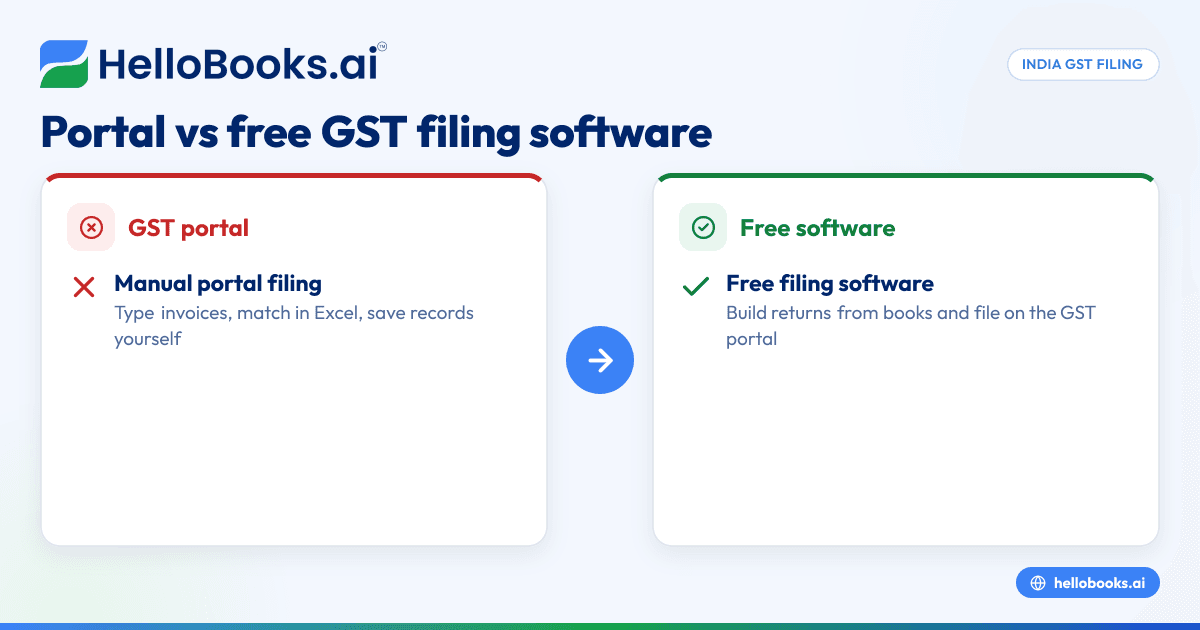
ਹਾਂ, GST Portal ਖੁਦ filing ਲਈ available ਹੈ। ਪਰ portal free ਹੋਣਾ ਅਤੇ compliance easy ਹੋਣਾ ਇੱਕੋ ਗੱਲ ਨਹੀਂ। Portal ਤੁਹਾਡਾ accounting system ਨਹੀਂ। ਉਹ purchase bill OCR ਨਹੀਂ ਕਰਦਾ, bank statement upload ਨਾਲ receipt matching ਨਹੀਂ ਕਰਦਾ, stock ਨਹੀਂ ਚਲਾਂਦਾ, ਅਤੇ Tally data ਨੂੰ bookkeeping flow ਵਿੱਚ ਨਹੀਂ ਜੋੜਦਾ। ਉਹ ਆਖ਼ਰੀ filing surface ਹੈ.
ਛੋਟੇ ਕਾਰੋਬਾਰ ਵਿੱਚ ਅਸਲੀ ਸਮਾਂ ਇੱਥੇ ਲੱਗਦਾ ਹੈ:
- customer GSTIN ਚੈਕ ਕਰਨਾ
- inter-state sale ਤੇ IGST ਅਤੇ intra-state sale ਤੇ CGST/SGST ਸਹੀ ਰੱਖਣਾ
- supplier invoices ਨੂੰ GSTR-2B ਨਾਲ ਮਿਲਾਉਣਾ
- UPI, NEFT, RTGS ਜਾਂ IMPS ਨਾਲ ਆਈ receipt ਨੂੰ invoice ਨਾਲ ਮੈਚ ਕਰਨਾ
- bank statement ਦੀ lines ਨੂੰ manually tick ਕਰਨਾ
- e-way bill ਜਾਂ e-invoice ਦੀ ਲੋੜ ਵਾਲੇ case ਵੱਖਰੇ ਸੰਭਾਲਣਾ
ਇਸ ਲਈ ਜੇ ਕੋਈ tool ਸਿਰਫ filing screen ਦਿੰਦਾ ਹੈ ਪਰ books ਨਹੀਂ, ਤਾਂ ਤੁਹਾਡਾ ਕੰਮ ਘੱਟ ਨਹੀਂ ਹੁੰਦਾ; ਸਿਰਫ ਆਖ਼ਰੀ ਕਦਮ software ਵਿੱਚ ਅਤੇ ਬਾਕੀ ਸਭ ਕਿਤੇ ਹੋਰ ਰਹਿੰਦਾ ਹੈ.
ਇਕ ਭਾਰਤੀ ਕਾਰੋਬਾਰ ਨੂੰ free tool ਵਿੱਚ ਘੱਟੋ-ਘੱਟ ਕੀ ਦੇਖਣਾ ਚਾਹੀਦਾ ਹੈ
ਫ੍ਰੀ GST ਫਾਈਲਿੰਗ ਸਾਫਟਵੇਅਰ ਦੀ ਜਾਂਚ checklist ਨਾਲ ਨਹੀਂ, workflow ਨਾਲ ਕਰੋ। ਫਿਰ ਵੀ ਕੁਝ ਬੁਨਿਆਦੀ ਗੱਲਾਂ ਬਿਨਾਂ ਕੰਮ ਨਹੀਂ ਚਲਦਾ.
ਸਭ ਤੋਂ ਪਹਿਲਾਂ, tool invoice level data ਸੰਭਾਲੇ। Rule-based GST invoice fields, HSN/SAC, customer GSTIN, place of supply, taxable value ਅਤੇ tax split consistent ਹੋਣੀ ਚਾਹੀਦੀ ਹੈ। ਇਹੀ data ਬਾਅਦ ਵਿੱਚ GSTR-1 ਵਿੱਚ ਜਾਂਦਾ ਹੈ। Smart invoicing ਵਰਗਾ setup ਇਸ ਲਈ ਜ਼ਰੂਰੀ ਹੈ ਕਿ filing ਤੋਂ ਪਹਿਲਾਂ entry ਸਹੀ ਹੋਵੇ.
ਦੂਜਾ, tool GSTR-1 ਅਤੇ GSTR-3B direct file ਕਰੇ। ਕਿਉਂਕਿ ਜੇ ਤੁਸੀਂ ਹਰ ਮਹੀਨੇ export-download-upload cycle ਵਿੱਚ ਫਸੇ ਰਹੋਗੇ, ਤਾਂ error handling ਤੁਹਾਡੇ ਉੱਪਰ ਹੀ ਰਹੇਗੀ.
ਤੀਜਾ, purchase side ignore ਨਾ ਹੋਵੇ। India ਵਿੱਚ ITC claim ਸਿਰਫ sale side ਨਾਲ ਨਹੀਂ ਬਣਦੀ। GSTR-2A/2B reconciliation ਨਾਲ ਇਹ ਦਿਖਣਾ ਚਾਹੀਦਾ ਹੈ ਕਿ supplier ਨੇ invoice reflect ਕੀਤਾ ਹੈ ਜਾਂ ਨਹੀਂ। ਇਹ GST Act ਦੀ compliance practicality ਹੈ, ਅਤੇ current guidance GST Portal/GSTN ਅਤੇ CBIC ਦੇ published materials ਵਿੱਚ ਵੇਖੀ ਜਾਣੀ ਚਾਹੀਦੀ ਹੈ.
ਚੌਥਾ, bank statement upload ਹੋਵੇ। India ਵਿੱਚ ਹਰ payment card gateway ਰਾਹੀਂ ਨਹੀਂ ਆਉਂਦੀ; UPI, NEFT, RTGS, IMPS, cash deposit, cheque—ਸਭ ਮਿਲੇ-ਜੁਲੇ ਹੁੰਦੇ ਹਨ। ਇਸ ਲਈ bank reconciliation software ਵਾਂਗ uploaded statement ਨੂੰ AI ਨਾਲ invoice ਅਤੇ ledger entries ਨਾਲ ਮਿਲਾਉਣ ਵਾਲਾ flow ਵੱਡਾ ਫਰਕ ਪਾਂਦਾ ਹੈ.
ਪੰਜਵਾਂ, purchase bills photo ਜਾਂ PDF ਤੋਂ capture ਹੋਣ। OCR ਵਾਲਾ workflow ਖਾਸ ਕਰਕੇ ਉਹਨਾਂ ਲਈ useful ਹੈ ਜਿਨ੍ਹਾਂ ਕੋਲ supplier bills WhatsApp ਜਾਂ email PDF ਰੂਪ ਵਿੱਚ ਪੈਂਦੀਆਂ ਹਨ.
ਛੇਵਾਂ, ਜੇ ਤੁਹਾਡਾ ਵਪਾਰ goods ਵਿੱਚ ਹੈ, ਤਾਂ inventory ਹਲਕਾ feature ਨਹੀਂ। Stock ਅਤੇ GST ਵੱਖ ਨਹੀਂ ਰਹਿੰਦੇ। ਜੇ closing stock, purchase, sale ਅਤੇ returns ਇੱਕੋ system ਵਿੱਚ ਨਾ ਹੋਣ, ਤਾਂ books ਅਤੇ return ਵਿਚ mismatch ਵਧਦਾ ਹੈ। Inventory linked bookkeeping ਇਸੇ ਲਈ practical ਹੈ.
ਫ੍ਰੀ ਪਲਾਨ ਕਿੱਥੇ ਅਕਸਰ ਅਟਕਦਾ ਹੈ
ਭਾਰਤ ਵਿੱਚ free plan ਦੀ ਸਭ ਤੋਂ ਵੱਡੀ ਸਮੱਸਿਆ ਇਹ ਨਹੀਂ ਕਿ ਉਹ free ਹੈ; ਸਮੱਸਿਆ ਇਹ ਹੈ ਕਿ limit ਉਹਥੇ ਆਉਂਦੀ ਹੈ ਜਿੱਥੇ compliance thick ਹੋ ਜਾਂਦੀ ਹੈ.
ਅਕਸਰ ਹੇਠਾਂ ਦਿੱਤੀਆਂ ਸਥਿਤੀਆਂ ਵਿੱਚ ਮੁਸ਼ਕਿਲ ਆਉਂਦੀ ਹੈ:
- ਇੱਕ ਤੋਂ ਵੱਧ GSTIN ਹੋਣ, ਜਿਵੇਂ ਪੰਜਾਬ ਅਤੇ ਹਰਿਆਣਾ ਵਿੱਚ registration
- e-invoice ਦੀ ਜ਼ਰੂਰਤ ਪੈਣਾ, ਜਿੱਥੇ IRN ਅਤੇ signed QR invoice issue ਵੇਲੇ ਹੀ ਚਾਹੀਦੇ ਹੋਣ
- e-way bill generation ਦੀ ਲੋੜ ਹੋਣ
- purchase invoices ਜ਼ਿਆਦਾ ਹੋਣ ਅਤੇ 2B reconciliation regular ਕਰਨੀ ਪਏ
- TDS/TCS ਜਾਂ reverse charge ਵਾਲੇ transactions ਹੋਣ
- Tally ਤੋਂ migration ਜਾਂ connector ਦੀ ਲੋੜ ਹੋਵੇ
- owner, accountant ਅਤੇ CA ਨੂੰ ਇਕੱਠੇ access ਚਾਹੀਦਾ ਹੋਵੇ
ਇੱਥੇ “free forever” label ਨਾਲੋਂ ਇਹ ਸਮਝਣਾ ਜ਼ਿਆਦਾ ਜ਼ਰੂਰੀ ਹੈ ਕਿ ਤੁਹਾਡਾ ਕਾਰੋਬਾਰ ਸਿਰਫ filing use-case ਹੈ ਜਾਂ complete bookkeeping-plus-filing use-case। ਜੇ ਤੁਸੀਂ sirf ਕੁਝ invoice issue ਕਰਦੇ ਹੋ, portal work manageable ਹੋ ਸਕਦਾ ਹੈ। ਪਰ ਜੇ bank, inventory, purchase bills ਅਤੇ multi-user approval flow ਹੈ, ਤਾਂ free tool ਦੀ hidden cost time ਬਣ ਜਾਂਦੀ ਹੈ.
GSTR-1 ਅਤੇ GSTR-3B ਲਈ data ਕਿੱਥੋਂ ਬਣਣਾ ਚਾਹੀਦਾ ਹੈ
ਭਾਰਤ ਵਿੱਚ ਸਭ ਤੋਂ ਸੁਰੱਖਿਅਤ filing discipline ਇਹ ਹੈ ਕਿ return, books ਤੋਂ ਬਣੇ; books, return ਤੋਂ ਨਹੀਂ। ਇਸਦਾ ਮਤਲਬ ਇਹ ਕਿ ਪਹਿਲਾਂ sale invoices, credit/debit notes, purchases, expenses, receipts ਅਤੇ tax classification ਸਹੀ ਦਰਜ ਹੋਣ; ਫਿਰ GSTR-1 ਅਤੇ GSTR-3B ਉਹੀ data ਤੋਂ ਨਿਕਲਣ.
ਜਦੋਂ sale invoice issue ਹੁੰਦਾ ਹੈ, ਉਸ ਵੇਲੇ customer GSTIN, place of supply, item HSN/SAC ਅਤੇ tax treatment ਸਹੀ ਹੋਣੀ ਚਾਹੀਦੀ ਹੈ। ਜੇ buyer ਦਿੱਲੀ ਵਿੱਚ ਹੈ ਅਤੇ supplier ਪੰਜਾਬ ਵਿੱਚ, IGST logic ਲਾਗੂ ਹੋਵੇਗਾ; ਜੇ same state supply ਹੈ ਤਾਂ CGST/SGST split। ਕਿਹੜੀ supply ਕਿਸ head ਵਿੱਚ ਆਉਂਦੀ ਹੈ, ਇਹ Central Goods and Services Tax Act, 2017, Integrated Goods and Services Tax Act, 2017 ਅਤੇ CBIC/GST Portal ਦੇ official guidance ਨਾਲ ਮਿਲਾ ਕੇ verify ਕੀਤਾ ਜਾਣਾ ਚਾਹੀਦਾ ਹੈ.
HelloBooks ਇਸ flow ਵਿੱਚ ਇਸ ਲਈ practical ਬਣਦਾ ਹੈ ਕਿ GST invoice ਬਣਾਉਣ ਸਮੇਂ place-of-supply ਅਤੇ tax head split ਆਪੇ consistent ਰਹਿੰਦੀ ਹੈ, ਅਤੇ ਬਾਅਦ ਵਿੱਚ ਉਹੀ data gst return filing software ਰਾਹੀਂ filing ਲਈ ਵਰਤੀ ਜਾ ਸਕਦੀ ਹੈ। ਜੇ e-invoice applicable ਹੋਵੇ, ਤਾਂ IRN ਅਤੇ signed QR ਵਾਲਾ workflow manual JSON upload ਦੇ ਬਿਨਾਂ same record ਤੋਂ ਬਣ ਸਕਦਾ ਹੈ; ਪਰ applicability ਦੀ current turnover condition ਅਤੇ notified classes CBIC ਦੇ notifications ਅਤੇ einvoice portal documentation ਵਿੱਚ publish ਹੁੰਦੀ ਹੈ, ਇਸ ਲਈ exact current criterion ਉੱਥੇ verify ਕਰਨਾ ਚਾਹੀਦਾ ਹੈ.
2B ਮਿਲਾਣ ਅਤੇ ITC tracking free software ਵਿੱਚ optional ਨਹੀਂ
ਬਹੁਤ ਲੋਕ free GST tool ਚੁਣਦੇ ਸਮੇਂ sirf outward filing ਵੇਖਦੇ ਹਨ। ਪਰ Indian compliance ਵਿੱਚ inward side ਉਤਨੀ ਹੀ important ਹੈ। GSTR-2B reconciliation ਨਾ ਹੋਵੇ ਤਾਂ ITC tracking spreadsheet ਵਿੱਚ ਚਲੀ ਜਾਂਦੀ ਹੈ, ਅਤੇ spreadsheet ਫਿਰ accountant ਦੇ laptop, CA ਦੇ email ਅਤੇ owner ਦੇ WhatsApp ਵਿਚ ਘੁੰਮਦੀ ਰਹਿੰਦੀ ਹੈ.
ਪ੍ਰੈਕਟਿਕਲ ਦਿੱਕਤਾਂ ਇੱਥੇ ਹੁੰਦੀਆਂ ਹਨ:
- supplier ਨੇ invoice upload ਨਹੀਂ ਕੀਤਾ
- GSTIN typo ਕਰਕੇ invoice reflect ਨਹੀਂ ਹੋਈ
- amount mismatch ਹੈ
- credit note properly adjust ਨਹੀਂ ਹੋਇਆ
- reverse charge ਵਾਲੀ purchase alag treatment ਮੰਗਦੀ ਹੈ
Input tax credit ਦੇ claim ਦੇ ਨਿਯਮ Central Goods and Services Tax Act, 2017 ਅਤੇ ਉਸਦੇ rules ਹੇਠ ਆਉਂਦੇ ਹਨ, ਅਤੇ current operational position GST Portal, GSTN statements ਅਤੇ CBIC circulars/notifications ਵਿੱਚ publish ਹੁੰਦੀ ਹੈ। ਇਸ ਲਈ ਕੋਈ ਵੀ software ਚੋਣਦਿਆਂ ਇਹ ਦੇਖੋ ਕਿ ਉਹ missing invoices, matched invoices ਅਤੇ doubtful ITC ਨੂੰ track ਕਰਦਾ ਹੈ ਜਾਂ ਨਹੀਂ.
HelloBooks ਵਿੱਚ GSTR-2A/2B reconciliation ਅਤੇ ITC tracking ਵਾਲਾ flow ਉਹਨਾਂ teams ਲਈ ਮਾਇਨੇ ਰੱਖਦਾ ਹੈ ਜੋ purchase bills ਦੀ photo/PDF upload ਕਰਦੇ ਹਨ ਅਤੇ ਫਿਰ OCR ਨਾਲ entries capture ਕਰਕੇ supplier reflection ਚੈਕ ਕਰਦੇ ਹਨ। ਇਸ ਨਾਲ ITC claim ਕਰਨ ਤੋਂ ਪਹਿਲਾਂ ਗਲਤੀ ਦਿਖ ਸਕਦੀ ਹੈ.
ਇਕ ਸੱਚਾ, ਕਲਪਿਤ ਹਿਸਾਬ ਦੇਖੋ ਕਿ software time ਕਿਵੇਂ ਬਚਾਂਦਾ ਹੈ
ਮੰਨ ਲਓ ਇਹ ਪੂਰੀ ਤਰ੍ਹਾਂ illustrative ਅਤੇ invented ਸਥਿਤੀ ਹੈ: ਲੁਧਿਆਣਾ ਦੀ ਇੱਕ trading firm ਇੱਕ ਮਹੀਨੇ ਵਿੱਚ 84 sales invoices issue ਕਰਦੀ ਹੈ, 39 purchase bills receive ਕਰਦੀ ਹੈ, ਅਤੇ bank statement ਵਿੱਚ 112 lines ਹਨ। ਅਸੀਂ ਹੇਠਾਂ ਕੋਈ tax rate, late fee, interest, threshold ਜਾਂ legal eligibility actual fact ਵਜੋਂ ਨਹੀਂ ਦੇ ਰਹੇ; ਜਿੱਥੇ ਅਜਿਹੇ ਅੰਕ ਲਾਗੂ ਹੁੰਦੇ ਹਨ, ਉਹ CBIC, GST Portal, GSTN ਜਾਂ Income Tax Department ਦੀ official publication ਤੋਂ verify ਕਰਨੇ ਚਾਹੀਦੇ ਹਨ.
ਇਸ invented setup ਵਿੱਚ ਸੋਚੋ ਕਿ 84 ਵਿੱਚੋਂ 26 B2B invoices ਹਨ, ਅਤੇ 8 inter-state sales ਹਨ। ਜੇ owner spreadsheet ਤੇ ਕੰਮ ਕਰਦਾ ਹੈ, ਤਾਂ ਉਹ ਪਹਿਲਾਂ GSTIN copy-paste ਕਰੇਗਾ, ਫਿਰ taxable values ਅਲੱਗ table ਵਿੱਚ ਰੱਖੇਗਾ, ਫਿਰ bank ਵਿੱਚ ਆਈ rupee receipts UPI/NEFT references ਨਾਲ match ਕਰੇਗਾ। ਜੇ 39 purchase bills ਵਿੱਚੋਂ 7 supplier invoices GSTR-2B ਵਿੱਚ ਨਾ ਮਿਲਣ, ਤਾਂ ITC decision ਫਿਰ manual ਹੋ ਜਾਵੇਗੀ।
ਉਸੇ invented case ਵਿੱਚ ਜੇ invoices ਪਹਿਲਾਂ ਹੀ software ਵਿੱਚ ਬਣੇ ਹੋਣ, purchase bills OCR ਨਾਲ capture ਹੋਏ ਹੋਣ, bank statement upload ਹੋਕੇ AI reconciliation ਹੋ ਗਈ ਹੋਵੇ, ਤਾਂ GSTR-1 ਦਾ outward data ledger ਤੋਂ ਬਣੇਗਾ, GSTR-3B ਲਈ tax buckets pre-filled ਹੋਣਗੀਆਂ, ਅਤੇ owner ਨੂੰ sirf review exceptions ਦੇਖਣੀਆਂ ਪੈਣਗੀਆਂ। ਇਹ ਹਿਸਾਬ cash payment challan creation, legal review, classification disputes, goods returned after period-end, ਜਾਂ auditor adjustments ਨੂੰ include ਨਹੀਂ ਕਰਦਾ; ਇਹ ਸਿਰਫ workflow simplification ਦਿਖਾਉਂਦਾ ਹੈ.
ਕਿਹੜੇ ਕਾਰੋਬਾਰ free filing tool ਨਾਲ ਕੰਮ ਚਲਾ ਸਕਦੇ ਹਨ
ਸਭ ਲਈ ਇੱਕੋ ਜਵਾਬ ਨਹੀਂ। ਪਰ ਕੁਝ patterns ਸਾਫ਼ ਹਨ.
ਫ੍ਰੀ GST filing tool ਕਾਫ਼ੀ ਹੋ ਸਕਦਾ ਹੈ ਜੇ:
- ਇੱਕ ਹੀ GSTIN ਹੈ
- invoices ਘੱਟ ਹਨ
- business primarily services ਦਾ ਹੈ
- stock complexity ਨਹੀਂ
- owner ਜਾਂ accountant disciplined entry ਕਰਦਾ ਹੈ
- CA ਨੂੰ final review ਹੀ ਕਰਨੀ ਹੈ
ਇਹ ਕਾਫ਼ੀ ਨਹੀਂ ਰਹਿੰਦਾ ਜੇ:
- multiple states ਵਿੱਚ GSTIN ਹਨ
- goods movement ਨਾਲ e-way bill regular ਬਣਦਾ ਹੈ
- notified class ਹੋਣ ਕਰਕੇ e-invoice/IRN ਦੀ ਲੋੜ ਹੈ
- TDS/TCS, reverse charge ਜਾਂ branch-wise reporting ਹੈ
- Tally data migrate ਜਾਂ sync ਕਰਨਾ ਹੈ
- management reports ਚਾਹੀਦੇ ਹਨ, ਜਿਵੇਂ receivables ageing, P&L, stock summary
ਐਸੀ ਸਥਿਤੀ ਵਿੱਚ accounting software india ਜਾਂ tally alternative ਵਰਗੇ broader workflow ਨੂੰ ਵੇਖਣਾ better ਹੁੰਦਾ ਹੈ, ਕਿਉਂਕਿ filing isolated ਕੰਮ ਨਹੀਂ ਰਹਿੰਦੀ.
HelloBooks ਕਦੋਂ fit ਬੈਠਦਾ ਹੈ
ਜੇ ਤੁਹਾਡੀ ਮੁੱਖ ਲੋੜ ਇਹ ਹੈ ਕਿ invoice ਬਣੇ, GSTIN ਅਤੇ place of supply ਦੇ ਅਧਾਰ ਤੇ tax split ਸਹੀ ਰਹੇ, purchase bills OCR ਨਾਲ capture ਹੋਣ, bank statement upload ਕਰਕੇ reconciliation ਹੋ ਜਾਵੇ, ਅਤੇ ਫਿਰ ਉਹੀ data ਤੋਂ GSTR-1 ਅਤੇ GSTR-3B direct file ਹੋਣ, ਤਾਂ HelloBooks ਇਸ use-case ਲਈ strong fit ਹੈ। Goods business ਲਈ inventory move ਹੁੰਦੀ ਰਹਿੰਦੀ ਹੈ, ਤਾਂ books ਅਤੇ GST alag register ਵਿੱਚ ਨਹੀਂ ਟੁੱਟਦੇ.
ਜਿਨ੍ਹਾਂ businesses ਨੂੰ e-invoicing applicable ਹੈ, ਉਹ invoice save ਸਮੇਂ IRN ਅਤੇ signed QR ਵਾਲੇ flow ਨਾਲ manual portal hopping ਘੱਟ ਕਰ ਸਕਦੇ ਹਨ। Jਿੱਥੇ dispatch-heavy operations ਹਨ, invoice ਤੋਂ e-way bill ਬਣਾਉਣ ਨਾਲ duplicate typing ਘੱਟ ਹੁੰਦੀ ਹੈ। Accountant, owner ਅਤੇ CA ਇਕੱਠੇ ਕੰਮ ਕਰਦੇ ਹੋਣ, ਤਾਂ unlimited users ਅਤੇ multi-GSTIN setup ਵੱਡੇ use-case ਵਿੱਚ ਮਦਦਗਾਰ ਹੈ.
ਜੇ ਤੁਸੀਂ ਅਜੇ ਵੀ Tally ਉੱਤੇ ਹੋ, ਤਾਂ Tally migration/connector ਵਾਲੀ practicality transition easy ਕਰਦੀ ਹੈ। ਅਤੇ ਜੇ owner desk ਤੋਂ ਵੱਧ phone ਉੱਤੇ ਕੰਮ ਕਰਦਾ ਹੈ, ਤਾਂ mobile app ਨਾਲ invoice/expense entry workable ਰਹਿੰਦੀ ਹੈ। ਕੁਝ ਲੋਕ WhatsApp ਉੱਤੇ Hindi, English ਜਾਂ Hinglish ਵਿੱਚ bookkeeping ਸਵਾਲ ਪੁੱਛਣ ਪਸੰਦ ਕਰਦੇ ਹਨ; ਉੱਥੇ Noor assistant useful ਹੋ ਸਕਦਾ ਹੈ.
Free tools try ਕਰਨ ਤੋਂ ਪਹਿਲਾਂ ਤੁਸੀਂ GSTIN validator, HSN code search ਜਾਂ GST reconciliation checker ਵਰਗੇ India tools ਨਾਲ ਆਪਣਾ data hygiene check ਕਰ ਸਕਦੇ ਹੋ। Pricing ਦੇ ਵੇਰਵੇ ਲਈ ਸਿੱਧਾ /in/pricing ਵੇਖੋ, ਕਿਉਂਕਿ plan details ਬਦਲ ਸਕਦੀਆਂ ਹਨ.
ਚੋਣ ਕਰਦੇ ਵੇਲੇ ਅਖੀਰਲਾ practical test
ਕੋਈ ਵੀ software sign up ਕਰਨ ਤੋਂ ਪਹਿਲਾਂ vendor ਨੂੰ ਸਿਰਫ ਇਹ ਨਾ ਪੁੱਛੋ ਕਿ “free plan ਹੈ?” ਇਹ ਪੰਜ ਸਵਾਲ ਪੁੱਛੋ:
- ਕੀ ਤੁਸੀਂ GSTR-1 ਅਤੇ GSTR-3B direct file ਕਰਦੇ ਹੋ, ਜਾਂ sirf JSON/export ਦਿੰਦੇ ਹੋ?
- ਕੀ sale invoice ਤੋਂ CGST/SGST ਅਤੇ IGST split ਆਪੇ ਸਹੀ ਲੱਗਦੀ ਹੈ?
- ਕੀ GSTR-2A/2B reconciliation ਅਤੇ ITC tracking built-in ਹੈ?
- ਕੀ bank statement upload ਕਰਕੇ UPI, NEFT, RTGS, IMPS receipts match ਹੋ ਸਕਦੀਆਂ ਹਨ?
- ਕੀ e-way bill, e-invoice, OCR purchase bills, inventory ਅਤੇ Tally connector ਦੀ ਲੋੜ ਪੈਣ 'ਤੇ ਉਹੀ system scale ਕਰਦਾ ਹੈ?
ਜੇ ਜਵਾਬ workflow-based ਹਨ, tool mature ਹੈ। ਜੇ ਜਵਾਬ sirf “free invoice unlimited” ਤੱਕ ਸੀਮਤ ਹਨ, ਤਾਂ ਉਹ filing software ਨਹੀਂ, billing utility ਹੈ.
ਅਖੀਰ ਵਿੱਚ, GST compliance ਭਾਰਤ ਵਿੱਚ CBIC ਦੇ ਕਾਨੂੰਨੀ ਫਰੇਮਵਰਕ, GSTN ਦੇ system flow, GST Portal ਦੇ published instructions, ਅਤੇ ਕਈ ਕੇਸਾਂ ਵਿੱਚ Companies Act, Income-tax Act, MCA ਜਾਂ RBI context ਨਾਲ ਜੁੜੀ ਹੋ ਸਕਦੀ ਹੈ, ਇਸ ਲਈ rates, thresholds, due dates, interest, penalty ਜਾਂ notified applicability ਵਰਗੀਆਂ current figures ਹਮੇਸ਼ਾਂ official source ਤੋਂ ਹੀ verify ਕਰੋ. Free software ਦੀ ਸਹੀ ਪਰਖ ਇਹ ਹੈ: ਕੀ ਉਹ ਤੁਹਾਡੇ rupee ਦੀ ਬਚਤ ਕਰਦਾ ਹੈ, ਜਾਂ ਤੁਹਾਡਾ ਮਹੀਨਾਵਾਰ compliance ਦਿਮਾਗੀ ਬੋਝ ਘਟਾਉਂਦਾ ਹੈ?


