


Key takeaways
What this article covers, in order:
- फ्री GST filing का मतलब भारत में असल में क्या होना चाहिए
- GST portal फ्री है, फिर अलग software की जरूरत क्यों पड़ती है
- भारत में छोटे business को फ्री tool चुनते समय कौन-सी चीजें देखनी चाहिए
- GSTR-1 और GSTR-3B के बीच असली काम कहाँ फँसता है
- एक invented illustrative स्थिति से समझें कि “free” कब पर्याप्त है
- multi-GSTIN, Tally और branch operations में फ्री software जल्दी छोटा क्यों पड़ता है
भारत में फ्री GST फाइलिंग सॉफ्टवेयर मिल सकता है, लेकिन छोटे business के लिए असली फर्क यह है कि software सिर्फ invoice बनाता है या GSTN के जरिए GSTR-1 और GSTR-3B filing तक ले जाता है। अगर आप हर महीने GST portal पर दोबारा typing, GSTIN mistakes, 2B mismatch और bank entries के पीछे समय खो रहे हैं, तो फ्री option तभी काम का है जब वह आपकी books, invoices, purchase bills और reconciliation को एक साथ जोड़े। वरना “free” सिर्फ data-entry shifting बन जाता है, compliance simplification नहीं।
फ्री GST filing का मतलब भारत में असल में क्या होना चाहिए
India में कई tools खुद को free GST software कहते हैं, पर उनका “free” अक्सर सिर्फ billing तक सीमित होता है। आप invoice बना लेते हैं, PDF डाउनलोड कर लेते हैं, लेकिन return filing के समय फिर GST portal पर manually figures भरने पड़ते हैं। यहीं सबसे ज़्यादा confusion होता है।
GST compliance का केंद्र केवल invoice बनाना नहीं है। Central Goods and Services Tax Act, 2017 और उससे जुड़े नियमों के तहत outward supplies, inward supplies, input tax credit, place of supply, tax head split, और record keeping आपस में जुड़े हुए हैं। इन कानूनों का प्रशासन Central Board of Indirect Taxes and Customs यानी CBIC करता है, जबकि return system और filing rails GSTN तथा GST portal पर चलती हैं। कौन-सी return किस तरह filed होती है, और current process क्या है, इसकी latest operational detail GST portal और CBIC notifications में published होती है।
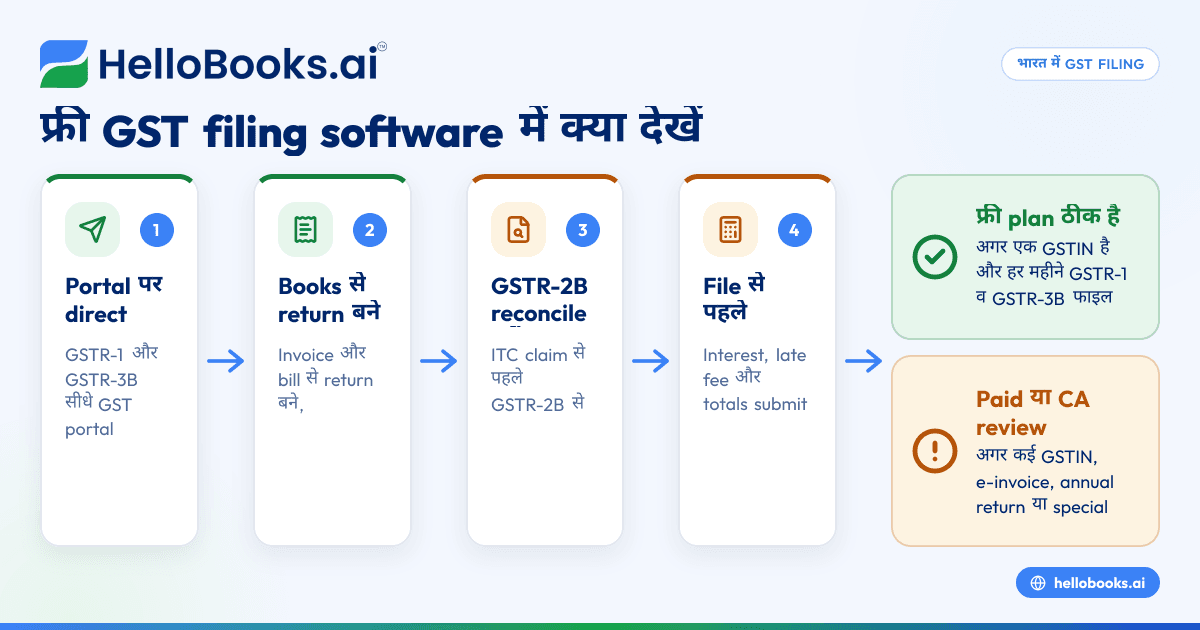
इसलिए “free GST filing software” को कम से कम तीन काम जोड़ने चाहिए:
- GST invoice से return data बने
- purchase side पर GSTR-2A/2B reconciliation दिखे
- GSTR-1 और GSTR-3B को portal तक पहुँचाने का practical रास्ता हो
अगर software में सिर्फ invoice है, filing नहीं, तो वह accounting सहायता हो सकती है, पर filing solution नहीं। अगर filing है पर books अलग Excel में हैं, तो mismatch का risk बना रहता है। और अगर sales, purchase, bank, stock और tax अलग-अलग apps में हैं, तो free होने के बावजूद compliance महँगा पड़ता है।
GST portal फ्री है, फिर अलग software की जरूरत क्यों पड़ती है
यह सवाल बिल्कुल सही है: जब GST portal मौजूद है, तो अलग tool क्यों लें? जवाब यह है कि portal filing rail है, bookkeeping system नहीं।
Portal पर आप return file कर सकते हैं, लेकिन portal आपके लिए रोज़ का business workflow नहीं संभालता। वह आपका inventory register maintain नहीं करता, purchase bill की OCR entry नहीं करता, bank statement upload करके receipts match नहीं करता, और हर invoice पर सही CGST/SGST या IGST split automatically तय नहीं करता।
मान लीजिए आप Jaipur में goods बेचते हैं, कुछ local sales Rajasthan के भीतर हैं, कुछ inter-state Delhi या Gujarat जाती हैं, और कुछ consignments के लिए e-way bill भी चाहिए। अगर place-of-supply गलत बैठ गया, तो tax head split भी गलत हो सकता है। यह issue सिर्फ return filing के दिन नहीं, invoice बनाते समय पैदा होता है। अच्छा software उसी समय गलती रोकता है। HelloBooks जैसे system में GST invoice बनाते समय customer GSTIN, state और supply type के आधार पर place-of-supply और tax head split संभल जाता है, इसलिए बाद में GSTR-1 में surprise कम आते हैं।
Portal की एक और limitation है: वहाँ data entry अलग task है। यदि आपके invoices पहले से books में नहीं हैं, तो return filing manual exercise बनती है। अगर invoices software में पहले से बने हों, purchases OCR से capture हुई हों, और bank statement upload के बाद AI reconciliation से collections match हों, तो GST compliance accounting के flow का हिस्सा बन जाता है, अलग monthly panic नहीं।
भारत में छोटे business को फ्री tool चुनते समय कौन-सी चीजें देखनी चाहिए
Free plan को price से नहीं, breakpoints से समझिए। कौन-से stage पर software रुक जाएगा? कौन-सी core चीजें paywall के पीछे हैं? और कौन-सी compliance चीजें पहले दिन से usable हैं?
सबसे पहले देखिए कि software smart invoicing के साथ GST-ready है या नहीं। Rule-based invoice fields, HSN/SAC support, buyer GSTIN capture और state-wise tax treatment जरूरी हैं। इन requirements का legal framework CGST Act, 2017 और CGST Rules, 2017 में है; practical validation GST portal specifications और CBIC guidance में दिखती है। Current field requirements official sources पर published होती हैं, इसलिए कोई भी template देखकर भरोसा करने के बजाय latest government guidance check करें।
दूसरी बात, filing direct होनी चाहिए। अगर system GSTR-1 और GSTR-3B filing को invoices और books से तैयार करता है, तो duplication घटती है। अगर वह सिर्फ JSON export देता है, तो आप अब भी half-manual workflow पर हैं।
तीसरी बात, purchase side को नज़रअंदाज़ मत कीजिए। Input tax credit का practical control GSTR-2A/2B reconciliation पर टिकता है। कौन-सा supplier invoice दिखाई दे रहा है, कौन missing है, कहाँ mismatch है—ये सब filing से पहले दिखना चाहिए। HelloBooks में purchase bills OCR से capture करके GSTR-2A/2B reconciliation और ITC tracking के साथ मिलान करना useful है, खासकर तब जब supplier invoices email, PDF और photo के रूप में बिखरे पड़े हों।
चौथी बात, money trail। India में collections UPI, NEFT, RTGS या IMPS से आते-जाते हैं। अगर आपने invoices तो बना दिए लेकिन receipts match नहीं कीं, तो receivables report unreliable हो जाती है। HelloBooks में bank statement upload करके India-specific AI reconciliation से payments match करना इसीलिए relevant है; यहाँ live bank feed claim नहीं किया जाना चाहिए, क्योंकि workflow uploaded bank statement पर आधारित है।
पाँचवीं बात, अगर goods movement है तो e-way bill support practical benefit देता है। Invoice से consignment details उठ जाने पर same data दोबारा टाइप नहीं करना पड़ता। और यदि आपका business e-invoicing scope में आता है, तो IRN और signed QR वाले e-invoicing का built-in flow portal hopping कम करता है। E-invoice applicability, turnover criteria और current operational rules CBIC notifications, GST portal documentation और NIC/GST system advisories में published होती हैं; कोई भी exact figure official source से verify करें.
GSTR-1 और GSTR-3B के बीच असली काम कहाँ फँसता है
India में अधिकांश regular taxpayers का recurring GST workload outward supplies और summary payment return के इर्द-गिर्द घूमता है। लेकिन practical दर्द filing button दबाने में नहीं, pre-filing cleanup में होता है।
GSTR-1 outward supplies की statement है। GSTR-3B self-declared summary return है जहाँ tax liability, ITC और net payment picture बनती है। इनके legal basis CGST Act, 2017, Integrated Goods and Services Tax Act, 2017 और संबंधित rules में मिलते हैं; return mechanics और system behavior GST portal और CBIC updates में current form में published होते हैं। कौन-सा field auto-populate होगा, कौन editable है, कौन correction path available है—यह portal behavior समय-समय पर बदल सकता है, इसलिए latest GSTN release notes देखना जरूरी है।
छोटे business में mismatch आम तौर पर इन वजहों से आता है:
- sales invoice books में है, पर सही classification नहीं हुई
- B2B sale को B2C treat कर दिया गया
- inter-state supply पर CGST/SGST लगा दिया, जबकि IGST होना चाहिए था
- credit note timely record नहीं हुआ
- supplier ने invoice upload नहीं किया, पर buyer ने ITC मान लिया
- bank receipt तो आ गई, लेकिन invoice से match नहीं हुई
यहीं integrated software की value निकलती है। जब invoice creation, purchase capture, bank reconciliation और return preparation एक flow में हों, तो GSTR-1 और GSTR-3B के बीच reasoning साफ रहती है। HelloBooks में direct filing के साथ 2A/2B reconciliation, ITC tracking, reverse charge handling और TDS/TCS recording useful हो जाते हैं, क्योंकि business reality केवल sales side नहीं है। खासकर services firms और trading businesses में supplier deductions, reverse charge scenarios और mixed payment modes side spreadsheets में खो जाते हैं।
एक invented illustrative स्थिति से समझें कि “free” कब पर्याप्त है
मान लीजिए यह पूरी तरह illustrative और invented स्थिति है: Lucknow का एक trader एक महीने में 42 sales invoices बनाता है, जिनमें 18 B2B और 24 B2C हैं। उसी महीने 11 purchase bills आते हैं, जिनमें से 3 PDF email से और 4 WhatsApp image के रूप में मिले, बाकी paper bills थे। कुल receipts UPI, NEFT और cash के mix से आती हैं। यह calculation simplified है; इसमें stock valuation detail, sector-specific exemptions, composition issues, amended returns, credit note timing और legal edge cases शामिल नहीं हैं.
अब दो scenarios सोचिए।
पहले में owner free billing app use करता है। वह invoices बना लेता है, पर month-end पर GST portal में outward data दोबारा check करना पड़ता है। Purchase bills Excel में हैं, इसलिए GSTR-2B से mismatch देखने में समय लगता है। Bank statement अलग downloaded PDF में है, collections अलग notebook में लिखे हैं। Filing technically free हो सकती है, लेकिन time-cost और error-risk ऊँचा है।
दूसरे में owner ऐसा tool use करता है जहाँ invoices GST-ready हैं, bills OCR से capture होते हैं, uploaded bank statement से receipts reconcile होती हैं, और GSTR-1 तथा GSTR-3B उसी data से build होकर file होते हैं। यहाँ software free हो या paid, महत्वपूर्ण यह है कि monthly compliance routine predictable हो जाता है।
यानी free plan तभी पर्याप्त है जब business complexity low हो: एक GSTIN, limited invoices, simple place-of-supply pattern, manageable purchase volume, और owner या accountant के पास cleanup का समय। जैसे ही multi-state operations, inventory, e-way bill, e-invoice या multiple users आते हैं, selection price-led नहीं, workflow-led होना चाहिए।
multi-GSTIN, Tally और branch operations में फ्री software जल्दी छोटा क्यों पड़ता है
India के कई businesses “small” दिखते हैं, पर compliance structure simple नहीं होता। एक PAN के तहत अलग राज्यों में GST registration हो सकती है। अलग GSTIN का मतलब अलग outward data, अलग ITC view, अलग return handling और कई बार अलग warehouse या stock movement भी।
ऐसे cases में free tools की limit जल्दी सामने आती है। या तो user limit होती है, या GSTIN limit, या inventory weak होती है, या reports shallow होती हैं। अगर आपकी team में owner, accountant, branch manager और CA सभी को access चाहिए, तो unlimited users या controlled collaboration practical matter बन जाता है, luxury नहीं। HelloBooks में multi-GSTIN और unlimited users वाला setup इस तरह के Indian structure के लिए relevant है, खासकर तब जब Rajasthan, Delhi और Uttar Pradesh जैसे अलग states में operations हों।
Tally भी India में वास्तविक factor है। बहुत-से businesses पूरी तरह switch नहीं करना चाहते। उन्हें migration चाहिए, लेकिन overnight replacement नहीं। इसलिए Tally alternative देखते समय यह भी पूछिए कि historical data migration और connector support है या नहीं। HelloBooks में Tally migration और connector useful है, क्योंकि कई firms parallel run करना चाहती हैं: compliance workflow नए system में, legacy comfort Tally में। HelloBooks vs Tally जैसी तुलना तभी meaningful है जब आप केवल ledger familiarity नहीं, GST workflow speed भी देखें।
inventory, reports और accounting के बिना GST filing अधूरी क्यों लगती है
GST compliance को केवल return submission मानना Indian small business की सबसे expensive misunderstanding हो सकती है। अगर books और tax अलग-अलग सच बोल रहे हों, तो साल भर decisions खराब हो सकते हैं।
मान लीजिए stock books में कुछ और है, physical godown में कुछ और, और sales return properly entered नहीं हुई। तब outward supplies ठीक दिख सकती हैं पर gross margin report गलत हो जाएगी। अगर purchase bills timely enter नहीं हुए, तो payable ageing भी बिगड़ती है। अगर bank reconciliation नहीं हुई, तो outstanding receivables inflated दिख सकते हैं।
इसलिए software चुनते समय inventory, AI bookkeeping, bank reconciliation और accounting software India वाले हिस्से को GST से अलग मत देखिए। HelloBooks में stock movement sales और purchases के साथ update होता है, financial reports same entries से बनते हैं, और owner mobile app पर invoices व expenses देख सकता है। इसका benefit यह है कि P&L, receivables, tax liability और stock picture एक ही source से निकलती है।
अगर owner road पर है, market visit पर है, या godown और दुकान के बीच चलता रहता है, तो mobile app practical advantage देता है। और जो users Hindi, English या Hinglish में काम करते हैं, उनके लिए WhatsApp पर Noor assistant से books या entries पर guidance लेना local working style के ज्यादा करीब है। यहाँ WhatsApp का relevance marketing नहीं, daily habit है—India में बहुत-से business owners formal dashboard से पहले chat window खोलते हैं।
कानून, regulator और official numbers के बारे में सावधानी क्यों जरूरी है
GST पर content पढ़ते समय सबसे बड़ा risk stale information है। Rates, thresholds, due dates, e-invoicing applicability, e-way bill conditions, notified classes of taxpayers, return process changes—ये सब static facts की तरह quote नहीं करने चाहिए जब तक current official publication cite न हो।
India में GST framework का statutory आधार CGST Act, 2017, IGST Act, 2017, संबंधित rules और notifications हैं। इनके administration में CBIC की भूमिका central है, जबकि return operations GSTN और GST portal पर practical रूप लेते हैं। Company law side पर Companies Act, 2013 और Ministry of Corporate Affairs यानी MCA का अपना relevance है, खासकर books, records और governance context में। Payment systems के broader ecosystem में RBI का role है, जबकि personal data handling के संदर्भ में Digital Personal Data Protection Act, 2023 यानी DPDP Act का compliance context भी उभरता है।
इस article में जानबूझकर कोई bare due date, threshold, penalty figure या tax rate standalone fact की तरह नहीं दी गई है। आपको current figures CBIC notifications, GST portal help content, GSTN advisories, relevant law text, RBI circulars या MCA publications में verify करनी चाहिए। अगर आपके business में reverse charge, TDS, TCS, exports, SEZ, job work, e-commerce या sector-specific treatment आता है, तो CA या indirect tax expert से review लेना बेहतर है।
HelloBooks कहाँ fit बैठता है, और कब सिर्फ free tool काफी नहीं रहेगा
अगर आपका business India में GST compliance को billing से आगे ले जाकर books, filing और reconciliation के साथ जोड़ना चाहता है, तो HelloBooks का उपयोग सबसे ज़्यादा वहीं meaningful होता है जहाँ duplication कम करनी हो। Invoice से सही GST split, e-invoice scope में आने पर IRN और signed QR, invoice-based e-way bill creation, GSTR-1 और GSTR-3B direct filing, GSTR-2A/2B reconciliation, OCR-based purchase capture, uploaded bank statement से AI reconciliation, inventory, reports, Tally migration, multi-GSTIN management—ये सब एक flow बनाते हैं, अलग-अलग islands नहीं।
अगर आपका use case बहुत basic है—एक GSTIN, बहुत कम invoices, almost no purchases, और आप portal पर manual filing comfortably कर लेते हैं—तो free lightweight option कुछ समय तक पर्याप्त हो सकता है। लेकिन अगर हर month-end पर Excel, WhatsApp photos, PDF bills, Tally export, bank statement और GST portal tabs एक साथ खुलते हैं, तो problem price नहीं, fragmentation है।
ऐसी स्थिति में पहले free India tools से hygiene check कर सकते हैं, जैसे GSTIN validation या invoice validation। फिर देख सकते हैं कि आपका current workflow किस stage पर टूटता है। Useful शुरुआत के लिए GSTIN validator, GST invoice validator, GST reconciliation checker और pricing pages practical next steps हैं। अगर आपको अपने setup पर discussion चाहिए, तो demo लेना अधिक साफ रास्ता है बनिस्बत generic “best software” lists पढ़ते रहने के।
अंतिम बात सीधी है: India में free GST filing software अच्छा विकल्प हो सकता है, पर केवल तब जब वह आपके business के real workflow—invoice, purchase, ITC, bank, stock और filing—को जोड़ता हो। वरना software free होगा, compliance नहीं।


