


Key takeaways
What this article covers, in order:
- ट्रेड और wholesale business में GST इतना sensitive क्यों होता है
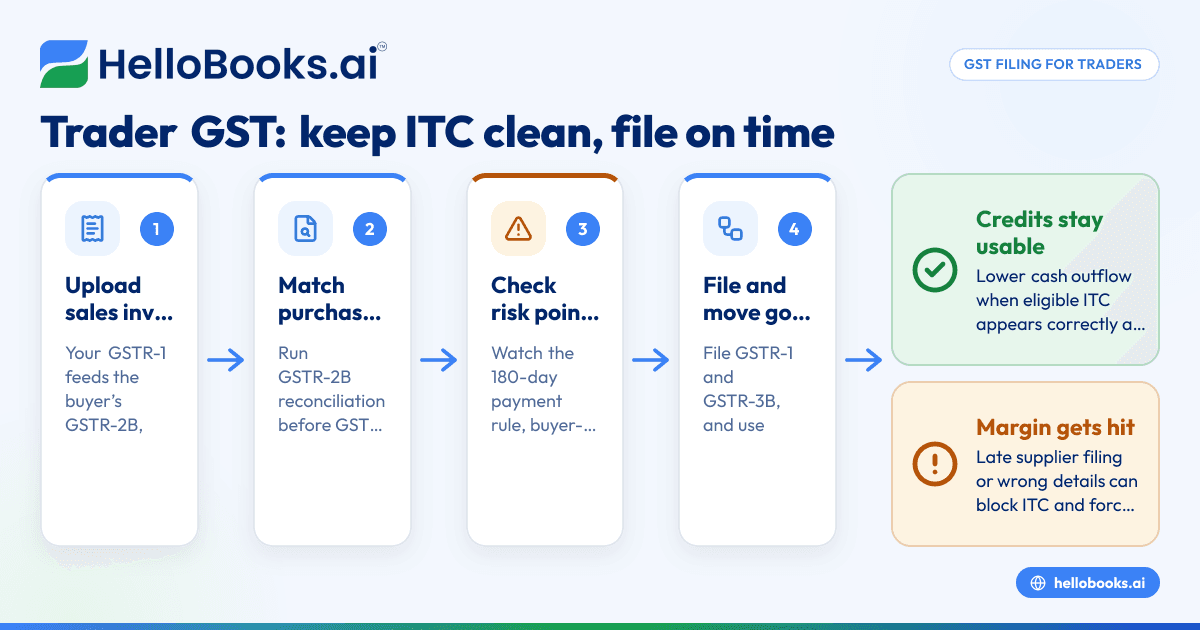
- trader के लिए return filing से पहले invoice discipline ज़्यादा important है
- ITC वहीं बचता है जहाँ purchase records और GSTR-2B साथ बैठें
- e-way bill और invoice को अलग process मानना traders की बड़ी operational गलती है
- Hindi-speaking trader के लिए free GST filing का मतलब क्या होना चाहिए
- invented और illustrative हिसाब से समझें कि margin कैसे दबता है
India में traders और wholesalers के लिए GST filing का असली मतलब सिर्फ GSTR-1 और GSTR-3B जमा करना नहीं, बल्कि सही invoice, सही GSTIN, सही place of supply, समय पर e-way bill और GSTR-2B के हिसाब से ITC बचाना है। अगर आपका buyer registered business है, तो आपकी invoice entry उसकी working capital को सीधे प्रभावित करती है. इसी वजह से wholesale trade में GST compliance accounting से अलग चीज नहीं, वही core operations है।
ट्रेड और wholesale business में GST इतना sensitive क्यों होता है
Retail sale में buyer अक्सर final consumer होता है, लेकिन wholesale में buyer आम तौर पर GST-registered business होता है। इसका मतलब आपकी tax invoice सिर्फ sale proof नहीं, बल्कि उसके ITC का आधार भी है। Central Goods and Services Tax Act, 2017 और Integrated Goods and Services Tax Act, 2017 के framework में invoice details, place of supply, tax head split और supplier reporting का असर buyer की books तक जाता है। इन laws की operational filings और validations GSTN और GST Portal पर चलती हैं, जबकि policy notifications और circulars Central Board of Indirect Taxes and Customs, यानी CBIC, publish करता है।
यहीं wholesale trade की मुश्किल शुरू होती है:
- माल लगातार state के भीतर और state के बाहर जाता है, इसलिए CGST, SGST और IGST का फर्क रोज़ की billing में आता है।
- Buyer GSTIN गलत हुआ तो sale की recovery भी अटक सकती है, क्योंकि सामने वाला credit चाहता है।
- Purchase side पर supplier ने return सही नहीं भरी तो आपका ITC planning बिगड़ता है।
- Dispatch-heavy business में e-way bill और invoice data अलग-अलग नहीं चल सकते।
अगर aap hardware, electricals, garments, pharma distribution, FMCG, agri-inputs या industrial supplies जैसे segments में हैं, तो GST आपके margin के ऊपर बैठा compliance layer नहीं है; वही cash-flow control system है।
trader के लिए return filing से पहले invoice discipline ज़्यादा important है
GST return portal पर जाकर figures भर देना सबसे आख़िरी काम है। उससे पहले जो data books में गया, वही filing का base बनता है। Traders के लिए तीन fields बार-बार गलती करवाती हैं: customer GSTIN, place of supply, और tax head split.
मान लीजिए Delhi का wholesaler Haryana के buyer को माल भेज रहा है, लेकिन staff ने local sale समझकर CGST और SGST लगा दिया। ऐसी error सिर्फ invoice correction का issue नहीं; buyer side credit, ledger balance और return reporting सब पर असर पड़ सकता है. Current tax treatment, invoice particulars और document rules के लिए CGST Act, 2017, IGST Act, 2017 और संबंधित Rules देखें; latest official text CBIC notifications, CBIC circulars और GST Portal documentation पर publish होता है.
यहीं software discipline मदद करता है। HelloBooks invoice बनाते समय GSTIN, place of supply और tax head split को साथ में पकड़कर invoice data consistent रखता है, ताकि inter-state sale पर IGST और local sale पर CGST/SGST का mix-up कम हो। अगर business e-invoice regime में आता है, तो invoice save करते ही IRN और signed QR process भी उसी flow में हो सकता है, जिससे अलग JSON upload करने का manual काम घटता है. E-invoicing की current applicability, notified classes और document requirements CBIC के e-invoice notifications और NIC/GST system advisories में publish होते हैं; exact current criteria वहीं verify करें.
ITC वहीं बचता है जहाँ purchase records और GSTR-2B साथ बैठें
Wholesale business में GST का सबसे practical सवाल यह नहीं होता कि कितनी sale हुई; सवाल यह होता है कि purchase side पर कौन-सी invoices reflected हैं, कौन-सी missing हैं, और किन पर claim hold करना safer है। Input tax credit के conditions CGST Act, 2017 और संबंधित Rules में दिए गए हैं, और auto-drafted statements GSTN ecosystem के through GST Portal पर उपलब्ध होते हैं। Latest position हमेशा official GST Portal और CBIC circulars से verify करें।
बहुत से traders का pattern यह होता है:
- supplier से bill मिल गया,
- stock आ गया,
- payment कभी UPI, कभी NEFT, कभी RTGS, कभी IMPS से हो गया,
- लेकिन supplier ने return में invoice सही report नहीं की।
Books में purchase है, godown में stock है, bank statement में payment है, पर GSTR-2B alignment नहीं है। यहीं cash blockage होता है। ITC tracking बिना reconciliation के practically unreliable हो जाती है।
HelloBooks purchase bills को OCR से capture कर सकता है, फिर GSTR-2A/2B reconciliation के साथ दिखा सकता है कि कौन-सी supplier invoices matched हैं, कौन-सी pending हैं, और किन bills पर ITC status clear नहीं है। इससे trader को CA के month-end message का इंतज़ार नहीं करना पड़ता; mismatch पहले दिख जाता है। Bank statement upload करके AI reconciliation से यह भी समझना आसान होता है कि supplier payment books से match हो रही है या नहीं, खासकर जब payment UPI और bank transfer के mix से आई-गई हो।
यहाँ एक साफ़ बात ज़रूरी है: सिर्फ payment proof होने से ITC automatically safe नहीं हो जाती। Claim conditions law-driven हैं, और उनकी current interpretation के लिए CBIC circulars, GST Portal advisories और जरूरत पड़े तो qualified tax professional की advice देखनी चाहिए।
e-way bill और invoice को अलग process मानना traders की बड़ी operational गलती है
Trader के office में अक्सर billing counter, dispatch desk और transporter coordination तीन अलग लोग संभालते हैं। इसी वजह से invoice एक जगह बनती है और e-way bill दूसरी जगह। Manual duplication से vehicle number, consignee detail, taxable value या document number mismatch होने का risk बढ़ता है। E-way bill requirements Central Goods and Services Tax Rules, 2017 के relevant provisions के तहत operate होती हैं, और current applicability, document fields और portal instructions official e-way bill system तथा CBIC/GST advisories में publish होते हैं। कोई भी current figure या limit official portal से verify करें.
Practical issue यह है कि wholesaler के लिए movement frequent होता है:
- branch transfer,
- job-work like movement,
- customer dispatch,
- replacement supply,
- return inward,
- inter-state stock movement.
इनमें documentation discipline कमजोर हुआ तो transporter call करता रहता है, warehouse रुका रहता है और buyer delivery complain करता है। HelloBooks invoice data से e-way bill generate करने वाला flow देता है, ताकि consignment details दो बार type न करनी पड़ें। अगर item master, quantity और party details पहले से books में ठीक हैं, तो dispatch team की dependency handwritten register पर कम होती है। e-way bill flow और GST invoicing setup साथ हों तो operations smoother रहते हैं।
Hindi-speaking trader के लिए free GST filing का मतलब क्या होना चाहिए
“Free GST filing” सुनकर बहुत लोग सिर्फ zero-cost return submission समझते हैं। लेकिन trader के perspective से useful free setup वह है जिसमें filing से पहले essential checks हो जाएँ: GSTIN valid है या नहीं, invoice fields सही हैं या नहीं, ITC reconciliation basic level पर दिख रहा है या नहीं। वरना free filing भी expensive पड़ सकती है अगर गलत data upload हो जाए।
HelloBooks में India users के लिए GSTR-1 और GSTR-3B filing वही data use करके की जा सकती है जो invoices और purchases से पहले से books में है। इससे return figures और day-to-day sales register के बीच gap कम होता है। Hindi, English और Hinglish में WhatsApp पर Noor assistant जैसी मदद छोटे owners के लिए useful हो सकती है, खासकर जब owner खुद billing भी देखता है और accounts staff limited हो। Mobile app से godown, shop floor या travel के दौरान expense, sale या purchase note डालना भी आसान पड़ता है।
अगर आप अभी system evaluate कर रहे हैं, तो GST return filing, India accounting software और pricing details देख सकते हैं। Basic checks के लिए GSTIN validator और GST reconciliation checker जैसे tools भी useful हैं।
invented और illustrative हिसाब से समझें कि margin कैसे दबता है
मान लीजिए, यह पूरी तरह illustrative और invented स्थिति है; figures सिर्फ समझाने के लिए हैं, current legal rates, thresholds, set-off outcomes या reporting treatment का substitute नहीं हैं, और यह freight classification, discounts, debit notes, reverse charge, blocked credits, valuation disputes और stock returns जैसे मुद्दे छोड़ रही है। Current treatment CGST Act, IGST Act, Rules, CBIC guidance और GST Portal computation flow से verify करना चाहिए।
एक wholesaler ने एक महीने में कुल taxable purchases लगभग ₹12,00,000 की दर्ज कीं। इनमें कुछ inter-state purchases थीं जिन पर IGST लगा, और कुछ local inward supplies थीं जिन पर CGST और SGST लगा। उसी महीने उसने लगभग ₹13,50,000 की sales कीं, जिनमें local B2B buyers भी थे और दूसरे state के dealers भी। Books में overall trading margin लगभग ₹1,20,000 जैसा दिख रहा है।
अब मान लीजिए purchase register में दिख रही tax amount का एक हिस्सा GSTR-2B में reflect नहीं हुआ, क्योंकि एक supplier ने invoice upload late किया या गलत GSTIN report कर दिया। Paper पर trader profitable दिख सकता है, लेकिन return filing month में उसे उतना ITC utilise करने का comfort नहीं मिलेगा जितना उसने purchase file देखकर assume किया था। नतीजा: cash ledger में ज़्यादा rupee arrange करने पड़ सकते हैं।
Wholesale business में यही stress point है। Margin lakh में छोटा हो सकता है, लेकिन tax outflow timing mismatch बड़ा लग सकता है। इसलिए experienced traders ledger, stock और GST data को अलग-अलग islands की तरह नहीं देखते। वे चाहते हैं कि purchase bill, stock inward, supplier payment और GSTR-2B status एक जगह दिखे। इसी वजह से inventory-linked bookkeeping और GST reconciliation practical importance रखती है। HelloBooks inventory movement को sale और purchase entries से जोड़ता है, इसलिए closing stock, purchase record और GST working अलग registers में भागते नहीं रहते। Financial reports से receivables ageing और monthly P&L भी उसी data से निकलते हैं।
multi-state wholesale trade में place of supply और GSTIN governance ज़रूरी है
एक single-shop trader और multi-state wholesaler की compliance complexity एक जैसी नहीं होती। अगर आपके पास अलग-अलग states में GSTIN हैं, branch stock movement है, या billing एक शहर से और dispatch दूसरे state से coordinate होती है, तो compliance design बदल जाता है। GST registration structure, distinct persons concept और inter-state supply treatment law-driven matters हैं; current official position GST law text, CBIC notifications और GST Portal guidance में publish होती है। Specific treatment transaction facts पर निर्भर कर सकता है, इसलिए NEEDS EXPERT REVIEW.
Operational level पर challenges कुछ ऐसे आते हैं:
- अलग GSTINs की outward supplies अलग books/series में track करनी पड़ती हैं,
- branch transfers और customer supplies mix हो सकते हैं,
- staff Tally में एक तरीका use करता है और reporting sheet किसी और format में चलती है,
- HO को consolidated view चाहिए, लेकिन filings GSTIN-wise होती हैं।
HelloBooks multi-GSTIN setup support करता है, इसलिए एक login से अलग registrations पर काम करना आसान होता है। Unlimited users का फायदा यह है कि godown, accountant, owner और external accountant अपनी-अपनी role-based working कर सकें। अगर business अभी भी Tally पर partially चल रहा है, तो Tally migration या connector approach transition को softer बना सकती है, खासकर तब जब आप overnight system change नहीं करना चाहते। Comparison stage पर Tally alternative या HelloBooks vs Tally देखना useful हो सकता है।
records सिर्फ GST के लिए नहीं, Companies Act और Income-tax context में भी matter करते हैं
Trader proprietorship हो, partnership हो या company, books की consistency सिर्फ GST notice risk तक सीमित नहीं रहती। Companies Act, 2013 के तहत companies की books and records expectations अलग context में भी महत्वपूर्ण हैं, MCA compliance ecosystem उनसे जुड़ता है, और Income-tax Act, 1961 के तहत turnover, expenses, stock, TDS treatment और business income computation में accounting trail का practical महत्व रहता है। Exact reporting consequences entity type और facts पर depend करते हैं; official law text MCA, Income Tax Department और related rules/notifications में publish होता है।
अगर purchase bills अलग folder में हैं, bank entries किसी spreadsheet में, GST working CA के system में, और stock register notebook में, तो year-end पर mismatch almost certain है। यही जगह है जहाँ AI bookkeeping, OCR capture और bank statement upload जैसे tools trader के लिए luxury नहीं, housekeeping system बन जाते हैं। HelloBooks uploaded bank statement को books से match करने, purchase bills को OCR से pull करने और accounting reports को GST data के करीब रखने में मदद करता है। इससे CA के साथ discussion भी data-led हो जाती है, memory-led नहीं। Bank reconciliation और AI bookkeeping जैसी workflows wholesale businesses में खासतौर पर useful हैं जहाँ रोज़ entries बहुत होती हैं।
free tool, free filing और expert review—तीनों का सही इस्तेमाल कैसे करें
Small trader को हर सवाल पर consultant dependency नहीं चाहिए, लेकिन बिना review के हर चीज़ DIY करना भी ठीक नहीं। बेहतर approach यह है:
- routine validation tool से करें,
- invoicing और books system से करें,
- filing structured data से करें,
- unusual issue पर expert review लें।
मसलन GSTIN check करना, HSN lookup करना, invoice field validation करना या rough GST calculation समझना tools से हो सकता है। लेकिन mixed supplies, branch transfer valuation, reverse charge applicability, blocked credit, TDS interplay, damaged stock write-off, cross-charge, e-invoice applicability edge cases या state-specific practical handling जैसे मुद्दे professional advice मांग सकते हैं. Reverse charge, TDS/TCS capture और other edge treatments को books में correctly record करना important है; HelloBooks ऐसे entries handle कर सकता है, लेकिन legal position हमेशा facts और current law से verify होनी चाहिए.
अगर आप Hindi में काम करते हैं और trader/wholesaler setup सरल रखना चाहते हैं, तो ideal system वही है जो invoice से return तक एक chain बनाए: सही GST invoice, जरूरत पर IRN, dispatch पर e-way bill, purchase OCR, GSTR-2B reconciliation, uploaded bank statement matching, inventory sync, और फिर GSTR-1 तथा GSTR-3B filing। India के wholesale trade में यही “free GST filing” का practical मतलब है—return submit होना नहीं, return तक पहुँचने वाला data साफ़ होना।


