


Key takeaways
What this article covers, in order:
- ਰੈਸਟੋਰੈਂਟ GST ਵਿੱਚ ਸਭ ਤੋਂ ਵੱਡੀ ਗਲਤੀ books ਦੀ ਹੁੰਦੀ ਹੈ, rate ਦੀ ਨਹੀਂ
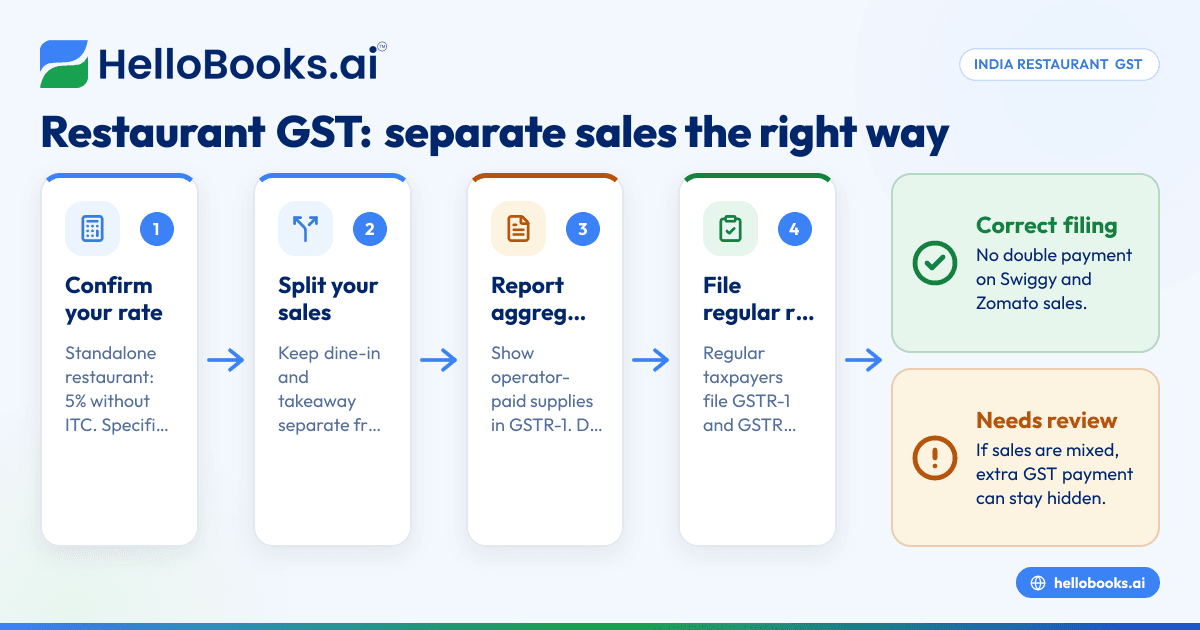
- dine-in, takeaway, own delivery ਅਤੇ platform orders ਇਕੋ ਜਿਹੇ ਨਹੀਂ ਮੰਨਣੇ
- Swiggy ਅਤੇ Zomato settlements ਨੂੰ sale ਸਮਝੋ, bank credit ਨਹੀਂ
- ITC ਕਿੱਥੇ ਫਸਦਾ ਹੈ, ਅਤੇ books ਵਿੱਚ ਇਸ ਦਾ ਅਸਰ ਕੀ ਹੁੰਦਾ ਹੈ
- ਇਕ ਕਲਪਨਾਤਮਕ ਮਹੀਨਾ, ਤਾਂ ਜੋ entry logic ਸਾਫ਼ ਹੋ ਜਾਵੇ
- registration, composition, specified premises: ਇਨ੍ਹਾਂ ਫੈਸਲਿਆਂ ਵਿੱਚ shortcut ਨਾ ਲਓ
ਭਾਰਤ ਵਿੱਚ ਰੈਸਟੋਰੈਂਟ ਅਤੇ ਕੈਫੇ ਲਈ GST ਦਾ ਅਸਲ ਸਵਾਲ ਇਹ ਹੁੰਦਾ ਹੈ: dine-in, takeaway, ਆਪਣੀ ਡਿਲੀਵਰੀ ਅਤੇ Swiggy/Zomato ਵਾਲੀਆਂ sales ਨੂੰ books ਵਿੱਚ ਕਿਵੇਂ ਵੱਖ ਰੱਖਣਾ ਹੈ ਤਾਂ ਜੋ GSTR-1 ਅਤੇ GSTR-3B ਠੀਕ ਬਣਣ। ਰੈਸਟੋਰੈਂਟ ਸੇਵਾਵਾਂ ਦੀ ਵਰਗੀਕਰਨ, input tax credit ਮਿਲਦਾ ਹੈ ਜਾਂ ਨਹੀਂ, ਅਤੇ e-commerce operator ਕਿੱਥੇ tax ਜਮ੍ਹਾਂ ਕਰਦਾ ਹੈ—ਇਹ ਸਭ Central Goods and Services Tax Act, 2017, Integrated Goods and Services Tax Act, 2017 ਅਤੇ CBIC/GST Council ਦੀਆਂ ਅਧਿਕਾਰਿਕ notifications, circulars ਅਤੇ gst.gov.in ਉੱਤੇ ਛਪੀਆਂ ਹਦਾਇਤਾਂ ਤੋਂ ਚੈੱਕ ਕੀਤਾ ਜਾਣਾ ਚਾਹੀਦਾ ਹੈ।
ਰੈਸਟੋਰੈਂਟ GST ਵਿੱਚ ਸਭ ਤੋਂ ਵੱਡੀ ਗਲਤੀ books ਦੀ ਹੁੰਦੀ ਹੈ, rate ਦੀ ਨਹੀਂ
ਕੈਫੇ ਦੇ ਮਾਲਕ ਨੂੰ ਅਕਸਰ ਲੱਗਦਾ ਹੈ ਕਿ ਮੁੱਖ ਸਵਾਲ ਇਹ ਹੈ ਕਿ bill ਉੱਤੇ GST ਕਿੰਨਾ ਲੱਗੇਗਾ। ਅਸਲ ਵਿੱਚ ਵੱਡੀ ਗੜਬੜ ਉੱਥੇ ਹੁੰਦੀ ਹੈ ਜਿੱਥੇ ਇੱਕੋ ਦਿਨ ਦੀ sale ਵਿੱਚ counter billing, UPI receipts, dining tables ਦੀ service, own delivery, aggregator settlement, packaging charges ਅਤੇ supplier purchase bills ਇਕੱਠੇ ਮਿਲ ਜਾਂਦੇ ਹਨ। ਉਸ ਤੋਂ ਬਾਅਦ GSTR-1 ਵੱਖ ਬਣਦਾ ਹੈ, GSTR-3B ਵੱਖ, bank statement ਵੱਖ ਅਤੇ Tally ਜਾਂ spreadsheet ਵੱਖ।
ਰੈਸਟੋਰੈਂਟ business ਵਿੱਚ ਖ਼ਾਸ ਮੁਸੀਬਤ ਇਹ ਹੈ ਕਿ ਹਰ receipt tax liability ਨਹੀਂ ਬਣਦੀ ਅਤੇ ਹਰ expense ਦਾ GST ITC ਨਹੀਂ ਬਣਦਾ। ਜੇ ਤੁਸੀਂ Zomato ਜਾਂ Swiggy settlement report ਨੂੰ ਸਿਰਫ਼ bank credit ਦੇ ਬਰਾਬਰ sale ਮੰਨ ਲਿਆ, ਤਾਂ gross turnover ਘੱਟ ਦਿਸ ਸਕਦਾ ਹੈ। ਜੇ ਤੁਸੀਂ platform fee, delivery-related charges ਜਾਂ ad spends ਨੂੰ ਬਿਨਾਂ tax treatment ਸਮਝੇ enter ਕੀਤਾ, ਤਾਂ books ਅਤੇ returns ਵਿੱਚ mismatch ਬਣ ਜਾਂਦਾ ਹੈ।
ਇਸ ਲਈ ਸਹੀ ਸਵਾਲ ਇਹ ਹੈ: supply ਦੀ nature ਕੀ ਹੈ, tax ਕਿਸ ਨੇ ਜਮ੍ਹਾਂ ਕਰਨਾ ਹੈ, ਅਤੇ books ਵਿੱਚ entry ਕਿਵੇਂ ਹੋਵੇ। ਇਹ ਗੱਲ GSTN ਦੀ return structure, CBIC ਦੀਆਂ clarifications ਅਤੇ GST Portal ਉੱਤੇ available tables ਦੇ ਹਿਸਾਬ ਨਾਲ ਹੀ ਦੇਖਣੀ ਪੈਂਦੀ ਹੈ। HelloBooks ਵਿੱਚ restaurant owner invoice ਬਣਾਉਂਦੇ ਸਮੇਂ CGST, SGST ਜਾਂ IGST ਦੀ split manually guess ਨਹੀਂ ਕਰਦਾ; place-of-supply ਅਤੇ tax head split ਨਾਲ invoice ਹੋਰ consistent ਬਣਦਾ ਹੈ, ਅਤੇ ਜਿੱਥੇ regular GST invoicing ਦੀ ਲੋੜ ਹੈ ਉੱਥੇ data return filing ਨਾਲ ਜੁੜਿਆ ਰਹਿੰਦਾ ਹੈ।
dine-in, takeaway, own delivery ਅਤੇ platform orders ਇਕੋ ਜਿਹੇ ਨਹੀਂ ਮੰਨਣੇ
ਭਾਰਤ ਵਿੱਚ restaurant supply ਦਾ treatment ਸਿਰਫ਼ ਇਸ ਗੱਲ ਨਾਲ ਨਹੀਂ ਨਿਸ਼ਚਿਤ ਹੁੰਦਾ ਕਿ ਖਾਣਾ ਵੇਚਿਆ ਗਿਆ। ਇਹ ਵੀ ਵੇਖਣਾ ਪੈਂਦਾ ਹੈ ਕਿ supply restaurant service ਵਜੋਂ ਹੈ, outdoor catering ਹੈ, specified premises ਨਾਲ ਜੁੜੀ ਹੈ, ਜਾਂ e-commerce operator ਰਾਹੀਂ ਉਹ category trigger ਹੋ ਰਹੀ ਹੈ ਜਿੱਥੇ operator tax collect ਅਤੇ deposit ਕਰਦਾ ਹੈ। ਇਨ੍ਹਾਂ ਮਸਲਿਆਂ ਲਈ Central Goods and Services Tax Act, 2017 ਦੀ charging framework, Section 9(5) ਵਾਲੇ ਪ੍ਰਾਵਧਾਨ, Integrated Goods and Services Tax Act, 2017 ਦੀ inter-state rules structure, ਅਤੇ CBIC notifications/circulars authoritative sources ਹਨ। Current treatment ਹਮੇਸ਼ਾ cbic.gov.in, gstcouncil.gov.in ਅਤੇ gst.gov.in ਉੱਤੇ verify ਕਰਨਾ ਚਾਹੀਦਾ ਹੈ।
ਦਿਨ-ਚਰਿਆ ਵਿੱਚ ਇਸ ਦਾ ਸਾਦਾ ਮਤਲਬ ਇਹ ਹੈ:
- counter sale ਜਾਂ dine-in ਨੂੰ ਇੱਕ bucket ਵਿੱਚ ਨਾ ਸੁੱਟੋ ਜੇ ਤੁਹਾਡੇ ਕੋਲ multiple outlets ਹਨ; location ਅਤੇ GSTIN matter ਕਰਦੇ ਹਨ
- takeaway ਨੂੰ dine-in ਨਾਲ accounting ਵਿੱਚ ਮਿਲਾ ਦੇਣਾ practical ਹੋ ਸਕਦਾ ਹੈ, ਪਰ supporting records ਵੱਖ ਹੋਣੇ ਚਾਹੀਦੇ ਹਨ
- own delivery receipts ਨੂੰ aggregator settlement ਨਾਲ ਨਾ ਮਿਲਾਓ
- Swiggy/Zomato reports ਵਿੱਚ gross order value, commission, net payout ਅਤੇ tax components ਵੱਖ ਪੜ੍ਹੋ
- refund, cancellation ਅਤੇ complimentary items ਲਈ separate treatment ਰੱਖੋ
ਜੇ ਤੁਸੀਂ ਇੱਕ ਹੀ outlet ਤੋਂ ਪੰਜਾਬੀ thali, coffee, desserts ਅਤੇ bottled items ਵੇਚਦੇ ਹੋ, ਤਾਂ HSN/SAC mapping ਅਤੇ invoice description ਵਿੱਚ discipline ਰੱਖਣਾ ਲਾਭਦਾਇਕ ਹੈ। Rule 46 under the CGST Rules, 2017 invoice fields ਲਈ framework ਦਿੰਦਾ ਹੈ; current wording CBIC ਅਤੇ GST Portal ਤੋਂ verify ਕਰੋ। HelloBooks ਦੇ GST invoicing ਨਾਲ restaurant bill ਜਾਂ tax invoice ਵਿੱਚ CGST/SGST ਜਾਂ IGST ਦੀ split ਜ਼ਿਆਦਾ ਸੰਭਲ ਕੇ ਹੁੰਦੀ ਹੈ, ਅਤੇ ਜੇ ਤੁਹਾਡੇ business ਉੱਤੇ e-invoice regime ਲਾਗੂ ਹੁੰਦੀ ਹੈ ਤਾਂ e-invoicing ਵਿੱਚ IRN ਅਤੇ signed QR save ਸਮੇਂ ਹੀ ਲੈਣ ਦੀ ਸਹੂਲਤ ਮਿਲਦੀ ਹੈ, ਬਜਾਏ JSON portal ਤੇ ਵੱਖ upload ਕਰਨ ਦੇ।
Swiggy ਅਤੇ Zomato settlements ਨੂੰ sale ਸਮਝੋ, bank credit ਨਹੀਂ
ਰੈਸਟੋਰੈਂਟ owners ਲਈ ਇਹ ਸਭ ਤੋਂ practical point ਹੈ। ਜਦ bank ਵਿੱਚ NEFT, IMPS ਜਾਂ direct settlement amount ਆਉਂਦਾ ਹੈ, ਉਹ gross sale ਨਹੀਂ ਹੁੰਦਾ। Platform ਅਕਸਰ ਆਪਣੀ commission, listing fee, ad recovery ਜਾਂ ਹੋਰ adjustments ਕੱਟ ਕੇ payout ਕਰਦਾ ਹੈ। ਜੇ books ਸਿਰਫ਼ bank credit ਤੋਂ ਬਣੀ, ਤਾਂ turnover, expense ਅਤੇ tax treatment ਤਿੰਨੋਂ ਗਲਤ ਹੋ ਸਕਦੇ ਹਨ।
Section 9(5) under the Central Goods and Services Tax Act, 2017 ਦੇ ਤਹਿਤ ਕਿਹੜੀਆਂ notified services ਉੱਤੇ e-commerce operator tax deposit ਕਰਦਾ ਹੈ, ਇਹ bare fact ਵਜੋਂ ਯਾਦ ਰੱਖਣ ਦੀ ਥਾਂ CBIC notifications ਅਤੇ GST Portal guidance ਤੋਂ ਦੇਖੋ। Restaurant service supplied through notified operators ਲਈ ਜੋ ਵੀ current legal position ਹੈ, ਉਹ official publication ਤੋਂ ਹੀ confirm ਕਰੋ। Aggregator reports ਦੇ basis ਉੱਤੇ GSTR-1 ਵਿੱਚ reporting bucket ਵੀ GSTN schema ਦੇ ਅਨੁਸਾਰ ਹੀ ਹੋਣੀ ਚਾਹੀਦੀ ਹੈ।
ਇਸ ਲਈ accounting flow ਕੁਝ ਇਸ ਤਰ੍ਹਾਂ ਸੋਚੋ:
- gross food value turnover ਵਿੱਚ capture ਕਰੋ
- operator-settled tax liability ਨੂੰ ਆਪਣੀ direct output tax liability ਨਾਲ mix ਨਾ ਕਰੋ
- commission ਅਤੇ other charges ਨੂੰ expense ਵਜੋਂ identify ਕਰੋ
- supplier invoice ਜਾਂ operator tax invoice ਉਪਲਬਧ ਹੋਵੇ ਤਾਂ ਉਸ ਦੀ document trail ਸੰਭਾਲੋ
- settlement report ਅਤੇ bank receipt ਨੂੰ reconcile ਕਰੋ
ਇੱਥੇ bank statement ਬਹੁਤ ਕੰਮ ਦਾ ਹੁੰਦਾ ਹੈ, ਪਰ live bank feed ਮੰਨ ਲੈਣਾ ਗਲਤ ਹੈ। HelloBooks ਵਿੱਚ ਭਾਰਤ ਲਈ owner monthly bank statement upload ਕਰਦਾ ਹੈ; ਉਸ ਤੋਂ ਬਾਅਦ AI reconciliation receipts ਨੂੰ invoices ਅਤੇ settlements ਨਾਲ ਮਿਲਾਉਣ ਵਿੱਚ ਮਦਦ ਕਰਦੀ ਹੈ। ਇਹ bank reconciliation ਦਾ ਉਹ practical use-case ਹੈ ਜਿੱਥੇ UPI collections, card settlements ਅਤੇ aggregator payouts ਦੇ mixed inflows ਸਮਝ ਆਉਂਦੇ ਹਨ। ਜੇ purchase side ਉੱਤੇ supplier bills PDF ਜਾਂ photo ਵਿੱਚ ਹਨ, ਤਾਂ OCR ਨਾਲ ਉਹਨਾਂ ਨੂੰ type ਕਰਨ ਦੀ ਲੋੜ ਘੱਟ ਹੁੰਦੀ ਹੈ, ਜਿਸ ਨਾਲ kitchen supplies, packaging ਅਤੇ rent-related entries ਠੀਕ ਬਣਦੀਆਂ ਹਨ।
ITC ਕਿੱਥੇ ਫਸਦਾ ਹੈ, ਅਤੇ books ਵਿੱਚ ਇਸ ਦਾ ਅਸਰ ਕੀ ਹੁੰਦਾ ਹੈ
ਰੈਸਟੋਰੈਂਟ trade ਵਿੱਚ owner ਨੂੰ ਸਭ ਤੋਂ ਵੱਧ emotional shock ਉੱਥੇ ਲੱਗਦਾ ਹੈ ਜਦ ਉਹ ਵੇਖਦਾ ਹੈ ਕਿ purchases ਉੱਤੇ GST ਭਰਿਆ ਗਿਆ, ਪਰ ਉਹ return ਵਿੱਚ usable credit ਨਹੀਂ ਬਣਿਆ। ਪਰ ਇਹ business reality ਹੈ ਅਤੇ ਇਸ ਨੂੰ invoice stage ਤੋਂ ਹੀ price-setting ਵਿੱਚ ਲਿਆਉਣਾ ਪੈਂਦਾ ਹੈ। Input tax credit ਕਦੋਂ available ਹੈ, ਕਦੋਂ blocked ਹੈ, ਅਤੇ ਕਦੋਂ output supply structure ਕਰਕੇ practically unavailable ਹੈ—ਇਹ Central Goods and Services Tax Act, 2017, especially ITC provisions, blocked credits rules, ਅਤੇ restaurant services ਨਾਲ ਜੁੜੀਆਂ CBIC notifications/circulars ਵਿੱਚ ਦੇਖਣਾ ਲਾਜ਼ਮੀ ਹੈ। Current position cbic.gov.in ਅਤੇ gst.gov.in ਉੱਤੇ verify ਕਰੋ.
ਜੇ ਤੁਹਾਡਾ business packaging material, cleaning chemicals, cloud kitchen rent, refrigerator repairs, consultant bills, software subscriptions ਜਾਂ aggregator commissions ਉੱਤੇ GST ਭਰਦਾ ਹੈ, ਤਾਂ ਹਰ invoice ਦਾ treatment same ਨਹੀਂ ਹੋਵੇਗਾ। ਬਹੁਤ ਵਾਰੀ owner ਸਿਰਫ਼ ਇਹ ਸੋਚਦਾ ਹੈ ਕਿ “GST paid” means “credit available”. Restaurant line ਵਿੱਚ ਇਹ assumption ਅਕਸਰ ਖ਼ਤਰਨਾਕ ਹੈ।
ਇਸ ਕਰਕੇ accounts structure ਵਿੱਚ ਇਹ discipline ਲਾਓ:
- purchases ਨੂੰ stock, consumables, services ਅਤੇ capital items ਵਿੱਚ ਵੰਡੋ
- eligible vs ineligible ITC ਦਾ internal view ਰੱਖੋ
- supplier invoice missing ਹੋਵੇ ਤਾਂ claim thinking postpone ਕਰੋ
- GSTR-2A/2B reconciliation ਨੂੰ sirf large factories ਲਈ relevant ਨਾ ਮੰਨੋ
HelloBooks ਵਿੱਚ purchase bills OCR ਨਾਲ capture ਹੋ ਕੇ GSTR-2A/2B reconciliation ਅਤੇ ITC tracking ਵਿੱਚ ਲੱਗ ਸਕਦੇ ਹਨ, ਜਿਸ ਨਾਲ missing supplier invoices ਜਾਂ mismatch jaldi ਦਿਖਦੇ ਹਨ। Restaurant owner ਲਈ ਇਸ ਦਾ ਲਾਭ ਇਹ ਨਹੀਂ ਕਿ ਹਰ paid GST credit ਬਣ ਜਾਵੇ; ਲਾਭ ਇਹ ਹੈ ਕਿ eligible ਅਤੇ ineligible ਖ਼ਰਚੇ ਘੱਟੋ-ਘੱਟ books ਵਿੱਚ ਗਡ਼ਬਡ਼ ਨਾ ਕਰਨ। GST return filing ਵਿੱਚ GSTR-1 ਅਤੇ GSTR-3B direct filing ਉਸੇ data ਤੋਂ ਹੁੰਦੀ ਹੈ ਜੋ invoices ਅਤੇ bills ਵਿੱਚ record ਹੈ, ਇਸ ਲਈ books ਅਤੇ return ਦੇ figures ਵਧੇਰੇ aligned ਰਹਿੰਦੇ ਹਨ।
ਇਕ ਕਲਪਨਾਤਮਕ ਮਹੀਨਾ, ਤਾਂ ਜੋ entry logic ਸਾਫ਼ ਹੋ ਜਾਵੇ
ਹੇਠਲੇ ਅੰਕੜੇ ਪੂਰੀ ਤਰ੍ਹਾਂ illustrative ਅਤੇ invented ਹਨ। ਇਹ ਕਿਸੇ official rate card, threshold ਜਾਂ filing calendar ਦਾ substitute ਨਹੀਂ ਹਨ, ਅਤੇ ਇਹ calculation refunds, debit notes, credit notes, staff meals, wastage, service charge disputes, TDS impacts, inter-branch transfers ਅਤੇ cash rounding ਨੂੰ ਛੱਡ ਰਹੀ ਹੈ। Current tax treatment, rates, thresholds ਅਤੇ return tables CBIC, GST Council, GSTN/GST Portal ਅਤੇ applicable law ਤੋਂ verify ਕਰਨੇ ਚਾਹੀਦੇ ਹਨ।
ਮੰਨ ਲਓ ਲੁਧਿਆਣਾ ਵਿੱਚ ਇੱਕ ਕੈਫੇ ਦਾ ਇੱਕ ਮਹੀਨਾ ਇਸ ਤਰ੍ਹਾਂ ਦਿਸਦਾ ਹੈ:
- dine-in ਅਤੇ takeaway ਦੀ gross taxable sale: ₹8,40,000
- own app/phone delivery sale: ₹1,10,000
- aggregator orders ਦੀ gross food value: ₹4,60,000
- aggregator commission and related charges before tax: ₹82,000
- kitchen purchases ਅਤੇ consumables: ₹3,25,000
- rent, cleaning, software, repairs ਅਤੇ misc overheads: ₹1,40,000
- bank account ਵਿੱਚ net payouts ਅਤੇ direct receipts mixed form ਵਿੱਚ ਆਏ
ਜੇ owner sirf bank credits ਜੋੜ ਕੇ sale ਮੰਨ ਲਵੇ, ਤਾਂ ਹੋ ਸਕਦਾ ਹੈ books ਵਿੱਚ turnover ਘੱਟ ਦਿਸੇ। ਕਿਉਂਕਿ aggregator ਨੇ ਆਪਣੀ fees ਕੱਟ ਕੇ settlement ਕੀਤਾ, bank ਵਿੱਚ ਆਇਆ amount gross order value ਤੋਂ ਘੱਟ ਹੋਵੇਗਾ। ਸਹੀ accounting logic ਇਹ ਹੋਵੇਗਾ ਕਿ aggregator orders ਦੀ gross sale alag capture ਹੋਵੇ, operator charges alag expense ਬਣਨ, ਅਤੇ ਜੋ tax operator framework ਹੇਠ deposit ਹੋਇਆ ਹੈ ਉਹ owner ਦੀ direct cash liability ਨਾਲ confuse ਨਾ ਹੋਵੇ।
ਹੁਣ ਮੰਨ ਲਓ ਇਸ ਕੈਫੇ ਦੇ ਦੋ outlets ਹਨ—ਇੱਕ ਪੰਜਾਬ ਵਿੱਚ ਅਤੇ ਇੱਕ ਚੰਡੀਗੜ੍ਹ ਵਿੱਚ—ਅਤੇ ਦੋਵੇਂ ਦੇ ਵੱਖ GSTIN ਹਨ। ਉਸ ਸਥਿਤੀ ਵਿੱਚ multi-GSTIN bookkeeping ਬਿਨਾਂ disciplined software ਦੇ jaldi messy ਹੋ ਜਾਂਦੀ ਹੈ। HelloBooks ਵਿੱਚ ਇੱਕ login ਤੋਂ multiple GSTINs ਅਤੇ unlimited users ਦੇ ਨਾਲ branch-wise records ਦੇਖਣੇ ਆਸਾਨ ਰਹਿੰਦੇ ਹਨ। Outlet manager phone ਤੋਂ sale entry ਕਰ ਸਕਦਾ ਹੈ, accountant purchase bill upload ਕਰ ਸਕਦਾ ਹੈ, ਅਤੇ owner mobile app ਤੇ reports ਦੇਖ ਸਕਦਾ ਹੈ।
registration, composition, specified premises: ਇਨ੍ਹਾਂ ਫੈਸਲਿਆਂ ਵਿੱਚ shortcut ਨਾ ਲਓ
ਰੈਸਟੋਰੈਂਟ owners ਅਕਸਰ ਪੁੱਛਦੇ ਹਨ: “ਕੀ GST registration ਲੈਣੀ ਹੀ ਪਵੇਗੀ?” ਜਾਂ “composition scheme ਚੰਗੀ ਰਹੇਗੀ?” ਇਸ ਦਾ ਸਿੱਧਾ universal ਜਵਾਬ ਨਹੀਂ। Registration thresholds, composition eligibility, inter-state supplies, e-commerce implications, notified persons, specified premises treatment, ਅਤੇ bill of supply vs tax invoice ਵਰਗੇ ਸਵਾਲ Central Goods and Services Tax Act, 2017, State GST laws, relevant rules, ਅਤੇ CBIC notifications ਵਿੱਚ governed ਹਨ। Current thresholds, eligibility conditions, exclusions, forms ਅਤੇ due dates GST Portal ਅਤੇ CBIC publications ਉੱਤੇ ਹੀ ਮਿਲਦੇ ਹਨ; bare fact ਵਜੋਂ ਕਿਸੇ blog ਦੀ line ਉੱਤੇ ਭਰੋਸਾ ਨਾ ਕਰੋ।
ਖ਼ਾਸ ਕਰਕੇ ਤਿੰਨ ਹਾਲਤਾਂ ਵਿੱਚ expert review ਲਓ:
- ਤੁਸੀਂ dine-in ਨਾਲ ਨਾਲ outdoor catering ਵੀ ਕਰਦੇ ਹੋ
- ਤੁਸੀਂ hotel premises ਜਾਂ specified premises ਨਾਲ linked operation ਚਲਾ ਰਹੇ ਹੋ
- ਤੁਸੀਂ multiple states ਵਿੱਚ branches ਜਾਂ dark kitchens ਰੱਖਦੇ ਹੋ
Companies Act, 2013 ਅਤੇ MCA compliance ਵੀ picture ਵਿੱਚ ਆ ਸਕਦੀ ਹੈ ਜੇ business company form ਵਿੱਚ ਹੈ ਅਤੇ statutory books, board approvals ਜਾਂ branch structuring ਦਾ issue ਹੈ। Payment receipts UPI, cash, card, NEFT, RTGS ਜਾਂ wallet ਤੋਂ ਆਉਂਦੀਆਂ ਹੋਣ, tax position payment rail ਨਾਲ ਨਹੀਂ ਸਗੋਂ supply structure ਨਾਲ ਨਿਰਧਾਰਤ ਹੁੰਦੀ ਹੈ। RBI payment-system regulation business cashflow ਨੂੰ affect ਕਰ ਸਕਦੀ ਹੈ, ਪਰ GST liability decide ਨਹੀਂ ਕਰਦੀ। Customer data, phone numbers ਅਤੇ WhatsApp communications ਸੰਭਾਲਦੇ ਸਮੇਂ Digital Personal Data Protection Act, 2023 (DPDP) ਦੀ practical sensitivity ਵੀ ਯਾਦ ਰੱਖੋ, especially अगर loyalty programs ਜਾਂ order databases maintain ਕਰ ਰਹੇ ਹੋ।
ਜੇ ਤੁਸੀਂ Tally ਵਰਤਦੇ ਆ ਰਹੇ ਹੋ ਪਰ return workflow modern ਕਰਨਾ ਚਾਹੁੰਦੇ ਹੋ, ਤਾਂ Tally alternative ਜਾਂ HelloBooks vs Tally ਵਰਗੇ pages ਵੇਖ ਸਕਦੇ ਹੋ। HelloBooks ਵਿੱਚ Tally migration ਅਤੇ connector ਇਸ ਲਈ ਲਾਭਦਾਇਕ ਹੋ ਸਕਦੇ ਹਨ ਕਿ ਪੁਰਾਣਾ data ਇਕदम abandon ਨਾ ਕਰਨਾ ਪਵੇ।
restaurant accounting ਵਿੱਚ stock ਅਤੇ purchase control tax ਜਿੰਨਾ ਹੀ ਮਹੱਤਵਪੂਰਨ ਹੈ
GST filing free ਹੋਵੇ ਜਾਂ paid, restaurant ਦਾ leak ਅਕਸਰ tax return ਵਿੱਚ ਨਹੀਂ, stock room ਵਿੱਚ ਹੁੰਦਾ ਹੈ। Milk, coffee beans, paneer, sauces, paper cups, lids, delivery packaging, bottled drinks—ਜੇ closing stock rough estimate ਤੇ ਚੱਲਦਾ ਹੈ, ਤਾਂ P&L ਵੀ wobble ਕਰੇਗਾ ਅਤੇ tax discussions ਵੀ weak ਹੋਣਗੀਆਂ। Inventory accuracy ਸਿਰਫ਼ operational issue ਨਹੀਂ; ਇਹ purchase booking, wastage control ਅਤੇ menu pricing ਨੂੰ ਪ੍ਰਭਾਵਿਤ ਕਰਦੀ ਹੈ।
ਇਸ ਲਈ accounting setup ਵਿੱਚ inventory ਨੂੰ ignored module ਨਾ ਬਣਾਓ। HelloBooks ਦੀ inventory capability ਨਾਲ sale ਅਤੇ purchase ਦੇ ਨਾਲ stock movement update ਰਹਿੰਦੀ ਹੈ, ਜਿਸ ਨਾਲ outlet-wise closing figure ਜ਼ਿਆਦਾ current ਰਹਿ ਸਕਦੀ ਹੈ। Financial reports ਵੀ ਉਸੇ data ਤੋਂ ਨਿਕਲਦੀਆਂ ਹਨ ਜਿਥੋਂ GST entries ਆ ਰਹੀਆਂ ਹਨ, ਇਸ ਲਈ gross margin, receivables, payables ਅਤੇ expense trend ਸਮਝਣਾ ਆਸਾਨ ਹੁੰਦਾ ਹੈ। Restaurant owner ਲਈ ਇਸ ਦਾ practical benefit ਇਹ ਹੈ ਕਿ GST ਦੀ ਗੱਲ CA ਨਾਲ ਅਤੇ margin ਦੀ ਗੱਲ operations team ਨਾਲ ਕਰਦੇ ਸਮੇਂ ਦੋ ਵੱਖ ਸੱਚਾਈਆਂ ਨਾ ਬਣਣ।
ਜੇ purchases physical challan, PDF invoice ਜਾਂ mobile photo ਵਿੱਚ ਮਿਲਦੇ ਹਨ, ਤਾਂ OCR entry speed ਵਧਾਉਂਦੀ ਹੈ। Agar supplier ਨੇ GSTIN, invoice number ਜਾਂ tax heads ਗਲਤ ਲਿਖ ਦਿੱਤੇ, ਤਾਂ filing ਤੋਂ ਪਹਿਲਾਂ review ਫਿਰ ਵੀ ਮਨੁੱਖੀ ਹੋਣਾ ਚਾਹੀਦਾ ਹੈ। ਇਸ ਲਈ free tools ਵੀ ਕੰਮ ਆਉਂਦੇ ਹਨ, ਜਿਵੇਂ GSTIN validator, HSN code search ਅਤੇ GST reconciliation checker।
free filing ਕਦੋਂ ਕਾਫ਼ੀ ਹੈ, ਅਤੇ ਕਦੋਂ process ਬਦਲਣੀ ਚਾਹੀਦੀ ਹੈ
ਜੇ ਤੁਹਾਡਾ restaurant operation ਇੱਕ regular pattern ਵਿੱਚ ਹੈ—single or limited GSTIN, controlled invoice volume, clear split between dine-in and aggregator sales, monthly bank statement available, supplier bills collected, ਅਤੇ GSTR-1/GSTR-3B ਹੀ main filing need ਹੈ—ਤਾਂ free filing meaningful ਹੋ ਸਕਦੀ ਹੈ। ਪਰ free ਸਿਰਫ਼ tab ਖ਼ਤਮ ਕਰਨ ਲਈ ਨਹੀਂ; process disciplined ਹੋਣੀ ਚਾਹੀਦੀ ਹੈ।
ਅਸਲ test ਇਹ ਹਨ:
- ਕੀ invoices books ਵਿੱਚ timely enter ਹੁੰਦੇ ਹਨ?
- ਕੀ settlement reports month-end ਤੋਂ ਪਹਿਲਾਂ ਮਿਲ ਜਾਂਦੀਆਂ ਹਨ?
- ਕੀ bank statement upload ਕਰਕੇ reconciliation ਹੁੰਦੀ ਹੈ?
- ਕੀ purchase bills OCR ਜਾਂ manual entry ਨਾਲ complete ਹਨ?
- ਕੀ owner ਨੂੰ outlet-wise P&L ਦਿਸਦਾ ਹੈ?
- ਕੀ e-invoice applicability ਆਉਣ ਉੱਤੇ IRN workflow ready ਹੈ?
HelloBooks restaurant owners ਲਈ ਇਸ workflow ਵਿੱਚ ਉੱਥੇ fit ਹੁੰਦਾ ਹੈ ਜਿੱਥੇ invoice creation, GSTR-1/GSTR-3B filing, purchase capture, bank statement upload-based reconciliation, inventory view ਅਤੇ reports ਇੱਕ ਹੀ system ਵਿੱਚ ਰਹਿਣ। Mobile app ਨਾਲ on-floor operator ਜਾਂ owner phone ਤੋਂ entries ਕਰ ਸਕਦਾ ਹੈ। ਜੇ owner WhatsApp 'ਤੇ Hindi, English ਜਾਂ Hinglish ਵਿੱਚ ਸਵਾਲ ਪੁੱਛਣਾ ਪਸੰਦ ਕਰਦਾ ਹੈ, Noor assistant ਉਹ interaction ਸੌਖਾ ਕਰ ਸਕਦੀ ਹੈ। Plans ਜਾਂ paid limits ਲਈ ਇੱਥੇ number quote ਕਰਨ ਦੀ ਥਾਂ pricing ਵੇਖੋ, ਅਤੇ India setup ਲਈ HelloBooks India ਜਾਂ demo ਉੱਤੇ current details ਚੈੱਕ ਕਰੋ.
ਅੰਤ ਵਿੱਚ, restaurant GST ਨੂੰ “bill ਉੱਤੇ ਲੱਗਣ ਵਾਲਾ percent” ਸਮਝਣਾ ਘੱਟ ਪੈਂਦਾ ਹੈ। ਭਾਰਤ ਵਿੱਚ ਸਹੀ answer books, settlement logic, GSTN return mapping, CBIC law position, inventory discipline ਅਤੇ practical reconciliation ਦੇ ਮਿਲੇ-ਜੁਲੇ system ਵਿੱਚ ਹੁੰਦਾ ਹੈ। ਜੇ ਤੁਸੀਂ ਇਹ structure ਠੀਕ ਕਰ ਲੈਂਦੇ ਹੋ, ਤਾਂ free filing ਸਿਰਫ਼ free ਨਹੀਂ ਰਹਿੰਦੀ—ਉਹ usable ਵੀ ਬਣਦੀ ਹੈ।


