

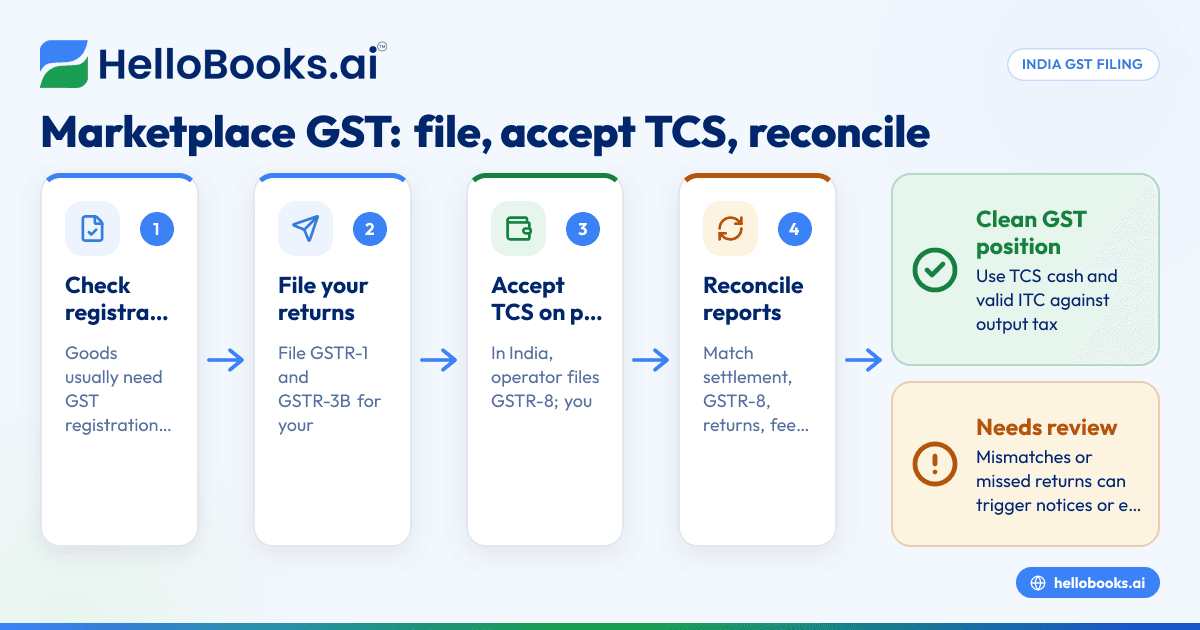

Key takeaways
What this article covers, in order:
- Marketplace seller-க்கு GST registration எப்போது அவசியமாகலாம்?
- TCS என்ன, seller என்ன செய்ய வேண்டும்?
- Invoice சரியாக இல்லையென்றால் filing சரியாக இருக்காது
- GSTR-1, GSTR-3B, GSTR-2B: seller-க்கு உண்மையில் வேலை எது?
- Bank settlement மற்றும் GST books ஒன்றாக அமைய வேண்டியது ஏன்?
- ஒரு நேர்மையான கணக்கு காட்சி: figures அனைத்தும் illustrative மற்றும் invented
India-வில் Amazon, Flipkart போன்ற marketplace-ல் பொருட்கள் விற்கும் seller-க்கு GST வேலைப்பாடு சாதாரண retail billing போல இருக்காது: sale invoice, marketplace fees, TCS, returns, bank settlement, சில நேரங்களில் e-invoice, e-way bill ஆகியவை ஒன்றோடொன்று இணைந்து போகும். அதனால் “இலவச GST filing” என்று மட்டும் பார்ப்பதற்கு பதிலாக, உங்கள் GSTIN-க்கு சரியான invoice, GSTR-1 மற்றும் GSTR-3B filing, GSTR-2B reconciliation, bank statement matching ஆகியவை ஒரே flow-வில் வருமா என்பதைத்தான் முதலில் பார்க்க வேண்டும்.
Marketplace seller-க்கு GST registration எப்போது அவசியமாகலாம்?
பொருட்களை e-commerce operator மூலம் விற்பது குறித்து அடிப்படை சட்டம் Central Goods and Services Tax Act, 2017-ல் உள்ளது. Registration தொடர்பான தற்போதைய விதிகள் CBIC notifications, rules, மற்றும் GST portal / GSTN வெளியிடும் guidance-ல் புதுப்பிக்கப்படுகின்றன. அதனால் “எல்லோருக்கும் ஒரே rule” என்று நினைக்கக் கூடாது.
பொதுவாக, marketplace வழியாக பொருட்கள் விற்பவர்களுக்கு registration தேவைப்படுமா என்பது:
- நீங்கள் goods விற்கிறீர்களா, services விற்கிறீர்களா
- intra-state மட்டும் விற்கிறீர்களா
- GSTIN இல்லாமல் enrolment முறையில் விற்க அனுமதி தரும் தற்போதைய rule உங்களுக்கு பொருந்துகிறதா
- platform உங்களிடம் இருந்து TCS collect செய்கிறதா
என்பதைக் கொண்டு மாறும்.
இங்கே முக்கியமானது: எந்த threshold, exemption, enrolment condition ஆகியவற்றின் தற்போதைய figure-மும் CBIC notification மற்றும் GST portal-ல் தான் official-ஆக பார்க்க வேண்டும். Bare fact-ஆக யாரும் சொல்வதை மட்டும் நம்பி registration முடிவு எடுக்க வேண்டாம். உங்கள் specific model-க்கு CA அல்லது GST practitioner review அவசியம்.
நீங்கள் Tamil Nadu-ல் இருந்து கையால் செய்யப்பட்ட பொருட்கள் விற்றாலும், Karnataka, Kerala, Maharashtra போன்ற மாநிலங்களுக்கு dispatch செய்கிறீர்கள் என்றால், place of supply, tax head split, e-way bill applicability, operator settlement structure ஆகியவை ஒரே நேரத்தில் முக்கியமாகிவிடும். அதனால் invoice உருவாக்கும்போதே CGST/SGST அல்லது IGST சரியாகப் பிரிவது பெரிய விஷயம். இந்த இடத்தில் smart invoicing மற்றும் GST return filing software போன்ற workflow உதவும்: invoice entry-யிலிருந்தே GSTR-1, GSTR-3B data build ஆகும்; பின்னர் manual retyping குறையும்.
TCS என்ன, seller என்ன செய்ய வேண்டும்?
Marketplace seller-களுக்கு பெரும்பாலும் குழப்பமளிப்பது TCS. இது Tax Collected at Source; e-commerce operator தொடர்பான provisions CGST Act மற்றும் அதனுடன் தொடர்புடைய rules-ல் இருக்கின்றன, இதன் current rate மற்றும் reporting mechanics CBIC notifications மற்றும் GST portal documentation-ல் வெளியிடப்படுகின்றன.
Seller கவனிக்க வேண்டிய practical point என்னவென்றால்:
- customer full payment platform-க்கு செலுத்துகிறார்
- platform commission, shipping-related charges, other recoveries ஆகியவற்றை adjust செய்கிறது
- TCS-ஐ applicable rule படி collect செய்து report செய்கிறது
- balance settlement தான் bank account-க்கு வருகிறது
அதனால் “sales as per marketplace” மற்றும் “amount received in bank” ஒரே figure ஆக இருப்பது அரிது. இது தவறு என்பதல்ல; reconciliation செய்யாமல் விட்டால் தான் பிரச்சினை.
TCS என்பது உங்கள் purchase ITC மாதிரி அல்ல; அது cash ledger effect உடைய ஒரு வேறு credit flow. அதனால் GST portal-ல் reflect ஆகும் operator data, உங்கள் books, உங்கள் filed returns ஆகியவை logically align ஆக வேண்டும். இதற்காக seller-க்கு monthly discipline தேவை:
- marketplace settlement report download
- fees மற்றும் recoveries classification
- TCS trace
- sales vs returns alignment
- bank receipt match
இந்த மாதிரி matching-க்கு bank statement-ஐ upload செய்து AI reconciliation செய்வது நேரத்தை மிச்சப்படுத்தும், குறிப்பாக settlement entries NEFT, RTGS, IMPS, சில சமயம் UPI collection traces போன்ற mixed narration-களோடு வரும் போது.
Invoice சரியாக இல்லையென்றால் filing சரியாக இருக்காது
Marketplace seller-க்கு GST filing பிரச்சினையின் வேரே invoice quality. GST law, குறிப்பாக invoice particulars பற்றிய requirements, CGST Rules-ல் குறிப்பிடப்பட்டுள்ளன; practical validations GST portal, GSTN schema, மற்றும் தேவையான இடங்களில் CBIC guidance மூலம் புரிந்துகொள்ளப்பட வேண்டும்.
Seller-கள் தொடர்ந்து செய்யும் தவறுகள்:
- inter-state sale-க்கு CGST + SGST charge செய்துவிடுதல்
- local sale-க்கு தவறாக IGST போடுதல்
- HSN mismatch
- returns / credit note timing mismatch
- marketplace listing data மற்றும் accounting data வேறுபடுதல்
- B2B buyer GSTIN தவறாக capture செய்தல்
இந்தியாவில் place of supply சரியாகப் பிடிக்காததால் GSTR-1-ல் wrong tax head split போய்விடும். பின்னர் GSTR-3B-ஐ சரிசெய்ய accountant manual working செய்ய வேண்டி வரும். அதனால் invoice save செய்யும் நேரத்திலேயே GSTIN, state, place of supply, HSN, tax head split ஆகியவை consistent-ஆக வர வேண்டும்.
நீங்கள் e-invoice applicability உடைய business என்றால், current turnover-based applicability, document coverage, exclusions போன்றவை CBIC notifications மற்றும் NIC / GST e-invoice system documentation-ல் பார்க்கப்பட வேண்டும். அந்த rule உங்களுக்கு பொருந்தும் நிலையில், invoice-க்கு IRN மற்றும் signed QR தேவைப்படும். Marketplace seller என்பதால் அது தானாக irrelevant ஆகிவிடாது; உங்கள் supply type மற்றும் business setup-ஐப் பொறுத்து review செய்ய வேண்டும். அதற்காக e-invoicing software மூலம் IRN flow books-ோடு இணைந்திருக்க வேண்டும்; இல்லையென்றால் JSON upload, portal mismatch, duplicate handling போன்ற சிக்கல்கள் வரும்.
GSTR-1, GSTR-3B, GSTR-2B: seller-க்கு உண்மையில் வேலை எது?
Marketplace operator தன் reporting-ஐ செய்யும்; ஆனால் seller-ன் core compliance அங்கே முடிவதில்லை. Seller-க்கு முக்கியமானது தன் outward supplies மற்றும் tax liability books-ல் சரியாக build ஆகி GSTR-1 மற்றும் GSTR-3B-ல் ஒத்திருக்க வேண்டும். இந்த returns-ஐ current due dates, system validations, and filing advisories உடன் GST portal / GSTN publish செய்கிறது. எந்த due date-யும் official portal-ல் தான் cross-check செய்ய வேண்டும்.
Marketplace seller-க்கு filing workflow-ல் மூன்று layers இருக்கும்:
Outward sales layer
Amazon, Flipkart அல்லது பிற platform order data-வுடன் invoice records align ஆக வேண்டும். Returns, cancellations, replacement supplies, discounts, post-sale adjustments ஆகியவற்றின் accounting consistent ஆக வேண்டும்.
Input tax layer
Marketplace fee invoices, courier / fulfilment related supplier invoices, ad spends, packaging purchases போன்றவற்றில் claim செய்யும் ITC, GSTR-2A/2B visibility-யுடன் reconcile ஆக வேண்டும். Supplier invoice இருக்கிறது என்பதற்காக மட்டும் ITC safe என்று கொள்ள முடியாது; current eligibility conditions CGST Act, rules, மற்றும் CBIC circulars-ஐப் பொறுத்தது.
Cash and settlement layer
TCS, bank receipt, fees withholding, reimbursements, refunds ஆகியவை separately understood ஆக வேண்டும். இல்லையென்றால் sales figure one place, receipt figure another place, tax payment third place என்று போய்விடும்.
இதில் HelloBooks பயன்படும் பகுதி மிகவும் practical: நீங்கள் ஏற்கனவே பதிவு செய்த sales மற்றும் purchase bills-இலிருந்து GSTR-1, GSTR-3B build ஆகும்; supplier bills-ஐ photo அல்லது PDF-இலிருந்து OCR மூலம் capture செய்து, பின்னர் GSTR-2A/2B reconciliation மற்றும் ITC tracking செய்யலாம். அதனால் Excel side-working குறையும், குறிப்பாக small team அல்லது founder-led ecommerce business-க்கு.
Bank settlement மற்றும் GST books ஒன்றாக அமைய வேண்டியது ஏன்?
Marketplace seller-க்கு bookkeeping pain point GST portal-ல் மட்டும் இல்லை; bank account-ல்தான் தினசரி குழப்பம் தெரியும். Settlement report ஒரு amount சொல்கிறது, bank credit வேறு narration-உடன் வருகிறது, சில entry-கள் next day post ஆகும், returns adjustment another cycle-ல் வரும். இதை சரியாகப் புரியாமல் விட்டால்:
- revenue overstate ஆகலாம்
- fees expense understate ஆகலாம்
- TCS track ஆகாமல் போகலாம்
- receivable ageing நம்பகமற்றதாகிவிடும்
- month-end GST working மற்றும் P&L வேறு வேறு கதைகள் சொல்வது போன்ற நிலை வரும்
இந்தியாவில் many sellers இன்னும் Tally export, portal download, bank PDF, Excel pivot என்று வேலை செய்கிறார்கள். அது doable தான், ஆனால் order volume அதிகரிக்கும்போது break ஆகும். அதனால் bank statement upload செய்து AI reconciliation, invoice-linked receipt matching, settlement-driven posting ஆகியவை useful. நீங்கள் Tally-யிலிருந்தே வந்தாலும், முழுதாக system மாற்றாமல் gradual migration செய்யலாம்; tally-alternative comparison பார்க்கலாம் அல்லது accounting software india page-ல் India-specific workflow எப்படி இருக்கிறது என்று பார்க்கலாம்.
ஒரு நேர்மையான கணக்கு காட்சி: figures அனைத்தும் illustrative மற்றும் invented
இதைக் கற்பனை எடுத்துக்காட்டு என்றே வாசிக்கவும். கீழே வரும் எல்லா ₹ figures-மும் illustrative மற்றும் invented; actual GST treatment product HSN, place of supply, returns timing, operator contract, supplier invoice validity, மற்றும் current CBIC/GST portal rules-ஐப் பொறுத்து மாறும். இந்த கணக்கில் income tax, TDS credit utilisation, damaged stock write-off, promotional reimbursements போன்ற விஷயங்கள் deliberately விடப்பட்டுள்ளது.
சென்னை அடிப்படையிலான ஒரு seller ஒரு மாதத்தில் marketplace வழியாக வீட்டுப் பயன்பாட்டு பொருட்கள் விற்றதாக நினைப்போம்:
- gross listed sales: ₹4,80,000
- customer returns accepted within same cycle: ₹60,000
- net sales for the cycle: ₹4,20,000
- marketplace commission and fulfilment charges plus GST on those charges: ₹42,000
- operator-collected TCS as per applicable law and current notified rate: ₹2,100 (rate must be checked in current CBIC source; this figure is illustrative)
- bank settlement received: ₹3,75,900
இந்த invented illustration-ல் seller செய்ய வேண்டிய thinking:
- bank-க்கு வந்த ₹3,75,900 தான் sales அல்ல
- ₹42,000 expense side-ல் சரியாக split ஆக வேண்டும்; அதில் supplier invoice / operator tax invoice data check செய்ய வேண்டும்
- ₹2,100 TCS-ஐ cash ledger effect உடன் track செய்ய வேண்டும்
- net outward supply reporting books-லுள்ள invoice and credit note data-வை அடிப்படையாகக் கொள்ள வேண்டும்
- fees invoice GSTR-2B-ல் reflect ஆகிறதா என்று தனியாக பார்க்க வேண்டும்
இப்படி பார்க்கும்போது தான் “எவ்வளவு sale?”, “எவ்வளவு GST payable?”, “bank ஏன் குறைவாக வந்தது?” என்ற மூன்று கேள்விகளுக்கும் ஒரே answer chain கிடைக்கும்.
e-way bill, inventory, returns: ecommerce-ல் இவை பின்புற support systems
Marketplace seller-களுக்கு GST filing மட்டும் போதாது; dispatch reality-யும் accounts-ஐ பாதிக்கும். Goods movement தொடர்பான தற்போதைய limits மற்றும் conditions CGST Rules, state rules, CBIC guidance, மற்றும் e-way bill system documentation-ல் வெளியிடப்படுகின்றன. எந்த consignment-க்கு e-way bill தேவை, exemption உண்டா, document trail எப்படி maintain செய்ய வேண்டும் என்பது shipment nature-ஐப் பொறுத்தது.
Tamil Nadu-லிருந்து interstate dispatch செய்யும் seller-க்கு e-way bill தவறினால் issue billing-ஐத் தாண்டி போகலாம். அதேபோல் inventory books update ஆகவில்லை என்றால் returns handling messy ஆகும். Marketplace return வந்த பின்:
- stock physically வந்ததா?
- sellable condition-லா?
- credit note pass செய்தோமா?
- tax reversal timing correct-ஆ?
என்பது business-க்கும் GST-க்கும் இரண்டுக்கும் முக்கியம்.
இந்த இடத்தில் invoice-லிருந்து e-way bill software flow, stock inward-outward movement, purchase bill OCR capture, monthly financial reports ஆகியவை ஒரே system-ல் இருந்தால் founder-க்கும் accountant-க்கும் clarity வரும். Closing stock, gross margin, GST output, ITC, receivables—all from one book of record என்பது தான் நோக்கம்.
“இலவச GST filing” என்று சொன்னால் seller என்ன கேள்வி கேட்க வேண்டும்?
Marketplace seller-கள் free offer பார்த்தவுடனே “return file ஆகுமா?” என்று மட்டும் கேட்பது போதாது. கேட்க வேண்டியது:
- என் GSTIN-க்கு GSTR-1 மற்றும் GSTR-3B direct filing இருக்கிறதா?
- marketplace sales books-ல் இருந்து return build ஆகிறதா, அல்லது manual summary upload ஆ?
- purchase bills OCR மற்றும் GSTR-2B reconciliation இருக்கிறதா?
- bank statement upload செய்து settlement reconciliation செய்ய முடியுமா?
- inter-state / intra-state split தானாக check ஆகுமா?
- e-invoice applicability வந்தால் same flow-ல் IRN handle ஆகுமா?
- multiple GSTIN இருந்தால் ஒரே login-ல் பார்க்க முடியுமா?
HelloBooks-இல் India workflow relevant ஆக இருப்பது இதில்தான்: GST invoice உருவாக்கும்போது place of supply அடிப்படையில் CGST, SGST, IGST split சரியாக வர உதவும்; recorded invoices-இலிருந்தே GSTR-1 மற்றும் GSTR-3B direct filing செய்ய முடியும்; supplier bills upload செய்த பின் GSTR-2A/2B reconciliation மூலம் missing ITC கவனிக்கலாம்; bank statement upload செய்து marketplace settlements match செய்யலாம். நீங்கள் phone-லேயே entry செய்ய வேண்டுமானால் mobile app-லும் வேலை முடிக்கலாம். Pricing details வேண்டுமெனில் pricing பக்கத்தில்தான் current information பார்க்க வேண்டும்.
Tamil Nadu seller-களுக்கு practical checklist
Marketplace business India முழுவதும் scale ஆகும்; ஆனால் compliance local discipline-ல்தான் நிற்கிறது. Tamil Nadu seller என்றால் நீங்கள் கவனிக்க வேண்டியது:
- GSTIN master data சரியா?
- customer state, place of supply, tax head split சரியா?
- operator fee invoices books-ல் capture ஆனதா?
- GSTR-2B-ல் supplier data match ஆகிறதா?
- TCS cash effect trace ஆனதா?
- bank settlement மற்றும் invoice ledger agree ஆகிறதா?
- stock returns inventory-யில் post ஆனதா?
- e-invoice / e-way bill applicability official source-ல் recheck செய்தீர்களா?
இதைக் கையால் manage செய்யலாம்; ஆனால் orders அதிகரிக்கும் போது reconciliation தான் bottleneck. ஆரம்பிக்க வேண்டுமெனில் gst return filing software, bank reconciliation software, tools/gstin-validator, tools/gst-reconciliation-checker போன்ற pages-ஐப் பார்க்கலாம், அல்லது demo கேட்டு உங்கள் actual marketplace workflow-க்கு பொருந்துமா எனச் சோதிக்கலாம்.
அடைமொழி ஒன்றே: India-வில் ecommerce seller-க்கு GST filing என்பது “ஒரு return submit செய்வது” அல்ல; GST law, CBIC rules, GSTN portal data, marketplace settlements, bank receipts, inventory returns ஆகியவற்றை ஒன்று சேர்த்து உண்மையான books உருவாக்குவது. அது சரியாக இருந்தால் filing சுலபமாகும்; இல்லையெனில் filing மட்டும் செய்தாலும் நிம்மதி வராது.


