


Key takeaways
What this article covers, in order:
- Amazon-Flipkart seller માટે GST filing “અલગ” કેમ લાગે છે
- Online sale માટે GST registration વિશે શું સમજવું
- TCS શું છે, અને seller માટે તેનો અર્થ શું થાય
- Marketplace fees, purchase ITC અને GSTR-2Bનું વાસ્તવિક કામ
- Invoice, e-invoice, e-way bill અને place of supplyની ગડબડ ક્યાં થાય છે
- આ આંકડા સમજાવવા માટે કલ્પિત છે: Gujarat sellerની monthly picture કેવી દેખાય
Indiaમાં Amazon અને Flipkart જેવા marketplace પર વેચતા seller માટે મૂળ જવાબ સીધો છે: GST સંબંધિત જવાબદારી માત્ર return file કરવાથી પૂરી થતી નથી; marketplace settlement, TCS, purchase ITC, state-wise tax split, invoice data અને bank receipt બધું સાથે મળવું જોઈએ. Indiaમાં online goods વેચવા માટે registration અંગેના નિયમો CGST Act હેઠળ આવે છે, તેનું અમલીકરણ CBIC અને GSTN/GST Portal દ્વારા થાય છે, અને હાલના નિયમોની ચોક્કસ સ્થિતિ official notification, Act text અને GST portal પર ચકાસવી જોઈએ.
Amazon-Flipkart seller માટે GST filing “અલગ” કેમ લાગે છે
Offline દુકાનમાં સામાન્ય રીતે invoice, payment અને stockનો રસ્તો સરળ હોય છે. Marketplaceમાં એવું નથી. Customer order place કરે, platform collection કરે, પછી settlement આવે જેમાં sale value, returns, commission, shipping, ads, deductions અને TCS અલગ-અલગ line item તરીકે દેખાય. Bankમાં જે રૂપીયા આવે છે તે invoice value જેટલા હોતા નથી. એ કારણે sellerને ઘણીવાર લાગે છે કે GST તો sales પર ભરવું પડે છે, પણ cash તો ઓછો મળ્યો.
અહીંથી confusion શરૂ થાય છે.
GST return માટે તમને સામાન્ય રીતે પોતાની outward supply, inward supply પર ITC, credit note/debit note, place of supply, અને marketplace deductionsનું સાચું accounting જોઈએ. Marketplace statementમાં દેખાતું બધું GST returnમાં એ જ રીતે જતું નથી. કેટલીક entries revenue છે, કેટલીક expense છે, કેટલીક tax ledger પર અસર કરે છે, અને કેટલીક માત્ર settlement adjustment છે.
એટલે ecommerce seller માટે “free GST filing” નો સવાલ સાચે તો આ બને છે: શું software તમારી books એવી રીતે રાખે છે કે GSTR-1 અને GSTR-3B file કરતી વખતે data ફરીથી ગોઠવવું ન પડે?
Online sale માટે GST registration વિશે શું સમજવું
Goods online વેચવા માટે registration અંગેનો મુખ્ય કાયદો Central Goods and Services Tax Act, 2017 છે. Marketplace મારફતે supply કરતી વ્યક્તિ પર કયા સંજોગોમાં registration જરૂરી બને છે, એ અંગેનું વર્તમાન કાનૂની સ્થાન CGST Act, સંબંધિત notifications અને CBIC દ્વારા પ્રકાશિત updatesમાં ચકાસવું જોઈએ. GSTIN વગર marketplace sale માટે જે ખાસ enrolment framework ઉપલબ્ધ થયો હોય તેવી સ્થિતિ હોય, તો તેની હાલની શરતો GST Portal અને official notification પર જ verify કરવી જોઈએ, કારણ કે state, nature of supply અને platform conditions પ્રમાણે અસર બદલાઈ શકે છે.
Practical રીતે sellerએ ત્રણ વાત તરત ચકાસવી જોઈએ:
- તમે goods વેચો છો કે services?
- તમે માત્ર એક stateમાં વેચો છો કે inter-state dispatch કરો છો?
- marketplace તમારી તરફથી collection કરે છે અને TCS લાગુ પડે છે કે નહીં?
જો તમે Gujaratમાંથી stock dispatch કરીને Maharashtra, Karnataka અથવા Delhiમાં order મોકલો છો, તો place of supply અને tax head splitનો મુદ્દો તરત ઊભો થાય છે. આવા સમયે invoice પર CGST+SGST લાગુ પડે કે IGST, તે transaction facts પરથી નક્કી થાય છે. Rule-based billing રાખવી જરૂરી છે. HelloBooks invoice બનાવતી વખતે customer GSTIN, place of supply અને transaction pattern પરથી tax head split ગોઠવવામાં મદદ કરે છે, જેથી local sale અને inter-state sale મિક્સ થવાથી ભૂલ ઓછી થાય.
TCS શું છે, અને seller માટે તેનો અર્થ શું થાય
Marketplace seller માટે સૌથી વધુ ગૂંચવણ ઊભી કરતો મુદ્દો Tax Collected at Source (TCS) છે. આ નિયમ CGST Act હેઠળ ecommerce operator સંબંધિત જોગવાઈઓમાંથી આવે છે, અને હાલનો rate, computation base, reporting format જેવી બાબતો CBIC notifications અને GST Portal પર પ્રકાશિત official materialમાં ચકાસવી જોઈએ.
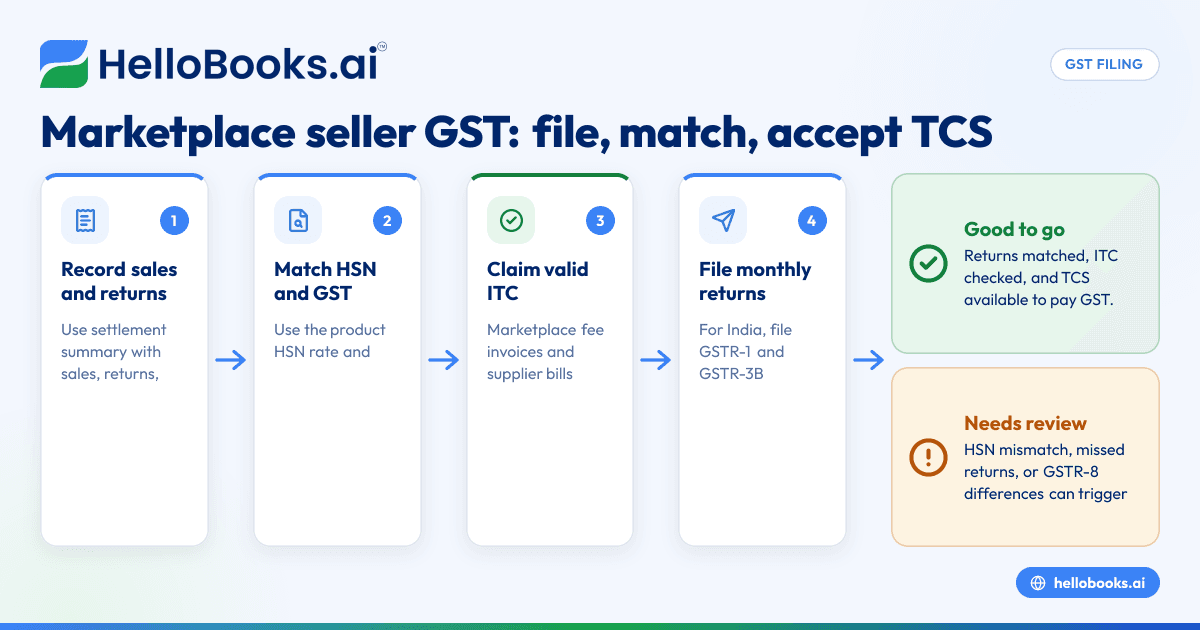
Seller માટે અગત્યની વાત આ છે: marketplace દ્વારા collect કરાયેલ TCS સામાન્ય રીતે sellerના ledger પર cash-type credit તરીકે જોવામાં આવે છે; તે purchase ITC જેવી બાબત નથી. એટલે તેને stock purchase પર મળતા input tax credit સાથે ગડબડ કરવી નહીં.
Marketplace settlementમાં જો તમે જુઓ કે gross sale value એક છે, bank transfer ઓછો છે, તો એનો અર્થ હંમેશા “ઓછું વેચાણ” નથી. શક્ય છે કે platformએ પોતાનો commission કાપ્યો હોય, shipping recovery adjust કરી હોય, ad charges deduct કર્યા હોય, returns net કર્યા હોય અને TCS પણ collect કર્યો હોય. Return file કરતી વખતે sellerએ પોતાની outward supplies અને purchase-side creditsને booksમાં સાચી જગ્યાએ બેસાડવી પડે.
આ જ જગ્યા પર reconciliation ખૂબ જ મહત્વની બની જાય છે. Bank statement upload કરીને settlement receipt match કરવી, marketplace fees expense તરીકે capture કરવી, અને purchase billsમાંથી ITC અલગ ઓળખવી — આ બધું spreadsheetમાં કરવું ભારે પડે. HelloBooksમાં India માટે bank statement upload કરીને AI-assisted reconciliation કરી શકાય છે, જેથી NEFT, RTGS, IMPS અથવા payout entries invoice અને settlement સામે match કરવી સરળ બને.
Marketplace fees, purchase ITC અને GSTR-2Bનું વાસ્તવિક કામ
Amazon અથવા Flipkart seller માટે GST માત્ર sales tax નથી. તમારા પર platform commission, fulfilment fees, warehousing charges, advertising charges જેવી servicesના invoices પણ આવે છે. જો supplier અથવા platform invoice પર તમારો GSTIN સાચો હોય અને credit માટેની કાનૂની શરતો પૂરી થતી હોય, તો તેનો ITC claim કરવાનો સવાલ ઊભો થાય છે. ITCની eligibility, restriction અને documentation સંબંધિત નિયમો CGST Act, સંબંધિત Rules અને CBIC દ્વારા પ્રકાશિત guidanceમાં ચકાસવા જોઈએ.
પણ હકીકતમાં sellerને જે મુશ્કેલી આવે છે, તે આ છે:
- purchase bill PDF છે, entry થઈ નથી
- supplierએ upload મોડું કર્યું છે, તેથી GSTR-2Bમાં invoice દેખાતું નથી
- amount booksમાં એક છે અને portal dataમાં બીજી છે
- platform fee invoice અને settlement deductionને બે વાર expense બનાવી દેવાની ભૂલ થાય છે
જો તમે handmade goods, garments, cosmetics, electronics accessories અથવા packaged products વેચો છો, તો HSN, supplier invoice અને stock inward વચ્ચે linkage રાખવી જરૂરી છે. OCRથી purchase bills capture થાય તો manual typing ઘટે છે. HelloBooks purchase invoicesને photo અથવા PDFમાંથી વાંચીને record કરવામાં મદદ કરે છે, અને પછી GSTR-2A/2B reconciliation તથા ITC tracking દ્વારા missing અથવા mismatched invoices દેખાડી શકે છે.
આ માત્ર return filingનું convenience નથી; આ working capital બચાવવાની વાત છે. કારણ કે ITC રહી જાય તો GST cashમાં વધારે ભરવો પડે.
Invoice, e-invoice, e-way bill અને place of supplyની ગડબડ ક્યાં થાય છે
બધા sellerને e-invoice લાગુ પડતું નથી. કયા turnover class પર IRN અને signed QR જરૂરી બને, તે બાબત CGST Rules, CBIC notifications અને Invoice Registration Portal/GST system advisoriesમાં current formમાં પ્રકાશિત થાય છે; તેથી ચોક્કસ threshold official source પરથી verify કરવી જોઈએ.
પણ ecommerce seller માટે even જ્યારે e-invoice ફરજિયાત ન હોય, ત્યારે પણ invoice discipline જરૂરી છે. કારણ કે marketplace listing data, dispatch records, customer address, courier movement અને GST return data વચ્ચે consistency હોવી જોઈએ.
ખાસ કરીને આ ભૂલો બહુ જોવા મળે છે:
- Gujarat customer માટે local dispatch હોવા છતાં IGST લગાવી દેવું
- Rajasthan shipment પર CGST/SGST લગાવી દેવું
- HSN એક product listingમાં જુદું અને invoiceમાં જુદું રાખવું
- return અથવા cancellation માટે credit note સમયસર record ન કરવું
- e-way bill જરૂરી હોવા છતાં dispatch document trail અધૂરી રાખવી
e-way billના applicability rules, consignment value conditions અને documentation requirements CGST Rules, state GST provisions અને NIC e-Way Bill System/CBIC guidanceમાં current formમાં ચકાસવા જોઈએ.
HelloBooks invoice બનાવતી વખતે tax head split અને place of supply logic ગોઠવવામાં મદદ કરે છે; જ્યાં applicable હોય ત્યાં invoiceમાંથી e-way bill details તૈયાર કરવી પણ સરળ બને છે. જો તમારું business e-invoicing હેઠળ આવે, તો invoice save સમયે IRN અને signed QR મેળવવાનો workflow manual JSON upload કરતાં વધુ સીધો થઈ શકે છે.
આ આંકડા સમજાવવા માટે કલ્પિત છે: Gujarat sellerની monthly picture કેવી દેખાય
ચાલો એક illustrative and invented પરિસ્થિતિ લઈએ. આ figures બનાવટના છે, માત્ર settlement, TCS, expense અને ITC વચ્ચેનો સંબંધ સમજાવવા માટે છે. આ ગણતરી freight classification, blocked credit issues, product-specific HSN disputes, year-end adjustments અને legal interpretation જેવા મુદ્દાઓને પૂર્ણ રીતે cover કરતી નથી.
માનો કે Ahmedabadનો એક seller ઘરગથ્થુ products Amazon અને Flipkart પર વેચે છે.
- મહિનાની gross taxable outward supplies: ₹4,80,000
- customer returns and cancellations adjustment: ₹60,000
- net taxable supplies considered for marketplace settlement view: ₹4,20,000
- marketplace commission plus fulfilment charges before GST: ₹52,000
- marketplace service GST shown on those invoices: ₹9,360
- registered suppliers પાસેથી ખરીદેલ stock value: ₹1,90,000
- supplier invoices પર GST: ₹22,800
- marketplace દ્વારા collect કરાયેલ TCS: official rate current source પરથી verify કરવો જોઈએ; અહીં માનીએ કે settlement ledgerમાં ₹2,100 equivalent deduction દેખાય છે as an invented figure
- bank payout received after deductions: ₹3,56,540
અહીં seller માટે accounting thought-process એવો બને:
- Gross sale અને returns booksમાં capture થાય.
- Marketplace fees expense તરીકે જાય.
- Fees પર invoice-available GST ITC sideમાં consider થાય.
- Supplier purchase billsથી અલગ ITC ઉભી થાય.
- TCSને purchase ITC સમજીને નહીં, પરંતુ appropriate cash-ledger effectવાળી item તરીકે track કરવી પડે.
- Bank receipt sale value નથી; તે settlement પછીનું net inflow છે.
જો seller spreadsheetમાં માત્ર bank creditને sales માને, તો outward supply ઓછું દેખાશે. જો gross saleને booksમાં રાખીને platform fees record ન કરે, તો profit ખોટો દેખાશે. જો purchase invoices capture ન કરે, તો ITC ચૂકી જશે. અને જો TCS સ્વીકારવાની પ્રક્રિયા portal પર reconcile ન થાય, તો cash flowનો અંદાજ બગડશે.
એટલા માટે ecommerce seller માટે bookkeeping અને GST filingને અલગ કામ માનવું નુકસાનકારક છે.
Free filing ત્યારે જ કામનું છે જ્યારે books ફરીથી બાંધવા ન પડે
ઘણા sellerનો સવાલ હોય છે: “મારે GSTR-1 અને GSTR-3B file થઈ જાય એટલું પૂરતું છે; પછી software free હોય તો સારું.” પરંતુ ecommerceમાં filing button દબાવવું અંતિમ પગલું છે. પહેલા data clean હોવો જોઈએ.
Practical checklist જુઓ:
- Sales invoices timely record થયા છે?
- Credit notes દાખલ થયા છે?
- Marketplace fee invoices booksમાં છે?
- Purchase bills OCR કે manual entryથી ચડાવ્યા છે?
- GSTR-2B સાથે ITC reconcile થયું છે?
- Bank payout lines settlement સામે match થાય છે?
- Multi-state business હોય તો અલગ GSTIN books separated છે?
જો આ બધું systemમાં થાય, તો direct filing ખરેખર ઉપયોગી બને છે. HelloBooksમાં GSTR-1 અને GSTR-3B direct filing available છે, એટલે invoice અને purchase data તૈયાર હોય તો return portal પર manually retype કરવાની જરૂર ઘટે છે. Multi-state seller માટે એકથી વધુ GSTIN એક loginમાં રાખી શકાય છે, અને Ahmedabad warehouse સાથે Maharashtra registration જેવા structure હોય તો state-wise books અલગ સંભાળવા સરળ બને છે.
જો તમે હજુ Tallyમાં historical books રાખો છો, તો બધું એકદમ બદલવાની જરૂર નથી. Tally migration અથવા connector approachથી transition staged રીતે કરી શકાય છે, જેથી old ledger history અને new GST workflow વચ્ચે continuity રહે.
Gujarat કે Indiaના seller માટે day-to-day workflow શું સારું રહે
Ecommerce seller માટે sustainable workflow flashy હોવો જરૂરી નથી; consistent હોવો જરૂરી છે.
સારો monthly rhythm સામાન્ય રીતે એવો દેખાય:
- order/invoice data timely capture કરો
- returns આવે ત્યારે credit notes/adjustments record કરો
- marketplace fee invoices download કરો
- supplier purchase bills PDF, scan અથવા mobile photoથી booksમાં ચડાવો
- bank statement upload કરીને payouts reconcile કરો
- GSTR-2B સાથે ITC check કરો
- પછી outward summary અને tax liability review કરીને return file કરો
જો stock business છે, તો inventoryને bookkeepingથી અલગ ન રાખવું. Marketplace sellerને “કેટલું વેચાયું” એ કરતાં “કયું stock હજી booksમાં છે” વધુ મહત્વનું બની શકે છે, ખાસ કરીને returns અને damaged goodsને કારણે. HelloBooks inventory movement purchase અને sale entries સાથે જ update રાખે છે, જેથી closing stock, margin અને product-wise performance વધારે વિશ્વસનીય રીતે દેખાય.
Owners ઘણીવાર desk પાસે ન હોય. Mobile પરથી invoice, expense અથવા quick approval કરવાની જરૂર પડે. તે માટે phone-based access ઉપયોગી છે. અને કેટલાક business owners accounting terms કરતાં WhatsApp-style પ્રશ્નો વધારે સરળતાથી પૂછે છે; આ pattern Indiaમાં સામાન્ય છે. તેથી quick guidance માટે WhatsApp-based assistant flow પણ handy બની શકે છે, ખાસ કરીને Hindi, English અથવા Hinglish વપરાશમાં.
Return file કરતાં પહેલાં official source ક્યાં જોવું
GSTમાં current number, threshold અથવા due-date પ્રકારની કોઈપણ ચોક્કસ વાત માટે final reliance હંમેશા official source પર જ રાખવી જોઈએ. Sellerએ ખાસ કરીને આ sources જોવાના:
- CBIC notifications, circulars and GST law text
- GST Portal/GSTN advisories and return instructions
- e-invoice applicability માટે official portal guidance
- e-way bill માટે official system guidance
HSN, GSTIN અને invoice validation માટે practical checking tools ઉપયોગી બને છે. HelloBooksના India pages પર GSTIN validator, HSN code search, GST invoice validator અને GST reconciliation checker જેવા toolsથી basic validation ઝડપથી કરી શકાય છે. જો તમે process simplify કરવા માંગતા હો, તો GST return filing software, bank reconciliation software, e-invoicing software અને accounting software India વિશે વધુ જોઈ શકો છો. Plans માટે current details pricing પર છે.
અંતમાં સીધી વાત: Amazon અને Flipkart seller માટે “free GST filing” ત્યારે જ ખરેખર ફાયદાકારક છે જ્યારે sales, settlement, TCS, purchase ITC, bank payout અને stock એક જ consistent systemમાં હોય. નહિતર filing free હોય છતાં errors મોંઘા પડે છે. જો તમારા books હજી fragmented હોય, તો પહેલા data flow ઠીક કરો; return filing પછી સરળ બની જાય છે.


