


Key takeaways
What this article covers, in order:
- GSTR-1ல் இந்த வேறுபாடு ஏன் இத்தனை முக்கியம்?
- முதலில் பார்க்க வேண்டியது: buyer registered ஆ, unregistered ஆ?
- B2B, B2CL, B2CS: practical-ஆக எப்படி பிரிக்கலாம்?
- Tamil Nadu sellerக்கு இது எப்படி நடக்கிறது என்று ஒரு கற்பனை கணக்கு
- place of supply தவறு ஆனால் B2B/B2C reporting கூட தவறிவிடும்
- credit note, debit note வந்தால் classification எப்படி தொடரும்?
GSTR-1ல் இந்த வேறுபாடு ஏன் இத்தனை முக்கியம்?
GSTR-1 என்பது வெறும் sales summary அல்ல. இந்தியாவின் GST அமைப்பில், Central Goods and Services Tax Act, 2017 மற்றும் அதனுடன் உள்ள rules கீழ் outward supplies report செய்யும் முக்கிய return இதுதான். இதன் தொழில்நுட்ப இயக்கம் GSTN மூலமாகவும், நடைமுறை மற்றும் சட்ட விளக்கங்கள் CBIC அறிவிப்புகள், circulars, notifications, advisory updates மற்றும் GST Portal help content மூலமாகவும் வெளிவருகின்றன.
ஒரு sale-ஐ B2B ஆக report செய்ய வேண்டிய இடத்தில் B2C ஆக போட்டுவிட்டால், tax amount அரசுக்கு சென்றிருந்தாலும் பிரச்சினை முடிவதில்லை. உங்கள் customer registered person என்றால், அவருக்கு input tax credit தொடர்பான matching, visibility, reconciliation பிரச்சினை வரலாம். அதுதான் பல wholesalers, manufacturers, service providers, distributors, contractors, SaaS firms எல்லோருக்கும் இங்கு real pain point ஆகிறது.
மாறாக, unregistered buyer-க்கு விற்கப்பட்ட sale-ஐ B2B போலக் காட்ட முயன்றால் GSTIN validation, return mismatch, buyer communication issue போன்றவை எழலாம். இதனால் books, GST return, e-invoice data, e-way bill data, bank receipt matching, மற்றும் month-end reconciliation எல்லாம் ஒரே நேரத்தில் பாதிக்கப்படும்.
முதலில் பார்க்க வேண்டியது: buyer registered ஆ, unregistered ஆ?
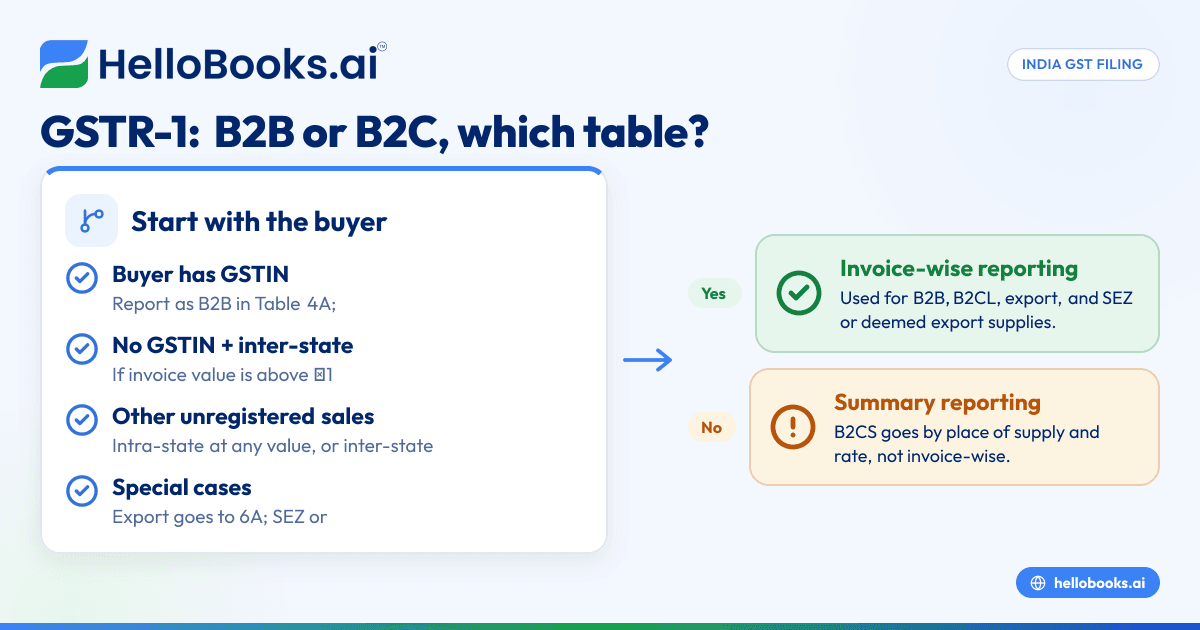
GSTR-1 classification-இன் முதல் filter buyer-ன் registration status. வாங்குபவருக்கு செல்லுபடியான GSTIN இருந்தால், அந்த outward supply பொதுவாக B2B bucket-இல் பார்க்கப்படும். GSTIN இல்லாத retail customer, walk-in buyer, end consumer, small unregistered business ஆகியோருக்கான sale பொதுவாக B2C bucket-இல் போகும்.
ஆனால் இங்கே ஒரு முக்கிய இந்திய நடைமுறை nuance இருக்கிறது: invoice issue செய்யும் நேரத்தில் நீங்கள் buyer-ன் GSTIN-ஐ பெற்றீர்களா, அது valid தானா, supply-க்கான place of supply என்ன, intra-state ஆ inter-state ஆ, CGST+SGST போகிறதா அல்லது IGST போகிறதா — இவை classification-ஐ மட்டுமல்ல, tax head split-ஐயும் தீர்மானிக்கும். இதுதான் பல businesses Tally export, Excel summary, மற்றும் portal typing-இல் தவறு செய்வதற்கான common காரணம்.
அதனால் invoice உருவாக்கும் தருணத்திலேயே customer GSTIN, state code, place of supply சரியாக capture ஆக வேண்டும். smart invoicing பயன்படுத்தும் business-க்கு இந்த அடிப்படை fields consistent-ஆக இருக்கும்; place of supply அடிப்படையில் CGST, SGST, IGST split சரியாக அமைந்தால் GSTR-1 classification பிழைகள் குறையும்.
B2B, B2CL, B2CS: practical-ஆக எப்படி பிரிக்கலாம்?
இந்தியாவில் most confusion table names-ல்தான் வருகிறது. Trade language-ல் மக்கள் “B2B”, “B2C Large”, “B2C Small” என்று சொல்வார்கள். ஆனால் நீங்கள் current return design-ஐ உறுதி செய்ய வேண்டியது GST Portal offline utilities, GSTN advisories, CBIC notifications, மற்றும் relevant law updates மூலமாகத்தான்.
Practical logic:
- Registered buyer with GSTIN: பொதுவாக B2B reporting bucket.
- Unregistered buyer + certain inter-state invoice conditions: B2CL bucket ஆக வரலாம்.
- Unregistered buyer + remaining retail/consumer supplies: B2CS summary bucket ஆக வரலாம்.
இங்கே threshold அல்லது cut-off பற்றிய எந்த current figure-யும் bare fact ஆக memory-யிலிருந்து நம்பக் கூடாது. அது CGST Act framework கீழ் CBIC notification மற்றும் GST Portal schema/update notes-இல் publish செய்யப்படும் current figure-ஐ பார்த்தே உறுதி செய்ய வேண்டும். ஏனெனில் law change மற்றும் portal implementation change சில நேரம் வேறுபட்ட நேரத்தில் reflect ஆகலாம்.
நீங்கள் gst-return-filing-software மூலம் invoices-லிருந்து return build செய்தால், already recorded data-விலிருந்து GSTR-1 மற்றும் GSTR-3B consistency maintain செய்ய எளிதாகும். இது manual summary sheet வைத்திருப்பதைவிட பாதுகாப்பான நடைமுறை.
Tamil Nadu sellerக்கு இது எப்படி நடக்கிறது என்று ஒரு கற்பனை கணக்கு
இப்போது முழுக்க illustrative, invented figures கொண்டு ஒரு நிலையைப் பார்ப்போம். இந்த எண்கள் உண்மையான rate, threshold, liability, notification status ஆகியவற்றை நிரூபிப்பதற்கல்ல; current law, CBIC notification, GST Portal validation rules, மற்றும் classification edge cases ஆகியவற்றை இது முழுவதுமாக cover செய்யாது.
மதுரையில் இருக்கும் ஒரு furniture seller மூன்று invoices issue செய்கிறார் என்று வைத்துக்கொள்வோம்:
- Invoice A: கோயம்புத்தூரில் உள்ள ஒரு registered hotel-க்கு ரூபாய் 48,000 taxable value கொண்ட sale
- Invoice B: showroom-க்கு வந்த end customer-க்கு ரூபாய் 62,000 taxable value கொண்ட retail sale
- Invoice C: Bengaluru-வில் உள்ள unregistered home buyer-க்கு ரூபாய் 1,40,000 taxable value கொண்ட sale
இந்த illustrative scenario-வில்:
- Invoice A-க்கு buyer GSTIN இருப்பதால் இது B2B bucket-இல் பார்க்கப்படும்.
- Invoice B unregistered local retail sale என்பதால் B2C summary bucket-இல் போகலாம்.
- Invoice C inter-state unregistered sale; current law-இன் applicable published figure மற்றும் GST Portal rules அடிப்படையில் அது B2CL அல்லது B2CS என தீர்மானிக்கப்படும். இந்த cut-off figure CBIC notification மற்றும் GST Portal published guidance-இல் check செய்யப்பட வேண்டும்.
Invoice C-க்கு place of supply Karnataka என்றால் tax head split Tamil Nadu seller-க்கு IGST பக்கம் செல்லும்; Invoice A போன்ற intra-state supply-ல் CGST மற்றும் SGST split வரும். இதை invoice save செய்யும் போதே software enforce செய்யாவிட்டால், GSTR-1 filing முன் mismatch தெரியும்.
அதனால் e-invoicing-software பயன்படுத்தும் eligible businesses-க்கு IRN, signed QR, invoice data consistency ஆகியவை ஒரே flow-இல் வரும். E-invoice mandate எப்போது பொருந்தும், எந்த turnover figureக்கு பொருந்தும் என்பது e-invoicing provisions கீழ் CBIC notifications மற்றும் NIC/GST system advisories-இல் published current position பார்த்தே உறுதி செய்ய வேண்டும்.
place of supply தவறு ஆனால் B2B/B2C reporting கூட தவறிவிடும்
இந்திய GST-ல் classification என்பது buyer registered ஆ இல்லையா என்பதோடு முடிவதில்லை. Place of supply rules மிக முக்கியம். Services-க்கு ஒரு logic, goods-க்கு வேறு logic வரலாம். IGST Act, 2017 provisions இங்கே relevant. Regulator side-ல் CBIC clarifications மற்றும் GST Portal data structure இரண்டையும் கவனிக்க வேண்டும்.
உதாரணமாக:
- Chennai seller, Chennai registered buyer: பொதுவாக intra-state treatment
- Chennai seller, Hyderabad registered buyer: பொதுவாக inter-state treatment
- Goods bill-to/ship-to model: reporting nuance இருக்கலாம்
- Installation at site, works contract, or event-based supply: place-of-supply logic நுட்பமாக மாறலாம்
இதனால்தான் B2B/B2C classification discussion-ஐ tax head split-இலிருந்து பிரிக்க முடியாது. Invoice-ல் தவறாக CGST+SGST போட்டுவிட்டு return-ல் IGST logic எதிர்பார்த்தால் buyer reconciliation தடுமாறும். accounting-software-india போன்ற setup-இல் place-of-supply மற்றும் tax head split invoice உருவாக்கும்போதே சரியாக வந்தால், later-stage GSTN filing errors குறையும்.
credit note, debit note வந்தால் classification எப்படி தொடரும்?
Original sale எந்த bucket-இல் report செய்யப்பட்டதோ, subsequent adjustment documents-க்கும் அதே context முக்கியம். Registered buyer-க்கு issue செய்த invoice-க்கு பிறகு commercial discount, goods return, pricing correction காரணமாக credit note வந்தால், அது buyer-linked reporting effect கொண்டு வரும். Unregistered buyer-க்கு sale இருந்தால், அதற்கான adjustment summary treatment வேறுபடலாம்.
இங்கே bare mapping-ஐ நினைவில் வைத்து blindly file செய்வதைவிட current table structure மற்றும் amendment flow-ஐ GST Portal help, release notes, return instructions, மற்றும் CBIC-backed updates-இல் check செய்ய வேண்டும். ஏனெனில் note reporting, amendments, reference invoice linkage போன்றவை system design-ஐ சார்ந்தவை.
ஒரு practical இந்திய pain point என்னவென்றால்: sales team invoice போடும் போது GSTIN capture செய்யவில்லை; month-end-ல் buyer phone செய்து “எங்கள் ITC reflect ஆகவில்லை” என்பார். பிறகு accounts team credit note issue செய்யலாமா, amended invoice வேண்டுமா, next return-ல் rectify செய்யலாமா என்று குழம்புவார்கள். இந்த நிலை குறைய invoice master data discipline தேவை.
buyer GSTIN பிறகு கொடுத்தால் என்ன செய்ய வேண்டும்?
இது wholesalers, machine suppliers, B2B service firms, fabric traders, electronics distributors எல்லோருக்கும் அடிக்கடி வரும் issue. Sale நடந்தபோது buyer தன்னை unregistered போல காட்டியிருக்கலாம், அல்லது accounts executive GSTIN கேட்காமல் invoice போட்டிருக்கலாம். பிறகு buyer WhatsApp அல்லது email-ல் GSTIN அனுப்பி “B2B bill வேண்டும்” என்பார்.
அப்போது மூன்று விஷயம் separate-ஆக பார்க்க வேண்டும்:
- Supply நடந்த தேதியில் buyer உண்மையில் registered person தானா?
- Original invoice legally revise செய்ய முடியுமா, அல்லது note/amendment route வேண்டுமா?
- Current GST Portal functionality அந்த correction-ஐ எப்படி allow செய்கிறது?
இதற்கு சட்ட ஆதாரம் CGST Act, related invoicing rules, மற்றும் CBIC clarifications. Technical answer GSTN portal process-இல் இருக்கும். எனவே invoice change செய்யும் முன் CA அல்லது GST practitioner review அவசியம்.
எந்த business-க்கும் master customer records வைத்திருப்பது சிறந்தது. GSTIN validate செய்து save செய்வது later dispute குறைக்கும். இதற்கு tools/gstin-validator உதவும். Invoice fields சரியா உள்ளதா என்று பார்க்க tools/gst-invoice-validator பயன்படும்.
e-invoice, e-way bill, GSTR-1: மூன்றும் ஒன்றோடொன்று இணைந்திருக்கும்
India-வில் mid-sized மற்றும் growing businesses-க்கு இது ஒரு தனி reality. E-invoice applicable entity என்றால் invoice data IRN generation stage-இலேயே structured ஆகிவிடும். Goods movement இருந்தால் e-way bill details-ும் தொடர்புடையதாகும். பிறகு GSTR-1 file செய்யும் போது invoice records, transport records, books, receivables, bank collections இவை ஒன்றுடன் ஒன்று ஒத்திருக்க வேண்டியது அவசியம்.
உதாரணமாக, inter-state B2B goods sale ஒன்று invoice-ல் ஒரு state-ஆக, e-way bill-ல் மற்றொரு destination-ஆக, books-ல் இன்னொரு ledger-ஆக இருந்தால் reconciliation issue உறுதி. அதனால் e-way-bill-software மற்றும் e-invoice workflow invoice source data-யிலிருந்து இயங்குவது double entry குறைக்கும்.
Eligible business-களுக்கு IRN மற்றும் signed QR invoice save செய்யும் தருணத்திலேயே உருவானால், later manual JSON upload தவிர்க்கலாம். Multi-branch setup இருந்தால் multi-GSTIN handlingவும் முக்கியம். Tamil Nadu, Karnataka, Kerala போன்ற மாநிலங்களில் தனித்தனியாக GSTIN வைத்திருக்கும் business-க்கு ஒரே login-இல் ஒவ்வொரு GSTIN-க்கும் outward supplies track செய்வது practical advantage.
books, receipts, returns மூன்றும் ஒத்திருக்காவிட்டால் B2C side-ல் அதிகம் வழுக்கும்
B2B invoices-க்கு buyer pressure இருப்பதால் அவை சீக்கிரம் சரியாகிவிடும். ஆனால் B2C summary side-ல் தான் அதிக slippage நடக்கும். காரணங்கள்:
- POS/export-to-Excel summary incomplete
- Cash, UPI, NEFT, IMPS, RTGS receipts mix ஆக இருப்பது
- Online and offline channels separate books-ல் இருப்பது
- State-wise summary தயார் செய்யாமல் direct portal entry செய்தல்
- Returns team மற்றும் sales team data வேறுபடுதல்
இதற்காக bank receipts against invoices அல்லது daily sales summaries against deposits reconcile செய்ய வேண்டும். இங்கே ஒரு விஷயம் தெளிவாக சொல்ல வேண்டும்: India market-க்கு bank statement upload செய்து reconciliation செய்யும் workflow உதவியாக இருக்கும்; live bank feed என்று கருதக் கூடாது. bank-reconciliation-software வழியாக uploaded bank statement-இலிருந்து receipts match செய்தால் month-end summary அதிக நம்பகமாகும்.
Supplier bills OCR capture, purchase bookkeeping, outward supply consistency, inventory movement, receivable matching — இவை எல்லாம் ஒரே ledger discipline-ஐ உருவாக்கும். அதனால் ai-bookkeeping அல்லது inventory போன்ற workflows GST return quality-ஐ indirect-ஆக மேம்படுத்தும்.
Tally-யிலிருந்து வேலை செய்பவர்களுக்கு தனி கவனம்
இந்தியாவில் இன்னும் பல accountants, tax practitioners, SMEs Tally-யை மையமாக வைத்து வேலை செய்கிறார்கள். பிரச்சினை என்னவென்றால் sales entry Tally-யில், e-invoice வேறு utility-யில், GSTR-1 JSON வேறு export-யில், bank reconciliation spreadsheet-ல், GSTIN validation browser tab-ல் — இப்படியாக process உடைந்து கிடக்கும்.
அதனால் migration ஒரே நாளில் செய்ய வேண்டிய அவசியமில்லை. tally-alternative பற்றி பார்க்கும் business-களுக்கு connector அல்லது staged migration useful ஆகும். பழைய data continuity காப்பாற்றி, current period outward supplies, GSTR-1 filing, inventory, receivables, மற்றும் reports ஆகியவற்றை structured system-க்கு கொண்டு வரலாம். Financial reports books data-யிலிருந்தே வருவதால், sales register மற்றும் return figures ஒத்திருக்கிறதா என்று management check செய்ய முடியும்.
Tamil Nadu business owner மாதம் தோறும் என்ன review செய்யலாம்?
இந்தப் பகுதி checklist மாதிரி தோன்றினாலும், நோக்கம் filing tension குறைப்பது:
- customer GSTIN captured and validated ஆனதா?
- place of supply invoice-க்கு சரியா?
- CGST/SGST vs IGST split சரியா?
- inter-state unregistered invoices current published B2CL rule அடிப்படையில் சரியான bucket-லா?
- B2C summary state-wise consolidate ஆனதா?
- credit/debit note linkage preserved ஆக உள்ளதா?
- e-invoice applicable invoices எல்லாம் IRN status உடனா?
- goods movement இருந்தால் e-way bill alignment சரியா?
- bank statement upload செய்து receipts match செய்தீர்களா?
- GSTR-1 figures மற்றும் GSTR-3B outward tax summary broadly reconcile ஆகிறதா?
GSTR-2A/2B reconciliation பெரும்பாலும் purchase side-க்காக பயன்படுத்தப்பட்டாலும், overall GST discipline-க்கு அது முக்கியம்; output side-ல் நீங்கள் issue செய்த invoices, input side-ல் suppliers issue செய்த invoices, ITC tracking, reverse charge, TDS/TCS entries ஆகியவை books-ஐ முழுமையாக்கும். Mobile app மூலம் field-லிருந்தே invoices மற்றும் expenses capture செய்தால் month-end backlog குறையும். Hindi, English, Hinglish வேலைப்பழக்கம் உள்ள owner-களுக்கு Noor assistant on WhatsApp quick queries-க்கு உதவலாம்.
இறுதியாக: சரியான question “B2B ஆ B2C ஆ?” மட்டும் இல்லை
சரியான இந்திய கேள்வி இதுதான்: buyer GSTIN என்ன, supply nature என்ன, place of supply என்ன, applicable GST law treatment என்ன, GST Portal current schema என்ன, invoice data books-உடன் ஒத்திருக்கிறதா? GSTR-1ல் B2B vs B2C classification என்பது இந்த பெரிய system-இன் ஒரு பகுதி மட்டுமே.
நீங்கள் current figures, thresholds, due dates, penalties, or latest return table behavior பற்றி உறுதி செய்ய வேண்டும் என்றால் CBIC notifications, GSTN/GST Portal advisories, CGST Act/IGST Act provisions, மற்றும் qualified GST professional guidance-ஐ பயன்படுத்த வேண்டும். Practical filing-க்கு automation வேண்டும் என்றால் gst-return-filing-software, invoice accuracy-க்கு smart invoicing, India setup details-க்கு in, மற்றும் fitment பார்க்க demo உதவும். Pricing பார்க்க வேண்டும் என்றால் pricing பக்கத்தில்தான் current தகவல் இருக்கும்.


