

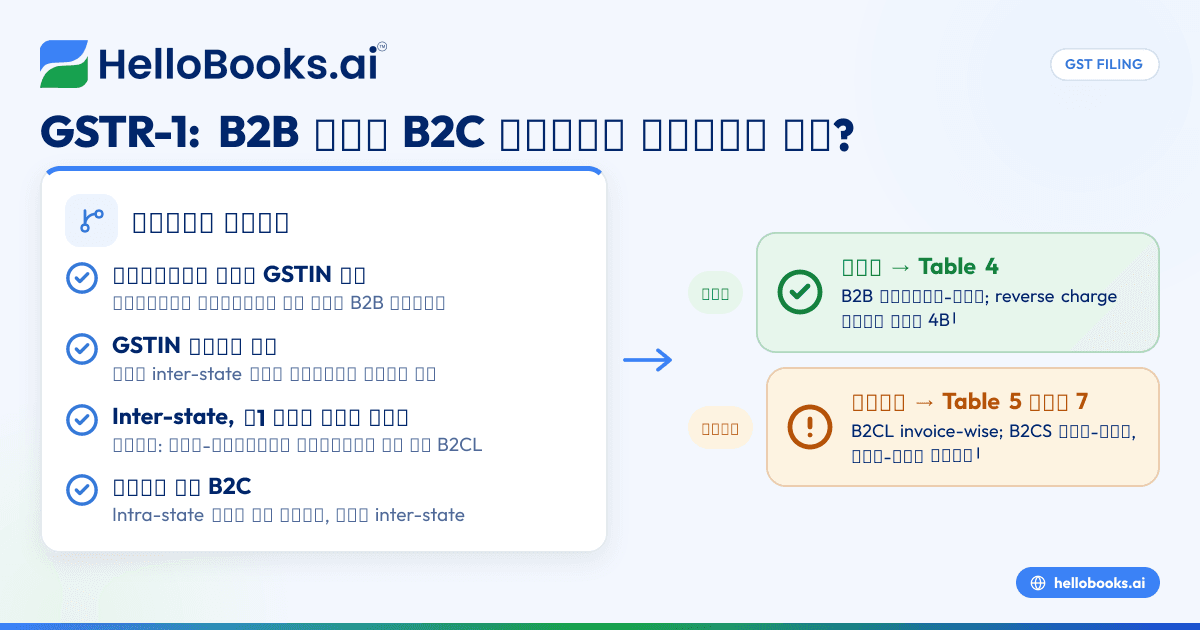

Key takeaways
What this article covers, in order:
- B2B ਜਾਂ B2C ਤੈਅ ਕਰਨ ਲਈ ਸਭ ਤੋਂ ਪਹਿਲਾਂ ਕੀ ਦੇਖਣਾ ਹੈ?
- GSTR-1 ਵਿੱਚ ਕਿਹੜੀ sale ਕਿਹੜੇ ਹਿੱਸੇ ਵਿੱਚ ਜਾਂਦੀ ਹੈ?
- Place of supply ਗਲਤ ਹੋਇਆ ਤਾਂ B2B/B2C ਹੀ ਨਹੀਂ, tax head ਵੀ ਗਲਤ ਹੋ ਜਾਂਦਾ ਹੈ
- B2B invoices ਲਈ ਕਿਹੜੀ detail critical ਹੁੰਦੀ ਹੈ?
- B2C reporting ਵਿੱਚ ਲੋਕ ਸਭ ਤੋਂ ਵੱਧ ਕਿੱਥੇ ਫਸਦੇ ਹਨ?
- Credit notes, debit notes ਅਤੇ late GSTIN ਵਾਲੀਆਂ situations
ਭਾਰਤ ਵਿੱਚ GSTR-1 ਵਿੱਚ B2B ਜਾਂ B2C ਦੀ ਸਹੀ ਵਰਗੀਕਰਨ ਦਾ ਸਧਾਰਣ ਨਿਯਮ ਇਹ ਹੈ: ਜੇ buyer ਕੋਲ ਵੈਧ GSTIN ਹੈ ਤਾਂ sale ਆਮ ਤੌਰ ਤੇ B2B ਹਿੱਸੇ ਵਿੱਚ ਜਾਂਦੀ ਹੈ; ਜੇ buyer unregistered ਹੈ ਤਾਂ sale B2C ਵਿੱਚ ਜਾਂਦੀ ਹੈ, ਅਤੇ ਫਿਰ place of supply ਅਤੇ invoice value ਦੇ ਆਧਾਰ ਤੇ ਉਸਦੀ reporting ਵੱਖ ਹੋ ਸਕਦੀ ਹੈ। ਇਹ ਫਰਕ ਸਿਰਫ਼ return ਭਰਨ ਲਈ ਨਹੀਂ, ਸਗੋਂ buyer ਦੇ input tax credit, ਤੁਹਾਡੇ GST portal data, ਅਤੇ CBIC ਦੇ ਕਾਨੂੰਨੀ framework ਹੇਠ ਸਹੀ disclosure ਲਈ ਮਹੱਤਵਪੂਰਨ ਹੈ। ਮੌਜੂਦਾ table mapping ਅਤੇ instructions GSTN ਦੇ GST portal ਉੱਤੇ GSTR-1 instructions ਵਿੱਚ published ਹੁੰਦੀਆਂ ਹਨ।
B2B ਜਾਂ B2C ਤੈਅ ਕਰਨ ਲਈ ਸਭ ਤੋਂ ਪਹਿਲਾਂ ਕੀ ਦੇਖਣਾ ਹੈ?
ਸਭ ਤੋਂ ਪਹਿਲਾਂ buyer ਦੀ registration status ਦੇਖੋ। GST ਕਾਨੂੰਨ, ਅਰਥਾਤ Central Goods and Services Tax Act, 2017 ਅਤੇ ਉਸਦੇ rules, ਅਤੇ ਇਸਦੀ administration CBIC ਅਤੇ GSTN-backed GST portal ਰਾਹੀਂ ਹੁੰਦੀ ਹੈ। ਜੇ ਤੁਹਾਡਾ customer registered person ਹੈ ਅਤੇ ਉਸਦਾ GSTIN ਸਹੀ ਹੈ, ਤਾਂ invoice ਨੂੰ B2B ਵਜੋਂ ਦੇਖਿਆ ਜਾਂਦਾ ਹੈ। ਜੇ customer ਕੋਲ GSTIN ਨਹੀਂ ਹੈ, ਜਾਂ ਉਹ transaction ਲਈ unregistered customer ਵਾਂਗ treat ਹੋ ਰਿਹਾ ਹੈ, ਤਾਂ ਉਹ B2C ਵੱਲ ਜਾਂਦੀ ਹੈ।
ਇਸੇ ਕਰਕੇ invoice ਬਣਾਉਂਦੇ ਸਮੇਂ GSTIN ਨੂੰ “ਬਾਅਦ ਵਿੱਚ ਪਾ ਲਾਂਗੇ” ਵਾਲੀ ਸੋਚ ਖਤਰਨਾਕ ਹੈ। ਇੱਕ ਵਾਰ ਤੁਸੀਂ sale ਨੂੰ galat section ਵਿੱਚ report ਕਰ ਦਿੱਤਾ, buyer ਦੀ GSTR-2B visibility ਪ੍ਰਭਾਵਿਤ ਹੋ ਸਕਦੀ ਹੈ। Registered buyer ਲਈ ਇਹ ਸਿੱਧਾ ITC dispute ਬਣ ਸਕਦਾ ਹੈ।
ਜੇ ਤੁਸੀਂ invoice ਬਣਾਉਂਦੇ ਸਮੇਂ hi customer ਦਾ GSTIN validate ਕਰ ਲਓ, ਤਾਂ B2B/B2C confusion ਕਾਫ਼ੀ ਘਟ ਜਾਂਦੀ ਹੈ। HelloBooks ਵਿੱਚ GST invoicing ਕਰਦੇ ਹੋਏ GSTIN, place of supply ਅਤੇ tax head split ਇਕੱਠੇ capture ਹੋ ਜਾਂਦੇ ਹਨ, ਇਸ ਲਈ Punjab ਦੇ buyer ਲਈ CGST/SGST ਅਤੇ Delhi ਜਾਂ Karnataka ਵਾਲੇ buyer ਲਈ IGST ਦੀ direction manual guesswork ਨਾਲ ਨਹੀਂ ਚਲਦੀ। GSTIN verify ਕਰਨ ਲਈ GSTIN validator ਵੀ ਵਰਤ ਸਕਦੇ ਹੋ।
GSTR-1 ਵਿੱਚ ਕਿਹੜੀ sale ਕਿਹੜੇ ਹਿੱਸੇ ਵਿੱਚ ਜਾਂਦੀ ਹੈ?
ਇੱਥੇ practical logic ਸਮਝੋ, table number ਯਾਦ ਕਰਨ ਤੋਂ ਵੀ ਵੱਧ ਜ਼ਰੂਰੀ ਹੈ:
- Registered buyer ਨੂੰ ਕੀਤੀ taxable supply ਆਮ ਤੌਰ ਤੇ B2B section ਵਿੱਚ ਜਾਂਦੀ ਹੈ.
- Unregistered buyer ਨੂੰ ਕੀਤੀ supply B2C ਵਿੱਚ ਜਾਂਦੀ ਹੈ.
- B2C ਦੇ ਅੰਦਰ ਵੀ ਹਰ sale ਇੱਕੋ ਤਰੀਕੇ ਨਾਲ report ਨਹੀਂ ਹੁੰਦੀ; inter-state ਅਤੇ invoice value ਦੇ ਆਧਾਰ ਤੇ ਕੁਝ invoices invoice-level disclosure ਮੰਗ ਸਕਦੇ ਹਨ, ਅਤੇ ਬਾਕੀ state-wise/rate-wise summary ਵਿੱਚ ਜਾਂਦੇ ਹਨ.
- Exports, SEZ supplies, deemed exports ਵਰਗੀਆਂ categories ਵੱਖ treatment ਲੈਂਦੀਆਂ ਹਨ; ਉਹਨਾਂ ਨੂੰ ਸਿਰਫ਼ B2B/B2C ਨਾਲ confuse ਨਾ ਕਰੋ.
ਕਿਹੜਾ invoice B2C Large-style invoice reporting ਵਿੱਚ ਜਾਵੇਗਾ ਅਤੇ ਕਿਹੜਾ summary ਵਿੱਚ, ਇਸਦਾ ਮੌਜੂਦਾ threshold bare fact ਵਜੋਂ quote ਨਾ ਕਰਨਾ ਬਿਹਤਰ ਹੈ ਜਦ ਤੱਕ ਤੁਸੀਂ GST portal instructions ਦੀ current publication ਨਾ ਵੇਖ ਲਓ, ਕਿਉਂਕਿ ਇਹ operational guidance GSTN portal updates ਨਾਲ align ਹੋਣੀ ਚਾਹੀਦੀ ਹੈ. Current figure CBIC notifications ਅਤੇ GST portal help/instructions ਵਿੱਚ published ਹੁੰਦੀ ਹੈ.
ਇੱਕ illustrative, invented situation ਲਓ. ਮੰਨ ਲਓ Ludhiana ਦਾ furniture seller ਇੱਕ ਹਫ਼ਤੇ ਵਿੱਚ ਤਿੰਨ sales ਕਰਦਾ ਹੈ:
- ₹48,000 ਦੀ sale Amritsar ਦੇ showroom walk-in customer ਨੂੰ,
- ₹82,000 ਦੀ sale Jalandhar ਦੇ registered hotel ਨੂੰ ਜਿਸਨੇ valid GSTIN ਦਿੱਤਾ,
- ₹1,35,000 ਦੀ sale Jaipur ਦੇ unregistered home buyer ਨੂੰ.
ਇਹ figures illustrative ਅਤੇ invented ਹਨ; ਇਹ calculation freight, returns, discounts after supply, e-way bill conditions, ਅਤੇ sector-specific issues ਨੂੰ simplify ਕਰਦੀ ਹੈ। ਇਸ situation ਵਿੱਚ hotel ਵਾਲੀ sale B2B ਵਜੋਂ invoice-level report ਹੋਵੇਗੀ। Amritsar ਵਾਲੀ sale B2C summary ਦਾ ਹਿੱਸਾ ਹੋ ਸਕਦੀ ਹੈ। Jaipur ਵਾਲੀ sale inter-state unregistered invoice ਹੈ, ਇਸ ਲਈ ਉਸਦੀ reporting summary ਵਿੱਚ ਜਾਵੇਗੀ ਜਾਂ invoice-level B2C category ਵਿੱਚ, ਇਹ current GST portal instructions ਵਿੱਚ published value rule ਉੱਤੇ ਨਿਰਭਰ ਕਰੇਗਾ।
Place of supply ਗਲਤ ਹੋਇਆ ਤਾਂ B2B/B2C ਹੀ ਨਹੀਂ, tax head ਵੀ ਗਲਤ ਹੋ ਜਾਂਦਾ ਹੈ
ਭਾਰਤ ਵਿੱਚ GST reporting ਸਿਰਫ਼ buyer registered ਹੈ ਜਾਂ ਨਹੀਂ, ਇਥੇ ਖਤਮ ਨਹੀਂ ਹੁੰਦੀ। Place of supply ਵੀ equally important ਹੈ। IGST, CGST ਅਤੇ SGST ਦੀ split place of supply rules ਉੱਤੇ ਨਿਰਭਰ ਕਰਦੀ ਹੈ। ਇਹ rules GST law ਵਿੱਚ ਹਨ ਅਤੇ CBIC guidance ਅਤੇ GST portal documentation ਵਿੱਚ reflect ਹੁੰਦੇ ਹਨ।
Punjab ਤੋਂ Punjab sale ਹੋਵੇ ਤਾਂ ਆਮ ਤੌਰ ਤੇ intra-state treatment ਬਣੇਗੀ, ਇਸ ਲਈ CGST ਅਤੇ SGST relevant ਹੋ ਸਕਦੇ ਹਨ। Punjab ਤੋਂ Haryana, Delhi, Rajasthan ਜਾਂ Maharashtra sale ਹੋਵੇ ਤਾਂ inter-state treatment ਕਰਕੇ IGST relevant ਹੋ ਸਕਦਾ ਹੈ। ਪਰ services ਵਿੱਚ place of supply rules ਹੋਰ nuanced ਹੋ ਸਕਦੇ ਹਨ, ਇਸ ਲਈ facts matter ਕਰਦੇ ਹਨ.
B2B/B2C errors ਅਕਸਰ ਇੱਥੇ ਬਣਦੇ ਹਨ:
- buyer ਦਾ GSTIN ਸਹੀ ਸੀ, ਪਰ place of supply galat pick ਹੋ ਗਿਆ;
- unregistered buyer ਨੂੰ local sale ਸਮਝ ਲਿਆ, ਜਦ dispatch ਹੋਰ state ਵਿੱਚ ਗਿਆ;
- billing address ਅਤੇ shipping address ਦੇ base ਤੇ rule apply ਨਹੀਂ ਕੀਤਾ;
- tax invoice ਵਿੱਚ IGST charge ਕੀਤਾ ਪਰ GSTR-1 summary CGST/SGST bucket ਵਿੱਚ ਚਲੀ ਗਈ.
HelloBooks ਵਿੱਚ invoice save ਕਰਦੇ ਸਮੇਂ place-of-supply ਅਤੇ tax head split ਨੂੰ system-driven ਰੱਖਣਾ ਇਸ ਲਈ useful ਹੈ। ਜੇ ਤੁਹਾਡਾ business goods dispatch ਕਰਦਾ ਹੈ ਅਤੇ e-way bill ਵੀ ਬਣਦਾ ਹੈ, ਤਾਂ invoice data ਤੋਂ e-way bill ਉਠਾਉਣ ਨਾਲ address, state code, taxable value ਅਤੇ tax breakup ਦੋ ਵਾਰ type ਕਰਨ ਦੀ ਲੋੜ ਘਟਦੀ ਹੈ। EWB requirements ਦੀ current applicability CBIC notifications ਅਤੇ e-way bill system documentation ਵਿੱਚ published ਹੁੰਦੀ ਹੈ। ਹੋਰ context ਲਈ e-way bill software ਵੇਖ ਸਕਦੇ ਹੋ।
B2B invoices ਲਈ ਕਿਹੜੀ detail critical ਹੁੰਦੀ ਹੈ?
B2B invoice ਦੀ reporting invoice-level discipline ਮੰਗਦੀ ਹੈ। Registered buyer ਦਾ GSTIN, invoice number, invoice date, taxable value, tax rate breakup, place of supply, ਅਤੇ reverse charge ਜਿਹੇ flags ਸਹੀ ਹੋਣੇ ਚਾਹੀਦੇ ਹਨ। Reverse charge ਦੀ applicability GST law ਅਤੇ CBIC notifications ਉੱਤੇ depend ਕਰਦੀ ਹੈ; current notified categories official source ਵਿੱਚ published ਹੁੰਦੀਆਂ ਹਨ।
ਜੇ ਤੁਹਾਡਾ buyer ਕਹਿੰਦਾ ਹੈ “GSTIN ਬਾਅਦ ਵਿੱਚ share ਕਰ ਦੇਵਾਂਗੇ”, ਤਾਂ practical risk ਇਹ ਹੈ ਕਿ sale ਪਹਿਲਾਂ B2C ਵਾਂਗ book ਹੋ ਜਾਵੇਗੀ। ਬਾਅਦ ਵਿੱਚ correction ਕਰਨੀ ਪੈ ਸਕਦੀ ਹੈ, ਅਤੇ buyer ਦੀ books, your GSTR-1, their GSTR-2B, ਅਤੇ sometimes payment release ਸਾਰੇ delay ਹੋ ਸਕਦੇ ਹਨ।
ਖ਼ਾਸ ਕਰਕੇ distributors, wholesalers, machinery sellers, packaging suppliers ਅਤੇ B2B services firms ਲਈ ਇਹ routine issue ਹੈ। Buyer ਦੀ accounts team NEFT, RTGS, IMPS ਜਾਂ UPI reference ਨਾਲ payment ਕਰ ਦੇਵੇਗੀ, ਪਰ ITC tab ਤਦ ਤੱਕ clean ਨਹੀਂ ਹੁੰਦੀ ਜਦ ਤੱਕ seller ਨੇ invoice ਸਹੀ B2B section ਵਿੱਚ ਨਹੀਂ ਦਿਖਾਇਆ। Bank receipt ਮਿਲ ਜਾਣਾ reporting correctness ਦਾ substitute ਨਹੀਂ ਹੈ।
ਜੇ ਤੁਸੀਂ regular B2B trade ਕਰਦੇ ਹੋ, direct GST return filing software ਉਹਨਾਂ businesses ਲਈ useful ਹੁੰਦਾ ਹੈ ਜੋ issued invoices ਤੋਂ GSTR-1 ਬਣਾਉਣਾ ਚਾਹੁੰਦੇ ਹਨ, Excel rework ਤੋਂ ਨਹੀਂ। HelloBooks ਵਿੱਚ GSTR-1 ਅਤੇ GSTR-3B direct filing ਇਸ ਲਈ relevant ਹੈ ਕਿ invoice book ਅਤੇ return figures ਇੱਕੋ base data ਤੋਂ ਆਉਣ।
B2C reporting ਵਿੱਚ ਲੋਕ ਸਭ ਤੋਂ ਵੱਧ ਕਿੱਥੇ ਫਸਦੇ ਹਨ?
B2C ਨੂੰ ਕਈ ਲੋਕ “consumer sale ਹੈ, ਇਸ ਲਈ simple ਹੈ” ਸਮਝਦੇ ਹਨ। ਅਸਲ ਵਿੱਚ retail, D2C, showroom, WhatsApp order, courier dispatch ਅਤੇ cash-plus-bank mix ਵਾਲੇ businesses ਵਿੱਚ B2C ਜ਼ਿਆਦਾ messy ਹੋ ਸਕਦੀ ਹੈ।
Typical issues:
- invoice-level report ਹੋਣ ਵਾਲੀ B2C sale ਨੂੰ summary ਵਿੱਚ ਪਾ ਦੇਣਾ;
- inter-state consumer sale ਨੂੰ local retail sale ਵਾਂਗ treat ਕਰ ਦੇਣਾ;
- rate-wise summary galat ਬਣਾਉਣਾ;
- credit note adjustment ਨੂੰ same month state/rate bucket ਨਾਲ align ਨਾ ਕਰਨਾ;
- cash, UPI, bank transfer receipts ਅਤੇ invoice totals reconcile ਨਾ ਕਰਨਾ.
Illustrative, invented figures ਨਾਲ ਇੱਕ ਹੋਰ situation ਦੇਖੋ. ਮੰਨ ਲਓ Patiala ਦਾ electronics seller ਇੱਕ ਮਹੀਨੇ ਵਿੱਚ Rajasthan ਦੇ consumers ਨੂੰ ਕੁੱਲ ₹2,10,000 ਦੀ multiple small invoices sale ਕਰਦਾ ਹੈ, Punjab walk-in customers ਨੂੰ ₹3,40,000 ਦੀ sale ਕਰਦਾ ਹੈ, ਅਤੇ Chandigarh address ਵਾਲੇ unregistered buyer ਨੂੰ ਇੱਕ single invoice ₹1,20,000 ਦਾ issue ਕਰਦਾ ਹੈ. ਇਹ figures illustrative ਅਤੇ invented ਹਨ; ਇਹ example returns, cancellations, mixed tax rates ਅਤੇ freight inclusion ਨੂੰ simplify ਕਰਦੀ ਹੈ। ਇੱਥੇ har line item ਨਹੀਂ, ਬਲਕਿ correct bucket ਬਣਾਉਣਾ important ਹੈ। Single consumer invoice ਦੀ treatment summary ਹੋਵੇਗੀ ਜਾਂ invoice-level B2C category, ਇਹ current GST portal instructions ਤੋਂ confirm ਹੋਵੇਗਾ। Punjab walk-in sales ਆਮ ਤੌਰ ਤੇ local B2C summary logic follow ਕਰ ਸਕਦੀਆਂ ਹਨ। Rajasthan multiple invoices ਨੂੰ place-of-supply wise summary ਜਾਂ invoice-level reporting ਵਿੱਚ ਕਿਵੇਂ break ਕਰਨਾ ਹੈ, ਇਹ current published instruction ਉੱਤੇ depend ਕਰੇਗਾ।
Retail businesses ਲਈ inventory linkage ਵੀ important ਹੈ। ਜੇ stock books ਵੱਖ ਅਤੇ GST sales data ਵੱਖ ਹੈ, ਤਾਂ month-end mismatch ਬਣਦੀ ਹੈ। HelloBooks ਵਿੱਚ inventory movement sale ਦੇ ਨਾਲ update ਹੋਵੇ ਤਾਂ books, GST output ਅਤੇ closing stock ਦਾ narrative ਇਕੱਠੇ ਰਹਿੰਦਾ ਹੈ। ਇਸ ਨਾਲ accountant ਨੂੰ Tally export/import ਜਾਂ manual register comparison ਘੱਟ ਕਰਨੀ ਪੈਂਦੀ ਹੈ, ਖ਼ਾਸ ਕਰਕੇ ਜਦ business multi-location ਹੋਵੇ। Inventory workflows ਲਈ inventory useful context ਦਿੰਦਾ ਹੈ।
Credit notes, debit notes ਅਤੇ late GSTIN ਵਾਲੀਆਂ situations
Real life ਵਿੱਚ confusion invoices ਨਾਲ ਘੱਟ, corrections ਨਾਲ ਜ਼ਿਆਦਾ ਹੁੰਦੀ ਹੈ।
ਜੇ registered buyer ਲਈ original supply B2B ਸੀ, ਤਾਂ ਉਸ ਨਾਲ linked credit note/debit note ਦੀ reporting ਵੀ registered-buyer logic ਨਾਲ ਹੀ ਚੱਲੇਗੀ। ਜੇ unregistered consumer ਲਈ sale B2C nature ਦੀ ਸੀ, ਤਾਂ correction treatment ਉਸ original reporting bucket ਨਾਲ align ਹੋਣੀ ਚਾਹੀਦੀ ਹੈ। Exact table handling current GSTR-1 instructions on GST portal ਵਿੱਚ published ਹੁੰਦੀ ਹੈ.
Late GSTIN ਵਾਲਾ case ਬਹੁਤ common ਹੈ। Buyer ਨੇ order ਦੇ ਦਿਨ GSTIN ਨਹੀਂ ਦਿੱਤਾ, invoice B2C issue ਹੋ ਗਿਆ, ਫਿਰ month-end ਤੇ accounts team ਨੇ ਕਿਹਾ: “ਸਾਨੂੰ ITC ਚਾਹੀਦਾ, GSTIN add ਕਰੋ.” ਇੱਥੇ kya legally possible correction ਹੈ, ਇਹ facts, timing, document trail, and current law-position ਉੱਤੇ depend ਕਰਦਾ ਹੈ। CGST Act, related rules, ਅਤੇ GST portal amendment functionality ਦੀ current scope ਵੇਖਣੀ ਚਾਹੀਦੀ ਹੈ। Bare rule ਯਾਦ ਕਰਕੇ decision ਨਾ ਲਵੋ; official instructions ਚੈਕ ਕਰੋ ਜਾਂ expert advice ਲਵੋ।
Practical discipline ਇਹ ਹੈ:
- dispatch ਤੋਂ ਪਹਿਲਾਂ buyer GSTIN confirm ਕਰੋ;
- GSTIN name mismatch ਨੂੰ ignore ਨਾ ਕਰੋ;
- billing party ਅਤੇ shipping party ਵੱਖ ਹਨ ਤਾਂ note ਬਣਾਓ;
- credit note issue ਕਰਦੇ ਸਮੇਂ original invoice reference loose ਨਾ ਹੋਣ ਦਿਓ.
Free checks ਲਈ GST invoice validator ਅਤੇ GST reconciliation checker ਵਰਤਣਾ helpful ਹੋ ਸਕਦਾ ਹੈ।
Monthly close ਵਿੱਚ ਕਿਹੜੀਆਂ reconciliations B2B/B2C mistakes ਫੜ ਲੈਂਦੀਆਂ ਹਨ?
ਸਹੀ GSTR-1 ਸਿਰਫ਼ return filing day ਤੇ ਨਹੀਂ ਬਣਦੀ; ਇਹ month close discipline ਨਾਲ ਬਣਦੀ ਹੈ। India ਵਿੱਚ practical reconciliation ਤਿੰਨ layers ਵਿੱਚ ਕਰੋ:
ਪਹਿਲੀ layer: sales register vs GST buckets.
ਦੇਖੋ ਕਿ registered GSTIN ਵਾਲੀਆਂ parties galti ਨਾਲ B2C ਵਿੱਚ ਤਾਂ ਨਹੀਂ ਗਈਆਂ। Inter-state consumer invoices ਦਾ separate review ਕਰੋ।
ਦੂਜੀ layer: receipts vs invoices.
UPI, NEFT, RTGS, IMPS ਅਤੇ cash collections ਨੂੰ invoice book ਨਾਲ ਮਿਲਾਓ। Receipt narration clean ਹੋਣ ਨਾਲ B2C retail bundles trace ਕਰਨਾ ਆਸਾਨ ਹੁੰਦਾ ਹੈ। HelloBooks ਵਿੱਚ bank statement upload ਕਰਕੇ AI reconciliation ਕਰਨ ਦਾ relevance ਇੱਥੇ ਹੈ, ਕਿਉਂਕਿ India ਵਿੱਚ live feed ਦੀ ਥਾਂ uploaded bank statement ਤੋਂ matching hoti hai, ਅਤੇ owner ਨੂੰ line-by-line re-entry ਨਹੀਂ ਕਰਨੀ ਪੈਂਦੀ। ਇਸ ਲਈ bank reconciliation software useful ਹੈ।
ਤੀਜੀ layer: purchase side context.
ਹਾਲਾਂਕਿ ਇਹ article output tax ਅਤੇ GSTR-1 ਬਾਰੇ ਹੈ, ਫਿਰ ਵੀ B2B discipline input side thinking ਨਾਲ stronger ਹੁੰਦੀ ਹੈ। ਜਦ business supplier invoices OCR ਨਾਲ capture ਕਰਦਾ ਹੈ ਅਤੇ GSTR-2A/2B reconciliation regularly ਵੇਖਦਾ ਹੈ, accounting team ਨੂੰ samajh ਆਉਂਦੀ ਹੈ ਕਿ doosri party ਦੀ return filing ਤੁਹਾਡੇ ITC ਨੂੰ ਕਿਵੇਂ ਪ੍ਰਭਾਵਿਤ ਕਰਦੀ ਹੈ। Same logic ਤੁਹਾਡੇ buyers ਉੱਤੇ ਵੀ ਲਾਗੂ ਹੁੰਦੀ ਹੈ: ਤੁਸੀਂ galat B2C report ਕਰੋਗੇ ਤਾਂ ਉਹਨਾਂ ਦੀ side ਤੇ issue ਬਣੇਗਾ।
ਪੰਜਾਬੀ business owner ਲਈ practical workflow ਕੀ ਹੋ ਸਕਦਾ ਹੈ?
ਜੇ ਤੁਸੀਂ Punjab ਵਿੱਚ trader, manufacturer, wholesaler, service provider ਜਾਂ D2C seller ਹੋ, ਤਾਂ ਇਹ workflow workable ਹੈ:
- customer create ਕਰਨ ਵੇਲੇ GSTIN mandatory/optional logic ਸਾਫ਼ ਰੱਖੋ;
- invoice ਬਣਾਉਂਦੇ ਵੇਲੇ state, place of supply ਅਤੇ tax head auto-check ਕਰੋ;
- inter-state consumer sales ਨੂੰ separate review queue ਵਿੱਚ ਰੱਖੋ;
- e-invoice applicability ਹੋਵੇ ਤਾਂ IRN ਅਤੇ signed QR invoice creation ਦੇ same flow ਵਿੱਚ ਲਵੋ; current applicability CBIC notifications ਵਿੱਚ published ਹੁੰਦੀ ਹੈ;
- goods movement ਹੋਵੇ ਤਾਂ invoice ਤੋਂ e-way bill raise ਕਰੋ;
- month-end ਤੇ B2B invoices ਦੀ GSTIN-wise review ਕਰੋ;
- B2C summary ਨੂੰ state-wise, rate-wise verify ਕਰੋ;
- uploaded bank statement ਨਾਲ collections reconcile ਕਰੋ;
- ਫਿਰ GSTR-1 ਅਤੇ GSTR-3B file ਕਰੋ.
HelloBooks ਇਸ flow ਵਿੱਚ particularly ਉਹਨਾਂ businesses ਲਈ fit ਬੈਠਦਾ ਹੈ ਜੋ smart invoicing ਤੋਂ return filing ਤੱਕ ਇੱਕ ਹੀ system ਚਾਹੁੰਦੇ ਹਨ, multi-GSTIN setup ਚਲਾਉਂਦੇ ਹਨ, ਜਾਂ Tally ਤੋਂ gradual shift ਕਰ ਰਹੇ ਹਨ। Tally use ਕਰਨ ਵਾਲੇ firms ਲਈ tally alternative ਅਤੇ accounting software india helpful starting points ਹੋ ਸਕਦੇ ਹਨ। Pricing details ਲਈ ਸਿਰਫ਼ pricing ਵੇਖੋ।
ਕਿਹੜੀਆਂ situations ਵਿੱਚ expert review ਲੈਣਾ ਚਾਹੀਦਾ ਹੈ?
ਹੇਠਾਂ ਵਾਲੇ cases ਵਿੱਚ CA ਜਾਂ GST practitioner ਦੀ review ਲਵੋ:
- buyer ਨੇ invoice ਤੋਂ ਬਾਅਦ GSTIN ਦਿੱਤਾ;
- wrong place of supply ਨਾਲ tax head change ਹੋ ਰਿਹਾ ਹੈ;
- reverse charge applicability doubtful ਹੈ;
- export/SEZ/deemed export vs domestic B2B confusion ਹੈ;
- e-invoice applicability business turnover history ਉੱਤੇ depend ਕਰਦੀ ਹੈ;
- credit note issue ਪਿਛਲੇ tax period ਨਾਲ linked ਹੈ;
- multi-state registrations ਹਨ ਅਤੇ ek hi customer group ko different GSTINs ਤੋਂ billing ਹੋ ਰਹੀ ਹੈ.
ਇਹ ਵੀ ਯਾਦ ਰੱਖੋ ਕਿ Companies Act, 2013 ਦੇ ਹੇਠ audit trail, books retention ਅਤੇ MCA-related record expectations ਦਾ ਆਪਣਾ role ਹੈ, ਅਤੇ payment handling ਨਾਲ ਜੁੜੀਆਂ broader banking norms RBI framework ਹੇਠ operate ਕਰਦੀਆਂ ਹਨ। Customer data handle ਕਰਦੇ ਸਮੇਂ DPDP Act compliance ਵੀ ignore ਨਹੀਂ ਕਰਨੀ ਚਾਹੀਦੀ, ਖ਼ਾਸ ਕਰਕੇ ਜਦ invoices, phone numbers ਅਤੇ WhatsApp-based communication involved ਹੋਣ।
ਅੰਤ ਵਿੱਚ, GSTR-1 ਵਿੱਚ B2B vs B2C ਦਾ core question ਸਾਧਾ ਹੈ: buyer registered ਹੈ ਜਾਂ ਨਹੀਂ, supply ਕਿਹੜੇ state ਲਈ ਹੈ, ਅਤੇ current GST portal instruction ਉਸ invoice ਨੂੰ summary ਵਿੱਚ ਲੈਂਦੀ ਹੈ ਜਾਂ invoice-level disclosure ਮੰਗਦੀ ਹੈ। ਜੇ ਇਹ ਤਿੰਨ cheezaan invoice ਬਣਾਉਂਦੇ ਸਮੇਂ ਹੀ ਸਹੀ ਫੜ ਲਈਆਂ ਜਾਣ, ਤਾਂ return filing ਵੇਲੇ panic ਕਾਫ਼ੀ ਘੱਟ ਰਹਿੰਦਾ ਹੈ।


