
Key takeaways
What this article covers, in order:
- Key takeaways
- What is ai accounting software, and why should small businesses care?
- Which AI-driven features are essential in accounting software for small US businesses?
- How does AI electronic invoicing work for small businesses in the US?
- How can AI accounting software help with state sales tax compliance?
- What role does AI play in bank reconciliation software?
Top AI-Driven Accounting Software Features Small Businesses in the United States Need in 2026
Accounting software has transformed how small businesses in the United States manage their finances. In 2026, the best solutions leverage artificial intelligence (AI) to automate repetitive tasks, improve accuracy, and provide actionable insights. Choosing software with essential AI-driven features can save time, reduce errors, and support compliance efforts.
Key takeaways
- AI-powered automation streamlines bookkeeping and invoicing, reducing manual data entry.
- Real-time bank reconciliation and expense management improve cash flow visibility.
- Accurate tax compliance tools help handle state sales tax and IRS reporting obligations.
- Intelligent financial reporting provides insights for better decision-making.
- Integration with common US payment platforms like Stripe and QuickBooks enhances workflow.
- Security features aligned with US business standards protect sensitive financial data.
What is ai accounting software, and why should small businesses care?
AI accounting software uses artificial intelligence to automate and enhance accounting tasks. It processes transactions, reconciles bank statements, categorizes expenses, and generates reports with minimal human intervention. For small businesses, this means less time spent on tedious work and more time focusing on growth.
Adopting AI accounting software allows US businesses to reduce costly errors in data entry and compliance. It also provides real-time financial insights, helping owners and finance leads make informed decisions quickly. Automation ensures deadlines for tax filings and payments, such as 1099 forms and sales tax, are met consistently.
Which AI-driven features are essential in accounting software for small US businesses?
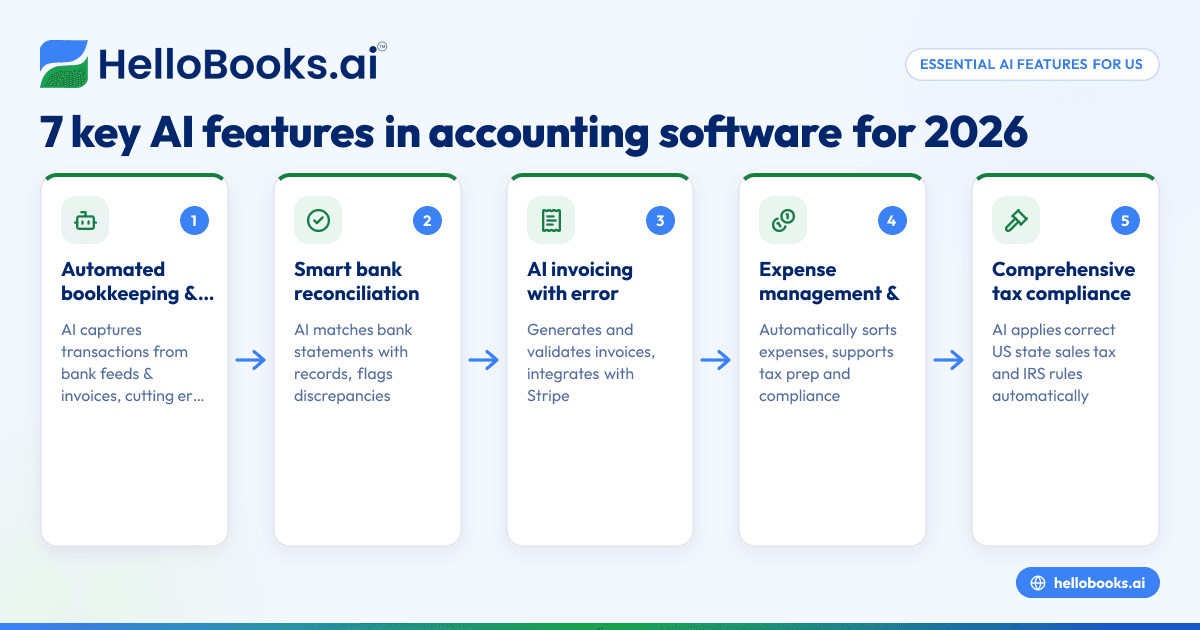
Successful accounting software in 2026 must offer features that harness AI to address common pain points for small businesses. These features include:
1. Automated bookkeeping and data entry
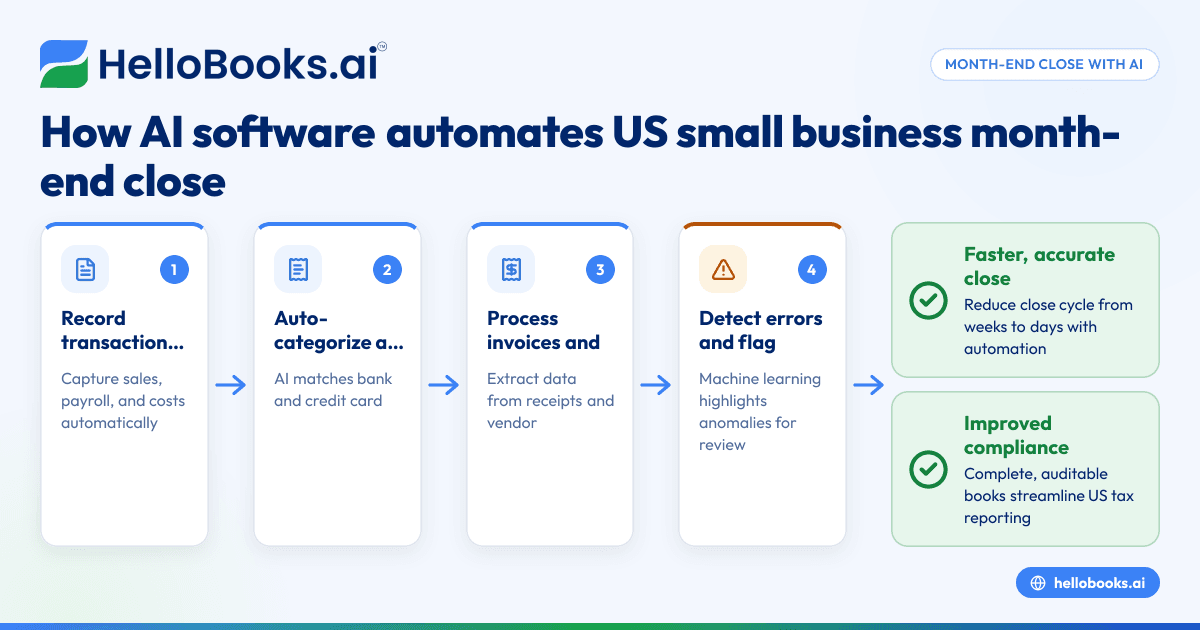
AI-powered bookkeeping captures and records transactions automatically from bank feeds and invoices. It reduces manual entry, lowers errors, and accelerates month-end closes. Small businesses can quickly reconcile daily sales and expenses, ensuring accurate financial records that reflect real-time activity.
2. Smart bank reconciliation
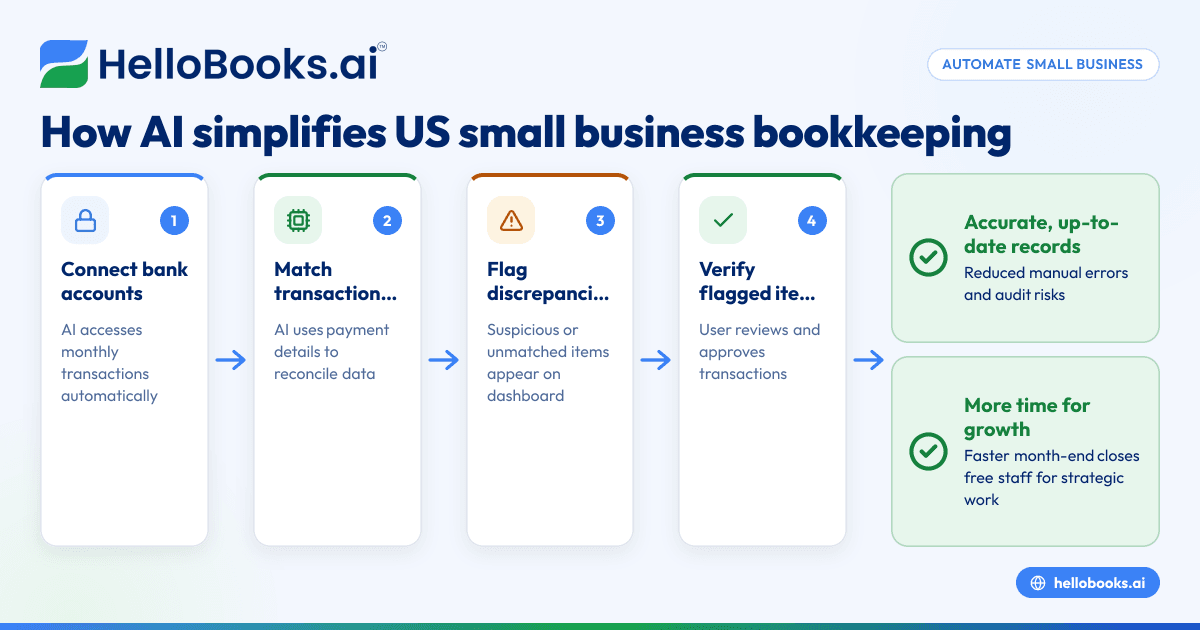
Reconciling bank accounts manually is time-consuming and prone to mistakes. AI bank reconciliation software matches bank transactions with internal records automatically. It flags discrepancies for review, speeding up error resolution. This feature gives businesses in cities like Chicago or Houston immediate insights into their cash flow.
3. AI-powered invoicing with error detection
AI-driven invoice software automatically creates and sends invoices based on sales data. Intelligent validation checks catch errors such as incorrect tax calculations or missing terms before sending. This reduces payment delays and improves cash flow. Integration with US-centric payment gateways like Stripe facilitates easy customer payments.
4. Expense management with AI categorization
Expenses are automatically categorized using AI, matching receipts and bills to appropriate accounts. This saves time during bookkeeping and simplifies tax preparation. Businesses can set spending policies and monitor compliance, avoiding surprises during IRS audits or state tax reviews.
5. Comprehensive tax compliance tools
Meeting complex US tax requirements, including state sales tax and IRS forms like 1099s, is vital. AI tax software tracks regulatory changes and applies correct rates automatically. It prepares tax filings and reminders, helping businesses avoid penalties and interest charges. This feature also assists with preparing reports required for state tax authorities.
6. Dynamic financial reporting and forecasting
AI generates customizable financial reports such as profit and loss statements, balance sheets, and cash flow forecasts. These tools reveal trends and opportunities for cost savings or investment. Small business owners and accountants can make smarter decisions, supported by near real-time data.
7. Secure cloud access and data protection
Security features tailored for US businesses protect sensitive financial information. Cloud-based AI accounting systems offer robust encryption, user access controls, and backups compliant with standards expected by enterprise clients. This enables confident data sharing with accountants and auditors.
How does AI electronic invoicing work for small businesses in the US?
AI electronic invoicing software automatically generates and sends digital invoices that comply with US standards and customer requirements. It extracts billing details from sales records, applies correct taxes including state sales tax, and submits invoices via email or secure portals. This process reduces manual typing and speeds up payment cycles.
Under the hood, AI verifies invoice details for accuracy and consistency with contract terms. It can detect duplicate invoices or pricing errors, minimizing disputes. Because AI systems integrate with payment platforms like Stripe and QuickBooks, customers can pay instantly online, further improving cash flow.
How can AI accounting software help with state sales tax compliance?
AI accounting software simplifies the challenging task of managing state sales tax across multiple jurisdictions. It keeps an updated database of tax rates and rules relevant to a business’s locations and product categories. When processing sales, AI automatically applies the correct tax rate based on shipping address or customer location.
It tallies taxable and non-taxable sales separately, ensuring accurate records for state returns. The software can generate sales tax reports tailored to each state’s filing requirements and deadlines, helping US businesses avoid costly penalties and interest. Automated reminders also keep businesses on track for quarterly or monthly filings.
What role does AI play in bank reconciliation software?
AI bank reconciliation software compares your business bank statements with internal accounting records to identify matches and mismatches automatically. It uses algorithms to recognize similar transaction descriptions despite slight variations. This reduces the manual effort required and accelerates identifying duplicate or missing entries.
When discrepancies occur, AI highlights them for prompt user review, preventing errors from slipping into financial reports. For US small businesses operating in cities like Detroit or Houston, this means up-to-date financials with minimal effort. It supports compliance with US accounting standards and smooth audits.
Can AI accounting software integrate with existing tools like QuickBooks or Stripe?
Yes, AI accounting software supports seamless integration with popular US finance tools such as QuickBooks and Stripe. These integrations allow businesses to synchronize sales, payments, and bank data effortlessly. This creates a consolidated view of all financial activities without manual imports or exports.
Integration ensures that AI automation works across platforms, maintaining consistency and accuracy. For instance, AI can categorize Stripe transactions instantly and feed them into bookkeeping records, while QuickBooks integration helps maintain sync with tax filings and payroll. This connectivity enhances efficiency.
How does AI improve financial reporting for small businesses?
AI elevates financial reporting by generating tailored insights every accounting cycle. It aggregates data, identifies patterns, and highlights key performance indicators automatically. Small business owners receive reports that are easy to understand and actionable.
For example, AI can forecast cash flow gaps, suggest cost reduction areas, or project tax liabilities. This predictive capability helps businesses plan for seasonal dips or growth spurts. It also supports strategic decisions like hiring new staff or expanding operations with confidence.
Why is secure cloud access important for small business accounting software?
Cloud access ensures that your business financial data is accessible anytime, anywhere, on multiple devices. For small businesses, this flexibility lets owners and accountants collaborate remotely, especially when working with US-based accounting firms.
Security is paramount. Cloud AI accounting software uses encryption and access controls to protect data from breaches. Regular backups and compliance with US data protection expectations safeguard against data loss. This reassurance allows businesses to focus on growth while trusting their financial information is safe.
Conclusion
Small businesses in the United States need AI-driven features in their accounting software to stay competitive and efficient in 2026. Automation of bookkeeping, bank reconciliation, invoicing, tax compliance, and reporting simplifies financial management, saves time, and improves accuracy. Integration with common US platforms and robust security completes the picture. To explore how AI accounting software like hellobooks.ai can elevate your business, book a demo or compare plans today.
Frequently asked questions
What distinguishes AI accounting software from traditional accounting tools?
AI accounting software automates data entry, transaction categorization, and reconciliation using machine learning. Unlike traditional tools, it reduces manual errors, accelerates processes, and provides real-time insights, making financial management more efficient for small businesses.
Can AI accounting software handle multiple state sales taxes?
Yes, AI accounting software maintains updated tax rate databases and applies them appropriately based on customer location and products sold. It generates accurate state-specific sales tax reports and reminders tailored to US filing requirements.
Is AI accounting software secure for sensitive financial data?
Reputable AI accounting software employs encryption, secure cloud storage, and strict access controls aligned with US data security standards. This ensures small businesses’ financial information is protected against unauthorized access and data loss.
Do I need special training to use AI accounting tools?
Most AI accounting platforms are designed with user-friendly interfaces for non-experts. While some onboarding may be helpful, many businesses can start using AI features with minimal training, benefiting from automation and insights quickly.
How does AI improve tax filing accuracy?
AI continuously updates tax rules, verifies transaction details, and prepares filings automatically. It reduces human errors and ensures compliance with IRS and state regulations, helping businesses file accurate and timely tax returns.
Can AI accounting software integrate with QuickBooks and Stripe?
Yes, many AI accounting systems integrate seamlessly with QuickBooks, Stripe, and other common US finance tools, enabling automated syncing of financial data and streamlining workflows for small businesses.
Read next
This article covers one part of a bigger topic. For the complete picture, read our guide to accounting software.