


Key takeaways
What this article covers, in order:
- Reverse charge ਦਾ ਮਤਲਬ ਇੱਥੇ ਅਸਲ ਵਿੱਚ ਕੀ ਹੈ
- ਕਿਹੜੀਆਂ inward supplies ਆਮ ਤੌਰ ਤੇ RCM ਵਿੱਚ ਆ ਸਕਦੀਆਂ ਹਨ
- GSTR-3B ਵਿੱਚ RCM ਕਿੱਥੇ ਜਾਂਦਾ ਹੈ, ਅਤੇ ITC ਕਿੱਥੇ ਕਲੇਮ ਹੁੰਦਾ ਹੈ
- Self-invoice, payment voucher ਅਤੇ paperwork ਦਾ ਅਸਲ ਰੋਲ
- Time of supply: ਜਿਥੇ RCM ਦੀ ਅਕਸਰ ਸਭ ਤੋਂ ਮਹਿੰਗੀ ਗਲਤੀ ਹੁੰਦੀ ਹੈ
- CGST/SGST ਜਾਂ IGST: RCM ਵਿੱਚ tax head split ਸਹੀ ਹੋਣਾ ਕਿਉਂ ਲਾਜ਼ਮੀ ਹੈ
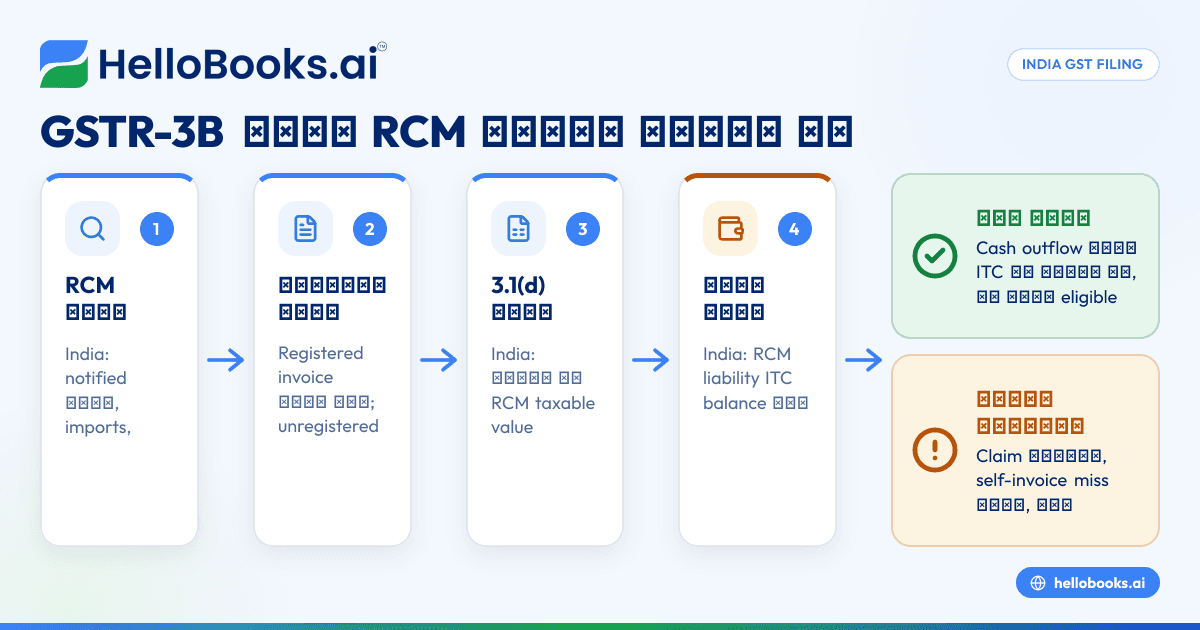
ਭਾਰਤ ਵਿੱਚ GSTR-3B ਵਿੱਚ reverse charge mechanism (RCM) ਦਿਖਾਉਣ ਦਾ ਸਿੱਧਾ ਜਵਾਬ ਇਹ ਹੈ: RCM ਵਾਲੀਆਂ inward supplies ਆਮ ਤੌਰ ਤੇ Table 3.1(d) ਵਿੱਚ ਰਿਪੋਰਟ ਹੁੰਦੀਆਂ ਹਨ, ਉਸ ਉੱਤੇ GST cash ledger ਰਾਹੀਂ ਭਰਿਆ ਜਾਂਦਾ ਹੈ, ਅਤੇ ਜੇ input tax credit ਯੋਗ ਹੈ ਤਾਂ ਉਹੀ ਟੈਕਸ Table 4 ਦੇ ਸਬੰਧਤ ਹਿੱਸੇ ਵਿੱਚ ਕਲੇਮ ਕੀਤਾ ਜਾਂਦਾ ਹੈ। ਪਰ ਅਸਲ ਕੰਮ ਇੱਥੇ ਖਤਮ ਨਹੀਂ ਹੁੰਦਾ—ਸਹੀ time of supply, self-invoice, payment voucher, CGST/SGST ਜਾਂ IGST split, ਅਤੇ GSTR-3B ਨਾਲ books ਦੀ ਮਿਲਾਣ ਸਭ ਉਤਨਾ ਹੀ ਜ਼ਰੂਰੀ ਹੈ.
Reverse charge ਦਾ ਮਤਲਬ ਇੱਥੇ ਅਸਲ ਵਿੱਚ ਕੀ ਹੈ
ਆਮ GST ਸਿਸਟਮ ਵਿੱਚ supplier tax collect ਕਰਦਾ ਹੈ ਅਤੇ ਸਰਕਾਰ ਨੂੰ ਭਰਦਾ ਹੈ। Reverse charge ਵਿੱਚ ਇਹ ਜ਼ਿੰਮੇਵਾਰੀ recipient ਉੱਤੇ ਆ ਜਾਂਦੀ ਹੈ। ਭਾਰਤ ਵਿੱਚ ਇਸ ਦਾ ਕਾਨੂੰਨੀ ਆਧਾਰ Central Goods and Services Tax Act, 2017 ਦੀਆਂ reverse charge provisions ਹਨ, ਖਾਸ ਕਰਕੇ section 9(3) ਅਤੇ section 9(4), ਅਤੇ integrated tax ਵਾਲੇ ਮਾਮਲਿਆਂ ਲਈ Integrated Goods and Services Tax Act, 2017 ਦੇ ਸਬੰਧਤ ਪ੍ਰਾਬਧਾਨ। ਇਹ ਕਾਨੂੰਨ Parliament ਦੇ ਹਨ; implementation ਅਤੇ notifications Central Board of Indirect Taxes and Customs (CBIC) ਜਾਰੀ ਕਰਦਾ ਹੈ; return filing ਅਤੇ system-side validations GST Network (GSTN) ਅਤੇ GST portal ਉੱਤੇ ਚੱਲਦੀਆਂ ਹਨ.
ਇਸ ਲਈ ਸਵਾਲ ਸਿਰਫ਼ “RCM ਹੈ ਜਾਂ ਨਹੀਂ” ਦਾ ਨਹੀਂ ਹੁੰਦਾ। ਸਹੀ ਸਵਾਲ ਇਹ ਹੈ:
- ਕੀ supply notified category ਵਿੱਚ ਆਉਂਦੀ ਹੈ?
- supplier registered ਹੈ ਜਾਂ unregistered?
- place of supply ਕੀ ਹੈ?
- tax head IGST ਬਣੇਗਾ ਜਾਂ CGST plus SGST?
- ITC eligible ਹੈ ਜਾਂ blocked?
- entry books ਅਤੇ GSTR-3B ਵਿੱਚ ਇੱਕੋ ਜਿਹੀ ਬੈਠਦੀ ਹੈ ਜਾਂ ਨਹੀਂ?
ਜੇ ਤੁਸੀਂ invoice ਬਣਾਉਂਦੇ, purchase bills ਪੜ੍ਹਦੇ ਅਤੇ GST returns ਇੱਕੋ system ਵਿੱਚ ਸੰਭਾਲਦੇ ਹੋ, ਤਾਂ ਇਹ ਗਲਤੀਆਂ ਘੱਟ ਹੁੰਦੀਆਂ ਹਨ। HelloBooks ਵਿੱਚ purchase bill capture, OCR, place-of-supply ਦੇ ਹਿਸਾਬ ਨਾਲ tax head split, reverse charge handling, ਅਤੇ GSTR-3B filing ਇਕੱਠੇ ਹੋਣ ਕਰਕੇ RCM Excel ਦੇ side-notes ਵਿੱਚ ਗੁੰਮ ਨਹੀਂ ਹੁੰਦਾ.
ਕਿਹੜੀਆਂ inward supplies ਆਮ ਤੌਰ ਤੇ RCM ਵਿੱਚ ਆ ਸਕਦੀਆਂ ਹਨ
ਹਰ ਖਰੀਦ RCM ਨਹੀਂ ਬਣਦੀ। ਭਾਰਤ ਵਿੱਚ RCM notified supplies ਉੱਤੇ ਹੀ ਲੱਗਦਾ ਹੈ, ਅਤੇ notified list CBIC ਦੀਆਂ current notifications ਵਿੱਚ publish ਹੁੰਦੀ ਹੈ। ਇਸ ਲਈ ਕਿਸੇ ਵੀ specific category ਬਾਰੇ final conclusion ਕੱਢਣ ਤੋਂ ਪਹਿਲਾਂ CBIC notifications ਅਤੇ GST portal ਉੱਤੇ updated guidance ਚੈੱਕ ਕਰਨਾ ਚਾਹੀਦਾ ਹੈ.
ਕਾਰੋਬਾਰਾਂ ਨੂੰ ਆਮ ਤੌਰ ਤੇ ਇਹਨਾਂ ਕਿਸਮਾਂ ਵਿੱਚ RCM ਦਾ ਸਵਾਲ ਆਉਂਦਾ ਹੈ:
- goods transport agency (GTA) ਸੇਵਾਵਾਂ ਦੇ ਕੁਝ ਕੇਸ
- advocate ਜਾਂ law firm ਵੱਲੋਂ business entity ਨੂੰ ਦਿੱਤੀਆਂ legal services
- company director ਤੋਂ company ਨੂੰ ਕੁਝ services
- sponsorship services ਦੇ ਕੁਝ ਕੇਸ
- security services ਦੇ notified ਕੇਸ
- unregistered supplier ਤੋਂ ਕੁਝ ਖਾਸ notified inward supplies
- import of services
- immovable property renting ਦੇ ਕੁਝ notified ਕੇਸ
ਪਰ template-ਟਾਈਪ rule ਯਾਦ ਰੱਖਣਾ ਖ਼ਤਰਨਾਕ ਹੈ। ਉਦਾਹਰਨ ਲਈ, ਇੱਕ ਹੀ “rent” ਸ਼ਬਦ ਦੇ ਹੇਠ commercial property, residential dwelling, registered landlord, unregistered landlord, composition taxpayer, company, proprietorship—ਹਰ case ਦੀ tax treatment ਵੱਖ ਹੋ ਸਕਦੀ ਹੈ। Current position ਕਿੱਥੇ publish ਹੁੰਦੀ ਹੈ? CBIC notifications, circulars, FAQs, ਅਤੇ GST portal ਦੇ law section ਵਿੱਚ.
ਇਹ ਵੀ ਯਾਦ ਰੱਖੋ ਕਿ supplier invoice ਉੱਤੇ “reverse charge applicable” ਲਿਖ ਦੇਵੇ ਤਾਂ ਵੀ final liability recipient ਦੀ legal analysis ਨਾਲ ਹੀ ਤੈਅ ਹੁੰਦੀ ਹੈ। ਜੇ ਤੁਸੀਂ bill OCR ਨਾਲ capture ਕਰਕੇ ਅਤੇ vendor master ਵਿੱਚ RCM flag ਰੱਖਕੇ ਕੰਮ ਕਰਦੇ ਹੋ, ਤਾਂ HelloBooks recurring vendor entries ਵਿੱਚ ਇਹ consistency ਕਾਇਮ ਰੱਖ ਸਕਦਾ ਹੈ; ਇਹ ਖ਼ਾਸ ਕਰਕੇ ਉਹਨਾਂ businesses ਲਈ ਵਰਤੋਂਯੋਗ ਹੈ ਜਿਹੜੇ GTA, legal fees ਜਾਂ multi-branch expense booking ਕਰਦੇ ਹਨ.
GSTR-3B ਵਿੱਚ RCM ਕਿੱਥੇ ਜਾਂਦਾ ਹੈ, ਅਤੇ ITC ਕਿੱਥੇ ਕਲੇਮ ਹੁੰਦਾ ਹੈ
GSTR-3B ਵਿੱਚ reverse charge ਵਾਲੀਆਂ inward supplies reporting ਦਾ ਕੇਂਦਰ Table 3.1(d) ਹੁੰਦਾ ਹੈ। ਇੱਥੇ taxable value ਅਤੇ tax liability ਦਿਖਾਈ ਜਾਂਦੀ ਹੈ। Current return structure, field labels ਅਤੇ filing flow GST portal ਅਤੇ GSTN ਦੀ published return schema/documentation ਵਿੱਚ ਮਿਲਦੇ ਹਨ.
ਸਭ ਤੋਂ ਮਹੱਤਵਪੂਰਨ practical rule ਇਹ ਹੈ ਕਿ RCM liability ਆਮ ਤੌਰ ਤੇ electronic cash ledger ਰਾਹੀਂ ਭਰੀ ਜਾਂਦੀ ਹੈ; existing ITC balance ਨਾਲ set-off ਕਰਨ ਦੀ position GST law, rules, ਅਤੇ portal guidance ਤੋਂ verify ਕਰਨੀ ਚਾਹੀਦੀ ਹੈ। Current utilisation rules CBIC/GST portal ਉੱਤੇ publish ਹੁੰਦੇ ਹਨ.
ਫਿਰ ITC claim ਦਾ ਮੋੜ ਆਉਂਦਾ ਹੈ। Eligible RCM tax, inward supply ਦੀ nature ਦੇ ਹਿਸਾਬ ਨਾਲ, GSTR-3B ਦੇ Table 4 ਵਿੱਚ ਸਬੰਧਤ ਹਿੱਸੇ ਵਿੱਚ ਲਿਆ ਜਾਂਦਾ ਹੈ। Import of services ਅਤੇ domestic reverse charge entries ਹਮੇਸ਼ਾ ਇੱਕੋ box ਵਿੱਚ ਨਹੀਂ ਜਾਂਦੀਆਂ; current mapping GST portal ਦੀ return instructions ਵਿੱਚ ਦੇਖਣੀ ਚਾਹੀਦੀ ਹੈ. NEEDS EXPERT REVIEW
ਇੱਥੇ ਲੋਕ ਸਭ ਤੋਂ ਵੱਧ ਦੋ ਗਲਤੀਆਂ ਕਰਦੇ ਹਨ:
- Table 3.1(d) ਵਿੱਚ liability ਦਿਖਾ ਦਿੰਦੇ ਹਨ ਪਰ Table 4 ਵਿੱਚ eligible ITC ਲੈਣਾ ਭੁੱਲ ਜਾਂਦੇ ਹਨ.
- ITC ਲੈ ਲੈਂਦੇ ਹਨ ਪਰ underlying documentation—self-invoice, payment voucher, purpose-of-business proof—ਅਧੂਰੀ ਛੱਡ ਦਿੰਦੇ ਹਨ.
ਜੇ ਤੁਸੀਂ GST return filing software ਰਾਹੀਂ GSTR-3B books ਤੋਂ build ਕਰਦੇ ਹੋ, ਤਾਂ liability ਅਤੇ ITC ਦਾ trail ਸਾਫ਼ ਰਹਿੰਦਾ ਹੈ। HelloBooks ਵਿੱਚ reverse charge entries purchase stage ਤੋਂ tag ਹੋਣ ਅਤੇ GSTR-3B direct filing ਨਾਲ ਇਹ risk ਘੱਟ ਹੁੰਦਾ ਹੈ ਕਿ tax books ਵਿੱਚ ਹੋਵੇ ਪਰ return ਵਿੱਚ ਰਹਿ ਜਾਏ, ਜਾਂ return ਵਿੱਚ ਹੋਵੇ ਪਰ ledger ਵਿੱਚ supporting entry ਨਾ ਮਿਲੇ.
Self-invoice, payment voucher ਅਤੇ paperwork ਦਾ ਅਸਲ ਰੋਲ
RCM ਵਿੱਚ paperwork ਸਿਰਫ਼ formalities ਨਹੀਂ; ਇਹ audit trail ਦਾ ਬੁਨਿਆਦੀ ਹਿੱਸਾ ਹੈ। ਕੁਝ ਕੇਸਾਂ ਵਿੱਚ supplier regular tax invoice ਜਾਰੀ ਕਰਦਾ ਹੈ ਪਰ tax recipient ਨੇ ਭਰਨਾ ਹੁੰਦਾ ਹੈ। ਕੁਝ ਹੋਰ ਕੇਸਾਂ ਵਿੱਚ, ਖ਼ਾਸ ਕਰਕੇ unregistered supplier ਵਾਲੇ notified transactions ਵਿੱਚ, recipient ਨੂੰ self-invoice ਬਣਾਉਣ ਦੀ ਲੋੜ ਪੈ ਸਕਦੀ ਹੈ. Current documentary requirements Central Goods and Services Tax Rules, 2017 ਅਤੇ CBIC guidance ਵਿੱਚ publish ਹੁੰਦੀਆਂ ਹਨ.
ਆਮ ਤੌਰ ਤੇ ਧਿਆਨ ਵਾਲੇ ਦਸਤਾਵੇਜ਼ ਇਹ ਹਨ:
- supplier bill ਜਾਂ agreement
- self-invoice, ਜਿੱਥੇ ਕਾਨੂੰਨ ਮੰਗਦਾ ਹੈ
- payment voucher, ਜਿੱਥੇ ਲਾਗੂ ਹੋਵੇ
- proof of receipt of goods/services
- accounting entry showing RCM liability
- tax payment evidence on GST portal
- ITC claim support
ਜੇ ਕੋਈ business unregistered landlord, transporter, advocate, ਜਾਂ imported online service provider ਨਾਲ ਲੈਣ-ਦੇਣ ਕਰਦਾ ਹੈ, ਤਾਂ ਇਹ paperwork scattered folders ਵਿੱਚ ਰੱਖਣਾ ਖਤਰਾ ਵਧਾਉਂਦਾ ਹੈ। HelloBooks ਵਿੱਚ OCR ਰਾਹੀਂ purchase bills capture ਕਰਕੇ, voucher entry ਨਾਲ attach ਕਰਕੇ, ਅਤੇ vendor-wise ledger ਬਣਾਕੇ evidence trail ਇਕੱਠਾ ਰੱਖਿਆ ਜਾ ਸਕਦਾ ਹੈ। ਇਸੇ ਕਰਕੇ AI bookkeeping ਅਤੇ expense management RCM ਵਾਲੇ माहੌਲ ਵਿੱਚ ਸਿਰਫ਼ convenience ਨਹੀਂ, control ਬਣ ਜਾਂਦੇ ਹਨ.
Time of supply: ਜਿਥੇ RCM ਦੀ ਅਕਸਰ ਸਭ ਤੋਂ ਮਹਿੰਗੀ ਗਲਤੀ ਹੁੰਦੀ ਹੈ
RCM ਦੀ ਸਭ ਤੋਂ ਮਹੱਤਵਪੂਰਨ timing issue “ਇਹ tax ਕਿਸ ਮਹੀਨੇ ਦੀ GSTR-3B ਵਿੱਚ ਜਾਣਾ ਸੀ?” ਵਾਲੀ ਹੁੰਦੀ ਹੈ। Reverse charge ਲਈ time of supply ਦੇ rules normal forward charge ਨਾਲ ਵੱਖ ਹੋ ਸਕਦੇ ਹਨ। ਇਨ੍ਹਾਂ rules ਦਾ ਕਾਨੂੰਨੀ ਆਧਾਰ CGST Act, 2017 ਅਤੇ IGST Act, 2017 ਦੇ time-of-supply provisions ਵਿੱਚ ਹੈ; exact wording ਅਤੇ interpretation CBIC circulars, advance rulings, ਅਤੇ judicial decisions ਨਾਲ evolve ਹੋ ਸਕਦੀ ਹੈ.
ਇਸ ਕਰਕੇ practical approach ਇਹ ਰਹਿੰਦੀ ਹੈ:
- goods ਲਈ receipt date, invoice date, payment date, ਅਤੇ deemed timing triggers ਇਕੱਠੇ ਦੇਖੋ
- services ਲਈ payment timing ਅਤੇ invoice timing ਦੋਵੇਂ ਚੈੱਕ ਕਰੋ
- part payment ਹੋਵੇ ਤਾਂ allocation ਸੋਚੋ
- import of services ਹੋਵੇ ਤਾਂ contract terms, foreign currency booking, ਅਤੇ receipt of service separately ਦੇਖੋ
ਇੱਕ invented, illustrative ਦ੍ਰਿਸ਼ ਨਾਲ ਵੇਖੀਏ—ਇਹ ਅਸਲੀ ਦਰ, threshold, ਜਾਂ deadline ਦੱਸਣ ਲਈ ਨਹੀਂ, ਸਿਰਫ਼ logic ਸਮਝਾਉਣ ਲਈ ਹੈ. ਮੰਨ ਲਓ ਇੱਕ Ludhiana business ਨੇ ਆਪਣੇ advocate ਤੋਂ service ਲਈ ₹50,000 ਦਾ bill book ਕੀਤਾ। ਮੰਨ ਲਓ ਇਸ supply ਉੱਤੇ applicable GST, CBIC ਦੀ current notification ਅਤੇ GST portal guidance ਮੁਤਾਬਕ, illustrative ਤੌਰ ਤੇ ₹9,000 ਬਣਦਾ ਹੈ. ਇਹ figures invented ਹਨ ਅਤੇ actual rate, exemption, eligibility, place of supply, blocked credit, ਅਤੇ legal nuances ਨੂੰ leave out ਕਰਦੀਆਂ ਹਨ. ਜੇ service April ਵਿੱਚ ਮਿਲੀ, payment May ਵਿੱਚ ਹੋਈ, ਅਤੇ law ਦੇ time-of-supply rule ਮੁਤਾਬਕ liability May ਵਿੱਚ trigger ਹੁੰਦੀ ਹੈ, ਤਾਂ Table 3.1(d) ਦੀ reporting May ਦੀ GSTR-3B ਵਿੱਚ ਜਾਵੇਗੀ, ਨਾ ਕਿ sirf April booking ਦੇ ਆਧਾਰ ਤੇ. ਫਿਰ ਉਹ ₹9,000, ਜੇ business purpose ਲਈ eligible ਹੈ, Table 4 ਵਿੱਚ claim ਹੋ ਸਕਦਾ ਹੈ.
ਇਸ timing ਨੂੰ manually track ਕਰਨਾ mushkil ਹੋ ਜਾਂਦਾ ਹੈ ਜਦੋਂ ਤੁਸੀਂ bank entries, vendor bills ਅਤੇ journal vouchers ਵੱਖ-ਵੱਖ systems ਵਿੱਚ ਰੱਖਦੇ ਹੋ। HelloBooks ਵਿੱਚ uploaded bank statement ਤੋਂ reconciliation, vendor bill OCR, ਅਤੇ ledger mapping ਨਾਲ ਇਹ ਪਤਾ ਲਗਾਉਣਾ ਆਸਾਨ ਹੁੰਦਾ ਹੈ ਕਿ payment ਕਦੋਂ ਹੋਈ ਅਤੇ ਕਿਸ bill ਨਾਲ ਜੋੜੀ ਗਈ. ਇੱਥੇ ਧਿਆਨ ਰਹੇ: India ਵਿੱਚ bank statement upload ਹੁੰਦਾ ਹੈ; live bank feed ਦਾ claim ਇਸ ਸੰਦਰਭ ਵਿੱਚ ਨਹੀਂ ਕਰਨਾ ਚਾਹੀਦਾ.
CGST/SGST ਜਾਂ IGST: RCM ਵਿੱਚ tax head split ਸਹੀ ਹੋਣਾ ਕਿਉਂ ਲਾਜ਼ਮੀ ਹੈ
RCM liability ਸਿਰਫ਼ “tax payable” ਨਹੀਂ; ਇਹ ਸਹੀ head ਵਿੱਚ payable ਹੋਣੀ ਚਾਹੀਦੀ ਹੈ। Domestic intra-state supply ਵਿੱਚ CGST ਅਤੇ SGST ਦਾ split ਹੋ ਸਕਦਾ ਹੈ, ਜਦਕਿ inter-state supply ਜਾਂ import-linked situations ਵਿੱਚ IGST ਆ ਸਕਦਾ ਹੈ। ਇਹ determination place of supply rules, location of supplier, location of recipient, ਅਤੇ supply ਦੀ nature ਉੱਤੇ ਨਿਰਭਰ ਕਰਦੀ ਹੈ। Current legal position IGST Act, 2017, CGST Act, 2017, CBIC guidance ਅਤੇ GST portal documentation ਵਿੱਚ publish ਹੁੰਦੀ ਹੈ.
ਇੱਥੇ real-world problems ਆਉਂਦੀਆਂ ਹਨ:
- head office Delhi ਵਿੱਚ ਹੈ, branch Punjab ਵਿੱਚ ਹੈ, vendor Haryana ਦਾ ਹੈ
- freight invoice ਇੱਕ GSTIN ਉੱਤੇ book ਹੋਇਆ, goods ਦੂਜੇ state ਵਿੱਚ deliver ਹੋਏ
- imported software subscription INR card payment ਨਾਲ settle ਹੋਇਆ ਪਰ service recipient GSTIN ਹੋਰ state ਦਾ ਹੈ
ਇੱਕ illustrative, invented ਸਥਿਤੀ ਲਓ: ਮੰਨ ਲਓ Jaipur ਦਾ transporter ਇੱਕ Punjab GSTIN ਵਾਲੇ buyer ਲਈ service provide ਕਰਦਾ ਹੈ, ਅਤੇ law ਦੇ current place-of-supply rules ਮੁਤਾਬਕ ਇਹ inter-state treatment ਵਿੱਚ ਆਉਂਦਾ ਹੈ. ਤਾਂ illustrative ਤੌਰ ਤੇ ₹12,000 taxable value ਉੱਤੇ ₹2,160 ਨੂੰ IGST ਵਜੋਂ ਸੋਚਿਆ ਜਾ ਸਕਦਾ ਹੈ, ਨਾ ਕਿ ₹1,080 CGST + ₹1,080 SGST. ਇਹ numbers invented ਹਨ, actual rate ਨਹੀਂ ਦੱਸਦੀਆਂ, ਅਤੇ valuation, exemption, documentation, ਅਤੇ notification conditions ਨੂੰ leave out ਕਰਦੀਆਂ ਹਨ.
ਜੇ books ਵਿੱਚ head galat split ਹੋ ਗਿਆ, ਤਾਂ GSTR-3B payment, cash ledger utilisation ਅਤੇ later reconciliation ਸਭ ਉਲਝ ਜਾਂਦੇ ਹਨ। HelloBooks ਵਿੱਚ place-of-supply ਅਤੇ tax head split logic ਇਸੇ ਲਈ ਮਹੱਤਵਪੂਰਨ ਹੈ; ਇਹ ਖ਼ਾਸ ਕਰਕੇ multi-GSTIN businesses ਲਈ ਲਾਭਕਾਰੀ ਹੈ ਜਿਨ੍ਹਾਂ ਦੇ ਵੱਖ-ਵੱਖ ਰਾਜਾਂ ਵਿੱਚ registrations ਹਨ ਅਤੇ ਇੱਕੋ login ਤੋਂ state-wise compliance ਦੇਖਣੀ ਹੁੰਦੀ ਹੈ.
RCM ਅਤੇ GSTR-2A/2B: ਕਦੋਂ ਮਿਲਾਣ ਮਦਦ ਕਰਦੀ ਹੈ, ਕਦੋਂ ਨਹੀਂ
ਬਹੁਤ ਸਾਰੇ taxpayers ਸੋਚਦੇ ਹਨ ਕਿ ਹਰ inward supply ਪਹਿਲਾਂ GSTR-2B ਵਿੱਚ ਦਿਖੇਗੀ, ਫਿਰ ਹੀ ਉਹ GSTR-3B ਵਿੱਚ ਕੁਝ ਕਰਨਗੇ। RCM ਵਿੱਚ ਇਹ ਸੋਚ ਅਧੂਰੀ ਹੈ। Registered supplier ਵਾਲੇ ਕੁਝ reverse charge invoices system trail ਵਿੱਚ reflect ਹੋ ਸਕਦੇ ਹਨ, ਪਰ unregistered supplier ਵਾਲੇ self-invoiced cases ਵਿੱਚ GSTR-2B ਆਮ ਤੌਰ ਤੇ ਤੁਹਾਡਾ primary source ਨਹੀਂ ਬਣਦਾ। Current behaviour GSTN system design ਅਤੇ GST portal documentation ਤੋਂ verify ਕਰਨਾ ਚਾਹੀਦਾ ਹੈ.
ਇਸ ਲਈ best practice ਇਹ ਹੁੰਦੀ ਹੈ:
- supplier-reported inward data ਨੂੰ GSTR-2A/2B ਨਾਲ reconcile ਕਰੋ
- self-invoice cases ਨੂੰ ਆਪਣੀ purchase register ਅਤੇ voucher register ਨਾਲ reconcile ਕਰੋ
- ITC eligibility alag se test ਕਰੋ
- return filing ਤੋਂ ਪਹਿਲਾਂ RCM control sheet ਬਣਾਓ
HelloBooks ਦਾ GSTR-2A/2B reconciliation ਅਤੇ ITC tracking ਇਸੇ gap ਨੂੰ address ਕਰਦਾ ਹੈ: ਜਿੱਥੇ supplier-side data available ਹੈ, ਉੱਥੇ mismatch ਦਿਖ ਸਕਦਾ ਹੈ; ਜਿੱਥੇ self-invoice case ਹੈ, ਉੱਥੇ books-based control ਜ਼ਰੂਰੀ ਰਹਿੰਦਾ ਹੈ। Free checks ਲਈ GST reconciliation checker, GSTIN validator, ਅਤੇ GST invoice validator ਵੀ ਕੰਮ ਆ ਸਕਦੇ ਹਨ.
RCM ਵਾਲੀਆਂ entries books, bank ਅਤੇ stock ਨਾਲ ਮਿਲਣੀਆਂ ਚਾਹੀਦੀਆਂ ਹਨ
GST return ਠੀਕ ਭਰਨਾ ਇਕੱਲਾ ਮਕਸਦ ਨਹੀਂ। ਜੇ purchase books, expense ledgers, bank outflow, inventory receipt ਅਤੇ financial reports ਆਪਸ ਵਿੱਚ ਨਹੀਂ ਮਿਲਦੇ, ਤਾਂ RCM compliance ਕਾਗਜ਼ ਤੇ ਠੀਕ ਲੱਗ ਕੇ ਵੀ scrutiny ਵਿੱਚ ਕਮਜ਼ੋਰ ਪੈ ਸਕਦੀ ਹੈ। ਭਾਰਤ ਵਿੱਚ accounting reality ਇਹ ਹੈ ਕਿ ਕਈ SMEs purchase Excel ਵਿੱਚ, payments bank portal ਜਾਂ UPI apps ਵਿੱਚ, stock godown register ਵਿੱਚ, ਅਤੇ GST return CA ਦੇ system ਵਿੱਚ ਰੱਖਦੇ ਹਨ। ਇਹ fragmentation RCM ਲਈ ਖ਼ਾਸ ਤੌਰ ਤੇ ਖ਼ਤਰਨਾਕ ਹੈ.
ਮੰਨ ਲਓ ਇੱਕ business scrap, security service ਅਤੇ GTA freight ਇਕੱਠੇ handle ਕਰਦਾ ਹੈ। Inventory receipt ਹੋ ਗਈ, payment NEFT ਨਾਲ ਨਿਕਲ ਗਈ, purchase bill PDF mail ਵਿੱਚ ਪਈ ਰਹੀ, ਅਤੇ RCM liability month-end ਤੇ ਕਿਸੇ ਨੂੰ ਯਾਦ ਨਾ ਰਹੀ। ਇਸ case ਵਿੱਚ GST default ਦਾ root cause law ਦੀ complexity ਨਹੀਂ; process disconnection ਹੈ.
ਇਥੇ integrated bookkeeping ਕੰਮ ਆਉਂਦੀ ਹੈ। HelloBooks ਵਿੱਚ purchase bills OCR ਨਾਲ capture, uploaded bank statement ਦੀ AI reconciliation, inventory movement, financial reports, ਅਤੇ inventory ਨਾਲ linked accounting ਇੱਕੋ flow ਵਿੱਚ ਰਹਿ ਸਕਦੇ ਹਨ। Tally ਤੋਂ shift ਜਾਂ parallel use ਵਾਲਿਆਂ ਲਈ Tally alternative ਅਤੇ migration/connector ਵੀ practical ਹਨ, ਖ਼ਾਸ ਕਰਕੇ ਜੇ CA firm ਨੂੰ old data continuity ਚਾਹੀਦੀ ਹੋਵੇ.
ਹਰ ਮਹੀਨੇ RCM ਬੰਦ ਕਰਨ ਲਈ ਇੱਕ practical India-first routine
ਹਰ month-end ਇਹ ਚਾਰ ਸਵਾਲ ਪੁੱਛੋ:
ਪਹਿਲਾਂ: ਕੀ ਇਸ ਮਹੀਨੇ ਕੋਈ notified inward supply ਆਈ ਸੀ? Freight, legal fee, director-related service, rent, import of service, security service, ਜਾਂ ਕੋਈ sector-specific item.
ਦੂਜਾ: ਕੀ supplier registered ਸੀ ਜਾਂ unregistered? GSTIN validate ਕਰਨ ਲਈ GSTIN validator ਵਰਤਿਆ ਜਾ ਸਕਦਾ ਹੈ.
ਤੀਜਾ: ਕੀ self-invoice ਜਾਂ payment voucher ਦੀ ਲੋੜ ਸੀ, ਅਤੇ ਕੀ documentation ਬਣੀ?
ਚੌਥਾ: ਕੀ liability Table 3.1(d) ਵਿੱਚ ਗਈ, cash ਨਾਲ ਭਰੀ, ਅਤੇ eligible ITC ਸਹੀ box ਵਿੱਚ claim ਹੋਈ?
ਇਸ ਤੋਂ ਬਾਅਦ bank statement upload ਕਰਕੇ payment match ਕਰੋ, pending vendor bills scan ਕਰੋ, ਅਤੇ ਜੇ goods movement ਸੀ ਤਾਂ e-way bill trail ਵੀ ਮਿਲਾਓ। RCM ਹਰ ਮਹੀਨੇ ਨਹੀਂ ਆਉਂਦਾ, ਇਸ ਲਈ ਇਹ ਹੋਰ ਵੀ ਜ਼ਿਆਦਾ ਛੁੱਟ ਜਾਂਦਾ ਹੈ। Rare transaction ਹੀ ਅਕਸਰ expensive mistake ਬਣਦਾ ਹੈ.
ਜੇ owner phone ਤੋਂ ਕੰਮ ਕਰਦਾ ਹੈ, ਤਾਂ mobile app entries useful ਹੁੰਦੀਆਂ ਹਨ; ਜੇ accounts team WhatsApp ਉੱਤੇ Hindi, English ਜਾਂ Hinglish ਵਿੱਚ quick clarification ਲੈਂਦੀ ਹੈ, ਤਾਂ Noor assistant day-to-day follow-up ਨੂੰ ਆਸਾਨ ਕਰ ਸਕਦਾ ਹੈ। Pricing ਲਈ ਅੰਦਾਜ਼ਾ ਲਗਾਉਣ ਦੀ ਬਜਾਏ ਸਿੱਧਾ /in/pricing ਦੇਖੋ, ਜਾਂ workflow ਸਮਝਣ ਲਈ /demo ਬੁੱਕ ਕਰੋ.
ਅੰਤ ਵਿੱਚ ਇੱਕ ਗੱਲ ਸਭ ਤੋਂ ਜ਼ਰੂਰੀ ਹੈ: RCM ਵਿੱਚ “tax paid” ਅਤੇ “ITC claimed” ਦੋਵੇਂ ਸਹੀ ਹੋਣੇ ਚਾਹੀਦੇ ਹਨ, ਪਰ ਉਸ ਤੋਂ ਪਹਿਲਾਂ “RCM applicable ਸੀ ਵੀ ਜਾਂ ਨਹੀਂ” ਇਹ ਸਹੀ ਹੋਣਾ ਚਾਹੀਦਾ ਹੈ। ਕਿਉਂਕਿ current rates, thresholds, due dates, penalties, interest, notifications ਅਤੇ return field behaviour CBIC, GSTN ਅਤੇ GST portal ਉੱਤੇ update ਹੁੰਦੇ ਰਹਿੰਦੇ ਹਨ, ਆਪਣੇ exact facts—ਖ਼ਾਸ ਕਰਕੇ rent, import of services, mixed-use expenses, blocked credit, composition status, company-law overlap under the Companies Act, 2013, ਅਤੇ TDS implications under the Income-tax Act, 1961—ਲਈ professional review ਕਰਵਾਉਣਾ ਸੁਰੱਖਿਅਤ ਰਹਿੰਦਾ ਹੈ.
ਜੇ ਤੁਹਾਡਾ ਟੀਚਾ ਇਹ ਹੈ ਕਿ GST, books ਅਤੇ cash movement ਇੱਕੋ ਸੱਚ ਬੋਲਣ, ਤਾਂ accounting software India, smart invoicing, ਅਤੇ bank reconciliation software ਵਰਗਾ connected setup RCM ਨੂੰ guesswork ਤੋਂ process ਵਿੱਚ ਬਦਲ ਦਿੰਦਾ ਹੈ.


