
Key takeaways
What this article covers, in order:
- The right accounting solution for Indian businesses
- Overview
- Key features comparison
- Pricing and value
- Usability and onboarding
- Compliance and tax readiness
The right accounting solution for Indian businesses
Overview
Small and medium businesses require clear accounting options that align with their growth strategy. Selecting accounting software when it comes to cash flow, tax filings and everyday workflow. The services mentioned here are the most common and there is no specific mentioning of any service provider. It compares features, pricing, usability, compliance and support to aid readers in making a decision.
Key features comparison
Core bookkeeping and invoicing
Both kinds of solution can handle basic bookkeeping, invoicing and bank reconciliation but do so in different manners. One of those options usually focuses on easy workflows and fast setup for small teams. The other variant usually provides greater reconciliation tools and layered reporting to larger companies. Assess which core bookkeeping features best match your routine and staff skill sets.
Inventory and billing controls
Retailers and manufacturers can be heavily impacted by providers, as inventory handling widely differs. Some systems have in-depth stock tracking and batch controls, while others keep their stock features more basic. Think about your sales volume, multiple warehouses and whether you need to serial or batch track. Pick the feature depth that avoids inventory mistakes with minimum added complexity.
At a glance features list
- Basic bookkeeping and generating invoices.
- Bank rec and transaction matching.
- Batch or serial control, stock tracking.
- GST bill and tax calculating tool.
Pricing and value
In India, transparent pricing is important for smaller budgets or accurate forecasting. Basic tools for a single user, and a limited number of invoices per month are commonly included in entry level plans. More expensive plans may offer payroll, multi-user access, and advanced reporting. Before you choose, compute the total cost inclusive of taxes, add-ons and any transaction fees.
Common pricing considerations
- Differences between monthly and annual billing.
- Number of users and team license fees.
- Optional extras for reports or payroll.
Usability and onboarding
Ease of use leads to fewer mistakes and less training for teams not well versed in accounting. Certain solutions come with straightforward menus and guided setup flows tailored for newbie businesses. Other solutions take an assumption of accounting familiarity and provide even more customization in its onboarding. We have our staff skills and time to work with interfaces and processes, Test the UI, interface & set up process.
Support and training options
Finally, support quality also determines how fast issues are resolved during tax time or month end. Seek responsive support channels, such as chat, email and phone, as well good documentation. Do also look for guided training or partner networks that facilitate migration and setup. Reliable local support can accelerate adoption and avoid expensive missteps.
Support channels list
- Email support with documented response times.
- Live chat for operational queries.
- Phone support for complicated or time-sensitive questions.
- Training or partner network access.
Compliance and tax readiness
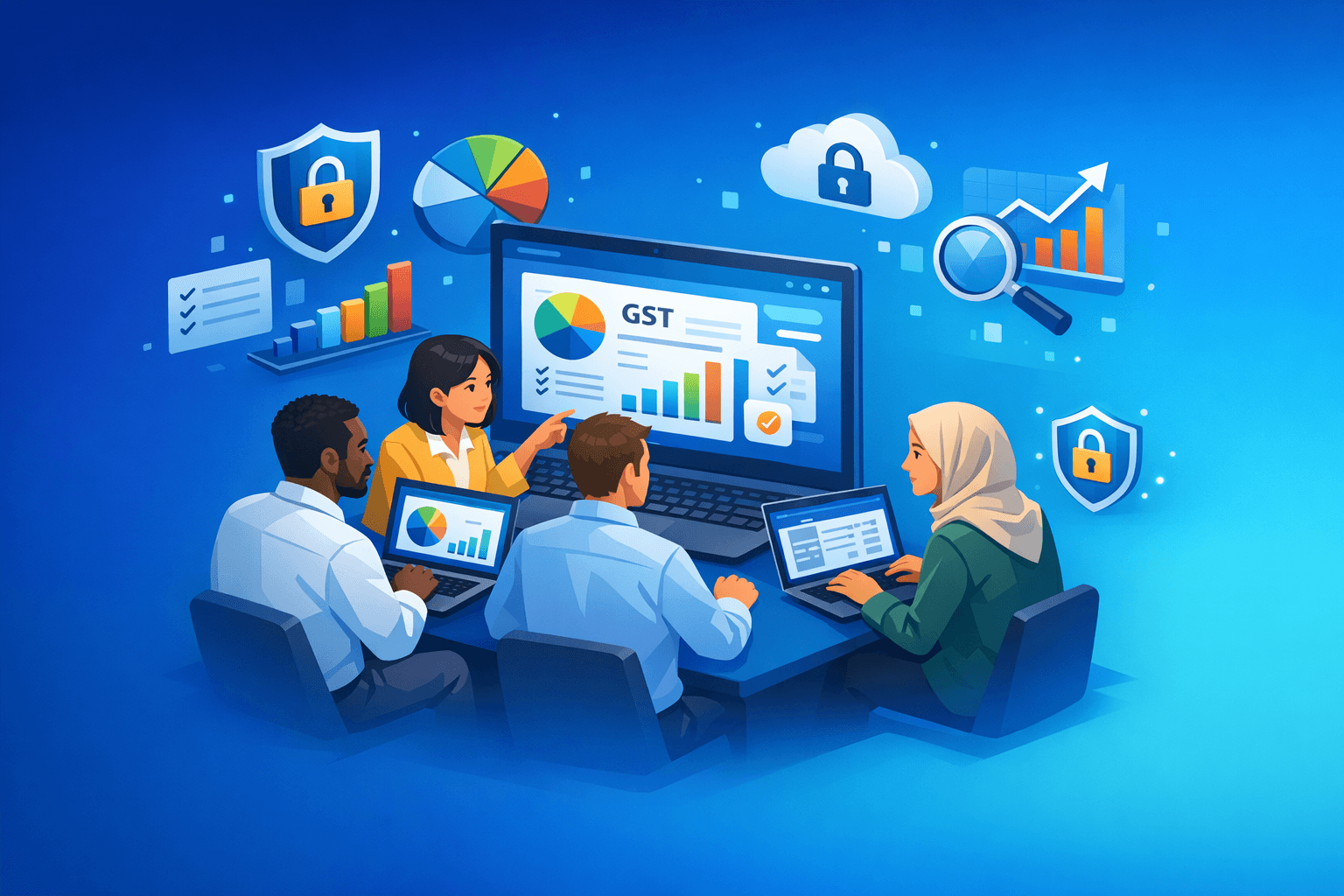
Indirect taxes in India make sure proper invoicing for tax compliance and timely filings. Verify support for GST-compliant invoicing and convenient tax summary exports. Search for automated tax calculations that are based on common rules used by local businesses. Also verify the system can produce audit-ready reports and transaction ledgers on-demand.
Integrations and bank connectivity
Seamless integrations eliminate manual entry and expedite reconciliation with bank feeds and payment gateways. Look for native connectors to major banks and export formats used by tax filing software. If you utilize e-commerce or inventory systems, ensure that the solution links to those channels first. It minimises duplication of effort and allows for greater real time accuracy.
Referring to the case on business size and development
However we recommend aligning the solution with your current size and near term growth plans to avoid costly migrations. Tiny teams can get away with something very, very simple like core bookkeeping down to a quick billing system. As your business grows, you may require multi-user access, project costs and more detailed reports to help make decisions. Function of the next two years and choose the best scalable option without borders.
Selection checklist
Ensuring essential features are aligned with daily needs
- Compare total cost with add-ons + tax.
- Test the interface to make sure it promotes team-friendly workflows.
- Check GST compliance and tax reports exports.
Decision framework and final tips
Make a list of must-have features and pain points that exist in your current tools or spreadsheets. Use real transactions for trial accounts of both solution types to validate reconciliation & reports. Use the person who will actually use this every day to playtest workflows and ease of use. This often comes down to expertise and prior experience, so prioritize solutions that balance cost, compliance (which generally includes complex requirements), and low friction for the best long term results.
Conclusion
Accounting software for Indian businesses is a tricky balance of features, cost and local compliance requirements. Evaluate options across bookkeeping accuracy, GST readiness, scalability and reliable support. Validate assumptions before tasking upon a plan using trials and checklists. Choosing to migrate judiciously enables lower future migration costs and establishes the foundation for systematic business growth.