

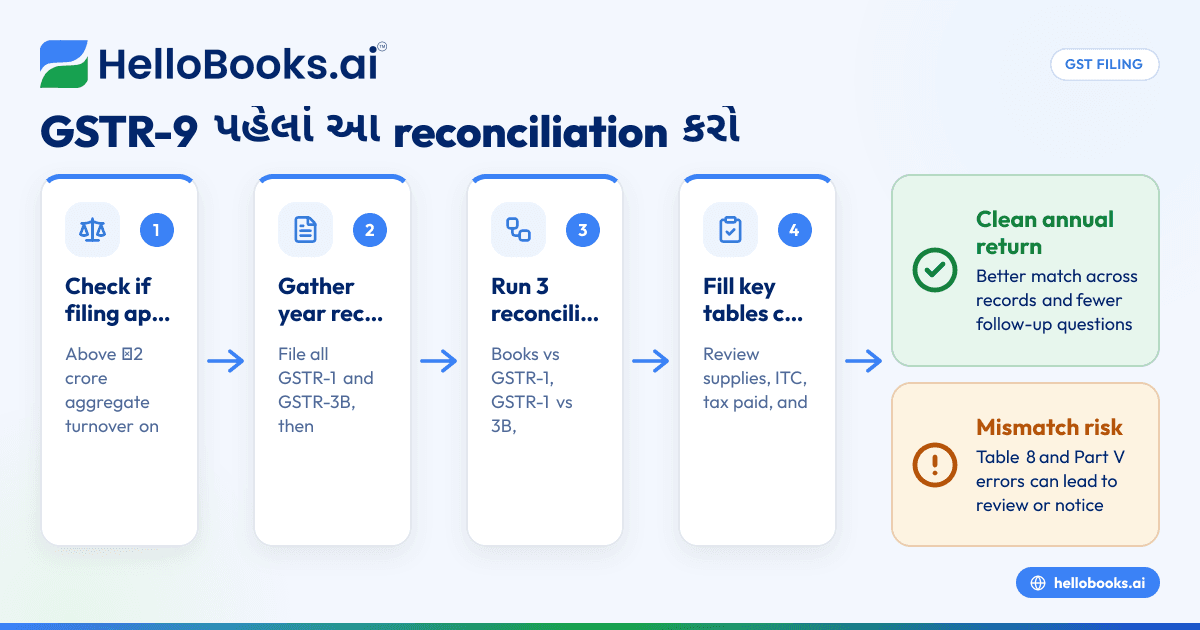

Key takeaways
What this article covers, in order:
- GSTR-9 ખરેખર શું કામનું છે?
- કોને GSTR-9 ભરવું પડે છે, અને કોને નહીં?
- આ રિટર્ન ભરતાં પહેલાં કયા records તૈયાર રાખવા?
- GSTR-9 માં outward supplies ક્યાં ખાસ ધ્યાન માંગે છે?
- ITC માટે GSTR-2B અને booksનો મેળાપ કેમ એટલો મહત્વનો છે?
- Books, bank statement અને stock વચ્ચેની ખાઈ ક્યાંથી બને છે?
ભારતમાં GSTR-9 એ GST કાયદા હેઠળ વર્ષભર ફાઇલ થયેલા GSTR-1 અને GSTR-3Bનો વાર્ષિક સાર છે, પણ તેને માત્ર “એક વધુ રિટર્ન” સમજીને ભરવું જોખમી છે. Central Goods and Services Tax Act, 2017 અને તેના નિયમો હેઠળ કઈ વ્યક્તિએ GSTR-9 ભરવું, ક્યારે ભરવું, લેટ ફી કેવી રીતે લાગુ પડે, અને કયા વર્ગોને છૂટ છે—આ બધાની હાલની સ્થિતિ CBICની સૂચનાઓ, GST Portal અને GSTN પર પ્રકાશિત થાય છે. નીચેનો માર્ગદર્શક જવાબ ગુજરાતી વાચક માટે એ જ મુદ્દા સ્પષ્ટ કરે છે.
GSTR-9 ખરેખર શું કામનું છે?
GSTR-9 નો ઉદ્દેશ આખા નાણાકીય વર્ષનું GST reporting એક જગ્યાએ જોવા મળે તે છે. મહિનાવાર અથવા ત્રિમાસિક GSTR-1 માં તમે outward supplies બતાવો છો, GSTR-3B માં tax liability અને ITC ક્લેઇમ કરો છો, અને વર્ષના અંતે GSTR-9 એ બંને વચ્ચેનો મોટો સરવાળો બતાવે છે.
તે કારણે GSTR-9 માત્ર portal પર auto-filled આંકડા ચેક કરવાનો ફોર્મ નથી. આ રિટર્ન તમારા books, sales register, purchase register, GSTR-1, GSTR-3B અને GSTR-2A/2B વચ્ચેનું મેળાપ છે. ખાસ કરીને Table 8 જેવા ભાગોમાં mismatch દેખાય તો પછી CBIC અથવા departmental scrutiny દરમિયાન સવાલો ઊભા થઈ શકે છે.
ગુજરાતના ટ્રેડર, મેન્યુફેક્ચરર, job worker, e-commerce seller અથવા service provider માટે એક સામાન્ય મુશ્કેલી એ છે કે વર્ષ દરમિયાન entries Tallyમાં એક રીતે થાય, GST portal પર amendments બીજી રીતે થાય, અને bank statement માં receipt timing ત્રીજી રીતે દેખાય. GSTR-9 આ બધું એક વર્ષના દૃશ્યમાં એકત્ર કરે છે.
કોને GSTR-9 ભરવું પડે છે, અને કોને નહીં?
આ સવાલનો જવાબ હંમેશા official source પરથી ચેક કરવો જોઈએ, કારણ કે eligibility, exemption, turnover-based relief અથવા class-based exclusion વિશેની હાલની સ્થિતિ CBIC notifications અને GST Portal પર પ્રકાશિત થાય છે. Central Goods and Services Tax Act, 2017 હેઠળ annual return ની જોગવાઈ છે, પરંતુ કયા taxpayer category માટે filing ફરજિયાત છે તે સમયાંતરે notificationથી સ્પષ્ટ થાય છે.
વ્યવહારમાં, તમે પહેલું આ જુવો:
- તમે regular GST taxpayer છો કે composition scheme હેઠળ છો
- તમે financial year દરમિયાન active GSTIN સાથે registered હતા કે નહીં
- તમારા PAN આધારિત aggregate turnover વિશે official rule શું કહે છે
- તમે એવી categoryમાં આવો છો કે જેને annual returnમાંથી specifically બહાર રાખવામાં આવી હોય
એક મહત્વની સ્થાનિક બાબત: turnover અલગ-અલગ GSTIN પ્રમાણે ન ગણાતું હોય તેવી પરિસ્થિતિઓમાં PAN-level aggregate turnover matter કરી શકે છે; current position GST law, rules અને CBIC notificationsમાં જોઈ શકાય. જો તમારા businessના Gujarat, Maharashtra અને Rajasthanમાં જુદા GSTIN હોય, તો “મારું Gujarat GSTIN તો નાનું છે” એમ માની લેવાથી કામ ચાલતું નથી—official test ક્યાં લેવાય છે તે source પરથી ચકાસો.
જો તમે multiple statesમાં કામ કરો છો, તો HelloBooksમાં multi-GSTIN એક login હેઠળ રાખવાથી year-end review સરળ બને છે, કારણ કે outward supplies, tax heads, ITC tracking અને books એકસાથે જોવા મળે છે. પરંતુ filing obligation નક્કી કરવા માટે હંમેશા GST Portal અને CBICની હાલની સૂચનાઓને authority માનો.
આ રિટર્ન ભરતાં પહેલાં કયા records તૈયાર રાખવા?
GSTR-9 portal પર ખોલતાં પહેલાં documents અને reconciliations તૈયાર હોય તો જ કામ સરળ બને છે. સૌથી ઉપયોગી set સામાન્ય રીતે આ હોય છે:
- આખા વર્ષની filed GSTR-1 અને GSTR-3B
- sales register અને purchase register
- month-wise અથવા quarter-wise GSTR-2A/2B data
- credit notes, debit notes અને amendments
- HSN-wise outward supply summary
- tax payment records, including any DRC-03 if applicable
- refund, demand, notice અથવા adjudication સંબંધિત papers, જો લાગુ પડતા હોય
- e-invoice અને IRN records, જો તમારા business પર e-invoicing rules લાગુ પડતા હોય
- e-way bill trail, ખાસ કરીને goods movement-heavy businesses માટે
ગુજરાતમાં textile, chemicals, engineering parts, ceramic, pharma અથવા FMCG distribution જેવા sectorsમાં એક સામાન્ય gap એ હોય છે કે invoice book, e-way bill data, stock register અને bank receipts એકબીજા સાથે perfectly sync નથી થતા. જો invoice પર place of supply ખોટું હોય, તો CGST/SGST સામે IGST head mismatch થઈ શકે. જો goods interstate ગયા હોય પણ local tax head લાગ્યો હોય, તો annual return પહેલાં correction review ખૂબ જરૂરી બને છે.
આ stage પર software મદદરૂપ થાય છે ત્યારે જ જ્યારે entries source પર જ સાચી હોય. જેમ કે HelloBooks invoice બનાવતી વખતે GSTIN પરથી place-of-supply logic અને tax head split ધ્યાનમાં રાખે છે, જેથી intrastate sale માટે CGST/SGST અને interstate sale માટે IGST mapping વધુ consistent રહે. જ્યાં e-invoice ફરજિયાત હોય, ત્યાં IRN અને signed QR સાથેનું record year-end matchingમાં useful બને છે. Goods movement હોય ત્યાં invoice પરથી e-way bill data જોડાયેલું રહે તો duplicate typing ઘટે છે.
GSTR-9 માં outward supplies ક્યાં ખાસ ધ્યાન માંગે છે?
Annual return નો outward supplies ભાગ ઘણી વખત deceptively simple લાગે છે, કારણ કે portal ઘણા આંકડા auto-populate કરે છે. પરંતુ auto-filled એટલે correct એવી ગેરસમજ ન રાખવી.
ખાસ ધ્યાન અહીં રાખો:
- B2B અને B2C supplies વચ્ચે classification સાચી છે કે નહીં
- exports tax સાથે report થયા કે LUT/Bond હેઠળ without tax
- SEZ suppliesનું reporting nature સાચું છે કે નહીં
- credit notes અને debit notes યોગ્ય financial year સાથે map થયા છે કે નહીં
- advance receipt અને adjustment entries books અને returnમાં એકસરખી છે કે નહીં
- exempt, nil-rated અને non-GST supplies ગડબડથી taxable bucketમાં ગયા નથી ને?
સ્થાનિક ઉદાહરણ તરીકે માનો કે Ahmedabadનો wholesaler Gujarat અંદર supply કરે છે, પણ થોડો માલ Rajasthan અને Maharashtraમાં પણ મોકલે છે. જો dispatch address, billing GSTIN અને place of supply entryમાં inconsistency હોય, તો monthly GSTR-1 somehow filed થઈ જાય છતાં annual returnમાં IGST સામે CGST/SGST mismatch બહાર આવી શકે છે. આ માત્ર tax headની ભૂલ નથી; તે turnover classification, e-way bill trail અને buyer reconciliationને પણ અસર કરે છે.
જો books Tallyમાં હોય અને transition દરમિયાન data split થયું હોય, તો Tallyમાંથી migration અથવા connector દ્વારા invoice history compare કરવી ઉપયોગી બને છે. Year-end પહેલા outward register અને filed GSTR-1 નું line-of-thought એકસરખું હોવું જોઈએ: “જે supply booksમાં છે, તે GST portal પર ક્યાં reflect થાય છે?”
ITC માટે GSTR-2B અને booksનો મેળાપ કેમ એટલો મહત્વનો છે?
GSTR-9માં સૌથી વધુ scrutiny ખેંચતો વિસ્તાર સામાન્ય રીતે ITC side હોય છે. કારણ કે outward tax તમે પોતાની invoice પરથી report કરો છો, જ્યારે ITC માટે supplier compliance, invoice timing, eligibility rules, reversals અને blocked credits બધું આવે છે.
Central Goods and Services Tax Act, 2017 અને સંબંધિત rules હેઠળ ITC eligibility, reversal અને documentationની હાલની સ્થિતિ official law text, CBIC circulars, notifications અને GST Portal પર ઉપલબ્ધ છે. કઈ credit allowed છે, કઈ blocked છે, અને કઈ later periodમાં reflect થાય છે—એ માટે current source જોવું જ જોઈએ.
GSTR-9 review કરતી વખતે ઓછામાં ઓછા આ પ્રશ્નોના જવાબ તૈયાર રાખો:
- booksમાં purchase bill છે, પણ GSTR-2Bમાં નથી—શા માટે?
- GSTR-2Bમાં invoice છે, પણ booksમાં duplicate અથવા unbooked તો નથી?
- reverse charge લાગુ પડતી ખરીદી સાચી રીતે ઓળખાઈ છે?
- exempt supply proportionને કારણે કોઈ ITC reversal લાગુ પડે છે?
- supplierએ GSTIN, invoice number અથવા taxable value ખોટી report કરી છે?
અહીં OCRથી purchase bills capture કરવી અને GSTR-2A/2B reconciliationથી missing invoices અને ITC tracking જોવી ખરેખર કામ આવે છે. ખાસ કરીને જ્યાં દર મહિને અનેક suppliers હોય—જેમ કે Rajkotની engineering unit, Suratનો fabric trader અથવા Morbiની tile business—manual spreadsheet reconciliationમાં સરળતાથી છૂટે તેવા bills software spotting કરી શકે છે.
એક નાની, સ્પષ્ટ રીતે illustrative અને invented સ્થિતિ લો: માનો તમારી booksમાં rupee 4,80,000 જેટલી input tax credit જેવી entries દેખાય છે, જ્યારે GSTR-2B matching પછી rupee 4,35,000 equivalent eligible-looking invoices જ દેખાય છે. આ આંકડા સંપૂર્ણપણે illustrative અને invented છે; તેમાં blocked credit, ineligible items, timing differences, reverse charge adjustments અને litigation positions સમાવ્યા નથી. આવી સ્થિતિમાં annual return ફાઇલ કરતાં પહેલાં gapનું nature સમજ્યા વિના માત્ર auto-filled figure accept કરવું જોખમી છે. Exact treatment માટે current GST law અને professional review જરૂરી રહેશે.
Books, bank statement અને stock વચ્ચેની ખાઈ ક્યાંથી બને છે?
ઘણા Gujarati businessesમાં GST issue ખરેખર GSTથી શરૂ જ થતો નથી; તે bookkeeping disciplineથી શરૂ થાય છે. Invoice issue થયું, partyએ UPI, NEFT, RTGS અથવા IMPSથી payment કર્યું, bankમાં amount આવ્યું, પણ receipt wrong invoice સામે set-off થયું. Purchase bill warehouse સુધી પહોંચ્યો, પણ accountsમાં late booked થયો. Stock physically move થયો, e-way bill બન્યો, પણ sale invoice amendment પછી booksમાં reflect નહોતો થયો.
આ gaps પછી annual return સમયે આવી રીતે દેખાય છે:
- turnover books અને GSTR-1 વચ્ચે match નથી થતો
- output tax liability અને collection timing ગડબડ લાગે છે
- debtors ageing અને GST receivables જુદા દેખાય છે
- purchase accrual booksમાં છે, પણ ITC support paperwork અધૂરું છે
- inventory movement અને taxable outward supply વચ્ચે explainability ઘટે છે
A bank statement upload કરીને AI reconciliation કરવું useful છે કારણ કે Indian banking practiceમાં collections fragmented હોય છે—ક્યારેક UPI reference unclear હોય, ક્યારેક customer short payment કરે, ક્યારેક one payment બહુ invoices cover કરે. જ્યારે invoice, receipt અને ledger line જોડાય છે, ત્યારે year-end turnover review વધુ મજબૂત બને છે. Inventory-heavy businessમાં stock movement accounting સાથે જોડાયેલું હોય તો outward supply omissions ઝડપથી પકડાય છે.
Financial reports પણ અહીં practical value આપે છે. જો P&L, receivables ageing અને GST returns એક જ data spine પરથી બને, તો annual return review “paper exercise” નહીં રહે; તે books health check બની જાય.
Gujaratના business માટે ખાસ સાવચેતીના મુદ્દા
ગુજરાતમાં interstate trading, manufacturing dispatches, branch transfers, job work અને distributor networksને કારણે GSTR-9 reviewમાં કેટલાક મુદ્દા વારંવાર ઊભા થાય છે:
Interstate vs intrastate confusion: Billing Gujaratનું, delivery અન્ય stateની, અને tax head split ખોટું. આથી IGST સામે CGST/SGST mismatch દેખાય.
HSN summary inconsistency: year દરમિયાન product master બદલાયો, પણ old code અને new code mixed રહ્યા. Annual summary વખતે bucket totals ગડબડ દેખાય.
Credit notes timing: festive season schemes, rate differences અથવા sales return માટે credit note પછીના periodમાં pass થાય, પરંતુ annual viewમાં correct linkage ભૂલાય.
Job work and movement trail: e-way bill records છે, પણ accounting narrationમાં clear linkage નથી. Department પૂછે ત્યારે movement explain કરવો મુશ્કેલ બને.
Multiple GSTIN operations: same PAN હેઠળ જુદા statesમાં business હોય તો reporting discipline દરેક GSTINમાં સમાન નથી રહેતી.
Legacy Tally dependence: Books Tallyમાં, return prep spreadsheetમાં, અને final corrections portal પર manual—આ ત્રણ layers mismatch વધારતી હોય છે.
જો તમારે Tally data સાથે parallel review કરવી હોય, તો Tally alternative અથવા HelloBooks vs Tally જેવા comparison pages useful context આપી શકે છે. GST invoice field check કરવા માટે GST invoice validator, GSTIN verification માટે GSTIN validator અને mismatch spotting માટે GST reconciliation checker જેવા free India tools પણ year-end reviewમાં મદદરૂપ બને છે.
HelloBooks જેવી સિસ્ટમ GSTR-9 તૈયારીમાં ક્યાં વાસ્તવિક મદદ કરે છે?
સાચી વાત એ છે કે GSTR-9 HelloBooksમાંથી direct file થતું return નથી; annual returnની final responsibility અને filing position official GST portal પર અને applicable law મુજબ જ જોવાની રહે છે. પરંતુ GSTR-9 માટે જે groundwork જોઈએ છે, તેમાં softwareનો પ્રભાવ મોટો છે.
વાસ્તવિક રીતે મદદ આ રીતે થાય છે:
- વર્ષ દરમિયાન invoices compliant રીતે બને તો later clean-up ઓછો રહે
- GSTR-1 અને GSTR-3B direct filing એક જ books data પરથી થાય તો monthly mismatch ઘટે
- GSTR-2A/2B reconciliationથી ITC issues earlier stage પર દેખાય
- OCRથી purchase bills book કરવાથી missing vendor invoice risk ઘટે
- bank statement uploadથી receipt matching સુધરે
- inventory અને financial reports સાથે outward supply અને stock trail વધુ explainable બને
- multi-GSTIN viewથી group-level review સરળ બને
જો business owner travellingમાં હોય, તો mobile app પરથી basic checks થઈ શકે છે. જો owner WhatsAppમાં Hindi, English અથવા Hinglishમાં કામ કરવાનું વધારે પસંદ કરે, તો Noor assistant પર books-related basic guidance મેળવવી practical બની શકે. પરંતુ legal interpretation, eligibility disputes અથવા contentious ITC positions માટે professional advice replace થતું નથી.
GST-focused workflows સમજવા માટે smart invoicing, GST return filing software, bank reconciliation software અને accounting software India સંબંધિત પેજ પણ ઉપયોગી છે. જો તમે product fit જોવા માંગતા હો, તો demo અથવા India pricing context માટે /in/pricing જુઓ.
GSTR-9 ફાઇલ કરતા પહેલાં final review કેવી રીતે વિચારવો?
Annual return submit કરતાં પહેલાં તમારું target “portal accepts the form” ન હોવું જોઈએ. target એવું હોવું જોઈએ કે એક વર્ષ પછી પણ તમે numbers explain કરી શકો.
ફાઇલિંગ પહેલાં આ logicથી review કરો:
- booksનું turnover અને filed outward supplies broadly align થાય છે?
- tax headsનું break-up place of supply સાથે logically consistent છે?
- ITC books, GSTR-3B claims અને GSTR-2B view વચ્ચે reasons documented છે?
- credit notes, amendments અને later-period corrections properly captured છે?
- e-invoice, IRN અને e-way bill trail business reality સાથે મેળ ખાતી છે?
- bank receipts અને debtor ledgers explainable છે?
- stock-heavy businessમાં inventory movement outward reporting સાથે logical છે?
લેટ fee, filing deadline, applicability threshold અથવા time bar વિશે કોઈ પણ ચોક્કસ current figure જાણવા હોય, તો bare article પર વિશ્વાસ ન કરો. Central Goods and Services Tax Act, 2017, applicable rules, CBIC notifications અને GST Portal પર પ્રકાશિત હાલની માહિતી જ authoritative source છે. આવા figures વારંવાર બદલાઈ શકે છે, તેથી current filing seasonમાં official publication ચેક કરવી શ્રેષ્ઠ છે.
સારાંશમાં, GSTR-9 annual compliance કરતાં વધુ એક audit-style self-check છે. જે Gujarati business વર્ષ દરમિયાન invoice, GST, bank, stock અને purchase records disciplined રીતે જાળવે છે, તેના માટે આ return manageable રહે છે. જે business year-end સુધી spreadsheet patches પર ચાલે છે, તેના માટે GSTR-9 portal કરતાં reconciliation project વધુ બને છે. તેથી annual returnનો સારો ઉપાય છેલ્લી ઘડીએ form ખોલવો નહીં, પરંતુ આખું વર્ષ clean data રાખવું છે.


