

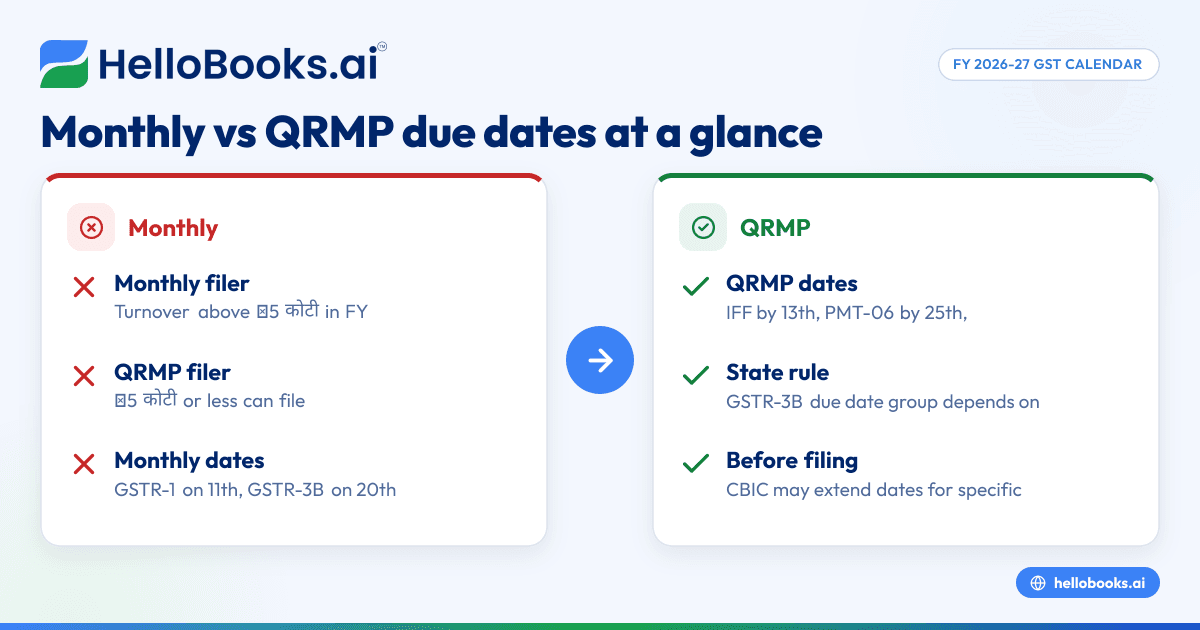

Key takeaways
What this article covers, in order:
- FY 2026-27 मध्ये आधी कोणता filing pattern लागू आहे ते ठरवा
- अधिकृत तारीखा कुठे तपासायच्या आणि bare table वर अवलंबून का राहू नये
- मासिक filer साठी calendar पेक्षा month-close system जास्त महत्त्वाचा
- QRMP मध्ये तिमाही return असला तरी महिन्याला काम थांबत नाही
- महाराष्ट्रासह state group, place of supply आणि GSTIN यामुळे calendar बदलून दिसतो
- return date चुकते ते बहुतेक वेळा books ready नसल्यामुळे
India मध्ये FY 2026-27 साठी GST रिटर्न due dates शोधत असाल, तर आधी सरळ उत्तर हे: एकच “सर्वांसाठी” कॅलेंडर पुरेसं नसतं. तुमचा व्यवसाय monthly filer आहे की QRMP, तुमचा GSTIN कोणत्या राज्यात आहे, आणि CBIC ने Central Goods and Services Tax Act, 2017 आणि संबंधित Rules अंतर्गत GST portal वर काही extension किंवा advisory दिली आहे का, हे आधी तपासा. सुरक्षित पद्धत म्हणजे अधिकृत dates नेहमी GSTN च्या GST portal आणि CBIC notifications मधून confirm करणे.
FY 2026-27 मध्ये आधी कोणता filing pattern लागू आहे ते ठरवा
मराठीत हा प्रश्न साधा वाटतो, पण व्यवहारात बहुतेक गोंधळ इथूनच सुरू होतो. तुम्ही दरमहा GSTR-1 आणि GSTR-3B भरता का, की QRMP योजनेत तिमाही return भरता पण काही payment obligations महिन्यागणिक सांभाळता, यावर तुमचं संपूर्ण वर्षाचं planning अवलंबून असतं.
ही eligibility, option window, aggregate turnover यांचे current निकष Goods and Services Tax law अंतर्गत CBIC आणि GSTN कडून GST portal वर प्रकाशित केले जातात. त्यामुळे कोणती turnover मर्यादा लागू आहे, कोणत्या quarter साठी option कधी बदलता येतो, किंवा कोणाला monthly filing बंधनकारक आहे, हे अधिकृत portal वरच पाहा. जर तुम्ही एखाद्या CA कडून summary घेत असाल, तरी अंतिम reference म्हणून GST portal वरचा profile आणि filing dashboard तपासा.
व्यवहारात हे लक्षात ठेवा:
- filing pattern तुमच्या accountant च्या सोयीवर नाही, तुमच्या registration profile आणि law वर ठरतो
- तुमच्याकडे एकापेक्षा जास्त राज्यांत GSTIN असतील, तर एका राज्यासाठी monthly आणि दुसऱ्यासाठी वेगळा compliance workload असू शकतो
- Maharashtra मध्ये business असला तरी Karnataka, Gujarat किंवा Delhi GSTIN वेगळ्या operational rhythm मध्ये चालू शकतो
याच ठिकाणी books स्वच्छ असणं महत्त्वाचं ठरतं. HelloBooks मध्ये multi-GSTIN handle करता येत असल्याने वेगवेगळ्या राज्यांच्या returns वेगळे track करता येतात, आणि recorded invoices वरून GSTR-1 व GSTR-3B तयार करून direct filing करता येते. त्यामुळे Excel calendar आणि books यांच्यात mismatch कमी होतो.
अधिकृत तारीखा कुठे तपासायच्या आणि bare table वर अवलंबून का राहू नये
GST due date article वाचताना सर्वात मोठी चूक म्हणजे table छापून भिंतीवर लावणे आणि वर्षभर तेच अंतिम सत्य समजणे. India मध्ये GST compliance हा Central Goods and Services Tax Act, 2017, संबंधित Rules, CBIC notifications/circulars आणि GSTN portal updates यांच्या एकत्र वाचनावर चालतो. काही वेळा portal advisory, state-specific राहत, technical outage advisory किंवा notification मुळे practical position बदलते.
म्हणून current dates तपासण्यासाठी ही स्रोत-साखळी वापरा:
- GST portal वर returns dashboard आणि advisory section
- CBIC notifications आणि circulars
- आवश्यकता असेल तर state jurisdiction संदर्भातील communication
- portal वर login केल्यानंतर दिसणारी applicable due date
कोणतीही date, late fee, interest किंवा penalty यांची current figure अधिकृतपणे CGST Act, Integrated Goods and Services Tax Act, संबंधित Rules आणि CBIC/GSTN updates मध्ये प्रकाशित असते. त्यामुळे bare fact म्हणून कुठलीही संख्या कॉपी करून ठेवण्यापेक्षा official source bookmark करून ठेवा.
जर तुमच्या team मध्ये accountant, owner आणि operations manager तिघेही वेगवेगळ्या कागदावर dates लिहीत असतील, तर चुका होतात. Invoice issue date, e-invoice IRN generation, e-way bill movement, bank receipt matching आणि return filing date हे सगळं एकाच workflow मध्ये दिसलं तर deadline management सोपं होतं.
मासिक filer साठी calendar पेक्षा month-close system जास्त महत्त्वाचा
Monthly filer साठी प्रश्न फक्त “GSTR-1 कधी?” आणि “GSTR-3B कधी?” एवढाच नाही. खरा प्रश्न असा आहे: त्या तारखेआधी तुमचं data freeze कधी होणार?
Monthly compliance मध्ये सामान्यतः पुढील workflow असतो:
- sales invoices पूर्ण आणि error-free असणे
- place of supply बरोबर असणे
- intra-state sale साठी CGST/SGST आणि inter-state sale साठी IGST योग्य split असणे
- credit/debit notes नोंदवलेले असणे
- purchase bills book झालेले असणे
- GSTR-2A/2B reconciliation पाहून ITC tracking केलेलं असणे
- bank statement upload करून receipts आणि payments reconcile केलेले असणे
यात एक invoice चुकीच्या tax head ने गेला, तर return date अजून पुढे असली तरी correction workload वाढतो. उदाहरणार्थ Pune मधील seller ने Bengaluru customer ला supply करून CGST+SGST लावलं, तर हा place-of-supply error return calendar पेक्षा आधी पकडला पाहिजे. HelloBooks invoice तयार करताना place-of-supply आणि tax head split नीट लावायला मदत करतं, त्यामुळे अशी चूक कमी होते.
जर तुम्ही e-invoice applicable business असाल, तर IRN आणि signed QR वेळेवर मिळणंही month-close चा भाग आहे. IRN उशिरा किंवा वेगळ्या portal workflow मुळे hold झाला, तर outward supply records वर परिणाम होऊ शकतो. म्हणून invoicing आणि compliance वेगळे systems मध्ये न ठेवता smart invoicing आणि e-invoicing-software सारखा connected flow वापरणं practical ठरतं.
QRMP मध्ये तिमाही return असला तरी महिन्याला काम थांबत नाही
QRMP बद्दल एक गैरसमज खूप दिसतो: “quarterly आहोत, म्हणजे quarter-end ला बघू.” India मध्ये हा approach धोकादायक ठरतो. कारण QRMP मध्ये outward supplies, customer expectations, supplier credits, payment challan obligations, optional invoice furnishing, आणि working capital planning हे महिन्यागणिकच चालू असतं.
Current due dates, PMT-related obligations, IFF availability, आणि राज्य-गटावर आधारित applicable GSTR-3B date या सगळ्यांचे अधिकृत तपशील CBIC आणि GSTN कडून GST portal वर प्रकाशित केलेले असतात. कोणती current date, कोणता state group आणि कोणती option window लागू आहे हे तेथेच तपासा.
QRMP business साठी practical calendar असा पाहा:
- महिना 1: B2B invoices clean ठेवा; buyer ला ITC visibility हवी असेल तर optional furnishing बद्दल विचार करा
- महिना 2: purchase booking मागे ढकलू नका; supplier ने invoice upload केलंय का ते 2A/2B मध्ये पाहा
- महिना 3: quarter close आधी sales, purchase, debit notes, reverse charge, TDS/TCS adjustments आणि bank matching पूर्ण करा
हे विशेषतः traders, distributors आणि inventory-heavy businesses साठी महत्त्वाचं आहे. Stock movement, e-way bill, invoice आणि bank receipt यांना quarter-end ला एकत्र लावण्यापेक्षा महिन्याला discipline ठेवणं जास्त सुरक्षित असतं. HelloBooks मध्ये invoice वरून e-way bill उभा करता येतो, OCR ने purchase bills capture करता येतात, आणि uploaded bank statement वर AI reconciliation केल्याने QRMP असूनही data महिन्यागणिक तयार राहतो.
महाराष्ट्रासह state group, place of supply आणि GSTIN यामुळे calendar बदलून दिसतो
FY calendar article मध्ये state group हा मुद्दा फक्त table row म्हणून दाखवला जातो; पण प्रत्यक्षात तो operating rule आहे. तुमचा principal place of business कुठे आहे, return कोणत्या GSTIN ने file होतो, आणि tax कोणत्या registration वरून paid/declared होतो, यावर applicable path ठरतो.
इथे तीन वेगळे मुद्दे आहेत:
- GSTIN state — filing responsibility कोणत्या registration वर आहे
- Place of supply — invoice वर CGST/SGST की IGST हे ठरवते
- Goods movement — e-way bill आणि dispatch planning वर परिणाम करते
उदाहरणार्थ, Mumbai head office, Goa warehouse आणि Bengaluru buyer असा व्यवहार असेल, तर books, inventory, invoice आणि tax head यांचा मेळ बसला पाहिजे. State-group confusion मुळे नाही, तर चुकीच्या operational entry मुळे return stress वाढतो.
HelloBooks सारख्या system मध्ये inventory movement, invoice tax split, आणि multiple GSTIN visibility एकत्र दिसली तर month-end ला “ही sale कोणत्या registration वर गेली?” असा प्रश्न कमी पडतो. Tally वापरणाऱ्या अनेक businesses साठी transition हाही मुद्दा असतो; म्हणून tally-alternative पाहण्याबरोबर migration/connectivity practical ठरते, विशेषतः जेव्हा CA office अजून Tally data बघत असतं.
return date चुकते ते बहुतेक वेळा books ready नसल्यामुळे
लोक late filing ला “date miss झाली” असं म्हणतात; पण मूळ कारण अनेकदा date नसतंच. ते असतं:
- sales register incomplete
- purchase bills उशिरा मिळणे
- supplier GSTIN mismatch
- GSTR-2B मध्ये invoice न दिसणे
- reverse charge entries वेगळ्या sheet मध्ये राहणे
- TDS/TCS adjustments books मध्ये नसणे
- NEFT, RTGS, IMPS किंवा UPI receipts book न केलेली असणे
- accountant कडे bank statement उशिरा पोहोचणे
GST आणि accounting वेगळे ठेवल्यावर हा गोंधळ वाढतो. खासकरून MSME business मध्ये owner WhatsApp वर customer ला rate सांगतो, warehouse dispatch करतो, payment UPI ने येतं, पण books update दोन आठवड्यांनी होतात. मग return date जवळ आली की panic सुरू होतो.
HelloBooks मध्ये uploaded bank statement वर AI reconciliation, OCR ने purchase bill entry, आणि GSTR-2A/2B reconciliation व ITC tracking यामुळे “deadline week data-entry sprint” कमी होतो. Return file करताना GSTR-1 आणि GSTR-3B direct filing available असल्याने portal वर पुन्हा summary बनवण्याचं काम घटतं. याबरोबर gst-return-filing-software आणि bank-reconciliation-software पाहिल्यास workflow कसा बसतो ते स्पष्ट होतं.
हे आकडे illustrative आणि invented आहेत: calendar discipline नसला तर cash flow कसा तुटतो
समजा, ही पूर्णपणे illustrative आणि invented परिस्थिती आहे; current law मधील actual rates, late fee, interest, eligibility, set-off rules किंवा filing consequences यासाठी CGST Act, CGST Rules, CBIC notifications आणि GST portal वरील published figures तपासणे आवश्यक आहे. खालील गणितात legal nuances, blocking conditions, departmental proceedings आणि sector-specific rules धरलेले नाहीत.
नाशिकमधील एका wholesaler कडे तीन महिन्यांत एकूण ₹12 lakh इतकी illustrative outward supplies आहेत, आणि purchases ₹8 lakh इतक्या illustrative आहेत असे धरू. त्याने sales invoices वेळेवर केल्या, पण supplier bills पैकी ₹2 lakh चे invented invoices books मध्ये उशिरा घेतले. वरून bank statement upload केला नाही, म्हणून दोन मोठे UPI receipts outstanding दिसत राहिले.
त्यामुळे quarter-end ला त्याच्या working papers मध्ये:
- receivables जास्त दिसतात
- actual collection कमी समजते
- ITC tracking incomplete राहते
- GSTR-3B साठी liability planning चुकते
जर owner ला वाटलं की “पैसे आले नाहीत”, तर तो अनावश्यक short-term borrowing करेल. आणि जर CA ला वाटलं की “purchase bills अजून नाहीत”, तर return drafting conservative होईल. या invented उदाहरणात समस्या tax calendar नसून bookkeeping latency आहे.
म्हणून due date calendar हे फक्त शेवटचं milestone आहे. त्याआधी invoice, purchase capture, reconciliation आणि review checkpoints नक्की करा.
FY 2026-27 साठी practical Marathi compliance rhythm कसा ठेवावा
भिंतीवर dates लिहिण्यापेक्षा दर महिन्याला repeat होणारा rhythm ठेवा. हा व्यवसायानुसार बदलू शकतो, पण broadly उपयोगी पडतो:
- महिन्याचा शेवट होण्याआधी सर्व dispatches आणि sales invoices review करा
- e-invoice applicable असल्यास IRN/signed QR status त्वरित verify करा
- goods movement असेल तर e-way bill trail पूर्ण ठेवा
- supplier bills फोटो/PDF वरून लगेच book करा
- bank statement महिन्याला upload करा; NEFT/RTGS/IMPS/UPI receipts match करा
- GSTR-2A/2B मध्ये missing invoices शोधा
- reverse charge, TDS/TCS entries side sheet मध्ये न ठेवता books मध्ये घ्या
- filing week आधी final review करा, filing week मध्ये data entry नको
Owner mobile वर काम करणारा असेल, field sales team असेल, किंवा accountant office-बाहेर असेल, तर mobile app मुळे invoice आणि expense capture जलद होतं. काही लहान business owners Hindi, English किंवा Hinglish मध्ये WhatsApp वर प्रश्न विचारतात; Noor assistant मुळे basic bookkeeping/contextual queries तिथे हाताळता येतात, पण final legal reliance साठी official law-source आणि professional review आवश्यकच आहे.
अधिकृत figures बदलू शकतात; म्हणून नेहमी source-first approach ठेवा
FY 2026-27 साठी कोणतीही due date, late fee, interest implication, turnover criterion, e-invoice applicability, e-way bill rule, किंवा amendment window याबद्दल current संख्या लिहायची असल्यास ती CBIC, GSTN, GST portal, आणि लागू असल्यास CGST Act/Rules किंवा IGST Act मध्ये जशी published आहे तशीच पाहिली पाहिजे. Static blog table वर अंधविश्वास ठेवू नका.
तुम्हाला लगेच practical मदत हवी असेल, तर official confirmation सोबत internal workflow सुधारा: invoice ते return एकाच system मध्ये आणा, purchase bills उशिरा नोंदवू नका, आणि bank reconciliation पुढे ढकलू नका. HelloBooks बद्दल अधिक पाहायचं असल्यास accounting-software-india, in, किंवा in/pricing वर market-specific माहिती मिळेल. GSTIN verify करायचा असेल किंवा काही field checks करायचे असतील, तर GSTIN validator आणि GST reconciliation checker सारखी India tools उपयोगी पडू शकतात.
शेवटची सुरक्षित गोष्ट: FY 2026-27 चं तुमचं GST calendar notebook मध्ये नाही, तर GST portal + books-ready process + state-wise GSTIN clarity + timely reconciliation या चौघांच्या संगमात असावं. ते केलं, तर due date हा ताण नसून routine बनतो.


