


Key takeaways
What this article covers, in order:
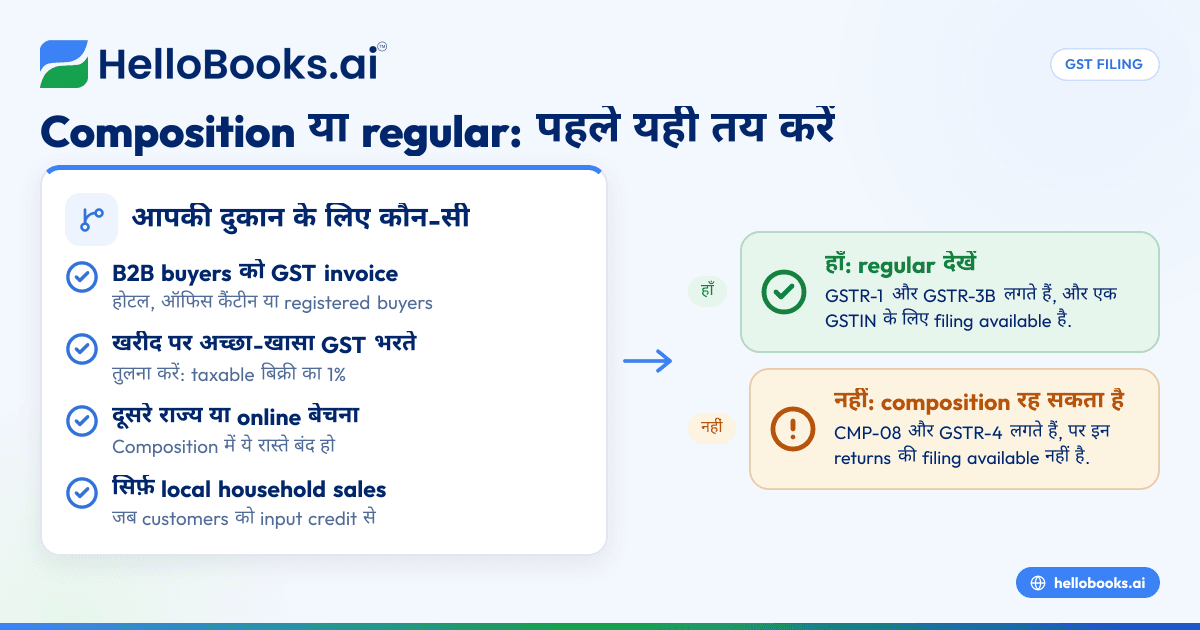
- पहले यह तय करें: आपकी दुकान regular GST में है या composition में
- किराना स्टोर में GST की असली दिक्कत rate नहीं, item mix और invoice discipline है
- सिर्फ return file होना काफी नहीं है; GSTR-1 और GSTR-3B का source वही entries होनी चाहिए
- purchase bills, GSTR-2B और ITC: छोटे retailer की सबसे महंगी चूक
- stock, shelf और GST का रिश्ता: inventory गलत तो return भी suspect
- एक ईमानदार काल्पनिक हिसाब: regular GST कब composition से बेहतर लग सकता है
भारत में छोटे किराना स्टोर और रिटेलर के लिए “free GST filing software” का सीधा मतलब यह होना चाहिए: अगर आप regular GST में registered हैं, तो सॉफ्टवेयर आपके invoice से ही GSTR-1 और GSTR-3B तैयार करे, GST Portal पर filing आसान बनाए, stock और purchase bills संभाले, और bank statement upload करके मिलान कराए। अगर आप composition scheme में हैं, तो जरूरत अलग है, क्योंकि वहां return flow अलग होता है। इसलिए पहला फैसला software नहीं, आपकी GST scheme है।
पहले यह तय करें: आपकी दुकान regular GST में है या composition में
किराना, mini-mart, cosmetic shop, stationery store या mixed retail counter—इन सब में GST का compliance एक जैसा नहीं होता। भारत में Central Goods and Services Tax Act, 2017, State/Union Territory GST laws और Integrated Goods and Services Tax Act, 2017 के तहत आपकी scheme से invoice का format, ITC eligibility, और return filing flow बदल जाता है। current eligibility, conditions और notifications की authoritative position CBIC और GST Portal/GSTN पर published material में देखी जानी चाहिए.
छोटे दुकानदारों के लिए composition अक्सर इसलिए आकर्षक लगता है क्योंकि billing हल्की रहती है। लेकिन regular GST में आने पर आप tax invoice दे सकते हैं, input tax credit track कर सकते हैं, और registered buyers—जैसे local cafe, office pantry, hostel, clinic या small business—को proper GST invoice दे पाते हैं। यही वह जगह है जहां software का काम सिर्फ filing नहीं, सही books बनाना भी होता है।
अगर आपकी दुकान में B2B और B2C दोनों तरह की sale है, packaged goods हैं, suppliers से GST वाले bills आते हैं, और कभी-कभी inter-state supply भी होती है, तो regular setup को spreadsheet से संभालना जल्दी उलझ जाता है। ऐसे में GST return filing software और accounting software India का साथ में होना practical हो जाता है।
किराना स्टोर में GST की असली दिक्कत rate नहीं, item mix और invoice discipline है
मोहल्ले की किराना दुकान में एक ही counter पर exempt, nil-rated, taxable, MRP goods, loose items, personal withdrawals, supplier credit notes और cash/UPI collections सब साथ चलते हैं। इसी वजह से गलती rate table में कम, classification और posting में ज्यादा होती है।
भारत में GST classification का legal basis GST law, HSN framework, CBIC notifications/circulars और GST Portal guidance से आता है। किसी item पर कौन-सा tax treatment लागू है, इसकी current position CBIC rate notifications और official explanatory material में verify करनी चाहिए। shelf पर रखे goods—जैसे packaged grocery, dairy products, snacks, soaps, cleaning items—के लिए “सभी पर एक ही GST” वाला shortcut अक्सर गलत पड़ता है. NEEDS EXPERT REVIEW
किराना दुकानों में तीन खास mistakes बार-बार दिखती हैं:
- local sale पर IGST लगा देना, जबकि सही जगह CGST + SGST बनता है
- दूसरे राज्य की supply पर CGST/SGST लगा देना, जबकि place of supply के हिसाब से IGST बनना चाहिए
- purchase bill में GST दिखने पर भी बाद में GSTR-2B से match न करना
यहीं पर billing tool का महत्व आता है। अगर invoice बनाते समय customer GSTIN, place of supply और tax head split सही बैठ जाए, तो बाद की filing बहुत आसान हो जाती है। smart invoicing और place-of-supply based tax split वाली setup छोटे retailer के लिए “nice to have” नहीं, error control है।
सिर्फ return file होना काफी नहीं है; GSTR-1 और GSTR-3B का source वही entries होनी चाहिए
कई दुकानदारों का दर्द यह है कि billing अलग app में होती है, purchases Excel में, stock register copy में, और return accountant बाद में portal पर बनाता है। इससे GSTR-1, GSTR-3B, stock और profit report चार अलग कहानियां बोलते हैं।
बेहतर workflow में sale invoice, purchase bill, expense, stock movement और tax summary एक ही books से निकलते हैं। HelloBooks का practical फायदा यही है कि regular GST वाले business में invoices से GSTR-1 और GSTR-3B सीधे तैयार और file किए जा सकते हैं, इसलिए return numbers बाद में दोबारा typing से नहीं बनते। अगर दुकान के पास एक से ज्यादा GSTIN हों—मान लीजिए NCR में एक entity दिल्ली में और दूसरी हरियाणा में registered है—तो multi-GSTIN setup एक ही login में अलग compliance view देता है।
यह भी जरूरी है कि software किराना जैसे business की day-to-day reality समझे: कुछ sale cash में, कुछ UPI में, कुछ bank transfer से; supplier bill कभी PDF में, कभी photo में, कभी WhatsApp पर आया scan; और owner को कई बार mobile से ही invoice देखना है। ऐसी स्थिति में phone app, OCR से purchase bill capture, और Hindi/English/Hinglish support वाला workflow समय बचाता है।
purchase bills, GSTR-2B और ITC: छोटे retailer की सबसे महंगी चूक
छोटे दुकानदार अक्सर output tax पर ध्यान देते हैं, पर cash leakage input side पर होता है। distributor ने bill दे दिया, आपने माल stock में डाल लिया, payment NEFT या IMPS से कर दिया—लेकिन supplier ने सही upload नहीं किया, GSTIN गलत था, या document books में enter ही नहीं हुआ। बाद में GSTR-3B बनाते समय confusion शुरू होता है।
भारत में ITC claim की conditions CGST Act, 2017 और संबंधित rules में हैं; reflected data का operational source GSTN/GST Portal का GSTR-2A/2B ecosystem है। किस tax period में कौन-सी invoice reflected है और claim position क्या बनती है, इसकी current compliance view official portal data पर आधारित होनी चाहिए। specific eligibility conclusion case facts पर depend करेगा. NEEDS EXPERT REVIEW
इसलिए retailer के लिए useful software वह है जो purchase bill की photo या PDF से details पढ़ ले, फिर GSTR-2A/2B से reconciliation और ITC tracking दिखाए। इससे owner या accountant जल्दी पकड़ सकता है कि कौन-सा supplier invoice books में है लेकिन portal reflection में नहीं है, या portal में है पर books में छूटा हुआ है। ai-bookkeeping और bank reconciliation software तभी meaningful बनते हैं जब purchase, payment और GST credit की कहानी जुड़ी हुई हो।
एक और local reality है: कई दुकानों में supplier payments split mode में होते हैं—थोड़ा cash, थोड़ा UPI, बाकी bank transfer। ऐसे में bank statement upload करके receipts/payments reconcile करना manual ticking से तेज होता है। यह live feed नहीं, uploaded statement based matching है, जो Indian banking practice—bank statement export, passbook PDF, accountant-led reconciliation—के ज्यादा करीब है।
stock, shelf और GST का रिश्ता: inventory गलत तो return भी suspect
किराना दुकान में inventory सिर्फ operations की चीज नहीं; यह accounting credibility का आधार है। अगर closing stock और purchase booking में gap है, तो gross margin भी अजीब लगेगा और GST review के समय सवाल भी उठेंगे। soap, biscuit, atta, oil, beverage, dairy, cleaning supplies—इन सबका inward और outward loosely याद से नहीं चल सकता, खासकर जब mixed packs, schemes, expiry losses और damaged stock भी हों।
भारत में books and records की expectations GST law, Income-tax Act, 1961 और, entity type के हिसाब से, Companies Act, 2013/MCA compliance context से भी जुड़ सकती हैं। retail business छोटा हो तब भी proper inventory trail practical need है।
इसीलिए जो software GST filing के साथ inventory भी संभाले, वह किराना के लिए ज्यादा उपयोगी है। sale और purchase enter होते ही stock move हो, reorder view मिले, और month-end पर अलग register न बनाना पड़े—तो accounts और tax दोनों साफ रहते हैं। inventory और accounting-software-for-small-business का यह combination खास तौर पर उन दुकानों में काम आता है जहां items सैकड़ों में हैं लेकिन accounting staff छोटा है।
अगर आप अभी भी Tally में काम करते हैं, तब भी पूरा switch एक दिन में जरूरी नहीं। कुछ businesses trial period में Tally data migrate करके या connector के साथ parallel run करना पसंद करते हैं, ताकि owner को नई system की आदत पड़े लेकिन पुराना record भी accessible रहे। ऐसे readers के लिए tally-alternative और HelloBooks vs Tally useful starting points हो सकते हैं।
एक ईमानदार काल्पनिक हिसाब: regular GST कब composition से बेहतर लग सकता है
मान लीजिए यह illustrative और invented स्थिति है, किसी real दुकान का data नहीं। calculation सिर्फ concept समझाने के लिए है; इसमें every item-wise classification, exemptions, stock adjustments, credit notes, reverse charge edge cases, blocked credits, cash discount treatment, और scheme-specific legal conditions शामिल नहीं हैं.
मान लें कानपुर की एक neighborhood grocery shop के एक महीने के books में यह mix है:
- taxable outward supplies की value: ₹6,00,000
- उस sale से निकलने वाला output GST: ₹30,000, यह आंकड़ा केवल illustrative assumption है; actual tax item classification और current CBIC notifications पर depend करेगा
- taxable inward purchases जिन पर eligible ITC reflect हो सकता है: ₹3,50,000
- उन purchases पर GST: ₹17,500, यह भी illustrative invented figure है
- कुछ local expenses और non-credit items अलग हैं, जिन्हें इस simplified calculation में शामिल नहीं किया गया
इस invented illustration में regular GST regime के under net cash outflow roughly output tax minus eligible reflected ITC जैसा दिख सकता है, यानी ₹12,500 का conceptual result। लेकिन अगर same business composition logic देखे, तो comparison taxable turnover definition, eligibility conditions, inter-state restrictions, customer profile और ITC loss के साथ करना होगा; composition levy का actual rate या threshold CGST Act/Rules, CBIC notifications और GST Portal guidance में current form में verify करना चाहिए. NEEDS EXPERT REVIEW
इसलिए practical सवाल यह नहीं कि “scheme A हमेशा सस्ती है या scheme B।” सही सवाल यह है:
- क्या आपके buyers को GST invoice चाहिए?
- क्या distributor bills पर meaningful ITC build हो रहा है?
- क्या आप inter-state supply, online channel या institutional buyers देख रहे हैं?
- क्या आपका shop mix exempt + taxable + B2B सब साथ है?
इन सवालों का जवाब books से आना चाहिए, अंदाजे से नहीं। software की value यहीं है।
e-invoice, e-way bill और local delivery: हर retailer को सब कुछ नहीं चाहिए
हर छोटे retailer को e-invoice या e-way bill रोज नहीं चाहिए, पर जिस business को चाहिए उसके लिए यह manual portal work बहुत time लेता है। e-invoice applicability, IRN requirement और threshold position CBIC notifications और GST system advisories में published होती है; current limit official source से verify करनी चाहिए। कोई भी fixed threshold यहां bare fact के रूप में quote करना safe नहीं है बिना official citation के. NEEDS EXPERT REVIEW
अगर आपकी shop wholesale-style supply भी करती है, nearby businesses को cartons भेजती है, या branch transfers/consignments manage करती है, तो e-way bill की जरूरत practical issue बन जाती है। invoice से ही e-way bill raise हो जाए तो duplicate data entry कम होती है। applicable businesses के लिए e-invoice में IRN और signed QR save time करते हैं, खासकर जब accountant को portal JSON upload अलग से नहीं करना पड़े। इस use case के लिए e-invoicing software और e-way bill software relevant हैं।
छोटे शहरों में एक और common pattern है: owner shop floor पर है, accountant part-time है, और questions WhatsApp पर होते हैं—“ये purchase bill book हुआ?”, “इस GSTIN का state code सही है?”, “यह sale local है या IGST?” Hindi या Hinglish में quick support workflow adoption बढ़ाता है। इसी context में HelloBooks का Noor assistant WhatsApp पर basic bookkeeping/GST context में मददगार हो सकता है, खासकर उन owners के लिए जो desktop पर बैठकर हर चीज नहीं करते।
bank statement upload, UPI collections और day-end matching
भारत में किराना collections अब cash के साथ UPI, bank transfer, कभी-कभी card settlement के mix में आते हैं। problem GST filing से पहले accounting में खड़ी होती है: sale book हो गई, पर payment mapping नहीं हुई; bank में credit दिख रहा है, पर किस invoice/summary से जुड़ा है यह clear नहीं; expense debit हुआ, पर purchase bill attach नहीं है।
यहीं uploaded bank statement based reconciliation काम आता है। monthly statement upload करके receipts और payments को books से match करना manual matching से सरल होता है। खासकर तब जब multiple modes—UPI, NEFT, RTGS, IMPS—एक ही bank account में दिख रहे हों। इससे owner को day-end cash-vs-bank picture और accountant को period-end cleanup दोनों बेहतर मिलते हैं।
ध्यान रहे, bookkeeping quality अब सिर्फ tax का मामला नहीं रही। customer, supplier और employee data के handling पर India का Digital Personal Data Protection Act, 2023 भी broader governance context बनाता है। छोटे business को भी documents, GSTIN details, bank statements और IDs loosely forward करके चलने के बजाय controlled software workflow पसंद करना चाहिए. NEEDS EXPERT REVIEW
free का मतलब क्या देखें: सिर्फ filing free हो या पूरी दुकान usable हो
जब कोई दुकानदार “free GST filing software” खोजता है, तो उसे यह साफ देखना चाहिए कि free किस हिस्से के लिए है—return filing, invoicing, accounting, tools, या limited records? अगर आपके लिए core जरूरत regular GST returns है, तो यह देखना जरूरी है कि GSTR-1 और GSTR-3B directly file होते हैं या नहीं, invoices से figures उठते हैं या नहीं, और purchase reconciliation available है या नहीं।
HelloBooks की India use-case strength यह है कि regular GST workflow को invoicing, purchase capture, stock, bank statement upload, reconciliation और reports के साथ जोड़ा जा सकता है। इससे CA और owner दोनों एक ही data spine पर काम करते हैं। छोटे retailer के लिए यह बड़ा फर्क है, क्योंकि वही entries बाद में receivables, expense view, P&L और GST return सभी में दिखती हैं। pricing देखने के लिए India pricing सही जगह है, और setup समझने के लिए demo लिया जा सकता है।
अगर आप अभी evaluate कर रहे हैं, तो पहले free tools से basic hygiene check कर लें—जैसे GSTIN validator, HSN code search, GST calculator, और GST reconciliation checker। इनसे कम से कम data-entry level mistakes जल्दी पकड़ में आ जाती हैं।
आखिर में, किराना स्टोर के लिए सही GST software वह नहीं जो सबसे ज्यादा features बोलता हो; सही software वह है जो आपकी India-specific retail reality समझे: GSTIN, CGST/SGST vs IGST, GSTR-1, GSTR-3B, e-way bill जहां needed हो, supplier ITC checks, Tally migration, stock control, Hindi/Hinglish support, और bank statement upload based reconciliation। अगर आपका store regular GST में है, तो filing को books से जोड़ना ही सबसे बड़ा time-saver है।


